
EPISODE · Jul 8, 2026 · 11 MIN
When Hot Pipelines Warm Frozen Ground
from Waterlines: How Water Shapes Our World · host jaywen
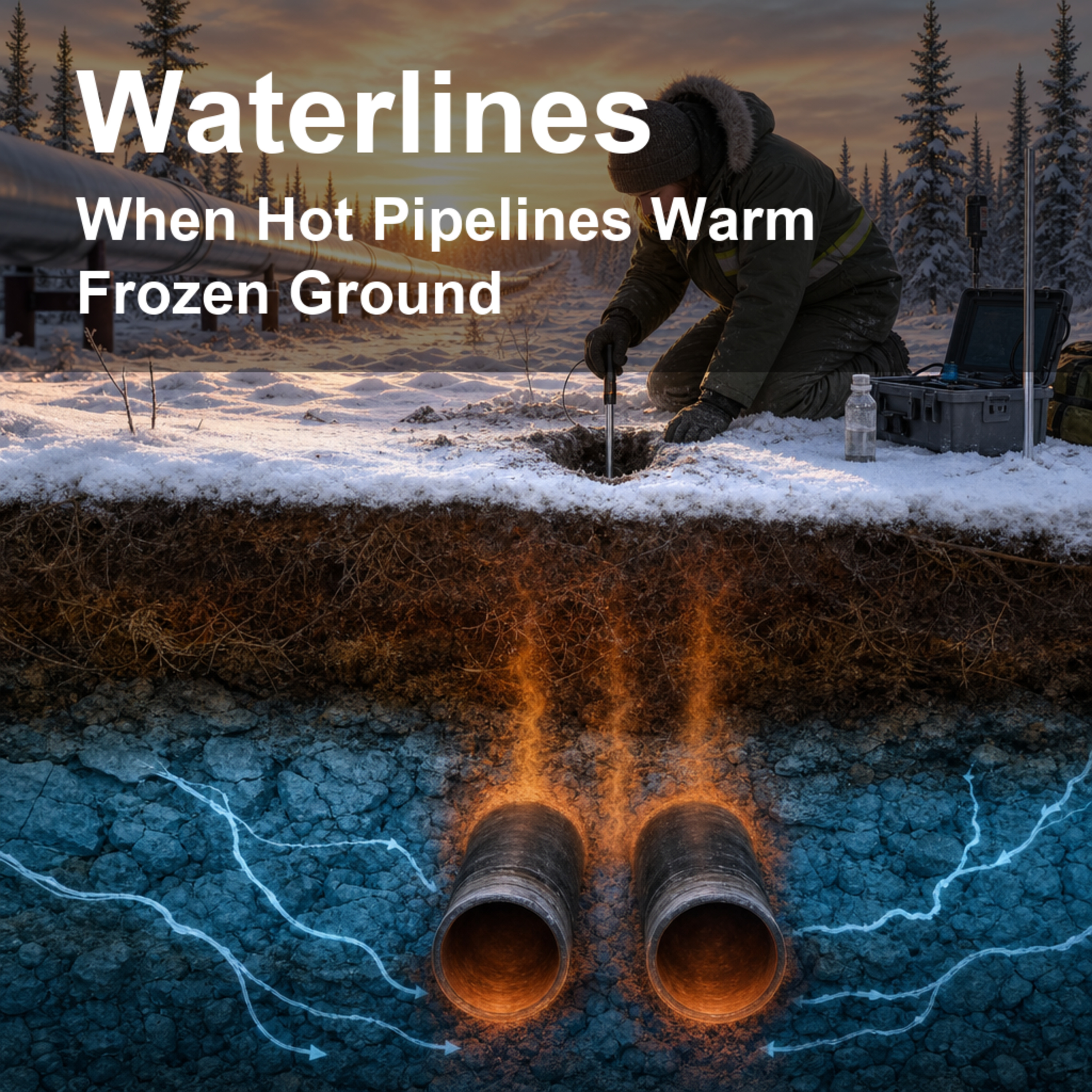
Takeaway: A hot buried pipeline with damaged insulation can quietly turn frozen ground into a warm wet chimney, and careful temperature modeling helps find the trouble before it spreads.Cold ground is not just scenery around northern infrastructure; it is part of how roads, wetlands, streams, soils, and communities stay stable through winter. This episode follows a real pipeline corridor in northern Alberta where buried pipes carrying very hot water could heat nearby soil if their insulation failed. The story is about more than pipelines: it shows how snow, frost, groundwater, and heat move together underground, and how scientists turn scattered field temperatures into a practical warning system.We unpack how researchers combined weather records, freeze-thaw physics, and a field survey along 12 kilometers of buried pipe to distinguish normal winter ground from ground warmed by damaged insulation. Along the way, we explain why snow can act like a blanket, why water freezing and thawing slows temperature change, and why modeling the air-ground boundary is harder than it sounds.Citation: Nagare, R. M., Mohammed, A. A., Park, Y.-J., & Schincariol, R. A. (2021). Modeling shallow ground temperatures around hot buried pipelines in cold regions. Cold Regions Science and Technology, 187, 103295. https://doi.org/10.1016/j.coldregions.2021.103295Disclosure: This Waterlines episode package is written for production with AI-generated voices.
Embed this episode
NOW PLAYING
When Hot Pipelines Warm Frozen Ground
No transcript for this episode yet
Similar Episodes
No similar episodes found.
Similar Podcasts
No similar podcasts found.