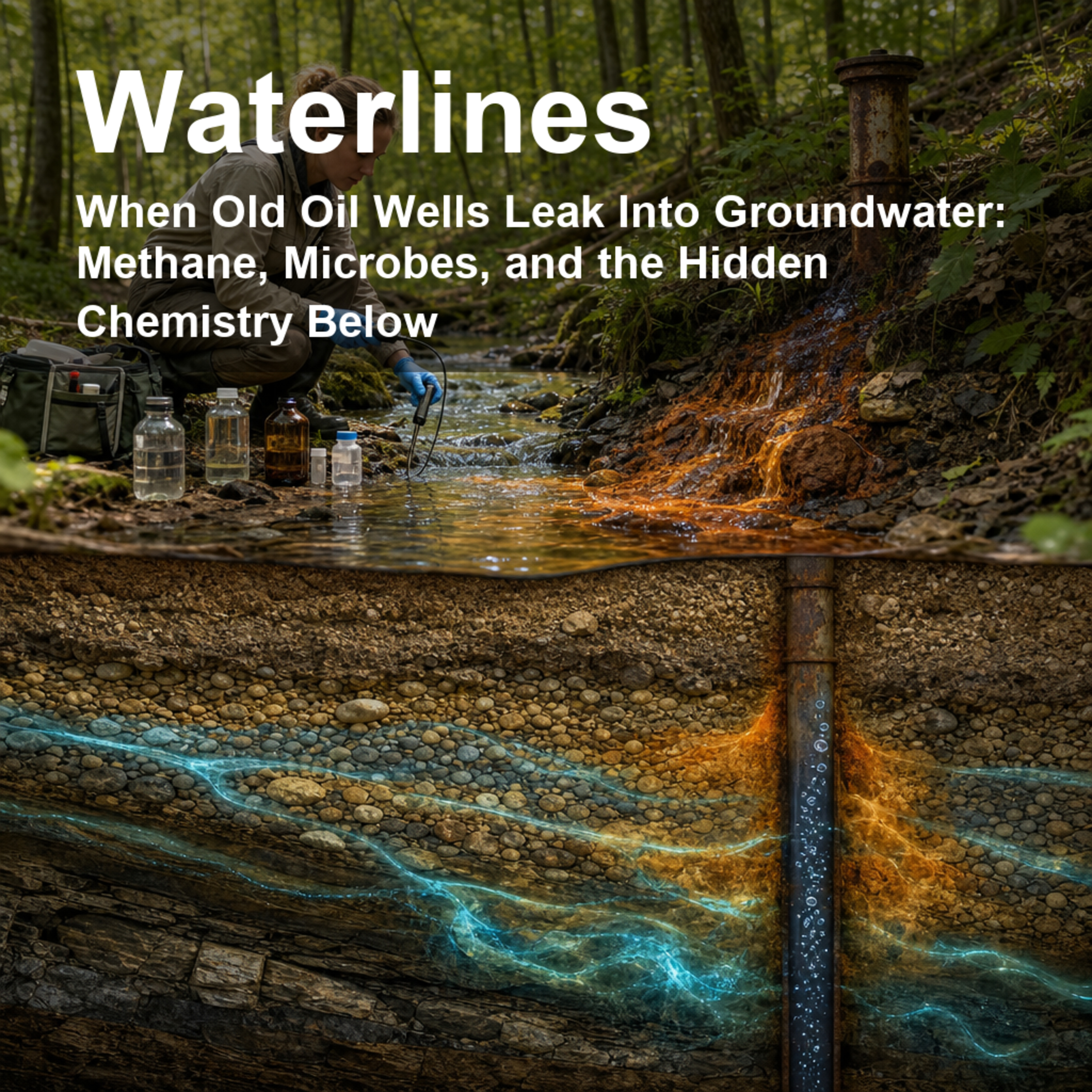
When Old Oil Wells Leak Into Groundwater: Methane, Microbes, and the Hidden Chemistry Below episode artwork

EPISODE · Jun 10, 2026 · 12 MIN

When Old Oil Wells Leak Into Groundwater: Methane, Microbes, and the Hidden Chemistry Below

from Waterlines: How Water Shapes Our World · host jaywen

Takeaway: Water quality problems often begin out of sight, in small mixtures and slow reactions.Abandoned oil and gas wells are often discussed as climate problems because they can leak methane to the air. But this episode follows a quieter path: what happens when that methane, salty deep water, and shallow groundwater meet underground. In northwestern Pennsylvania, researchers sampled water flowing from or near legacy wells and found that old wellbores can act like hidden straws, connecting deep formations to aquifers. The surprising twist is microbial: tiny organisms can “breathe” methane without oxygen, changing water chemistry and sometimes helping mobilize iron, manganese, and trace metals such as arsenic.We unpack how field sampling, dissolved gas fingerprints, microbial DNA, lab incubations, and a reactive transport model all fit together. Along the way, we explain why methane in water is not just about bubbles, why rusty orange seeps can signal deeper chemistry, and why the same leak can produce metal-rich water in one place and sulfide-smelling water in another. The practical stakes are local water quality, abandoned well cleanup, and how society manages the long afterlife of fossil fuel infrastructure.Citation: Shaheen, S. W., Lloyd, M. K., Roden, E. E., & Brantley, S. L. (2025). Anaerobic oxidation of methane from abandoned oil and gas wells leaking into aquifers. Geochimica et Cosmochimica Acta, 408, 269–282. https://doi.org/10.1016/j.gca.2025.08.039Disclosure: This Waterlines episode package is written for public science communication and is intended for production using AI-generated voices.

Episode metadata supplied by the publisher feed · Published Jun 10, 2026

Takeaway: Water quality problems often begin out of sight, in small mixtures and slow reactions.Abandoned oil and gas wells are often discussed as climate problems because they can leak methane to the air. But this episode follows a quieter path: what happens when that methane, salty deep water, and shallow groundwater meet underground. In northwestern Pennsylvania, researchers sampled water flowing from or near legacy wells and found that old wellbores can act like hidden straws, connecting deep formations to aquifers. The surprising twist is microbial: tiny organisms can “breathe” methane without oxygen, changing water chemistry and sometimes helping mobilize iron, manganese, and trace metals such as arsenic.We unpack how field sampling, dissolved gas fingerprints, microbial DNA, lab incubations, and a reactive transport model all fit together. Along the way, we explain why methane in water is not just about bubbles, why rusty orange seeps can signal deeper chemistry, and why the same leak can produce metal-rich water in one place and sulfide-smelling water in another. The practical stakes are local water quality, abandoned well cleanup, and how society manages the long afterlife of fossil fuel infrastructure.Citation: Shaheen, S. W., Lloyd, M. K., Roden, E. E., & Brantley, S. L. (2025). Anaerobic oxidation of methane from abandoned oil and gas wells leaking into aquifers. Geochimica et Cosmochimica Acta, 408, 269–282. https://doi.org/10.1016/j.gca.2025.08.039Disclosure: This Waterlines episode package is written for public science communication and is intended for production using AI-generated voices.

PodParley-generated summary based on available episode metadata and transcript content.

NOW PLAYING

When Old Oil Wells Leak Into Groundwater: Methane, Microbes, and the Hidden Chemistry Below

0:00 12:02

No transcript for this episode yet

We transcribe on demand. Request one and we'll notify you when it's ready — usually under 10 minutes.

Eat to Live Jenna Fuhrman, Dr. Fuhrman Our health is our most precious gift and smart nutrition can change your life. Each month, join Dr. Fuhrman and his daughter, Jenna Fuhrman as they discuss important topics in the world of nutrition. Eat to Live will change the way you eat and think about food. French Your Way Jessica: Native French teacher founder of French Your Way Boost your French listening skills and test your comprehension with this one of a kind series of podcasts. Get the chance to listen to a real conversation between native speakers talking at normal speed AND customise your learning experience through carefully designed sets of questions (2 levels of difficulty) available for download at www.frenchvoicespodcast.com. All interviews also come with the transcript. French teacher Jessica interviews native speakers of French from around the world who share a bit of their life and passion. Where else would you meet in one same place a French yoga teacher based in Melbourne, a soap manufacturer from Provence, or a couple cycling around the world? HOMELAND HOMELAND The Church is a body not a building. It's the bride of Jesus Christ! Jesus is coming back for a mature bride. That means it's time for the church of Jesus Christ to move from milk to meat. This is the hour of maturity!HOMELAND is an announcement that the church is being set free. Only the church has the ability to transform the world. The kingdom's of this world will become the kingdoms of our Lord and Savior!All of creation has been waiting for this moment! Sons and daughters of God are rising up and taking their seat! XXX Tech by SOVRYN Dr. Brian Sovryn The crossroads between technology, sensuality, and metaphysics - and the longest running anarchist podcast in the world! Brought to you by Dr. Brian Sovryn.

Frequently Asked Questions

How long is this episode of Waterlines: How Water Shapes Our World?

This episode is 12 minutes long.

When was this Waterlines: How Water Shapes Our World episode published?

This episode was published on June 10, 2026.

What is this episode about?

Takeaway: Water quality problems often begin out of sight, in small mixtures and slow reactions.Abandoned oil and gas wells are often discussed as climate problems because they can leak methane to the air. But this episode follows a quieter path:...

Can I download this Waterlines: How Water Shapes Our World episode?

Yes, you can download this episode by clicking the download button on the episode player, or subscribe to the podcast in your preferred podcast app for automatic downloads.
URL copied to clipboard!