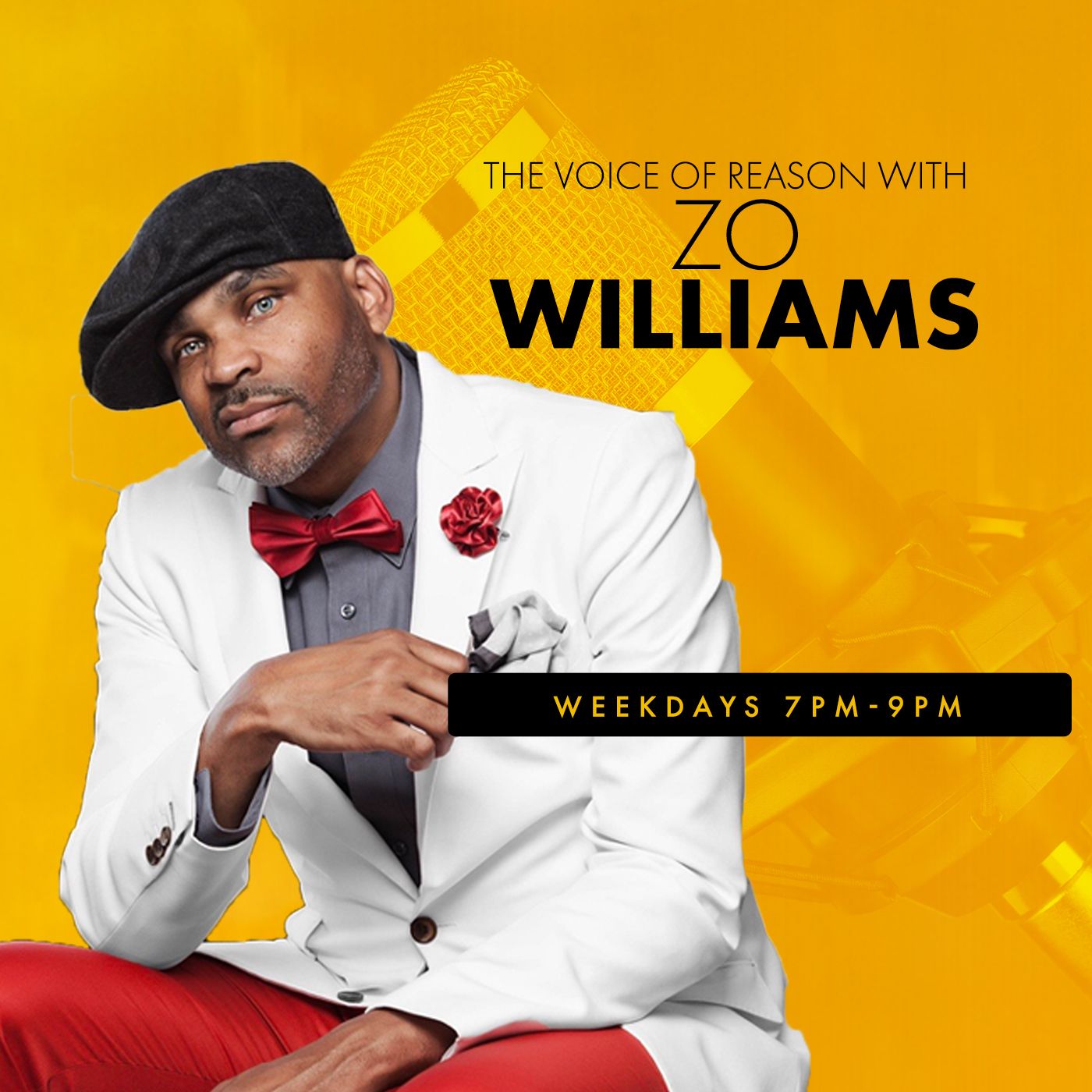
“When Your Happiness Removes Their Leverage” “Why Emotionally Regulated People Sometimes Become Targets Inside Intimate Relationships” episode artwork

EPISODE · May 27, 2026 · 1H 14M

“When Your Happiness Removes Their Leverage” “Why Emotionally Regulated People Sometimes Become Targets Inside Intimate Relationships”

from Zo Williams: Voice of Reason · host KBLA 1580 Am

Tonight’s conversation walks straight into a relational nerve most people would rather medicate with gender slogans, therapy language, or moral superiority: what happens when a man becomes happy without needing a woman to authorize, regulate, rescue, validate, inspire, approve, or emotionally complete that happiness? Alison Armstrong’s provocation does not merely ask whether women “attack happy men.” That phrasing gives the room something to argue about. The deeper wound asks whether some women feel unconsciously displaced when male happiness no longer orbits around female emotional centrality. If his striving once proved devotion, if his need once confirmed her importance, if his instability once gave her a role, if his pursuit once made the relationship feel alive, then his peace may not register as health. It may register as loss of influence, loss of necessity, loss of proof. This is not an indictment of women. It is an indictment of unconscious dependency contracts hiding inside intimacy. Men do it too. Parents do it. Lovers do it. Communities do it. Entire cultures train people to confuse being needed with being loved. But tonight we place the spotlight where the clip places it: on the possibility that certain women may unconsciously experience a self-sourced man as less reachable, less governable, less emotionally available, or less relationally useful precisely because he no longer needs suffering to prove connection. The psychological question becomes brutal: do we love people, or do we love the role their incompleteness gives us? The spiritual question cuts deeper: can love survive when it no longer feeds the ego’s need to matter? And the cultural question may disturb everybody: if modern intimacy has been built on pursuit, proof, emotional labor, and mutual insecurity, what happens when one person finally becomes free? That is tonight’s investigation: when happiness stops needing permission, who loses power? Allison’s Bio: Alison Armstrong is a relationship educator and workshop facilitator who studies relationship patterns between men and women through observation and lived experience—not through clinical psychology or psychiatry. She does not present herself as a psychologist, therapist, neuroscientist, or academic researcher. Her work focuses on how men and women often misinterpret each other’s emotional signals, communication styles, and expressions of connection. Her perspective is phenomenological and experiential rather than clinical doctrine.

Tonight’s conversation walks straight into a relational nerve most people would rather medicate with gender slogans, therapy language, or moral superiority: what happens when a man becomes happy without needing a woman to authorize, regulate, rescue, validate, inspire, approve, or emotionally complete that happiness? Alison Armstrong’s provocation does not merely ask whether women “attack happy men.” That phrasing gives the room something to argue about. The deeper wound asks whether some women feel unconsciously displaced when male happiness no longer orbits around female emotional centrality. If his striving once proved devotion, if his need once confirmed her importance, if his instability once gave her a role, if his pursuit once made the relationship feel alive, then his peace may not register as health. It may register as loss of influence, loss of necessity, loss of proof. This is not an indictment of women. It is an indictment of unconscious dependency contracts hiding inside intimacy. Men do it too. Parents do it. Lovers do it. Communities do it. Entire cultures train people to confuse being needed with being loved. But tonight we place the spotlight where the clip places it: on the possibility that certain women may unconsciously experience a self-sourced man as less reachable, less governable, less emotionally available, or less relationally useful precisely because he no longer needs suffering to prove connection. The psychological question becomes brutal: do we love people, or do we love the role their incompleteness gives us? The spiritual question cuts deeper: can love survive when it no longer feeds the ego’s need to matter? And the cultural question may disturb everybody: if modern intimacy has been built on pursuit, proof, emotional labor, and mutual insecurity, what happens when one person finally becomes free? That is tonight’s investigation: when happiness stops needing permission, who loses power? Allison’s Bio: Alison Armstrong is a relationship educator and workshop facilitator who studies relationship patterns between men and women through observation and lived experience—not through clinical psychology or psychiatry. She does not present herself as a psychologist, therapist, neuroscientist, or academic researcher. Her work focuses on how men and women often misinterpret each other’s emotional signals, communication styles, and expressions of connection. Her perspective is phenomenological and experiential rather than clinical doctrine.

NOW PLAYING

“When Your Happiness Removes Their Leverage” “Why Emotionally Regulated People Sometimes Become Targets Inside Intimate Relationships”

0:00 1:14:53

No transcript for this episode yet

We transcribe on demand. Request one and we'll notify you when it's ready — usually under 10 minutes.

Ask A Spaceman Archives - 365 Days of Astronomy Ask A Spaceman Archives - 365 Days of Astronomy Podcasting Astronomy Every Day of the Year Eat to Live Jenna Fuhrman, Dr. Fuhrman Our health is our most precious gift and smart nutrition can change your life. Each month, join Dr. Fuhrman and his daughter, Jenna Fuhrman as they discuss important topics in the world of nutrition. Eat to Live will change the way you eat and think about food. French Your Way Jessica: Native French teacher founder of French Your Way Boost your French listening skills and test your comprehension with this one of a kind series of podcasts. Get the chance to listen to a real conversation between native speakers talking at normal speed AND customise your learning experience through carefully designed sets of questions (2 levels of difficulty) available for download at www.frenchvoicespodcast.com. All interviews also come with the transcript. French teacher Jessica interviews native speakers of French from around the world who share a bit of their life and passion. Where else would you meet in one same place a French yoga teacher based in Melbourne, a soap manufacturer from Provence, or a couple cycling around the world? That Hoarder: Overcome Compulsive Hoarding That Hoarder Hoarding disorder is stigmatised and people who hoard feel vast amounts of shame. This podcast began life as an audio diary, an anonymous outlet for somebody with this weird condition. That Hoarder speaks about her experiences living with compulsive hoarding, she interviews therapists, academics, researchers, children of hoarders, professional organisers and influencers, and she shares insight and tips for others with the problem. Listened to by people who hoard as well as those who love them and those who work with them, Overcome Compulsive Hoarding with That Hoarder aims to shatter the stigma, share the truth and speak openly and honestly to improve lives.

Frequently Asked Questions

How long is this episode of Zo Williams: Voice of Reason?

This episode is 1 hour and 14 minutes long.

When was this Zo Williams: Voice of Reason episode published?

This episode was published on May 27, 2026.

What is this episode about?

Tonight’s conversation walks straight into a relational nerve most people would rather medicate with gender slogans, therapy language, or moral superiority: what happens when a man becomes happy without needing a woman to authorize, regulate,...

Can I download this Zo Williams: Voice of Reason episode?

Yes, you can download this episode by clicking the download button on the episode player, or subscribe to the podcast in your preferred podcast app for automatic downloads.
URL copied to clipboard!