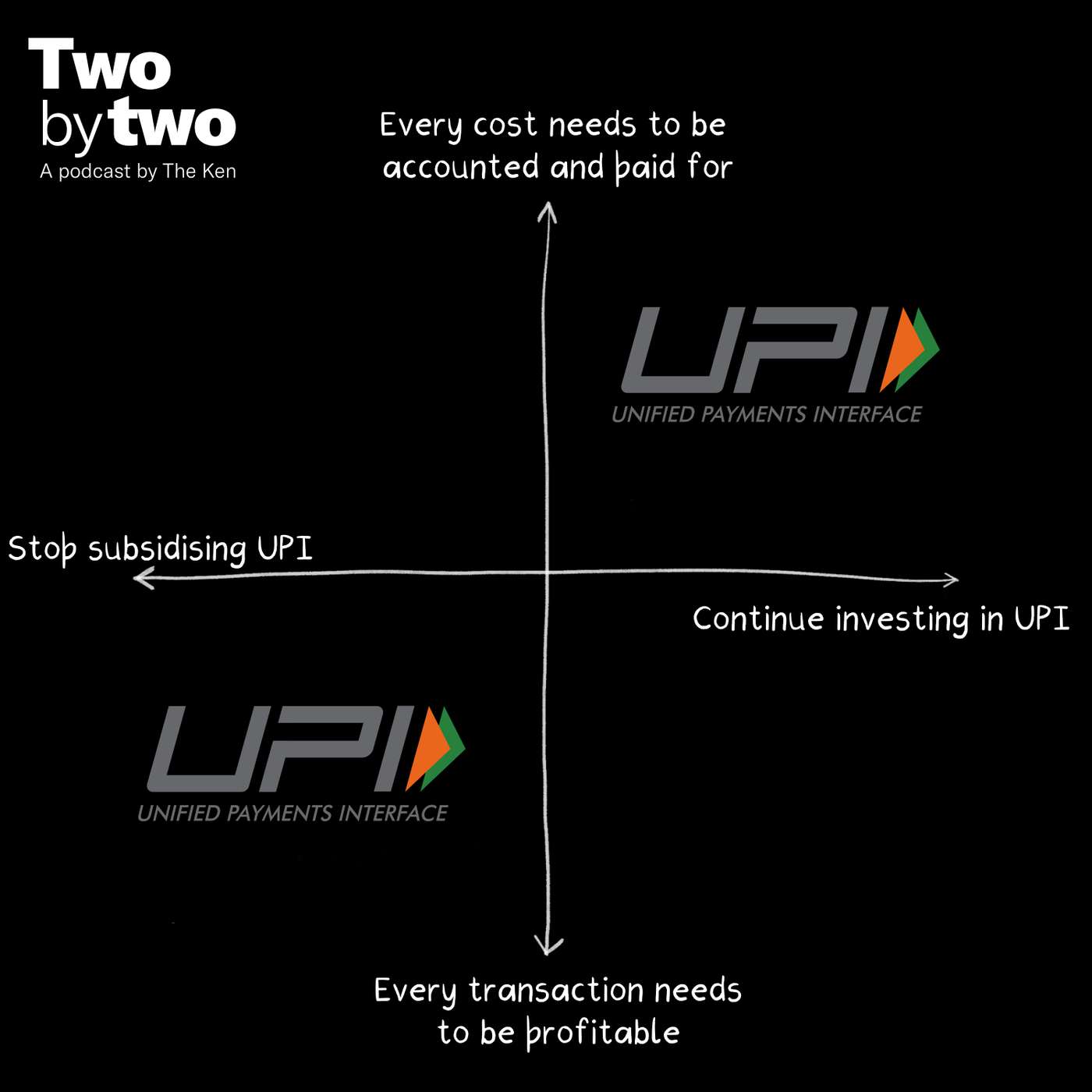
Which quadrant does India want UPI in?
from Two by Two (Private) Hosted by The Ken
Launched in 2016, UPI now dominates retail digital payments in India, accounting for over 80% of the volume and processing a massive 300 million transactions every month. What began as a government-funded project is now a public utility. Unlike private companies like Visa or Mastercard, government-funded entities like the Internet or the World Wide Web are not typically judged in terms of profitability. Their vast economic and innovative benefits far outweigh their costs. Viewing UPI through a profit-making lens is simply the wrong approach. In this episode of Two by Two, hosts Rohin Dharmakumar and Praveen Gopal Krishnan are joined by two vocal experts—Alok Prasanna, co-founder of Vidhi Legal, and Ateesh Tankha, CEO and co-founder of Alsowise Content Solutions—to dissect the sustainability and future of UPI in India. This episode of Two by Two was mixed and mastered by Rajiv CN, our resident sound engineer. If you liked this episode of Two by Two, please share it with your friends, colleagues, and anyone else who might be interested. And if you have thoughts on the discussion, we’d love to hear from you. Write to us at [email protected]. ***** Additional reading Alok’s Linkedin post UPI can be forever or free—not both UPI wants to go international, but it isn't built for it (yet) The mystery of usury
Embed this episode
No transcript yet.