
EPISODE · Dec 27, 2025 · 36 MIN
Who cares about the Baltic Jammer? (39c3)
from Chaos Computer Club - recent events feed · host Lars, Niklas Hehenkamp, Markus
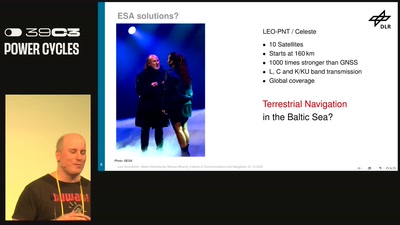
Reports of GNSS interference in the Baltic Sea have become almost routine — airplanes losing GPS, ships drifting off course, and timing systems failing. But what happens when a group of engineers decides to build a navigation system that simply *doesn’t care* about the jammer? Since 2017, we’ve been developing **R-Mode**, a terrestrial navigation system that uses existing radio beacons and maritime infrastructure to provide independent positioning — no satellites needed. In this talk, we’ll share our journey from an obscure research project that “nobody needs” to a system now seen as crucial for resilience and sovereignty. Expect technical insights, field stories from ships in the Baltic, and reflections on what it means when a civilian backup system suddenly attracts military interest. Since 2017, our team at DLR and partners across Europe have been working on an alternative to satellite navigation: **R-Mode**, a backup system based on terrestrial transmitters. Our main testbed spans the Baltic Sea — a region now infamous for GNSS jamming and spoofing. We’ll start by showing what GNSS interference actually means in practice: aircraft losing navigation data, ships switching to manual control, and entire regions facing timing outages — such as the recent disruption of telecommunications in Gdańsk during Easter 2025. Then we’ll take you behind the scenes of building R-Mode: designing signals that can coexist with legacy systems, installing transmitters along the coast, and testing shipborne receivers in rough conditions. We’ll share personal moments — like the first time we received a stable position fix in the middle of the Baltic. Finally, we’ll talk about perception and politics: how a “research curiosity” became a critical infrastructure project, why ESA now wants to build a *satellite* backup (with the same vulnerabilities), and how it feels when your civilian open-source navigation system suddenly becomes strategically relevant. Licensed to the public under http://creativecommons.org/licenses/by/4.0 about this event: https://events.ccc.de/congress/2025/hub/event/detail/who-cares-about-the-baltic-jammer-terrestrial-navigation-in-the-baltic-sea-region
Embed this episode
Ready to play
Who cares about the Baltic Jammer? (39c3)
No transcript for this episode yet
Similar Episodes
No similar episodes found.
Similar Podcasts
No similar podcasts found.