
EPISODE · Mar 14, 2026 · 19 MIN
WHY A RE-INDIGENIZATION OF SOCIETY MAKES SENSE
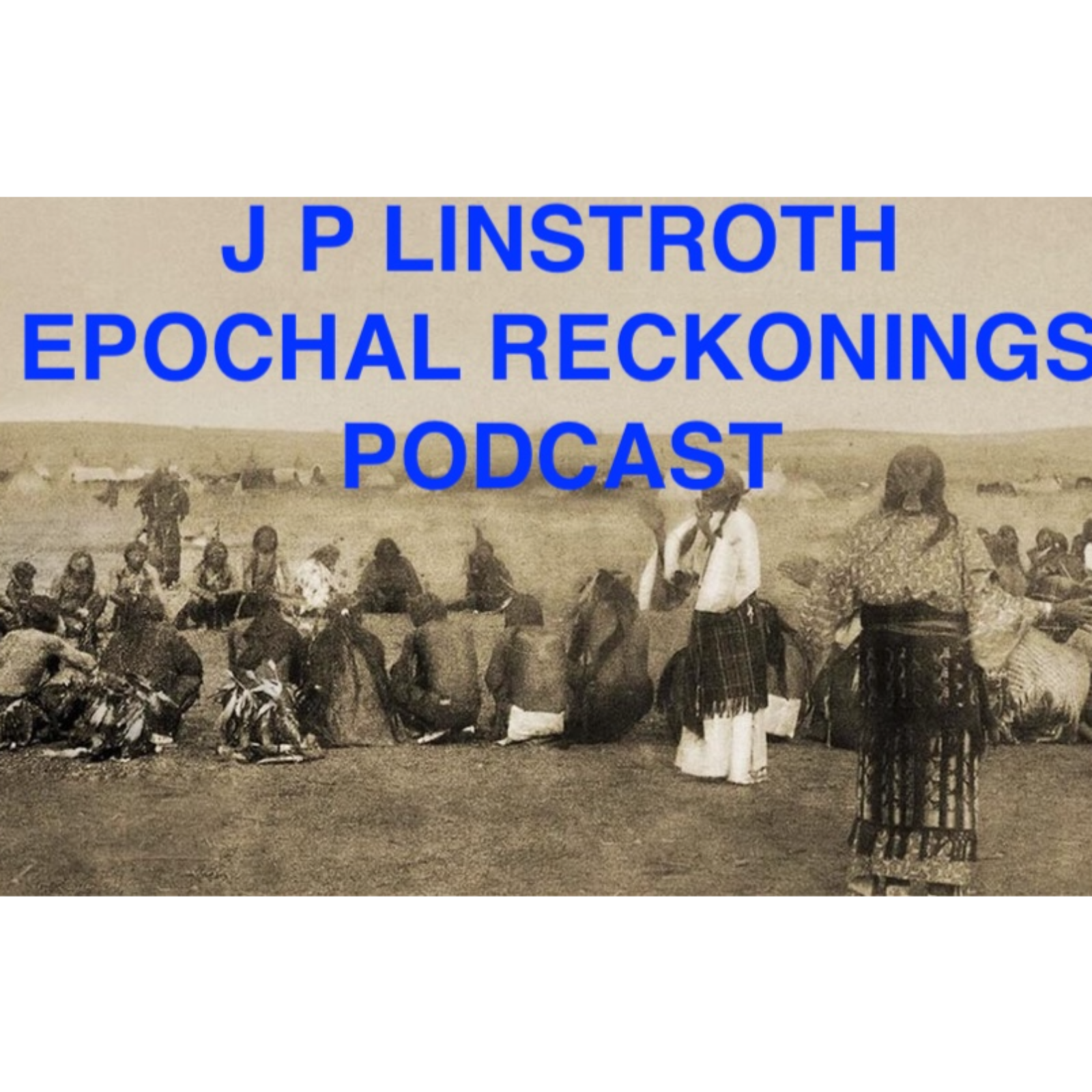
from J P LINSTROTH EPOCHAL RECKONINGS PODCAST
It may sound patently absurd to discuss a “re-Indigenization” of society. Yet, I (J. P. Linstroth) argue not only is it practical but necessary if humanity is to survive into this century and beyond. Humans, for most of their history, lived as hunter-gatherers, for about the first 290,000 years or so. It is only in the last ten to fifteen thousand years from the “Agricultural Revolution or Neolithic Revolution”, did we begin domesticating animals and plants, and thus began so-called “civilization” with writing, hierarchies, state systems, endemic warfare, and worst of all, slavery. In fact, most of us do not even think about this pre-history. We simply “are” in the world today—a globe we inherited from our collective human shift of moving away from hunting and gathering to a world of domesticating the natural environment. If we are to legitimately address a history of these inequalities and their historical consequences, “environmental destruction”, “genocide”, “racism”, “systemic warfare”, “human exploitation”, and “state system oppression”, we must begin by examining if progress means a continuation on our present path toward self-destruction. In part, I address some of the effects of these colossal man-made calamities in my new book, Epochal Reckonings (2020, Co-Winner of the Proverse Prize)—a poetic guide to some of our 21st century crises. As a society we need to think beyond technological progress and using the planet as an unending natural resource. Here is how in my humble opinion. 1) Accept human beings as part of Earth, and not apart from it, and by this acceptance, accept our dependence upon it; 2) Accept Earth as a living being, the Gaia theory. And if we are to take care of ourselves, we need to take care of the Earth too and become its guardians. We need to love the Earth and respect it as much as indigenous peoples everywhere do; 3) Being grateful for our being on this planet and not endlessly destroying it and polluting it is a good beginning which has been around for a while in ecological consciousness circles; 4) Instead of putting resources into warfare, put resources into renewable energies and into solving malnutrition and poverty in sustainable ways. Make farming more sustainable too instead of a form of factory production and endless soil depletion; 5) Allow indigenous peoples to have “more voice” with first-world nations (Europe, United States, Japan, Canada, Australia, New Zealand and powerful states as China and Russia) in United Nations forums and such environmental decision-making as the Paris Agreement of 2015; 6) Protect indigenous peoples and their rights and allow for indigenous parks and reserves to remain and to be expanded upon by protecting larger tracts of land, instead of developing and exploiting natural resources on indigenous lands for industrial farming, mining interests, oil extraction, electric dams, lumbering, and ranching; 7) Make the “re-indigenization” project official in international law and international treaties, and along with other international laws concerning indigenous peoples (e.g. ILO Convention Number 169 of 1989 and the 2007 UNDRIP, United Nations Declaration on the Rights of Indigenous Peoples). Make all nation states adhere to such a project if possible; 8) Create more public awareness through more education programs through universities, and above all, create an ecological consciousness understood from indigenous perspectives and in their own voices; 9) Remember scientists believe we are entering the sixth extinction phase on the planet and we must prevent this by all productive means necessary; 10) And finally, allow more indigenous peoples to be spokespeople and to become planetary ambassadors for realizing such a re-indigenization project before it is too late.
NOW PLAYING
WHY A RE-INDIGENIZATION OF SOCIETY MAKES SENSE
No transcript for this episode yet
Similar Episodes
Mar 26, 2026 ·1m
Jan 2, 2026 ·47m
Dec 21, 2025 ·46m