
EPISODE · Jun 30, 2026 · 7 MIN
Why couldn't I believe a kind man loved me?
from Divorced me Podcast · host Missy Rönsch
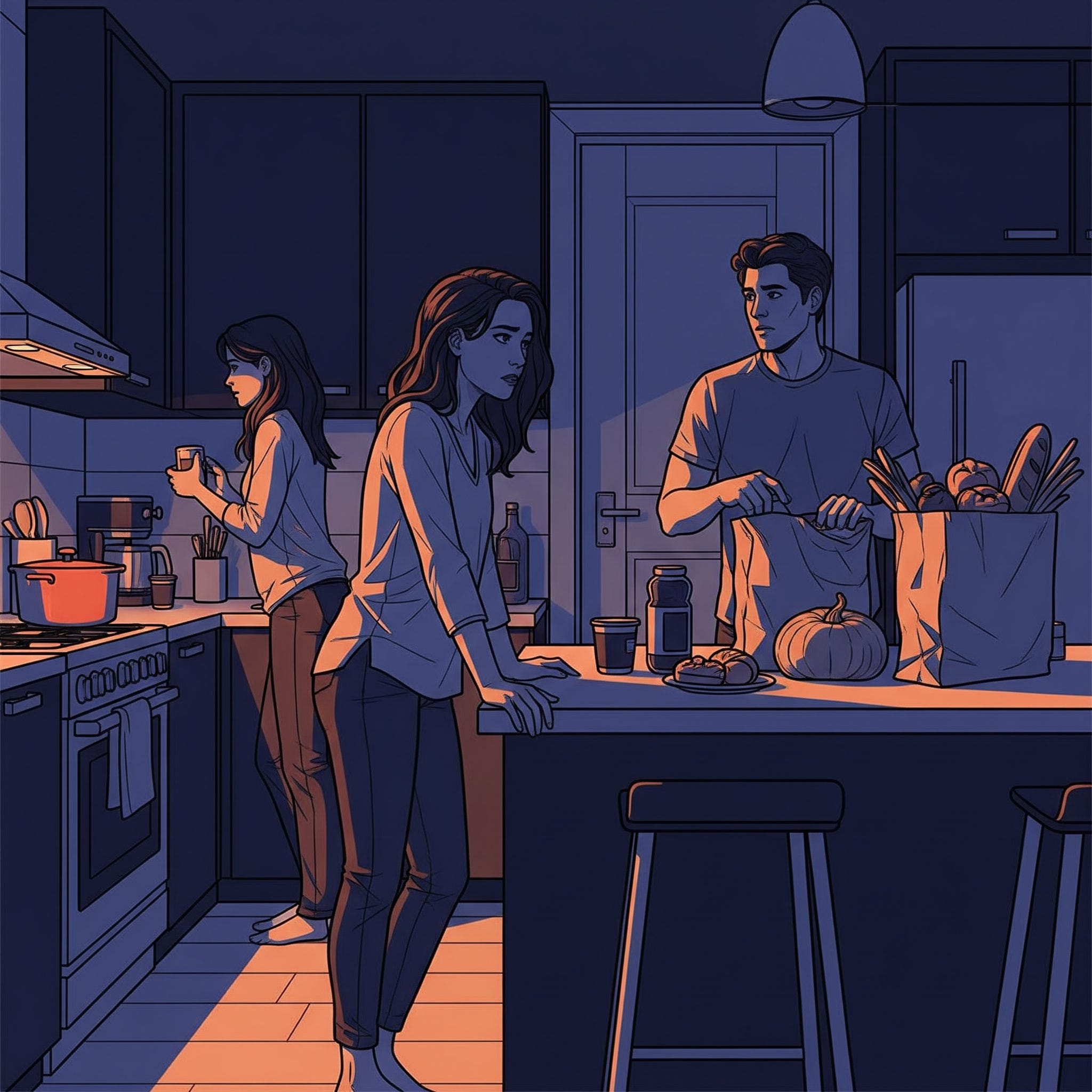
[From my diary]February, 23d 2022I will never believe that such a beautiful man can love me. I am seeking for deviations in him, for some pervertedness that would explain his interest in a freak like me: a socially awkward, unsexy, fake nerd without any girlfriend skills. I can never believe I deserve someone who will not abuse me. To compensate for the dissonance — me dating a handsome kind man — I invent his abuses, like dirty mugs and forgotten grocery lists ...When you are certain you do not deserve to be loved well, a kind partner does not feel like relief — he feels like a contradiction. The mind resolves contradictions, and it is far easier to find fault in one person than to overturn a lifelong belief about yourself. So you go looking for his cruelty, and when you cannot find it, you invent it — small, deniable, the size of a dirty mug — until the relationship finally matches the story you already believed.Let’s talk about the science behind this phenomenon.A contradiction the mind cannot solveI named the mechanism myself, inside the entry: to compensate for the dissonance. The dissonance was between two things I could not hold at once — that I was, in my own description, a freak who deserved to be hurt, and that a kind and beautiful man had chosen me anyway. Both could not be true.Illustration provided by Supportive StrangerI learned about the cognitive dissonance theory while doing my PhD in media studies, but the theory goes far beyond media research and extends to routine life attitudes. What I remember about it, is that existing attitudes are very difficult to change, unless there is some physical threat to you. What else does the science say on the subject? Leon Festinger, who gave cognitive dissonance its name in 1957, observed that the discomfort of holding two contradictory beliefs pushes us to resolve it, and that we almost always change whichever belief is cheaper to change. Overturning a conviction about my own worth, built over years, was expensive. Rewriting one man was cheap. So the man was the one who had to give in.Searching for confirmation, as easy as it goesI blamed him for forgetting his sun glasses next to the couch, saying, I could have stepped into them and cut my foot (at home, I often run around without my glasses, bump into things, and then complain about the chaos). That was also the clever Elsie talking inside myself, but that’s worth another post. I knew from the media studies that confirmation biases make us search for facts aligning with our existing believes in the media reports, but we do the same thing with our personal experiences, unrelated to media consumption.The psychologist William Swann calls this self-verification: the pull to seek out experiences that confirm what we already believe about ourselves, even when the belief is unkind. In his studies, people with negative self-views often preferred feedback that agreed with those views over warmer feedback that did not — because being seen accurately, even harshly, feels more stable than being seen well and waiting for the correction. A man who treats you gently while you are braced for the catch does not feel safe. He feels like a trap.On dirty mugs ruining our marriagesTo be honest, dirty mugs should have been in quotes, as I only used them as an example of a “small thing like this” that has a bigger impact than you can expect.In one of my previous posts, I complained that my ex husband took over all household tasks, making me feel small. Well, I was not quite honest with myself, forgetting to mention that I made a big drama a few times when he did not start the washing machine or forgot to put my tea pot into the dish washer. Apart from the cognitive dissonance theory and self-verification, another explanation of my actions seems plausible in the aftermath. Sandra Murray and her colleagues described the same pattern in their work on what they called risk regulation. People who doubt their own worth tend to underestimate how much their partners actually love them, and when closeness leaves them feeling exposed, they protect themselves by finding fault — devaluing the partner and the relationship before either can do the hurting. The fault does not have to be real, or large. It only has to be enough to justify keeping a little distance. A dirty mug is not evidence of his cruelty. It is evidence of me, preparing myself for it.What it doesn’t meanI was not scanning him for danger because he was dangerous. Neither didn’t he have his own “dark sides”: here, I am only talking of what I have invented about him, because I was scanning him since his goodness did not match the verdict I already carried about myself, and I needed to find the justification for the verdict to stay right.Illustration provided by Supportive StrangerThe conviction that one does not deserve to be loved without being hurt is almost always learned somewhere, long before the kind man arrives. It is information about what came before, not a measurement of worth — and deserve may be the wrong word entirely. Nobody earns gentleness by being good enough for it. It is simply how some people treat the people they love, and being on the receiving end of it is allowed, even when it does not yet feel believable. And I know very well where this pattern of distrust is coming from: from where I learned all other things in my life, from my own family. But that is worth another publication that I am currently planning. I write these reflections while building Supportive Stranger, a small iOS app for journaling through the moments when the kindness seems undeserved and you are torn between contradictions.Thanks for reading Divorced me! Subscribe for free to receive new posts and support my work. This is a public episode. If you would like to discuss this with other subscribers or get access to bonus episodes, visit divorcedme.substack.com
Embed this episode
Ready to play
Why couldn't I believe a kind man loved me?
No transcript for this episode yet
Similar Episodes
No similar episodes found.
Similar Podcasts
No similar podcasts found.