
EPISODE · Aug 18, 2026 · 7 MIN
Why did we try so hard to look like the couple that would last?
from Divorced me Podcast · host Missy Rönsch
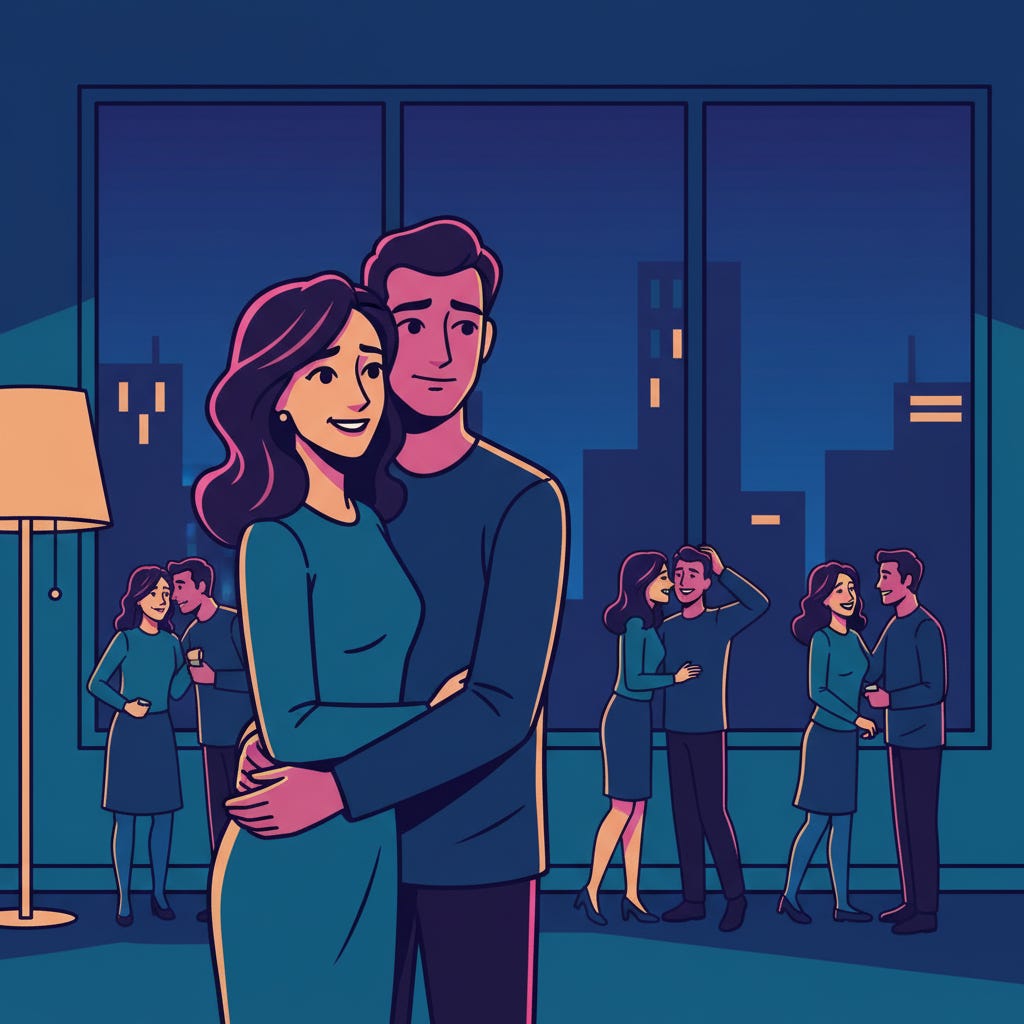
[From my diary]August, the 8th 2023I felt like in competition with other couples, wanting us to be better. I think my ex-husband felt the same urge. Maybe, it came from our own families where first marriages ended nightmarish. Many of his friends came together or even got married at the same time as we did. Many broke quickly enough, some much faster than we did. Each time we met with those couples, we tried to show how special we were. It was something subtle, like a kiss, or a detail about our daily routine that made us "stand out". It did not save us, indeed.The wish to have the best relationship in the room usually comes from insecurity, even when it feels like the opposite. We competed with the couples around us. A kiss at the right moment, some detail about our life mentioned so the others would notice it, and I took all of it as a sign we were doing well. The research mostly disagrees: people who keep measuring their relationship against other people's tend to be the least secure about it. We had our reasons. Both of us grew up in families where the first marriages fell apart, and at some point not repeating that became a full-time job. It changed nothing, and I have come to think the effort was part of what went wrong. All that energy went toward other people. Very little of it was left for us.The best couple in the roomAlmost everyone thinks their own relationship is a little better than other people’s. That is normal, and mostly harmless. Bram Buunk, who has spent years studying how couples size themselves up against other couples, found the belief is nearly universal; one of his papers is titled, roughly, most relationships are good, but ours is the best. A private sense that yours is the good one helps people stay committed. There is nothing wrong with having it.The illustration has been kindly provided by Supportive StrangerWe went further than that. We did not just think it, we kept score, and we wanted to win. That is the part the research treats less kindly. People who compare their relationship to other people’s a lot, who reach for other couples as a measuring stick again and again, tend to be more insecure rather than less, and the habit tends to lower commitment over time instead of raising it. At the time the scorekeeping felt like confidence. Looking back, it was closer to worry.The families we came fromThe drabble points at the families we came from, and it is right to. Both of us grew up watching a first marriage fall apart, and in both cases it was bad. That matters more than it might seem. It is one of the most consistent findings in the research on divorce: if your parents divorced, your own marriage is roughly twice as likely to end the same way, and the risk is higher still when both partners bring that history, which we both did. Paul Amato, who has studied this for decades, has said it is about as well established as anything in social science.What passes down is not really a curse. It is more like a shortage of confidence, a learned sense that marriages come apart, even ones that look fine from outside. Amato found something strange here: the effect was strongest when the parents’ marriage had been fairly calm before it ended, the kind that looked okay until it suddenly was not. Two people raised on that arrive at their own wedding already tense. The tension has to go somewhere, and for us it went into proving. If we could be clearly better than everyone else, maybe we would be the ones who made it. We thought we were competing with the other couples. Really we were still arguing with our parents.A kiss, for an audienceThe shape it took is the part I least like remembering. A kiss. A comment about our routine — some ordinary thing we did that I made sound special — mentioned so the other couple would catch it. Small, and staged.Half of that kiss was for the room. Only half was actually ours. That is the problem with performing a relationship: the work goes to the people watching, and not to the marriage. We put our best attention into people whose opinion could never keep us together, and we spent it in the settings where we were relaxed and off duty, where it could have gone to each other instead. Most of those couples were breaking up anyway. Some sooner than we did.What it doesn’t meanNone of this means there was nothing real between us. In some ways we probably were good together, and the specialness we kept advertising may have had something true underneath it. Feeling it was never the problem. The problem was that we could not stop performing it, and over time the performance wore away the thing it was meant to show.The illustration has been kindly provided by Supportive StrangerIt also does not mean our families sentenced us to this. Twice the odds is still only odds. Plenty of people who grew up around divorce go on to build marriages that last, usually by deciding to trust what they have instead of testing it over and over. What we inherited was not the divorce itself but a nervousness about marriage, a habit of treating ours as something to win instead of somewhere to live.The performance did not fail because we did it badly. It failed because that is what performing does. Whatever holds a marriage together sits underneath all of it, out of sight, in how two people are with each other when nobody is around to be impressed. We put almost nothing there. That is why the kisses and the scorekeeping never amounted to anything. They were aimed at the wrong audience the whole time.I write these reflections while building Supportive Stranger, a small iOS app for the parts of a relationship that no one can see, except for yourself.Thanks for reading Divorced me! Subscribe for free to receive new posts and support my work. This is a public episode. If you would like to discuss this with other subscribers or get access to bonus episodes, visit divorcedme.substack.com
Embed this episode
Ready to play
Why did we try so hard to look like the couple that would last?
No transcript for this episode yet
Similar Episodes
No similar episodes found.
Similar Podcasts
No similar podcasts found.