
EPISODE · Jul 16, 2025 · 15 MIN
Why Do So Many Parents Love Politicians More Than Their Own Children?
from Walter Rhein Podcast · host Walter Rhein
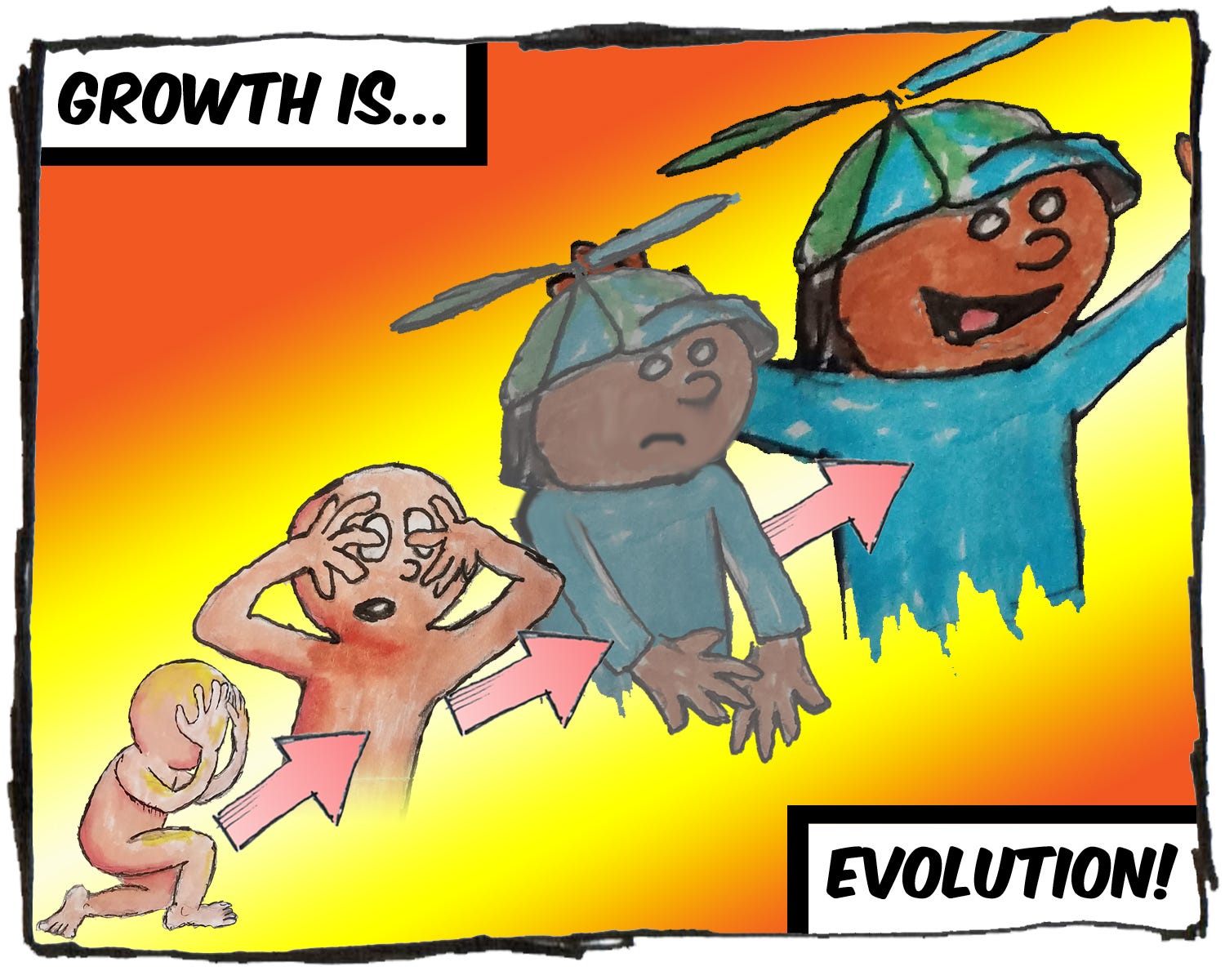
Your tips are greatly appreciated! Upgrade at 30% offIt's becoming more and more common for children to make the tough decision to go no contact with their parents. I feel this trend is a symptom of a larger source of division within American culture.There is an overwhelming lack of effective communication at work today. It's unfortunate that this divide manifests both as a general ideological clash in our society, and with the ending of relationships that have endured for many years.People are walking away from each other. These are individuals who have lived together, who grew up together, who are joined by shared experiences, and who probably still love each other very deeply.Yet we've come to a point where people are so unwilling to communicate or reevaluate their decisions that they will throw away longstanding connections out of a misplaced loyalty to disconnected beliefs.It's tragic.I often see this narrative framed in a way where parents are frustrated with their children for being angry over who the parent choses to vote for. Today a reader commented, “It's foolish to break a relationship with your family over politics.”But that blade cut both ways.Who is really severing the connection? Isn't it the case that both parties are participating? We rarely give equal consideration to the idea that the parent who insists on voting for a hostile candidate is the one who is truly guilty of ending a relationship because of politics.Ultimately, they chose the politician over their children.The fact is that we live in a society where the Republican party is actively working to deprive immigrants, minorities, and the LGBTQ+ community of their basic human rights. The Republicans indulge in hate rhetoric and calls to violence.Republicans are actively working to make the world more dangerous for everyone. They restrict voting rights, and even work to prevent low-income children from having access to school lunch programs.What in their ideology compels parents to give up on their relationship with their own children?Within that context, it's kind of bizarre that it’s often the parents who feel aggrieved when their children decide to go no contact. Furthermore, there's a larger social narrative that casts blame on the children instead of encouraging accountability for the adults.The longstanding belief in the United States seems to be that people don't have a right to end toxic relationships no matter how much abuse they've endured. This is not a healthy, moral, or sustainable ideology.Too often, individuals who are not directly involved in the conflict will assume that both parties share blame, or they will blame the kids. This leads to even more unfair social pressure for the child to accede to the demands of the parent.“You guys need to sit together and talk it out.”But this proposal is deceitful too. What our society fails to acknowledge is that by the time the kids decide to go no contact, it's likely because they've exhausted every other tactic. If you're in a relationship with somebody who stubbornly refuses to recognize your viewpoint, you can't solve the issue through conversation.I do want to acknowledge that there are cases where kids go no contact unfairly. In my experience, the way to determine who is at fault is to observe which party is unwilling to practice accountability. I'm at a point in my life where I've apologized and received apologies from everyone who is still in my sphere. The people who are gone are the ones who never recognized they played a part in any disagreement.Today, we're seeing more kids choosing to go no contact because their parents stubbornly refuse to make political choices that will help their children's future. I believe that's a fair and legitimate reason to go no contact.If you are in a same-sex marriage and your parents vote for candidates who cultivate hostility against the LGBTQ+ community, your parents are actively working to cause you harm. This applies to people who support policies that cause enduring trauma to women, immigrants, the Black community, and other groups.The United States has entered into a new era of anti-humanitarianism. Sooner or later, the consequences of the reckless choices that are being made today will come back to harm us all.It all starts with accountability.You reap what you sow.We don't have any obligation to sit around and pretend harm isn’t being done because people in our lives are too stubborn and entitled to respectfully listen to our concerns.The traditional relationship structure in the United States follows a toxic, patriarchal belief system. It's the “father knows best” model, where the wife and children aren't allowed to discuss any misstep of the male parent, no matter how much damage he inflicts.Instead, the long-suffering members of the family are supposed to adapt to the “rough edges” of the father out of respect and reverence for his “sacrifices.” But the sacrifices of the wife and children are never acknowledged.Isn't it obvious that, instead of a relationship based on selective perception, there should be a uniform expectation that all members must practice accountability?Instead of forcing children to disregard the pain inflicted by a parent, wouldn't it be more efficient for the parent to change his behavior?When individuals insist they have some sort of right to inflict pain on you, at some point leaving becomes a matter of self-preservation.We live in a society where a large percentage of the population absolutely refuses to acknowledge that their beliefs are causing human beings to suffer and die. Their obtuse dismissals of verifiable reality, and their irresponsible actions, are destroying the present and sabotaging the future.But when you try to bring it up, you get a stubborn refusal to engage. It's natural to arrive at the conclusion that the people who persist in causing you pain simply don't care about you.Why should you maintain a relationship with somebody who doesn’t care about you?This is a conflict that comes from people who lean into their position of authority and lecture rather than listen. Too often in the United States, authority does not practice accountability.We get caught up an unspoken agreement that we must never revisit previous conflicts that have been resolved. The problem is that many of those resolutions were made when one of the parties was at a disadvantage of power.For example, perhaps there was an incident when a parent physically hurt you and then apologized.You might have determined that the aggression was inadvertent and it was something you could forgive. But you shouldn't consider that case closed if the abuses continue. In the context of a revaluation of prior resolutions, a new perception of reckless behavior might emerge.Reevaluating old resolutions can make somebody hostile because they perceive it as an attack. They act as if you're violating the rules of your unspoken agreement.“Why are you coming after me again? We had that settled. Why can't you let it go?”The thing is, the secret to growing into your power as a human being lies in constantly reevaluating your life. It's a process of self-reflection. It's a process of maturation. As you get more experience, you gain a new understanding of your past.We should never be expected to lock up past traumas and throw away the key. Why don't they want us to reexamine those? What are they trying to hide? What do they fear we might discover?In some cases, yes, it is possible to take circumstantial evidence and create a false narrative of abuse. But that's not universal. In other cases, repeated evaluation illuminates a perspective that was deliberately obscured.I've often reflected on all the times my own father caused me physical pain. He slammed on the brakes and smashed my face into a dashboard. He slammed my fingers in a car door. He dropped me face first into a river and I had to get my eyes cleaned out at the hospital.These were all these moments where I was bloodied and hurt. His position is that I must forgive them all. I was pressured to forgive them as they happened, but it's impossible to erase the additional evidence of reoccurring behavior.Today, I have further evidence as a parent. I never once slammed my daughter’s fingers in a car door. I didn’t subject them to any of the abuses I had to endure.I was careful.I couldn’t bear the thought of hurting them.I know from my mature experience that it is possible to make the choice to prevent your kids from having to endure that type of pain.So, I can't help but conclude that what I had to endure was a result of my father’s choice.Maybe he wasn't consciously aware that's what he was doing, but he did persist in a reckless approach to life that yielded pain as a consequence. He could have made the decision to act with greater care, but he didn’t.When I tried to talk to him about this, he insisted that these moments were “accidents” and that I shouldn't hold it against him. He said I was being “unfair.”Still, without an example of accountability, can I trust him to be in the presence of my daughters? If he refuses to entertain the idea that these abuses were preventable, isn't it only a matter of time until he hurts my children too?I can't allow that.We have to evaluate our society from that perspective as well. There have been many acts throughout the history of this country that have caused unspeakable damage. Yet, we haven't acknowledged those mistakes with the level of responsibility to ensure they will not happen again.So, the cycle continues.We have a cultural ideology that's based on agreements that were made in the past. Today, those moments of “resolved conflict” are considered off-limits when it comes to discussion. One example is the idea of socialism. That's a non-starter in our society today. People put their foot down and insist that's been decided and that nothing positive can come from that line of thinking.But this argument is the basis of ending programs that might help feed hungry children and alleviate other forms of human suffering.As our society continues to fail to meet the needs of the population, and as we continue to use the same tactics that have repeatedly proven to be ineffective, it becomes prudent to reevaluate some of our basic beliefs.Again, life is a process of evolution. With the benefit of further experience, further maturity, and further power, we gain a better perspective of conflicts we assumed were resolved. As we age, we gather more evidence. This knowledge helps us better understand our past.We shouldn't be afraid to reopen old conflicts and see how they appear within the context of greater maturity. If we had good advisors and we made the right decision, our additional power should only confirm our original conclusions.But if we were wrong, or our assessment lacked critical nuance, we might find the key to unlocking future conflicts.If we practice this inquiry on a grand social scale, we might discover the solutions to issues which have inflicted pain on human beings throughout all of history.Don’t the potential rewards justify the effort of the labor?It seems to me that the only reason people wouldn’t want you looking back is because they pressured you into accepting a deceit.These deceits continue to inflict damage. That’s why we can’t afford to assume everything’s been resolved and we can never reflect on past conflict.The more we learn about human society and our ability to interact with the world, the more we recognize our crude models that represented breakthroughs of the past are no longer relevant today.We have more information. We have more understanding. We have better tools. We shouldn't feel beholden to outdated assessments constructed from insufficient data.Today, we have the power to get a more accurate reading on the world. It would be foolish not to. What we believed were danger zones of the past are no longer dangerous now because we are equipped to handle them. The evolution of the species continues. Part of the problem is that there are those even today who will deny the concept of evolution itself. They don’t want to talk about it. It’s a non-starter for them.Why should we allow people such as these to operate like an anchor on the progress of the entire human race?“I don't want to talk about that.”Yes, it takes extra work to reopen old wounds and reevaluate our assessments. But that effort is an investment, and it's the means of harvesting the keys to a more prosperous and humanitarian future.There's a lot of frustration because people are fully aware that our society isn't working for us. Human beings are abused and tortured. Children are forced to endure terrible agony. Even able-bodied women and men are struggling to survive.People are in pain.Yet, rather than do anything about it, there are some who are quite content to cut off any possible discussion about the subject. This results in a level of division both on the interpersonal and the national level. We fight with our families.We fight with our political rivals.We refuse to recognize we all want the same thing.This conflict derives from an impulse to maintain a stubborn loyalty to disproven interpretations. It’s a consequence of laziness. It’s an abandonment of the fundamental human need to be inquisitive.“That’s been resolved. Don’t bring it up again. Drop it!”It represents an abuse of power when authority figures try to bludgeon you into silence and subservience rather than participate in the quest for mutual advancement. We all need to adapt and constantly revise our behavior for the betterment of our individual relationships and for the betterment of the human race.An unexamined life is not worth living. That’s why so many people are going no-contact.People who don't practice accountability don’t want a relationship, they only want obedience.Thank you for listening! This publication is reader sponsored. Your support means the world to me. Thank you for being here, and I look forward to sharing more thoughts with you tomorrow!Upgrade at 30% offUpgrade at 40% offUpgrade at 50% offUpgrade at 60% offTwenty dollars a yearMy CoSchedule referral linkHere’s my referral link to my preferred headline analyzer tool. If you sign up through this, it’s another way to support this newsletter (thank you).I'd Rather Be Writing is a reader-supported publication. To receive new posts and support my work, consider becoming a free or paid subscriber. Get full access to I'd Rather Be Writing at walterrhein.substack.com/subscribe
NOW PLAYING
Why Do So Many Parents Love Politicians More Than Their Own Children?
No transcript for this episode yet
Similar Episodes
Mar 26, 2026 ·1m
Jan 2, 2026 ·47m
Dec 21, 2025 ·46m