
EPISODE · Jul 7, 2026 · 21 MIN
Why Liver Disease Makes Patients Bleed AND Clot
from Healthy Skin Life · host Brooke Wallace
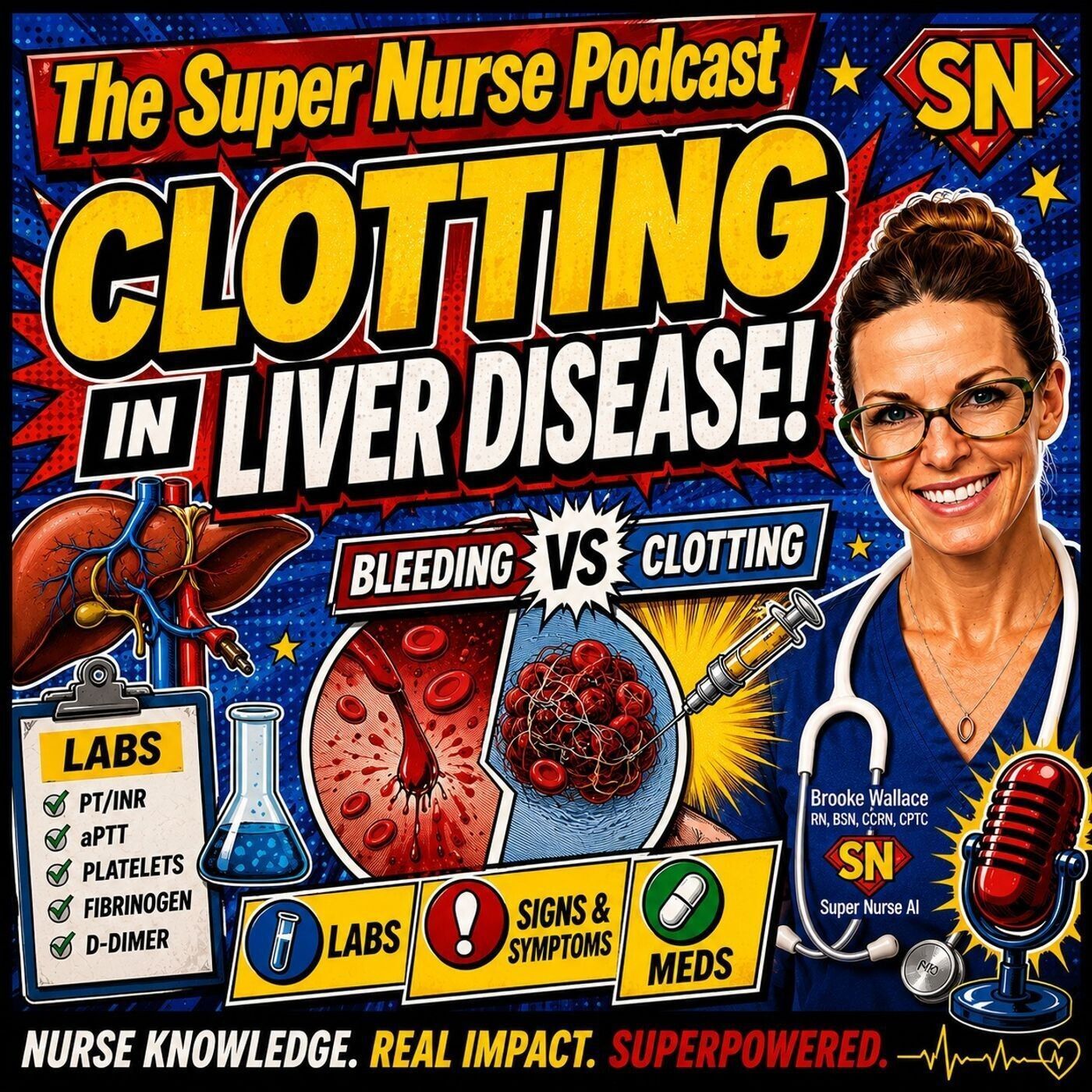
This episode focuses on the liver’s role in coagulation and why liver disease creates such a dangerous clinical paradox. We begin by clarifying the difference between liver injury labs, such as AST and ALT, and true liver function markers, such as albumin and PT/INR. From there, we explore how the liver produces clotting factors, why Factor VII affects INR early, and how low platelets develop through decreased thrombopoietin and splenic sequestration from portal hypertension. 👉 Visual Learner? Watch the video https://youtu.be/Y5vAoE8ivck The discussion then moves into rebalanced hemostasis, the idea that liver patients lose both pro-clotting and anti-clotting factors, making them vulnerable to both hemorrhage and thrombosis. We cover bedside warning signs including bruising, oozing IV sites, bleeding gums, melena, coffee-ground emesis, and bright red hematemesis from ruptured esophageal varices. The episode also explains how a GI bleed can trigger hepatic encephalopathy through ammonia buildup and why lactulose helps trap and remove ammonia from the gut. Finally, we compare decompensated liver failure with disseminated intravascular coagulation, or DIC, and explain why Factor VIII can help distinguish between the two. We wrap up with the limitations of PT/INR in liver disease and introduce thromboelastography, or TEG, as a more dynamic way to assess real-time clot formation and breakdown. What This Episode Is About: Why liver disease can cause both bleeding and clotting The difference between liver injury and liver function Why AST and ALT are not true “liver function tests” How albumin and PT/INR reflect liver synthetic function The liver’s role in producing clotting factors Why Factor VII affects PT/INR early in liver injury Rebalanced hemostasis in cirrhosis and liver failure Why a high INR does not tell the full bleeding-risk story How thrombocytopenia develops in severe liver disease The role of thrombopoietin, portal hypertension, and splenic sequestration Why esophageal varices can cause life-threatening bleeding Bedside signs of GI bleeding nurses should monitor How GI bleeding can trigger hepatic encephalopathy How lactulose helps remove ammonia from the body DIC vs liver failure and why the labs can look similar Why Factor VIII is an important clue in distinguishing DIC from liver failure How TEG may provide a better picture of clotting status than INR alone Timestamps: 00:00 — Opening: The “sea of red” labs in liver disease 01:05 — Why liver disease creates information overload at the bedside 01:55 — The biggest misconception about “liver function tests” 02:45 — AST and ALT explained: liver injury, not liver function 04:05 — Why AST and ALT can look normal in end-stage cirrhosis 05:15 — True liver function markers: albumin and PT/INR 06:20 — How the liver controls the coagulation cascade 07:15 — Vitamin K–dependent clotting factors and Factor VII 08:20 — Bedside bleeding signs: bruising, oozing IV sites, and bleeding gums 09:30 — Bleeding precautions nurses should implement 10:10 — The liver clotting paradox: bleeding and clotting at the same time 11:20 — Rebalanced hemostasis explained 12:30 — Why cirrhosis creates a fragile clotting balance 13:20 — Thrombocytopenia, thrombopoietin, and low platelet production 14:25 — Portal hypertension and splenic sequestration of platelets 15:35 — Esophageal varices: when portal hypertension becomes an emergency 16:45 — GI bleed warning signs: melena, coffee-ground emesis, and hematemesis 17:35 — How GI bleeding can trigger hepatic encephalopathy 18:30 — Ammonia buildup, asterixis, and early neuro assessment clues 19:20 — Lactulose explained: trapping and flushing ammonia 20:05 — DIC vs decompensated liver failure 20:45 — Factor VIII: the key clue that separates DIC from liver failure 21:10 — Why INR may not tell the full bleeding-risk story 21:27 — Final takeaway: liver disease is a fragile clotting balance Want to reach out? Send an email to [email protected] or visit SuperNurse.ai The content presented in The Super Nurse Podcast is for educational purposes only and should not be considered medical advice. The host and creators are not responsible for any clinical decisions made based on this content. Always adhere to your institution’s policies and consult appropriate healthcare professionals when making patient care decisions. The content presented in The Super Nurse Podcast is for educational purposes only and should not be considered medical advice. The host and creators are not responsible for any clinical decisions made based on this content. Always adhere to your institution’s policies and consult appropriate healthcare professionals when making patient care decisions.
Embed this episode
What this episode covers
This episode focuses on the liver’s role in coagulation and why liver disease creates such a dangerous clinical paradox. We begin by clarifying the difference between liver injury labs, such as AST and ALT, and true liver function markers, such as albu...
NOW PLAYING
Why Liver Disease Makes Patients Bleed AND Clot
No transcript for this episode yet
Similar Episodes
Apr 17, 2026 ·13m
Similar Podcasts
No similar podcasts found.