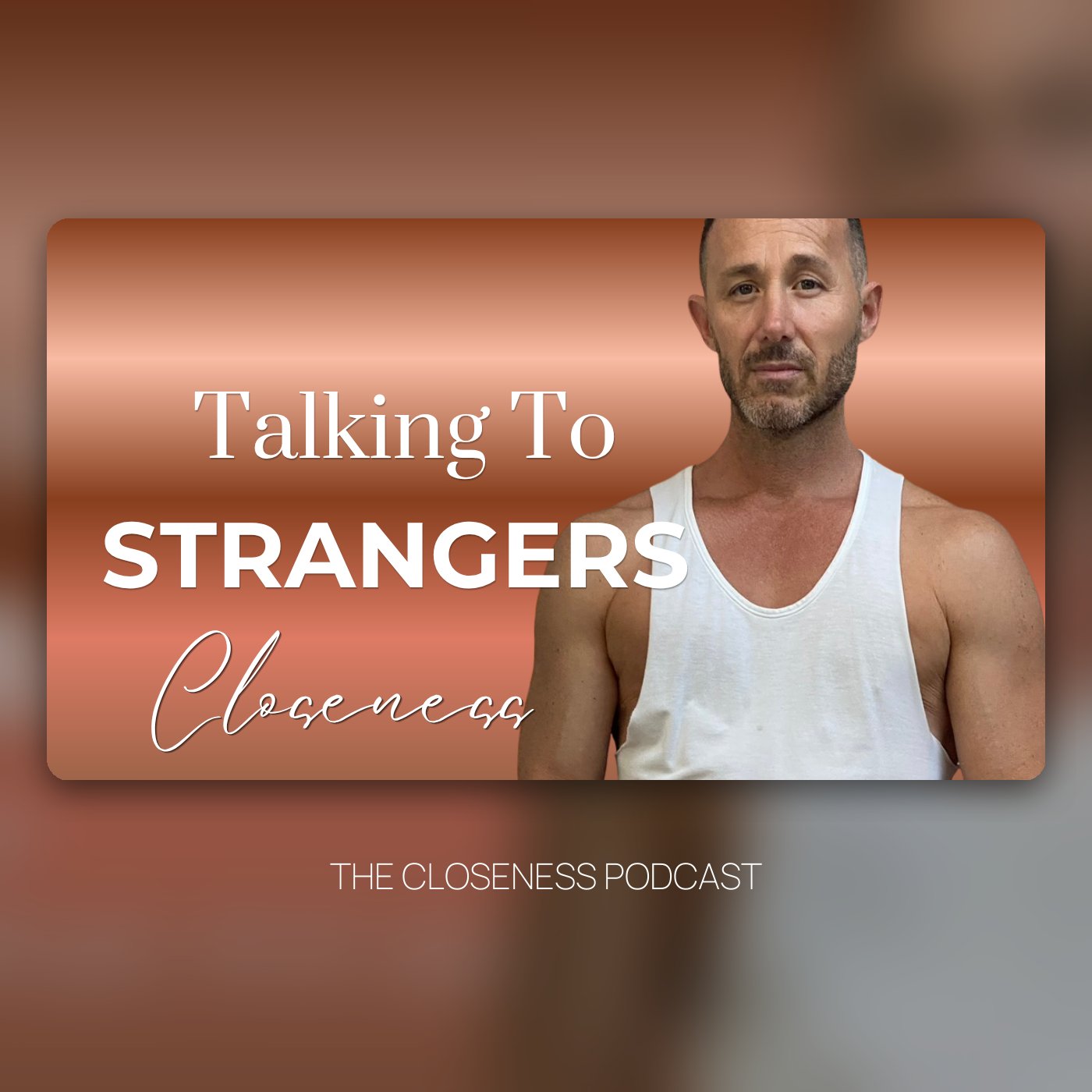
Why You Should Talk to Strangers
from Closeness Hosted by Tari
Everyone you've ever loved, slept with or called a friend was a stranger before you met them. "You don't know me. You might be a serial killer. I don't meet anyone until we've sent a hundred texts." Many of us now treat every stranger as a threat, and it shapes everything: how we date, how we walk down the street and how open we let ourselves be. In this episode I talk about the fear-based view of the world, the cold one-liners that shut a conversation down before it starts, why wanting to be seen requires letting people in, what fearful and open people look like in their bodies, why friendliness draws healthy people toward you, and the strangers who helped me across the world, from Japan to Abu Dhabi. In this episode "Stranger" sounds worse than it is. Most people mean you no harm. Defensive one-liners backfire. They make the moment more uncomfortable for you too. To be seen, let people in. Closeness requires some exposure. Your body shows your worldview. Raised shoulders and wide eyes signal fear. You get back what you put out. Friendliness attracts healthy people. Chapters 0:00Welcome 1:04"You Might Be a Serial Killer" 4:02What Makes Someone a Stranger? 9:45Cold Ways to Shut People Down 14:28Wanting to Be Seen 16:19Fearful vs. Open 18:02Communicating From Friendliness 19:07Every Friend Was a Stranger First Listen next5 Social Faux Pas That Kill Attraction (Part 1)→ Read the transcript 0:01Welcome to the Closeness podcast. The following is based on both personal experiences and wisdom, as well as personal experiences that have been contributed to us. Generalizations are sometimes made for the sake of brevity, but are never meant to exclude or offend. Regardless of your gender identity, relationship status preferences, or sexual orientation, it's our sincere hope that you can take away something positive, construct and useful from each topic explored. Let's get started. Today's topic is very unusual. We're exploring whether or not you should talk to strangers, meaning people that you don't know and whether you should refer to people who you don't know as strangers. Are we isolating ourselves, blocking ourselves off and closing down channels of communication by believing that there is us and there's them? Those who we know, those who we don't. Back when we were children, almost everyone was told not to talk to strangers. And this was one of the most powerful things we may have ever learned when it comes to social interaction because it stuck with us through most of our lives. So while it was completely useful and beneficial as a child to avoid danger and situations that we don't want to be in as adults, this thread of not wanting to speak to people whom we don't know has carried through significantly. So we're going to be exploring what all that's about. How does not talking to strangers present itself in today's world as an adult? Maybe some of this sounds familiar to you. 1:42You don't know me. 1:43You don't know anything about me. 1:46You're a stranger. I don't go over to people's houses who I don't know. I don't invite someone over to my house who I don't know. You might be a serial killer. You might be an axe murderer. Oh, I don't meet anyone in public until I'
Embed this episode
No transcript yet.