
EPISODE · Jan 11, 2026 · 3 MIN
Women in Business: Rewriting the Tech Economy From the Inside Out
from Women in Business · host Inception Point AI
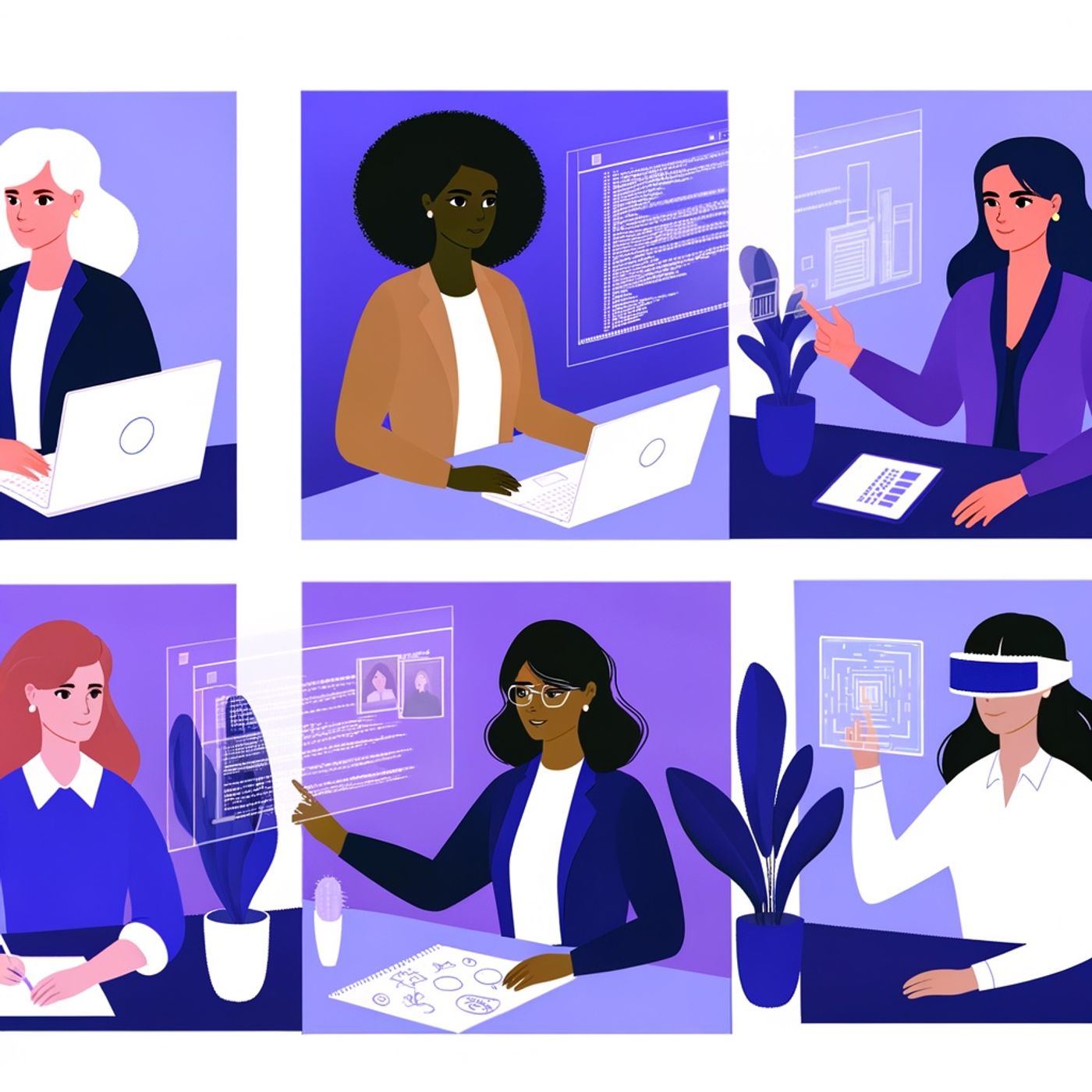
This is your Women in Business podcast. Welcome back to Women in Business. Let’s get right to it, because the economic ground under the tech industry is shifting, and women are not just reacting to it – we’re actively reshaping it. According to McKinsey’s Women in the Workplace report, women remain underrepresented at every level of leadership, yet companies with more gender-diverse leadership are consistently more profitable and more innovative. At the same time, data compiled by StrongDM shows that only about 27 to 28 percent of the global tech workforce is female, and women hold roughly 17 percent of tech CEO roles. That means many of you listening today are navigating an economic climate where budgets are tighter, expectations are higher, and the rooms where decisions are made are still mostly male. So discussion point one for us is power and representation in a cooling economy. When investment slows and layoffs loom, who gets protected and who gets pushed out? Spacelift’s 2026 Women in Tech analysis reports that women were significantly more likely to be laid off during recent tech cutbacks, even though diverse teams have been linked to better financial performance. In this environment, women leaders like Reshma Saujani at Girls Who Code and Safra Catz at Oracle are not just surviving; they’re showing that women at the helm can steer companies through volatility with a stronger focus on resilience and people. Discussion point two is the new map of opportunity: AI, cloud, and data. Women in Tech UK highlights that women are increasingly well represented in product management, UX and UI design, and accessibility-focused roles – exactly the kinds of roles that are crucial in artificial intelligence, cloud computing, and data ethics. WomenTech Network projects that women could hold around 35 percent of tech-related roles globally by 2025, with especially strong growth in quality assurance, product, and program management. That means the current economic reset is also a reallocation of power toward skills where women are already strong: systems thinking, communication, and understanding real user impact. Discussion point three is burnout, boundaries, and bargaining power. StrongDM and Spacelift both point out a hard truth: around half of women who enter tech leave by age 35, and more than half report feeling burned out, at higher rates than men. Yet remote and hybrid work, now normalized across the industry, have become powerful negotiation tools. Women are using this moment to demand flexible structures that actually work – not only for themselves, but for entire teams. Discussion point four is capital and entrepreneurship. While women still receive a smaller slice of venture funding, we’re seeing a rise in women-led funds and angel networks backing founders like Whitney Wolfe Herd at Bumble and Anne Wojcicki at 23andMe. In a tighter funding climate, investors are increasingly drawn to sustainable, revenue-driven businesses – the very styl This content was created in partnership and with the help of Artificial Intelligence AI.
Embed this episode
NOW PLAYING
Women in Business: Rewriting the Tech Economy From the Inside Out
No transcript for this episode yet
Similar Episodes
No similar episodes found.
Similar Podcasts
No similar podcasts found.