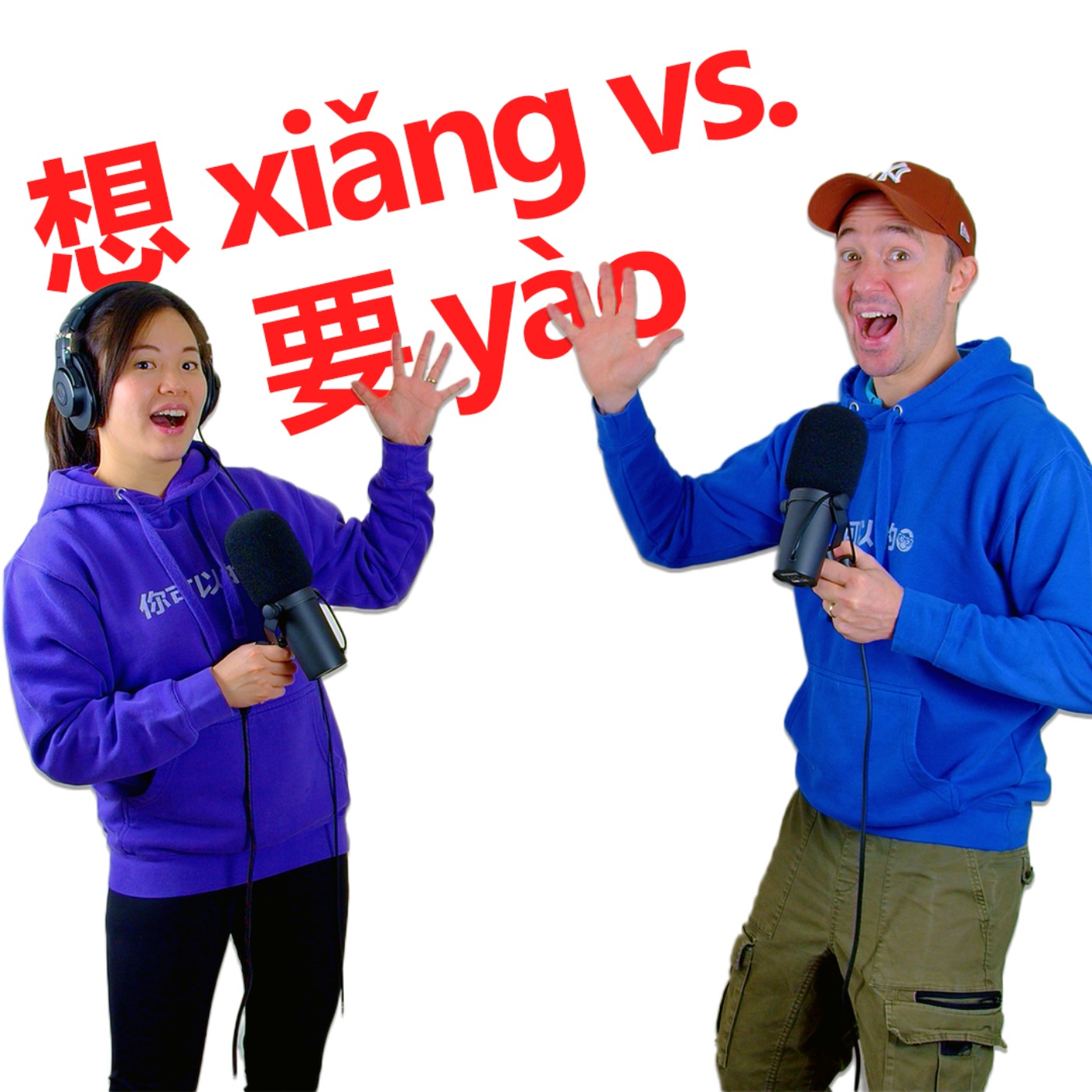
想 xiǎng vs. 要 yào | Confusion Mandarin & English words | Mandarin Monkey Podcast episode artwork

EPISODE · Jan 31, 2025 · 55 MIN

想 xiǎng vs. 要 yào | Confusion Mandarin & English words | Mandarin Monkey Podcast

from Mandarin Monkey Podcast

Ula and Tom speak about some confusing Mandarin and English words. All in Mandarin and English (Chinglish) for your listening pleasure.Mandarin Lessonswww.mandarinmonkey.com帶 (dài) vs. 戴 (dài)帶 (dài): to bring/carry (請帶你的護照。Qǐng dài nǐ de hùzhào. – Please bring your passport.)戴 (dài): to wear (accessories) (她戴了一條項鍊。Tā dài le yī tiáo xiàngliàn. – She wore a necklace.)買 (mǎi) vs. 賣 (mài)買 (mǎi): to buy (我買了一本書。Wǒ mǎi le yī běn shū. – I bought a book.)賣 (mài): to sell (這家店賣衣服。Zhè jiā diàn mài yīfú. – This store sells clothes.)見 (jiàn) vs. 見面 (jiànmiàn)見 (jiàn): to see (我昨天見到了他。Wǒ zuótiān jiàn dào le tā. – I saw him yesterday.)見面 (jiànmiàn): to meet (我們下週見面。Wǒmen xià zhōu jiànmiàn. – We will meet next week.)聽 (tīng) vs. 停 (tíng)聽 (tīng): to listen (請聽我說。Qǐng tīng wǒ shuō. – Please listen to me.)停 (tíng): to stop (請停車。Qǐng tíngchē. – Please stop the car.)還 (hái) vs. 還 (huán)還 (hái): still/yet (我還沒吃飯。Wǒ hái méi chīfàn. – I haven’t eaten yet.)還 (huán): to return something (請還我書。Qǐng huán wǒ shū. – Please return my book.)做 (zuò) vs. 作 (zuò)做 (zuò): to do/make (我要做飯。Wǒ yào zuò fàn. – I am going to cook.)作 (zuò): to act as or create (這是他的作品。Zhè shì tā de zuòpǐn. – This is his work.)借 (jiè) vs. 接 (jiē)借 (jiè): to borrow/lend (我可以借你的筆嗎?Wǒ kěyǐ jiè nǐ de bǐ ma? – Can I borrow your pen?)接 (jiē): to pick up (phone/person) or receive (我要去機場接他。Wǒ yào qù jīchǎng jiē tā. – I am going to the airport to pick him up.)試 (shì) vs. 是 (shì)試 (shì): to try (請試試這個。Qǐng shì shì zhège. – Please try this.)是 (shì): to be (我是老師。Wǒ shì lǎoshī. – I am a teacher.)借 (jiè) vs. 還 (huán)借 (jiè): to borrow (他借了我的書。Tā jiè le wǒ de shū. – He borrowed my book.)還 (huán): to return (請還我書。Qǐng huán wǒ shū. – Please return my book.)光 (guāng) vs. 亮 (liàng)光 (guāng): light (陽光很好。Yángguāng hěn hǎo. – The sunlight is nice.)亮 (liàng): bright (這盞燈很亮。Zhè zhǎn dēng hěn liàng. – This lamp is very bright.)換 (huàn) vs. 變 (biàn)換 (huàn): to exchange/change (我要換錢。Wǒ yào huàn qián. – I need to exchange money.)變 (biàn): to transform (他變了很多。Tā biàn le hěn duō. – He has changed a lot.)想 (xiǎng) vs. 要 (yào)想 (xiǎng): to think or miss someone (我想你。Wǒ xiǎng nǐ. – I miss you.)要 (yào): to want or need (我要喝水。Wǒ yào hē shuǐ. – I want to drink water.)近 (jìn) vs. 進 (jìn)近 (jìn): near (我家很近。Wǒ jiā hěn jìn. – My home is close.)進 (jìn): to enter (請進來。Qǐng jìnlái. – Please come in.)難 (nán) vs. 男 (nán)難 (nán): difficult (這題很難。Zhè tí hěn nán. – This question is very difficult.)男 (nán): male (他是男生。Tā shì nánshēng. – He is a boy.) Hosted on Acast. See acast.com/privacy for more information.

Ula and Tom speak about some confusing Mandarin and English words. All in Mandarin and English (Chinglish) for your listening pleasure.Mandarin Lessonswww.mandarinmonkey.com帶 (dài) vs. 戴 (dài)帶 (dài): to bring/carry (請帶你的護照。Qǐng dài nǐ de hùzhào. – Please bring your passport.)戴 (dài): to wear (accessories) (她戴了一條項鍊。Tā dài le yī tiáo xiàngliàn. – She wore a necklace.)買 (mǎi) vs. 賣 (mài)買 (mǎi): to buy (我買了一本書。Wǒ mǎi le yī běn shū. – I bought a book.)賣 (mài): to sell (這家店賣衣服。Zhè jiā diàn mài yīfú. – This store sells clothes.)見 (jiàn) vs. 見面 (jiànmiàn)見 (jiàn): to see (我昨天見到了他。Wǒ zuótiān jiàn dào le tā. – I saw him yesterday.)見面 (jiànmiàn): to meet (我們下週見面。Wǒmen xià zhōu jiànmiàn. – We will meet next week.)聽 (tīng) vs. 停 (tíng)聽 (tīng): to listen (請聽我說。Qǐng tīng wǒ shuō. – Please listen to me.)停 (tíng): to stop (請停車。Qǐng tíngchē. – Please stop the car.)還 (hái) vs. 還 (huán)還 (hái): still/yet (我還沒吃飯。Wǒ hái méi chīfàn. – I haven’t eaten yet.)還 (huán): to return something (請還我書。Qǐng huán wǒ shū. – Please return my book.)做 (zuò) vs. 作 (zuò)做 (zuò): to do/make (我要做飯。Wǒ yào zuò fàn. – I am going to cook.)作 (zuò): to act as or create (這是他的作品。Zhè shì tā de zuòpǐn. – This is his work.)借 (jiè) vs. 接 (jiē)借 (jiè): to borrow/lend (我可以借你的筆嗎?Wǒ kěyǐ jiè nǐ de bǐ ma? – Can I borrow your pen?)接 (jiē): to pick up (phone/person) or receive (我要去機場接他。Wǒ yào qù jīchǎng jiē tā. – I am going to the airport to pick him up.)試 (shì) vs. 是 (shì)試 (shì): to try (請試試這個。Qǐng shì shì zhège. – Please try this.)是 (shì): to be (我是老師。Wǒ shì lǎoshī. – I am a teacher.)借 (jiè) vs. 還 (huán)借 (jiè): to borrow (他借了我的書。Tā jiè le wǒ de shū. – He borrowed my book.)還 (huán): to return (請還我書。Qǐng huán wǒ shū. – Please return my book.)光 (guāng) vs. 亮 (liàng)光 (guāng): light (陽光很好。Yángguāng hěn hǎo. – The sunlight is nice.)亮 (liàng): bright (這盞燈很亮。Zhè zhǎn dēng hěn liàng. – This lamp is very bright.)換 (huàn) vs. 變 (biàn)換 (huàn): to exchange/change (我要換錢。Wǒ yào huàn qián. – I need to exchange money.)變 (biàn): to transform (他變了很多。Tā biàn le hěn duō. – He has changed a lot.)想 (xiǎng) vs. 要 (yào)想 (xiǎng): to think or miss someone (我想你。Wǒ xiǎng nǐ. – I miss you.)要 (yào): to want or need (我要喝水。Wǒ yào hē shuǐ. – I want to drink water.)近 (jìn) vs. 進 (jìn)近 (jìn): near (我家很近。Wǒ jiā hěn jìn. – My home is close.)進 (jìn): to enter (請進來。Qǐng jìnlái. – Please come in.)難 (nán) vs. 男 (nán)難 (nán): difficult (這題很難。Zhè tí hěn nán. – This question is very difficult.)男 (nán): male (他是男生。Tā shì nánshēng. – He is a boy.) Hosted on Acast. See acast.com/privacy for more information.

NOW PLAYING

想 xiǎng vs. 要 yào | Confusion Mandarin & English words | Mandarin Monkey Podcast

0:00 55:46

No transcript for this episode yet

We transcribe on demand. Request one and we'll notify you when it's ready — usually under 10 minutes.

That Hoarder: Overcome Compulsive Hoarding That Hoarder Hoarding disorder is stigmatised and people who hoard feel vast amounts of shame. This podcast began life as an audio diary, an anonymous outlet for somebody with this weird condition. That Hoarder speaks about her experiences living with compulsive hoarding, she interviews therapists, academics, researchers, children of hoarders, professional organisers and influencers, and she shares insight and tips for others with the problem. Listened to by people who hoard as well as those who love them and those who work with them, Overcome Compulsive Hoarding with That Hoarder aims to shatter the stigma, share the truth and speak openly and honestly to improve lives. The Small Business Startup School – Business Notes | Financial Literacy | Retail Psychology – For Professionals & Entrepreneurs The Small Business Startup School Inc. Starting or buying a small business? While personal circumstances may vary, business patterns remain timeless. On The Small Business Startup School, we explore strategies, insights, and practical solutions to help entrepreneurs confidently navigate their journey.Hosted by Ola Williams—a retail entrepreneur, fintech founder, and financial coach with over two decades of experience—this podcast marries financial awareness and retail psychology with optimism to deliver actionable takeaways.Join us to learn, grow, and connect as we uncover the keys to business success.Let’s continue to learn together and be encouraged to keep on connecting! DIOSA. Carolina Sanper This podcast is a sacred space created by Carolina Sanper where you connect with your inner wisdom and embody your magnetic feminine power.It is the realization that the mystical realm is where you plant the seeds of your desired reality.It is a portal to your true essence: awareness, presence, and receiving with ease. Welcome home, DIOSA. 🖤 XXX Tech by SOVRYN Dr. Brian Sovryn The crossroads between technology, sensuality, and metaphysics - and the longest running anarchist podcast in the world! Brought to you by Dr. Brian Sovryn.

Frequently Asked Questions

How long is this episode of Mandarin Monkey Podcast?

This episode is 55 minutes long.

When was this Mandarin Monkey Podcast episode published?

This episode was published on January 31, 2025.

What is this episode about?

Ula and Tom speak about some confusing Mandarin and English words. All in Mandarin and English (Chinglish) for your listening pleasure.Mandarin Lessonswww.mandarinmonkey.com帶 (dài) vs. 戴 (dài)帶 (dài): to bring/carry (請帶你的護照。Qǐng dài nǐ de hùzhào. –...

Can I download this Mandarin Monkey Podcast episode?

Yes, you can download this episode by clicking the download button on the episode player, or subscribe to the podcast in your preferred podcast app for automatic downloads.
URL copied to clipboard!