Xi's Pyongyang visit tests denuclearization hopes episode artwork

EPISODE · Jun 7, 2026 · 3 MIN

Xi's Pyongyang visit tests denuclearization hopes

from Korea JoongAng Daily - Daily News from Korea

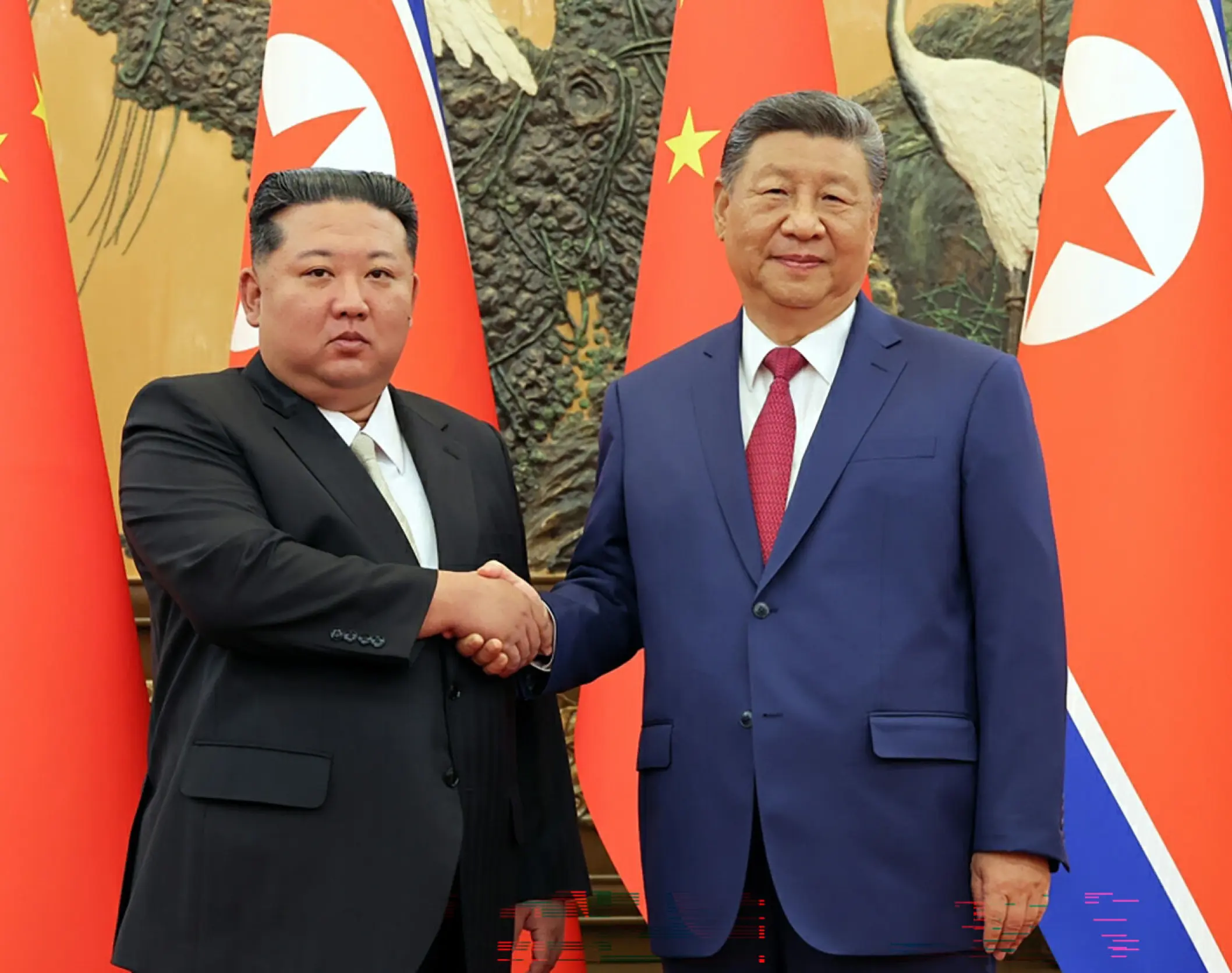
Chinese President Xi Jinping begins a two-day state visit to North Korea Monday, coinciding with the 65th anniversary of the Sino-North Korean friendship treaty. The summit is expected to focus on restoring bilateral ties and expanding economic and security cooperation. Ahead of the visit, North Korea has intensified its display of nuclear capabilities. After inspecting nuclear material production facilities, North Korean leader Kim Jong-un continued a series of public appearances highlighting the country's nuclear and missile programs. On Sunday, his sister, Kim Yo-jong, declared that North Korea's status as a nuclear weapons state was "an irreversible red line." She also rejected reports that Beijing and Washington had reaffirmed their support for the denuclearization of the Korean Peninsula during last month's U.S.-China summit, calling them "fabricated" and "groundless." The message appeared aimed not only at the United States but also at China, signaling that denuclearization is no longer open for discussion. The situation differs markedly from Xi's previous visit to Pyongyang in 2019. Even after the collapse of the Hanoi summit between North Korea and the United States, Pyongyang did not entirely reject the framework of denuclearization negotiations. Today, however, the North's position is that the issue should not even be raised. Since the outbreak of the war in Ukraine, North Korea has expanded its strategic room for maneuver through closer ties with Russia. Emboldened by that relationship, Pyongyang is pressing not only Washington but also Beijing to accept the reality of its nuclear arsenal. China, for its part, has strong incentives to keep North Korea within its sphere of influence. Xi's visit could accelerate discussions on economic cooperation, logistics projects and port development. The concern is that the longstanding principle of denuclearization may receive less attention while new security uncertainties emerge in Northeast Asia and the East Sea region. If China focuses primarily on managing relations with Pyongyang while effectively tolerating North Korea's nuclear development, prospects for resolving the nuclear issue will grow even dimmer. A shift from pursuing denuclearization to merely managing or freezing the North's nuclear program could amount to de facto recognition of its nuclear status. The Korean government should closely analyze the outcome of the summit and actively engage diplomatic channels with Beijing. At the same time, it must maintain the Korea-U. S. alliance and trilateral security cooperation among Korea, the United States and Japan. As North Korea continues to advance its nuclear and missile capabilities while cooperation among North Korea, China and Russia deepens, strong alliances and international coordination remain the most realistic foundation for safeguarding Korea's security. Xi's trip to Pyongyang must not become an occasion that legitimizes North Korea's pursuit of permanent nuclear weapons status. This article was originally written in Korean and translated by a bilingual reporter with the help of generative AI tools. It was then edited by a native English-speaking editor. All AI-assisted translations are reviewed and refined by our newsroom.

Chinese President Xi Jinping begins a two-day state visit to North Korea Monday, coinciding with the 65th anniversary of the Sino-North Korean friendship treaty. The summit is expected to focus on restoring bilateral ties and expanding economic and security cooperation. Ahead of the visit, North Korea has intensified its display of nuclear capabilities. After inspecting nuclear material production facilities, North Korean leader Kim Jong-un continued a series of public appearances highlighting the country's nuclear and missile programs. On Sunday, his sister, Kim Yo-jong, declared that North Korea's status as a nuclear weapons state was "an irreversible red line." She also rejected reports that Beijing and Washington had reaffirmed their support for the denuclearization of the Korean Peninsula during last month's U.S.-China summit, calling them "fabricated" and "groundless." The message appeared aimed not only at the United States but also at China, signaling that denuclearization is no longer open for discussion. The situation differs markedly from Xi's previous visit to Pyongyang in 2019. Even after the collapse of the Hanoi summit between North Korea and the United States, Pyongyang did not entirely reject the framework of denuclearization negotiations. Today, however, the North's position is that the issue should not even be raised. Since the outbreak of the war in Ukraine, North Korea has expanded its strategic room for maneuver through closer ties with Russia. Emboldened by that relationship, Pyongyang is pressing not only Washington but also Beijing to accept the reality of its nuclear arsenal. China, for its part, has strong incentives to keep North Korea within its sphere of influence. Xi's visit could accelerate discussions on economic cooperation, logistics projects and port development. The concern is that the longstanding principle of denuclearization may receive less attention while new security uncertainties emerge in Northeast Asia and the East Sea region. If China focuses primarily on managing relations with Pyongyang while effectively tolerating North Korea's nuclear development, prospects for resolving the nuclear issue will grow even dimmer. A shift from pursuing denuclearization to merely managing or freezing the North's nuclear program could amount to de facto recognition of its nuclear status. The Korean government should closely analyze the outcome of the summit and actively engage diplomatic channels with Beijing. At the same time, it must maintain the Korea-U. S. alliance and trilateral security cooperation among Korea, the United States and Japan. As North Korea continues to advance its nuclear and missile capabilities while cooperation among North Korea, China and Russia deepens, strong alliances and international coordination remain the most realistic foundation for safeguarding Korea's security. Xi's trip to Pyongyang must not become an occasion that legitimizes North Korea's pursuit of permanent nuclear weapons status. This article was originally written in Korean and translated by a bilingual reporter with the help of generative AI tools. It was then edited by a native English-speaking editor. All AI-assisted translations are reviewed and refined by our newsroom.

NOW PLAYING

Xi's Pyongyang visit tests denuclearization hopes

0:00 3:18

No transcript for this episode yet

We transcribe on demand. Request one and we'll notify you when it's ready — usually under 10 minutes.

No similar episodes found.

No similar podcasts found.

Frequently Asked Questions

How long is this episode of Korea JoongAng Daily - Daily News from Korea?

This episode is 3 minutes long.

When was this Korea JoongAng Daily - Daily News from Korea episode published?

This episode was published on June 7, 2026.

What is this episode about?

Chinese President Xi Jinping begins a two-day state visit to North Korea Monday, coinciding with the 65th anniversary of the Sino-North Korean friendship treaty. The summit is expected to focus on restoring bilateral ties and expanding economic and...

Can I download this Korea JoongAng Daily - Daily News from Korea episode?

Yes, you can download this episode by clicking the download button on the episode player, or subscribe to the podcast in your preferred podcast app for automatic downloads.
URL copied to clipboard!