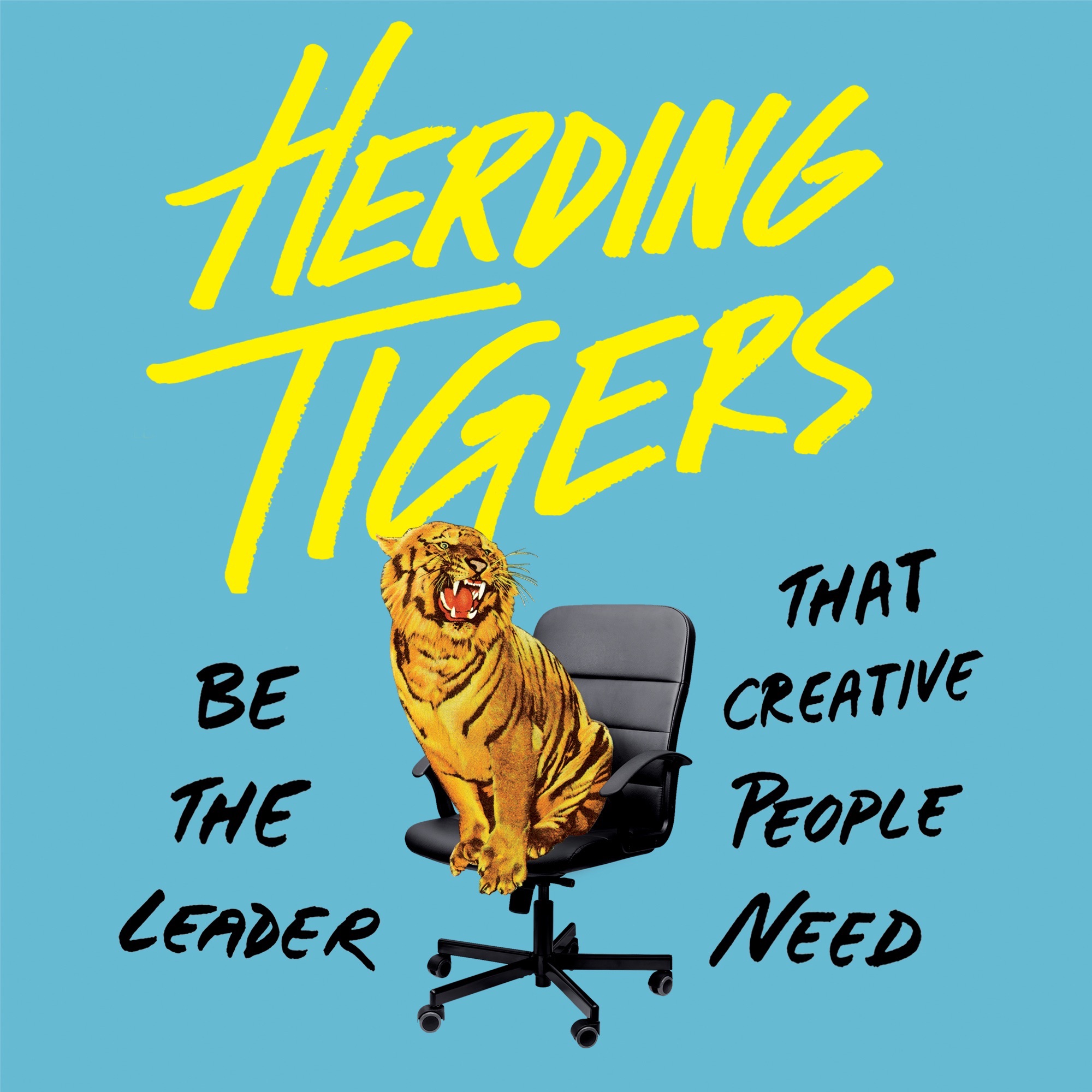
Hey, if you're welcome to the podcast, my name is Todd Henry, I'm the author of Hurting Tigers, be the leader that creative people need. And this show is about some of the unique qualities of leading teams of creative people, some of the unique characteristics that those teams have. And some of the things we need to do is leaders to position ourselves to help them bring their best effort every day. And so today on the show, we're going to talk about one of the chapters in the book, Hurting Tigers.
We're going to talk about your leadership philosophy. Very specifically, what does it mean to have a leadership philosophy? How do you set the rails for your team? You know, one of the transitions that we have to make, and we've talked about this on the show before, and we've also wrote about it extensively in Hurting Tigers, transitions we have to make, and we move from maker to manager, is we have to transition from control to influence.
You know, most of us spend our entire career being defined by the work that we create, the work that we do. So if we do great work, if we produce great work, then we are considered successful. And if we are considered successful, then we get promotions, we get more money, we get better clients, all of those things, because we have been really good at getting the work done, controlling the work and making it what it needs to be. The moment we transition into a manager role, where we're leading other people, we have to transition from a mindset of control to a mindset of influence, meaning it's no longer our job to do the work, per se, it's our job to lead the work.
And it's a fundamentally different thing. And it's a question that all of us have to ask is, do I really want to be a leader, right? Do I really want to be in this role? Because I think for some people, they never successfully make that transition from control to influence and as a result, their team is essentially cursing their over controlling nature behind their back, because they don't feel like they have the freedom they need to be able to deliver ideas on their own.
And so the capacity of the team never expands beyond the capacity of the leader. So we're going to talk today about leadership philosophy. And one of the interviews I did for Hurting Tigers was with Brian Coppelman, who is the co-executive producer and the showrunner for the hit showtime series Billions. He also, he and his writing partner, David Levine, also wrote Rounders.
They produced Oceans 13. They've done a lot of work in, obviously in the creative space in television and film. But one of the things I really enjoyed was how he described the importance of having a vision but letting other people on your team own that vision and run with that vision. So I'm going to read to you from Hurting Tigers.
This is from a section, it's from the chapter, they broke it, you bought it. The shift from my stuff to our stuff. But it's from a section called for creative work, influence scales, but control doesn't. Brian Coppelman is the co-executive producer and showrunner for the hit showtime series Billions.
Most often, Coppelman told me the showrunner is the creator of the show. It's an in charge of every aspect of the production. He is responsible for making sure that everyone is on the same page and that the finished product is consistent with the original vision. He also hires the writing staff, oversees the writing of the episodes, hires the directors for each episode, and is in charge of the casting process.
If that wasn't enough, the showrunner is also responsible for planning the shooting days and for the post-production, musical scoring, and any and all other aspects of the finished product. In other words, if it happens, it crosses the showrunner's metaphorical desk at some point. Though he and his business partner David Levine strive to be deeply involved in all aspects of the show from writing the post-production, having the buck stops here responsibility for such a massive undertaking means that Coppelman can't possibly be everywhere at once. He says the only way to lead such a diverse team of creative people is by ensuring that the driving vision is clear, then letting people do what they were hired to do.
As their vision is clear and well communicated, their team understands how and why they make creative decisions, Coppelman and Levine are able to lead their collective of super talented people via influence rather than needing to micromanage every aspect of production. The result is that everyone in the team is able to freely add a unique perspective to the project without waiting for explicit permission for everything. Coppelman said, you want to make sure that a director owns the vision for an episode, that it's her show. Yes, you want to fit within the overall vision, but you have to make certain that she feels like she owns the idea and execution.
Otherwise, she will be calling you every few minutes. Many leaders prefer to control their team because it eliminates uncomfortable conversations about the potential for short-term failure. It's easier to dictate the terms and get exactly what you want here and now. However, you're also unknowingly robbing future value in order to claim a little present value.
Your team will not grow and you won't attract great people. So that is about having a vision, communicating the vision, clearly defining the culture, clearly defining how you want the work to get done and specifically where the work is going to go, but it's not making decisions for your team. It's allowing them to understand your defining vision, allowing them to own the vision. So how do you set a leadership philosophy?
How do you establish those rails? It's really important that your team understands your philosophy on a couple of things, your point of view on a couple of things. They don't understand this. They're going to be coming to you asking questions and waiting for you to make decisions for them.
So a couple of things that I want to encourage you to define your leadership philosophy around are, number one, how do you define what quality work looks like? What does quality work look like? How do you determine if something is good enough? And this is a question a lot of teams don't understand.
They bring something to the leader, the leader gives a thumbs up or the thumbs down. They never really understand the criteria that the leader is using to make those decisions. So have you ever clearly articulated to your team what works, what doesn't work, what good is, what good isn't, how do you determine the quality of the work that your team is doing? So it's really important for your team to have a target to shoot for.
If they don't have a target for the targets constantly moving, they're going to struggle to bring their best effort because they're not going to bring their best effort. They feel like the target's going to move tomorrow. So how do you determine quality of work? Number two, what about risk and failure?
Have you ever had a serious conversation with your team about risk and failure? What kind of risks are acceptable? What kind of risks are unacceptable? What if somebody takes a risk in the effort to produce some kind of work and they fail?
What happens? Are they going to be protected? Are you going to protect them? Is it okay that they fail?
Is it ever okay that they don't fail? What are those circumstances? It's important that your team understands how you think about risk and failure as a leader so that they feel free to take those risks knowing they're going to be protected or they understand that if I take this risk, I'm on my own because this is outside of the balance of what you believe to be acceptable as a leader. So what is your philosophy on risk and failure?
What about the right idea? How do you determine what the right idea is? How do you know it when you see it? Have you ever articulated to your team?
Now sometimes it's gut instinct, it's intuition. It's often there are stories told about firemen who fire fighters who go into a building and they just know, experienced firefighters just know when not to go through a certain door because there's danger behind the door. There's nothing on the outside or on any visual cues or anything like that. It's telling them it's just that they have developed this kind of sixth sense based upon their experience.
Well, sometimes that's what it's like when you're trying to figure out what idea is right? Or what idea is right for a project? But are there any criteria that you use to determine which idea is right and which idea isn't? And have you clearly articulated those two teams so that they can make those decisions on their own or at least one or down all of the possible options to a set that might be most appropriate?
How about credit on your team? Have you ever clearly articulated to your team? Here's how credit is given? Who gets credit for a project?
If Sue is working on a project and Sue basically drives the project to a successful completion, does Sue get credit? Does the team get credit? How does that work? Or if, let's say Sue does that and Sue gets credit one time, but then I do it next time and the team gets equal credit.
That's if those situations aren't consistent, then people are going to invent ghost rules about how credit is doled out on the team. So what is your philosophy about who gets credit for what? Who gets credit for the work? Is it the team?
Is it the individual? How does that work? And then with regard to conflict, how should conflict be handled on the team? Have you ever had a conversation with your team about what to do when they have a conflict with someone else on the team?
Handle it yourself, bring it to me. You're some leaders say, listen, we're fast, we don't have time to deal with conflict. So you handle the conflict, but don't just ignore it, deal with it in the moment, get it out of the way, fight it out, do whatever you have to do to resolve the conflict and move on to move on to peaceful terms. And then let's get moving on the work again.
Some leaders say, no, I want to be involved if there's a serious conflict because I want to make sure that everybody is getting an equal hearing. So what is your philosophy about how conflict should be handled on the team? Have you ever clearly articulated that to your team? You have to be consistent in how you reinforce this philosophy once you articulate.
And then finally, opportunity. Who gets opportunity on your team? Who gets the prestigious project? Who gets promoted?
How is it that people get promoted? Now, here's something you can do if you've never articulated a leadership philosophy before, your team, a point of view, guiding rails for your team and how they function. If you've never clearly articulated these things, you can sit down with people one on one. So I'm just curious, how do you think I determine what quality work looks like?
Based on your experience of me, how do you think I do that? Or how do you think I think about risk? I would just love to hear your perspective on that. What do you think I believe about when it's okay to fail?
How do you think I determine the right idea? How do you think I give credit on our team? Who gets credit and when do they get credit? I mean, these kinds of conversations can be very helpful to you because they can illuminate areas where there might be ghost rules lurking just beneath the surface of your team's engagement.
And those ghost rules might be limiting their behavior, might be misleading them about what you really expect from them. So as a leader, you need to have a leadership philosophy, you need to establish that leadership philosophy and you need to communicate it so that your team understands very clearly what you think, where the boundaries are. Again, we go back to stability and challenge, which we've talked about extensively already on the podcast and it's in herding tigers throughout the book. It's really the foundation of the book is how do you establish stability for your team?
How do you also challenge them simultaneously? But if we're looking at stability and challenge, really what we're talking about is how do we establish a bounded autonomy, right? Boundaries but then autonomy within those boundaries. How do we establish a clear playing field for them so that they feel free to take risks, to try new things, they have stable ground beneath them when they are venturing into the unknown, which is what's required to do creative work?
So how do we do that as a leader? Well, the very first thing we have to do is we have to establish a clear philosophy of leadership that shows them, hey, here are the rules that we're going to play by. Here's what I expect of you. Here's what I don't expect of you.
And as long as you stay within these bounds, you're going to be fine. Okay, that's critical. It's essential to having a team that functions, that thrives and communicates and collaborates in a healthy way. All right.
I go very deeply into this and hurting tigers as well as much more. We're going to be talking over the coming weeks about different concepts related to this and other subjects in the book, hurting tigers. If you want to know more about the book, you can visit herdingtiggers.net and also watch a little video there that can show you a little more about stability and challenge and why they're so important to the team. If you have any questions you'd like for us to address here on the podcast, send them to book at ToddHenry.com.
That's book at ToddHenry.com. All right. Until next time, be a leader who makes seconds.