All episodes
Ancient Civilization, Population, Language, and a Great Wall and more
Chinese Zodiac The Chinese zodiac consists of a 12-year cycle, each year associated with an animal sign and more
Longmen Grottoes A series of caves and grottoes housing thousands of Buddhist statues and more.mp3
Qinghai-Tibet Plateau The world's highest and largest plateau, known as the Roof of the World and more
Chinese Seal Carving An ancient art form used for personal identification and more
Spring Rolls A popular Chinese dish, especially during the Spring Festival and more
Chinese Gardens Classical gardens, especially in Suzhou, are renowned for their beauty and design and more
Tang Dynasty Poetry The Tang dynasty is considered a golden age of Chinese poetry and more
Gobi Desert The Gobi Desert is a large desert region in northern China and southern Mongolia and more
Silk Road The ancient Silk Road was a network of trade routes connecting China with the West and more
Ethnic Groups China officially recognizes 56 ethnic groups, with Han Chinese being the majority and more
Population Density The eastern part of China is more densely populated than the western regions and more
Peking University One of China's top universities, founded in 18 and more
Festivals Other major festivals include the Mid-Autumn Festival and Dragon Boat Festival and more
Cultural Revolution Initiated by Mao Zedong in 1966, it aimed to preserve communist ideology by purging remnants of capitalist and tradition
Territorial Claims China has ongoing territorial disputes in the South China Sea and more
National Day October 1st is celebrated as National Day in China, marking the founding of the People's Republic of China in 19 and more
Territorial Size China is the fourth-largest country by land area and more
Peking Opera A traditional Chinese theater form combining music, vocal performance, mime, dance, and acrobatics and more
Hong Kong Hong Kong is a Special Administrative Region with a high degree of autonomy and more
Dynasties China's history is marked by several dynasties, including the Han, Tang, Song, Ming, and Qing and more
Ancient Civilization, Population, Language, and a Great Wall
Chinese Hot Pot: A
The Bund: A famous waterfront area in Shanghai.
Chinese Zodiac: The Chinese zodiac consists of a 12-year cycle, each year associated with an animal sign.
Silk Road: An ancient network of trade routes that connected China with the West.
National Museum of China: Located in Beijing, it is one of the largest museums in the world.
Chinese Paper Cutting: A traditional folk art used for decoration.
Longmen Grottoes: A series of caves and grottoes housing thousands of Buddhist statues.
Chinese Gardens: Often designed to reflect natural landscapes and incorporate water features.
Chinese Silk: Historically a major export, with silk production dating back thousands of years.
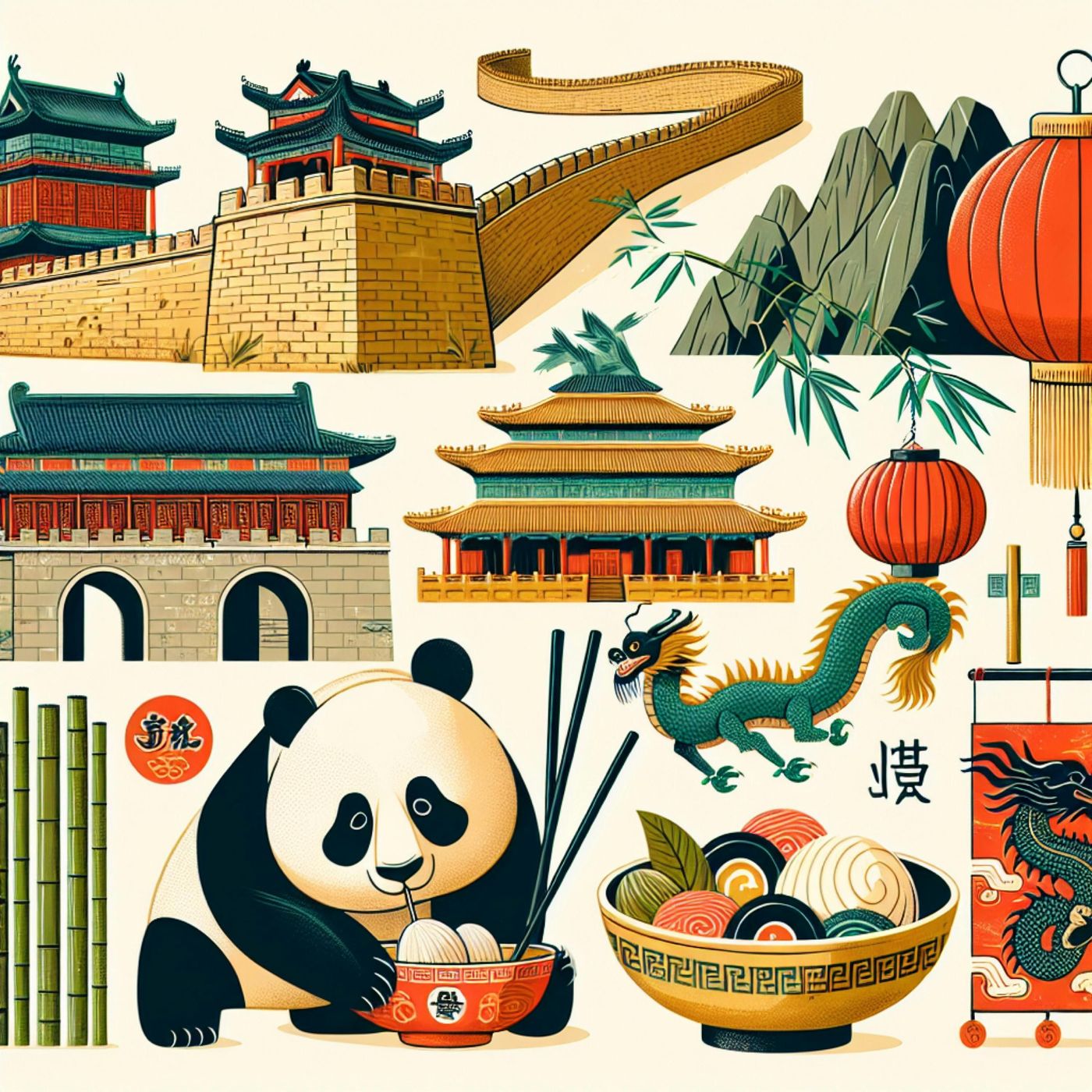
Red Lanterns: Symbolize good fortune and are commonly used in festivals and celebrations.
Qinghai-Tibet Plateau: The world's highest and largest plateau, known as the "Roof of the World."
Chengdu: Known for its pandas and spicy cuisine.
Chinese Ceramics: China has a long history of ceramic production, known for its beauty and craftsmanship.
Chinese Seal Carving: An ancient art form used for personal identification.
Chinese Characters: The writing system is logographic, with each character representing a word or phrase.
Chinese Painting: Often features landscapes, birds, and flowers.
Chinese Lantern Festival: Celebrated on the 15th day of the first lunar month, marking the end of Chinese New Year celebrations.
Spring Rolls: A popular Chinese dish, especially during the Spring Festival.
Daoism (Taoism): A philosophical and religious tradition that emphasizes living in harmony with the Tao (the Way).
Confucianism: A philosophy based on the teachings of Confucius, emphasizing ethics and social harmony.
Tea Houses: Traditional tea houses are popular social gathering spots.
Chinese Gardens: Classical gardens, especially in Suzhou, are renowned for their beauty and design.
Ming Dynasty Porcelain: Known for its high-quality ceramics, particularly blue-and-white porcelain.
Yuan Dynasty: Established by Kublai Khan, a Mongol leader, in the 13th century.
Tang Dynasty Poetry: The Tang dynasty is considered a golden age of Chinese poetry.
Three Gorges Dam: The world's largest hydroelectric power station, located on the Yangtze River.
Chinese Ink Painting: A traditional art form using black ink on paper or silk.
Peking Opera Masks: The colorful masks worn in Peking Opera symbolize different characters and emotions.
Gobi Desert: The Gobi Desert is a large desert region in northern China and southern Mongolia.
Forbidden City Layout: The Forbidden City in Beijing has 980 surviving buildings.
Acrobatics: Chinese acrobatics are a traditional performance art with a long history.
Chinese Dragons: Dragons are mythical creatures symbolizing power and strength in Chinese culture.
Sino-Japanese War: The Second Sino-Japanese War (1937-1945) was a significant conflict between China and Japan.
Chinese Medicine: Traditional Chinese medicine includes practices like acupuncture and herbal medicine.
One Belt One Road: An ambitious infrastructure and economic initiative to enhance global trade.
Ethnic Groups: China officially recognizes 56 ethnic groups, with Han Chinese being the majority.
Beijing Capital Airport: One of the busiest airports in the world.
Chinatown: Chinatowns can be found in cities around the world, established by Chinese immigrants.
Olympics: Beijing hosted the Summer Olympics in 2008 and will host the Winter Olympics in 20
Population Density: The eastern part of China is more densely populated than the western regions.
Chinese Gardens: Traditional Chinese gardens, like those in Suzhou, are designed to reflect natural landscapes.
Qin Shi Huang: The first emperor of a unified China, known for his mausoleum guarded by the Terracotta Army.
Peking University: One of China's top universities, founded in 18
Seismology: China is prone to earthquakes due to its geographical location.
Opera: Chinese opera is a traditional form of drama and musical theater.
Peking Man: The remains of Homo erectus, known as Peking Man, were discovered near Beijing and are over 500,000 years old.
Festivals: Other major festivals include the Mid-Autumn Festival and Dragon Boat Festival.
National Parks: China has numerous national parks and natural reserves, including Zhangjiajie National Forest Park.
Chinese Zodiac: The Chinese zodiac is a 12-year cycle, with each year represented by an animal.
Modernization: Deng Xiaoping's policies in the late 20th century opened China to foreign investment and market reforms.
Cultural Revolution: Initiated by Mao Zedong in 1966, it aimed to preserve communist ideology by purging remnants of capitalist and traditio
Great Famine: From 1959 to 1961, China experienced a severe famine during the Great Leap Forward.
Infrastructure: China has rapidly expanded its infrastructure, including high-speed rail networks.
Territorial Claims: China has ongoing territorial disputes in the South China Sea.
Education: China places a high value on education, and its students consistently rank among the top in international assessments.
Pagodas: These multi-tiered towers are iconic symbols of Chinese architecture.
Buddhist Temples: China is home to many ancient Buddhist temples, such as the Shaolin Monastery.
National Day: October 1st is celebrated as National Day in China, marking the founding of the People's Republic of China in 19
Yellow River: Often called the "cradle of Chinese civilization," it is the second-longest river in China.
Yangtze River: The Yangtze is the longest river in Asia and the third-longest in the world.
Tiananmen Square: Located in Beijing, it is one of the largest public squares in the world.
Territorial Size: China is the fourth-largest country by land area.
Calligraphy: Chinese calligraphy is a revered art form.
Literature: Classic Chinese literature includes works like "Journey to the West" and "Dream of the Red Chamber."
Peking Opera: A traditional Chinese theater form combining music, vocal performance, mime, dance, and acrobatics.
Martial Arts: China is the birthplace of various martial arts, including kung fu and tai chi.
Cuisine: Chinese cuisine is diverse, with regional dishes such as Peking duck, Sichuan hotpot, and Cantonese dim sum.
One-Child Policy: Implemented in 1979 to control population growth, the policy was relaxed in 20
Hong Kong: Hong Kong is a Special Administrative Region with a high degree of autonomy.
Shanghai: Shanghai is China's largest city and a global financial hub.
Beijing: Beijing is the capital of China and one of the most populous cities in the world.
Philosophy: Chinese philosophy includes Confucianism, Taoism, and Buddhism.
Tea Culture: China is the birthplace of tea, and tea culture is an integral part of Chinese life.
Forbidden City: Located in Beijing, the Forbidden City was the Chinese imperial palace from the Ming dynasty to the end of the Qing dynasty.
Chinese New Year: The most important traditional Chinese holiday is the Lunar New Year, also known as Spring Festival.
Pandas: The giant panda is native to China and is considered a national treasure.
Silk Road: The ancient Silk Road was a network of trade routes connecting China with the West.
Terracotta Army: Discovered in 1974, the Terracotta Army is a collection of terracotta sculptures depicting the armies of the first Emperor