Episodes
-
Chinese Hot Pot: A
Chinese Hot Pot: A
-
The Bund: A famous waterfront area in Shanghai.
The Bund: A famous waterfront area in Shanghai.
-
Chinese Zodiac: The Chinese zodiac consists of a 12-year cycle, each year associated with an animal sign.
Chinese Zodiac: The Chinese zodiac consists of a 12-year cycle, each year associated with an animal sign.
-
Silk Road: An ancient network of trade routes that connected China with the West.
Silk Road: An ancient network of trade routes that connected China with the West.
-
National Museum of China: Located in Beijing, it is one of the largest museums in the world.
National Museum of China: Located in Beijing, it is one of the largest museums in the world.
-
Chinese Paper Cutting: A traditional folk art used for decoration.
Chinese Paper Cutting: A traditional folk art used for decoration.
-
Longmen Grottoes: A series of caves and grottoes housing thousands of Buddhist statues.
Longmen Grottoes: A series of caves and grottoes housing thousands of Buddhist statues.
-
Chinese Gardens: Often designed to reflect natural landscapes and incorporate water features.
Chinese Gardens: Often designed to reflect natural landscapes and incorporate water features.
-
Chinese Silk: Historically a major export, with silk production dating back thousands of years.
Chinese Silk: Historically a major export, with silk production dating back thousands of years.
-
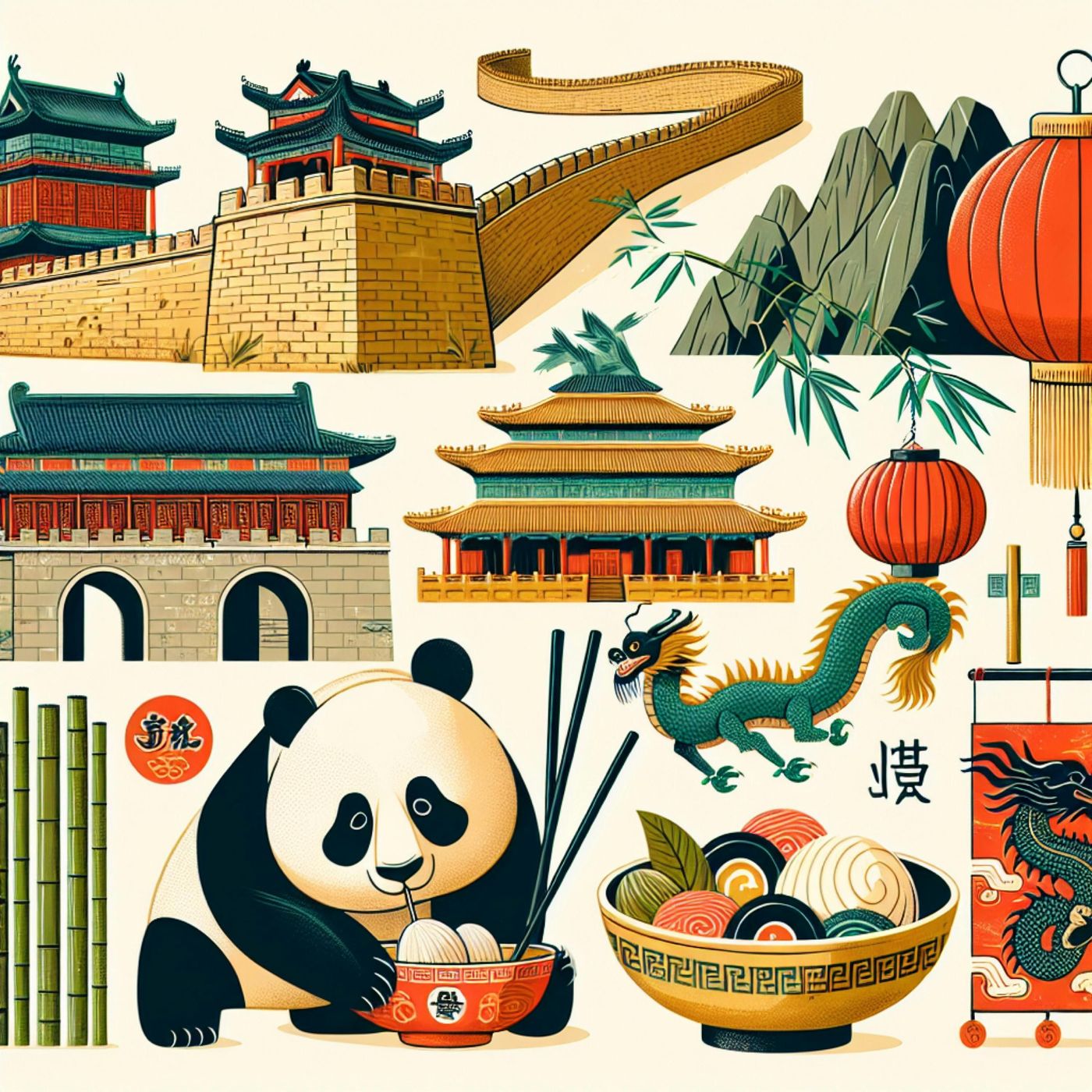
Red Lanterns: Symbolize good fortune and are commonly used in festivals and celebrations.
Red Lanterns: Symbolize good fortune and are commonly used in festivals and celebrations.
-
Qinghai-Tibet Plateau: The world's highest and largest plateau, known as the "Roof of the World."
Qinghai-Tibet Plateau: The world's highest and largest plateau, known as the "Roof of the World."
-
Chengdu: Known for its pandas and spicy cuisine.
Chengdu: Known for its pandas and spicy cuisine.
-
Chinese Ceramics: China has a long history of ceramic production, known for its beauty and craftsmanship.
Chinese Ceramics: China has a long history of ceramic production, known for its beauty and craftsmanship.
-
Chinese Seal Carving: An ancient art form used for personal identification.
Chinese Seal Carving: An ancient art form used for personal identification.
-
Chinese Characters: The writing system is logographic, with each character representing a word or phrase.
Chinese Characters: The writing system is logographic, with each character representing a word or phrase.
-
Chinese Painting: Often features landscapes, birds, and flowers.
Chinese Painting: Often features landscapes, birds, and flowers.
-
Chinese Lantern Festival: Celebrated on the 15th day of the first lunar month, marking the end of Chinese New Year celebrations.
Chinese Lantern Festival: Celebrated on the 15th day of the first lunar month, marking the end of Chinese New Year celebrations.
-
Spring Rolls: A popular Chinese dish, especially during the Spring Festival.
Spring Rolls: A popular Chinese dish, especially during the Spring Festival.
-
Daoism (Taoism): A philosophical and religious tradition that emphasizes living in harmony with the Tao (the Way).
Daoism (Taoism): A philosophical and religious tradition that emphasizes living in harmony with the Tao (the Way).
-
Confucianism: A philosophy based on the teachings of Confucius, emphasizing ethics and social harmony.
Confucianism: A philosophy based on the teachings of Confucius, emphasizing ethics and social harmony.
-
Tea Houses: Traditional tea houses are popular social gathering spots.
Tea Houses: Traditional tea houses are popular social gathering spots.
-
Chinese Gardens: Classical gardens, especially in Suzhou, are renowned for their beauty and design.
Chinese Gardens: Classical gardens, especially in Suzhou, are renowned for their beauty and design.
-
Ming Dynasty Porcelain: Known for its high-quality ceramics, particularly blue-and-white porcelain.
Ming Dynasty Porcelain: Known for its high-quality ceramics, particularly blue-and-white porcelain.
-
Yuan Dynasty: Established by Kublai Khan, a Mongol leader, in the 13th century.
Yuan Dynasty: Established by Kublai Khan, a Mongol leader, in the 13th century.
-
Tang Dynasty Poetry: The Tang dynasty is considered a golden age of Chinese poetry.
Tang Dynasty Poetry: The Tang dynasty is considered a golden age of Chinese poetry.
-
Three Gorges Dam: The world's largest hydroelectric power station, located on the Yangtze River.
Three Gorges Dam: The world's largest hydroelectric power station, located on the Yangtze River.
-
Chinese Ink Painting: A traditional art form using black ink on paper or silk.
Chinese Ink Painting: A traditional art form using black ink on paper or silk.
-
Peking Opera Masks: The colorful masks worn in Peking Opera symbolize different characters and emotions.
Peking Opera Masks: The colorful masks worn in Peking Opera symbolize different characters and emotions.