
PODCAST · religion
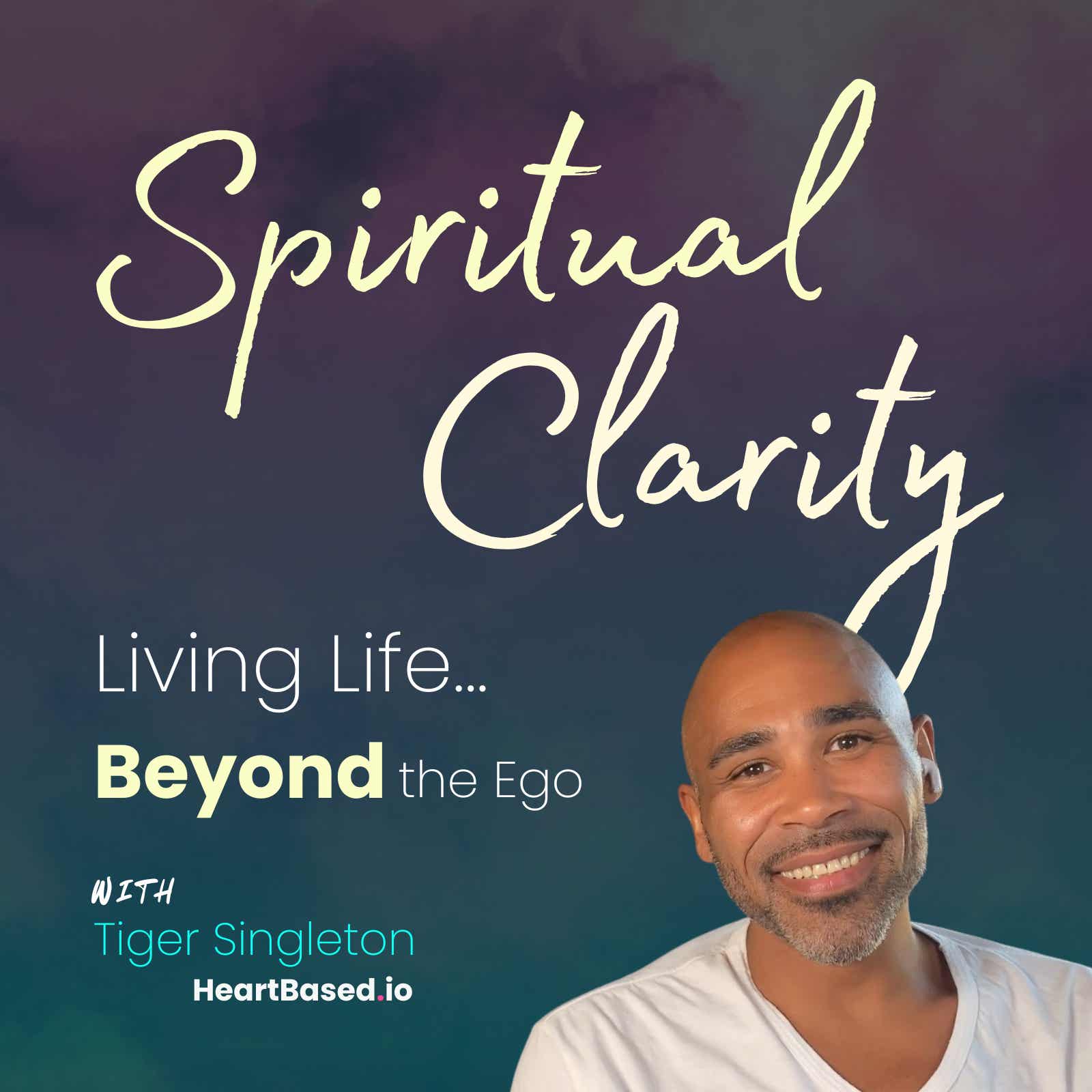
🎙️ Spiritual Clarity; Living Life Beyond the Ego (podcast)
by Tiger Singleton
This podcast is a simple, honest look at what gets in the way of a peaceful human life. We explore the mechanics of the ego—not as an enemy to fight, but as the mind’s noisy misunderstanding—so we can see what’s actually here beyond all that tension.The conversation points back to the deeper clarity that’s always present when we’re not caught in fear, projection, or performance. No superstition, no spiritual posturing. Just a sincere curiosity about what it means to be human, to open the heart a little more, and to live with a grounded sense of love and play.Many episodes come from live sessions inside the Deep Divers Group, where these insights are explored in real time with real people, in a way that stays practical, intimate, and deeply human. tigmonk.substack.com
-
132
Letting Go of Control: From Arrogance to Humility
In this session, I explored the difference between humility and arrogance — not as behaviors to perform, but as two fundamentally different ways of meeting Life.This video was taken from a live broadcast. See all recordings and join me live at Tigmonk.com/Community. We looked at why humility follows naturally from seeing what is true, while arrogance grows from pretending to know, control, and take credit for what Life is doing. Here in Substack, we will write it out and explore it in a bit more depth.A quick note: this write-up is an AI-assisted — a best attempt at capturing the ideas and voice of the session in written form with AI trained on Tiger’s voice. Naturally, expect errors.Humility Is Not Something You Perform (00:00)We often approach spiritual virtues as things we need to manufacture. We ask how to be more loving, compassionate, patient, or humble — as if we can force ourselves into becoming a better person.But genuine virtue is not a performance. It flows naturally when we stop opposing what is true.“These are not things that you do. These are things that happen naturally as you see and align yourself with what is simply true.”Humility is honesty without the performance.* It acknowledges what is known and what is not known.* It removes the facade of pretending.* It does not require someone to look, sound, or act humble.* It emerges naturally through surrendering to the truth of Life.Arrogance moves in the opposite direction. It positions the separate self as the one who knows, controls, and makes Life happen.Taking Credit for What Life Is Doing (02:28)The more honestly I look at my work, the less credit I can take for it. The words come through me. Creativity moves through the artist. Even the breath that makes every other action possible is given.“If you can’t take credit for the breath that allows you to be, how then can you take credit for anything that comes after that?”Getting out of the way is not an accomplishment the separate self can claim.* The artist does not personally manufacture creativity.* The tree cannot take independent credit for producing an apple.* No person creates themselves separately from Life.* Spiritual expression is not proof that someone pressed the correct spiritual buttons.Arrogance says, “I did this. I created this. I made this happen.”Humility sees the whole universe involved in every apparent individual creation.The Illusion of Control (06:00)Sometimes it looks like we have control. Then five minutes later, something changes and that control disappears.This does not mean control was lost. It means the appearance of control was mistaken for something real.“If you have control now, but you don’t have control in five minutes from now, then you don’t really have control.”The fear of losing control begins with believing we had it.* A temporary result creates the appearance of personal control.* We cling to that appearance because it gives us security.* When Life changes, we assume something has gone wrong.* We blame ourselves for failing to maintain something we never possessed.Humility does not require becoming helpless or passive. It simply stops pretending that a separate self stands outside of Life and dominates what happens next.Judgment Proclaims Knowledge We Do Not Have (08:55)A tree’s fruit is not separate from the environment that produced it. Healthy soil, water, weather, neglect, and countless unseen conditions all contribute to what appears on its branches.Human beings are no different. Yet we look at someone’s behavior and judge them as though we can see the entire picture.“Because to judge proclaims you know something that you don’t really know.”Judgment is the claim that a limited perspective sees the whole.* Blame isolates the person from the conditions that shaped the behavior.* Condemnation pretends to know what someone fundamentally deserves.* Hatred toward another must first be carried within the person expressing it.* The same false certainty turns inward as guilt and self-condemnation.The invitation is not to stop judging because judgment is morally wrong. The invitation is to see its futility and recognize how completely it opposes reality.The Freedom of Not Knowing (11:00)Humility requires being at peace with the unknown. That is difficult because certainty appears to offer safety, even when the certainty is manufactured.An honest life admits the limits of its perspective. There is no lie to manage and no false certainty to protect.“When you’re honest, it opens you up to the mystery of what comes next.”Not knowing is not a failure. It is the truth of being human.* Words can point toward truth without containing it.* A perspective can be sincere without being ultimately correct.* Life can be lived as art rather than as a test of personal worth.* Painful consequences can be received as information instead of condemnation.Touching fire creates a burn. The burn is feedback. It does not proclaim that the person is fundamentally wrong or unworthy.Life is constantly giving us this kind of information. Arrogance turns the information into identity, guilt, and blame. Humility receives it and learns.Getting Out of the Way (20:30)Spiritual practice brings us back to what is here before the stories, judgments, and claims of separation. It invites us to stop hiding from Life and stop pushing away what already is.“To drop all the stories of separation, to drop all the pretending. And to truly be what is.”Humility gives Life back to Life.The world celebrates people who take credit because it reinforces the fantasy that the separate self can eventually become powerful enough to control everything. We place people on pedestals and secretly desire the same imagined dominance for ourselves.But there is no separate person standing outside the whole.* Life makes the tree possible.* Life is the lightning that strikes it.* Life is the person learning through both love and fear.* Life is the intelligence holding together what the mind cannot fully see.This is not something the entire world needs to understand.“It’s for the one who’s willing to see. And the one who’s willing to see, for them the world is transformed.” This is a public episode. If you'd like to discuss this with other subscribers or get access to bonus episodes, visit tigmonk.substack.com/subscribe
-
131
Overcome The Shame & Fear of Being Wrong
In this session, I explored the great surrender — getting out of your own way — through one specific doorway: our fear of being wrong.* This video was taken from a live broadcast.* To see full recordings, or to join me live, visit Tigmonk.com/Community.* To explore working with me 1 on 1, start here: Tigmonk.com/consult.A quick note: this write-up is AI-assisted — a best attempt at capturing the ideas and voice of the session in written form with AI trained on Tiger’s voice. Naturally, expect errors.Here’s the overview — the core moves of the session, distilled so you get real value even if you don’t watch.The Great Surrender Is Not A Weekend Project (00:23)The overarching theme is the great surrender — getting out of your own way. It’s a lifelong journey, not a weekend project. Over time, it turns into something less like effort and more like devotion.“It’s a recognition of something deeply profound... and it becomes a life of devotion.”One of the clearest doorways into that surrender: our intrinsic fear of being wrong.Certainty, And The Terror Of Being Wrong (01:43)Being wrong, at its simplest, is just discovering you didn’t know something you thought you knew — and that’s perfectly fine. But before that ease sets in, there’s the classic terror of being wrong. As a young man, certainty about his own assumptions felt solid; looking back, it wasn’t.“That perspective is such an amazingly small slice of the full picture — and that small slice is really a story about the slice. So it’s not even a slice.”Spirituality, at its core, shows how the mind’s content can’t actually touch reality.Judgment, Blame, And Withheld Love (05:11)We act as arbitrators of who is or isn’t deserving of love, deciding someone is “less than” the moment they don’t match our image. But that withholding is a felt sense inside us — not something we’re actually doing to someone else.“It looks like I’m withholding love from somebody else, but as I do that, I’m the one that feels the withholding of love.”* We blame the other person for the pain — “it’s their fault” — rather than owning the judgment.* For Tiger, blame is “utterly irrelevant.” What’s happening inside is a response to how we see, not to what’s outside.Trying To Be God (11:47)Insisting “it is how I say it is” is trying to be God instead of letting God be God. Whenever we project a judgment and call it truth, we’re deciding someone else isn’t sovereign — that their experience is whatever we decide it to be.“You are how I see you, therefore you are not sovereign... that totally gets in the way of the divinity that’s already there.”This shows up most intimately with the people closest to us — Tiger points to his relationship with his wife as the clearest mirror: what he experiences with her is simply how he sees her.Emotional Pain As An Alarm (16:20)Emotional pain isn’t a threat to defend against — it’s an alarm that you’re not seeing clearly. We’re as afraid of our own pain as we are of being wrong, so we throw both outward, blaming others instead of asking why we actually feel this way.“The only way such things heal is through an understanding of them... we must look at them.”The pain doesn’t need to be fixed or avoided — it needs to be understood.The Practical Doorway: Healing The Fear Of Being Wrong (20:09)Get radically honest about what you actually know about someone — the real list is much shorter than you think. From there, a few doorways open up.* Notice that emotions respond to how you see, not to what’s actually happening.* See that the judgment feeling is created by you, not by the other person.* Recognize that the fear of being wrong is really a fear of what it means about you.“Being wrong itself isn’t what you’re afraid of — you are afraid of the interpretation you have of what it means about you.”The problem was never being wrong. It’s how we relate to being wrong.A Life Of Devotion, Not A Destination (34:21)Getting out of your own way is alignment with the truth of life — fighting reality is a fight you’ll never win. There’s no final destination here, and no arriving; just an ever-evolving coming home to the truth of what you are.“There’s no final destination. There is no ‘getting there.’ There’s just an ever-evolving coming home to the truth of what you are.”The pain along the way isn’t a problem to eliminate — it’s a teacher.That’s the shape of it. The full depth is in the video above.* To see full recordings, or to join me live, visit Tigmonk.com/Community.* To explore working with me 1 on 1, start here: Tigmonk.com/consult. This is a public episode. If you'd like to discuss this with other subscribers or get access to bonus episodes, visit tigmonk.substack.com/subscribe
-
130
Meeting the Unknown Without Turning It Into a Problem
The unknown is not the problem. This talk is for listeners who notice how fear turns uncertainty into stories, control, and emotional tension. Tiger explores the difference between what is actually known and what the mind imagines. The value is a clearer relationship with uncertainty, fear, and the human habit of pretending to know.* 00:00 — Opening frame: fear distorts perception, and this space is for slowing down enough to see what is actually going on beneath emotional pain.* 03:30 — The difference between what is actually known and what the mind pretends to know. Plans, interpretations, and assumptions can feel certain, but they are not the same as truth.* 08:03 — Fear of the unknown and the false security of pretending to know. Life has always been unknown, and much of the need to know is an attempt to control what cannot be controlled.* 12:16 — The unknown as a field of possibility. Fear fills it with scary stories, while peace with the unknown allows more loving possibilities to appear naturally.* 15:02 — Fear itself is not wrong. The suffering compounds when I fear my fear, resist my humanity, or treat another person’s emotional state as a problem.* 19:00 — Inner disturbance as an invitation to return to truth. The shift is from trying to get what I want to asking what is actually true.* 21:43 — Truth can push against the boundaries of fear. The mind creates fearful images and then mistakes them for reality, but the world in the mind is not the world that is.* 24:58 — Closing reflection: different languages can point toward the same truth. The deeper work is helping people see for themselves, in language they can actually hear. This is a public episode. If you'd like to discuss this with other subscribers or get access to bonus episodes, visit tigmonk.substack.com/subscribe
-
129
Insight Meditation: Waking Up From The Painful Dream of Everyday Life
This is a free preview of a paid episode. To hear more, visit tigmonk.substack.comMost of us are walking around inside a dream we don’t know we’re dreaming — a story the mind has constructed about what’s wrong, what’s missing, what we need to fix before we can be okay. This session is an invitation to wake up from that dream. Not through force or discipline, but through honest looking.In this insight meditation, Tiger moves slowly through some of the most universal human experiences: the fear of not being enough, the compulsion to control, the exhaustion of resisting what simply is. What emerges isn’t a technique — it’s a shift in how you see. The chapter guide below is here to help you navigate the recording, or to stand alone if you’re reading instead of watching.Chapter 1 — The Reverence That Has No Words 0:00Tiger opens not with a lesson but with a feeling. He describes a state that many meditators recognize: a deep, wordless gratitude where the only honest response is to bow. No agenda, no teaching — just presence.From this place, he introduces the session’s central question: What is it we are actually remembering?He offers several ways to point at it — “all is well,” “God is,” “we are whole,” “there is nothing to fear” — while acknowledging that words can only gesture toward what the heart already knows. The key insight here is what remembering actually means in a spiritual context. It isn’t learning something new. It’s waking up. The mind spins stories — many of them destructive, most of them cataloguing fears that aren’t really there. We get captured by those stories. We exhaust ourselves inside them. And remembering is simply the moment we see through them again.This opening chapter functions as the container for everything that follows. Tiger isn’t presenting a philosophy to understand — he’s pointing to an experience that’s available right now.Chapter 2 — The Partner Story: What It Looks Like to Hold Space 4:19Tiger shares something personal from earlier that morning. His partner is in a low mood — disappointed about something she wants that simply isn’t possible. And he notices himself learning, again, how to be okay with that.This is where the teaching gets grounded. He uses the image of a parent and child: a child who can’t have ice cream for dinner and concludes, from inside that story, that it means they aren’t loved. The story feels completely real to the child. But the parent sees something different — not that the child is wrong to feel it, but that the child is momentarily lost in a narrative that isn’t the whole truth.He then extends this into our relationship with God. What if we relate to God the way a child relates to an uncooperative parent — crying out, “You don’t love me, you’re not giving me what I want”? The assumption underneath that relationship is that I should be in charge. That life should conform to my preferences. That God is essentially a vending machine.This framing — God, parent, partner — leads somewhere important: it’s ultimately a mirror for how we relate to ourselves when we’re in confusion. Can you hold space for yourself the way a wise parent holds space for a frightened child? Can you see that underneath the story, there’s a person who’s simply forgotten something?Chapter 3 — What Is the Deeper Fear? 11:04Tiger turns toward the structure of fear itself.When we’re suffering, we have stories about why we’re suffering. We think we’re afraid of what might happen, of what people will think, of things not working out. But these are surface-level fears. They’re the ice cream.He invites a more honest question: What are you really afraid of?As you follow the thread down beneath the specific stories, something universal starts to appear. Nearly every human fear, when you trace it far enough, arrives at the same place: I’m afraid I’m not enough. I’m afraid I’m not loved. I’m afraid I’m separate from God.This is one of the most striking observations in the session. People come from completely different lives, different stories, different surface-level problems — but the root is strikingly consistent. And in the stillness, as the mind quiets and the imagined world fades a little, something else becomes available: the sense that the love we thought was missing isn’t actually missing. It never was.The invitation isn’t to convince yourself of this intellectually. It’s to actually get quiet enough to notice it.Chapter 4 — The Trap Disguised as Spirituality 15:20This chapter addresses something subtle and important — a trap that tends to catch people who are genuinely on a spiritual path.Once you understand the mechanism (fear comes from false stories, there’s really nothing to fear), it’s tempting to conclude: therefore, I should never be afraid. And then being afraid becomes evidence that you’re doing it wrong. You start using the teaching against yourself.Tiger is clear: this misses the point entirely.Because there’s nothing to really be afraid of, it’s completely okay that you are afraid. That understanding doesn’t eliminate the human experience — it makes room for it. You can be scared without being wrong for being scared.He illustrates this in the relational context again. True spiritual maturity isn’t saying to your partner, “You’re getting it wrong — there’s nothing to be afraid of.” That’s using spiritual language to avoid being present. Real presence looks like: It’s okay that you’re afraid. It’s understandable. I love you.This is also the doorway the session has been building toward: the way out is the way through. Fear isn’t the problem to eliminate — it’s the doorway to walk through. And you can only walk through it if you stop running. If you can just be with yourself, without needing to fix or flee, that’s when the waking up actually happens.Chapter 5 — Letting God Be God 20:22Tiger pulls back to look at something he observes in the world and in himself: the relentless human compulsion to control.The ego, as he describes it, is essentially trying to be God. Trying to make people see you a certain way. Trying to make life about you. Managing what others think, resisting what’s actually happening, white-knuckling outcomes. And the suffering this creates isn’t a punishment — it’s simply the natural result of fighting against what is true.He offers a quieter alternative: letting God be God. Not as resignation or passivity, but as a willingness to align with reality rather than argue with it. Honesty about not knowing. Honesty about being scared when you’re scared. Not pretending to certainty you don’t have.There’s a line here that lands with particular weight: we are only afraid of the truth. The unknown is real — and here you still are. Inadequacy is real — but who you think you are was never the whole story. The invitation isn’t to conquer these things. It’s to be at peace with them. Not taking the ego quite so seriously.Chapter 6 — The Balcony View: From Chaos to Symphony 25:10Tiger closes with an image that ties the entire session together.He describes sitting on his balcony, looking down at the town below — cars, motorcycles, roosters, dogs, ocean, clouds. From street level, it looks like chaos. From above, it’s a symphony. Everything doing what it’s supposed to do. The ocean tide flowing in and out. The clouds coming and going. Even what looks like conflict — when you zoom out — is just one thing dancing.The low tide and the high tide aren’t fighting each other. It’s the ocean moving.The mind, though, can turn all of this into an epic battle and conclude that life is making a mistake.He ends where he began — with surrender. Not defeat, but something more honest: releasing the project of controlling what was never ours to control. And he notes, with some humor, what’s underneath so many of the things we want in the world: protection of an image, hiding from our own humanity, all of it driven by a judgment of that humanity.The paradox he leaves with is this: the more you can see the beauty in your own humanity — the fear, the confusion, the not-knowing — the less you need the world to be a particular way. The less you need people to see you a certain way. You can just love them as they are.Which is also how you start to love yourself.
-
128
Remember, Forget, Repeat. Why — The Great Oscillation
This is a free preview of a paid episode. To hear more, visit tigmonk.substack.comThe forgiveness you are looking for is already there — because the wrongness you think happened never actually occurred.This is a clip taken from a recent live video broadcast where we explored the “great oscillation” between remembering and forgetting, and why true forgiveness has nothing to do with pardoning a wrongdoing. Here in Substack, we will write it out and explore it in a bit more depth.The Great OscillationThere is the appearance of a great oscillation — the appearance of remembering and forgetting the truth of your spiritual nature. We could call this the great oscillation of the ocean’s low tide and high tide, or of daytime and nighttime. In everything, there is the appearance of this great oscillation.However, it is not really an oscillation between this and that. It is an oscillation within itself that is required.The oscillation between daytime and nighttime is not going back and forth between two separate things. It is one thing. The high tide and the low tide are not different versions of the ocean. It is one ocean.Likewise, the great remembering or the great forgetting — it is not really this or that. It is one breath in and out, and it is required.It is not the oscillation that is so much the problem. It is wanting what is not that presents the problem.Oh my goodness, how long the winter lasts when you so desperately want it to be summer. Only to find out yet again the summer returns. The sun rises once more, and here comes the high tide.Such a beautiful invitation to relax. Let it be what it is and trust the process. If I remember, I am supposed to remember. If I forgot, I am supposed to forget.The Invitation of ForgivenessI don’t know if you recognize this, but this is also a great invitation of forgiveness. It is not a forgiveness because you did it wrong. It is a forgiveness that recognizes there is actually nothing to forgive here. Nothing went wrong.It is so deep. It is so deep and it is so true.There is this infinite sea of forgiveness immediately available. Fully present in every day, there before the sun even rises. And it is not even a forgiveness in advance that says, “Hey look, I know you’re going to mess up.” It is a forgiveness that says there is no such thing.The Wrongness That Never HappenedIn a greater context, sure, you can attempt to do a math problem and get the wrong answer. So in that context, there is to get a wrong answer. There is to attempt to do something and experience what we might call failure. So in that context, there is to get it wrong.But in the raw nature of these contexts, that is not what brings about suffering.What I’m saying is that the wrongness that inspires suffering is not really a wrongness. That wrongness never actually happened.Because the wrongness that inspires suffering is always a wrongness that comes with an assumption of a guilt that withholds love. A wrongness that says you are less than. A wrongness that says you are unworthy.You can find this flavor of wrongness in the wrongness of an answer to trying to solve a math problem, or in the wrongness of failing at an adventure. But the wrongness that breeds suffering is a wrongness that isn’t really there.In the appearance of not getting the anticipated or desired outcome, it is simply a learning opportunity. It doesn’t say anything about your worth and value.Furthermore, the forgiveness is forgiving the impossible wrongness that leads to being less than or unlovable. Which is why that forgiveness is there before it even happens — because there is nothing that can happen that ultimately means you are unlovable. The one thing that makes you suffer.Forgiveness and the Innocent MisunderstandingIt is like seeing somebody who steals a bunch of money from me. And I say that you are already forgiven, because the thing that I would be trying to forgive is some sort of upside-down world where you have the power to make me feel unlovable.So you did something that made me suffer, which is to have an emotional disturbance to my perception that says this means I’m unloved, unworthy, not enough. And that didn’t really happen. So therefore you are forgiven.Do you see this? The opposite of forgiveness is to withhold a love that essentially says, “I do not love you because you’re making me feel unloved.” Which is an innocent misunderstanding.Isn’t that wild?In this, because it is an innocent misunderstanding, the whole world is forgiven. Instantly.Now does that mean people are not going about a way of living that might be out of alignment with the way of things? Ultimately bumping into life and hurting themselves? There is plenty of that going on. But it is automatically forgiven because the judgment and guilt that is perceived to go with it isn’t really there.Learning Without JudgmentIt is fascinating that when we remove the judgment and guilt — which is to be forgiven — how much more effective the learning experience becomes.Likewise, as we were talking about earlier, the great oscillation between remembering and forgetting: how much more do you learn in your forgetting when you are not judging yourself about forgetting?That is wild.IntegrationLet’s get practical about how to live this in the everyday chaos of your life.
We're indexing this podcast's transcripts for the first time — this can take a minute or two. We'll show results as soon as they're ready.
No matches for "" in this podcast's transcripts.
No topics indexed yet for this podcast.
Loading reviews...
ABOUT THIS SHOW
This podcast is a simple, honest look at what gets in the way of a peaceful human life. We explore the mechanics of the ego—not as an enemy to fight, but as the mind’s noisy misunderstanding—so we can see what’s actually here beyond all that tension.The conversation points back to the deeper clarity that’s always present when we’re not caught in fear, projection, or performance. No superstition, no spiritual posturing. Just a sincere curiosity about what it means to be human, to open the heart a little more, and to live with a grounded sense of love and play.Many episodes come from live sessions inside the Deep Divers Group, where these insights are explored in real time with real people, in a way that stays practical, intimate, and deeply human. tigmonk.substack.com
HOSTED BY
Tiger Singleton
CATEGORIES
Loading similar podcasts...
Frequently Asked Questions
How many episodes does 🎙️ Spiritual Clarity; Living Life Beyond the Ego (podcast) have?
🎙️ Spiritual Clarity; Living Life Beyond the Ego (podcast) currently has 5 episodes available on PodParley. New episodes are automatically indexed when they're published to the podcast feed.
What is 🎙️ Spiritual Clarity; Living Life Beyond the Ego (podcast) about?
This podcast is a simple, honest look at what gets in the way of a peaceful human life. We explore the mechanics of the ego—not as an enemy to fight, but as the mind’s noisy misunderstanding—so we can see what’s actually here beyond all that tension.The conversation points back to the deeper...
How often does 🎙️ Spiritual Clarity; Living Life Beyond the Ego (podcast) release new episodes?
🎙️ Spiritual Clarity; Living Life Beyond the Ego (podcast) has 5 episodes. Check the episode list to see recent publication dates and frequency.
Where can I listen to 🎙️ Spiritual Clarity; Living Life Beyond the Ego (podcast)?
You can listen to 🎙️ Spiritual Clarity; Living Life Beyond the Ego (podcast) on PodParley by clicking any episode. We provide an embedded audio player for direct listening, and you can also subscribe via your preferred podcast app using the RSS feed.
Who hosts 🎙️ Spiritual Clarity; Living Life Beyond the Ego (podcast)?
🎙️ Spiritual Clarity; Living Life Beyond the Ego (podcast) is created and hosted by Tiger Singleton.
URL copied to clipboard!