
PODCAST · society
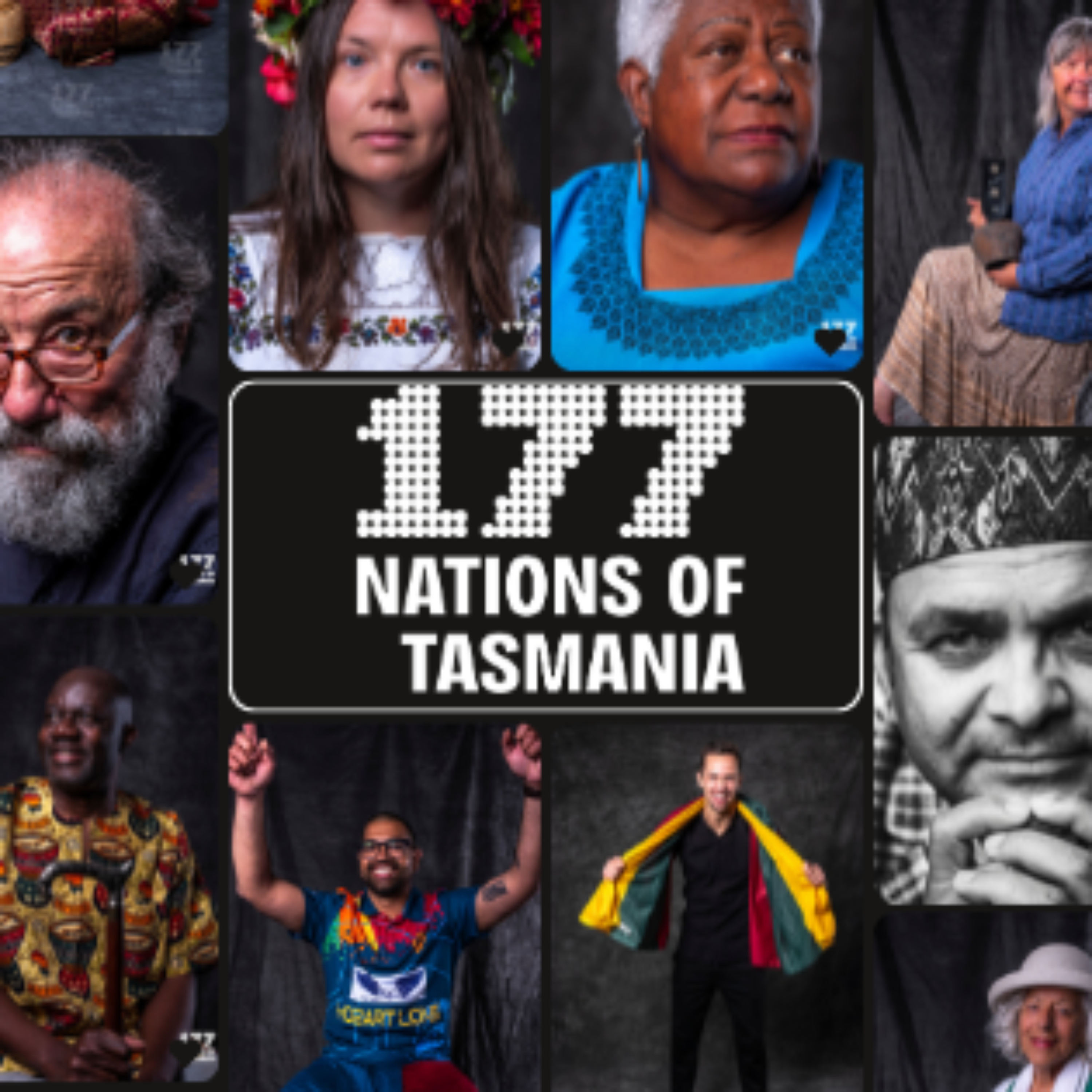
177 Nations of Tasmania
by Mark Thomson
There are 177 different nationalities represented in Tasmania's population and in this podcast we try to talk with one person from each one, and find out about why they came to Tasmania, what they brought with them ( experiences, culture, traditions, skills, ideas etc), and their experiences of settling on a small and fairly isolated island state not known for being very multicultural. These are authentic stories from people from all corners of the globe who have made Tasmania their home and cover the full gamut of the migrant experience.
-
138
Tania from Belarus : A journey to Tasmania forged through resilience
Belarus is a land-locked nation centred between Russia, Poland, Ukraine and the Baltic states. Despite becoming independent from the former USSR in 1991, It has maintained strong ties with Russia, not only through cultural and political connections, but through personal and family connections between individuals. Similar to its large neighbour, it has been shaped by the trauma of war and hardship following the collapse of the Soviet Union. Tania grew up initially in a small village in eastern Belarus, with family close by, and later moved closer to the city. When she was still at school in 2007, her sister moved to Tasmania, and Tania thought that one day she would move there too, and so her choice of study at university was influenced by this.Her first attempt to migrate was unsuccessful, but she came to visit as a tourist and feel in love with the state and was determined to find another way, and in 2018 she returned with her husband , to study a Masters of Accounting. This time things worked out much better, and her and her husband are now happily settled in Tasmania with an 11-year old son, David.
-
137
Lena from the Faroe Islands : Echoes of home in the Tasmanian scenery
The Faroe Islands are a self-governing territory of the Kingdom of Denmark. It's an archipelago of green and mountainous small islands situated in the North Sea, between Scotland, Iceland and Norway and home to just 54,000 inhabitants. Lena spent the first 20 years of her life in the small town of Klaksvik, in the eastern part of the Faroes, surrounded by family in a close-knit community. She grew up also in a time when the world was far less connected than it is today, and TV didn't arrive on the islands until 1981. Therefore her early life was filled mostly with memories of activities in the outdoors.When she was 20, she made the big step to move to England to take up a position as an au pair, and although she did return to the Faroes for time, she never moved back permanently. She would meet her husband in the UK and over 20 years ago they moved to Perth looking for a change, and in 2020 Lena moved to Tasmania to be near her daughter, and felt straight away at home being close to the see and surrounded by natural scenery that reminded her of the Faroes.Although she has spent most of her life outside of the Faroe Islands now, she still retains some small Faroese traditions at Christmas and birthdays and still speaks the Faroese language with family abroad.
-
136
Taye from Jersey : Life on a small island community, then travelling the world
Jersey is one of several self-governing islands that make up part of the United Kingdom. Although it it a possession of the UK, it actually lies closer to France, and French culture is evident on Jersey, including in its local, but now little-spoken language, Jersiais. Like other British islands, its an offshore tax haven, meaning that the majority of islanders work in the finance industry or related areas.This wasn't the path that Taye chose though. She was born on Jersey, but her family moved to Australia when she was 3, and then returned when she was 13 on what was originally a short-term stay but ended up lasting 15 years.Rather than following a career in finance, Taye became a beauty and massage therapist, a career which brought her to Tasmania for a 6-month stint working at Cradle Mountain. She later returned to work at the newly-opened Saffire Resort at Coles Bay, met her husband there, and has remained in Tasmania ever since.In this episode we discuss some similarities and differences between the two island communities of Jersey and Tasmania, and how the memories of the German occupation in WW2 impacted both the Jersey community and her family's story.The song that you hear excerpts from in this episode is called "I'ile de Jerri" from Jersey , sung in the Jersiais dialect
-
135
Willoh from Belize : A shipwreck and an unconventional upbringing by the Caribbean
Belize is a small and unique country in Central America - it's the only English-speaking nation, has the 2nd largest coral reef, and possesses an unusual and unique racial mix in its population. Willoh was born in a small village by the Caribbean coast of Belize, and was something of a novelty as the only white child in the village at the time. Her hippy parents had ended up in Belize in very unusual circumstances, essentially as a consequence of an adventurous sailing trip across the Gulf of Mexico gone wrong.Needless to say then, Willoh didn't have the most conventional upbringing in Belize, where she lived until 13, when she moved with her mum to South Australia. However, she would return to Belize fairly regularly over the years, and in fact, at the time of our interview had just returned from there.In adulthood, Willoh has forged a career as an artist, and has previously worked at Hobart's Museum of Old and New Art ( MONA). Despite having lived many years in Australia now, she's still maintains many connections with her country of birth.
-
134
Julio from Guatemala : How a broken American dream lead to Tasmania
Guatemala is the largest country in Central America by both population and area. Like many other countries in the region, it has experienced its fair share of conflict and instability over the year and it's a society marked by income inequality and the problems that brings. As a result of this, many Guatemalans look for a better life abroad, and most seek the so-called "American Dream". Very few though end up in Australia.Julio certainly didn't come from poorer side if Guatemalan society, but he also bought into the American dream after going to study economic at college in Utah and spending some time in California. In the meantime he struck up an online friendship with an Australian girl, Paige. At a certain point the relationship got serious and they had the dilemma as to where to settle more permanently. The first choice was a middle ground in the Bay Area in California, but an ugly twist of fate on the Mexico-California border broke this dream.Although they tried living in Guatemala for a while, it wasn't a sustainable option and finally they made the move to Sydney, which Julio immediately fell in love with and thought he would be there for life.But, like many others, Sydney's housing prices proved an insurmountable barrier, and while looking outside Sydney, the idea of moving to Tasmania came up. A visit to the state convinced them and they bought a house and moved to Blackman's Bay in 2025.Guatemala is also a country of great natural beauty, famous for its many volcanoes and Julio recalls fondly family hikes - something that has made Tasmania feel more like home. In this episode, he contrasts the differences between Guatemala and Australia, but also the very different feeling he has had as an outsider in the USA compared with Australia.
-
133
Renella from Zambia : Appreciating the outdoor life
Zambia is a largeish country in central southern African, perhaps best known for sharing the iconic landmark of Victoria Falls with it's southern neighbour, Zimbabwe. Although it's not a country that comes up on our radar much in Tasmania, according to the 2021 Census, there were over one hundred Zambians living in Tasmania. Not many perhaps, but also not insignificant.Renella has lived in Tasmania since 2003, and around the same time, much of her close family also moved here, but all have now left for other parts of the country or world. She grew up in small town in the south of Zambia amongst family from her mum's Zambian family, and her Dad's Malaysian Chinese family and inherited traditions from both, including both cuisines. Renella has fond memories of her childhood and the range outdoor activities available, and part of what made her love Tasmania was this similar outdoor lifestyle that she had known in Zambia. Renella moved to Sydney when she was 18 to study Accounting, as she could live with an aunt there. After graduating, at the recommendation of her sister, she moved to Hobart, and later other members of the family came to join her. She had not planned to stay long term, but a chance meeting at a party lead to an important relationship. Although her main job is as an accountant, since being in Tasmania, Renella has also rediscovered her love of food in operating a couple of small food businesses.The song featured in this episode is called "Mao", By Amayenge, a popular music group from Choma in the 1970s. The music style is called calindula, a style distinctive to Zambia
-
132
Natalia from Costa Rica : A story of faith, resilience and community
Costa Rica is one of the smaller countries of Central America, both in population and in size. It's also historically been much more stable and secure than many of its neighbours and its efforts to preserve and protect its natural environment has made it a biodiversity hot spot. As a result, Costa Ricans haven't emigrated at the same rate as some other peoples in Latin America. Hence, it is a bit of a surprise to find a Costa Rican living in Burnie, in northwest Tasmania.Natalia grew up near the capital of San Jose, and had always imagined that she would travel. However, the way it happened was totally unexpected.When she was 19, she started learning English from a young Australian man. A connection developed quickly and it was not long before she was on her first ever plane journey to start a new life in Hobart.Her first 18 months in Tasmania were incredibly challenging. An unexpected pregnancy, little English and no driver's license, it was not surprising that she felt isolated and homesick. Discovering a supportive community of Latin Americans in northwest Tasmania, she convinced her husband they should move there, but it was then tragedy struck, with the sudden loss of her husband. At 21 and pregnant with her second child, Natalia had considered returning to Costa Rica, but the support of the community she had found and her personal faith helped her to stay resilient. Almost 20 years later she has managed to build a good life in Burnie, having remarried, raised 4 kids and recently getting what she considers her dream job providing support for children in out of home care.
-
131
Olive from New Zealand : A new spiritual home away from home
As of late 2025, the number of New Zealanders living in Australia was estimated to be around 700,000 - a huge number for such a small country, reflecting the close relationship between our two countries. In Tasmania, it's estimated there are about 5000 New Zealanders living here, making them one of the top 5 migrant groups.It's assumed often that New Zealanders are very similar to us and don't have many challenges to settle in here, but the true picture is more complex. One thing that distinguishes New Zealand from Australia is the influence of Maori culture, something which until fairly recently was repressed. Olive grew up in a small farming community near Gisborne, a small city on the east side of the North Island. Her mother and grandmother were strong influences during her younger years and gave her a connection with Maori culture and her grandmother, in particular, practised traditional Maori healing. Losing her mother and grandmother at the age of 16 was a deeply traumatic event for Olive and for a while she fell into some unhealthy coping mechanisms. Most of her family also migrated to Melbourne and, pregnant with her first child, she joined them to be near family support.It was around ten years ago that Olive met a Tasmanian man, who she later married, and was part of the reason that brought her to Tasmania. The other was a slightly more spiritual reason, which you will her about in the podcast.You will also hear how during the COVID pandemic and the lockdown in Melbourne lead to Olive reconnecting with the Maori language and culture through online communities, something she now also shares within her local community in Tasmania.
-
130
Roque from El Salvador : Getting help from "angels"
El Salvador is a small Central American nation that has suffered from a multitude of hardships over many decades, include civil wars, a brutal military dictatorship, crippling poverty and violent crime. This has led to a large exodus of the population escaping, through both legal and illegal channels, to countries like the USA, Canada, Mexico and Australia. In fact Australia is home to the third-largest population of Salvadoreans outside the country itself.Roque came with his family to settle in northern Tasmania in the early 90s as a result of the civil war that lasted from 1981 to 1992. Australia accepted some 10,000 Salvadoreans during this time as a part of its Humanitarian Resettlement program, and Tasmania received several hundred of those.Roque chose Australia over USA or other countries because he wanted to be as far away from El Salvador and its problems as he could, but with no English when he came, settling in near the small city of Devonport was quite a challenge at the beginning.However, as Roque says, he met some angels in Tasmania, almost by chance, who helped him with work and even build a house, and ultimately let him put down roots in Latrobe.
-
129
Alfredo from Cuba : Dentist, writer, kick-boxer
Cuba is a country that really stands out amongst Latin American nations because of the revolution in 1959. Since then they have lived under the rule of a Communist dictatorship and for most of that time also under severe sanctions from the United States, both of which have create severe hardship for the people of Cuba, both in material terms and also in terms of the lack of civic freedoms. This has resulted in large numbers of Cubans leaving the country over the years to seek a better life in countries such as the USA, Canada, Spain or other parts of Latin America. Not a lot come to Australia, because it is very difficult both practically and financially.Alfredo is perhaps then a bit of a pioneer, who arrived in Hobart in July 2025 from Ecuador, where he spent 12 years previously. His first goal was to improve his English, but his main goal is to find a safe place for his family to settle. Like many migrating from South America, safety and security were major considerations.But despite the hardships that drove him away from Cuba, Alfredo remembers his childhood fondly, as he grew up in a place that was safe and security and where there was a strong sense of community around and people helped each other out. It was only later in life that he started to question the ideology that he had drummed into him religiously from a young age, as the reality that he experienced no longer seemed to match the government line.Alfredo is also a writer, having self-published books on dentistry, he's also written books for children and is working on a fantasy novel as well. On top of this, he has started teaching kickboxing in Hobart as well, and that reflects a theme that kept coming up in our interview that Alfredo values service to others.
-
128
Rodney from Trinidad and Tobago : An unexpected love affair
Trinidad and Tobago is one of the larger nations of what is often known in the West Indies. It's known for its tropical beaches, its coral reefs, its steel drums and the Caribbean's biggest carnival celebration. In Australia, it is also associated with world-class cricketers like Brian Lara. Rodney grew up in a couple of small close-knit communities on the north coast of Trinidad and has great memories of his childhood there. Life took a darker turn for him later in life though, and family circumstances meant that he was better off going to live with his mother in New York at the age of 15. His experiences in Trinidad and seeing the growing influence of the illegal drug trade, influenced Rodney's decision to study a degree in Criminal Justice in New York. However, it was during his degree that he made an online gamer friend from Tasmania, and cutting a long story short, he came to Tasmania to live in 2018. After the stress and tension of life in New York, Tasmania felt like a return to home and the more close-knit of community he had grown up with in Trinidad.
-
127
Huw from Wales : Connecting with the Tasmanian sense of community
It can be easy to forget that English is not the only indigenous language of Britain, and indeed Welsh, still spoken by around 600,000, has its roots far deeper in the history of ancient Britain. Wales is a land of mythical folk tales, rolling hills, magnificent choral singing traditions, passion for rugby and so much more. Though perhaps clichees, although these contribute to a distinctive Welsh identity, which can still be seen in faraway places like Tasmania, which has long received Welsh migrants ( and convicts).Huw is one of the more recent arrivals from Wales having come to settle in 2021. His partner had arrived in early 2020 to take up a position at the University of Tasmania. Due to a succession of misfortunes and tribulations, such as a global pandemic, Huw couldn't make it until much later.Huw grew up in a very rural area of north-west Wales and was brought up in a Welsh-speaking household, and indeed, English wasn't introduced into his schooling until he was 7 years of age. As we discuss in this episode, language, especially having more than one, can have a big impact on shaping how one sees the world and Welsh is no exception.Growing up on a farm where everyone had to pitch in, meant Huw developed a strong sense of community, something which he has found resonance with in Tasmania also.
-
126
Ingrid from St Lucia : A touch of the Caribbean in Tasmania
Ingrid hails from the tiny island nation of Saint Lucia, a lush Caribbean island known for its volcanic peaks, vibrant Creole culture, and status as the only country named after a woman. With a population of around 180,000, Saint Lucia blends African, French, and British influences, and though its official language is English, many speak Saint Lucian Creole.Ingrid trained as a physician in Cuba on a Saint Lucian government scholarship, worked in pediatrics, and later took on various public health roles across the Caribbean. She made a big move to study Master’s degree in Adelaide, where she met herpartner—but it was the appeal of small-city life that drew her to Hobart for her Ph.D.Now based at the Menzies Institute, she’s deep into health economics research and has found a second home in Tasmania—one that, surprisingly, shares much with her island roots.
-
125
Lobelia from the Solomon Islands : From enforcing the law on the seas to tending gardens in Launceston
Lobelia’s story begins in the Solomon Islands, a Pacific nation comprising over a thousand islands scattered southeast of New Guinea. Growing up in a small, remote village on one of the six main islands, she experienced a simple and traditional village lifestyle, with no technology and few of the modern convenience we take for granted now.At the end of her high school, life in the Solomons took a dramatic turn when the country was gripped by significant ethnic conflict and social unrest. This period of instability was so severe that it required intervention from theinternational community, including Australian police forces, to help restore peace and order. For three years Lobelia stayed at home with her family in their village, not quite sure where her life was going to go.Once stability was re-established, Lobelia’s decided join the local police force. She later advanced her career by working in the Maritime Division, where she got to see life on some of the remote islands. She also had the opportunity for further training at Australian Maritime College in Launceston, and it was here she first met Craig, who would become her future husband.After marrying Craig, Lobelia made the big move to Launceston, Tasmania in 2017. Like many migrants to the region, she faced the challenge of starting over professionally and just building a social circle. She decided to do a course in Horticulture at Tafe Tasmania, and now runs her own gardening business.
-
124
Outhai from Laos : From the heart of SE Asia to country town Tasmania
Laos, a Southeast Asian country of about 7 million people,is known for its Buddhist traditions and vibrant food culture. Outhay grew up in the capital, Vientiane, helping her family run a 24-hour convenience store where everyone pitched in. Memories of both the abundance and scarcity of food shaped her childhood.After studying English at university, Outhay worked in government administration, where she met Roger, a Tasmanian geologist working in Laos. Romance developed gradually, and laws in Laos had significant penalties for Lao women having relationships with foreign men, meaning they had to bite the bullet and they got married in 2005. In 2006, Outhay moved to a farm in Wilmot, north-west Tasmania. She connected with the local community through playgroups with her children and became known for her spring rolls. Later, she retrained by studying cooking at TAFE, worked at a café, and completed a chef’s apprenticeship—earning Tasmania’s Apprentice of the Year in 2016.
-
123
Khaled from Yemen : Proud of where he comes from and the new place where he lives
Yemen is a country that gets little attention despite being at the centre of one of the greatest humanitarian crises in the world, as declared by the UNHCR in 2025. There is not space enough here to describe all the events that have led to such a crisis, including civil war, an overthrow of the government and in 2015 a Saudi-led mass bombing of the country, but the results have seen a catastrophic collapse in living standards, large-scale hunger and instability.In other words, not the kind of environment parents would want their children to grow up in. This was the view of Khaled's parents in 2015, as missiles rained down in their neighbourhood, destroying many buildings around them, and this was the first step to Khaled coming to Tasmania.Coming to Hobart to study a Business and Finance degree, Khaled could scarcely have come to a more contrasting environment. A place that was peaceful and quiet, even a bit too quiet, and it took Khaled a while also to adjust to western culture. Despite this, he has truly made a lot of his opportunity to develop his skills, creative pursuits and character. This included completing a novel during the pandemic while he was struggling to find work after graduating.Of course, it goes without saying, that the situation in Yemen is still very unstable, and in this episode, Khaled speaks of the fears for family still living back home.
-
122
Ellie from the Isle of Man : A "tree change" to the Huon Valley after a life on the seas
The Isle of Man, or Manx, is a self-governing dependency of the United Kingdom, located between Great Britain and Ireland, and has been influenced by the cultures of both. It's known for being an offshore tax haven and a centre for gambling companies. It also has the oldest continuously-running parliament, the Tynwald, which is claimed to be over 1000 years old. There is also the Manx tongue, a Celtic language spoken by little over 2000 people, but which has undergone a recent revival.With a population of around 80,000, it is perhaps a surprise to find a Manxer on another island on the other side of the world. It was Ellie's love of boats and sailing that drew her away from the Isle of Man, first with a a sailing adventure across the Atlantic, then 6 months sailing around the Pacific. Her first contact with Tasmania though came through a circumnavigation of Australia on the tall ship the Endeavour . It wasn't until years later, when Ellie became pregnant with her second child, that her and her Australian partner, made the decision that Tasmania would be the place they would settle and raise their children, and it's been a decision that Ellie hasn't regretted.Music used in this episode is in the Manx language and is used under Creative Commons from Culture Vannin -https://culturevannin.im/manxfolklore... . Culture Vannin exists to promote, supportand celebrate the culture of the Isle of Man.
-
121
John : A "Ten-Bob Kraut" who escaped the East German secret police
John's story begins in an undistinguished town in the South-East of war-torn Germany, where as a child he remembers sheltering under a blanket in a cellar as Lancaster bombers roared overhead. As a young boy he experienced the deprivation of the post-war era and then the emergence of the Germany Democratic Republic and its sophisticated surveillance society. Even after escaping across the border to West Germany on his brother's motorbike, the East German Secret Service tried to recruit him while he was working at Mercedes in Stuttgart. The fear of the East German secret service was just one of several reasons that a 20-year old John decided to migrate to Australia as a "10-pound Kraut" in 1960, and this would ultimately lead to employment at the Hydro in Tasmania and a new life.Sadly, John passed away on 18 April 2025. RIP John Keller. I am glad to have been privileged enough to hear your story and preserve it for the future.
-
120
Refugee stories compilation 2024
To mark Refugee Week 2024, here's a compilation of stories from five of the interviews I've done in the last 12 months that reflect different aspects of the refugee experience from Asia, Africa, Europe and the Middle East.There's Ieva's story of her whole family walking 200km to get to the port of Riga to escape the oncoming Soviet Army, Sandra's tale of when a to-close-for-comfort missile attack was the final straw for her family to leave Damascus. Khadga explains how ethnic Nepalis were brutally imprisoned, threatened and expelled from Bhutan and Lawrence describes his memories of life of being a South Sudanese refugee in a camp in Uganda. Finally, Aubert explains part of the legacy for genocide survivors from Rwanda and the long-lasting effect it has.Image attribution under Creative Commons 2.0Creator: Mirek Pruchnicki Copyright: Mirek Pruchnicki | Flickr
-
119
Rose from Malta : Passing on the lessons from mother's kitchen
Rose's story begins in the throes of World War 2, in one of the darkest moments in Maltese history, as the island was laid siege by the axis powers and would become the most bombed territory in all of the war.Rose came from a big family, and their fate reflected the wider human cost of the war on the population, having their house destroyed and family members killed. Rose was born after the Siege of Malta was lifted, but life was difficult in the post-war period and many Maltese would seek to emigrate. Like tens of thousands of others, Rose's family would migrate to Australia in the 1950s. She grew up in Melbourne in a big family. Melbourne was not the multicultural melting pot it is today, and Rose recalls the family being targets of some unwelcoming insults, but her memories of growing up there were mostly positive ones.It was many years later that she moved with her then husband to Launceston, where she still resides today. While living in Tasmania, she also bought the old bank building in Campbelltown in Tasmania's Northern Midlands, which she ran as a gallery and antique store for many years.Although she has lived in Australia along time now, and Tasmania is for her the best place in the world, she still cherishes parts of her Maltese heritage such as the language, the food and some of them unspoken values from her mother such as caring for others and making no one goes without. Today there are around 40,000 Maltese-born living in Australia, a big number for such a small islands nation, but which demonstrates the special historical connection between Malta and Australia.
-
118
Lili from China : "My parents told me : 'Don't be a sheep' "
Lili grew up in the southernmost region of China, in a neighbourhood where there were strong community connections.Her parents were perhaps not typical for Chinese parents in that they were not focused on grades, but more than Lili was doing what made her happy and they encouraged her to beat her own path.This perhaps contributed to her decision to go to Australia to study after she finished school. She studied Psychology, and after she graduated she returned to her hometown with the idea to start a counselling service. The time wasn't quite right yet for such an enterprise, but while back in China she met her future Australian husband. They would eventually come down to the Huon Valley to pursue their dream to live a more green lifestyle and grow their own vegetables. Lilli's first job was at MONA, but after some time she decided to do further studies in the field of social work, and she now works within the area of mental health and counselling.
-
117
Aubert from Rwanda : Looking to the future, but not forgetting the past
Rwanda is a small nation of 13 million people in the centre of Africa, and the setting for one of the worst atrocities of the late 20th century. During the Rwandan Genocide in 1994 an estimated 500,000-800,000 people of the Tutsi minority were killed by members of the Hutu majorityTasmania may seem a million miles away from such horrors, but the small Rwandan community here has continued to commemorate the event in Hobart in April for the past 20 years. Aubert has been one of the key organisers of the commemoration event, an event which includes commemoration of all genocides, in the hope that humanity can learn from history and avoid dehumanisation of others and the violence that brings.But in this interview Aubert also discusses the positives of growing up in Rwanda - family and community playing a big role in Rwanda society and a happy childhood for Aubert. After arriving in Hobart in the early 2000s, Aubert also did a number of different jobs, including teaching French privately and even an interesting stint as an assistant at the Body Shop. He's also been involved in helping new arrivals adapt to the new culture here through both his work and also as a some time coach and mentor at Hobart's most multicultural soccer club, Hobart United. Photo : Andrew Wilson Photography
-
116
Pul from Cambodia : "If you fail, the whole family fails"
Cambodia is a country with a dark recent past, with the the brutality of the Khmer Rouge regime leading to millions of deaths and large numbers of refugees. A large portion of those refugees came to Australia in the late 70s and early 80s, often on boats. However, in more recent times, Cambodia has enjoyed a sustained period of relative stability and prosperity, and Cambodians are more likely to come to Australia as students than as refugees.Pul ( aka Pulsokunreangsy ) arrived in Melbourne at 18 years of age to study IT. This was not something he had planned, it was an idea of his mother and cousin, who told him after they had already applied for him that he had better study for the English test ( IELTS) ! As Pul realised from his experiences in Australia, one of the biggest cultural differences is that in Australia, you are expected to be a lot more independent, while in Cambodia, even as an adult, the family is very much part of your decision-making. He has found one of the most positive things he has got from living in Australia is developing independence and life skills. In Cambodia, your successes and failures are very much tied to the family, and this can be stressful at times.Pul came to Hobart to do post-graduate studies in a quieter and more relaxed environment and he managed to get a graduate position in his field in Hobart after graduating.
-
115
Akram from Tunisia : Learning to be patient and trusting in destiny
Tunisia is a small northern African country, majority Muslim and Arabic-speaking, but also strongly connected with other cultures of the Mediterranean and North Africa. Akram is, at least at the time of recording, the only Tunisian in Tasmania. Yet Tasmania was an intentional choice by Akram, who arrived here in 2023 with his Filippino wife and two young children. Previously they had been living in Qatar, where Akram had worked for around 10 years. He had originally moved there to take a job at the Sheraton Hotel. Despite having done thorough research before arriving, there were some shocks. The first six months was quite a struggle but as Akram puts it, he learnt to be patient and accept new situations and now life is looking up for him and his family. Music credit : "Sidi Mansour" - Ahmed Alshaiba ft Ahmed Mounib, Mazin Samih.
-
114
Mia from Bosnia-Herzegovina : Taking a chance on love and crossing continents
Bosnia Herzegovina is perhaps sadly best known for the brutal war waged there in the 1990s between Serbs, Croats and Muslims. An estimated 100,000 were killed and millions became war refugees. Mia, as a 4 year old , was one of those many that fled the war, and her family took refugee in Croatia, where she would grow up and receive her schooling. At 18 years, Mia received a funny message on MySpace from some random Aussie guy. He was thinking to come to Croatia. They seemed to click and when they met Mia quickly felt she'd met the man she wanted to be with. A few years later she had moved to Launceston, Tasmania and got married. The first few years would prove to be a steep learning curve, both experiencing married life and a new culture. In Croatia, she had studied Architecture, and though she would complete further studies to become qualified, her first job in Tasmania was actually in a surf shop.
-
113
Mwase from Malawi : From the Beating Heart of Africa
Malawi is a small country that fits like a thin sliver between the Zambia, Tanzania, Mozambique. It's become known as the "beating heart of Africa" for being a sanctuary for people from some of the war-torn and troubled nations nearby. With a population of around 19 million, it's also one of the continent's most densely populated.Mwase's story begins by the shore of Lake Malawi, Africa's third largest lake and a feature of huge importance to the life and economy of the country. Although Mwase grew up in a small town, he was curious about the world and a backpacking trip around southern Africa opened his eyes to other cultures and lifestyles. When he returned to Malawi, he met an Australian volunteer, who he eventually married, and cutting a long story short. lead to his big move to Tasmania in the early 2000s.Tasmania in the early 2000s was only just starting to see a few faces from Africa on the streets, and discrimination and finding a sense of community were just some of the challenges Mwase had to deal with. He became involved with community care work and incorporated his passion and skills in music into this, and has been involved in numerous musical projects in his time in Tasmania.
-
112
Ana from Panama : Ballet dancing, long-distance romance and an epic journey to Tasmania
All that most Australians know about Panama are the Panama hats and the Panama Canal, and probably some have a vague idea that they speak Spanish.Ana grew up in the heart of Panama City, which lies on the Pacific coast of the country, the most southerly nation in Central America.Ana started dancing ballet when she was 5. She had bad as asthma as a child and she found it was one type of exercise she could do without issues. She continued dancing almost every day through her childhood and teens. She'd eventually go to study dance in Cuba, where she was for 5 years, and it there that in 2012 she met Elias, her future husband, who lived in Tasmania. But romance was to come much much later, as they started as friends, he went back to Australia and they stayed predominantly long-distance friends for years after. When things got serious between them, so did the state of the world, with the world-wide pandemic throwing some serious obstacles on Elias's route to get to Panama to propose, and then even further, after they married when Ana had to make an epically long journey to get to Australia.Ana also talks about getting pregnant not long after arriving in Tasmania and dealing with being a new mother in a new country and it's rewards and challenges.
-
111
Ben from Morocco : Studying housing issues both near and far
Ben was born into a Berber family in a small town in Morocco, the youngest of 11 children. While, for various reasons, some older siblings had to drop out of school early, Ben was an enthusiastic student. A teacher at high school inspired him to take an interest in some of the social issues he noticed around him and this lead him to studying a degree in Sociology.Ben followed the academic path after graduating, first doing a Masters in Malaysia and then coming to Tasmania to do his Phd and eventually becoming a lecturer. The main focus of his research has been housing, from the slums of Casablanca to the housing crisis in Tasmania and its various causes and consequences.
-
110
Michaela from Madagascar : Using the gift of "healing hands"
Madagascar is a unique and fascinating island nation off the east coast of Africa ,well-known for its incredible biodiversity, especially its famous lemurs. Less well known is its human and cultural diversity, with strong influences coming from Asia, Africa and Europe. Michaela has lived in different places in Madagascar and is familiar with the different regional dialects and traditions of the country, and her own family background reflects a lot of the fascinating cultural diversity of this large island. She met her Tasmania husband online, and in her 40s, she came with her daughter to Tasmania to be with him. Like many new migrants, finding employment in Tasmania was not easy, and she found her 17 years' work experience in Madagascar working at various NGOs was not really regarded at all. However, she was eventually able to make the most of another talent - her "healing hands" , for some years ran her own massage business in Hobart. Music : "Energizing" Kevin MacLeod (incompetech.com)Licensed under Creative Commons: By Attribution 4.0 Licensehttp://creativecommons.org/licenses/by/4.0/
-
109
Oren from Israel : Being able to turn down the volume
Oren was living in the middle of Melbourne with his partner during the COVID pandemic, when the city was put into regular lockdowns. This heightened the feeling of being stuck in a concrete jungle, and though not the only reason, it got Oren thinking about making a change. In 2021 he followed his partner down to Tassie, where she did a permaculture course and they did a farmstay down at Cygnet for 8 months...and the rest is history, as they say.Oren originally came to Australia to study Audio Engineering, and music and sound have been very much a part of his life. Indeed, some of his teenage musical influences lead him to questioning some of the aspects of Israeli society. This questioning came to a head when he left school and faced the obligatory 3 years' military service. Through a mixture of protest and negotiation, he ended up spending his time in a desk job in the Air Force. By the end of it, he was ready to jump back into the world of music and entertainment, and 18 months later he made the life-changing decision to move to Melbourne.Original music produced and composed by Oren Gerassi.https://borcho.com/ear-stimulants/
-
108
Niall from Northern Ireland : Sitting on the fence in a divided community
Niall grew up in Belfast in the 90s when the bloody sectarian conflict between Protestants and Catholics still permeated almost every aspect of Northern Ireland society. His family didn't belong to either faction and never bought into the toxicity created by the historical sectarian biases.Living in such atmosphere, Niall always thought to get out, and in his early 20s moved across to Brighton in the UK.With a passion for music, the strong artistic community in Brighton was really appealing, but also expensive. That love of music and the arts would also be what eventually attracted him to come and live in Hobart, after a visit during Dark Mofo, which was part of a break to recover from burnout.Niall was eventually move to Hobart with his partner and get a job at the Museum of New and Old Art, before a recent career change.Music credit - "Flux and Form" by Northern Irish band Tracer AMChttps://www.youtube.com/watch?v=ouXm_Pa5Its
-
107
Ayman from Sudan : Overcoming language barriers through soccer
Ayman's first experience of Australia was arriving at Sydney Airport with no English or knowledge of his new country, getting very lost and missing his connecting flight to Hobart. His lack of English was a problem at first, but his soccer skills helped him get involved with the local soccer community and this opened up social networks and job opportunities that Ayman took advantage of. Ayman grew up in Khartoum, but at around the age of 18, the threat of enforced military service became very real and he decided to escape to Egypt. After two years there, he was accepted as a refugee and was able to join his brother in Tasmania.
-
106
Micheal from Benin: The original home of Voodoo
Since arriving in Tasmania about a year ago, Michael has got somewhat accustomed to people questioning whether Benin is a real country - an indication of how little known his homeland is in Australia. Benin is a small country in West Africa, squeezed between the much larger Nigeria and Togo. It was formerly part of the much larger Kingdom of Dahomey and was also one of the centres of the Atlantic slave trade. A legacy of this is seen in places like Haiti, Cuba, Brazil and New Orleans, where Voodoo is still practised, a belief system originating in Benin. In western culture this has become associated with pushing pins into dolls, but in Benin it is still a very much accepted bona fide religion.Michael's story is remarkable other ways though. From a tough time as a child at a boarding school in Nigeria, to University studies in Ghana, where he'd secretly hoped to further his soccer career, he eventually got a scholarship to study agriculture in Israel. During his year in Israel he fell in love with a Filipina, and she was the eventual inspiration for him to come to Tasmania.He arrived in Tasmania to study, but with no contacts, little money, no secured accommodation and no partner ( her visa was rejected). His strategy for dealing with this situation and getting on his feet in Hobart was pretty unique and a really great story, which I'm not going to spoil here.Photo : Andrew Wilson Photography
-
105
Khadga from Bhutan : Forced to leave at gunpoint
Bhutanese now make up Tasmania's largest refugee community, and also on of the major migrant populations living in the state. Yet many Tasmanians know little about them and their story. In the early 90s many Bhutanese of Nepali ethnicity, were expelled from country, often with threats or actual use of violence, and forced to live in refugee camps in Nepal. For many years they lived in limbo in these camps, hoping to one day return to their former homeland.In Khadga's case, he and his family lived in the camp for 19 years before being accepted for settlement in Australia. Through the research he had been able to do at the time, Khadga had come to the conclusion that Tasmania would be the best place for them to settle given it's similar climate and topography to Nepal. Initial adjustments were tough but Khadga succeeded in getting first a qualification in Child Care, and then Nursing and Paramedics. He currently works as an Aged Care Nurse, but also is a co-owner of a business providing disability care.
-
104
Triin from Estonia : From pro volleyball in Europe to new life in Tasmania
Although Estonia is a small country far away on the other side of the world, there has been a long-standing, though small Estonian community since the aftermath of WW2, when many migrants from the Baltics settled in Tasmania.Triin is a more recent arrival, having settled in Tasmania a bit over 10 years ago after a career in professional volleyball in Europe. In fact, volleyball is the main sport for women in Estonia, and was through this that she met her Tasmanian husband, who was also playing volleyball in Europe.When they both reached the stage in the careers when retirement was looming, they had to make a decision as to where to live together, and Tasmanian seemed to be the most viable option. Though in some ways, settling down in Tasmania was a relatively smooth process for Triin - she got work quickly and the language was never a problem, but there were some cultural differences that were a challenge to adapt to, not least the very different style of communication and social relations compared with what was the norm in Estonia. Triin continues to play volleyball in Tasmania and help develop local players with the skills and knowledge that she brings from Europe. We also discuss the Estonia love of foraging and choral singing, a strong feature of other Baltic cultures also.
-
103
Nubar : An Armenian on King Island
Nubar was born in Egypt to Armenian parents, and grew up speaking Armenian, English and French rather than the majority language of the country, Arabic. After the revolution in Egypt in the 1950s and the rise of Arab nationalism in the region, many Armenians perceived they were going to be worse off and chose the emigrate to places like Australia, and Nubar's family was no exception.Armenians have a long and rich history that goes back thousands of years, of migrating from their homeland in the Caucasus and settling in forming communities in many different parts of the world, but particularly the Middle East and Asia. It's a history well beyond the limits of this podcast, but Nubar's accounts of some of his family's history will perhaps give a taste of that history.Nubar arrived in Melbourne with his family when was still school age and ended up initially having a career as a drama teacher, before pursuing an interest in filmmaking. This would ultimately lead to work as a lecturer at the Swinburne Film School in Melbourne. He currently lives on King Island, where his wife was born, a fairly remote island to the north-west of the Tasmanian mainland and he has continued to pursue his artistic streak through painting and photography, and has even become something of an expert in growing blueberries.
-
102
Anne from PNG : From the lush green Highlands to recommending books in Devonport
Although Papua New Guinea is one of Australia's closest neighbours, it's a place and a people that the average Australian is fairly ignorant of. It's probably not well known, but Papua New Guineans make up the largest of the Pasifika communities in Tasmania.Anne is a PNG born and bred, but now works at the Devonport Library, absolutely miles away both physically and culturally , from her early years living in different regions of Papua New Guinea. As her father was an Anglican Minister, and later a Bishop, her family moved around PNG every few years, and so she talks about her memories in a small town in the PNG Highlands, contrasted with the city of Lae, the second largest city in PNG. Like many other Pacific Island countries, the concept of family is very different to that in Australia, with family extending to a much wider community and the bonds being much stronger. Once Anne finished school, she came to Australia to study at Uni. She spent her first few years in Ballarat, but after graduating came to the NW of Tasmania, and after further study and some volunteering, ended up working as a librarian in Devonport.
-
101
Joanna from Singapore : Trading hustle and bustle for work-life balance
There could hardly be two more contrasting places than Singapore and Tasmania - one is a busy, crowded and cosmopolitan metropolis located in the tropics, the other a quiet, laid-back sort of place with a more homogeneous population and far more variable climate !Joanna originally left the hustle and bustle of Singapore to take a restful break in Tasmania on the recommendation of a friend. She was shown around Hobart by a man she later decided she would spend the rest of her life with.Joanna had studied Design in Singapore, and later Psychology, but she ended up studying Nursing in Tasmania and working in the Aged Care sector. She would eventually combine these experiences to pursue her current career as an environmental gerontologist.Her experience of Aged Care in Tasmania also proved invaluable when she returned to work in Singapore with her husband and did pioneering work in helping make changes in the way aged care services were delivered in Singapore.
-
100
Florian from Austria : Wanting to explore outside the bubble
Florian grew up in a the picturesque alpine region of the Austrian Tirol, in a small village near Innsbruck. For many, life in the Austrian alps might be considered quite idyllic, and possibly because of this, locals tended not to stray too far out of their local district. Therefore, when Florian sat down and told his parents he was going to Australia with his Brisbane-born wife, it was a really big deal. The original plan had been to stay for 2 years, but it ended up getting extended, and after a stint in South Australia, Florian discovered the green hills of northern Tasmania were more to his liking and the connection he felt with the Tasmania landscape eventually lead to staying long term. Despite some reservations by his parents initially, the long distance from home has actually helped Florian bond more strongly with his family and value some of the traditions of his homeland more than he did in the Tirol.
-
99
Ieva from Latvia : Keeping traditions and language alive on distant shores
Ieva's family left Latvia as the German army was retreating in the face of the surging Red Army forces, in what proved to be a dramatic journey. They would eventually land in a refugee camp in Germany, and then it was a 6 year wait before they were accepted as migrants to Australia. It was not their first choice as they had wanted to follow other family members to USA or Canada. Like many war refugees, family members became separated across the globe.Between 1947 and 1952 around 20,000 Latvians would migrate to Australia, making them amongst some of the earliest new post-war migrants to settle from post-war Europe. Like many Latvians, Ieva's family would eventually settle in Adelaide, and later she would marry a fellow Latvian living in Tasmania, and she has lived in Hobart for the last 60 years. Ieva only returned to Latvia for the first time in 1990, as a part of an Australian Latvian choir invited to a cultural festival, at a time when the country was on the verge of independence. She was also the President of the Tasmanian Latvian Association for 35 years and has actively tried to maintain some Latvian traditions and language. Like many Latvian migrant communities around the world, traditions of Latvian choral singing have been kept alive, though maintaining many traditions with a small community is a big challenge.
-
98
Nico from the Netherlands : Dutch directness and supporting diversity
The Netherlands and Tasmania have many ties . From the name of our island through to the development of burgeoning agricultural exports such as onions and tulips, the Dutch have really left their mark on life in Tasmania. Even today, they represent Tasmania's 6th largest migrant group and are the only migrant group which is overrepresented in Tasmania compared to the rest of Australia. In the past few decades the Dutch population has experienced a fairly significant decline, but migration from the Netherlands hasn't completely dried up, and Nico represents on of those more recent arrivals, arriving 13 years ago. Initially she came over with intention of picking cherries for a short time but ended up staying longer and meeting the man who was eventually to become her life partner. After a few travel adventures and time living with her partner abroad, they decided to come back to Tasmania and Nico worked as Multicultural Community Development Officer for the Multicultural Council of Tasmania. In this role she has drawn on her experience both as a migrant and working across cultures around the world and while her Dutch directness seemed to be a bit of a problem initially, she's found that it had its advantages in her role as well.
-
97
Ross from Scotland : A fishy story
Ross grew up in Northern Ayrshire and in a town north of Glasgow. He developed a strong interest in aquaculture at high school, with one of the primary attractions being that it would allow him to travel for work.In his early 20s he came to Australia on a working holiday and found work on a fish farm in Tasmania. His employer wanted him to stay longer and it meant that Ross had to make a big decision, a decision that meant he would still be in Tasmania 20 years later and still working in aquaculture.We also discuss a bit about some of the small Scottish traditions he maintains and how his kids have become interested in Scotland and their extended family in Scotland.
-
96
Aki from Taiwan : Finding a more balanced life
When I was a kid , "Made in Taiwan" was where every kids' toy seemed to be made, from Matchbox cars to the early electronic games. None of us knew anything about it except that it was a distant land full of gigantic toy-making facilities.In fact, Taiwan is a small country, half the size of Tasmania, but with almost the same population as the whole of Australia.Aki was born in the busy capital of Taiwan, Taipei, and followed her sister to Tasmania as a working holiday maker around 11 years ago. After various jobs, she decided to stay in Cygnet, a small town south of Hobart with a minimal Asian population. It was a real move out of her comfort zone but helped her improve her English and get to know locals, especially when she got a job at the local pub.Aki would eventually get longer- term employment at one of Tasmania's largest salmon producers, Tassal, and it was through this work that she would eventually meet her partner , ultimately leading to settling more permanently in Tasmania.
-
95
Patricia from Paraguay: Food with passion
Paraguay is a small land-locked country in the heart of South America, which still retains a rich indigenous heritage, in particular the Guarani language, which along with Spanish, is the official language of the country.Patricia's story begins in the capital city of Asuncion, where she grew up in a close-knit neighbourhood surrounded by family. When she was 11, she moved to Chile with her sister, due to a change in family circumstances. Although Chile was a neighbouring country, there were many aspects of life and culture there that Patricia struggled with. However, it was here, while at school, that she started earning money through selling home-made ice cream and other similar enterprises, and that is something she would return to in a different way in Tasmania.She would eventually meet her future Australian husband in Chile and she moved with him for several years in Canberra before coming down to Tasmania. After initially working in logistics, as she had in Chile, Patricia decided to take a chance and purchased a food truck from a placed called Triabunna, and now sells empanadas and other Latin American dishes under the name Salsa Sol at different locations around Hobart.Photo Credit : Alex Florez Photo
-
94
Lawrence from South Sudan: Reuniting with family and making a new home
South Sudanese represented the first significant group of Africans to settle in Tasmania, starting from the early 2000s. Lawrence and his siblings arrived from a refugee camp in Uganda in 2003 when he was 14. School was challenging as there was no one that spoke his language and his prior education had been disrupted by regular moves from camps to camp to Uganda. His father had been killed during the civil war in his country and the family had fled to Uganda as refugees to find safety, as many hundreds of thousands of South Sudanese have over the course of the ongoing conflict in Sudan. Despite many challenges in adjusting to a new life in Tasmania in the early years, Lawrence was able to get work while still studying and eventually even ran his own shop. He now works in transport doing deliveries all around Tasmania, which gives me an opportunity to see all the parts of the island. He also sings and writes his own songs, which is his avenue to express his feelings and thoughts about things. We also talked about the importance of family in South Sudanese culture and how the concept of family differs markedly from ours in Australia.
-
93
Cecilia from Sweden: A mutual connection with the Antarctic
Cecilia grew up in the old Swedish university town of Uppsala. As a child she had an interest in art and textiles, but would eventually go on to study chemistry and liminology - the study of rivers. Her studies would eventually lead her to work for the Swedish Polar Secretariat and work at the Swedish scientific base in the Antarctic. This connection also lead to her meeting her Tasmanian husband, Harry and ultimately coming to Tasmania in 1998. Although Swedes like Cecilia invariably speak excellent English, adjusting to a new life so far away from family was not without its challenges, and in this episode we discuss a few of them, and also a few of the ways Cecilia tries to maintain connection with some of her Swedish roots, especially finding regular opportunities to speak Swedish with other Swedes in Tasmania. We also talk about a few very distinctive Swedish things such as the concept of "lagom" and the notorious and very much acquired taste of "surströmming", a kind of fermented herring eaten mainly in the north of Sweden ( Look it up on YouTube and you will get a sense of the strong reactions that it evokes from foreigners ! ).
-
92
Lisbeth from Denmark : Meeting that special person in Tasmania
Denmark has been raised higher in the minds of Tasmanians ever since the Crown Prince of Denmark married a Tassie girl, sometimes affectionately referred to as "Our Princess Mary". Lisbeth's story has some parallels - she's a Dane who meet someone special in Tasmania. In her case, it was towards the end of a two-year Working Holiday in which she'd worked as a jillaroo in Northern Queensland and as an accountant for Australia's biggest mining company. Her romance with Adam in Tasmania was something of a whirlwind one by today's standards - they married within 6 months, and they are still going strong over a decade later.Lisbeth has two young boys, who have shown interest in their Danish heritage and are both learning Danish through Zoom from a teacher in Denmark.Lisbeth is also passionate about mental health, and is in the later stages of studying a Psychology major and has been trying to raise awareness of mental health in her local area. In this conversation we touch on family issues, including a childhood stay in her mother's birthplace of Greenland, and dealing with her father's cancer diagnosis. And like many other countries, Denmark has some of its own traditions and customs, especially around Christmas.Music credit : "Skye Cuillin" Kevin MacLeod (incompetech.com)Licensed under Creative Commons: By Attribution 4.0 Licensehttp://creativecommons.org/licenses/by/4.0/
-
91
Carmen from Spain : Helping make the University of Tasmania sustainable
Although Spain may be associated with sunshine and hot weather, it's actually a country of significant regional and linguistic diversity. The region of Galicia, in the north-west corner of Spain actually has a temperate, wet climate, as well as its own officially recognised language.This is the region where Carmen grew up, in the moderately-sized city of Ferrol. She studied Marine Ecology at university, and after completing her studies in Spain, she had the opportunity to do some postgraduate research overseas, and that brought her to Launceston, Tasmania.15 years on, she is still there, but now working in the role of sustainability officer at the University of Tasmania's northern campus.
-
90
Markelos from Cyprus : Maintaining a connection with the sea
Cyprus has a rich history stretching back to the Bronze Age, and it's strategic importance on trade routes between East and West has meant that many peoples have left their mark there from the Ancient Minoans to the British. It's a culture steeped in tradition and history, but first, poverty and wars, and more recently, economic developments have impacted the island, and has resulted in quite large scale emigration to places like Australia. These days, Cyprus is quite a prosperous and stable place, and so it is quite unusual to meet a recent Cypriot arrival in Tasmania. Markelos caught the travel bug young. He didn't feel suited to the classroom environment at school and decided that he wanted to see the world rather than pursue university study. He came to Australia as a working holidaymaker, but covid prolonged his stay and he ended up coming to Tasmania to study to be a commercial diver. In doing so, he found Tasmania felt more like home than anywhere else he's been and now he is looking forward to staying longer term.
-
89
Anna from Ukraine : Supporting Ukraine through art
The Russian invasion of Ukraine caused one of the greatest increases in displaced persons since WWII. The repercussions of this war have been felt across the world, both in terms of economic and human cost.Tasmania, though extremely distant from the events, has since last year, become host to a small group of Ukrainian arrivals. They have been supported by the small, but long-standing Ukrainian community of Tasmania, who have kept many cultural traditions alive.Anna was one of these arrivals in early 2021. Her husband Oleh had observed the Russian build up of forces on the border and recommended that they go with their infant son to Portugal for a while. However, they had never anticipated the full extent of what was to come.They chose Tasmania because it was far away, and they had a connection in Hobart. When they arrived they were also pleased to find there was a existing Ukrainian community here.In Tasmania, Anna has continued to pursue her passion for Ukrainian folk art and used to sell some of her art work at Hobart's Salamanca Market, and used the funds to support her family and Ukraine in this incredibly challenging moment in its history.Music : ''Хай живе, вільна Україна'' (Long live, free Ukraine!), composed by Petro Prosko.
We're indexing this podcast's transcripts for the first time — this can take a minute or two. We'll show results as soon as they're ready.
No matches for "" in this podcast's transcripts.
No topics indexed yet for this podcast.
Loading reviews...
ABOUT THIS SHOW
There are 177 different nationalities represented in Tasmania's population and in this podcast we try to talk with one person from each one, and find out about why they came to Tasmania, what they brought with them ( experiences, culture, traditions, skills, ideas etc), and their experiences of settling on a small and fairly isolated island state not known for being very multicultural. These are authentic stories from people from all corners of the globe who have made Tasmania their home and cover the full gamut of the migrant experience.
HOSTED BY
Mark Thomson
Loading similar podcasts...
Frequently Asked Questions
How many episodes does 177 Nations of Tasmania have?
177 Nations of Tasmania currently has 50 episodes available on PodParley. New episodes are automatically indexed when they're published to the podcast feed.
What is 177 Nations of Tasmania about?
There are 177 different nationalities represented in Tasmania's population and in this podcast we try to talk with one person from each one, and find out about why they came to Tasmania, what they brought with them ( experiences, culture, traditions, skills, ideas etc), and their experiences of...
How often does 177 Nations of Tasmania release new episodes?
177 Nations of Tasmania has 50 episodes. Check the episode list to see recent publication dates and frequency.
Where can I listen to 177 Nations of Tasmania?
You can listen to 177 Nations of Tasmania on PodParley by clicking any episode. We provide an embedded audio player for direct listening, and you can also subscribe via your preferred podcast app using the RSS feed.
Who hosts 177 Nations of Tasmania?
177 Nations of Tasmania is created and hosted by Mark Thomson.
URL copied to clipboard!