
PODCAST · business
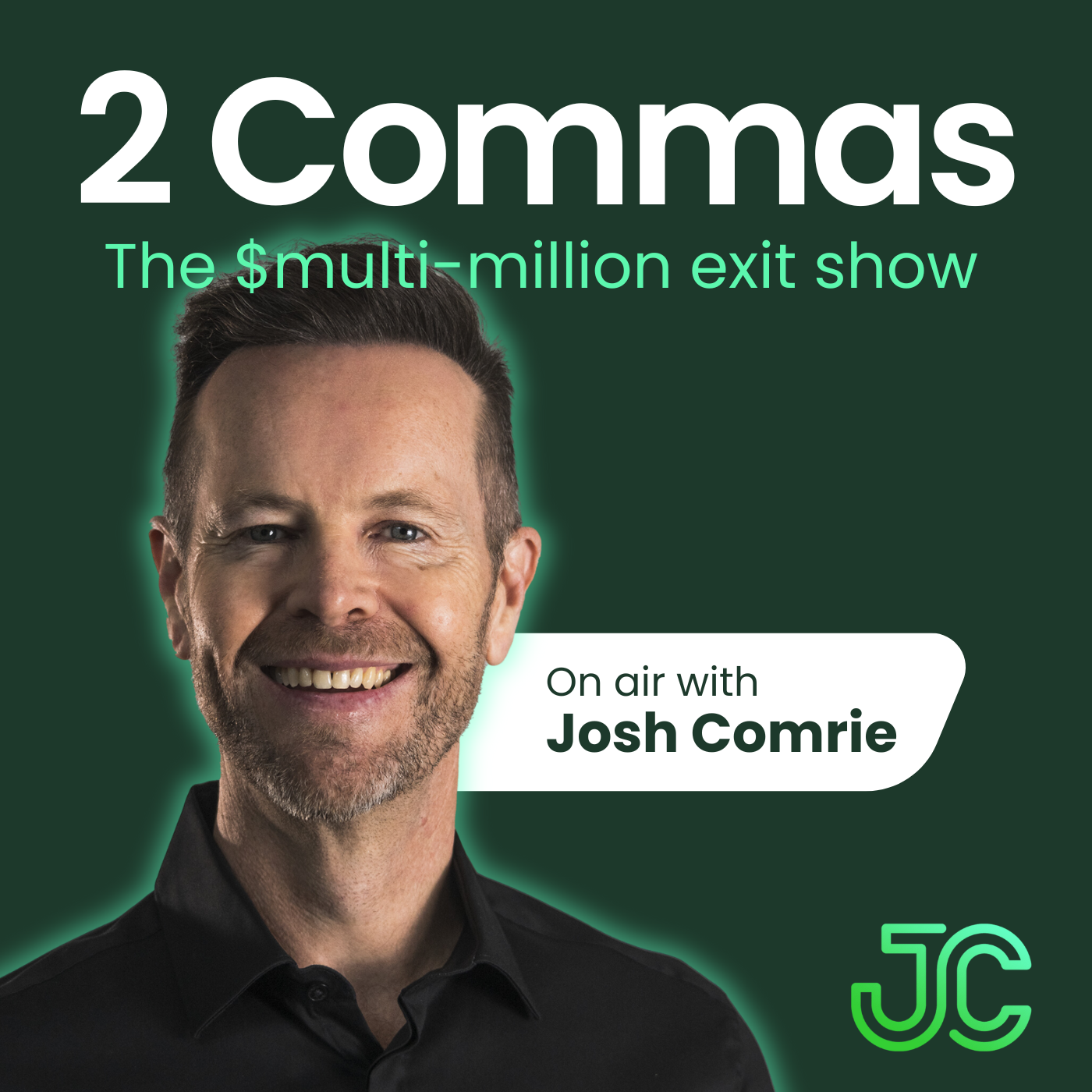
2 Commas: The $multi-million exit show with Josh Comrie
by Josh Comrie
Welcome to 2 Commas: The $multi-million exit showI've spent over two decades helping founders scale their businesses and achieve successful, multimillion-dollar exits. I've also achieved this myself on multiple occasions. With my experience as an entrepreneur, advisor, and investor, I’ve had the privilege of guiding companies through the highs and lows of business growth and exit strategies.Each episode will bring you the previously untold stories of entrepreneurs who have successfully scaled and exited their businesses for seven-figure (2 comma's) plus returns. You’ll hear more about the journeys, challenges, and pivotal moments that led to these transformative exits. My goal is to inform and inspire founders who are looking to scale their ventures to seven, eight or nine figures and beyond.Follow me on LinkedIn: www.linkedin.com/in/joshc
-
75
3 X GM's hired but only 1 exit: How I got this wrong | Dom Sutton | 2 Commas by Josh Comrie
Dom Sutton hired three general managers to run the business he built. Two didn't work out, and he owns most of the reasons why.Dom started Pumpt with his last paycheck, running cold calls from a tiny room next to the toilet while his two boys slept on a mattress beside his bed. He grew it into an advertising business putting 70 million items into NZ letterboxes a year. This is an unusually honest conversation about the founder-to-owner transition, the difference between delegating and abdicating, and why the lack of the right metrics let good months quietly slide into losses. He also tells the story of the toy business he bought on a lick-of-paint story that lost him a dollar a minute for two years, and how that exact disaster became StockTrim, the inventory forecasting software he now sells in 26 countries.We get into:Why two of his three GM hires failed and what he'd do differentlyDelegating vs abdicating, learned the hard wayThe $1.2 million toy business mistake and the due diligence lesson behind itHow that failure became a global SaaSWhy he walked away from selling Pumpt before finally exiting to his own GMSometimes the business you build next comes straight out of the one that nearly broke you.Subscribe to the 2 Commas JournalOrder the 2 Commas bookFollow Josh on LinkedIn
-
74
How I went from "I Think I Want to Sell" to the $$ in 81 days! | Dr. Michael Filosi | 2 Commas by Josh Comrie
81 days from "I think I want to sell" to the money clearing. No broker. No lawyer. Dr. Michael Filosi did the whole thing himself.He sold the largest dental practice in Adelaide to private equity at 41, at a multiple well above the industry norm. Ten years earlier he'd bought it with a possum living in the wall, two chairs, and pen-and-paper appointment books, the practice nobody else wanted. He saw the busy patient base underneath the mess, took it from worst to first, and built it into a genuinely sale-ready business. That's why, when he finally decided he'd had enough, it sold at warp speed.We get into:Why the sale moved in 81 days when most deals take monthsThe buy-in structure that locked his purchase price years in advanceWhat frictionless actually means to a buyer, and how he engineered itWhy he refused to let private equity condition him down on priceThe four Ds model he used to get out of the chair and design the businessBuild it to sell long before you ever want to, and the exit takes care of itself.I'm building a community for founders serious about a real exit. Come find out what it's about, Click here to join the FREE Webinar.Follow me on LinkedInConnect with Dr. Michael Filosi on LinkedIn
-
73
$100k to $10 million in four years: The cost of doing nothing else | Sarah Page | 2 Commas by Josh Comrie
$100,000 in year one. $10 million by year four. When people ask Sarah Page how she did it, her answer makes them uncomfortable. She did nothing else.Sarah is the founder and CEO of The Kindness Collective and the 2024 New Zealander of the Year for community work. What began as a car full of pantry cans driven to a woman's refuge during the darkest period of her life is now a charity supporting over 130,000 New Zealanders a year. This is a genuinely honest conversation about total focus and what it costs. Sarah has ADHD, which she's reframed from a source of shame into her greatest asset, and she's candid about the parts most founders won't touch: the brutal shift from founder to CEO, learning to give up control, and being told she's too much.We get into:Why doing nothing but the one thing scaled the charity so fastHow ADHD makes founders 400 times more likely to start somethingThe founder to CEO identity shift and why it nearly broke herLearning to hand control to a board smarter than herThe charity misconceptions that cost real people real helpThe intensity people find uncomfortable is the same thing that built it all.📩 Subscribe to the 2 Commas Journal → https://www.joshcomrie.com/subscribe 📖 Order the 2 Commas book → https://www.joshcomrie.com/2-commas-book-order 👤 Follow Josh on LinkedIn → https://www.linkedin.com/in/joshcomrie/ 🔗 Connect with Sarah Page → https://www.linkedin.com/in/sarahpagenz/
-
72
The non-performing salespeople weren't the problem. I was. | Rich Conway | 2 Commas by Josh Comrie
Rich Conway spent hundreds of thousands of dollars proving he was hiring the wrong salespeople. He was wrong about that too.He was bringing in good people, then setting them up to fail with no systems, no metrics, and no structure to succeed. When he finally hired a sales manager who put that scaffolding in place, the same calibre of people started producing straight away. It's one of the more honest leadership admissions you'll hear from a founder. Rich is an introvert with imposter syndrome who built Pure SEO into the number one search agency in New Zealand, arriving here in the depths of the GFC with no friends and no family. He refused to guarantee Google rankings when every competitor did, nearly went under, then watched the market swing his way.We get into:Why his best salespeople on paper kept failing and what he owned about itThe systems that turned the same people into producersThe emotional call to let go of his best mate, who he'd hired as GMTwo exit processes that fell over and why he's glad they didHow he rebuilt the whole business around AI searchSometimes the hire isn't the problem. The setup around them is.📩 Subscribe to the 2 Commas Journal → https://www.joshcomrie.com/subscribe📖 Order the 2 Commas book → https://www.joshcomrie.com/2-commas-book-order👤 Follow Josh on LinkedIn → https://www.linkedin.com/in/joshcomrie/🔗 Connect with Rich Conway → https://www.linkedin.com/in/pureseo/
-
71
By interviewing 20+ founders, she added 25% to the price! | Shivani Gupta | 2 Commas by Josh Comrie
Most founders sell a business once, with no idea what they're doing. Shivani Gupta refused to go in blind.Before she sold her wellness business, Shivani tracked down more than 20 founders who'd already exited and asked every one of them the same questions. What did you sell for, did you use a multiple of EBIT, what would you do again, what would you never do again. She put every answer into a spreadsheet, found the three lessons that came up most often, and applied all three. It added 25% to her final sale price, with no broker. A former electrical engineer who left corporate life after a trip to Nepal, Shivani had already built the business to 10X and exited at 11X. This conversation is the closest thing to an exit strategy masterclass you'll get from someone who taught herself the whole thing.We get into:The research process that added 25% to her exitWhy squeezing every line item flows straight through to your valuationWhy she turned down a higher offer that would not give her staff contractsHow she brought her key leaders inside the sale rather than hiding itThe scaling mindset she now uses to help founders think past incremental growthThe best time to learn how to sell a business is long before you have to.📩 Subscribe to the 2 Commas Journal → https://www.joshcomrie.com/subscribe📖 Order the 2 Commas book → https://www.joshcomrie.com/2-commas-book-order👤 Follow Josh on LinkedIn → https://www.linkedin.com/in/joshcomrie/
-
70
Taking on and beating the giants | 2 Commas by Josh Comrie
The Comma Club is now open for founding members — a private community for NZ founders building toward a multimillion-dollar exit: https://www.joshcomrie.com/clubShane Young flew to Sydney six times to get a single purchase order out of Woolworths. On launch day, he walked into the flagship supermarket to find his product had separated in transit and was leaking yellow puddles across the shelf. Four years of work, and he thought it was over in an instant.It wasn't. This is a special episode of 2 Commas built around one question: what does it take for a small New Zealand business to take on far bigger competitors and win? Three founders answer it from three angles. Shane covers product, and how getting locked out by contract manufacturers forced him to build his own factory and made the business unbeatable. James McGlinn covers strategy, and how Event Finder survived the NZ Government launching a taxpayer-funded competitor by fighting back with a guerrilla Twitter campaign that put the responsible minister on the spot live on Breakfast TV. Cornelius Boertjens covers market, and how raising his prices, building a deliberately annoying presence in Australia, and engineering deal tension between two acquirers turned a niche agency into a Havas exit.We get into:Why Shane's Brisbane disaster became the thing that made his business defensibleHow James won against a competitor with millions in government funding behind itWhy pricing up got Cornelius more demand, not lessThe modesty penalty that quietly costs NZ founders across the TasmanThe annoying itch strategy that makes a giant come to youIf you're building something small in a market full of big players, this episode is three different maps for the same territory.
-
69
50 Ferraris, 4 exits and a fight for his life | Grant Baker | 2 Commas with Josh Comrie
The Comma Club is now open for founding members — a private community for NZ founders building toward a multimillion-dollar exit: https://www.joshcomrie.com/clubGrant Baker was sitting in his office on credit watch with BNZ when his phone rang. Eric Watson was calling from Palm Springs to say he'd sold Blue Star for a hundred million dollars. The deal had been done on a golf course in the dark. Grant thought he was joking.He wasn't. Ninety million came in shares. Six months later, when the lockup expired, those shares had doubled. Blue Star had grown from $2M to $1B in sales through 56 acquisitions and almost no working capital. That was exit one. Then came Empower, an electricity retailer Grant built to 150,000 customers and 10% of all NZ electricity sales before selling to Contact Energy. Then 42 Below, which Jeff Ross was making 500 cases a year of in his garage when Grant got involved, sold to Bacardi for $165M USD on $20M revenue. Then Turners, bought for $70M when Grant's own company was worth $20M, now approaching a billion dollar market cap. Along the way: a bowel cancer diagnosis the morning of his first Bacardi meeting, 50 Ferraris, and a decade backing Liam Lawson from a $4,000 airfare to Formula One.We get into:What 56 acquisitions taught him about what kills a roll-up strategyWhy Bacardi paid a technology multiple for a spirits business and what that tells you about brandHow to build a business that a specific buyer will have to acquireThe cancer diagnosis, the 50/50 odds, and what his father's death three weeks later changedWhy he disagrees with "follow your passion" and what he'd tell any young NZ founderIf you're building something and wondering what four decades of exits, setbacks, and survival actually looks like from the inside, this one's worth your time.
-
68
He’s invested $billions and not taken a single share of equity | Tim Wixon | 2 Commas with Josh Comrie
Tim Wixon has put debt funding into more than 1,700 New Zealand tech companies. He has never taken a single share of equity in any of them.As Head of Technology and Innovation at BNZ, Tim spent 11 years building a lending model most traditional bankers said was impossible. Debt against recurring revenue, interest only while you scale, no personal guarantees, and no dilution. His first deal set the tone: five million dollars to a zero-profit software company buying another zero-profit company, secured only against the software. His colleagues laughed when he said he wanted to fund tech. One deal led to another, and it grew into a portfolio of over 1,700 companies. A former lawyer and FMA regulator, Tim brings an outsider's clarity to how founders should actually think about capital. This is the clearest explanation of non-equity funding you'll hear from anyone in New Zealand.We get into:How BNZ funds companies with no profit, no tangible assets, and no personal guaranteesWhy interest-only debt while you grow can protect your cap table better than a raiseThe lead indicators Tim looks for that most founders never trackWhat the SaaS apocalypse did to founder attitudes toward debt in NZThe one question that turns a bank's no into a roadmapDebt or dilution is a choice most founders make without understanding one side of it.
-
67
Simplicity: The $11B charity, that's worth nothing, and can never be sold! | Sam Stubbs | 2 Commas with Josh Comrie
KiwiSaver fees in New Zealand will hit a billion dollars this year. Sam Stubbs has been the loudest voice in the country saying that's a scandal and building something to prove it doesn't have to be that way.Sam is the founder and CEO of Simplicity, an $11 billion KiwiSaver fund owned by a charity. It makes almost no profit. It is worth essentially nothing. It can never be sold. That's the point. When you ask people to trust you with their retirement savings, being unbuyable turns out to be an extraordinarily powerful thing. Before Simplicity, Sam was at Goldman Sachs listing Chinese companies on the New York Stock Exchange, flying on the Rolling Stones jet, and having lunch at the Ritz in the same room where Princess Diana dined the week she died. He made all the money he needed by 50, felt nothing from it, planted trees on an island for three years, then came back to take on the finance industry from the inside.Simplicity now gets between $5 and $16 million in member contributions every single day. It gives $10,000 to charity daily, builds 1.3 houses a day, saves its members $100,000 a day in fees, and gets 10% of new signups directly from AI engines with zero advertising spend.We get into:Why the finance industry is a priesthood and how they've kept it that way for decadesThe deliberate bank lobbying that set NZ open banking back 10 yearsWhy KiwiSaver heading toward $1 trillion by 2070 is the most significant economic event in NZ history that founders aren't paying attention toHow KiwiSaver funds could become the exit buyer of choice for NZ baby boomer business ownersWhat Sam would say to any exited founder wondering what to do nextIf you're building something and wondering what it looks like to take on a billion dollar industry with almost no marketing budget and a model nobody thought would work, this one's worth your time.
-
66
Why I left millions on the table | Carl Thompson | 2 Commas with Josh Comrie
Carl Thompson flew to Singapore with $3,000, shared a pullout bed with his co-founder in a room so small he could touch the wall sitting up, and cold-called New York at 2am because that's when the market was awake. That was the start of TradeGecko.He left the company two and a half years in, halfway through his vesting schedule, because he needed to come home for his relationships and his health. He split his role into five people on the way out. A few years later, Cam checked his spam folder and found an email from Intuit saying they wanted to buy the business. The acquisition closed at $100 million US.Carl has ADHD, has been cycling in and out of burnout for 20 years, and now runs SortMe, a money management platform built around the uncomfortable fact that 60% of NZ households can't cover a $1,500 bill without borrowing. His clients aren't struggling. They earn $150K to $500K a year and spend every dollar of it.We get into:Why he walked away from millions in unvested equity and whether he regrets itThe dopamine science behind ADHD and why he thinks it's a competitive advantage for foundersHow a spam folder email became a $100M acquisitionWhat lifestyle creep actually looks like at high income levelsWhat he did with the exit money the day it landedIf you're building something and wondering what it looks like to choose the life over the money and keep building anyway, this one's worth your time.
-
65
Why I closed a business that fed 2,500 kids a day | Lisa King with Josh Comrie
Lisa King had a goal from the very first day of Eat My Lunch: the business would be a success the day it became unnecessary.She built it in 2015 to solve a problem she couldn't stop thinking about, kids going hungry at school in a country of abundance. By week 12 she was making 2,000 lunches a day out of her own kitchen. At peak, nearly 5,000, with police officers, politicians, and grannies in their sixties all buttering bread before sunrise. Then the government launched its own school lunch program, and Lisa did something most founders never do. She closed the business on purpose.Before that happened, a media story accused her of personally profiting off hungry kids, at a time when she was being paid less than she'd ever earned. She had to show a reporter her payslip to prove it. We talk through what that period actually felt like, what New Zealand's tall poppy syndrome did to her willingness to talk to press afterward, and the identity crisis of letting go of a business that had defined her for five years.We get into:How Eat My Lunch scaled from 50 to nearly 5,000 lunches a dayThe media smear and what it actually cost her personallyWhy she built the business to make itself redundant from day oneWhat closing your first business does to your sense of who you areIf you're building something with real purpose behind it, or wondering what it takes to walk away from your own success on your own terms, this one's worth your time.
-
64
Would you sell 80% of your business to 5X its value? | Murray Schnuriger and Toby King with Josh Comrie
Most founders won't give up 80% of their business. The ones who did walked away with more than if they'd kept 100%.Murray Schnuriger made the jump from 20 years advising founders on exits to actually owning the risk at 5V Capital, a mid-market PE fund across Australia and New Zealand. Toby King has spent his career at Cameron Partners, one of NZ's most established M&A firms, allied with Rothschild and Company. Together they've sat on both sides of more NZ business exits than almost anyone alive.The Education Perfect story is the one that sticks. Two brothers built an edtech platform into 50% of NZ secondary schools, hit their ceiling, and sold 80% to 5V. One went backpacking for a year. 5V brought in a new CEO, put sales teams on the ground in Australia, and tripled the business in three years. Exit to KKR. The 20% the brothers held at the end was worth more than their original 100%. That's the structure most NZ founders never think to ask about.Murray and Toby pull no punches on what founders consistently get wrong, pricing on EBITDA when buyers price on free cash flow, waiting one more year for growth when the multiple compression wipes out the gain, and showing up to a sale process without a narrative that holds up under serious due diligence.We get into:Why selling 80% can leave you wealthier than holding everythingThe EBITDA trap that costs NZ founders millions at the tableWhy "one more year of growth" is often the most expensive decision you'll makeHow PE investors actually think about your exit before they've even finished investing in youWhat your business narrative needs to nail to earn a premium valuationThe succession wave hitting NZ baby boomer founders and why PE is filling the gapIf you're building something and wondering what it actually looks like to sell part of your business, back yourself for one more run, and walk away with more than you started with, this one's worth your time.
-
63
I gave away half of my business on a handshake. Here's why. | Mark Zeman with Josh Comrie
What if the most successful version of your company is the smallest one?This week I sit down with Mark Zeman, co-founder of SpeedCurve, who quietly built one of the most unusual software businesses I've come across. No VC. No sales team. No marketing function. A team that never grew beyond seven people, paid two to three times market salary, and shared the monthly profit with everyone.SpeedCurve had customers like Airbnb, the New York Times and the Guardian. They found him, not the other way around. And after 13 years, he exited to Embrace, not at the peak.We get into:- Why Mark turned down customers, capital and "grow at all costs"- How a UX designer in New Zealand ended up shaping global web performance standards- The handshake co-founder deal with Steve Souders and why it worked- Monthly profit share instead of equity and a someday-maybe exit- The moment the market shifted and SpeedCurve became the wrong shape- Selling a declining SaaS business and why Embrace still wanted it- What working inside a VC-backed company has confirmed and challengedIf you've ever wondered whether there's another way to build a SaaS business and exit on your own terms, there is. Mark just lived it.
-
62
67% of founding teams fail. Here's why | Logan Yonavjak | 2 Commas
What if the biggest risk in your company isn't your product, it's whether your people are actually ready to lead?This week, I sit down with Logan Yonavjak, founder of the Readiness Engine, to explore how AI can now measure leadership capacity at scale. We get into coachability, the grit myth, the early warning signs a founding team is in trouble, and my own method for testing resilience and values in the room.Essential listening for founders, investors and operators.
-
61
John Bessey: His doctor said he was fine. The blood work said otherwise.
Most of us have no idea what's actually going on inside our body.John Bessey has been in the room for three major tech exits as CEO of Merkle (Davanti), head of revenue at Introgen, and on the executive team when Gen-I sold to Spark. He's also a certified metabolic and health coach who reckons most high-performers are flying blind on the things that actually matter and he's got the blood work to prove it.In this episode, John and I get into the overlap between building a high-performing business and building a body that doesn't quit before the game's over. He shares what actually worked when he stepped in as an external CEO and why most of those appointments fail, how Divanti's earn-out structure gave the founders real control through the sale, and the simple rituals he uses with executives to cut distraction and find the two or three things that will genuinely move the needle. On the health side, the four horsemen, why your GP's "you're fine" might be the most expensive thing you hear this year, and what John changed the day he stopped chasing biohacks and went back to basics.John's 55, thirteen kilos lighter than he was a decade ago, and building deliberately toward skiing Cardrona at 93. His book, Rituals of Impact, is available at ritualsofimpact.com (free shipping in NZ) and on Amazon worldwide.
-
60
Ken Crosson: From milking 1 cow to designing one of the word's best 400 houses
Ken Crosson nearly became a dairy farmer milking one cow in mid-Canterbury, instead, he walked into the Christchurch Town Hall at 16 and never looked back.In this episode of 2 Commas, I sit down with Ken, founder of Crosson and Co, one of New Zealand's most quietly celebrated architects, as the firm approaches its 40th year. We cover the pivot from farm kid to globally recognised designer, what it actually looks like to build a 40-year practice from scratch with no business training and one very young first hire, and why Ken still shows up to the office on weekends with a paper diary and a pencil. We get into the realities of partnership - how they form, how they end, and how the right recruiter talked Ken into a completely different hire than the one he thought he needed.We also unpack Plan Change 120, why building in New Zealand has gone from four drawings to 959 pages, and what AI is starting to do - and not yet do - to the profession. If you've ever wondered what four decades of designing spaces that move people actually teaches you about business, relationships, and the built world around us.
-
59
Dr. Catherine Stone: I created NZ's botox market then nearly lost it all
She was asking people if they wanted Botox before most New Zealanders knew what it was, and they were asking her if their face was going to fall off.Dr. Catherine Stone pioneered cosmetic medicine in New Zealand in 2001, set up her first clinic in Vulcan Lane for $13,500, and built one of the country's most recognised aesthetic brands from scratch. In this episode of 2 Commas, I sit down with Dr. Cat to unpack what it looks like to front-run a trend before anyone believes in it, build a high-end boutique in a space that didn't exist, and scale it through TV deals, London clinics, and a few very well-timed pivots.We also get into the stuff nobody talks about - buying 23 properties in 24 months right before the GFC, the burnout that nearly ended everything, and three separate cancer diagnoses that ultimately forced the question: what actually matters? The answer led to an eight-week exit to someone she trusted, not the biggest multiple on the table. If you're building something and wondering what it looks like to lose nearly everything, rebuild it bigger, and walk away on your own terms. This one's worth your time.
-
58
Rafael Niesten: I sold my company and bought three USB-C cables
Rafael Niesten built a nine-figure exit, woke up at 5:30am to watch the money land, and celebrated by going to Indian for $62 and buying three USB-C cables.In this episode of 2 Commas, I sit down with Raf, founder of PropTech Labs, to unpack what it actually looks like to build, acquire, and sell a portfolio of PropTech businesses without an investment banker in sight. We cover three strategic acquisitions in 18 months, five months of due diligence with a giant US corporate, and why timing the market ended up mattering just as much as building the product.We also get into the exit psychology - the void that opens up after a frenetic decade, the "one-eyed dog in a meat factory" focus lesson that changed everything, and what Raf's doing with the freedom on the other side. If you're building something and wondering what the finish line actually looks like and what comes after it, this one's worth your time.
-
57
Tim Boyle: Voted off the board of the company I built
He cold-called American trucking companies from a dark office in Auckland at 2am — New Zealand accent and all — and built a nine-figure SaaS exit out of it.In this episode of 2 Commas, I sit down with Tim Boyle, co-founder of Whip Around, to unpack what it really takes to go from a commercial real estate career and a half-baked idea to a fleet compliance platform operating across the US with thousands of customers. We talk about the accidental pivot to DVIR compliance that changed everything, the decision to plant their sales team in Charlotte, North Carolina, and how they scaled from $1M to $10M ARR in roughly two years.Tim also gets honest about the harder stuff — being voted off the board of the company he started, the structural mistakes that made it possible, and what he'd do differently from day one around founder rights, cap tables, and governance. He's remarkably at peace with how it all played out, and the lessons he's carrying into his next venture, HelpGenie, are worth the listen alone.We finish on the exit: what a nine-figure acquisition actually looks like from the founder's seat, why getting to a finish line matters beyond the dollars, and why Tim thinks the old-school ways of building customer trust are about to come back in a big way.
-
56
Yuan Wang: Why charging $150 for nothing beats selling something for $30
He pre-sold a SaaS product for $150 before it even existed — then discovered it was harder to sell the real thing for $30/month once customers could actually touch it.In this episode of 2 Commas, I sit down with Yuan Wang, co‑founder of Studio Ninja, to unpack what bootstrapping really looks like when you choose customers over investors. We talk about the early crowdfunding-style pre-sell (including taking card payments over the phone), the painful first launch that landed with silence, and the rebuild that came from obsessive customer feedback and iteration.Yuan also breaks down how Studio Ninja grew from a niche tool for wedding photographers into a global platform across 70+ countries — driven by SEO, community, and “hero photographers” who became unofficial ambassadors — before eventually being acquired by ImageQuix. We finish with the exit side: what inbound acquisition interest actually looks like, why they turned down an early life-changing offer, and how to keep growing the business while the deal noise swirls in the background.
-
55
Vivian Bryant-Taukiri: 23 years in, 6 weeks out: The no earn-out exit
Most founders think selling a business is a transaction. Find a buyer, get a multiple, sign the papers. In reality, it’s an identity shift, a relationship test, and a stress event that shows you what your company is really made of.In this episode of 2 Commas, I sit down with Vivian Bryant‑Taukiri, founder of Brand Spanking, to unpack what it takes to build and scale an experiential marketing agency over 20+ years, and then exit it cleanly. We talk about the shift from “promo girls in Lycra” to modern brand experience, why this is ultimately a people-and-problem-solving business, and how mergers, acquisitions, and COVID pressure-tested everything.This is a practical conversation about partnerships, agency growth, and the reality of selling a service business. You’ll hear what triggered the sale, why a simple offer beat complicated earnouts, and why the most underestimated part of an exit is learning how to sit still after the thing that once defined you is gone.
-
54
Why 2026 is the most important year of this millennium
Most founders hear “AI” and think they get it. Smarter emails. Faster content. A few basic automations. In reality, that’s a jet engine being used as a desk fan, and it creates a dangerous illusion of progress.In this episode of 2 Commas, I lay out why 2026 is a once-in-a-generation land grab for Western businesses, and why “power is never given, only taken”. I share the moment that snapped this into focus for me, the traps that keep smart operators stuck (the free-tier trap and the tool-shopping trap), and the real shift that’s happening right now: from assistant to agent, where AI stops answering questions and starts running multi-step workflows.This is a practical call to arms. You’ll leave with a simple three-step approach to take action this week: pick your most expensive recurring problem, define what “solved” actually looks like with a measure attached, then choose one tool and build one workflow end-to-end. Not this quarter. This week.Download the Whitepaper here 👉 https://www.joshcomrie.com/2026
-
53
Jeremy Moon: How Icebreaker went from $10M to a $300M brand
Founders often think they can tidy things up when it’s time to sell. In practice, the value is won or lost earlier—depending on how much complexity, weak infrastructure, and preventable errors are allowed to accumulate.In this episode of 2 Commas, I sit down with Jeremy Moon, founder of Icebreaker, to unpack what it takes to build a global brand from New Zealand and then execute a successful acquisition. We cover international expansion, why the “New Zealand advantage” is often a myth offshore, and why hiring local teams matters more than most founders expect.Jeremy also breaks down scaling and profitability, how brand shows up in gross margin, and what changed when he brought in Rob Fyfe as CEO to professionalise the business. We get into exit planning, sale readiness, the M&A process, and how to position a company so it attracts premium buyers and stronger valuation multiples.
-
52
Holli Moeini: A balance sheet mistake that could cost you $millions
Most founders assume they will be able to sell their business when the time comes. In reality, many are unprepared and lose significant value during the process.In this episode of 2 Commas, I sit down with M&A expert and CPA Holli Moeini, author of Finding the Missing Millions in M&A, to unpack why deals fail, how diligence erodes valuations, and what founders must fix long before going to market. We discuss financial readiness, working capital traps, balance sheet risks, and the factors sophisticated buyers evaluate beyond revenue growth.This is a practical conversation about exit planning, business valuation, mergers and acquisitions, and building a company that is truly sale ready, not just profitable on paper.
-
51
Rick Agraval: Sold the house, built an 8 figure business, then sold for a maximum multiple!
Selling your home to fund a business is a decision most founders only talk about in theory.In this episode of 2 Commas, Rick Agraval shares the real story behind that moment and the journey that followed. After co-founding his business with his wife, Rick made the bold call to sell their home in order to finance the next stage of growth and keep full ownership of the company.What began as a scrappy, self-funded venture evolved into a fast growing digital marketing and ecommerce growth business. Along the way Rick immersed himself in the mechanics of performance marketing, from Facebook advertising and customer acquisition costs to the systems that drive scalable online sales.We explore the realities of bootstrapping a company, the learning curve of mastering digital advertising, and the mindset required to scale without outside capital. Rick also shares how founder curiosity, relentless self-education, and a willingness to take calculated risks shaped the company’s growth.This is a candid conversation about entrepreneurship, ecommerce growth, performance marketing, and the kind of decisions founders make when everything is on the line.
-
50
Nigel Beach: 50 million mandarins a day: Inside a $150M sorting empire
50 million mandarins processed every single day.In this episode of 2 Commas, Nigel Beach shares the story behind Compac, the New Zealand engineering company that quietly became a global leader in automated fruit sorting.Nigel spent more than two decades inside the business, starting as a graduate software engineer and eventually becoming a shareholder as the company expanded across the US, Europe, and South America. What began as a small engineering firm grew into a global technology company processing millions of pieces of fruit every hour.We explore how machine vision transformed the fruit industry, the complexity of building hardware and software at industrial scale, and the strategic decisions that helped Compac grow from around $5M in revenue to $150M before its eventual sale.This is a founder journey shaped by engineering curiosity, relentless problem solving, and decades of incremental innovation in a surprisingly complex global industry.
-
49
Stan Murphy: Momentum trumps all: How to create a high growth company
In this episode of 2 Commas, I sit down with Stan Murphy to unpack how he turns underperforming businesses into high-growth companies — and why momentum is the single biggest driver of enterprise value.From qualifying as a fitter and turner in Whakatāne to scaling JR Wholesale Meats to $65M in revenue before its sale to Foodstuffs, Stan shares how he identifies distressed assets, restructures broken systems, and engineers growth in mature industries.We explore how businesses spiral up or down, why exit strategy should shape decisions from day one, how diversification protected the company during COVID, and what buyers actually look for when acquiring a business at scale.If you’re 1–5 years away from selling, considering buying a business, or focused on scaling revenue and valuation, this conversation offers practical insight into business turnaround strategy, growth execution, and building a company that attracts serious capital.
-
48
Neil Millar: 160 deals, 113 foreign buyers: What's really happening in NZ M&A
The M&A market is moving again. The question is... who’s ready?In this episode of 2 Commas, I sit down with Neil Millar, Partner of M&A at MinterEllison, to unpack what really happened in 2025 and what it signals for 2026.Global deal volume surged back toward $5 trillion, international buyers are re-entering New Zealand, and private equity still has significant dry powder. At the same time, succession challenges, health-forced exits, board hesitation, and slower processes have shaped a complex local market.We explore what’s driving renewed activity, why some deals stall while others move quickly, how corporate carve-outs are reshaping the landscape, and what regulatory shifts like OIO reform and competition law changes could mean for foreign capital.If you’re 1–3 years away from selling, or simply want to understand how market cycles influence enterprise value, this conversation will give you clarity on timing, preparation, and positioning.
-
47
Ray Delany: How I turned a failing business into a 5x + exit
He bought 51% of a business that was already going down the gurgler… then the GFC hit.In this episode of 2 Commas, Ray Delany shares the full story behind turning a struggling technology services company into a 5X+ exit. What followed the acquisition wasn’t momentum. It was cash bleed, lost customers, leadership doubt, a global financial crisis, and significant personal upheaval.Ray walks through what actually changed the trajectory. Shifting from chasing growth to building profitability. Taking full ownership rather than leaning on inherited thinking. Rebuilding credibility with customers. Attracting the right people. Moving early to cloud infrastructure. And learning that selling well often matters more than building something exceptional.We also explore the original MailMarshall exit, the realities of services multiples, structuring an earn-out, and why values alignment mattered more than squeezing the last dollar from the deal.This is a grounded conversation about responsibility, resilience, and earning an outcome over a decade.
-
46
Joaquin Cordero: My partners were secretly funding our biggest competitor
In this episode of 2 Commas, I sit down with Joaquin Cordero to unpack one of the defining moments of his entrepreneurial journey and the lessons it shaped for everything that followed.Joaquin has built businesses across twelve countries, often entering industries he’d never worked in before. We talk about how trust is built and broken in partnerships, what happens when misalignment surfaces too late, and how founders learn to assess risk beyond contracts and spreadsheets.The conversation moves through building in emerging markets, navigating fractured partnerships, stepping out of operations, and designing businesses that create freedom rather than dependency. Joaquin also reflects on how close calls changed his perspective, why service now sits at the centre of his work, and how he’s learned to treat businesses as assets, not anchors.A thoughtful conversation about judgment, resilience, and playing the long game as a founder.
-
45
Joshua Parsons: The 17yr old cop who built two companies worth millions by 30
He started as a police officer, nearly lost everything in his first business, then built and sold a capital-heavy security company before going again.In this episode of 2 Commas, I sit down with Joshua Parsons to unpack a founder journey shaped by early responsibility, hard-earned judgement, and an obsession with solving problems properly. From policing at 17 to bootstrapping Crosbies Security, learning the real difference between revenue and cash, and building a business that could run without him, Joshua shares the lessons most founders only learn the hard way.We also explore how one unresolved failure inside his first company led to the creation of Watchful, a software business now scaling rapidly across international markets. This is a practical conversation about resilience, influence, succession, and building businesses that actually hold value.If you’re thinking about scale, replaceability, or going again after a hard chapter, this episode will land.
-
44
Dear founder; Are you building the right business?
Strategy only works when it’s anchored in something that actually matters.In this episode of 2 Commas, I continue the strategy series by going deeper into direction, long-term objectives, and purpose. We start with why self-awareness on its own isn’t enough, and why founders need a clear North Star that aligns with the kind of challenge they are built to take on.The episode explores how BHAGs fail when they’re vague, generic, borrowed, or never truly communicated. Using real examples, including OpenAI, Juicero, and Quibi, I unpack what happens when purpose gets replaced by profit, and why that shift creates confusion, misalignment, and turnover.We also look at how different founder patterns require different long-term goals, why your BHAG needs to demand the right kind of challenge, and how purpose binds ambition, strategy, and team commitment together.A reflective, practical listen for founders thinking seriously about where their business is heading and why it exists at all.
-
43
Why businesses stall (and what you can do about it)
Trying to build a business without clarity is like heading into the bush without a map.In this episode of 2 Commas, I unpack why so many founders feel stuck, exhausted, or uncertain even when the business is moving. Not because they lack effort or capability, but because they haven’t clearly answered two foundational questions: what they want from the business, and what they’re willing to sacrifice to get it.We explore the patterns that show up when ambition and sacrifice are misaligned, why businesses tend to stall at predictable points, and how different founders are playing very different games without realising it. The episode introduces four common founder patterns and explains why strategy only works once you know which one you’re in.A practical, reflective listen for founders who want clarity before pushing harder.
-
42
Entrepreneur legends on mindset and mindfulness
Before getting into goals, it’s worth pausing.This first 2 Commas episode of 2026 is a curated compilation of insights from Linda Jenkinson, Jessie Stanley, and Debra Hall, drawn from different conversations and connected by a shared focus on mindset, ambition, and long-term thinking.The discussion stays away from tactics and frameworks, and instead returns to the internal side of building. How founders think under pressure. How ambition changes as responsibility grows. Why clarity becomes more important over time.A reflective listen for founders setting direction for the year ahead.
-
41
Shane Young: A massive product failure became our vital exit multiplier
This business started with eczema, a barbershop, and a lot of trial and error.In this episode of 2 Commas, I sit down with Shane Young to unpack the long road from mixing hair wax in a flat to building, scaling, and ultimately selling a multi-brand consumer business across haircare, skincare, and natural beauty.We talk about solving your own problem first, learning manufacturing the hard way, surviving near-disasters in new markets, and why owning the hard parts of the value chain became the real source of leverage. Shane also shares what made the business attractive to buyers and how preparation shaped the exit.A candid conversation about resilience, patience, and building value over decades, not quarters.
-
40
Marc Stöckli: Our near acquirer went to prison!
Most founders fear board meetings. Marc Stöckli documented more than 200 of them and turned the lessons into a playbook for builders.In this episode of 2 Commas, Marc walks through the lived reality behind Totemo’s two-decade journey. It is a story of rebuilding after a fractured founding team, competing early in a market no one understood, narrowly avoiding a disastrous sale to a Ponzi scheme, and finally exiting into a global cybersecurity group.We dig into what strong governance really looks like and why so many founders underestimate the emotional and strategic weight of the boardroom. Marc’s experience across Totemo, Kiteworks and his global leadership role at EO gives a rare window into decision-making at the edge.A grounded, insightful conversation for founders who want to build well and lead well.
-
39
James McGlinn: How we won against powerful competitors
Some exits happen fast. James McGlinn spent twenty years earning his.In this episode of 2 Commas, I sit down with James to trace the long arc of building Eventfinda — from coding websites as a teenager, to taking on a government-funded competitor, to ultimately selling into one of the world’s major ticketing groups.We talk about the realities founders rarely share: staying alive when you are under-resourced, the power of one well-timed hire, the discipline required to play a long game, and the emotional shift that comes when you finally hand over the thing you built.A grounded, honest conversation for any founder building something that takes time.Book launch alert! Join me and other founders, leaders, and podcast guests for an evening launch of my book: 2 Commas: The Founder's Guide to Exits, Wealth, and Freedom. >> Click here to buy your tickets<<Receive weekly business insights and real exit lessons straight to your inbox by signing up for 2 Commas Journal https://www.joshcomrie.com/subscribeFollow me on LinkedIn: www.linkedin.com/in/joshcomrieVisit https://www.joshcomrie.com/ to see how I can help you on your business journey.
-
38
How to keep going - when it all seems too hard
You can have drive, passion and grit, but if you’re not solving a real problem for real people, you don’t have a business.In this solo episode of Two Commas, I unpack the foundation every founder needs before thinking about product, market or funding: problem clarity. We talk about why motivation isn’t enough, why solutions-first thinking kills momentum, and the five reliable ways to uncover a problem that actually matters. I share lived examples from companies like Spanx, Dropbox and Slack, along with the patterns I’ve seen after meeting hundreds of founders.If you’re building anything right now, start here. This is the work that turns clever ideas into real companies.Book launch alert! Join me and other founders, leaders, and podcast guests for an evening launch of my book: 2 Commas: The Founder's Guide to Exits, Wealth, and Freedom. >> Click here to buy your tickets<<Receive weekly business insights and real exit lessons straight to your inbox by signing up for 2 Commas Journal https://www.joshcomrie.com/subscribeFollow me on LinkedIn: www.linkedin.com/in/joshcomrieVisit https://www.joshcomrie.com/ to see how I can help you on your business journey.
-
37
Why most businesses fail before they even begin
You can have all the drive in the world — but if you’re not solving a real problem, you’ve got nothing.In this episode of 2 Commas, I break down the most important question in your entire founder journey: what problem are you actually solving?I explore why motivation isn’t enough, how to avoid building solutions in search of a problem, and the five ways to uncover a problem that truly matters. From lived experience to research, consequence mapping to daily-active-user thinking, this is the foundation every successful company is built on.If you’re building anything right now, start here.Book launch alert! Join me and other founders, leaders, and podcast guests for an evening launch of my book: 2 Commas: The Founder's Guide to Exits, Wealth, and Freedom. >> Click here to buy your tickets<<Receive weekly business insights and real exit lessons straight to your inbox by signing up for 2 Commas Journal https://www.joshcomrie.com/subscribeFollow me on LinkedIn: www.linkedin.com/in/joshcomrieVisit https://www.joshcomrie.com/ to see how I can help you on your business journey.
-
36
Cornelius Boertjens: I built to sell, then wondered, what next?
He sold his business for millions — and found himself fixing coasters to fill the time.In this episode of 2 Commas, I sit down with Cornelius Boertjens, founder of Catchi, to talk about what really happens after you sell your business. From the grind of building and the challenges of a 5-year earnout to the strange quiet that follows the deal, Cornelius shares an honest look at identity, purpose, and what comes next for founders after the finish line.A grounded, candid conversation about freedom, success, and why so many of us struggle with both once we finally get them.
-
35
Brendan Roberts: Is this NZ's first AI exit?
He had weeks of cash left, then came the call that changed everything.In this episode of 2 Commas, I sit down with Brendan Roberts, co-founder of Nine Spokes and Aider.AI, to unpack one of New Zealand’s most remarkable founder journeys.Brendan shares what it’s really like to build through crisis, recover from near collapse, and ultimately sell twice. We talk about timing, resilience, and how luck usually shows up wearing the clothes of preparation.If you’re navigating growth, pressure, or an uncertain runway, this conversation will remind you what it takes to stay in the game.Receive weekly business insights and real exit lessons straight to your inbox by signing up for 2 Commas Journal https://www.joshcomrie.com/subscribeFollow me on LinkedIn: www.linkedin.com/in/joshcomrieVisit https://www.joshcomrie.com/ to see how I can help you on your business journey.
-
34
Chris Small: Inside the numbers: the state of NZ business sales
Building your business is one game. Selling it is another — and most founders never learn the rules.In this episode of 2 Commas, I sit down with Chris Small, Managing Director of ABC Business Sales, the firm behind nearly half of all SME business sales in New Zealand.Chris shares what really drives a successful exit — timing, risk, and what buyers truly value. With data from more than 480 business transactions, he reveals the patterns behind high-value deals, the biggest mistakes founders make, and the five things every acquirer looks for before making an offer.If you’re 1–5 years away from selling, or just want to build a business that’s worth more, this conversation will give you clarity, timing insight, and real leverage for your future deal.Receive weekly business insights and real exit lessons straight to your inbox by signing up for 2 Commas Journal https://bit.ly/47lfcPUDownload the first 2 chapters of my upcoming book, 2 Commas, for free here https://bit.ly/3WisuYoFollow me on LinkedIn: www.linkedin.com/in/joshcomrieVisit https://www.joshcomrie.com/ to see how I can help you on your business journey.
-
33
Chris Small: Inside the numbers: the state of NZ business sales
Building your business is one game. Selling it is another — and most founders never learn the rules.In this episode of 2 Commas, I sit down with Chris Small, Managing Director of ABC Business Sales, the firm behind nearly half of all SME business sales in New Zealand.Chris shares what really drives a successful exit — timing, risk, and what buyers truly value. With data from more than 480 business transactions, he reveals the patterns behind high-value deals, the biggest mistakes founders make, and the five things every acquirer looks for before making an offer.If you’re 1–5 years away from selling, or just want to build a business that’s worth more, this conversation will give you clarity, timing insight, and real leverage for your future deal.
-
32
Jonny Mirkin: Before I sold it, it hospitalised me
He built a fast-growing tech company, raised millions, and sold it in an eight-figure exit. But before that, the business nearly killed him.In this episode of 2 Commas, I talk with Jonny Mirkin, founder of Nomos and now GivenWell, about what happens when ambition turns on you. From burnout that landed him in hospital to the years of therapy that followed, Jonny shares the brutal lessons that changed how he leads, builds, and lives.It’s not just a story about selling a company. It’s about what success really costs and how to come back from losing yourself along the way.Receive weekly business insights and real exit lessons straight to your inbox by signing up for 2 Commas Journal https://bit.ly/47lfcPUDownload the first 2 chapters of my upcoming book, 2 Commas, for free here https://bit.ly/3WisuYoFollow me on LinkedIn: www.linkedin.com/in/joshcomrieVisit https://www.joshcomrie.com/ to see how I can help you on your business journey.
-
31
Nathan Morgan French: From gambling addiction to successful exit
Every founder has a story. But few have one that takes a turn like this.In this episode of Two Commas, I talk with Nathan Morgan French, a founder who built, scaled, and sold a telco business, but only after confronting something far deeper than business itself.What Nathan went through changed how he thinks about focus, discipline, and what success really costs. It’s a story of collapse and comeback, and the quiet strength it takes to rebuild when no one’s watching.Subscribe to the 2 Commas Journal to receive business insights and real exit lessons straight to your inbox https://bit.ly/47lfcPUDownload the first 2 chapters of my upcoming book, 2 Commas, for free here https://bit.ly/3WisuYoFollow me on LinkedIn: www.linkedin.com/in/joshcomrieVisit https://www.joshcomrie.com/ to see how I can help you on your business journey.
-
30
Justin Hamilton: I built it, then bought it back
What if the smartest way to start a company… is inside someone else’s?In this episode of Two Commas, I sit down with Justin Hamilton, co-founder of Davanti, to unpack one of the most unusual founding stories I’ve come across — how three consultants built a thriving, entrepreneurial business inside Spark, then bought it back, scaled it, and sold it in one of New Zealand’s most impressive consulting exits.We dig into how Justin and his partners turned corporate constraints into creative freedom, the art of building culture within a giant, and how to navigate buyouts, partnerships, and earnouts without losing your sanity.If you’ve ever wondered how to build something exceptional inside a big organisation — or how to know when it’s time to take it out on your own — this episode will give you the playbook.Subscribe to the 2 Commas Journal to receive business insights and real exit lessons straight to your inbox https://bit.ly/47lfcPUDownload the first 2 chapters of my upcoming book, 2 Commas, for free here https://bit.ly/3WisuYoFollow me on LinkedIn: www.linkedin.com/in/joshcomrieVisit https://www.joshcomrie.com/ to see how I can help you on your business journey.
-
29
Why most founders aren't entrepreneurs - Part 2
I’ve seen too many founders build businesses they end up resenting, not because the idea was wrong, but because they never stopped to ask: what do I actually want from this? In this episode, I introduce the five levels of foundership—from lifestyler to entrepreneur—and explore the rewards, risks and sacrifices at each stage.Some of the happiest people I know are lifestylers who never wanted anything bigger. Some of the most miserable are entrepreneurs who should have stayed operators. Wherever you are on the journey, this framework will help you figure out which level is right for you, so you can build a business that fuels the life you want, instead of consuming it.Subscribe to the 2 Commas Journal to receive business insights and real exit lessons straight to your inbox https://bit.ly/47lfcPUDownload the first 2 chapters of my upcoming book, 2 Commas, for free here https://bit.ly/3WisuYoFollow me on LinkedIn: www.linkedin.com/in/joshcomrieVisit https://www.joshcomrie.com/ to see how I can help you on your business journey.
-
28
Why most founders aren't entrepreneurs.
Season 4 kicks off with a special solo episode where I go deep on the founder’s burden: the pressure, the sacrifices, and the simple but confronting question: what do you really want from your business? Drawing on my own journey from burnout to clarity, I unpack why defining your true goals and what you’re willing to sacrifice is the key to building on your own terms.Subscribe to the 2 Commas Journal to receive business insights and real exit lessons straight to your inbox https://bit.ly/47lfcPUDownload the first 2 chapters of my upcoming book, 2 Commas, for free here https://bit.ly/3WisuYoFollow me on LinkedIn: www.linkedin.com/in/joshcomrieVisit https://www.joshcomrie.com/ to see how I can help you on your business journey.
-
27
Pro services company legends: timeless business lessons
Marisa Fong, Matt Chapman, and Jovan Pavlicevic each built and exited companies on their own terms — but the lessons they share are universal. From chasing government contracts as a two-person team, to scaling a global freight train, to selling before the market turned, their stories reveal how ambition, timing, and resilience shape the founder journey.This best-of episode isn’t about theory or glossy headlines. It’s the messy, human side of building and exiting — told by founders who’ve been there, scarred, and succeeded. If you’re growing, scaling, or planning an exit, these are the insights you’ll want in your back pocket.Subscribe to the 2 Commas Journal to receive business insights and real exit lessons straight to your inbox https://bit.ly/47lfcPUDownload the first 2 chapters of my upcoming book, 2 Commas, for free here https://bit.ly/3WisuYoFollow me on LinkedIn: www.linkedin.com/in/joshcomrieVisit https://www.joshcomrie.com/ to see how I can help you on your business journey.
-
26
Startup legends on how to start, scale, and sell
Mike Carden, Will Palmer, and James McCarthy each built, scaled, and sold SaaS companies in very different ways — but all with lessons that matter for founders today. From surviving the GFC with no cash, to putting profitability ahead of vanity growth, to mastering the art of storytelling as a sales weapon, their experiences cut through the myths of startup success.This “best of” episode isn’t polished theory. It’s real stories, hard scars, and the kind of wisdom you only get from the trenches of building and exiting. If you’re starting, scaling, or staring down an exit, you’ll find insights here worth stealing.Subscribe to the 2 Commas Journal to receive business insights and real exit lessons straight to your inbox https://bit.ly/47lfcPUDownload the first 2 chapters of my upcoming book, 2 Commas, for free here https://bit.ly/3WisuYoFollow me on LinkedIn: www.linkedin.com/in/joshcomrieVisit https://www.joshcomrie.com/ to see how I can help you on your business journey.
We're indexing this podcast's transcripts for the first time — this can take a minute or two. We'll show results as soon as they're ready.
No matches for "" in this podcast's transcripts.
No topics indexed yet for this podcast.
Loading reviews...
ABOUT THIS SHOW
Welcome to 2 Commas: The $multi-million exit showI've spent over two decades helping founders scale their businesses and achieve successful, multimillion-dollar exits. I've also achieved this myself on multiple occasions. With my experience as an entrepreneur, advisor, and investor, I’ve had the privilege of guiding companies through the highs and lows of business growth and exit strategies.Each episode will bring you the previously untold stories of entrepreneurs who have successfully scaled and exited their businesses for seven-figure (2 comma's) plus returns. You’ll hear more about the journeys, challenges, and pivotal moments that led to these transformative exits. My goal is to inform and inspire founders who are looking to scale their ventures to seven, eight or nine figures and beyond.Follow me on LinkedIn: www.linkedin.com/in/joshc
HOSTED BY
Josh Comrie
CATEGORIES
Loading similar podcasts...
Frequently Asked Questions
How many episodes does 2 Commas: The $multi-million exit show with Josh Comrie have?
2 Commas: The $multi-million exit show with Josh Comrie currently has 50 episodes available on PodParley. New episodes are automatically indexed when they're published to the podcast feed.
What is 2 Commas: The $multi-million exit show with Josh Comrie about?
Welcome to 2 Commas: The $multi-million exit showI've spent over two decades helping founders scale their businesses and achieve successful, multimillion-dollar exits. I've also achieved this myself on multiple occasions. With my experience as an entrepreneur, advisor, and investor, I’ve had the...
How often does 2 Commas: The $multi-million exit show with Josh Comrie release new episodes?
2 Commas: The $multi-million exit show with Josh Comrie has 50 episodes. Check the episode list to see recent publication dates and frequency.
Where can I listen to 2 Commas: The $multi-million exit show with Josh Comrie?
You can listen to 2 Commas: The $multi-million exit show with Josh Comrie on PodParley by clicking any episode. We provide an embedded audio player for direct listening, and you can also subscribe via your preferred podcast app using the RSS feed.
Who hosts 2 Commas: The $multi-million exit show with Josh Comrie?
2 Commas: The $multi-million exit show with Josh Comrie is created and hosted by Josh Comrie.
URL copied to clipboard!