
PODCAST · business
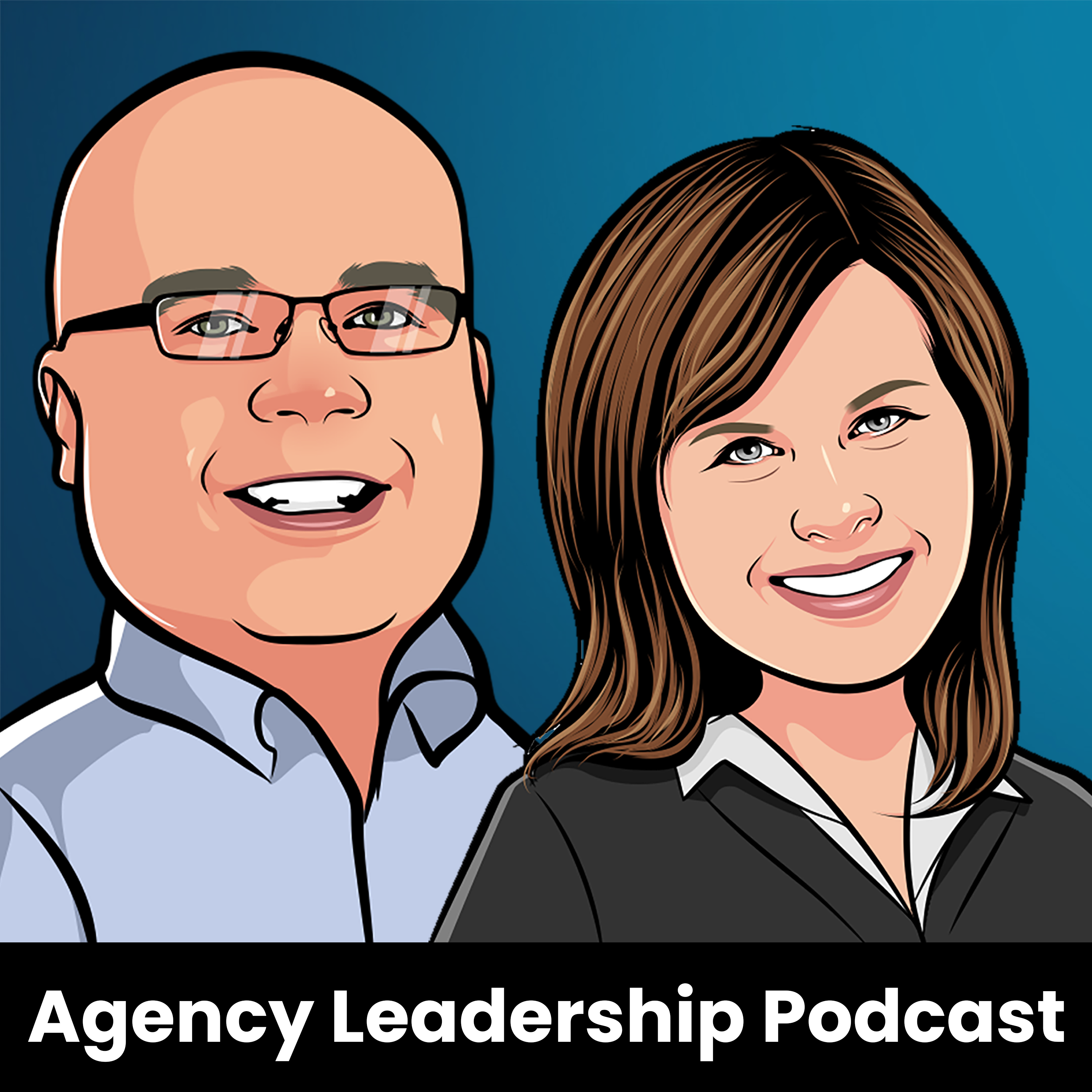
Agency Leadership Podcast
by Chip Griffin and Gini Dietrich
The Agency Leadership Podcast provides insights for agency owners and executives. Co-hosts Chip Griffin and Gini Dietrich share practical advice and industry news relevant to PR and marketing agency leaders.
-
100
The top two traits for new agency hires
If you're screening candidates on experience or technical skills, you may be making a mistake. In this episode, Chip and Gini make the case that curiosity and problem-solving are the two traits that separate great hires from mediocre ones, and neither one can be taught from scratch. Most agency skills, from writing a press release to running Google Ads to using AI tools, can be picked up on the job. Curiosity and problem-solving are different: people either arrive with some baseline capacity for them, or they don't. Gini makes it about AI, where ever-evolving tools and audience behavior reward the people who keep asking questions instead of coasting on routine. The two discuss how to actually screen for these traits in a couple hours of interviewing. Gini leaves 15 to 20 minutes at the end for the candidate's questions and reads a lot into what they ask, or whether they ask anything at all. Chip changes up the order entirely, opening by asking the candidate what questions they have for him before he's asked anything himself, and he'll throw a candidate's own question right back at them to see how they handle being put on the spot. Both dismiss scenario-based questions and interview theater like "what animal would you be" as close to useless. Gini also flags a habit she's trying to break on her own team, being "Gini-GPT," where people default to asking her for the fast answer instead of working through problems themselves.
-
99
Agency owners need to get their hands dirty with AI
Some advisers are telling agency owners they don't need to know AI all that well themselves. They suggest owners go deep on AI for a month or three, then pass the day-to-day to the team and move on with life. In this episode, Chip and Gini explain why that's backwards, and how owners who step back from AI are making a mistake. Chip's argument is that AI doesn't fit the usual delegation model because it's moving too fast and touching too much of the business to hand off after just a few months of study. Gini agrees, noting that advice which made sense six months ago is often stale today. Both connect this to credibility with the team: Chip compares the situation to a non-technical manager overseeing developers, who then gets disrespected because they don't speak the language. Gini says her own coaching works because she's in the tools constantly enough to give specific workable advice. They also describe pushing AI into something closer to a personal operating system than a work tool, from Chip wanting an assistant that catches him contradicting his own past positions, to Gini's agent that calls her out when she takes on work she said she'd delegate, telling her flatly it's not the best use of her time. The episode closes with the advice that staying curious personally is what keeps owners sharp enough to lead a team through a tool that keeps rewriting its own rules.
-
98
The audience has (and always will) matter most for PR and marketing leaders
Times change, but somehow the job hasn't. In this episode, Chip and Gini dig into what's stayed constant across their combined decades in PR and marketing, and why chasing the latest platform update is a losing game if you've lost sight of the fundamentals underneath it. The episode was sparked by a LinkedIn series from Doug Simon, who asked longtime PR pros what has remained constant in their careers. Gini was asked the question of whether the PESO Model still holds up, and her answer is that the four media types haven't gone anywhere, and earned media's third-party credibility now matters more to how LLMs learn. Chip extends the logic to SEO and its successors, advising to chase the people, not the algorithm or the platform. Other changes may also have less of an impact than you might think. Influencer marketing is the latest version of celebrity TV endorsements, but with a YouTube channel. The agency-client relationship continues to run on the same dynamics it did 70 or 80 years ago. Gini brings up the story about a UK agency reportedly running AI agents to pitch journalists undetected for eight months. Chip's take is that just like with interns and inexperienced team members, there are well-managed AI agents as well as poorly managed ones. It's the human factor that matters most.
-
97
Managing "Shadow AI" at your agency
Most agency owners probably haven't thought much about shadow AI (the name for when employees use their personal ChatGPT, Claude, or Gemini accounts to do work). In fact, owners may be doing it as well. In this episode, Chip and Gini walk through what the risks are and how to respond without overreacting. The instinct to crack down is understandable but wrong. Employees are going to use their own tools regardless, often because personal accounts are better trained or more accessible than whatever the company has set up. The goal should be education, not elimination. Most employees don't know that personal accounts default to feeding data into training sets, or that a single toggle can turn that off. That one fix alone is worth a conversation with your team. Vibe coding and a plain-language AI policy get discussed, in addition to educating your team. Gini's team runs weekly micro-learning sessions to help people use AI as a thinking partner, not just a drafting tool. Both Chip and Gini advise that owners and employees who aren't using AI meaningfully within the next year or two are putting their careers and businesses at risk.
-
96
How can agency owners hold themselves accountable?
realize they're often the biggest obstacle to it. In this episode, Chip and Gini offer suggestions for how to stop being the bottleneck at your agency. Chip tells of his own recent experience where he missed putting out a newsletter after an emergency root canal. Even with Jen repeatedly pinging him, the decision of whether to get something done rested with him. Most employees won't push back hard because they know who signs the paychecks. The exceptions are rare, and you can't build your accountability system around them. Gini's structural fix has been making "less founder dependence" an explicit OKR, tracked at every leadership meeting. When the goal shows up red on a dashboard, the visibility creates its own pressure. Chip thinks it's less about any specific single system. AI has helped him stop some procrastination, but it's also added new projects he'd never have attempted before. His takeaway is that you need to figure out what works for your specific wiring, and not rely on someone else's approach. For external accountability, peers, coaches, and organizations like YPO or Vistage can help, particularly for big-picture questions you wouldn't bring to your team. But formal advisory boards are another story. Both Chip and Gini are skeptical, since even paid corporate directors with legal obligations frequently fail at the oversight function. For owner-led agencies, the complexity almost never justifies the benefit.
-
95
In the age of AI, people skills matter more than ever
You're using AI to handle more of the work that your team used to do. That's exactly why the human side of the business has become a competitive advantage. In this episode, Chip and Gini make the case that as AI slop floods everyone's inbox and feeds, the bar for genuine human interaction has dropped so low that clearing it will make you stand out. Demonstrating real experience and expertise in conversation — not just in content — is where agencies will win. That starts with having actual conversations. Chip argues that meetings have become more valuable, not less, because you can't fake a real-time interaction the way you can a written deliverable. And Gini adds that it extends to one-on-one meetings with your team, which can be used to get the specific decisions needed from you. Written content is increasingly hard to trust, and Chip admits even he can't reliably tell his own writing from AI output. Video helps close that gap for now. So does the handwritten note, which Chip still sends to podcast guests when he can track down an address. He jokes that the illegibility is proof of authenticity. In person beats everything. Chip pushes agency owners to budget for it deliberately, with clients, prospects, and remote team members alike. Gini mentions the Augusta Rule as one way to offset some of those costs, though both are quick to say talk to your accountant before you try to benefit from it.
-
94
Is your agency easy to work with?
Most agency owners think their clients have it easy. But the gap between how you believe your agency operates and how clients and prospects actually experience it is often wider than you'd expect, and it's usually the small, everyday frictions that do the most damage. In this episode, Chip and Gini ask if you were on the receiving end of your own agency's processes, would you be happy? The answer, for a lot of agencies, is probably not. Their point isn't that agencies should cave to every demand, but if you market yourself as a partner, act like one. The friction can start before someone even becomes a client. Contact forms loaded with qualifying questions scare people away. And back-and-forth emails to find a meeting time have no excuse in 2026. Use a scheduling tool, have a link ready, and make it especially easy for prospects. Once someone is ready to talk, the goal is to respond fast and remove every obstacle. When it comes to the handoff from prospect to client, agencies should have a standard proposal template so they can turn paperwork around in 24 hours, not days. Make invoicing and payments as easy on the client as you would want it to be if you were in their shoes. And when it comes to project management tools, if the client already has one they're using, just use it. The tool matters less than having one.
-
93
Using AI to extend your agency's PESO Model expertise
Most owner-led agencies know they should be doing more than media relations. One barrier has always been capability: you can't execute paid media if nobody on your team knows paid media. AI is removing that barrier, and Chip and Gini dig into exactly how. Gini built a PESO model operating system AI that prompts you instead of you prompting it. Many agencies are strong in one or two media types and need scaffolding to think through the rest. The tool can be used to help agencies execute unfamiliar disciplines step by step. Chip frames this as an opportunity to do things that were theoretically possible two years ago but practically out of reach. A paid campaign to amplify a blog post no longer requires hiring a specialist. Beyond drafting, both hosts made a case for AI as a learning tool instead of merely a content machine. Gini tested this directly by vibe-coding a PESO model diagnostic, working through multiple versions with AI troubleshooting each step. The practical upshot is that you can use AI to build separate knowledge-rich agents for each media type, loaded with client messaging and context, and treat them as thought partners for areas where your team lacks depth. It won't eliminate the need for people or strategic thinking, but capability is no longer a credible excuse for staying stuck at one letter of PESO.
-
92
What to do when a client "fires" your agency
Losing a client is never fun, even when you saw the writing on the wall. The only question is how you choose to handle it. In this episode, Chip and Gini cover the practical and emotional side of client departures, from the moment you get the news to the lessons you take away. Gini points out that there are plenty of reasons a client could terminate the relationship, which may have nothing to do with your work. Strategy changes, budget cuts, and leadership turnover all end client relationships that were otherwise going fine. Chip's advice is to not react immediately. Ask for a couple of days to review the agreement and put together a transition plan. That space lets you get the emotion out before you say something you'll regret. Once you have your bearings, focus on making the exit clean. Read your actual contract, confirm the notice terms, and hand over everything the client needs: documents, passwords, contacts, work in progress. Chip is blunt about agencies that fight clients on the way out — it accomplishes nothing and just guarantees a bad final impression. Don't burn any bridges and you just might see those clients come back or send you referrals. Finally, be honest with your team about what the loss means for the business. If there are financial implications, say so before people start drawing their own conclusions.
-
91
What the Agency AI Survey results mean for PR and marketing firms
The SAGA Agency AI Survey results are in, and small agency owners are feeling great about AI. Maybe too great. In this episode, Chip and Gini dig into the numbers and find the gap between how owners think they're using AI and the reality of what's happening inside their businesses. The headline figures look impressive: 89% of respondents report regular or widespread AI use, 74% use it daily, and 88% say they've seen productivity gains. But Chip isn't buying it. He questions whether the sample skews toward early adopters, or more likely, whether agency owners simply don't have a clear enough picture of what "good" AI use looks like elsewhere. When 53% say they're ahead of their peers but only 13% say they're behind, the math doesn't work. As Gini puts it, they're probably grading themselves on usage habits, not operational depth. Next, Chip and Gini look at what agencies are actually doing with AI. Most activity falls squarely into what Chip calls "generative AI 101" — drafting emails, writing social posts, generating blog content. The more interesting stuff is largely absent. AI-assisted design work barely registers. Only 74% are even using AI to revise or edit content, a number both hosts find inexplicable given how easy and useful that is. Gini's own example of running an article through an AP style agent before sending it to a notoriously precise editor at PR Daily illustrates exactly the kind of practical, low-friction habit that should be universal by now. Another data point they discuss is the disconnect between productivity gains and revenue. Agencies report getting faster, but their top-line numbers are flat or down. Gini's read is that AI efficiency is getting absorbed into existing scope rather than converted into new value. Agencies are over-servicing clients at the same fees, filling freed time with more of the same work instead of building something new. On the pricing side, almost no one reported clients pushing for discounts tied to AI use. Instead of a reduction in cost, the larger enterprise clients are asking about data governance, usage policies, and procurement compliance. Chip advises unless your agency has the infrastructure to manage those requirements consistently, that's a market best left to someone else.
-
90
How agency owners can use AI as an always-on thought partner
Most agency owners know AI can write a first draft or clean up copy. Far fewer have figured out how to use it as the strategic sounding board they've always needed. In this episode, Chip and Gini explore how to use AI tools as a thought partner, not just a content machine. Gini's example is a client who asked her to map what a PESO model maturity ladder would look like for an organization. She described the situation and constraints to Chat GPT, and keep pushing the conversation forward. Six weeks of iterative back-and-forth surfaced ideas she wouldn't have reached on her own, including finding the gaps when the AI was willing to poke holes in her thinking. Chip points out that for owner-led agencies, that 8pm Friday idea you don't want to dump on your team now has somewhere to go. The tool doesn't care what time it is, and it has no stake in whether your idea succeeds or embarrasses you. Both hosts advise to direct the AI to ask you questions rather than just answer them. It takes some coaching to get a tool that genuinely engages rather than validates everything you propose, but once you're there, you start getting real value. One warning they have is that these tools are not always consistent. The same AI that helped you build a strategy three weeks ago might question it today with equally compelling reasoning. Stay in the driver's seat, and treat AI-generated recommendations as input, not conclusions.
-
89
Stop making sacrifices your agency doesn't need you to make
Most agency owners think they're doing their team a favor when they quietly absorb the painful, tedious, or time-consuming work. They're likely not. In this episode, Chip Griffin and Gini Dietrich look at the sacrifices owners make on behalf of their teams and why those sacrifices often create more problems than they solve. This isn't about the occasional tactical sacrifice, it's about the systemic ones: the conscious decisions to absorb entire categories of work because you've decided your team would find them too difficult, too unpleasant, or too much of a burden. Gini admits she's guilty of it herself, sharing that a new COO sat her down with a list of tasks she'd been handling and told her she shouldn't be doing any of them. The jobs weren't glamorous, but they weren't the owner's job either. Chip extends this into two areas where owner sacrifice tends to do the most damage: new business development, where owners keep proposals and pitches entirely to themselves thinking they're protecting team time, and org chart design, where flat structures are usually not a deliberate choice but the result of owners absorbing management responsibilities no one else wanted. Both patterns block team growth and overload the owner at the same time. Gini describes a practice she returns to every quarter, sorting her task list into three buckets — things only she can do, things she enjoys but probably doesn't need to do, and things she absolutely should not be doing. The third list gets delegated immediately. Chip puts it like this: for everything on your plate, ask yourself why you are the one doing it. If there isn't a good answer, stop doing it.
-
88
Preparing for your agency's group presentations and pitches
In this episode, Chip and Gini open with the analogy of Canadian doubles, the tennis format where two players face one. If your team outnumbers the prospect, you don't project strength, you project awkwardness. But the conversation goes well beyond headcount. A little preparation goes a long way in making sure every seat on your side is justified. You'll want to match expertise to whoever the prospect brought, which requires actually knowing who's coming. Gini described a recent pitch where she reverse-engineered her attendee list based entirely on who was showing up from the prospect's side. That's not logistics, it's strategy. And whoever is in the room during the pitch needs to be the person doing the work after the contract is signed — not a handoff to a team with no context and no ownership. Both Chip and Gini are emphatic that the meeting itself should not feel rehearsed like a school play. Agency owners who show up prepared to have a real conversation before pitching solutions will stand out. Harder for many owners is knowing when to keep quiet. Interjecting while a team member gives an imperfect answer undermines their confidence, signals to the prospect they can't be trusted, and makes them rely on you. The debrief after the meeting is where the coaching happens.
-
87
Rethink entry-level hiring to succeed in the AI era
The entry-level talent pipeline is being entirely restructured. If agency owners don't figure out what role a young professional actually plays in an AI-assisted agency, they won't just struggle to hire today. They'll have no one to promote in five years. In this episode, Chip and Gini dig into what's happening with entry-level hiring right now, and why the answer can't be to stop hiring junior staff altogether. The conversation covers why the old model of routine work is gone, what needs to replace it, and why agencies that don't solve this problem soon are setting themselves up for failure. The episode opens with an observation from Gini: every presentation she gives to college classes lately surfaces the same anxiety from students. Nobody's hiring at the entry level because AI can handle the work those roles used to cover — news releases, media lists, social drafts, basic research. How can they find jobs today, and get the on-the-job training they need to move forward in their careers? Chip frames the problem as a junction of circumstances: the rise of AI, economic uncertainty, and a higher education system that hasn't evolved with the workforce reality. Colleges discouraging AI use while their graduates are about to enter workplaces built around it is, as he puts it, the same mistake as banning calculators in math class. The students coming in aren't unprepared because they're less capable, they're underprepared because the institutions that trained them weren't keeping up with the times. Chip and Gini agree that entry-level hires aren't obsolete, but the role must change. Instead of being the lowest rung of the ladder, new professionals need to come in already functioning like managers — just managing AI tools and processes instead of people. That requires more on-the-job training, better-documented processes and SOPs, and a genuine commitment to learning and development that most agencies still don't have. There's more than one upside, though. Better documentation and SOPs don't just help entry-level hires do their jobs — they make your agency more efficient, reduce owner dependency, and, for those who want to sell someday, significantly improve the value of the business. Their closing argument is not to avoid entry-level hiring because the old version of the role is antiquated. Rethink what the role is, invest in the systems that support it, and get comfortable assigning junior people with responsibilities that would have felt premature five years ago. The alternative is a mid-level talent shortage that will be very hard to fix.
-
86
Five words every agency owner needs to understand
Most agency owners spend a lot of time thinking about growth, clients, and revenue. Far fewer think carefully about the words that define how they actually operate their businesses. In this episode, Chip and Gini dig into five of those words: leadership, management, accountability, responsibility, and authority. Leadership and management aren't the same thing. Leadership is about vision and getting people to follow you. Management is about making the work happen. Knowing which one you're stronger at is the first step toward building a team that covers your gaps. Accountability is the wrong place to start when a team member isn't delivering. You can't hold someone accountable for something you never clearly assigned, and you can't hold them accountable if you didn't give them the authority to get it done. Gini offers a useful comparison: when a client hires you for your expertise and then second-guesses every decision, it's demoralizing. That's exactly how your team feels when you delegate the work but not the authority to do it. The episode closes with a simple reminder. If you want more freedom as an owner, you have to be willing to actually let go. And if your team isn't capable of handling more responsibility, you should be asking yourself why you hired them.
-
85
300 episodes in: what's changed, what hasn't, and what we got wrong
Eight years and 300 episodes later, Chip and Gini take stock of what the Agency Leadership Podcast has actually been about and where their thinking has shifted since they sat down for lunch outside Wrigley Field and decided to start a show. Chip shares an AI-generated analysis of the 10 most common themes across 300 episodes. Gini distills them into four she considers non-negotiable: communication fixes most problems, know your numbers, focus on particular wins, and the owner sets the temperature. Chip adds that communication doesn't just solve problems, it prevents them. Ironic, given that probably everyone listening is in the communications business. On what's changed, Gini has moved from annual retainer-focused planning to quarterly reviews that constantly show results and surface what's working. She also notes that her advice for navigating a tough business environment now mirrors what worked during the pandemic: find the project work, start with an assessment, and build trust before building a retainer. The biggest evolution for Chip is his position on AI. While he was skeptical a few years ago about the timeline, now he thinks agencies are under-emphasizing it. He and Gini disagree on AI's limits. Gini believes critical thinking, emotional intelligence, and crisis work still require human judgment. Chip is less certain those guardrails will hold. What they do agree on: AI is turning everyone into a manager, and that puts a premium on skills that were already in short supply. The episode closes with a lightning round covering worst advice agencies still believe, best scary decisions, and prospect red flags including unreasonable expectations and unwillingness to discuss budget.
-
84
Hire people who understand how to solve problems
Most hiring processes obsess over the wrong things. Do they know our project management software? Are they proficient in this specific tool? Meanwhile, the one capability that actually determines whether someone will make your life easier or harder—their ability to solve problems independently—gets a cursory "are you a good problem solver?" question that everyone answers with "yes." In this episode, Chip and Gini break down why problem-solving ability should be the primary hiring criterion, especially as AI makes technical skills easier to acquire and offload. The conversation explores why this matters more now than ever: as AI handles tactical execution, the ability to define problems clearly, break them into components, and figure out solutions becomes the differentiator between humans who add value and humans who get replaced. Chip and Gini discuss how problem-solving cuts across every role, even ones you don't typically think of as problem-solving positions. Designers facing impossible deadlines, account people navigating last-minute client demands, anyone dealing with the reality that things rarely go according to plan. They all need to be able to figure out how to move forward rather than escalating every obstacle upward. The episode tackles the mechanics of actually interviewing for this capability. You can't just ask "are you a good problem solver?"—you need scenario-based questions that reveal how candidates think through challenges. But not hypothetical scenarios you make up; real situations that have happened in your agency. Ask them to walk through how they've handled compressed timelines, missing information, conflicting priorities, or last-minute changes in past roles. Gini shares how her daughter's school explicitly focuses on humanities and emotional intelligence rather than technical skills, anticipating that AI will reshape what jobs exist. She connects this to Anthropic's hiring practice of seeking people with humanities degrees who can absorb information, think critically, and demonstrate emotional intelligence rather than just technical proficiency. The episode concludes with an important reminder: if you hire problem solvers but then micromanage how they solve problems, you've wasted the hire. You need to let them solve things their way, even if it's different from how you'd do it, or you'll end up with everything back on your plate anyway.
-
83
Build the business you want to own, not the one you hope to sell
Most agency owners have read Built to Sell. But many have internalized the wrong lesson from it—fixating on that final chapter where the protagonist drives off into the sunset with a pile of cash, rather than the actual business-building advice throughout the book. The result is owners spending years building businesses optimized for a sale that may never happen, or that won't deliver the outcome they're imagining. In this episode, Chip and Gini discuss Chip's "Build to Own" philosophy as a counterpoint to the built-to-sell mindset. The core principle: focus on creating a business that serves you today, not some hypothetical buyer tomorrow. This doesn't mean you can't or won't sell—it means you stop treating the sale as the primary objective and start treating ownership as the thing you're optimizing for right now. Chip breaks down the TMRW framework for thinking about what you want from your business: Time (how much you spend and what flexibility you have), Meaning (what gives you satisfaction—clients, team, impact), Rewards (financial outcomes that fund your life today and tomorrow), and Work (the actual role you're crafting for yourself). Gini shares her decision to retire from speaking despite conventional wisdom saying agency owners should be out there raising their profile—because the anxiety wasn't worth the marginal business benefit. The conversation tackles the uncomfortable reality that most agency owners counting on a sale to fund their retirement are likely building businesses that won't command the multiple they're hoping for. Meanwhile, owners who build businesses that throw off enough cash to fund retirement directly—while also being enjoyable to run—end up with something far more attractive to buyers when and if they do decide to sell. Gini tells the story of a friend who prepared five years in advance for a sale: removing himself from day-to-day operations, hiring a president to build culture, ensuring the business wasn't founder-dependent. The result? An 18x multiple. But the episode's point isn't "here's how to get a great sale"—it's that you should make every decision through the lens of "would I still be happy with this if I never sold?"
-
82
Holding companies discover retainers, call them "subscriptions"
S4 Capital has announced a revolutionary new pricing model that will transform how agencies charge for their services: instead of billable hours, they're moving to... subscriptions. Fixed monthly fees. Annual contracts that auto-renew. All costs absorbed into the price rather than passed through as variables. You know, retainers. The pricing model most independent agencies have used for decades. In this episode (somewhat abbreviated due to Gini's technical difficulties), Chip and Gini dissect the holding company's "brilliant innovation" with the appropriate level of sarcasm, then pivot to the actually interesting question buried in the announcement: how should agencies price around AI? The conversation moves from eye-rolling at repackaged retainer models to wrestling with legitimate uncertainty about how AI costs will evolve and what that means for agency pricing strategies. Chip points out that we only know what AI costs today, and it's likely those costs will rise as platforms realize they're replacing expensive labor and can charge accordingly. This creates a pricing puzzle—do you transparently pass through AI costs, absorb them into your general cost of doing business, or find some middle ground? Gini shares how she's handling questions from college students about whether jobs will exist when they graduate, explaining that the work itself is shifting from doing to orchestrating, from creating to editing and refining AI outputs. The discussion highlights the difference between cosmetic changes (calling retainers "subscriptions") and substantive challenges (figuring out sustainable pricing as AI capabilities and costs both increase). They land on the principle that AI costs should be factored into your total cost of doing business rather than line-itemized separately, giving you flexibility to adapt as the landscape shifts without locking yourself into specific cost structures that may not hold. The subtext throughout is that holding companies remain out of touch with how most agencies actually operate, still discovering "innovations" that the rest of the industry implemented years ago.
-
81
The PESO Model evolves for the AI era (and why your website isn't dead)
The PESO Model has been guiding smart communications strategies for over a decade, but the tactical landscape underneath it keeps shifting. In the latest evolution, Gini and her team have completely revamped the PESO Model Certification to address how AI and large language models are fundamentally changing visibility in 2026. In this episode, Chip interviews Gini about the newly updated certification and what's changed in how organizations should think about paid, earned, shared, and owned media. The conversation centers on "visibility engineering"—the intersection of owned and earned media where LLMs are scraping information and making decisions about who appears in AI-generated answers. Gini explains why owned media remains the foundation (without content on your own properties, there's nothing to demonstrate to journalists, creators, or LLMs what you're about), but the recommended path has shifted from owned-then-earned-or-shared to a more deliberate owned-then-earned-then-shared-then-paid sequence. This evolution reflects how AI systems verify information by comparing what's on your website against what credible third parties say about you. They also tackle the persistent "X is dead" headlines that plague the industry—whether it's websites, PR, or press releases. Chip and Gini push back hard on the notion that websites are becoming irrelevant, pointing out that your owned content hub becomes more valuable in an AI-driven world, not less. It's your source of truth, the fuel for custom AI assistants, and the foundation that persists even as social platforms come and go. The conversation covers practical questions about implementing PESO in smaller agencies, whether you need to be full-service to deliver on all four pillars, and how the certification meets communicators at different experience levels—from college students to seasoned professionals. If you've been treating PESO as just four columns of tactics rather than an operating system for communications, this episode clarifies what you're missing.
-
80
Building the ideal agency: wrestling with the tough decisions
David C. Baker recently published a fascinating thought experiment about what he'd do if starting an agency from scratch today—and it's packed with provocative ideas worth serious consideration. His article offers a comprehensive blueprint covering everything from organizational structure to compensation philosophy, and much of it aligns with how Chip and Gini think about building sustainable agencies. But the most interesting conversations happen when smart people disagree, which is why this episode focuses on the handful of points where Chip and Gini see things differently. Not because Baker's ideas are bad, but because they expose the tension between aspirational agency management and the messy realities of running a business with real budgets, real people, and real client demands. In this episode, Chip and Gini tackle mandatory one-month sabbaticals for every employee, open-book finances published on your website, 360-degree reviews, and incentive compensation structures. They dig into why ideas that sound compelling in theory often create unintended consequences in practice—like how retention-based bonuses can fuel scope creep, or why forced sabbaticals don't actually solve the single-point-of-failure problem they're designed to address. The conversation reveals thoughtful nuance on both sides. Gini shares her brutal experience with anonymous feedback that backfired when presented poorly. Chip explains why he sees most performance measurement systems as "performance theater" while still advocating for more financial transparency with teams. They discuss the logistical nightmares of scheduling multiple month-long absences and why backup systems for unexpected departures matter more than planned time off. Throughout, they return to a central theme: what works brilliantly at one stage of growth can be completely wrong at another. The goal isn't to declare Baker's ideas right or wrong, but to test assumptions and recognize that even the most well-intentioned frameworks deserve scrutiny before implementation.
-
79
Wake up or get left behind: AI is forcing your hand
No more excuses. No more waiting to see how things play out. AI has moved past the experimental phase, and if you're still treating it like a nice-to-have rather than a fundamental shift in how your agency operates, you're already falling behind. In this episode, Chip comes out swinging with a wake-up call for the agency community: the ground is shifting faster than most are willing to admit, and the window for meaningful adaptation is closing. Gini backs him up with examples of how AI has progressed from an intern-level tool to something that can genuinely replace mid-level work—if agencies don't evolve what they're selling. They dig into the practical reality of training AI tools to work like team members, not just one-off prompt machines. Chip explains how he uses different platforms for different strengths—Claude for writing, Gemini for competitive intelligence, Perplexity for research, and ChatGPT as his strategic baseline. Gini shares how her 12-year-old daughter creates entire anime worlds through conversation with AI, demonstrating the power of treating these tools as collaborators rather than search engines. The conversation covers what clients actually want to pay for in 2026 (hint: it's not social posts and press releases), how to build AI agents trained on your specific expertise, and why the process of training AI forces valuable clarity about your business. They emphasize that this isn't about slapping the "AI-powered" label on your services—it's about fundamentally rethinking what value you deliver and how you deliver it. If you've been sitting on the sidelines waiting for the AI dust to settle, this episode is your warning: there is no settling. There's only evolution or extinction.
-
78
Stop letting your website embarrass you
You built an agency you're proud of. So why does your website still feature that glowing tribute to someone you wouldn't recommend today, or explain services you stopped offering three years ago? In this episode, Chip and Gini tackle the unsexy but critical task of auditing your agency's website content. They share practical approaches for identifying what needs updating, what deserves deletion, and how to prioritize your efforts when you're staring down hundreds (or thousands) of outdated pages. The conversation covers everything from quick wins—like updating your homepage and key pages—to strategic decisions about high-traffic content that no longer serves your business. Gini shares her process for using tools like Screaming Frog to audit content systematically, while Chip emphasizes the importance of focusing on human users rather than chasing every algorithm change. They also dive into the balance between refreshing old content and creating new material, with specific guidance on when each approach makes sense. The episode wraps with a reminder that consistency matters more than perfection—especially when AI is increasingly using your bio and content to determine whether to recommend you. If your website is starting to feel like a liability rather than an asset, this episode offers a manageable roadmap to get it back on track without turning it into a year-long project.
-
77
Rediscovering your agency's founding spark
In this episode, Chip and Gini discuss the importance of agency owners reflecting on the reasons they started their businesses and how those motivations can inform current strategies. They share personal anecdotes about the challenges and growth experiences in their early days of agency ownership. They emphasize the value of going back to basics, understanding what initially led to success, and aligning business strategies with personal passions and strengths. The duo also highlights the importance of avoiding pitfalls such as micromanagement and burnout. Finally, they encourage agency owners to use these insights to stay motivated, drive growth, and make informed strategic decisions in 2026.
-
76
Embracing innovation to survive and thrive in 2026
In this episode, Chip and Gini discuss the importance of strategic planning for 2026. As they near the end of 2025, they emphasize the need for agencies to set themselves apart and adapt to the evolving landscape, particularly through the effective use of AI. Despite ongoing economic challenges, they highlight the potential for AI to enhance both efficiency and strategic thinking. Chip and Gini also stress the importance of refining the ideal client profile and taking calculated risks. They share their personal experiences with using AI to assist in planning and decision-making processes, pointing out both the benefits and limitations of current AI technology.
-
75
Balancing skills and personality when hiring a new team member
In this episode, Chip and Gini discuss the complexities of hiring in growing agencies. They highlight the challenges of finding skilled, reliable employees who align with agency values. Sharing personal experiences, Gini explains the pitfalls of hasty hiring and the benefits of thorough vetting and cultural fit. They stress the importance of a structured hiring process, including clear job roles, career paths, and appropriate compensation. They also underscore the value of meaningful interviews, proper candidate evaluations, and treating the hiring process as the start of a long-term relationship. Lastly, Chip and Gini emphasize learning from past mistakes to improve hiring effectiveness and employee retention.
-
74
Firing underperforming team members
In this episode, Chip and Gini tackle the difficult subject of firing an underperforming and problematic employee. They discuss a real-life scenario where an employee with a bad attitude refuses to do their work, causing frustration among team members. They advise against prolonging the inevitable firing decision, suggesting that acting swiftly can alleviate overall team stress. Both hosts share insights on why Performance Improvement Plans (PIPs) are largely ineffective, stressing the need for proper documentation and the guidance of an HR advisor during termination processes. Additionally, they highlight the importance of showing proactive steps to the remaining team to mitigate the workload burden and maintain morale. The episode emphasizes the critical role of leadership in making tough decisions for the greater good of the team and the business.
-
73
AI myths agencies must avoid
In this episode, Chip and Gini discuss the growing concerns surrounding AI in the agency world. They highlight the irrational fears and cyclical nature of technological disruptions, drawing comparisons to social media and content marketing trends of the past. The hosts argue against the notion that agencies should discount services due to AI efficiencies, emphasizing that AI should be seen as a tool to enhance productivity and strategic value rather than a cost-cutting measure. They stress that agencies should focus on delivering more value and maintaining regular client communication instead of simply protecting existing revenue. The discussion also touches on the importance of transparency in AI use without oversharing minute details. Finally, they underscore the benefit of quarterly planning to align agency efforts with client business goals, thus fostering stronger client relationships and ensuring mutual success.
-
72
Do agency mission and values statements matter? And is yours even accurate?
In this episode, inspired by a newsletter from David C. Baker, Chip and Gini discuss the authentic motivations and realities behind agency mission statements and values. They emphasize that many agencies publish values that are either not reflective of their true operations or are overly broad and similar to others. The hosts stress the importance of being honest about the core purpose of a business and aligning public statements with actual behavior. They argue that values should stem from the owner's true beliefs and actions rather than aspirational ideals. They also caution against spending too much time wordsmithing values for marketing purposes, as clients are more interested in results. The conversation touches on the impact of leadership behavior on agency culture and the pitfalls of misrepresenting agency values.
-
71
Are you ghosting your own agency?
In this episode, Chip and Gini discuss a Reddit post about an agency leader going MIA and the repercussions for the team. They elaborate on the importance of communication, perception, and flexibility for agency owners. The conversation includes personal anecdotes from both hosts, highlighting the need for frequent touchpoints, setting clear expectations, and maintaining a balance between taking personal time and being present for the team. They also stress the significance of transparency during challenging times and the benefits of empowering employees to reduce bottlenecks.
-
70
Outbound sales & your agency
In this episode, Chip and Gini address a listener's question about the opportunities for growing an agency through outbound sales. They discuss the challenges of outbound sales, particularly in a small agency environment, and highlight the importance of building relationships and a strong brand. Both suggest that agency owners focus on networking and proactive relationship-building rather than traditional cold calling. They emphasize a multi-faceted approach to business development that includes content marketing, warm introductions, and maintaining an active online presence. Ultimately, they advocate for a shift in mindset from outbound sales to relationship cultivation to achieve sustainable agency growth.
-
69
Avoiding your agency's own AI bubble
In this episode, Chip and Gini discuss the impact of AI on small agencies, focusing on the high expectations and possible disappointments it poses. They reference a recent article from The Atlantic, which highlights a study showing that AI can sometimes decrease efficiency. They caution against overhauling business models based solely on AI's current capabilities, stressing that while AI can assist with tasks and improve efficiency, it cannot fully replace human judgment and creativity. The conversation extends to the challenges of integrating AI without sacrificing the development of new talent and ensuring that the evolving role of AI adds value rather than causing disruption.
-
68
What to do when your client contact isn't the problem
In this episode, Chip and Gini discuss how to handle situations when the problems affecting an agency's client relationship stem from external contacts like procurement, IT, or the sales team. They emphasize treating client contacts as allies and not enemies, and provide strategies to navigate bureaucratic hurdles and internal politics. The discussion covers creative problem-solving techniques such as using MSAs, having biweekly calls with VPs of Sales, and understanding cultural differences. The importance of having a collaborative approach and pre-building relationships to effectively manage challenges is also highlighted.
-
67
Stop providing solutions before understanding your client's challenges
In this episode, Chip and Gini discuss the common practice of providing free proposals and baseline ideas to clients. They argue that professional service providers should charge for these services as doing so adds value and ensures a thorough diagnosis before providing solutions. They share personal experiences and compare the situation to doctors who would never prescribe treatment without proper tests. They emphasize the importance of understanding a client's business through a paid discovery phase and making adjustments along the way to deliver effective results. Additionally, they discuss the risks of providing overly detailed plans in early stages, the benefits of quarterly assessments, and the importance of maintaining clear communication and trust with clients.
-
66
Supporting team members with mental and physical health challenges
In this episode, Chip and Gini discuss how agency owners should handle employees with physical and mental health concerns. They cover the increased openness around mental health and self-care, sharing personal experiences and business challenges. They highlight the importance of individualized management approaches, legal considerations, and quick professional advice. The hosts also emphasize compassionate handling of employee health issues, the need for flexible scheduling, and the impact on small businesses. Gini shares insights on providing support for team members and owners, such as disability insurance, to cover long-term absences. They conclude by underlining the importance of empathetic leadership and offering flexibility.
-
65
Handling early client contract terminations with finesse
In this episode, Chip and Gini discuss how to manage situations where clients want to terminate contracts early. Gini emphasizes the importance of having a strong contract with clear termination clauses, which can serve as leverage in negotiations. They share experiences and strategies for recovering outstanding invoices, including offering concessions and being flexible with payment arrangements. The duo also cautions against aggressive tactics like public shaming for non-payment and stresses the importance of maintaining professionalism to avoid burning bridges. They conclude with practical advice on managing accounts receivable and resolving disputes amicably.
-
64
Setting client expectations in the AI era
In this episode, Chip and Gini explore the impact of AI on client expectations. They discuss how AI is perceived to speed up work, leading clients to have unrealistic expectations regarding turnaround times and pricing. The duo emphasizes the need for agencies to set realistic boundaries and manage expectations from the outset. They share stories about AI's inconsistency, particularly in generating imagery and written content, and stress the importance of educating clients on the limitations and potential of AI. Ultimately, they advocate for leveraging AI's efficiencies while maintaining transparency and setting clear guidelines with clients to avoid morale and operational issues within your agency.
-
63
What to do when agency employees continue to over-service clients
In this episode, Chip and Gini focus on the issue of employees over-servicing clients. They discuss the reasons behind over-servicing, including fear of client dissatisfaction and insufficient initial project scopes. The hosts emphasize the importance of educating employees on the long-term negative impacts, both on agency profitability and client relationships. They advocate for involving employees in strategic planning and scoping processes to ensure accurate budgeting and foster accountability. Chip and Gini also highlight the benefits of regular communication and collaboration with team members to prevent recurring problems and enhance overall agency efficiency.
-
62
You don't need to be a visionary, but it helps to have a vision for your agency
In this episode, Chip and Gini discuss the importance of having a clear vision for where an agency is headed while also acknowledging the need for strong operational skills. They explore different types of agency owners, from visionaries to those who excel in operational management, and emphasize the necessity of balancing these roles within a team. The duo highlights the importance of complementing one's weaknesses by hiring the right people, whether it involves bringing in operational expertise or visionary ideas. They also share personal anecdotes and practical advice on maintaining this balance for the long-term success of an agency.
-
61
How to handle unsolicited agency acquisition emails
In this episode, Chip and Gini discuss the frequent occurrence of receiving offers to buy agencies and how to handle these communications. They share their own experiences of receiving such emails, including the prevalence of fraudulent or unserious offers. Gini describes her method of vetting these emails, such as examining URLs and LinkedIn profiles, and emphasizes the importance of legitimate connections within the industry. Chip provides further insights into the credibility of business brokers and the typical behaviors to watch out for. Both caution against making emotional decisions and underscore the necessity of due diligence, patient decision-making, and listening to one's gut feelings. They conclude by highlighting the importance of proper advice and support for making sound decisions in the agency selling process.
-
60
How to handle your team when they don't love your clients
In this episode, Chip and Gini discuss the challenges of dealing with team members who may not be enthusiastic about the clients or the work your agency is doing. They cover whether agency owners should be concerned if their employees dislike the job, the consequences of ignoring such issues, and the importance of alignment between client work and employee satisfaction. They also emphasize the need for transparency in the hiring process and preparing employees for potential pivots or shifts in the agency's focus. Gini shares her personal experience with pivoting towards the PESO model, and both hosts advise on involving team members early in the process to avoid misunderstandings and to gather valuable feedback. The episode underscores common themes such as the significance of communication, transparency, and knowing your financials in successful agency management.
-
59
Turning Employee Departures into Opportunities
In this episode, Chip and Gini discuss how agency owners should handle situations when an employee resigns. They explore the emotional reactions owners might have, the importance of maintaining professionalism, and the need to gather more information from the departing employee. They emphasize the value of a cooling-off period to devise a rational plan and the potential for restructuring the team. Chip and Gini also talk about seeking feedback from remaining team members to ensure a smooth transition and mitigate the risk of more employees leaving. They stress seeing an employee's resignation as an opportunity to learn and improve the business.
-
58
Ensuring AI is an asset — not a liability — for your agency
In this episode, Chip and Gini highlight the challenges and potential pitfalls of over-relying on AI for content creation in PR and marketing. They discuss instances of AI-generated content gone wrong, such as the fake book list published by the Chicago Sun-Times and poorly crafted AI-generated pitches. The hosts emphasize the importance of human oversight, individuality, and storytelling in maintaining quality and building relationships with the audience. They also delve into Google's EEAT guidelines and how PR professionals can leverage their expertise to stand out in search rankings. Finally, they discuss practical ways to efficiently use AI while ensuring the content remains authentic and relatable.
-
57
Why agencies get brought in too late by clients — and what to do about it
In this episode, Chip and Gini delve into the challenge of agencies being brought in late on client projects. They discuss the common scenario where clients give last-minute requests and share strategies for becoming part of the planning process earlier. Key recommendations include integrating into internal communications, attending more meetings, and maintaining a mindset of curiosity to stay updated. They also cover how to handle situations when timely inclusion isn't possible, such as negotiating new timelines or additional costs for urgent work. The conversation emphasizes the importance of proactive client communication to prevent unrealistic expectations and to potentially increase scope and revenue.
-
56
Can agency team members be more strategic?
In this episode, Chip and Gini discuss whether or not employees can be encouraged to be "more strategic". They explore the definition of being strategic, frequently misunderstood expectations, and the challenges of fostering strategic thinking among team members. Gini shares her personal experiences and frustrations from her early career, emphasizing the importance of proper coaching and mentoring. Chip and Gini conclude that agency owners should define their expectations clearly, consider the individual capabilities of their employees, and re-evaluate their own workload to potentially take on more strategic responsibilities themselves.
-
55
Limiting scope creep from the start
In this episode, Chip and Gini delve into the topic of scope creep in agencies. They discuss the bell curve of profitability and the importance of setting clear expectations from the first client conversation. They highlight strategies like dividing projects into 90-day scopes to regularly reassess goals and deliverables. The duo emphasizes the significance of internal communication, developing a culture of transparency, and ensuring team members understand project scope and costs. They also stress the need to build flexibility and cushion into initial pricing to manage minor scope changes and avoid financial strain. Finally, they agree on mastering financial understanding and regular one-on-one meetings for smoother agency operation.
-
54
Pricing psychology for agency clients
In this episode, Chip and Gini discuss the psychology of pricing within agencies. They cover topics such as the importance of being confident in your pricing, avoiding negotiating against oneself, and the benefits of premium pricing. Gini highlights her experiences with male and female negotiators, emphasizing how women often undervalue themselves. The duo debates the effectiveness of the 'three pricing options' strategy and its pitfalls. They also offer practical advice for owners to ensure their pricing sends the right message to clients and reflects the true value of their services.
-
53
Identifying and managing agency owner burnout
In this episode, Chip and Gini discuss the prevalent issue of burnout among agency owners. They explore the different types of burnout, including cyclical and long-term burnout, and offer strategies to identify, cope with, and prevent it. Key recommendations include taking regular breaks, understanding personal energy drains and boosts, and adjusting work habits accordingly. They emphasize the importance of self-care, realistic time management, and the necessity to avoid making major decisions while burned out. Chip and Gini also share personal experiences and practical tips to help agency owners manage their workload more effectively.
-
52
Agency owners review 2024 performance, assess outlook
In this episode, Chip and Gini discuss the latest quarterly SAGA owner survey, which provides a mixed bag of results for agencies. They explore key findings, including the cautious optimism displayed by respondents, concerns about economic conditions, and the impact of government policies. Despite the varied performance of agencies, many are still managing to move forward. The discussion also delves into the benefits of project work, the size of client bases, and the lack of mergers and acquisitions activity. Chip and Gini encourage agency owners to stay informed about macroeconomic trends but also to focus on positive strategies to navigate uncertainties.
-
51
Preparing your agency for an uncertain future
In this episode, Chip and Gini discuss what agency owners can do to weather the current climate of economic uncertainty and potential recession. They suggest preparing for different economic scenarios by creating best, neutral, and worst case plans, cutting unnecessary expenses, and keeping lines of communication open with team members. Chip and Gini also touch on the idea of diversifying income streams and being flexible with the type of work taken on, while cautioning against overreacting to market changes. They share personal experiences and practical steps to help agency owners lead through economic downturns.
We're indexing this podcast's transcripts for the first time — this can take a minute or two. We'll show results as soon as they're ready.
No matches for "" in this podcast's transcripts.
No topics indexed yet for this podcast.
Loading reviews...
ABOUT THIS SHOW
The Agency Leadership Podcast provides insights for agency owners and executives. Co-hosts Chip Griffin and Gini Dietrich share practical advice and industry news relevant to PR and marketing agency leaders.
HOSTED BY
Chip Griffin and Gini Dietrich
CATEGORIES
Loading similar podcasts...
Frequently Asked Questions
How many episodes does Agency Leadership Podcast have?
Agency Leadership Podcast currently has 50 episodes available on PodParley. New episodes are automatically indexed when they're published to the podcast feed.
What is Agency Leadership Podcast about?
The Agency Leadership Podcast provides insights for agency owners and executives. Co-hosts Chip Griffin and Gini Dietrich share practical advice and industry news relevant to PR and marketing agency leaders.
How often does Agency Leadership Podcast release new episodes?
Agency Leadership Podcast has 50 episodes. Check the episode list to see recent publication dates and frequency.
Where can I listen to Agency Leadership Podcast?
You can listen to Agency Leadership Podcast on PodParley by clicking any episode. We provide an embedded audio player for direct listening, and you can also subscribe via your preferred podcast app using the RSS feed.
Who hosts Agency Leadership Podcast?
Agency Leadership Podcast is created and hosted by Chip Griffin and Gini Dietrich.
URL copied to clipboard!