
PODCAST · comedy
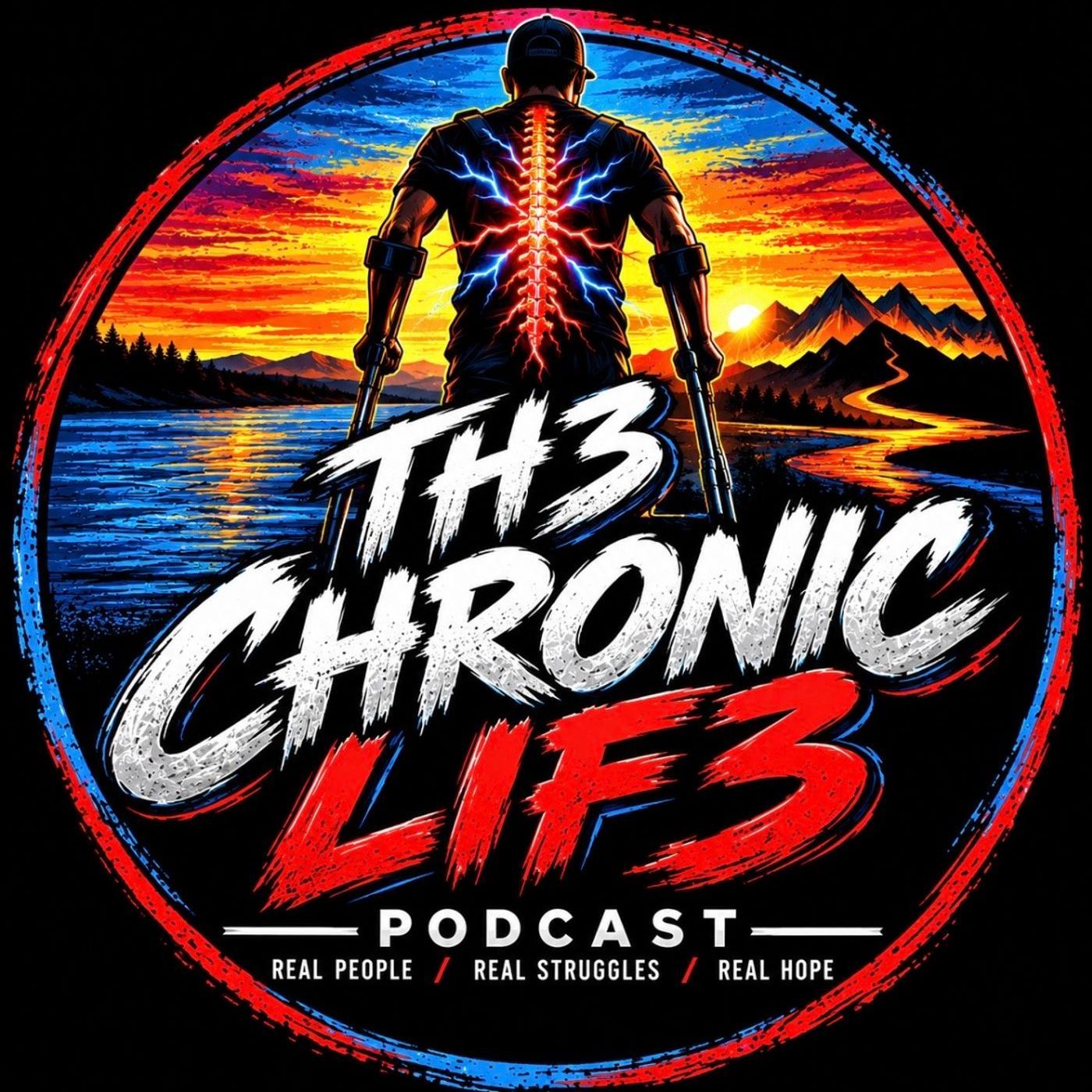
Th3 Chronic Lif3
by Steve
Th3 Chronic Lif3, created by Steve Lovelace, an x-ray tech & sports pioneer in triathlon & paratriathlon. Steve spent nearly 25 years in the medical device industry, and as a clinician, before being forced to retire due to constant pain from Arachnoiditis. His professional experience and that of being a patient, has made Steve a powerful patient advocate with a mission to Education, Advocate & Entertain those living with chronic pain and chronic disease & beyond. Steve Lovelace is a pioneer in triathlon & paratriathlon who, after surviving a catastrophic accident that left him temporarily paralyzed, refused to let his injuries define his future, pushing the boundaries of endurance sport for athletes with disabilities & a graduate of The Oklahoma University as a BSRT Radiological Technologist. This isn’t just a podcast, it’s a movement!
Episodes
-
S2E34 Part 1: Sian Welch Changing The Way Rehab Is Done & Changing The Lives of Spinal Cord Patients
The system keeps failing people after rehab ends—and Sian Welch’s family built a better one. She shares how her mother turned a gap in spinal cord injury care into a home-like model designed to help people reclaim independence, dignity, and a path forward. #paratriathlonpioneer…
more -
S2E36 What a random job interview, an Ironman, and Sobriety Taught Toni Will
Toni Will, General Manager of the Kalamazoo Wings, joins Steve Lovelace for a candid conversation about resilience, sobriety, and leadership. Toni shares how triathlon shaped her mindset, how she found her way into professional hockey, and how she’s helping break barriers for women in the sport....
-
S2E36 What a random job interview, an Ironman, and Sobriety Taught Toni Will
Toni Will, General Manager of the Kalamazoo Wings, joins Steve Lovelace for a candid conversation about resilience, sobriety, and leadership. Toni shares how triathlon shaped her mindset, how she found her way into professional hockey, and how she’s helping break barriers for women in the sport....
-
S2E33: Aura Taylor, The Policy Limit Queen & Humble Attorney With Heart
Insurance companies are not on your side and most people find that out too late. Aura Taylor, the founder of Taylor Law Firm and the “Policy Limit Queen,” breaks down how injured people can protect their rights, avoid costly mistakes, and maximize recovery before the insurance company starts...
-
S2E32: The Best is Yet To Come In Medicine With People Like Jason At The Helm
Jason West, a multi-degreed professional, shares his journey from the oil and gas industry to cancer research, focusing on a plant-based cancer drug. He discusses the efficacy of the drug, its clinical trials, and the potential impact on cancer treatment. Additionally, he delves into the...
-
Just F'ING Get On With It - The Chronic Illness Mindset That Changes Everything
The conversation covers the shared experiences of living with chronic illness, particularly MS and arachnoiditis, and the resilience and positivity exhibited by the individuals. It also delves into the challenges, coping mechanisms, and the impact of these conditions on daily life. The…
more -
How a Personal Loss Launched a Purpose-Driven Public Speaking Journey
Cystic fibrosis does not have to mean giving up your life, your voice, or your future. Nick Kelly - registered dietitian, CF ambassador, speaker, and author, shares the mindset, systems, and hard-won perspective that help him thrive while living with a chronic illness. Nick and host Steve…
more -
S2E29: Axay Shah: Advice from "THE" Raw Food Guru, Life Improvements Through Diet
The Chronic Life: Raw Food, Longevity, and Listening to Your Body In this episode of "the chronic life" presented by Arachnoiditis Unfiltered, Steve Lovelace sits down with Axay Shah, the “raw food guru,” to explore how nutrition, energy, and self-awareness can shape health outcomes for people...
-
S2E28: How Food Became the Fuel Behind Chronic Disease: Cherie Calbom, George Forman Nutristionist
Health is not just about living longer - it is about reclaiming the energy, clarity, and resilience to actually live your life. Nutrition expert Cherie Calbom, the Juice Lady, joins Steve Lovelace to reveal the food choices that quietly fuel inflammation, chronic illness, and fatigue, and the...
-
S2E27: VINCENT VAN DEN BROECK: Survive Against The Odds / "the chronic life"
A one split-second crash turned into a coma, a 1-in-10 survival outlook, and a story that still defies logic. Vincent Van den Broeck sits down with Steve Lovelace to unpack what happens when life hits you at full speed and how resilience becomes the difference between breaking and coming back...
-
S2E26: Dr. Sean Altman & the Altman Method For Chronic Pain: "the chronic life"
EPISODE DESCRIPTION - Ready to publish Chronic pain is not always a surgical problem. Dr. Sean Altman explains why so many treatments miss the real source of pain, and how a precision-based functional medicine approach can help people with arachnoiditis, cauda equina syndrome, migraines, long...
-
S2E25: Arachnoiditis Unfiltered 2.0: Comparing a Kidney Stone & Pyelonephritis Just Months Apart
Most people misunderstand the urgent warning signs of kidney infections, and how quickly they can escalate into life-threatening situations. In this deeply personal episode, host Steve Lovelace shares his recent harrowing experience with kidney infection and sepsis, revealing what often gets…
more -
S2E24: One Man’s Journey w/ Male Breast Cancer Disrupted a Pink Ribbon Paradigm & Started a Movement
Most people believe breast cancer only affects women, but the truth is far more complex, and devastatingly unfamiliar. Jake Messier, a military veteran and one of just 1% of men to develop male breast cancer, shares his raw, unfiltered journey from diagnosis to advocacy. His story is a powerful...
-
S2E23: United Theranostics & Dr. Munir Ghesani are Changing The Way Cancer is Treated!
Most cancer treatments are brutal, often sacrificing quality of life for a chance at survival. But what if there was a smarter, targeted way to fight cancer, one that kills with fewer side effects and more precision? Dr. Munir Ghesani reveals the groundbreaking technology behind Theranostics, an...
-
S2E22 Risa August: "The Road Unpaved" Leads to Resilience
Most people let their diagnoses define them. But Risa August’s story proves you can rewrite the narrative—transforming a life-threatening disease into a source of unstoppable resilience. From years of misdiagnosis to life-saving brain surgery, Risa’s journey is a masterclass in advocate power and...
-
S2E21 Arachnoiditis Unfiltered One Year Anniversary Episode
Most people don't realize how profoundly chronic illness can reshape their lives, until they discover a mindset shift that turns pain into purpose. This episode pulls back the curtain on living with autoimmune conditions, pain, and the relentless unpredictability of arachnoiditis, showing you how...
-
S2E20: The New Normal With Chronic Illness Caregiver Vs. Care-receiver
Here's a description for your episode: Episode Description Most caregivers and those suffering from chronic pain deal with the unrelenting challenge of navigating day-to-day life in a state of constant uncertainty. What if there was a way to find clarity, connection, and even moments of joy…
more -
S2E18 AI: The Game Changer in Medicine & Chronic Disease
Most spinal pain treatments focus only on mechanical fixes, but what if you could treat the nerve damage and correct the spine simultaneously? Dr. Nameer Haider unveils a groundbreaking neuromodulation technology—Synerfuse—that combines mechanical spine correction with dorsal root ganglion...
-
S2E19 New Normal With Chronic Illness Caregiver Vs. Care-receiver
Most caregivers feel overwhelmed by the emotional and physical toll of supporting loved ones with chronic illnesses, but this episode flipping the script reveals a powerful truth: resilience and purpose can turn suffering into strength. Don St. Louis and his wife Zan Lyrae share their raw,...
-
S2E17 How Resilience Turns Chronic Disease into a Source of Purpose and Strength w/ Emily Hertzberg
Most people overlook how devastating autoimmune diseases like arthritis really are—until they’re living with them. In this eye-opening episode, we break down the raw realities of managing arthritis from diagnosis to daily resilience, revealing the surprisingly invisible battles millions face with...
-
Sara's Shorts: Sara Explains The Importance of Protein for Chronic Illness
The conversation explores the critical role of protein in managing chronic illness, emphasizing its importance in healing, recovery, and overall well-being. It also highlights the impact of protein deficiency on the body and provides strategies for increasing protein intake to improve quality of...
-
S2E16 How Finding Purpose Transformed Hadley Ott & Reversed His Crohn's
Most people with chronic inflammation or autoimmune conditions like Crohn's are told medication is their only option—and yet, the story you’re about to hear will challenge everything you think you know about healing. Hadley Ott, a former Crohn's patient who healed himself naturally, shares his...
-
S2E15 Relearning Life After Tragedy
Most people with arachnoiditis wake up with the condition, never knowing exactly how it happened—and often without memory of the accident itself. Enoch Carter's story cuts through that darkness. After a devastating ATV collision shattered his lower spine and broke his face, he not only faced the...
-
S2E14 Aphasia Relearned with Kent & Leah
Benefit concert to support Aphasia Unlearned, June 5th 2026 at The Grand Theater in Salem Oregon. Watch to the end to see the the special guest performer, unveiling an original song, just for this event donating his time, musical talents and love for a brother and his cause! Most stroke survivors...
-
S2E13 Arachnoiditis & Dysautonomia, The Hidden Connection | Arachnoiditis Unfiltered
Unlock the hidden connections between dysautonomia, POTS, and arachnoiditis in this eye-opening conversation that could transform how you understand chronic illness. If you or someone you love struggles with mysterious symptoms like dizziness, heart irregularities, or gut issues, particularly…
more -
S2E12 Interview with The Alien Part 2, Arachnoiditis Unfiltered
The conversation covers the journey of ultra endurance, creating impact and systems, choosing your pain, living by your values, learning from mistakes, and finding positivity in difficult circumstances. The conversation delves into the nature of happiness, recognizing patterns and reactions,...
-
S2E11 Interview With The Alien, JD Tremblay
The conversation with JD Tremblay covers topics related to endurance, recovery, and understanding the body's systems. JD's background and achievements are discussed, highlighting his expertise in ultra-endurance triathlons. The importance of sleep and recovery, as well as the concept of quality…
more -
S2E11 Interview With The Alien, JD Tremblay
Email: [email protected] Rare Patient Voice: https://www.rarepatientvoice.com/rp/ArachnoiditisUnfiltered Instagram https://www.instagram.com/arachnoiditis_unfiltered/ Facebook: https://www.facebook.com/groups/64011197908243 Threads:...
-
Scott Groves: New Zealander, Photographer, Influencer & Arachnoiditis Warrior
The conversation covers the challenges of arachnoiditis diagnosis and treatment, the benefits of multidisciplinary rehabilitation and pain management, and the use of cannabis as a therapeutic option for symptom relief. The conversation covers topics related to pain management, physical...
-
Part 2 The Chronic Life
This episode emphasizes the resilience of individuals battling chronic disease and advocates pushing for systemic change. Remember, collective voice and shared knowledge are vital in transforming healthcare for those with invisible illnesses
-
A Sweet Soul With A Horrible Disease
"Pain doesn’t have to be only physical — sometimes it’s emotional, and distractions matter more than we realize." Drop a 💬 if you’ve ever found a moment or experience that shifted your perspective during tough times.This is a raw peek into how sharing genuine struggles can create connection and...
-
The Eyeglasses Dilemma
Boldly challenge what you think you know about perception, and how a simple choice can change everything. When a single comment about glasses sparks a story, it unravels insights on self-awareness, authenticity, and the power of small decisions. This episode isn't just about eyewear; it's about…
more -
Arachnoiditis Unfiltered S2E7: Life with Dysautonomia
Keywords dysautonomia, arachnoiditis, health journey, chronic illness, personal experience, symptoms, diagnosis, autoimmune disease, health monitoring, lifestyle changes Takeaways Steve shares his personal health journey after a recent diagnosis. He discusses the symptoms of dysautonomia and its...
-
Arachnoiditis Unfiltered S1E10: Dr. Betsy Grunch Not Your Average Neurosurgeon
Dr. Betsy Grunch, also known as Lady Spindoc, discusses her approach to educating patients about arachnoiditis and the challenges of diagnosing and understanding the disease. She also shares her experience with content creation and the impact of social media on her communication skills as a...
-
Arachnoiditis Unfiltered S2E6 Hadley Ott & Functional Medicine
The conversation covers Hadley's journey of overcoming Crohn's disease through natural methods, the impact of lifestyle factors on health, advocacy for rare disease awareness, and the transition to health coaching and book release. It explores the challenges of conventional treatments, the...
-
Arachnoiditis Unfiltered S2E4 Heath Howard for Congress
The conversation covers Heath Howard's journey with arachnoiditis, his accident, recovery, and subsequent involvement in political advocacy. It also delves into the impact of the disease on women, pain management, personal resilience, disability representation, and the future impact of research…
more -
Arachnoiditis Unfiltered S2E3: Erica's Story
content type Interview primary goal Educational summary In this inspiring interview, Erica Falco shares her journey from a challenging medical history to becoming a passionate advocate for rare diseases. Discover her story, advocacy efforts, and how she uses social media to raise awareness and...
-
Intimacy is a Casualty of Chronic Illness / S2E2 Arachnoiditis Unfiltered
The conversation delves into the sensitive topic of intimacy and its impact on individuals living with chronic diseases, specifically arachnoiditis. It also explores the challenges faced by individuals diagnosed with arachnoiditis, from early life experiences to pain management and medication.…
more -
Pain is Personal/ S1E1 Arachnoiditis Unfiltered
Keywords Arachnoiditis, chronic pain, patient advocacy, pain management, neuroinflammation, health resources, community support, personal experiences, medication, awareness Summary In the inaugural episode of Arachnoiditis Unfiltered, hosts Steve and Sarah Lewis share their personal experiences...
-
Mark Fox, NASA Rocket Scientist & Inventor, discusses PEMF and its Potential Health Benefits / S2E1
Summary In this episode of Arachnoiditis Unfiltered, host Steve welcomes Mark L. Fox, a former rocket scientist and inventor, to discuss innovative energy therapy technology designed to alleviate chronic pain. Mark shares his unique journey into the field of energy therapy, which began when he...
-
1000 fb Subscribers Milestone
The hosts express gratitude for community support and celebrate reaching milestones. They emphasize the importance of building a supportive community, reaching a wider audience, promoting positivity, expanding the podcast, and advocating for patient voice and research participation. Takeaways...
-
Rare Patient Voice President Wes Michaels Is Connecting Patients With Researchers Worldwide
The conversation delves into the role and impact of Rare Patient Voice in connecting patients with medical research studies and empowering them to share their experiences. It explores the journey, challenges, and expansion of Rare Patient Voice, as well as the understanding and diagnosis of rare...
-
Connecting The Rare Disease Community With Rare Patient Voice
Changing patients' lives and connecting the rare disease community. Sara and Steve have a powerful conversation with Rare Patient Voice President Wes Michaels and patient advocate Stacy.Through our discussion, we learn how signing up and participating in research projects for all types of…
more
We're indexing this podcast's transcripts for the first time — this can take a minute or two. We'll show results as soon as they're ready.
No matches for "" in this podcast's transcripts.
No topics indexed yet for this podcast.
Loading reviews...
ABOUT THIS SHOW
Th3 Chronic Lif3, created by Steve Lovelace, an x-ray tech & sports pioneer in triathlon & paratriathlon. Steve spent nearly 25 years in the medical device industry, and as a clinician, before being forced to retire due to constant pain from Arachnoiditis. His professional experience and that of being a patient, has made Steve a powerful patient advocate with a mission to Education, Advocate & Entertain those living with chronic pain and chronic disease & beyond.
Steve Lovelace is a pioneer in triathlon & paratriathlon who, after surviving a catastrophic accident that left him temporarily paralyzed, refused to let his injuries define his future, pushing the boundaries of endurance sport for athletes with disabilities & a graduate of The Oklahoma University as a BSRT Radiological Technologist.
This isn’t just a podcast, it’s a movement!
HOSTED BY
Steve
Loading similar podcasts...
Frequently Asked Questions
How many episodes does Th3 Chronic Lif3 have?
Th3 Chronic Lif3 currently has 43 episodes available on PodParley. New episodes are automatically indexed when they're published to the podcast feed.
What is Th3 Chronic Lif3 about?
Th3 Chronic Lif3, created by Steve Lovelace, an x-ray tech & sports pioneer in triathlon & paratriathlon. Steve spent nearly 25 years in the medical device industry, and as a clinician, before being forced to retire due to constant pain from Arachnoiditis. His professional experience and that of...
How often does Th3 Chronic Lif3 release new episodes?
Th3 Chronic Lif3 has 43 episodes. Check the episode list to see recent publication dates and frequency.
Where can I listen to Th3 Chronic Lif3?
You can listen to Th3 Chronic Lif3 on PodParley by clicking any episode. We provide an embedded audio player for direct listening, and you can also subscribe via your preferred podcast app using the RSS feed.
Who hosts Th3 Chronic Lif3?
Th3 Chronic Lif3 is created and hosted by Steve.
URL copied to clipboard!