
PODCAST · science
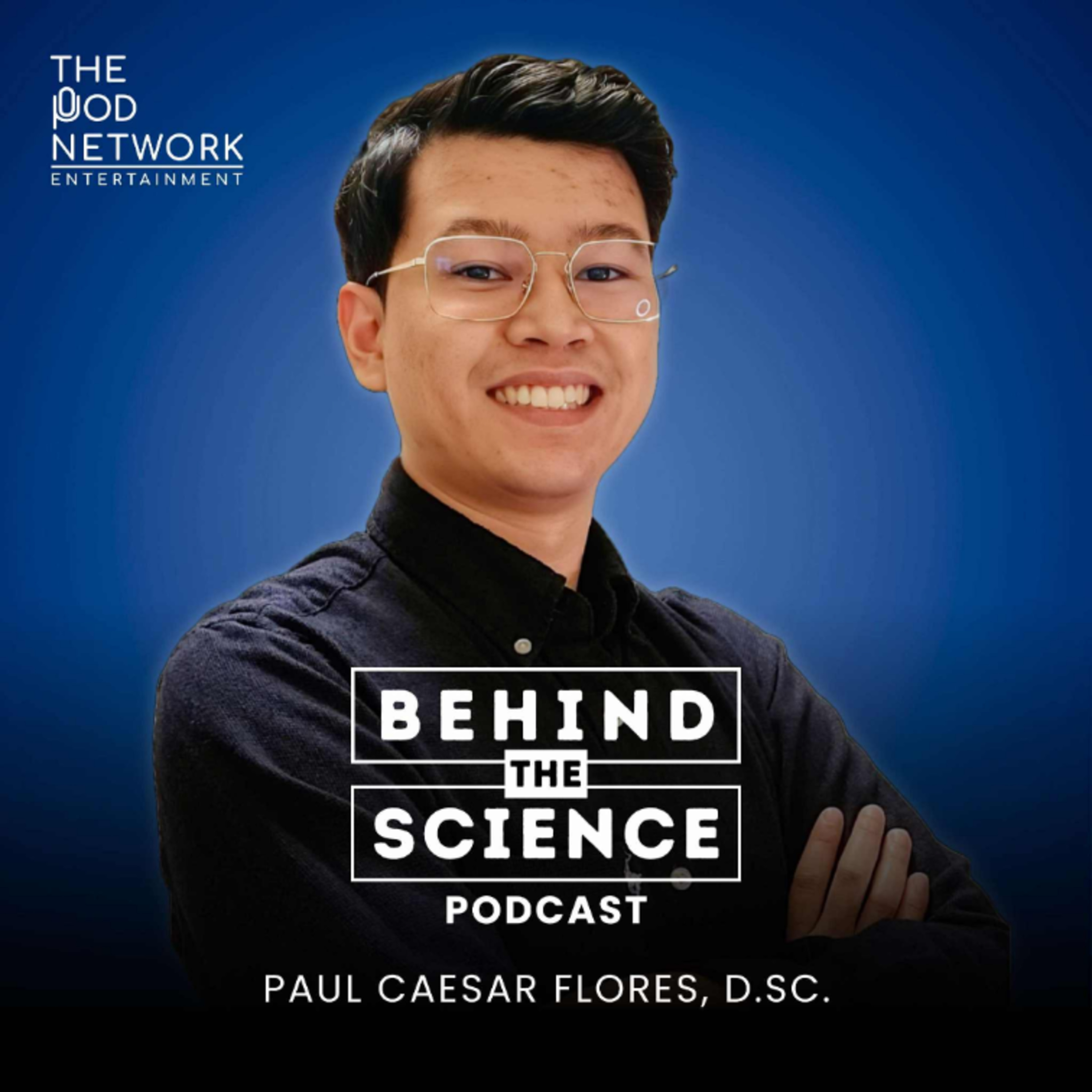
Behind The Science Podcast
by Paul Flores
Every research paper holds more than just data. It carries years of dedication, sleepless nights, and setbacks. Behind The Science Podcast takes you beyond the published pages and into the real stories of discovery.New episode every Thursday at 7:00 PM.Hosted by: Paul Caesar M. Flores, DScGoogle Scholar: https://scholar.google.com/citations?user=6QCdWywAAAAJ&hl=en
-
129
Ep140 - Diploma for Sale: Diploma Mills in Higher Education in the Philippines
In this episode, we talk with Dr. Karol Mark Yee, Executive Director of the Second Congressional Commission on Education (EDCOM 2), about the growing problem of diploma mills in Philippine higher education — schools that hand out real-looking diplomas without delivering real education. Dr. Yee explains that the Philippines is especially exposed because it has one of the largest higher education systems in the world. It has 2,400 colleges and universities, which is about half the size of the entire US system. Many of these schools survive on tiny enrollments (30% have fewer than 500 students) and simply can't afford the qualified faculty, laboratories, or journal access that a real degree requires. These diploma mills are a direct risk to students and a betrayal of the families paying for their education.⌛Chapters02:22 Intro and welcome06:24 Dr. Yee's journey from Broadcast Communication to education policy21:28 What is a diploma mill, and how easy is it to start one?31:53 Graduate school diploma mills: who gets victimized and why35:33 The promotion loophole, fake theses, and predatory journals48:06 EDCOM 2's plan to crack down on diploma mills53:05 Advice for choosing a legitimate school55:26 Closing and where to follow EDCOM 2
-
128
Ep139 - Meteorological Research by Jesuit Priests in the Philippines (1860s–1940s)
In this episode, we talk with Dr. Kerby Alvarez, a historian at the Department of History, University of the Philippines Diliman, about his study tracing the history of Philippine meteorology. Long before PAGASA existed, the Observatorio Meteorológico de Manila (OMM) — founded by Jesuit priests in 1865 — and its successor, the Philippine Weather Bureau (PWB) spent nearly a century turning typhoons into a subject of serious scientific study.Drawing on archives in the Philippines, the US, and Spain, Dr. Alvarez shows how these institutions published hundreds of reports, built a regional network with weather observatories across Asia, and even got caught in a diplomatic dispute with Hong Kong's observatory in 1899. As a historian, he traces not just what these scientists discovered, but how their writing, data-keeping, and international collaborations were shaped by the political currents of Spanish and American colonial rule in the Philippines.⌛Chapters00:01:51 Intro and welcoming Dr. Kerby Alvarez00:03:15 Getting to know Dr. Alvarez as a historian00:14:55 Filipino holidays and historical memory00:22:24 The paper: a history of Philippine meteorological science00:26:42 Building the Manila Observatory and Philippine Weather Bureau00:48:11 The Manila–Hong Kong observatory feud 00:50:34 Funding historical research, other disasters studied, and advice for aspiring historians01:02:07 Closing📚Reference: Alvarez KC. 2025. Scientific textualizations of tropical cyclones in the Philippines: the scientific activities of the Observatorio Meteorológico de Manila (OMM) and Philippine Weather Bureau (PWB), 1860s–1940s. Hist Meteorol. 12:1–26.🤝Behind The Science Podcast is in partnership with the UP Resilience Institute
-
127
Ep138 - Is the Philippines Ready for Nuclear Energy?
In this episode, we talk with Dr. Carlo Arcilla, a geologist and former director of the Philippine Nuclear Research Institute (PNRI) and the UP National Institute of Geological Sciences, about whether the Philippines is ready for nuclear energy. He explains why the Chernobyl and Fukushima accidents people associate with nuclear energy are not likely to happen Bataan. He also addresses the geologic hazard concerns in the BNPP. Dr. Arcilla also asserts that the Philippines is ready for nuclear energy but he will not advocate for it until the independent regulators are appointed.0:00 Introduction2:19 From Catanduanes to geology15:23 Turning Payatas garbage into electricity18:47 Leading PNRI and the nuclear waste problem24:19 The Bataan plant, Chernobyl, and Fukushima29:15 Why an independent nuclear regulator comes first31:36 Expensive electricity and the three sister plants still running36:35 The fault question, Mount Natib, and the evidence40:47 The DOE surveys: why most Filipinos favor nuclear44:26 Do we have the engineers to run a nuclear plant?47:25 Other proposed sites — and is the Philippines ready?52:01 A 40-year-old plant, TRISO fuel, and small modular reactors55:27 Advice to aspiring researchers, and alkaline water from nuclear research
-
126
Ep137 - Counterfactual analysis of the impact of Project NOAH on disaster risk reduction
In this episode, we talk with Mr. Jude Vito Custodio Agapito about his study on whether Project NOAH, the Philippine government's flagship disaster risk reduction program, actually saved lives. Using counterfactual analysis of hazard data from 1986 to 2024, the study compares fatalities and damages before and after operations research was embedded into the government's Pre-Disaster Risk Assessment system in 2014. While the cost of damages from typhoons and floods stayed consistent over both periods, average annual fatalities dropped by about 76%, from over 1,200 deaths per year to around 295, suggesting that the program may have saved more than 7,000 lives over the past decade.📚Reference: Agapito JVC, Rosales RML, Pascual AC, Concepcion CR, Lagmay AMFA. 2026. Counterfactual evidence on the impacts of operations research on Philippine disaster risk reduction efforts. Disaster Prev Manag. 35(6):44–63.🤝 Behind The Science Podcast is in partnership with the UP Resilience Institute
-
125
Ep136 - Coat of arms, logos, and seals
In this episode, we talk with Ms. Eulah Araullo, Creative Lead at Canva and one of the Philippines' top educational content creators (@eulahexplains), about the design principles behind coats of arms, logos, and seals. We discuss the distinction between these three symbols, and how colonial history continues to shape Philippine seals today.
-
124
Ep135 - Serving the Community as a Doctor to the Barrio
In this episode, we talk with Dr. Roy Joshua Gerona about the Doctors To The Barrio (DTTB) Program, what a day in rural healthcare actually looks like, the challenges of serving underserved communities, and why he chose this path.
-
123
Ep134 - There are 5 species of Lagundi in the Philippines
In this episode, we talk with Dr. Renerio Gentallan Jr. about his study on the taxonomic identity of "lagundi", a group of medicinal shrubs long confused with one another due to decades of conflicting nomenclatural revisions. Despite lagundi-based products generating hundreds of millions of pesos in sales in the Philippines, the exact species being used and studied has remained ambiguous, with some specimens historically misidentified even in national pharmacopeia records. Using complete chloroplast genome sequencing alongside morphological and statistical analyses of over 2,000 herbarium specimens, the study clarified the species boundaries within this complex. The findings support reinstating Vitex elmeri as a distinct species and describe a new species, Vitex arvensis. The new species is a hybrid between V. bicolor Willd. and V. elmeri Moldenke, and also proposed as a new endemic species to the Philippines.📚Reference: Gentallan RP Jr, Sengun S, Bartolome MCB, Quiñones KJO, Coronado NB, Borromeo TH, Timog EBS. 2024. The Vitex trifolia complex (Lamiaceae) in the Philippines. PhytoKeys. 248:1–40.
-
122
Ep133 - Flood and landslide susceptibility mapping in Mati, Davao Oriental
In this episode, we talk with Mr. Ramil Ramos about his study on flood and landslide susceptibility mapping in the City of Mati, Davao Oriental. Using a GIS-based Multi-Criteria Decision Analysis integrated with the Analytical Hierarchy Process (MCDA-AHP), the study generated hazard susceptibility maps and examined how urban expansion from 2017 to 2024 has increasingly encroached into high-risk zones.📚Reference: Ramos, R. L., & Cabrera, J. S. (2026). GIS-based multi-criteria decision analysis (MCDA-AHP) for flood and landslide susceptibility mapping and urban sprawl assessment in the Mati City, Davao Oriental, Philippines. Davao Research Journal, 17(2), 56–67.
-
121
Ep132 - Bakit tumatagal ang mga pasyente sa ospital?
We talk with Dr. John Jefferson Besa and Dr. Ella Mae Masamayor about their study on prolonged hospital stays among internal medicine patients admitted at the Philippine General Hospital. By reviewing the medical records of 386 patients admitted in 2019, prolonged length of stay was found in almost a fifth of emergency admissions and a quarter of elective admissions. They also discussed the factors associated with prolonged length of stay.📚Reference: Besa, J. J. V., Masamayor, E. M. I., Tamondong-Lachica, D. R., & Palileo-Villanueva, L. M. (2023). Prevalence and predictors of prolonged length of stay among patients admitted under general internal medicine in a tertiary government hospital in Manila, Philippines: a retrospective cross-sectional study. BMC Health Services Research, 23, 50.
-
120
Ep131 - Memorizing the virtual world
In this episode, we talk with Dr. Nicko Caluya about his study on whether the size of the overlay field of view (OFOV) in head-mounted displays affects a person's ability to memorize spatial locations. OFOV refers to the small window through which virtual objects are visible in optical see-through AR headsets, and narrower OFOVs are often criticized as a limitation of the technology. Using a simulated head-mounted display with three different OFOV sizes, the study tested 18 participants on their ability to memorize and recall the locations of virtual object pairs.📚Reference: Caluya, N. R., Plopski, A., Sandor, C., Fujimoto, Y., Kanbara, M., & Kato, H. (2022). Does overlay field of view in head-mounted displays affect spatial memorization? Computers & Graphics, 102, 554–565.
-
119
Ep130 - May formula ba sa pagpapatawa?
In this episode, we talk with Victor Anastacio, stand-up comedian and host of the podcast Intellectwalwal, about whether there's a formula for making people laugh. A former banker who left the corporate world to pursue comedy full-time with Comedy Manila, Victor shares his perspective on what makes comedy work, drawing from his years on stage and behind the mic.
-
118
Ep129 - Learning Intramuros' history with augmented reality
In this episode, we talk with Nicko R. Caluya about his study on the design of Igpaw: Intramuros, a smartphone- and tablet-based augmented reality game that teaches Philippine history through an adventure game format set in the walled city of Intramuros, Manila.📚Reference: Rodrigo, M. M. T., Caluya, N. R., Diy, W. D. A., & Vidal, E. C. E., Jr. (2015). Igpaw: Intramuros — Design of an augmented reality game for Philippine history. In H. Ogata et al. (Eds.), Proceedings of the 23rd International Conference on Computers in Education (pp. 1–10). Asia-Pacific Society for Computers in Education.
-
117
Ep128 - Pervasive stunting among children under five in Negros
In this episode, we talk with Dr. Janine Patricia G. Robredo about her thesis on stunting among children under five in nutrition aid-recipient communities in the Philippines.
-
116
Ep127 - Predicting the scores of university entrance examinees
In this episode, we talk with Diether C. Montejo about his study on predicting how university entrants perform in the State University Aptitude and Scholarship Test (SUAST) — the college admission exam of Davao Oriental State University. Despite a 54% passing rate over a five-year period, non-passers continued to be accepted due to policy changes, raising questions about what factors actually determine exam performance. Using both Multiple Linear Regression and Multi-Layer Perceptron Neural Network approaches, the study found that family income, library access, senior high school grades, intrinsic motivation, and openness and intellect were significant predictors. The neural network model also slightly outperformed traditional regression in predicting exam scores.📚Reference: Singh, N. A., & Montejo, D. C. (2023). Bridging the gap: A comparative analysis of traditional and neural network regression methods for predicting university entrant performance in SUAST examination. Davao Research Journal, 14(2), 116–137. 🤝This episode is co-presented by the Davao Research Journal. Submit here.
-
115
Ep126 - Life outside PhD, pagbabanda sa Taiwan
In this episode, we talk with Mr. John Fungo about his journey in science, PhD research in Taiwan, and life outside the laboratory.PS. Hindi pala nag save ang video recording kaya audio episode muna tayo.
-
114
Ep125 - Sonar mapping of groundwater discharge in coastal areas
In this episode, we talk with Mary Rose P. Gabuyo about her study on using low-cost fish finders — the kind used for recreational sport fishing — to detect and map submarine groundwater discharge (SGD) in coastal waters. SGD refers to all direct discharge of subsurface fluids across the seafloor, including fresh groundwater, recirculated seawater, and gases like CO₂ and methane. Despite its ecological significance, mapping SGD remains a challenge because conventional methods are costly, tedious, and require specialized equipment. This study tested whether recreational-grade echosounders could do the job — and they did.📚Reference: Gabuyo MRP, Siringan FP. 2022. Utility of low-cost recreational-grade echosounders in imaging and characterizing bubbly coastal submarine groundwater discharge. Journal of Hydrology X. 14:100118.
-
113
Ep124 - Reconstructing 13,000 years of sea ice extent in the Canadian Arctic
In this episode, we talk with Madeleine Santos about her study on how sea ice in the Canadian Arctic has changed over the past 13,000 years and what it tells us about where the Arctic is headed. By analyzing lipid biomarkers — chemical compounds preserved in seafloor sediments that serve as fingerprints of past environmental conditions — from two sediment cores collected from the Beaufort Sea, the study reconstructed sea ice cover, sea surface temperatures, salinity, and terrestrial input throughout the Holocene.📚Reference: Santos M, Bröder L, O'Regan M, Hernández-Almeida I, Tesi T, Bigler L, Haghipour N, Nelson DB, Fritz M, Lattaud J. 2026. Holocene sea ice and paleoenvironment conditions in the Beaufort Sea (Canadian Arctic) reconstructed with lipid biomarkers. Climate of the Past. 22:187–203.
-
112
Ep123 - Possible existence of gas hydrates in Manila Trench
In this episode, we talk with Elisha Jane M. Maglalang about her study on the possible occurrence of gas hydrates in offshore western Luzon — the first of its kind in the Philippines. Gas hydrates are ice-like substances that trap methane gas within their molecular structure and form naturally on the seafloor under high pressure and low temperature. They are of significant interest both as a potential alternative energy resource and as a geologic hazard. Their dissociation can release large amounts of methane into the atmosphere and trigger underwater landslides. By reinterpreting existing multi-channel seismic reflection data from the Manila Trench, the study identified bottom simulating reflectors, which is the primary seismic signature of gas hydrate presence, across a total area of approximately 15,400 km² in the Manila Trench forearc region.📚Reference: Maglalang EJM, Armada LT, Santos MC, Sayen KF, Dimalanta CB, Hsu S-K, Yumul GP Jr. 2023. Bottom simulating reflectors in the Manila Trench forearc and its implications on the occurrence of gas hydrates in the region. Marine and Petroleum Geology. 158:106538.🤝Behind The Science Podcast is in partnership with the UP Resilience Institute
-
111
Ep122 - Viruses in the Arctic Ocean
In this episode, we talk with Alyzza Calayag about her study on the diversity, seasonality, and global distribution of viruses in the Arctic Ocean. Viruses play critical roles in ocean ecosystems but very little is known about viral communities in polar waters. Using water samples collected monthly for four years, the study identified 5,662 viral groups, found that viral abundance is 8-fold higher in summer than the rest of the year, and discovered that 42% of these Arctic viruses also peak in abundance in high-latitude regions of the Southern Ocean📚Reference: Calayag AM, Priest T, Oldenburg E, Muschiol J, Popa O, Wietz M, Needham DM. 2025. Arctic Ocean virus communities and their seasonality, bipolarity, and prokaryotic associations. Nature Communications. 16:6427.🤝Behind The Science Podcast is in partnership with the UP Resilience Institute
-
110
Ep121 - Landslide prediction using machine learning
In this episode, we talk with Ms. Jamila B. Abuda about her study on using machine learning to predict when landslides are likely to occur along a mountain highway in Benguet, Philippines. Being able to predict when landslides will happen is critical for early warning systems. The study tested five machine learning algorithms using only rainfall data and documented landslide events, and found that grouping landslide occurrences by rock type or lithology before training the models significantly improved prediction accuracy. 📚Reference: Abuda JB, Saturay RM Jr., Catane SG, Guevarra I. 2026. Lithologically-constrained, machine learning-based temporal landslide prediction models using rainfall time series for the Benguet First Engineering District, Philippines. Bulletin of Engineering Geology and the Environment. 85:156.🤝Behind The Science Podcast is in partnership with the UP Resilience Institute.
-
109
Lec3 - Rapid mangrove colonization due to high sedimentation from a flood control project
Reuploading this lecture about the rapid mangrove colonization in Iloilo City because of high sedimentation from a flood control project. I also shared how this study developed from a class project to 2 publications.📚References: [1] Flores, P. C. M., & Siringan, F. P. (2020). Shoreline change in response to the construction of a flood canal in Jaro, Iloilo City, Philippines. IEEE India Geoscience and Remote Sensing Symposium (InGARSS), 2020, 134–137. [2] Flores, P. C. M., David, L. T., & Siringan, F. P. (2020). Mangrove forest cover change (1947–2018) at the River Mouth Section of The Jaro Floodway, Iloilo City, Philippines. IEEE India Geoscience and Remote Sensing Symposium (InGARSS), 2020, 246–249. 🤝Behind The Science Podcast is in partnership with the UP Resilience Institute
-
108
Ep120 - Using computer vision to identify pollen for doubled haploid breeding
In this episode, we talk with John Albert M. Caraan about his study on Sporesight — an AI-powered computer vision tool that can automatically identify pollen developmental stages in eggplant in real time. Knowing the exact developmental stage of pollen is critical in doubled haploid technology, where microspores at the right stage are cultured in vitro to rapidly produce purebred plant lines. 📚Reference: Caraan JAM, Bautista AM, Lamorin JBV, Madrid VRM. 2026. Sporesight: A real-time computer vision-driven inference tool for pollen development stage classification in eggplant. SciEnggJ. 19(Supplement):015–022. 🤝Behind The Science Podcast is presented to you by Marine & Earth Science Learning Hub, UP Resilience Institute, The Philippine Agricultural Scientist, The Philippine Journal of Fisheries, and SciEnggJ.
-
107
Ep119 - How can scientists become better science communicators
In this episode, we are joined by Mikael Angelo Francisco — an award-winning science journalist, the co-founder and editor-in-chief of FlipScience.ph, host of the Ask Theory Podcast, and a leading voice in Philippine science media — for an in-depth conversation on the evolving landscape of science communication in the Philippines. We discussed the strategic value of podcasting, the common errors scientists make when addressing non-specialist audiences, and the shared responsibility of journalists and researchers in combating misquotation and misinformation.🤝Behind The Science Podcast is presented to you by Marine & Earth Science Learning Hub, UP Resilience Institute, The Philippine Agricultural Scientist, The Philippine Journal of Fisheries, and SciEnggJ.
-
106
Ep118 - Philippine Climate Types Based on Rainfall and Temperature
Dr. Lyndon Olaguera discusses their study challenging the existing four-type Philippine climate classification by incorporating temperature alongside rainfall data from 1979 to 2015.📚Reference: Olaguera LMP, Badua EK, Llorin AGA, Cruz FAT, Villarin JRT, Manalo JA, Villafuerte MQ II, Matsumoto J. 2025. Rainfall and temperature-based Philippine climate zones using Self-Organizing Maps. Scientific Online Letters on the Atmosphere. 21C:10–20. 🤝Behind The Science Podcast is presented to you by Marine & Earth Science Learning Hub, UP Resilience Institute, The Philippine Agricultural Scientist, The Philippine Journal of Fisheries, and SciEnggJ.
-
105
Ep117 - Women's roles in Philippine agriculture
To cap off our March episode and celebrate Women’s Month, Ms. Gemmalyn Trespalacio shares their study examining women’s roles in Philippine agriculture in the context of climate change through a meta-synthesis using a gender analysis framework.🤝Behind The Science Podcast is presented to you by Marine & Earth Science Learning Hub, UP Resilience Institute, The Philippine Agricultural Scientist, The Philippine Journal of Fisheries, and SciEnggJ.
-
104
Ep116 - Fisheries Resources in the Babuyan Channel
Dr. Angel Encarnacion discusses their study assessing the fisheries resources of the Babuyan Channel in Northern Philippines, uncovering fluctuating fish production trends and high fishing pressure on commercially important species like shortfin scad, mahi-mahi, and largehead hairtail from 2009 to 2013.📚Reference: Calicdan MA, Gumiran E, Encarnacion AB, Ayson JP. 2018. Assessment of fisheries resources in the Babuyan Channel. The Philippine Journal of Fisheries. 25(1):14–24. 🤝Behind The Science Podcast is presented to you by Marine & Earth Science Learning Hub, UP Resilience Institute, The Philippine Agricultural Scientist, The Philippine Journal of Fisheries, and SciEnggJ.
-
103
Ep115 - Occurrence and stability of veterinary antibiotics in Pampanga River Basin
Mr. Gerardo Ilagan investigated the presence and fate of seven veterinary antibiotics, namely, amoxicillin, ampicillin, penicillin G, tetracycline, oxytetracycline, sulfamethazine, and sulfamethoxazole in the surface waters of the Upper Pampanga River and its tributaries in Nueva Ecija. 📚Reference: Ilagan G, Dimzon IK, Guidote Jr. A. 2026. Occurrence and stability of veterinary antibiotics in Upper Pampanga River Basin located in Nueva Ecija, Philippines. SciEnggJ. 19(1):79–88.🤝Behind The Science Podcast is presented to you by Marine & Earth Science Learning Hub, UP Resilience Institute, The Philippine Agricultural Scientist, The Philippine Journal of Fisheries, and SciEnggJ.
-
102
Ep114 - Measuring CO2 efflux in Philippine mangroves
Mr. Sean Manalo shares a low-cost method to measure the carbon dioxide efflux in Philippine mangrove forests.📚Reference: Manalo SP, Salmo SI. 2025. Exploring the potential of low-cost portable CO2 meter in the assessment of soil CO2 efflux in Philippine mangroves. SciEnggJ. 18(2):347–355.🤝Behind The Science Podcast is presented to you by Marine & Earth Science Learning Hub, UP Resilience Institute, The Philippine Agricultural Scientist, The Philippine Journal of Fisheries, and SciEnggJ.
-
101
Ep113 - Urban Heat Island Effect
Dr. John Manalo discussed their study on how urbanization has driven temperature changes across the Philippines from 1951 to 2018 using 34 meteorological stations.📚Reference: Manalo JA, Matsumoto J, Takahashi HG, Villafuerte MQ, Olaguera LMP, Ren G, Cinco TA. 2022. The effect of urbanization on temperature indices in the Philippines. International Journal of Climatology. 42(2):850–867.🤝Behind The Science Podcast is presented to you by Marine & Earth Science Learning Hub, UP Resilience Institute, The Philippine Agricultural Scientist, The Philippine Journal of Fisheries, and SciEnggJ.
-
100
Ep112 - The land is sinking: Ground deformation after the 2013 Bohol earthquake
Engr. Angela Bauzon discusses her Master's thesis on ground deformation in Bohol following the devastating 2013 Mw 7.2 earthquake. Her study analyzes post-earthquake land movement along the coastal areas of Loon and Maribojoc using Sentinel-1 satellite imagery and remote sensing techniques like shoreline change analysis and persistent scatterer interferometric synthetic aperture radar📚Reference: Bauzon, M.D.A., Reyes, R.B., Blanco, A.C. et al. Ground deformation analysis caused by post-2013 earthquake in Bohol, Philippines. Spat. Inf. Res. 30, 791–807 (2022).🤝Behind The Science Podcast is presented to you by Marine & Earth Science Learning Hub, UP Resilience Institute, The Philippine Agricultural Scientist, The Philippine Journal of Fisheries, and SciEnggJ.
-
99
Lec2 - Manila Trench tsunami scenarios
Reuploading this old lecture I made...Numerical modeling of tsunamis from the Manila Trench provides startling insights into the many countries and people who would be affected by such a catastrophic event. This video explains the modeling results and demonstrates just how devastating the effects of a powerful tsunami from the Manila Trench could be.📚References: Megawati K, Shaw F, Sieh K, Huang Z, Wu T-R, Lin Y, Tan SK, Pan T-C. 2009. Tsunami hazard from the subduction megathrust of the South China Sea: Part I. Source characterization and the resulting tsunami. Journal of Asian Earth Sciences. 36(1):13–20. doi:10.1016/j.jseaes.2008.11.012.Qiu Q, Li L, Hsu Y-J, Wang Y, Chan C-H, Switzer AD. 2019. Revised earthquake sources along the Manila trench for tsunami hazard assessment in the South China Sea. Natural Hazards and Earth System Sciences. 19(7):1565–1583. doi:10.5194/nhess-19-1565-2019.
-
98
Ep111 - Local community participation in coastal resource management of Palaui Island
In this episode, Dr. Ballad discussed her study on Palaui Island Protected Landscape and Seascape (PIPLS) where she explores how ecotourism serves as an alternative livelihood for local communities and how it influences their participation in coastal resource management. 📚Reference: Ballad E, Morooka Y, Shinbo T. 2021. Impact of ecotourism on local community's participation in coastal resource management: case of Palaui Island Protected Landscape and Seascape (PIPLS) in Northern Luzon, Philippines. The Philippine Journal of Fisheries. 28(2):168–180. 🤝Behind The Science Podcast is presented to you by Marine & Earth Science Learning Hub, UP Resilience Institute, The Philippine Agricultural Scientist, The Philippine Journal of Fisheries, and SciEnggJ.
-
97
Lec1 - This island in Lumaniag, Batangas was formed by storms
Reuploading this old lecture I made...Tsunami or typhoon? Which one built the mysterious island off the coast of Lumaniag village in Batangas? That's the question researchers from UP Diliman set out to answer.In this episode, we dive into how researchers from UP Diliman solved this coastal detective story. By combining field measurements, uranium-thorium dating of coral boulders, historical typhoon records, and interviews with village elders to piece together how typhoons in the 1960s and 70s built an entire island from scratch. Here's the twist: that storm-built island is now protecting the very community it once threatened.📚Reference: Gallentes AT, Manglicmot MT, Gong SY, Hu HM, Shen CC, Siringan FP. 2021. Coral boulder transport and gravel bar formation by storms in Lumaniag village, Batangas, northwestern Philippines. Geomorphology. 376:107554. doi:10.1016/j.geomorph.2020.107554.🤝Behind The Science Podcast is presented to you by Marine & Earth Science Learning Hub, UP Resilience Institute, The Philippine Agricultural Scientist, The Philippine Journal of Fisheries, and SciEnggJ.
-
96
Ep110 - Urban planning with AI
What does a livable city really look like and who gets to decide? In this episode, Enzo Campomanes explains how he developed AI models called "AI-voters" trained on satellite imagery and community input to map urban livability. 📚Reference: Campomanes V, F., Abascal, A., Oliveira, L.T. et al. Whose city is it? Mapping perceived urban livability with citizen-guided AI. npj Urban Sustain 6, 16 (2026).🤝Behind The Science Podcast is presented to you by Marine & Earth Science Learning Hub, UP Resilience Institute, The Philippine Agricultural Scientist, The Philippine Journal of Fisheries, and SciEnggJ.
-
95
Ep109 - Fungi as natural pest control
How can a fungus help control one of the Philippines’ most destructive crop pests? In this episode of Behind the Science Podcast, Marcela M. Navasero and Melissa P. Montecalvo of UPLB’s National Crop Protection Center share how Metarhizium rileyi is being studied as a biological control agent against fall armyworm, along with the real-world challenges of turning lab research into sustainable pest management solutions.📚Reference: Valeros JME, Garcia TAP, Sabino NG, Navasero MM, and Montecalvo MP. 2025. Effect of Successive Subculturing on Virulence, Growth, and Germination of Fungus Metarhizium rileyi for Biological Control of Fall Armyworm. The Philippine Agricultural Scientist. 108(4):406–412. 🤝Behind The Science Podcast is presented to you by Marine & Earth Science Learning Hub, UP Resilience Institute, The Philippine Agricultural Scientist, The Philippine Journal of Fisheries, and SciEnggJ.
-
94
Ep108 - Prioritizing disaster response using social media posts
I talked with Engr. Raymond Lagria about his study on classifying and ranking social media posts to prioritize disaster response.📚Reference: Lagria, R., et. al. “A Text Mining Framework for the Classification and Prioritization of Disaster-Related Tweets for Disaster Response”. Philippine Engineering Journal 2022 Vol. 43, No.: 65-88🤝Behind The Science Podcast is presented to you by Marine & Earth Science Learning Hub, UP Resilience Institute, The Philippine Agricultural Scientist, The Philippine Journal of Fisheries, and SciEnggJ.
-
93
Ep107 - Improving rice seed quality using organic fertilizers
I talked with Ms. Cielo Luz C. Mondejar about practical, low-cost ways to improve rice seed quality using organic fertilizers.📚Reference: Mondejar CL. 2025. Comparative Effects of Organic-Based Seed Treatments on Seed Viability and Vigor of Rice (Oryza sativa L.) Varieties. The Philippine Agricultural Scientist. 108(4):305–312.🤝Behind The Science Podcast is presented to you by Marine & Earth Science Learning Hub, UP Resilience Institute, The Philippine Agricultural Scientist, The Philippine Journal of Fisheries, and SciEnggJ.
-
92
Ep106 - Quantum violation of free-fall motion
What happens when you drop 2 quantum particles of different sizes at the same time?📚Reference: Flores PCM, Galapon EA. 2019. Quantum free-fall motion and quantum violation of the weak equivalence principle. Physical Review A. 99(4). 🤝Behind The Science Podcast is presented to you by Marine & Earth Science Learning Hub, UP Resilience Institute, The Philippine Agricultural Scientist, The Philippine Journal of Fisheries, and SciEnggJ.
-
91
Ep105 - 2 years of Behind The Science Podcast
Kwento ko lang paano ito nagsimula hanggang sa kung ano na ito ngayon.
-
90
Ep104 - What If Super Typhoons Rolly and Odette Occurred Under Past and Future Climate
In this episode, I talked with Dr. Rafaela Jane Delfino about her research on how climate change influences super typhoons in the Philippines. Using high-resolution climate models, her study examines how Super Typhoons Goni (2020) and Rai (2021) respond to past and future climate conditions.📚Reference: Delfino RJP, Bagtasa G. 2025. Response of super typhoons Goni (2020) and Rai (2021) to past and future climate conditions in convection-permitting model experiments. Environmental Research Communications. 7(9):091013.🤝Behind The Science Podcast is presented to you by Marine & Earth Science Learning Hub, UP Resilience Institute, The Philippine Agricultural Scientist, The Philippine Journal of Fisheries, and SciEnggJ.
-
89
Ep103 - Splitting light beams using a metal-dielectric interface for precision optics
I talked with Dr. Cherrie May Olaya, a postdoctoral researcher at the RIKEN Center for Advanced Photonics in Japan. She explains her work on how light behaves at metal surfaces, focusing on a phenomenon known as the photonic spin Hall effect. Using surface plasmon resonance, her study demonstrates a new way to directly measure tiny light shifts that are usually difficult to detect. We discuss why these effects matter, how they can improve optical sensing and imaging technologies, and what it is like to conduct advanced photonics research as a Filipino scientist working abroad.📚Reference: Olaya CM, Hayazawa N, Balgos MH, Tanaka T. 2025. Enhancing angular photonic spin Hall effect at surface plasmon resonance. Nanophotonics. 14(19):3115–3124. 🤝Behind The Science Podcast is presented to you by Marine & Earth Science Learning Hub, UP Resilience Institute, The Philippine Agricultural Scientist, The Philippine Journal of Fisheries, and SciEnggJ.
-
88
Ep102 - Bakit dumadami ang mga water hyacinth?
Dr. Mary Joy Abit shares their research that examines how nitrogen and phosphorus concentrations can influence the growth of water hyacinths.📚Reference: Abit MJ, Pilar RF, Ramirez AH. 2025. Influence of Nitrogen and Phosphorus Rates on the Growth of Water Hyacinth (Pontederia crassipes Mart.). The Philippine Agricultural Scientist. 108(1):7–12.🤝Behind The Science Podcast is presented to you by Marine & Earth Science Learning Hub, UP Resilience Institute, The Philippine Agricultural Scientist, The Philippine Journal of Fisheries, and SciEnggJ.
-
87
Ep101 - Tropical Cyclone Rainfall Forecasting in the Philippines using AI
Dr. Gerry Bagtasa shares their study on developing an AI-based model for forecasting tropical cyclone rainfall in the Philippines using historical data from 1951 to 2015 to train the model.📚Reference: Mesias CG, Bagtasa G. 2025. AI‐Based Tropical Cyclone Rainfall Forecasting in the Philippines Using Machine Learning. Meteorological Applications. 32(4). 🤝Behind The Science Podcast is presented to you by Marine & Earth Science Learning Hub, UP Resilience Institute, The Philippine Agricultural Scientist, The Philippine Journal of Fisheries, and SciEnggJ.
-
86
Ep100 - Developing a Microfluidic Platform for Cell Encapsulation in Alginate Hydrogel Microparticles
In this episode, I talk with Ms. Alexandra Hulog about a new microfluidic method that creates uniform alginate microbeads for cell encapsulation. Traditional batch emulsion techniques often produce beads of uneven sizes, which affects how much medicine, nutrients, or cells each bead can carry. Their microfluidic platform solves this problem by controlling droplet size during formation, resulting in more consistent microbeads that can be used for broader biological and biotechnological applications.📚Reference: Hulog AM, Francisco M, Oquendo N, Mariane Desiree Avendaño, Kaw J, Dagdag AD, Guerrero RJ. 2025. Development of a microfluidic platform for the encapsulation of baker’s yeast Saccharomyces cerevisiae in alginate hydrogel microparticles. SciEnggJ. 18:256–269.🤝Behind The Science Podcast is presented to you by Marine & Earth Science Learning Hub, UP Resilience Institute, The Philippine Agricultural Scientist, The Philippine Journal of Fisheries, and SciEnggJ.
-
85
Ep99 - Threats to small pelagic fisheries and milkfish aquaculture in the Philippines over the next 30 years
Dr. Edison Macusi discusses the most pressing issues facing the small pelagic fisheries and milkfish aquaculture industries in the Philippines over the next 30 years, and the solutions to these problems.📚Reference: Macusi ED, Nallos IM, Santos MD, Geronimo RC. 2025. Climate and Non-climate Related Hazards in Small Pelagic Fisheries and Milkfish Aquaculture: Expert Opinion Survey in the Philippines. The Philippine Journal of Fisheries. 32(1).🤝Behind The Science Podcast is presented to you by Marine & Earth Science Learning Hub, UP Resilience Institute, The Philippine Agricultural Scientist, The Philippine Journal of Fisheries, and SciEnggJ.
-
84
Ep98 - Chasing Super Typhoon Uwan
Mr. Marco Ibañez shares what it takes to become a storm chaser for the Philippine Atmospheric, Geophysical and Astronomical Services Administration, and his experience chasing Super Typhoon Uwan.📚 Check out Marco's research papers: [1] Ibañez MP, Pura AG, Sajulga RA, David SJ. 2023. Raindrop Size Distribution (RSD) Characteristics during the Southwest Monsoon Period in Western Luzon, Philippines. Philippine Journal of Science. 152(S1).► https://doi.org/10.56899/152.s1.01[2] Ibañez MPA, Capuli GH, Pura AG, Villafuerte MQ. 2025. Establishment of kinetic energy – Rainfall intensity (KE-I) relationships for soil erosion studies using raindrop size distribution (DSD) measurements in the mountainous region of Tanay, Rizal. Geomorphology. 488:109968.► https://doi.org/10.1016/j.geomorph.2025.109968🤝Behind The Science Podcast is presented to you by Marine & Earth Science Learning Hub, UP Resilience Institute, The Philippine Agricultural Scientist, The Philippine Journal of Fisheries, and SciEnggJ.
-
83
Ep97 - First successful production of adult corals derived from cryopreserved larvae
I talked with Dr. Arah Narida about a breakthrough in coral conservation. Their team achieved the world's first successful production of adult corals grown from cryopreserved larvae.📚Reference: Arah Narida, Tsai S-Y, Hsieh W-C, Wen Z, Wang L-H, Huang Cc, Lin C. 2023. First successful production of adult corals derived from cryopreserved larvae. Frontiers in Marine Science. 10.🤝Behind The Science Podcast is presented to you by Marine & Earth Science Learning Hub, UP Resilience Institute, The Philippine Agricultural Scientist, The Philippine Journal of Fisheries, and SciEnggJ.
-
82
Ep96 - Insect resistance in traditional corn: First report of cross-pollination with BT corn in the Philippines
I talked with Ms. Angelyn Marmeto about her study on the genetic interaction between BT corn and traditional maize varieties in the Philippines. Their team discovered the first evidence of natural cross-pollination, where insect-resistant traits from genetically modified corn were transferred to a native variety known as Silangan. We discuss how this gene flow happened, what it means for insect resistance, and the broader implications for agricultural biotechnology and biosafety in the country.📚Reference: Caasi-Lit, Merdelyn & Ocampo, Eureka & Salazar, Artemio & Paril, Jefferson & Novio, Bryan & Panabang, Bernard & Marmeto, Angelyn Marta. (2021). First Detection of Naturally Introgressed BT Cry1Ab in Asian Corn Borer [Ostrinia furnacalis (Guenée)]-Resistant Traditional Maize (Silangan) in the Philippines. Philippine Agricultural Scientist. 104. 340-350.🤝Behind The Science Podcast is presented to you by Marine & Earth Science Learning Hub, UP Resilience Institute, The Philippine Agricultural Scientist, The Philippine Journal of Fisheries, and SciEnggJ.
-
81
Ep95 - Tracking 30 years of land cover change in Albay and its effects on flooding
I talked with Mr. Gifford Jay Agudo about his study on land cover change and flood exposure in Quinali A Watershed, Albay. Using satellite remote sensing and flood modeling, his research tracks three decades of landscape transformation — from the loss of forests and brushlands to the rapid expansion of croplands and urban areas. The results reveal that urban growth is encroaching into flood-prone zones, nearly doubling exposure to flooding since 1990.📚Reference: Agudo GJ, Garcia J, Pulhin J, Mendoza J, Singson KV, Lagmay AMF, Cruz RV, Santiago J, Moises MA, Esquivel ALJ, et al. 2025. Land Cover Change and Its Associated Impacts on Landscape Fragmentation and Flood Exposure in Quinali A Watershed, Albay, the Philippines. Philippine Journal of Science. 154(2): 287-300.🤝Behind The Science Podcast is presented to you by Marine & Earth Science Learning Hub, UP Resilience Institute, The Philippine Agricultural Scientist, The Philippine Journal of Fisheries, and SciEnggJ.
-
80
Ep94 - Bioinformatics meets agriculture: Searching fungal DNA for genes behind fruit scabs
Scab diseases make fruits like mango, citrus, and sweet potato unappealing and unmarketable, but what if we could decode the fungus behind them down to its DNA? In this episode of Behind The Science Podcast, Dr. Leilani Sumabat-Dacones talked about her team’s discovery of the genes that make the fungus Elsinoë such an effective plant pathogen. Using bioinformatics, they analyzed fungal genomes to identify effectors and toxins like elsinochrome and melanin that trigger scab formation.📚Reference: Cequeña RC, Sumabat-Dacones L. 2024. Presence of elsinochrome and other putative effectors in select genomes of the plant pathogen Elsinoë spp. based on in silico analysis. SciEnggJ. 17(1):59–70.🤝Behind The Science Podcast is presented to you by Marine & Earth Science Learning Hub, UP Resilience Institute, The Philippine Agricultural Scientist, The Philippine Journal of Fisheries, and SciEnggJ.
We're indexing this podcast's transcripts for the first time — this can take a minute or two. We'll show results as soon as they're ready.
No matches for "" in this podcast's transcripts.
No topics indexed yet for this podcast.
Loading reviews...
ABOUT THIS SHOW
Every research paper holds more than just data. It carries years of dedication, sleepless nights, and setbacks. Behind The Science Podcast takes you beyond the published pages and into the real stories of discovery.New episode every Thursday at 7:00 PM.Hosted by: Paul Caesar M. Flores, DScGoogle Scholar: https://scholar.google.com/citations?user=6QCdWywAAAAJ&hl=en
HOSTED BY
Paul Flores
CATEGORIES
Loading similar podcasts...
Frequently Asked Questions
How many episodes does Behind The Science Podcast have?
Behind The Science Podcast currently has 50 episodes available on PodParley. New episodes are automatically indexed when they're published to the podcast feed.
What is Behind The Science Podcast about?
Every research paper holds more than just data. It carries years of dedication, sleepless nights, and setbacks. Behind The Science Podcast takes you beyond the published pages and into the real stories of discovery.New episode every Thursday at 7:00 PM.Hosted by: Paul Caesar M. Flores, DScGoogle...
How often does Behind The Science Podcast release new episodes?
Behind The Science Podcast has 50 episodes. Check the episode list to see recent publication dates and frequency.
Where can I listen to Behind The Science Podcast?
You can listen to Behind The Science Podcast on PodParley by clicking any episode. We provide an embedded audio player for direct listening, and you can also subscribe via your preferred podcast app using the RSS feed.
Who hosts Behind The Science Podcast?
Behind The Science Podcast is created and hosted by Paul Flores.
URL copied to clipboard!