
PODCAST · health
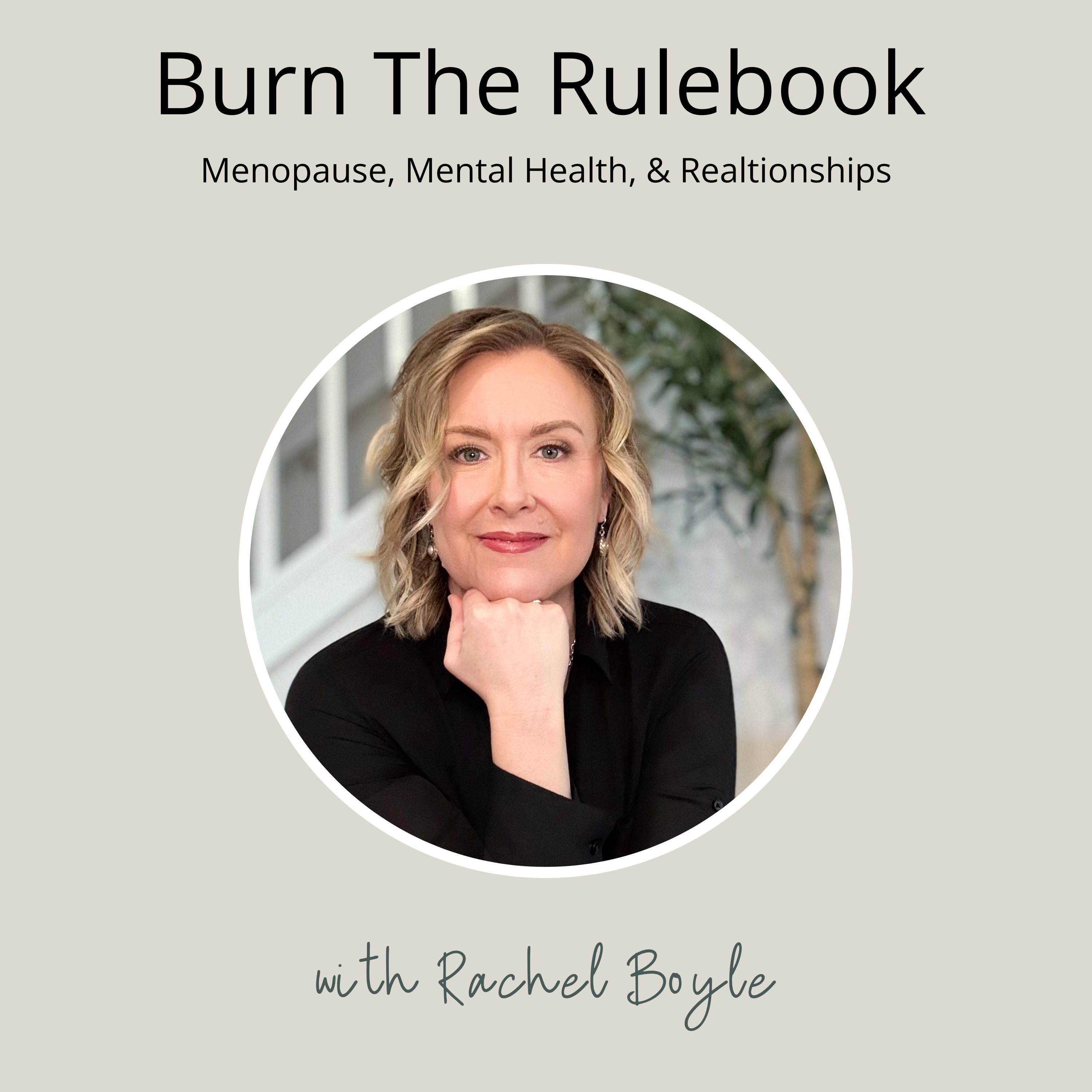
Burn The Rulebook Podcast: Real Talk On Menopause Mental, Health & Relationships
by Rachel Boyle
Feeling overwhelmed, anxious, or disconnected in midlife? You’re not broken—you’re in perimenopause or menopause. I’m Rachel Boyle, licensed therapist and sex therapy specialist, here to help you understand what’s happening to your hormones, mental health, libido, and relationships. Each week, I break down the real impact of menopause, perimenopause, people-pleasing, and emotional labor—plus how to reclaim your sex life, voice, and sanity. Subscribe for honest, therapy-informed episodes made for midlife women.
-
24
Dr. O'Sullivan
Summary:In this episode of the Burn the Rollbook podcast, Dr. Aoife O'Sullivan of discusses the critical need for better education and awareness around menopause and perimenopause. She shares her journey as a family physician and menopause specialist, highlighting the lack of training in medical schools and the importance of informed consent and patient advocacy. The conversation emphasizes the emotional and physical challenges women face during this transition and the necessity of finding supportive healthcare providers. Dr. O'Sullivan also discusses the role of hormone replacement therapy, the impact of community support, and the upcoming retreat aimed at empowering women through shared experiences and knowledge.Chapters:00:00 Introduction to Menopause Advocacy01:08 The Lack of Menopause Training in Medical Education04:07 Challenges in Finding Qualified Healthcare Providers07:38 Resources for Women Seeking Menopause Care10:08 Identifying Red Flags in Healthcare Providers12:22 The Importance of Community Recommendations14:28 The Role of Organizations in Menopause Education16:37 Personal Journeys into Menopause Advocacy20:35 The Impact of Hormone Therapy on Quality of Life24:09 Understanding Hormone Replacement Therapy30:17 Navigating Perimenopause and Menstrual Changes35:26 Understanding Menopause: The Individual Experience40:27 The Importance of Hormone Therapy46:28 Navigating Relationships During Menopause52:26 Building Community: The Power of Connection01:02:00 The Dusty Muffins Podcast: Empowering Women01:03:49 Trusting Your Body: A Call to ActionTakeaways:The current model of women's healthcare is outdated and failing women.Medical training often lacks adequate education on menopause.Women are increasingly educating themselves about menopause.Finding a supportive healthcare provider is crucial for managing menopause symptoms.Community support plays a vital role in navigating menopause.Hormone replacement therapy can significantly improve quality of life.Emotional symptoms during perimenopause are often overlooked.SSRIs can be effective in managing menopause-related anxiety and depression.Women should trust their bodies and advocate for their health needs.The importance of creating a supportive community for women during menopause.Keywords:menopause, perimenopause, hormone therapy, women's health, menopause education, mental health, community support, healthcare providers, women's empowerment, menopause retreat
-
23
Royal College of Psychiatrists Position Statement on Menopause and Mental Health
Summary:Rachel Boyle discusses the recent Royal College of Psychiatrists' position statement on menopause and mental health, highlighting gaps in awareness, healthcare, and the importance of education and support for women in midlife.Chapters:00:00 Introduction to Menopause Awareness06:22 Healthcare System Gaps and SolutionsTakeaways:• Women should start menopause screening in their late 30s to catch symptoms early.• Misdiagnosis of menopause symptoms as anxiety or depression is common due to diagnostic overshadowing.• Using SSRIs alone does not address menopause symptoms; combined with hormone therapy yields better outcomes.• Women in midlife face compounded stressors including career, family, and aging, which affect mental health.• Education and accessible information are crucial for women to understand and manage menopause effectively.Keywords:menopause, mental health, healthcare gaps, menopause awareness, hormone therapy, perimenopause, menopause stigma, women's health, mental health support, menopause education
-
22
Why Buy the Cow?: How Purity Culture Hijacks Women’s Desire and Voice
Summary:In this episode of the Burn the Rulebook podcast, Rachel Boyle delves into the detrimental effects of purity culture on women's desires and voices. She discusses how societal and religious messages shape women's perceptions of their bodies, sexuality, and self-worth from a young age. The conversation explores the conditioning that leads women to feel obligated to provide sex in relationships, often resulting in pressure, resentment, and disconnection. Boyle emphasizes the importance of reclaiming one's sense of self and learning to communicate about intimacy in a mutual and shame-free manner.Chapters:00:00 Understanding Purity Culture's Impact10:23 Sex as a Transaction: The Marketplace Model15:02 BRB outro__ jun 20, 2025 001_audio_only studio.wavTakeaways:• Purity culture shapes women's beliefs about their bodies and desires.• Messages about sexuality often teach women to monitor themselves constantly.• Desire is often treated as risky or sinful in purity culture.• Women may feel obligated to provide sex to maintain relationships.• Sexuality is often viewed as a bargaining chip in relationships.• Purity culture creates pressure and resentment around intimacy.• Healthy boundaries can feel like betrayal for women conditioned to be selfless.• Consent should be viewed as a relationship skill, not just a rule.• Healing involves reclaiming one's sense of self and body.• Women need to learn to express their desires and needs in relationships.Keywords:purity culture, women's desire, intimacy, sexual health, self-worth, relationships, emotional safety, consent, body image, healing
-
21
Boys Lose Feelings, Girls Lose Voice—Then We Call It “Relationship Problems”
Summary:In this episode, Rachel Boyle explores the emotional disconnects that arise in relationships due to cultural conditioning and patriarchy. She discusses how boys and girls are socialized differently, leading to men losing their emotional fluency and women losing their voice. The conversation emphasizes the importance of understanding these dynamics to foster intimacy and connection in adult relationships, and offers insights on reclaiming emotional expression and communication skills.Chapters:00:00 Understanding Emotional Disconnects in Relationships11:45 The Impact of Patriarchy on Communication18:53 Reclaiming Emotional Fluency and VoiceTakeaways:• Boys start out emotionally tuned in but lose this as they grow.• Girls are outspoken in childhood but become people pleasers later.• Patriarchy shapes how both genders express emotions and voice.• Men struggle with emotional vulnerability due to societal conditioning.• Women often over-explain and apologize to maintain relationships.• The hidden curriculum in schools teaches boys and girls different lessons.• Intimacy requires both emotional access and a clear voice.• Couples often fall into predictable traps due to these dynamics.• Reclaiming emotional fluency is possible in adulthood.• Relationships can be a space to challenge and change patriarchal norms.Keywords:emotions, relationships, patriarchy, communication, emotional fluency, gender roles, intimacy, Carol Gilligan, voice training, cultural conditioning
-
20
Why Women Struggle to Ask for What They Want: Finding Your Voice in Love and Sex
SummaryIn this episode of the Burn the Rule Book podcast, Rachel Boyle discusses the phenomenon of perimenopause and its impact on women's relationships and behaviors, particularly the shift away from people pleasing. She explores how hormonal changes during this stage can lead to increased irritability and a decreased tolerance for traditional societal expectations. Rachel emphasizes the importance of setting boundaries, effective communication, and embracing the changes that come with perimenopause as a path to empowerment and healthier relationships.Chapters00:00 Understanding Perimenopause and People Pleasing09:42 Navigating the Shift: From People Pleasing to Authenticity12:46 Tools for Healthy Communication and Boundaries17:28 Embracing Change: The Path to Empowerment19:06 BRB outro__ jun 20, 2025 001_audio_only studio.wavTakeaways• Perimenopause can change how women show up in relationships.• People pleasing is an unconscious survival strategy for many women.• Cultural expectations often pressure women to prioritize others' needs over their own.• Hormonal fluctuations during perimenopause can lead to mood swings and irritability.• Women often internalize societal norms that dictate their behavior.• The shift away from people pleasing can lead to personal empowerment.• Setting boundaries is crucial for maintaining healthy relationships.• Effective communication involves switching from complaints to requests.• Cherishing and appreciating partners fosters a supportive relationship environment.• Embracing the changes of perimenopause can lead to profound personal growth.Keywordsperimenopause, people pleasing, relationships, boundaries, assertiveness, hormonal changes, communication, empowerment, mental health, women's health
-
19
Why Women Enjoy Sex Less
Summary:In this episode of the Burn the Rule Book podcast, Rachel Boyle delves into the complexities surrounding women's sexual experiences, highlighting how societal norms and cultural scripts often lead to dissatisfaction and stress during sex. She emphasizes that the default cultural narrative surrounding sex is predominantly male-oriented, leaving women with a skewed understanding of their own pleasure and agency. Boyle discusses the concept of the 'sexual script'—the unspoken guidelines that dictate sexual behavior—and how these scripts are shaped by various influences, including family, community, and media. Rachel further explores the 'pleasure gap' and 'orgasm gap' between heterosexual men and women, revealing that women often experience fewer orgasms due to a lack of understanding and focus on their pleasure. She addresses the normalization of discomfort during sex and the performance pressure women feel, which detracts from their ability to enjoy intimate moments. By redefining what constitutes sex and encouraging open communication about pleasure, Boyle advocates for a more fulfilling sexual experience for women, urging listeners to seek professional help if they encounter pain or discomfort during sex.Chapters:00:00 Introduction to Women's Sexual Experiences09:50 The Risks Women Face in Sexual EncountersTakeaways:• 'Many women don't have a pleasure problem; they have a script problem.'• 'The goal is pleasure, not just orgasm.'• 'Sex is not supposed to hurt.'• 'Redefine what counts as sex beyond P in the V.'• 'Most men want their partners to feel good.'Keywords:women's sexual health, pleasure gap, orgasm gap, sexual scripts, intimacy issues, cultural norms, sex therapy, women's pleasure, sexual satisfaction, relationship dynamics
-
18
Painful Sex, Dryness, “UTIs,” and Perimenopause: It Might Be GSM
Summary:In this episode of the Burn the Rulebook podcast, Rachel Boyle discusses the often-overlooked topic of Genitourinary Syndrome of Menopause (GSM), which can lead to painful sex, dryness, and urinary issues during perimenopause and menopause. She emphasizes the importance of understanding GSM, its impact on intimate relationships, and the need for proper treatment and communication between partners. Rachel provides insights into treatment options, including hormonal and non-hormonal therapies, and encourages women to seek help rather than suffer in silence.Chapters:00:00 Understanding Genitourinary Syndrome of Menopause (GSM)09:33 Navigating Relationships and Intimacy During GSMTakeaways:● GSM is often misunderstood and can affect relationships.● Pain during sex is not normal and should be addressed.● Women often withdraw from intimacy due to pain, leading to relationship issues.● Communication with partners about discomfort is crucial.● There are effective treatments for GSM that many women are unaware of.● Localized estrogen therapy can help rebuild vaginal tissue.● Pelvic floor therapy can address underlying issues causing pain.● Women should not feel embarrassed to discuss sexual health concerns.● The recent removal of the black box warning on estrogen is significant.● Seeking professional help is essential for improving sexual health.Keywords:genitourinary syndrome, menopause, painful sex, relationship, treatment, intimacy, pelvic floor therapy, estrogen therapy, communication, women's health
-
17
Is It Perimenopause…or Undiagnosed ADHD
Summary:In this episode of the Burn the Rollbook podcast, Rachel Boyle discusses the complex relationship between perimenopause and ADHD, particularly in women. She highlights how hormonal changes during perimenopause can exacerbate ADHD symptoms, leading to challenges in focus, mood, and relationships. The conversation emphasizes the importance of accurate diagnosis and understanding the unique ways ADHD presents in women, as well as practical strategies for managing symptoms and improving relational dynamics during this transitional phase.Chapters:00:00 Understanding the Overlap: Perimenopause and ADHD05:07 Unmasking ADHD in MidlifeTakeaways:• Women often receive later ADHD diagnoses than men.• ADHD symptoms in women can manifest as anxiety and perfectionism.• Perimenopause can unmask previously undiagnosed ADHD.• Hormonal fluctuations impact neurotransmitters and ADHD symptoms.• Sleep disruption is a common complaint during perimenopause.• Understanding capacity shifts can improve relationship dynamics.• Communication with partners is crucial during this transition.• Finding specialists for ADHD and women's health is essential.• Tracking symptoms can help identify patterns and triggers.• Prioritizing sleep hygiene is vital for managing symptoms.Keywords:perimenopause, ADHD, women, diagnosis, hormonal changes, relationships, mental health, coping strategies, neurodivergent, emotional regulation
-
16
Sleep and Perimenopause
Summary:In this episode of the Burn the Rule Book podcast, Rachel Boyle discusses the intricate relationship between sleep, perimenopause, and mental health. She explores how hormonal fluctuations during perimenopause disrupt sleep patterns, leading to increased anxiety, mood swings, and relationship challenges. The conversation emphasizes the importance of understanding these connections and offers practical solutions for improving sleep quality, including seeking hormone therapy, cognitive behavioral therapy for insomnia (CBTI), and establishing healthy sleep habits.Chapters:00:00 Understanding Sleep and Perimenopause02:04 The Impact of Sleep on Mental Health03:36 Sleep Deprivation and Relationships06:11 Solutions for Better Sleep11:42 Establishing Healthy Sleep HabitsTakeaways:● Sleep struggles are common during perimenopause.● Hormonal fluctuations disrupt sleep cycles significantly.● Estrogen and progesterone play crucial roles in sleep quality.● Poor sleep can lead to increased anxiety and depression.● Mental health and sleep have a bi-directional relationship.● Sleep deprivation affects relationships negatively.● Emotional regulation is essential for healthy relationships.● Finding a trained hormone specialist can help manage symptoms.● CBTI is an effective treatment for insomnia.● Establishing a consistent sleep routine is vital for health.Keywords:sleep, perimenopause, mental health, relationships, insomnia, hormone therapy, CBTI, sleep health, anxiety, emotional regulation
-
15
Perimenopause and Relationship Communication: Why Emotional Changes Trigger Conflict and How to Fix It
SummaryIn this episode of the Burn the Rulebook podcast, Rachel Boyle discusses the profound effects of perimenopause on relationship communication. She explores how hormonal shifts lead to emotional changes that can trigger misunderstandings and conflicts between partners. The episode provides insights into identifying conflict patterns, understanding emotional regulation, and offers practical strategies for improving communication and repairing relationships during this transitional phase.Chapters00:00 Understanding Perimenopause and Its Impact on Relationships02:30 Emotional Changes and Communication Challenges05:49 Identifying Conflict Patterns in Relationships11:26 Strategies for Effective Communication17:15 Repairing Relationships After ConflictTakeaways● Perimenopause can lead to increased irritability and miscommunication in relationships.● Hormonal shifts affect emotional regulation and stress tolerance.● Old relational patterns may resurface or worsen during perimenopause.● Identifying conflict patterns can help couples navigate misunderstandings.● Effective communication involves leading with vulnerability and kindness.● Recognizing one's stance in a conflict can facilitate resolution.● Repairing after conflict is crucial for relationship health.● Couples should work together as problem solvers rather than blaming each other.● Self-regulation before communication is essential to avoid misunderstandings.● Perimenopause offers an opportunity for personal and relational growth.Keywordsperimenopause, relationship communication, emotional changes, conflict resolution, couples therapy, hormonal shifts, emotional regulation, communication strategies, relationship patterns, midlife transitions
-
14
Perimenopause, Pain (or Discomfort) with Sex — and Why It’s a Relational Problem
In this episode of the Burn The Rulebook podcast, Rachel Boyle discusses the common experience of pain or discomfort during sex that many women face during perimenopause. She emphasizes that this is a shared experience and not a personal failing, exploring the physical and emotional changes that contribute to this issue. The conversation highlights the importance of understanding both the bodily changes and the relational dynamics involved.Chapters:00:00 Understanding Perimenopause and Sexual Discomfort00:24 The Importance of Warm-Up and CommunicationTakeaways:• Pain or discomfort during sex is common in perimenopause.• Women experiencing this are not alone.• It's important to understand the physical changes happening in the body.• Emotional factors play a significant role in sexual discomfort.• This issue is not just personal; it affects relationships too.• Communication with partners is crucial during this time.• Understanding your body can help alleviate some concerns.• Seeking support from professionals can be beneficial.• Education about perimenopause is essential for women.• Normalizing these conversations can reduce stigma.Keywords:perimenopause, sexual discomfort, pain, relationships, emotions, women's health
-
13
Perimenopause & Boundaries — How to Reclaim Your Power and Protect Your Peace
In this episode, Rachel Boyle discusses the transformative journey of perimenopause, emphasizing the importance of living truthfully and establishing boundaries. She highlights how boundaries serve as acts of self-care and are essential for fostering authentic intimacy in relationships. By communicating and sharing boundaries, individuals can transition from feelings of resentment to understanding and from exhaustion to deeper connections with their partners.Takeaways• Perimenopause encourages a more truthful way of living.• Boundaries honor the truth in ourselves and our relationships.• Pia Melody emphasizes boundaries as self-care acts.• Boundaries facilitate authentic intimacy with partners.• Sharing boundaries can reduce resentment in relationships.• Effective communication is key to understanding in partnerships.• Establishing boundaries can lead to deeper connections.• Perimenopause can be a catalyst for personal growth.• Understanding oneself is crucial during perimenopause.• Healthy relationships thrive on clear boundaries.Keywords:perimenopause, boundaries, self-care, authentic intimacy, relationships, self-containment, communication, understanding, connection, Pia Melody
-
12
Your Desire Isn't Broken
In this episode of the Burn the Rulebook Podcast, Rachel Boyle explores the complexities of desire, particularly focusing on the differences between spontaneous and responsive desire. She discusses how societal expectations can create feelings of shame for those who do not experience spontaneous desire, especially women. The conversation emphasizes the importance of understanding one's unique desire style and creating a supportive environment for intimacy. Practical tools and insights are provided to help listeners nurture their desire and improve their sexual relationships.00:00 Understanding Desire: An Introduction01:38 Spontaneous vs. Responsive Desire03:56 The Role of Context in Desire06:12 Communication and Connection in Relationships08:33 Creating an Environment for Desire to ThriveTakeaways:• Desire can fluctuate, especially during perimenopause.Spontaneous desire appears suddenly, while responsive desire needs context.• Understanding your desire style can reduce shame.• Responsive desire is common in long-term relationships.• Chore play can enhance intimacy and desire.• Creating a safe and low-stress environment is crucial for desire.• Open communication about desires can strengthen relationships.• Both spontaneous and responsive desires are valid and healthy.• Desire isn't broken; it just needs the right conditions to thrive.• Reading 'Come As You Are' can provide deeper insights into desire.Keywords:desire, sexuality, spontaneous desire, responsive desire, intimacy, relationships, communication, arousal, emotional connection, sexual health
-
11
The Four Pillars Of Perimenopause
In this episode of the Burn the Rulebook Podcast, Rachel Boyle discusses the complexities of sex and intimacy during perimenopause. She introduces the concept of the four pillars of sex, which include medical factors, relationship dynamics, personal sexual satisfaction, and cultural messages. By understanding these pillars, women can navigate the changes in their bodies and relationships, ultimately leading to a more fulfilling sexual experience in midlife.TakeawaysSex and perimenopause can feel confusing.Hormonal shifts affect mood, libido, and overall well-being.Relationship dynamics play a crucial role in sexual desire.Women often need to explore what kind of sex they want.Cultural messages can negatively impact women's sexual experiences.Responsive desire is common in perimenopausal women.Therapy can help address relationship issues affecting intimacy.Women can rewrite outdated cultural scripts about sex.Addressing all four pillars can enhance sexual experiences.There is nothing wrong with you; it's a transition. Tags:perimenopause, sex, intimacy, hormonal changes, relationship dynamics, cultural messages, sexual health, libido, emotional well-being, therapy
-
10
Perimenopause, Trauma, and the Truth About Women’s Mental Health
In this episode of the Burn the Rule Book podcast, guest Dr. Harita Raja, a board-certified psychiatrist specializing in women's mental health, discusses the critical issues surrounding perimenopause and menopause. She highlights the significant gaps in training for healthcare providers regarding women's hormonal health and the impact of these changes on mental well-being. The conversation delves into the manifestations of anxiety and depression during these transitions, the importance of hormone replacement therapy, and the role of trauma in women's mental health. Dr. Raja emphasizes the need for education, community support, and holistic treatment approaches to empower women during this challenging phase of life.TakeawaysDr. Harita Raja specializes in women's mental health, focusing on reproductive psychiatry.There is a significant gap in training for healthcare providers regarding perimenopause and menopause.Perimenopause is often the most turbulent time for women due to hormonal fluctuations.Anxiety can manifest in various ways during perimenopause, including irritability and panic attacks.Women often come to therapy unaware that their symptoms are related to hormonal changes.Depression is more prevalent during perimenopause than postmenopause.Hormone replacement therapy can be an effective treatment for depression related to hormonal changes.Sleep disruption during perimenopause exacerbates other symptoms.Cognitive changes during perimenopause can impact women's confidence and performance.Trauma, both big and small, can significantly affect women's mental health during perimenopause.
-
9
Why Testosterone Might Not Be Enough
In this episode of the Burn the RuleBook podcast, Rachel Boyle discusses the role of testosterone in enhancing libido during midlife, particularly in the context of menopause. She emphasizes that while testosterone can be beneficial, it is not a standalone solution. The conversation explores the complexity of desire, the importance of emotional safety, and the four pillars that contribute to a healthy sex life. Rachel also provides practical advice for women looking to revive their libido, including exploring personal pleasure and addressing underlying emotional issues.TakeawaysTestosterone can help increase sexual thoughts and fantasies.Desire is influenced by multiple hormones, not just testosterone.Emotional safety is crucial for a healthy sex life.Chronic stress can inhibit sexual desire and pleasure.Women often need to explore their own pleasure without shame.Messages about sex received in childhood can impact adult sexuality.It's important to have honest conversations with partners about intimacy.Healthy habits like good sleep and stress management support libido.Therapists can help address emotional and sexual health issues.Testosterone is a part of a larger picture for sexual health.Keywords:testosterone, libido, midlife, menopause, sexual health, relationships, women's health, therapy, emotional safety, pleasure
-
8
Why Menopause is Misdiagnosed
SummaryThis episode of the Burn the RuleBook podcast addresses the critical issue of misdiagnosis of mental health conditions in perimenopausal and menopausal women. It highlights the hormonal changes that can lead to symptoms often misattributed to psychiatric disorders, the importance of proper screening, and the need for evidence-based treatment. The host emphasizes the necessity for women to advocate for themselves in seeking appropriate care and understanding the impact of hormonal fluctuations on mental health.TakeawaysMany women in their late 30s, 40s, and 50s are misdiagnosed with psychiatric disorders.Hormonal shifts during perimenopause can drive symptoms like anxiety and depression.Estrogen, progesterone, and testosterone significantly affect mood and cognitive function.Healthcare providers often overlook hormonal influences on mental health.Women should be screened for perimenopause and menopause before being prescribed antidepressants.The highest rates of suicide among women occur during perimenopause.Tracking symptoms can help in finding the right treatment.Finding a trained menopause specialist is crucial for proper care.Women should advocate for themselves and seek second opinions if necessary.Perimenopause and menopause are normal biological phases that deserve proper diagnosis and treatment.Keywords:perimenopause, menopause, mental health, misdiagnosis, antidepressants, hormone replacement therapy, women's health, psychiatric disorders, mood swings, anxiety
-
7
Perimenopause & People Pleasing: Why You’re Done Saying Yes to Everything
SummaryIn this conversation, Rachel Boyle explores the theme of people pleasing, particularly in the context of perimenopause. She discusses how societal conditioning has led many women to prioritize others' needs over their own, often resulting in emotional exhaustion. As women enter perimenopause, they may feel a shift that prompts them to question this lifelong habit. Rachel provides practical steps for reclaiming one's voice and setting boundaries, emphasizing the importance of self-respect and community support.TakeawaysPeople pleasing is a survival strategy learned early in life.Cultural norms condition women to prioritize others' needs.Perimenopause can trigger a reevaluation of self-identity.The decline in estrogen affects mood and stress management.People pleasing can lead to burnout and resentment.Setting boundaries is essential for emotional health.Disappointing others can be a path to self-respect.Clear communication is key to setting boundaries.Surround yourself with supportive friends.Start small when practicing boundary-setting.Keywords:perimenopause, people pleasing, self-identity, boundaries, midlife, emotional health, women's health, personal growth, mindset shift, self-respectTitlesReclaiming Your Voice in MidlifeThe Cost of People PleasingSound bites"Perimenopause is the breaking point.""People pleasing comes at a cost.""What do I want to do now?"Chapters00:00 Rachel00:45 Understanding People Pleasing in Women03:48 The Impact of Perimenopause on People Pleasing06:32 Steps to Reclaim Your Voice and Boundaries
-
6
The Perimenopause Awakening: From People Pleasing to Personal Power
SummaryIn this episode, Rachel Boyle discusses the intersection of perimenopause and people pleasing, highlighting how this phase of life can lead to an emotional awakening. She explores the psychological and cultural factors that contribute to women's tendency to prioritize others over themselves, the impact of hormonal changes on emotional well-being, and practical strategies for setting boundaries and reclaiming personal space. The conversation emphasizes the importance of self-awareness and the potential for growth during this transitional period.TakeawaysPerimenopause is not just a biological shift; it's an emotional awakening.Women often feel the weight of people pleasing during perimenopause.Cultural conditioning teaches women to prioritize others' needs over their own.The fawn response is a survival mechanism that leads to people pleasing.Anger during perimenopause can signal the need for boundary setting.Setting boundaries may feel uncomfortable but is necessary for self-care.No is a complete sentence; you don't owe anyone an explanation.Gratefulness can sometimes be weaponized against women.Perimenopause can be a crossroads for personal growth and realignment.Imagining a life centered around oneself is not selfish, but necessary.Sound bites"You are not alone in this journey.""No is a complete sentence.""It's time to stop over-functioning."Keywords:perimenopause, people pleasing, emotional awakening, boundaries, cultural conditioning, fawn response, mental health, women's health, self-care, empowermentChapters00:00 Introduction to Perimenopause Awakening00:45 Understanding People Pleasing in Perimenopause01:07 Understanding Perimenopause and People Pleasing03:46 The Psychological Impact of Perimenopause06:52 Cultural Conditioning and Its Effects on Women09:35 The Fawn Response: A Survival Mechanism12:21 Awakening to Anger and Setting Boundaries15:33 Creating a Life Centered on You
-
5
Why Do I Feel So Overwhelmed?
SummaryIn this episode, Rachel Boyle explores the overwhelming feelings many women experience during midlife, particularly during perimenopause and menopause. She discusses the emotional and mental labor that women often carry, the impact of hormonal changes, and practical strategies for rebalancing responsibilities. Rachel emphasizes the importance of recognizing the invisible load women bear and encourages seeking professional support to navigate these challenges effectively.TakeawaysMidlife can feel overwhelming due to emotional and hormonal shifts.Women often carry an invisible load of emotional labor.Hormonal changes during perimenopause can affect stress management.The Fair Play framework helps make invisible work visible.Women are often taught to manage everything on their own.Recognizing the mental load is crucial for balance.Therapy can provide strategies for redistributing responsibilities.Scheduling rest is essential for mental health.Finding a menopause-trained provider can be beneficial.Couples therapy can help address resistance in sharing responsibilities.Keywordsmidlife, overwhelm, emotional labor, perimenopause, menopause, mental load, hormonal changes, Fair Play, therapy, supportTitlesNavigating Midlife OverwhelmThe Hidden Burden of Emotional LaborSound bites"Why do I feel like I'm suddenly falling apart?""You need to make the invisible work visible.""Couples therapy can help sort out resistance."Chapters00:00 Understanding Midlife Overwhelm00:28 The Impact of Emotional and Mental Labor00:48 Understanding the Invisible Load of Women03:47 The Impact of Hormones on Mental Load06:32 Recognizing Overwhelm in Midlife09:14 Strategies for Sharing the Load11:55 Finding Support and Professional Help
-
4
Anxiety & Perimenopause, Part 2
SummaryIn this episode of the Burn The Rule Book podcast, Rachel Boyle explores the intricate relationship between anxiety and menopause, particularly focusing on the physiological aspects. She discusses how hot flashes and anxiety are interconnected through the autonomic nervous system, emphasizing the role of hormonal changes during perimenopause and menopause. Rachel introduces polyvagal theory to explain the body's response to perceived threats and offers practical tools for managing anxiety, including breathing techniques and movement exercises. The episode aims to empower listeners with knowledge and strategies to navigate anxiety during this transitional phase of life.TakeawaysAnxiety can feel more intense during perimenopause and menopause.Hot flashes and anxiety are highly correlated.The autonomic nervous system governs both anxiety and hot flashes.Fight, flight, freeze, and fawn are responses to perceived threats.Estrogen plays a critical role in regulating the nervous system.Cortisol levels can become elevated during menopause, leading to anxiety.Understanding the biology of anxiety can help reduce self-blame.Practical tools like breathing and movement can help manage anxiety.Polyvagal theory provides insight into the body's response to stress.Finding a menopause specialist can provide additional support.Keywordsmenopause, anxiety, hot flashes, nervous system, polyvagal theory, hormonal changes, mental health, coping strategies, stress management, women's healthTitlesNavigating Anxiety During MenopauseThe Science Behind Menopausal AnxietySound bites"These tools can help you feel better fast.""Find a menopause trained specialist for support.""You are not imagining the connection."Chapters00:00 Understanding Anxiety in Menopause03:12 The Connection Between Hot Flashes and Anxiety06:06 The Role of Hormones in Anxiety08:54 Tools for Regulating Anxiety11:44 Conclusion and Key Takeaways
-
3
Anxiety & Perimenopause
Episode 3: Anxiety & Perimenopause—What’s Really Going OnWelcome back to Burn the Rule Book, the podcast where we explore menopause, mental health, and relationships—one truth at a time. In this episode, host Rachel Boyle—licensed couples and sex therapist, and certified menopause specialist—dives into how anxiety can suddenly appear or intensify during perimenopause.You'll learn:What’s actually happening to your brain during menopause (spoiler: it’s not just in your head)How hormonal changes, especially declining estrogen, affect mood, memory, and emotional regulationThe real story behind hormone replacement therapy (HRT) and how it may help with anxietyPractical, science-backed tools you can use right now to calm your nervous systemRachel also introduces techniques like bilateral stimulation, box breathing, and five-senses grounding—simple but powerful methods rooted in trauma therapy and neuroscience.Whether you’ve dealt with anxiety for years or are feeling it for the first time, this episode offers insight, validation, and support. You're not broken—you're going through a major neurological shift, and you're not alone.🎧 Listen now, share with a friend, and check the show notes for links to the books mentioned: The Menopause Brain by Dr. Lisa Mosconi and Estrogen Matters by Dr. Avrum Bluming.
-
2
Why I Became A Menopause Specialist
Host: Rachel Boyle, Licensed Couples and Individual Therapist, Sex Therapist, and Certified Menopause SpecialistEpisode Overview: In this episode, Rachel Boyle shares her personal journey into specializing in women's sexual health, particularly focusing on the often-overlooked phase of perimenopause. She discusses the systemic gaps in medical training regarding women's health and the importance of understanding one's own body to advocate for better care.Key Topics:Rachel's personal experience with perimenopause and the lack of awareness in the medical community. The role of hormones like estrogen, progesterone, and testosterone in overall health. The impact of menopause on relationships and sexual health. The importance of informed communication in building healthier relationships. Resources and training that helped Rachel become a specialist in women's sexual health.Notable Quotes:"I realized I had been completely uninformed about my own body." "This wasn't just my story, this is the story of so many women out there." "When women were simply informed, they would have sighs of relief."Resources Mentioned:Podcasts by Dr. Kelly Caspersen and Dr. Heather Hirsch "Estrogen Matters" by Dr. Avrum Blooming "It's All in Her Head" by Dr. Elizabeth KomenIf you're experiencing changes in mood, sleep, libido, or relationships, and feel dismissed by the medical field, this podcast is for you. You're not alone, and you deserve real support.#MidlifeHealth #MenopauseAwareness #WomensHealth #Perimenopause
-
1
The Rollercoaster of Perimenopause
In this episode of the Burn the Rulebook podcast, host Rachel Boyle delves into the often misunderstood world of perimenopause. Discover the eight most common symptoms, why lab tests might not provide the answers you seek, and how to find a well-trained women's health provider. Rachel shares valuable insights and resources to help you navigate this transitional phase with confidence.Understanding perimenopause and its impact on your body and mind. Why lab tests may not reflect your true hormonal state. Finding a trained provider: Resources and red flags to watch out for. The importance of breaking the silence around menopause and seeking support.Menopause Society: menopause.orgISSWSH International Society for the Study of Women's Sexual Health The Menopause Society: isswsh.comMIDI Health: midihealth.com Alloy: myalloy.com #Perimenopause #WomensHealth #MenopauseAwareness
We're indexing this podcast's transcripts for the first time — this can take a minute or two. We'll show results as soon as they're ready.
No matches for "" in this podcast's transcripts.
No topics indexed yet for this podcast.
Loading reviews...
ABOUT THIS SHOW
Feeling overwhelmed, anxious, or disconnected in midlife? You’re not broken—you’re in perimenopause or menopause. I’m Rachel Boyle, licensed therapist and sex therapy specialist, here to help you understand what’s happening to your hormones, mental health, libido, and relationships. Each week, I break down the real impact of menopause, perimenopause, people-pleasing, and emotional labor—plus how to reclaim your sex life, voice, and sanity. Subscribe for honest, therapy-informed episodes made for midlife women.
HOSTED BY
Rachel Boyle
Loading similar podcasts...
Frequently Asked Questions
How many episodes does Burn The Rulebook Podcast: Real Talk On Menopause Mental, Health & Relationships have?
Burn The Rulebook Podcast: Real Talk On Menopause Mental, Health & Relationships currently has 24 episodes available on PodParley. New episodes are automatically indexed when they're published to the podcast feed.
What is Burn The Rulebook Podcast: Real Talk On Menopause Mental, Health & Relationships about?
Feeling overwhelmed, anxious, or disconnected in midlife? You’re not broken—you’re in perimenopause or menopause. I’m Rachel Boyle, licensed therapist and sex therapy specialist, here to help you understand what’s happening to your hormones, mental health, libido, and relationships. Each week, I...
How often does Burn The Rulebook Podcast: Real Talk On Menopause Mental, Health & Relationships release new episodes?
Burn The Rulebook Podcast: Real Talk On Menopause Mental, Health & Relationships has 24 episodes. Check the episode list to see recent publication dates and frequency.
Where can I listen to Burn The Rulebook Podcast: Real Talk On Menopause Mental, Health & Relationships?
You can listen to Burn The Rulebook Podcast: Real Talk On Menopause Mental, Health & Relationships on PodParley by clicking any episode. We provide an embedded audio player for direct listening, and you can also subscribe via your preferred podcast app using the RSS feed.
Who hosts Burn The Rulebook Podcast: Real Talk On Menopause Mental, Health & Relationships?
Burn The Rulebook Podcast: Real Talk On Menopause Mental, Health & Relationships is created and hosted by Rachel Boyle.
URL copied to clipboard!