
PODCAST · society
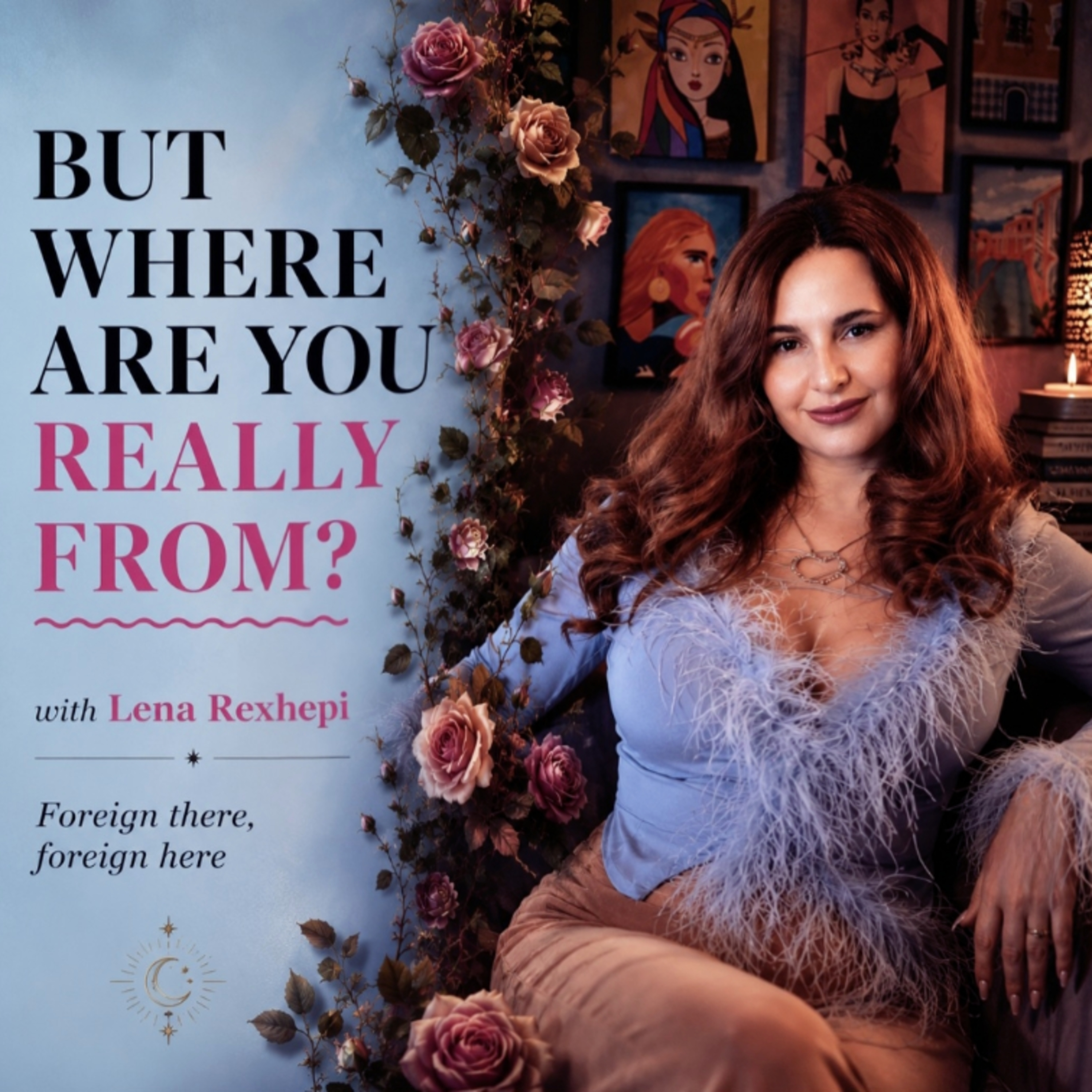
But where are you really from?
by Lena Rexhepi
But Where Are You Really From? is a podcast for those who feel like they don’t fully belong anywhere.For many that question is a reminder of being seen as different.Hosted by Lena, the podcast explores identity, belonging, and culture, while also diving into the realities of navigating life as a woman in the corporate world and the pressure to prove your worth.Together with friends and guests, Lena shares honest reflections through talks that balance laughter, failure, success, love, warmth, and wisdom in 3 languages (English, Danish and Albanian)More at: www.lenarexhepi.com /ig: lenarex
-
18
But Where Are You Really From? Albanian Danish?
Episode 19 in EnglishI talk with my friend Amire about being Albanian DanishCheck it out :)
-
17
Vizioni i Kosovës për Diasporën Shqiptare - Bisedë me Konsullatën në Danimark
Episoda 18 n´ShqipBisedë me drejtusin e Konsullatës të Kosovës në Danimark, Valdrin GraincaNa folem për vizionin e Kosoves për Diasporen dhe iniciativat që jan nis në Danimark.Episode 18 in AlbanianA conversation with the Head of the Kosovo Consulate in Denmark, Valdrin GraincaWe discussed Kosovo's vision for the Albanian diaspora and the initiatives that have been launched in Denmark.
-
16
Women empowerment in Corporate - Why some women have a scarcity mindset
Episode in English with ManishaDescription:In this episode, I sit down with Manisha, a former colleague from the pharmaceutical industry, for an honest conversation about women in the workplace, empowerment, and the importance of supporting one another.We explore why women sometimes view each other as competition rather than allies, while men often seem more willing to champion and promote one another. Together, we discuss how we can move from a scarcity mindset to an abundance mindset, one where there is room for all of us to succeed.We also talk about the value of traditionally "female" strengths that are often overlooked in corporate environments. While technical expertise, analytical thinking, and hard skills are essential, qualities such as empathy, collaboration, relationship-building, and creating inclusive cultures are equally important. These skills help shape strong teams, healthy workplaces, and better outcomes for everyone.This episode is a candid reflection on leadership, workplace culture, and why lifting each other up is far more powerful than tearing each other down.
-
15
Just because YOU don´t understand it, it doesn´t mean it isn´t REAL. So check your privilege please!
English episode 16Description:YOU don´t get to tell me that my LIVED EXPERIENCE is not real.On today’s episode, I talk about what it feels like to be called a “victim” simply for sharing your story.I talk about having my pain invalidated by people who have never lived through the things I have. People whose baseline in life started at zero while mine started at minus one hundred. People who were handed safety, stability, opportunities, and dignity, yet still feel entitled to tell marginalized people what is real, what matters, and how we should feel.I talk about growing up having to earn everything from an early age, constantly fighting to create a better and more dignified life for myself without ever allowing myself to sink into self-pity. Survival became motivation. Pain became fuel.But there is a particular arrogance in privileged people dismissing struggles they have never had to endure themselves.This episode is a reflection, and a conversation about class, privilege, survival, identity, and the audacity of people who think their limited experience is the universal truth.Listen now if you’ve ever experienced having your experiences or feeling be invalidated by people who cannot possible know what it feels to be in your shoes...
-
14
If you don´t quit, the universe will quit for you? Career Pivot and Spirituality
Episode 15 in English with ChristianWould you walk away from a high-paying, “successful” job if it no longer made you happy?Have you ever seriously asked yourself that question?In this episode, I sit down with my friend Christian to talk about career pivots, burnout, intuition, and trusting the timing of your life even when it feels uncertain.Sometimes we stay in jobs, relationships, or versions of ourselves simply because they look good from the outside or because we feel like we’re supposed to. But deep down, we know something isn’t right.And eventually, life, God, the universe, whatever you believe in starts pushing you toward the direction you were truly meant for.Christian and I reflect on our friendship from our London days, the pressure of figuring life out, learning to listen to ourselves, and finding the courage to choose alignment over appearances. ✨This can be harder to do in reality with a Balkan and Eastern European upbringing where you´re not supposed to question the societal and family expectations.If this resonates, let us know in the comment section or privately.Thank you for listening.Much love <3
-
13
From Denmark to Australia: Building character takes courage
English episode 14In today’s episode, I talk to Caroline, whom I met 10 years ago when I worked as a guide for a language travel company in London, UK.At the time, Caroline and the other teenagers had travelled abroad to learn English, but things quickly became disorganized. The host families were not welcoming, the conditions were poor, and many of the teenagers felt abandoned and unsupported. I found myself being one of the only adults trying to help and speak up for them, something that eventually came with consequences for me professionally.After the trip, Caroline went to the Danish media and spoke publicly about how badly the teenagers had been treated, which in many ways became a form of vindication.But this episode is about much more than what happened back then.Today, Caroline is in her late 20s, living in Australia and trying to find herself, navigating identity, relationships, work, love, belonging, and the feeling of being ethnically Danish while still not fully feeling “Danish" and feeling more at home in Australia. We reflect on how life changes from your 20s to your 30s, the courage it takes to build character and reinvent yourself, and how genuine human connections can survive time and distance.Because when something is authentic, it stays.
-
12
Skrid hjem til der hvor du kommer fra! Født i Danmark, men hvornår bliver man dansk nok?
Dansk (Danish) episode 13 med EminDagens episode har jeg besøg af Emin som jeg kender fra finanssektoren hvor vi arbejdede sammen for nogle år siden.Emin er født i Danmark men har tyrkiske rødder. Vi taler om hvordan det føles at få et klistermærke på ens postkasse hvor der står "remigration".Vi går et par temaer igennem og hvad gør man når man elsker Danmark men Danmark ikke altid elsker en tilbage?English translation:Danish episode 13 with EminIn today’s episode, I’m joined by Emin, whom I know from the financial sector where we worked together a few years ago.Emin was born in Denmark but has Turkish roots. We talk about what it feels like to receive a sticker on your mailbox saying “remigration.”We explore several themes and discuss what happens when you love Denmark, but Denmark does not always love you back.
-
11
Jeta mbas luftes t'Kosovës
Shqip (Albanian) episoda 12N'këte episode foli une për librin që e kam shkru që ka me dal ne treg në qershor 2026 "Amo, prej kait je met vërtet? - E huaja atje, e huaja ktu. Nga Kosova në Danimarkë" Motivimi për librin dhe jeta n'gurbet (Danimark) mbas luftës t'Kosovës.Qysh kemi ikë naper mal prej Kosovës deri ne Maqedoni 16 orë hecje ne kodra midis dimrit dhe plot borë të Shkurtit 1999.Shpresoj që ju pëlqen episoda.Faleminderit 🙏English translation:In this episode, I talk about the book I’ve written, which will be released in June 2026. "But where are you really from? Foreign there, foreign here. From Kosovo to Denmark " I speak about the motivation behind the book and life in the diaspora(Denmark)after the Kosovo War.About how we fled through the mountains from Kosovo to Macedonia, 16 hours of walking through the mountains in the middle of winter and the heavy snow of February 1999.I hope you enjoy the episode. Thank you 🙏
-
10
Men hvor er du rigtigt fra? Om at føle sig fremmed i Danmark og der hvor man kommer fra...
Dansk (Danish) episode 11 med AmireEpisodebeskrivelseI denne episode taler jeg med min veninde Amire, som jeg mødte på en stor dansk virksomhed for over tre år siden. Vi bondede hurtigt over vores personligheder og det var kun et ekstra plus, at hun også har albanske rødder. Det gav os et fælles sprog og en fælles forståelse for mange af de følelser, man kan stå med som dansk-albaner. ❤️🖤🤍I dagens episode taler vi om, hvordan det er for Amire at være født og opvokset i Danmark som tredje generations indvandrer. Hendes farfar kom til Danmark som gæstearbejder i 1960’erne, altså for snart 70 år siden, men alligevel føler Amire sig stadig ikke helt hjemme i Danmark.Vi taler også om den mærkelige følelse af at være fremmed begge steder. Amire har rødder i både Nordmakedonien og Kosovo med albansk afstamning og selv i "hjemlandet", føler hun sig heller ikke helt hjemme dér. Når hun besøger “hjemlandet”, bliver hun ofte kaldt for udlænding.Både Amire og jeg kender derfor følelsen af at være fremmede i Danmark, men også fremmede dér, hvor ens familier kommer fra og i mit tilfølde hvor jeg er født. En stille sorg og rastløshed, hvor man aldrig helt føler, at man hører til nogen steder.Vi taler også om, hvordan vi i Danmark ofte bliver mindet om at vi er anderledes, især under valgkampe og integrationsdebatter og hvordan det sætter sig i én over tid.Det her er en ærlig samtale om identitet, tilhørsforhold, diaspora og den usynlige sorg ved altid at føle sig lidt mellem to verdener.Hvis du kan genkende noget af det, vi taler om eller har lært noget nyt i hvordan dem med anden etnisk baggrund føler sig nogle gange, så del gerne dine tanker i kommentarerne og podcasten ✨eller kontakt os.KramDanish Episode 11 with AmireEpisode Description in EnglishIn this episode, I talk with my friend Amire, whom I met at a large Danish company more than three years ago. We quickly bonded over our personalities, and it was only an extra bonus that she also has Albanian roots. It gave us a shared language and a mutual understanding of many of the emotions you can experience as a Danish-Albanian. ❤️🖤🤍In today’s episode, we talk about what it’s like for Amire to be born and raised in Denmark as a third-generation immigrant. Her grandfather came to Denmark as a guest worker in the 1960s, almost 70 years ago, yet Amire still doesn’t fully feel at home in Denmark.We also talk about the strange feeling of being foreign in both places. Amire has roots in both North Macedonia and Kosovo with Albanian heritage, and even in the so-called “homeland,” she doesn’t completely feel at home there either. When she visits the “homeland,” she is often referred to as a foreigner.Both Amire and I know the feeling of being outsiders in Denmark, but also outsiders in the places our families come from and in my case, even the place where I was born. A quiet sadness and restlessness, where you never fully feel like you belong anywhere.We also talk about how, in Denmark, we are often reminded that we are different especially during election campaigns and integration debates and how that gradually leaves a mark on you over time.This is an honest conversation about identity, belonging, diaspora, and the invisible grief of always feeling caught between two worlds.If you can relate to anything we talk about, feel free to share your thoughts in the comments and follow the podcast ✨
-
9
Cozy racism and the Law of Jante?
English episode 10 with Nina Episode description:In this episode, I talk to my friend Nina about “cozy racism” in Denmark, the subtle, everyday microaggressions that many immigrants and minorities experience but that are often dismissed as harmless or “just jokes.”We discuss my upcoming book, But Where Are You Really From?, and how identity can feel fragmented when you live between languages and cultures, Danish, Albanian, and English in my case.I also open up about experiences with racism in Denmark, including being called slurs at work and being told to “go back to my country.” As a former Kosovo war refugee, those comments hit deeply, because leaving my home country was never a choice. I was forced out of my homeland as a child at the age of 9. Not really an intentional choice.Nina, originally from the Netherlands, lived in Denmark for 10 years and now lives in Norway. Before that, she lived in Ireland. Together, we reflect on what it feels like to constantly be “the other” in Scandinavian society and how even small comments can slowly shape your sense of belonging.We also dive into the Law of Jante, the unspoken Scandinavian social code that tells people not to think they are special, different, or better than others. We explore how this mentality influences Danish culture and what it can feel like to stand out in a very homogeneous society.Join us for an honest conversation about identity, belonging, cozy racism, and navigating life as "outsiders" in Scandinavia.Below an overview of the ten rules of Jante Law.The ten rules state:You're not to think you are anything special.You're not to think you are as good as we are.You're not to think you are smarter than we are.You're not to imagine yourself better than we are.You're not to think you know more than we do.You're not to think you are more important than we are.You're not to think you are good at anything.You're not to laugh at us.You're not to think anyone cares about you. You're not to think you can teach us anything
-
8
I opened a London office in record time and still wasn´t "GOOD ENOUGH"
English episode 9 and description:In this episode, I sit down with my friend Francesco to reflect on one of the most intense and defining periods of my career: opening a brand-new office in King’s Cross, London, in record time.We talk about what it meant to lead a massive project under immense pressure while still choosing kindness, warmth and humanity in environments that often reward hardness more visibly than empathy.I share how I delivered the project in just four months leading all the way up to the grand opening, where I somehow became everything at once: the project manager, the host of the evening, the compliance officer, the lawyer, the problem solver. Every hat a woman could possibly wear, I wore.Not only was the project delivered in record time, it was also delivered under budget which, in project management, is almost unheard of. I even returned £20,000 back to leadership, all while carrying enormous pressure behind the scenes with a smile on my face. I made it look easy. But somehow, making difficult things look effortless is rarely considered a skill.I spent weekends working on the office because I had given my word that we would open on that exact date, with senior colleagues flying in from all over the world for the launch.But this episode is about more than performance. It’s about perception.Why is kindness in corporate spaces so often mistaken for weakness? Why are warm, emotionally intelligent leaders valued but not always respected? And why do women especially immigrant women often feel they must work twice as hard just to be taken seriously?I also open up about subtle moments of discrimination and microaggressions throughout my career, including being asked whether I had been “vetted” to work at the company and hearing comments about my Albanian background that revealed how deeply stereotypes still exist, even in global corporate environments. One English leader even joked that I had been “hired off the streets.” How is that remotely professional?Francesco was the building host in London, and we bonded quickly because I genuinely appreciated his warmth, helpfulness and support throughout the process. Looking back, I actually believe my kindness was one of the reasons I achieved those results in record time and without stepping on anyone’s toes.And still somehow, it never felt fully “good enough.”For the colleagues who saw my sweat, tears and dedication, yes. But for the corporate suits? Making a massive project look effortless seemed to make me appear less impressive instead of more capable.This conversation is about ambition, identity, resilience, leadership and the hidden emotional labor behind success.
-
7
Vi har alle brug for en corporate cowboy på job ikke?
Danish episode 8 with Camilla <3EpisodebeskrivelseI dagens danske episode har jeg besøg af Camilla til en ærlig, sjov og meget relaterbar samtale om work crushes og hvorfor de nogle gange kan gøre hverdagen på arbejdet lidt mere spændende.Vi taler om den slags kemi, som kan være svær at definere på en arbejdsplads. Er det bare venligt? Flirtende? Nærmest søskendeagtigt? Eller er det måske noget mere? Det kan være svært at definere uden nogensinde at have “the talk”. Work crushes kan fungere, hvis alle parter er på samme side, og noget af det sjove ved at lære nogen at kende på jobbet er, at man langsomt ser dem i alle slags situationer, når de er stressede, glade, holder præsentationer, frustrerede eller bare er sig selv.På mange måder føles det mere ægte end en kaffedate fra Tinder. Et sjovt slow burn, som man kalder det. En langsom dans, hvor man gradvist lærer et andet menneske at kende på en helt anden måde, end hvis man blot gik på dates og “interviewede” hinanden.Vi taler også om, hvorfor et lille crush på arbejdet kan gøre mandage lettere, møder sjovere og hverdagen mere spændende, men også hvordan uskyldig kemi nogle gange langsomt kan udvikle sig til ægte følelser.Vi deler historien om en kollega, jeg engang satte Camilla op med, hvordan daten faktisk gik, og selvfølgelig taler vi om mit eget mystiske crush: Corporate Cowboy som vi kalder ham.Fra flirt og spændinger på arbejdspladsen til psykologien bag tiltrækning i professionelle miljøer er denne episode en blanding af humor, personlige historier og refleksioner over, hvorfor et crush på arbejdet både kan være spændende, forvirrende og overraskende betydningsfuldt.English translation and episode descriptionIn today’s Danish episode, Camilla joins me for an honest, funny, and highly relatable conversation about work crushes and why they can sometimes make everyday work life a little more exciting.We talk about the kind of chemistry that can be difficult to define in a workplace. Is it just friendly? Flirty? Almost sibling-like? Or could it actually be something more? It can be hard to define without ever having “the talk.” Work crushes can work when everyone is on the same page, and part of the fun of getting to know someone at work is that you slowly see them in all kinds of situations, when they are stressed, happy, presenting, frustrated, or simply being themselves.In many ways, it feels more real than a coffee date from Tinder. A fun slow burn, as they call it. A slow dance where you gradually get to know another person in a completely different way than if you were simply going on dates and “interviewing” each other.We also talk about why having a little crush at work can make Mondays´ feel lighter, meetings more fun, and everyday life more exciting but also how innocent chemistry can sometimes slowly develop into real feelings.We share the story of a colleague I once set Camilla up with, how the date actually went, and of course we talk about my own mysterious crush: Corporate Cowboy.From flirting and workplace tension to the psychology behind attraction in professional environments, this episode is a mix of humor, personal stories, and reflections on why a crush at work can be both exciting, confusing, and surprisingly meaningful.
-
6
She thought I was a basic white girl and no one believed that she was an Arab Christian
English - Episode 7In this episode, I’m joined by my friend May from from New York, USA for a real and honest conversation about identity, perception, and everything people get wrong at first glance.We talk about how people often don’t believe that Arab Christians exist, and how quickly assumptions are made based on how someone looks. She shares her experience growing up in New York after 9/11, and how that shaped the way she was seen and understood.We also reflect on the moment we first met, when she thought I looked like a “basic white girl” and how appearances can be completely misleading.A chill, open conversation about identity, faith, and the stories people don’t expect.Of not judging a book by its´ cover, as cliche as it sounds <3 Hug
-
5
You don't look like your wounds?
English - Episode 6: You Don’t Look Like Your WoundsIn today’s episode, I talk about when people say: “You don’t look like you’ve suffered.”What does that even mean?I reflect on how quickly I and all of us judge based on appearance, and how the human mind is wired to do exactly that. Drawing on Thinking Fast and Slow by Daniel Kahnemann, I explain how our instinctive “System 1” thinking creates stories about people before we truly know them.But behind the surface, there is always more.In this episode, I share parts of my own story growing up surviving war, taking on responsibility early, starting work at 13, and moving into my own apartment at 17 while continuing my education. I talk about what it meant for me to carry both emotional and financial responsibility from a young age, and how those experiences don’t always show on the outside. The Eldest daughter syndrome!I also talk about what it feels like to be underestimated, to not fit the image people expect as a perpetual victim somehow.I acknowledge my sorrows but I choose kindness, celebration and consideration but somehow these are seen as "weak" traits to the inexperienced human.For only those who have experienced war truly appreciate peace ✌️🙏
-
4
Bare ærgerligt Sonnyboy! Palads og danskhed
Episode 5 på dansk (In Danish)Palads, Den Eneste Ene og følelsen af at høre tilI denne episode taler vi om nedrivningen af Palads Bio, en ikonisk biograf i hjertet af København, som for mange er mere end bare en bygning.Jeg kom til Danmark i 1999 på grund af Kosovo-krigen, og for mig er Palads tæt forbundet med filmen Den Eneste Ene og med min “del 2” af barndommen i Danmark.En særlig følelse af danskhed. Af at høre til. Af genkendelse. Af noget trygt.Men hvad sker der, når det, man har knyttet sin identitet til, pludselig forsvinder?Nedrivningen af Palads har vækket noget i mig. Ikke kun nostalgi, men også en dybere refleksion over min relation til Danmark.Hvor hører jeg egentlig til? Og hvem har retten til at definere det?Vi taler om den konstante oplevelse af at skulle forklare sig. Forsvare sig. Svare på spørgsmålet:“Men hvor er du rigtigt fra?”For selv når man føler sig hjemme, kan det blive udfordret, igen og igen.Denne episode er en ærlig samtale om tilhørsforhold, identitet og de små og store ting, der former vores følelse af at være hjemme. Og hvordan film, musik og bygninger kan vække følelser frem man ikke troede man havde!English Palads, The One and Only, and the feeling of belongingIn this episode, I talk about the demolition of Palads Bio, an iconic cinema in the heart of Copenhagen that, for many, is more than just a building.I came to Denmark in 1999 because of the Kosovo War, and for me, Palads is closely connected to the film The One and Only and to what I think of as the “second part” of my childhood in Denmark.A special sense of Danishness. Of belonging. Of recognition. Of something safe.But what happens when something you’ve tied your identity to suddenly disappears?The demolition of Palads has stirred something in me. Not just nostalgia, but a deeper reflection on my relationship with Denmark.Where do I really belong? And who has the right to define that?We talk about the constant experience of having to explain yourself. Defend yourself. Answer the question:“But where are you really from?”Because even when you feel at home, that feeling can be challenged, again and again.This episode is an honest conversation about belonging, identity, and the small and big things that shape our sense of home. And how film, music, and places can awaken emotions you didn’t even know you had.
-
3
You speak Albanian so well! (Sa mire fol Shqip!)Language, identity & diaspora
Episoda 4 n´Shqip(Albanian)Në episodin e sotëm, une kam fol me shoqen tem Artën, e cila tash jeton në Texas. Jemi njoftu kur ajo ka jetu në Danimarkë gjatë masterit, e mandej ka vazhdu rrugën e saj në Londër, Spanjë, e tash në SHBA.Arta asht Shqiptare nga Kosova si unë, po rrugët tona na kan qu ne vende te ndryshme. Ajo ka jetu në Kosovë deri në moshën 26 vjeçare, ndërsa unë kam ikë prej luftës në vitin 1999, në moshën 9-vjeçare. Ky dallim e formëson mënyrën se si e shohim identitetin, përkatësinë dhe identitetin ton.Na folmi per librin tem qe esht ene produksion " Amo e kait je met vërtet?) dhe prekim tema si identiteti, integrimi, dhe plaga kur njehesh e huaja ne vendin qe jeton po edhe ne vendlindje. Na folmi edhe per provojen e diaspores Shqiptare qe eshte komplekse the me dinamik me kushte permes Shqiptareve ne diaspore dhe ata ne vendlindje. Sidomos kur tema eshte parja dhe mbeshtetja. Gjuha asht pjesë e madhe e kësaj bisede. Folim për bukurinë e gjuhës Shqipe, historinë e saj, dhe tensionin rreth “Shqipes standarde” një standard i ndërtuem kryesisht mbi dialektin tosk (80%), ndërsa shumë Shqiptarë, sidomos në Kosovë dhe në diasporë, folin gegnisht.Kjo asht edhe arsyeja pse përkthimi i librit tem në Shqip po bohet edhe në gegnisht për me pasqyru mënyrën se si folin njerëzit në të vërtetë dhe për me e ba ma të qasshëm.Një bisedë personale dhe e sinqertë për identitetin, gjuhën dhe çka do të thotë me u ndje ne shpi dikund, kudo që je në botë.English:On today’s episode, I speak with my friend Arta in Albanian, who now lives in Texas. We met when she was living in Denmark during her master’s, before continuing her journey through London, Spain, and now the U.S. Arta is Kosovo Albanian like myself, but our paths are very different. She lived in Kosovo until the age of 26, while I fled the war in 1999 as a 9-year-old. That difference shapes how we see identity, belonging, and what we call “home.” We talk about my upcoming book “But where are you really from?” and explore themes of identity, integration, and the wound of feeling like a foreigner, both in the country you live in and in your homeland. We also dive into the Albanian diaspora experience, including the complex and sometimes conditional dynamics between Albanians abroad and those back home, especially when expectations around money and support come into play. Language is a big part of this conversation. We talk about the beauty of the Albanian language, its history, and the tension around “standard” Albanian a standard shaped largely by the Tosk dialect (80%), while many Albanians, especially in Kosovo and the diaspora, speak Gheg. This is also why my Albanian book translation is being written in Gheg as-well to reflect how people actually speak, and to make it more accessible. A personal and honest conversation about identity, language, and belonging wherever you are in the world.
-
2
Strong Women get bullied too!
Episode 3 in EnglishIn this episode, we look into some of the other themes in the book " But where are you really from?".Nina and Lena reflect on their 15-year-long friendship, how they met at Copenhagen Business School, the fun, the laughter, and the years that shaped them before stepping into the corporate world.From student life to high-performing careers, they share how their paths evolved and what they didn’t expect along the way.Because somewhere between ambition and achievement, they both experienced something that doesn’t get talked about enough: even strong, competent women can be bullied at work.Together, they open up about difficult bosses, subtle power dynamics, and the moments that made them question themselves, despite knowing their worth.Most human have some sort of baggage that they carry with them and that´ why we believe that treated others nicely is important. You never know what people are dealing with when you meet them in the office or by the coffee machine.If you have ever dealt with difficult people at work, then this episode might resonate with you.
-
1
But where are you really from? Have you ever been asked that?
Episode 2 in English Have you ever been asked: “But where are you really from?”In this episode, I introduce my upcoming book:“But Where Are You Really From? Foreign There, Foreign Here. From Kosovo to Denmark.”This is a story about identity, belonging, war, humanity and the search for a dignified life.I share my journey as a former Kosovo refugee, and what it means to build a life in a new country while carrying both ambition and history.From navigating the corporate world as a feminine woman with a refugee background, to the quiet moments where you realize you don’t fully belong anywhere.This book is for those who already know that feeling and for those who want to understand why a simple question like“But where are you really from?” can carry so much weight.
-
0
Karriere Piskesmæld Amager Veninder!
Episode 1 på dansk(Danish)I denne episode snakker min veninde Camilla og jeg om vores karriere erfaringer, om at græde på arbejde og vores Amager opvækst og venskab i 20år!Om at opleve at blive talt ned på job på trods af gode kompetencer. Om at blive bedømt på ens udseende og personlighed og meget mere.Til sidst snakker vi om at have et arbejdscrush hvor vi vil snakke mere om i vores næste episode.
We're indexing this podcast's transcripts for the first time — this can take a minute or two. We'll show results as soon as they're ready.
No matches for "" in this podcast's transcripts.
No topics indexed yet for this podcast.
Loading reviews...
ABOUT THIS SHOW
But Where Are You Really From? is a podcast for those who feel like they don’t fully belong anywhere.For many that question is a reminder of being seen as different.Hosted by Lena, the podcast explores identity, belonging, and culture, while also diving into the realities of navigating life as a woman in the corporate world and the pressure to prove your worth.Together with friends and guests, Lena shares honest reflections through talks that balance laughter, failure, success, love, warmth, and wisdom in 3 languages (English, Danish and Albanian)More at: www.lenarexhepi.com /ig: lenarex
HOSTED BY
Lena Rexhepi
Loading similar podcasts...
Frequently Asked Questions
How many episodes does But where are you really from? have?
But where are you really from? currently has 19 episodes available on PodParley. New episodes are automatically indexed when they're published to the podcast feed.
What is But where are you really from? about?
But Where Are You Really From? is a podcast for those who feel like they don’t fully belong anywhere.For many that question is a reminder of being seen as different.Hosted by Lena, the podcast explores identity, belonging, and culture, while also diving into the realities of navigating life as a...
How often does But where are you really from? release new episodes?
But where are you really from? has 19 episodes. Check the episode list to see recent publication dates and frequency.
Where can I listen to But where are you really from??
You can listen to But where are you really from? on PodParley by clicking any episode. We provide an embedded audio player for direct listening, and you can also subscribe via your preferred podcast app using the RSS feed.
Who hosts But where are you really from??
But where are you really from? is created and hosted by Lena Rexhepi.
URL copied to clipboard!