
PODCAST · news
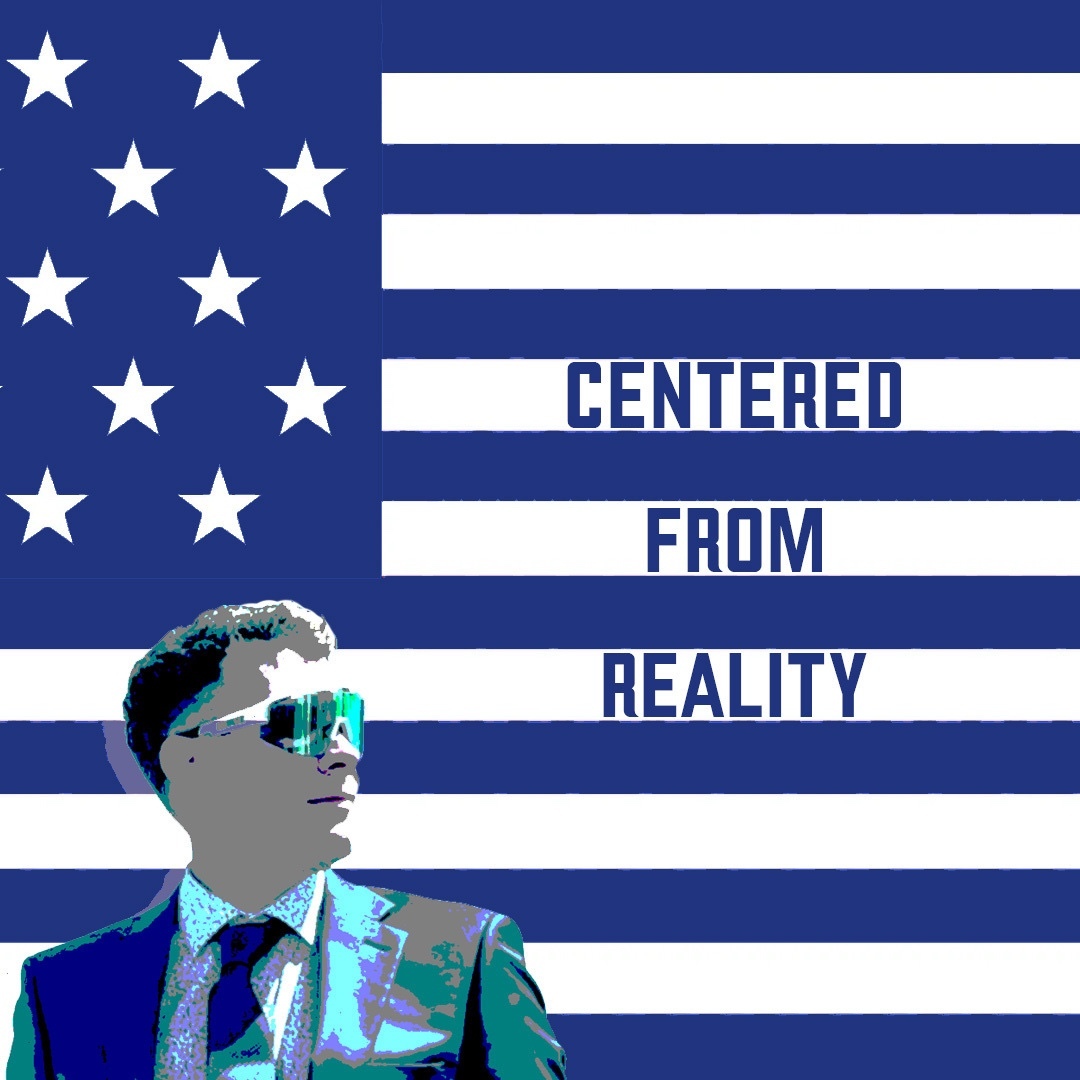
Centered From Reality
by centeredfromreality
Alex Kopytko is a ”radical centrist” that wants to understand the extremes. He has worked in politics and has studied public policy and political science. Alex argues that centrism is less about being a contrarian, it is about being able to change your mind and embrace an openness to new ideas. He is concerned about where the United States is headed and through conversations with people from all sides of the political spectrum, he wants to know how Americans can limit the tribalism that is flourishing. As someone that dances along the center-right of the political spectrum, Alex thinks the country needs to come together and talk to one another before it could be too late. This podcast covers domestic politics, as well as political philosophy, and international issues.
-
100
We're Watching an Empire Die (with Cole Costello)
Alex welcomes returning guest Cole Costello, a Ph.D. candidate at the University of Montana, for a wide-ranging conversation spanning war, geopolitics, history, and economics. They discuss the Cold War, American hegemony, Argentina's political and economic development, and the future of the post-World War II international order before shifting to a broader critique of modern capitalism. Through Cole's "token economy" thought experiment, they debate whether markets truly measure contribution, the role of incentives, and what a society ought to value.
-
99
Saturday Rant: Spain Is Burning, Tom Segura's Fall, and Trump's Latest Show
Alex delivers a wide-ranging Saturday afternoon commentary, blending humor, personal reflections, and political analysis. From joking about post-World Cup withdrawal and critiquing the White House Correspondents' Dinner to examining the transformations of JD Vance and comedian Tom Segura, Alex explores how success can sometimes lead people to reject the very identities that once made them relatable. He closes with a heartfelt discussion about the devastating wildfires across Spain and France, reflecting on their impact through the lens of his personal connection to Madrid and the growing challenges posed by climate change.
-
98
America's Geography of Neglect (with Cole Costello)
Alex welcomes Cole Costello back to the podcast for a conversation that begins with a decaying theater in rural Montana and expands into a broader discussion about America's forgotten communities. Cole argues that many small towns are living among the remnants of a once-functioning past that no longer has the resources, political attention, or economic investment needed to be restored. Along the way, Alex and Cole explore how this reality connects to modern populist politics, rural decline, infrastructure, railroads, agriculture, China's rapid development, the rise of data centers, and growing economic inequality. The result is a thought-provoking look at what happens when entire regions feel left behind—and what that means for America's future.
-
97
Trump's Pentagon Is Fighting the Last War
In this episode, Alex examines why the conflict with Iran is evolving into something far larger than a limited military operation—and why one question remains unresolved: if President Trump had an apparent off-ramp, why didn't he take it? He also explores how the economics of modern warfare, from cheap drones to expensive missile defenses and disrupted global shipping, may be exposing weaknesses the U.S. military has been slow to recognize.
-
96
The Real Monster in The Odyssey Is Time
Christopher Nolan's The Odyssey is more than an epic adventure—it's a story about what happens when you finally make it home and realize the world kept moving without you. Alex explores how a film rooted in ancient myth becomes a powerful meditation on memory, regret, and the passage of time while examining the Sea Peoples, the Bronze Age collapse, Nolan's casting choices, and why the film's emotional final act resonated so deeply with his own experience of returning to America after years living abroad.
-
95
Argentina Deserves the FIFA Peace Prize: A Knife Fight in an Art Gallery
Alex breaks down Spain's dominant World Cup victory over Argentina, arguing that character in defeat is just as important as excellence in victory. From Argentina's post-match conduct to Trump's awkward attempts to steal the spotlight, this episode explores why humility, sportsmanship, and leadership matter both on and off the field.
-
94
Trump's Speech Was a Dangerous Insomnia Cure
In this episode, Alex examines President Trump's latest White House speech announcing the release of declassified documents alleging Chinese interference in the 2020 election. Rather than presenting the announcement as a groundbreaking revelation, Alex explores it as another chapter in Trump's years-long effort to revisit the 2020 election and raise concerns about trust in America's electoral system ahead of the 2026 midterms. While recognizing the importance of government transparency and election security, Alex questions the timing, framing, and potential political motivations behind the release of a large collection of partially redacted intelligence documents presented without broader context.
-
93
The Minionization of Everything (with Martin Benes)
In the final installment of Alex's conversation with Martin Benes, a simple question about the popularity of Minions evolves into a thoughtful discussion about modern culture and the pursuit of constant entertainment. Using everything from "Oops! All Berries" cereal to soccer and streaming algorithms, Alex and Martin explore why the best experiences often come from balance rather than getting only the highlights. It's a fun, wide-ranging conversation that argues sometimes the "boring" parts are exactly what make the memorable moments matter.
-
92
The Two Lindsey Grahams: A Complicated Farewell
In this episode, Alex reflects on the death of Senator Lindsey Graham and the complicated legacy he leaves behind. The discussion explores how one of America's strongest advocates for democracy abroad became one of Donald Trump's closest political allies, asking whether Graham's unwavering support for Ukraine reflected a lingering commitment to principles he had compromised at home.
-
91
What the Hell Happened to the Democratic Party? (with Martin Benes)
In part two of their conversation, Alex is joined by Martin Benes for a wide-ranging discussion on the Democratic Party's identity crisis and where it goes from here. Together, they debate centrism versus progressivism, the rise of populism, controversial Democratic candidates, Obama's political legacy, and why the party continues to struggle with messaging. They also touch on Trump's Reflecting Pool controversy.
-
90
Ranch Dressing Won the World Cup (with Martin Benes)
Alex is joined by Martin Benes to break down the FIFA World Cup, from the USA's controversial red card reversal to why the U.S. still isn't ready to compete with the world's best. They discuss how the tournament has temporarily improved America's image abroad, the crucial role of immigrants in international soccer, and whether Europe's obsession with ranch dressing is a compliment—or a judgement.
-
89
Why Is the FBI Investigating Argentina's Football Association?
Argentina may be winning on the field, but off it, the headlines are far less celebratory. In this episode, Alex unpacks reports of an FBI inquiry into the Argentine Football Association's U.S. financial dealings, the millions of dollars under scrutiny, and why the investigation is raising new questions about governance, transparency, and the business behind the beautiful game.
-
88
-
87
Ranking World Cup Teams Based on Vibes (with Cole Costello)
In this episode, Alex welcomes returning guest Cole Costello, PhD candidate at the University of Montana, for a conversation that takes a different approach to the World Cup. Instead of debating favorites and championship odds, Alex and Cole each rank their top five World Cup teams based entirely on vibes—highlighting everything from underdog stories and fascinating history to national pride, cultural identity, and even great jerseys. The conversation explores how the World Cup serves as more than a sporting event, creating opportunities to learn about different cultures, histories, and people from around the globe.
-
86
Alexi Lalas Is Why the World Is Getting Sick of America
Alex breaks down the increasingly tense on-air feud between Alexi Lalas and Zlatan Ibrahimović, arguing that it's about far more than soccer. Using their clashes as a case study, he explores how American exceptionalism, political polarization, and a growing refusal to listen have fueled frustration among many of America's closest allies. The result is a sharp, often funny look at why a seemingly trivial sports-media beef may actually reveal something important about America's place in the world today.
-
85
From "America First" to $300 Billion for Iran
Alex examines the Trump-Iran MOU point by point and argues that the agreement is a political and strategic failure. From sanctions relief and frozen assets to a proposed $300 billion reconstruction package, Alex explains why many Republicans are questioning the deal and why he believes it closely resembles policies conservatives once criticized under the Obama administration. The episode offers a detailed breakdown of the agreement and its potential political consequences.
-
84
Is Irvine Hotel California? (with Cole Costello)
In this episode, Alex welcomes back longtime friend and former Chapman University roommate Cole Costello, a PhD candidate at the University of Montana with years of experience living in Orange County. The conversation begins with a critique of World Cup commentator Alexi Lalas before shifting into a broader discussion of Irvine, Orange County's unique culture, and why the region can feel both incredibly comfortable and strangely soulless. Alex and Cole then tackle California politics, including the Los Angeles mayoral race, Karen Bass's political resilience, and reality TV star Spencer Pratt's unlikely candidacy, using the race as a lens to explore the disconnect between national political narratives and local voter preferences. The episode culminates in a discussion of the "Graham Plattner dilemma," examining whether voters should overlook serious character concerns in pursuit of preferred policy outcomes.
-
83
The Deal We Bombed Our Way Back To
Alex breaks down the emerging U.S.-Iran peace deal and explains why, after four months of war, the outcome looks remarkably similar to the status quo that existed before the conflict began. He examines why the agreement leaves Iran's missile program and regional proxies largely untouched, why Israel may view the result as a costly strategic setback despite the damage inflicted on Iran, and why none of the major players can convincingly claim victory. Finally, Alex explores the broader implications of the war—from the vulnerability of the Strait of Hormuz to what the conflict reveals about the limits of American power and the future of global trade.
-
82
America's Geography of Neglect (with Cole Costello)
Alex welcomes Cole Costello back to the podcast for a conversation that begins with a decaying theater in rural Montana and expands into a broader discussion about America's forgotten communities. Cole argues that many small towns are living among the remnants of a once-functioning past that no longer has the resources, political attention, or economic investment needed to be restored. Along the way, Alex and Cole explore how this reality connects to modern populist politics, rural decline, infrastructure, railroads, agriculture, China's rapid development, the rise of data centers, and growing economic inequality. The result is a thought-provoking look at what happens when entire regions feel left behind—and what that means for America's future.
-
81
Fight Night at the White House!
This episode dives into the upcoming UFC event at the White House and why it looks less like a historic spectacle and more like a logistical headache. Alex breaks down the challenges of hosting a major combat sports event outdoors—from weather and production concerns to security complications—and explores what the event says about the growing overlap between politics, entertainment, and public spectacle.
-
80
Elon Musk's Trillion-Dollar Contradiction
In this episode, host Alex explores the extraordinary week that saw Elon Musk become the world's first trillionaire while simultaneously facing criticism for his role in amplifying political tensions online. Alex examines SpaceX's record-breaking IPO, Musk's growing influence over public discourse, and the ambitious vision driving investors to back his space and AI empire. The episode also takes a closer look at the government funding and taxpayer support that helped launch Musk's companies, raising important questions about power, influence, and who benefits when public investment fuels private fortunes.
-
79
Why I'm Rooting for Iraq: Soccer Reveals a lot About Iraq's Recovery
In this episode, Alex explores the intersection of soccer and politics through Iraq's remarkable return to the World Cup after a four-decade absence. Alex examines how Iraq's qualification journey reflects the country's broader recovery from decades of war, instability, and regional turmoil, while also discussing the recent detention of Iraqi team members upon arriving in the United States.
-
78
The Disgrace of Gijón: When Game Theory Took Over the World Cup
In this episode, Alex examines the infamous "Disgrace of Gijón" from the 1982 World Cup in Spain and why it remains one of the most fascinating examples of game theory in sports. Alex explores how FIFA's tournament structure created incentives that made competition irrational once West Germany took an early lead against Austria, ultimately leaving Algeria as the victim of a flawed system. The discussion goes beyond soccer to explore what this controversial match can teach us about politics, institutions, and the unintended consequences of poorly designed incentives.
-
77
The Graham Platner Gamble: Why Democrats Might Regret This Choice
In this episode, Alex unpacks the controversies surrounding Graham Platner, focusing on allegations, personal history, and questions about credibility that could make him a liability in a key Maine race. Alex argues that while Platner may be a product of his military experience and personal struggles, the accumulation of red flags raises concerns about his viability as a candidate. More broadly, he warns against a “race to the bottom” in politics, where moral and character concerns are increasingly dismissed in favor of raw electability or partisan advantage.
-
76
From Barbarian to Blood Meridian (with Cole Costello)
In this episode, Alex welcomes back regular guest Cole Costello for a wide-ranging conversation that starts with pop culture absurdities and quickly descends into the dark corners of modern horror. The two rank their favorite horror films of the 21st century, debate everything from Barbarian and Hereditary to The Lighthouse and The Hateful Eight, and explore why folk horror, psychological dread, and the unknown continue to captivate audiences. Along the way, they dive into Robert Eggers, Blood Meridian, and the timeless question: what actually makes something scary?
-
75
Trump's New DNI: The Retribution Project
Alex examines President Trump's decision to appoint Bill Pulte as acting Director of National Intelligence and why critics see the move as a potential national security risk. The episode explores concerns that placing a loyal political ally with no intelligence experience atop the nation's intelligence apparatus could blur the line between national security and domestic politics, transforming the DNI from a coordinator of foreign intelligence into a tool for pursuing political grievances. Alex unpacks what this appointment could mean for election oversight, intelligence declassification, and the growing debate over whether America's intelligence agencies could be drawn deeper into domestic political battles.
-
74
CBS Gets DOGE'd
Alex breaks down the explosive shakeup at CBS News, where Bari Weiss's overhaul of 60 Minutes has triggered a newsroom revolt and raised questions about the future of one of America's most trusted institutions. From the firing of veteran journalists to Scott Pelley's remarkable public confrontation with Weiss's new executive producer, Alex examines whether this is a necessary reinvention—or the "DOGE-ing" of American journalism. Along the way, he explores what happens when powerful institutions are remade from the inside and why one veteran reporter decided to say the quiet part out loud.
-
73
From Vanilla Ice to Jaxson Dart (with Cole Costello)
In this episode, host Alex Kopytko welcomes back recurring guest and history PhD student Cole Costello for a wide-ranging conversation on politics, culture, sports, and the stories we tell ourselves about all three. The two discuss the Great American Fair, celebrity politics, the ongoing debate around public figures and their personal views, and whether modern media focuses on the right controversies. They also dive into Chuck Klosterman's ideas about football, exploring why America's most popular sport is unlike any other and what its structure reveals about human nature and society.
-
72
Law and Disorder in Texas: Ken Paxton Wins Anyway
In this episode, Alex breaks down the shocking Texas Republican primary where Donald Trump-backed Ken Paxton crushed longtime Senator John Cornyn despite years of corruption scandals, impeachment, and legal controversy. Alex explains why the race left him feeling four emotions at once: schadenfreude watching Cornyn’s political humiliation, anger that Republican voters embraced Paxton anyway, excitement because Democrats may now have a real chance in Texas, and anxiety over what could happen if the general election turns chaotic or contested. The episode explores how Trump’s grip on the GOP continues to reshape American politics — even when the candidate is the Texas Attorney General facing accusations of abusing his own office.
-
71
The Political Breakdown of Real Madrid
In this episode, Alex explores why Real Madrid is beginning to resemble less of a football club and more of a political institution. Using ideas from institutional theory and populist politics, he breaks down the growing legitimacy crisis surrounding Florentino Pérez and the emergence of Enrique Riquelme as an outsider challenger positioning himself against an increasingly insulated establishment. The conversation looks at how performance decline, ownership debates, and elite power structures are turning a football election into something that feels much closer to a political movement.
-
70
Ceasefire in Name Only: Devastation in Lebanon & Strikes in Iran
In this episode, Alex dives into the unraveling ceasefire between the US, Iran, Israel, and Hezbollah as fresh airstrikes and mounting civilian casualties push the Middle East closer to a wider regional war. From American “self-defense strikes” near the Strait of Hormuz to Israel’s escalating campaign in Lebanon, Alex breaks down the political maneuvering, the human cost, and the fragile diplomacy struggling to hold everything together. Plus: why oil markets, global politics, and one of the world’s most volatile regions are now more connected than ever.
-
69
Game Theory in the Gulf: The World’s Most Expensive Game of Chicken
In this episode, Alex breaks down the fragile U.S.-Iran ceasefire that was supposed to last two weeks and somehow turned into a geopolitical game of chicken with the global economy hanging in the balance. As Trump pushes Gulf nations toward the Abraham Accords while teasing a possible Iran deal, even his own allies are warning that the agreement could resemble the Obama-era deal he once condemned. From oil tankers in the Strait of Hormuz to White House infighting and nuclear brinkmanship, Alex unpacks how America may have stumbled from “maximum pressure” into negotiating simply to keep negotiating.
-
68
“I Don’t Care What She Said” — Tulsi Gabbard and the Death of Objective Intelligence
Alex breaks down the surprising resignation of Tulsi Gabbard as director of national intelligence — officially over her husband’s cancer diagnosis, but amid growing tensions with Donald Trump over Iran and military intervention. The episode explores how Gabbard, an anti-interventionist outsider, became increasingly sidelined inside an administration that openly dismissed her intelligence assessments, including Trump’s blunt response to her claim that Iran “is not building a nuclear weapon”: “I don’t care what she said.” Along the way, Alex examines the politicization of the intelligence community, the irony of Gabbard’s role in Venezuela policy, and what her tenure reveals about the fragility of America’s post-9/11 intelligence system.
-
67
Operation Ahmadinejad: The Coup Attempt Nobody Saw Coming
In this episode, Alex unpacks one of the strangest regime-change stories imaginable: the reported Israeli-backed plan to reinstall former Iranian president Mahmoud Ahmadinejad during the opening days of the war with Iran. Why would Israel and the U.S. gamble on a man once known for Holocaust denial, anti-American rhetoric, and calls to “wipe Israel off the map”? Alex explores the theory that Ahmadinejad may not have been chosen despite his extremism—but because he could be controlled, leveraged, or used as an asset in a larger geopolitical gamble that quickly spiraled out of control.
-
66
Home Depot vs Lowes & Cruise Ship Hell (with Cole Costello)
In this episode, Alex opens with the escalating tensions surrounding Cuba, including the newly unsealed U.S. indictment charging former Cuban leader Raúl Castro with murder and conspiracy over the 1996 shoot down of Brothers to the Rescue planes that killed four people. The charges arrive amid growing speculation about instability inside Cuba, reports of drone strike warnings in the Florida Keys, and renewed discussion about whether the island is entering a rare window for possible regime change. Later, Alex is joined by Cole Costello for a wide-ranging conversation covering the surprisingly deep cultural divide between Lowe’s and Home Depot, the uniquely miserable experience of cruise ships, and the eternal hope of praying for rain.
-
65
On a Woke Odyssey (with Cole Costello)
In this episode of Centered From Reality, host Alex Kopetko is joined by recurring guest Cole Costello, future historian and PhD candidate out of Montana, to break down the internet backlash surrounding Christopher Nolan’s upcoming adaptation of The Odyssey. While both agree that the “woke” outrage over casting and historical accuracy is mostly overblown, Alex and Cole do find themselves increasingly confused by the movie’s bizarre, focus-group-feeling cast lineup — especially when compared to older epics like Troy. The conversation expands into Hollywood trends, modern horror movies, strange music rabbit holes, and an extended ranking of their favorite Stephen King books.
-
64
Trump Settles With His Own Government & Bill Cassidy Crashes Out
In this episode, Alex breaks down Senator Bill Cassidy losing his Louisiana primary and argues it’s the result of trying to balance criticism of Donald Trump with later attempts to win back MAGA support. He also dives into Trump’s reported plan for a massive compensation fund for allies investigated during the Biden administration, warning it could normalize political loyalty over accountability. Along the way, Alex mixes sharp political commentary with humor, touching on everything from Real Madrid frustrations to the chaos of modern Republican politics.
-
63
Spam, Fireworks & Constitutional Decay (with Cole Costello)
In this Sunday episode, Alex sits down with historian and returning guest Cole Costello for a wide-ranging conversation that starts with aging, bad backs, and Montana’s official “Day of Prayer for Rain” before evolving into a thoughtful discussion about American identity ahead of the country’s 250th anniversary. The two reflect on patriotism, historical memory, holidays, labor traditions, and the tension between celebrating America’s ideals while confronting its contradictions and failures. Along the way, they also debate ham, fireworks, pagan holidays, constitutional reform, and the state of modern politics in a candid and often humorous exchange.
-
62
Ranking ALL of Trump's Liquor Cabinet (From Security Risks to Doug Burgum)
Alex spends the episode informally ranking members of Trump’s cabinet from “most dangerous” to “least concerning,” arguing that the administration contains far more extreme or reckless figures than competent or stabilizing ones. He repeatedly contrasts ideological loyalists and media personalities — including JD Vance, Pete Hegseth, Robert F. Kennedy Jr., and Kash Patel — with a much smaller group he views as merely ineffective or relatively sane. By the end, he emphasizes that his own rankings produced more officials in the “most dangerous” tier than in the moderate or benign categories, which he presents as evidence of how unstable and ideologically driven he believes the administration has become.
-
61
Greece is Getting a NEW McDonald's!!!
In this casual Friday episode, Alex humorously rants about Kimberly Guilfoyle attending the ribbon cutting of a new McDonald’s in Athens, Greece, calling the moment both surreal and unintentionally hilarious. Using the story as a jumping-off point, Alex reflects on American culture abroad, his own experiences traveling in Greece, and why promoting fast food in a country known for its fresh local cuisine feels especially absurd. Beyond the McDonald’s story, Alex also touches on rising tensions involving Taiwan and China, political shakeups in the UK, an Ebola outbreak in the Democratic Republic of the Congo, and the latest developments in the war in Ukraine, blending global headlines with sharp political commentary and personal observations.
-
60
Enemies in the Shadows: Real Madrid, Florentino Pérez, and the Politics of Paranoia
In this episode, Alex breaks down Florentino Pérez’s extraordinary press conference and what it reveals about power, control, and perception at Real Madrid. He draws parallels between Pérez’s leadership style and political figures who increasingly frame criticism as conspiracy, using institutional control and media narratives to protect their authority. Alex argues that when leaders — in football or politics — start to believe that every setback is part of a coordinated attack, it distorts decision-making and erodes accountability. Ultimately, it’s a cautionary story about what happens when a powerful institution begins to see opposition not as feedback, but as evidence of enemies in the shadows.
-
59
Kari Lake: From Voice of America to Jamaica (??)
Alex breaks down the controversy surrounding Kari Lake’s potential appointment as U.S. ambassador to Jamaica, tracing the move back to her turbulent tenure overseeing Voice of America and the U.S. Agency for Global Media. Through sharp political analysis and a dose of irony, Alex explores how loyalty has increasingly become the defining currency in modern political appointments—often outweighing institutional experience or diplomatic expertise. The episode examines what this nomination says about America’s evolving approach to governance, diplomacy, and the rewards system inside Washington.
-
58
Is Keir Starmer Becoming Britain’s Joe Biden?
Alex breaks down the deepening crisis inside the UK Labour government, as resignations, public pressure, and electoral collapse leave Sir Keir Starmer fighting to survive politically. With Labour MPs split between demanding his resignation and warning against a leadership contest, Starmer is starting to give off unmistakable Joe Biden vibes: insisting he’s staying while much of his own party quietly wonders how long that can last. Meanwhile, Nigel Farage and Reform UK are looming over the chaos, capitalising on Labour’s instability as Britain heads into an increasingly volatile political moment.
-
57
Keeping Up with the Cabinet: Sean Duffy's Great American Road Grift
In this episode, Alex breaks down Transportation Secretary Sean Duffy’s bizarre sponsored road trip series and why critics are calling it one of the most tone-deaf stories of Trump 2.0. From nonprofit funding tied to major transportation corporations to the glaring irony of celebrating America’s national parks while protections and funding for public lands are being cut, the episode explores how governing increasingly feels like influencer content. Alex unpacks the ethics concerns, political hypocrisy, and growing disconnect between Washington spectacle and everyday Americans struggling with rising costs.
-
56
UFOs Are Politically Safe. The Epstein Files Aren’t.
On this episode of Centered From Reality, host Alex Kopytko dives into America’s renewed obsession with UFOs, government transparency, and why mysterious Pentagon disclosures seem far easier for politicians to release than something like the Epstein files. Alex explores the latest UAP document dump, breaks down theories like the Fermi Paradox and the Dark Forest Theory, and argues that UFO disclosures are politically convenient because they generate endless attention without ever requiring definitive answers or accountability. Blending skepticism, humor, conspiracy culture, and X-Files nostalgia, the episode examines why UFOs remain the perfect modern mystery.
-
55
The Tennessee Map Fight Is Just the Beginning (+ Fist Fights at the Bernabéu)
In this episode, Alex announces the launch of the Centered From Reality Substack and outlines plans to expand the show with newsletters, bonus content, and more direct audience interaction. He then dives into a mix of sports and current events, including Real Madrid locker room turmoil, public health concerns tied to a hantavirus outbreak discussion, and broader questions about preparedness and risk perception. The bulk of the episode focuses on escalating U.S. redistricting battles following recent Supreme Court decisions, with Tennessee’s new congressional map serving as a key example of shifting voting power and legal conflict. The episode closes with skepticism about a proposed Russia–Ukraine ceasefire and a broader reflection on how multiple major systems—political, health, and cultural—are all under increasing strain at the same time.
-
54
Hantavirus at Sea: Cruise Conspiracies & Gambling on the Apocalypse (with Martin Benes)
Alex and Martin Benes begin the episode by reacting to reports of a suspected hantavirus outbreak on a cruise ship, joking about cruises as chaotic floating cities filled with illness, strange behavior, and underreported crimes tied to murky international laws. The discussion then shifts to European football, where Alex vents about internal tensions at Real Madrid and the hosts debate who to support in the UEFA Champions League, touching on clubs including Arsenal F.C., Atlético Madrid, Paris Saint-Germain F.C., FC Bayern Munich, and FC Barcelona. Near the end, they discuss prediction-market platforms like Polymarket and Kalshi, comparing them to Rat Race and criticizing the way geopolitical crises are increasingly treated like gambling events. The episode closes with recommendations for Rat Race and Widows Bay, described as “Twin Peaks meets The Shining.”
-
53
Nobody Wants to Come to FIFA 2026…
In this episode, Alex breaks down the growing gap between the massive hype surrounding the 2026 World Cup and the surprisingly weak hotel bookings across U.S. host cities. Despite more than 5 million tickets sold and projections of huge international crowds, many hotels are reporting bookings below even normal summer levels. Alex dives into the reasons behind the slowdown—from visa concerns to America’s global image problem—and asks whether the U.S. is truly ready to host the world’s biggest sporting event.
-
52
Detached From Reality & Truthing on the Toilet (with Martin Benes)
In part two of their conversation, Alex sits down with Martin Benes to unpack what some call today’s “ketamine culture”—a growing sense of detachment shaping politics, media, and public perception. The conversation dives into Trump’s foreign policy, rising tensions with Iran, and the broader disconnect between political leaders and everyday Americans. They also explore fractures within the MAGA movement, media narratives, and the idea of a “YOLO presidency” driven more by impulse than strategy. Along the way, they mix sharp analysis with humor while looking ahead to what all of this could mean for the future of U.S. politics.
-
51
Looksmaxxing: Falling in Love With Your Own Reflection (with Martin Benes)
In this episode, Alex sits down with Martin Benes to unpack the rise of the “looksmaxxing” trend, a movement rooted in online subcultures that pushes self-improvement into obsessive and often unhealthy extremes . They contrast the chaotic, extreme influencer persona of Clavicular—who embodies the movement’s more dangerous, experimental edge—with biohacker Bryan Johnson, whose highly controlled lifestyle still reflects a more structured (if intense) version of optimization. The conversation expands into how “maxxing” culture has spiraled into a catch-all internet buzzword, arguing it reflects a broader shift toward reductive, performative self-improvement. Ultimately, they frame the trend as a distorted offshoot of wellness culture that prioritizes aesthetics and metrics over actual health.
We're indexing this podcast's transcripts for the first time — this can take a minute or two. We'll show results as soon as they're ready.
No matches for "" in this podcast's transcripts.
No topics indexed yet for this podcast.
Loading reviews...
ABOUT THIS SHOW
Alex Kopytko is a ”radical centrist” that wants to understand the extremes. He has worked in politics and has studied public policy and political science. Alex argues that centrism is less about being a contrarian, it is about being able to change your mind and embrace an openness to new ideas. He is concerned about where the United States is headed and through conversations with people from all sides of the political spectrum, he wants to know how Americans can limit the tribalism that is flourishing. As someone that dances along the center-right of the political spectrum, Alex thinks the country needs to come together and talk to one another before it could be too late. This podcast covers domestic politics, as well as political philosophy, and international issues.
HOSTED BY
centeredfromreality
CATEGORIES
Loading similar podcasts...
Frequently Asked Questions
How many episodes does Centered From Reality have?
Centered From Reality currently has 50 episodes available on PodParley. New episodes are automatically indexed when they're published to the podcast feed.
What is Centered From Reality about?
Alex Kopytko is a ”radical centrist” that wants to understand the extremes. He has worked in politics and has studied public policy and political science. Alex argues that centrism is less about being a contrarian, it is about being able to change your mind and embrace an openness to new ideas. He...
How often does Centered From Reality release new episodes?
Centered From Reality has 50 episodes. Check the episode list to see recent publication dates and frequency.
Where can I listen to Centered From Reality?
You can listen to Centered From Reality on PodParley by clicking any episode. We provide an embedded audio player for direct listening, and you can also subscribe via your preferred podcast app using the RSS feed.
Who hosts Centered From Reality?
Centered From Reality is created and hosted by centeredfromreality.
URL copied to clipboard!