
PODCAST · religion
Choshen Mishpat - Daily Recordings
by Ofer Livnat
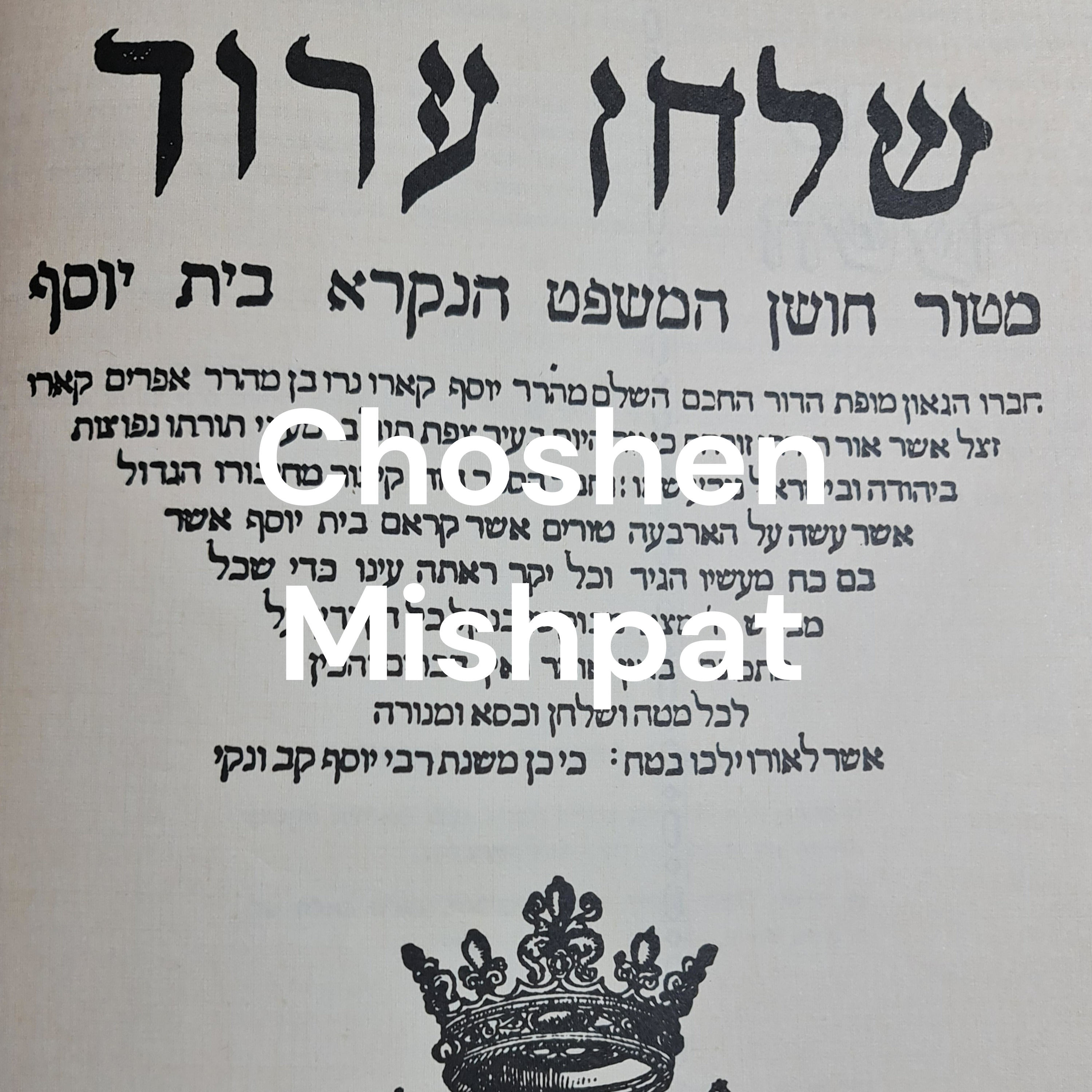
Choshen Mishpat is the section of Shulchan Aruch, the code of Jewish Law, that deals with monetary mattes. In this podcast we will study Choshen Mishpat in order. The first section of Choshen Mishpat deals with the laws of Dayanim, rabbinical judges. The podcast consists of brief recordings, each approximately 4-5 minutes long.
-
151
180 Choshen Mishpat siman 12
Topic: The beginning of the discussion of פשרה — compromise in Beit Din — and the dispute among the Tannaim whether compromise is permitted, prohibited, or a mitzvah.
-
150
179 Choshen Mishpat siman 12
Topic: The ruling of the Shulchan Aruch and Rema on לא תגורו מפני איש, and the later discussion of when fear, danger, or pikuach nefesh may justify a judge withdrawing from a case.
-
149
178 Choshen Mishpat siman 12
Topic: Two further qualifications in the Beit Yosef and Darkei Moshe: when a judge must take a case despite concern, and when real danger may justify withdrawal.
-
148
177 Choshen Mishpat siman 12
Topic: The Rashba’s responsum on a Beit Din threatened by a litigant, and whether לא תגורו מפני איש requires judges to face actual danger.
-
147
176 Choshen Mishpat siman 12
Topic: The source and scope of the Rambam’s ruling that a publicly appointed judge may not withdraw from a case out of fear, and the dispute over whether לא תגורו requires a judge to enter actual danger.
-
146
175 Choshen Mishpat siman 12
Topic: The Gemara’s limitation of לא תגורו מפני איש — when a judge may withdraw from a case because of fear, and when he may not.
-
145
174 Choshen Mishpat siman 12
Topic: Rabbeinu Yonah’s understanding of לא תגורו מפני איש — the obligation of a judge not to fear threats when administering justice.
-
144
173 Choshen Mishpat siman 12
The Prohibition of Judicial Fear
-
143
172 Choshen Mishpat siman 11
Representation, Dignity, and the Form of a Summons
-
142
171 Choshen Mishpat siman 11
Additional Details About נידוי and סרבנות
-
141
170 Choshen Mishpat siman 11
When Is the נידוי Removed?
-
140
169 Choshen Mishpat siman 11
Relying on Others to Deliver the Summons
-
139
168 Choshen Mishpat siman 11
Delivering a Summons Through OthersWhen the שליח בית דין Cannot Find the Litigant
-
138
167 Choshen Mishpat siman 11
Issuing a Proper Summons in the Name of בית דיןThe Need for a Clear Summons from the Whole Court
-
137
166 Choshen Mishpat siman 11
Refusing the Authority of בית דין
-
136
165 Choshen Mishpat siman 11
Further Laws of Summoning a Litigant to בית דיןAdditional Points in the Commentators
-
135
164 Choshen Mishpat siman 11
Summoning a Litigant to בית דיןFrom the Gemara to the Tur and Shulchan Aruch
-
134
163 Choshen Mishpat siman 11
The Practical Laws of Summoning a Person to בית דין
-
133
162 Choshen Mishpat siman 11
Summoning a Litigant to בית דין
-
132
161 Choshen Mishpat siman 10
From Tur to Shulchan Aruch: Deliberation, Consultation, and Responsibility in JudgmentOne-line summary: The Tur and Shulchan Aruch consolidate the Rambam’s principles—requiring careful deliberation, consultation with greater authorities, and a balanced sense of responsibility to rule only when both qualified and needed.
-
131
160 Choshen Mishpat siman 10
The Tur on Deliberation in Judgment: “Let the דין Rise Like Chametz”One-line summary: The Tur (טור) teaches that proper judgment requires slow, thoughtful development—like dough becoming chametz—while warning against both haste and excessive delay.
-
130
159 Choshen Mishpat siman 10
Who Should Rule—and When? Limits, Responsibility, and Restraint in Halachic AuthorityOne-line summary: The Rambam defines a delicate balance: only one who is qualified and needed should rule, while both unqualified ruling and unjustified abstention can cause serious harm.
-
129
158 Choshen Mishpat siman 10
Consultation, Humility, and the Dangers of Overconfidence in Judicial RulingsOne-line summary: A judge (dayan – דיין) must not rely on superficial analogy or personal confidence but must consult greater authorities when necessary, recognizing that overconfidence leads to distorted justice.
-
128
157 Choshen Mishpat siman 10
This section outlines the ethical and procedural responsibilities of a judge (dayan)—balancing careful deliberation with timely rulings, and emphasizing the importance of clarity, integrity, and broad Torah education.
-
127
156 Choshen Mishpat siman 9
Additional safeguards in the Shulchan Aruch to preserve the integrity of judgment: the role of students in the בית דין, when they may harm or must intervene, and the proper way to correct a דיין.
-
126
155 Choshen Mishpat siman 9
The Shulchan Aruch’s framework for compensating a דיין: when payment invalidates judgments, when it is permitted, and key exceptions such as compromise (פשרה) and non-formal judges.
-
125
154 Choshen Mishpat siman 9
The Rambam and Tur define the only legitimate form of compensation for a דיין: clearly identifiable compensation for lost work time (שכר בטלה), while all other forms of payment invalidate the judgment.
-
124
153 Choshen Mishpat siman 9
When and how a דיין may be compensated for his time: the distinction between prohibited payment for judgment (שכר דין) and permitted compensation for lost work (שכר בטלה), as established in the Gemara.
-
123
152 Choshen Mishpat siman 9
The ideal model for compensating judges (דיינים) according to the Tur and Shulchan Aruch: a community-funded system that preserves independence and avoids any suspicion of bribery or bias.
We're indexing this podcast's transcripts for the first time — this can take a minute or two. We'll show results as soon as they're ready.
No matches for "" in this podcast's transcripts.
No topics indexed yet for this podcast.
Loading reviews...
ABOUT THIS SHOW
Choshen Mishpat is the section of Shulchan Aruch, the code of Jewish Law, that deals with monetary mattes. In this podcast we will study Choshen Mishpat in order. The first section of Choshen Mishpat deals with the laws of Dayanim, rabbinical judges. The podcast consists of brief recordings, each approximately 4-5 minutes long.
HOSTED BY
Ofer Livnat
CATEGORIES
Loading similar podcasts...
Frequently Asked Questions
How many episodes does Choshen Mishpat - Daily Recordings have?
Choshen Mishpat - Daily Recordings currently has 29 episodes available on PodParley. New episodes are automatically indexed when they're published to the podcast feed.
What is Choshen Mishpat - Daily Recordings about?
Choshen Mishpat is the section of Shulchan Aruch, the code of Jewish Law, that deals with monetary mattes. In this podcast we will study Choshen Mishpat in order. The first section of Choshen Mishpat deals with the laws of Dayanim, rabbinical judges. The podcast consists of brief recordings, each...
How often does Choshen Mishpat - Daily Recordings release new episodes?
Choshen Mishpat - Daily Recordings has 29 episodes. Check the episode list to see recent publication dates and frequency.
Where can I listen to Choshen Mishpat - Daily Recordings?
You can listen to Choshen Mishpat - Daily Recordings on PodParley by clicking any episode. We provide an embedded audio player for direct listening, and you can also subscribe via your preferred podcast app using the RSS feed.
Who hosts Choshen Mishpat - Daily Recordings?
Choshen Mishpat - Daily Recordings is created and hosted by Ofer Livnat.
URL copied to clipboard!