
PODCAST · religion
Chumash with Chayenu
by Chayenu
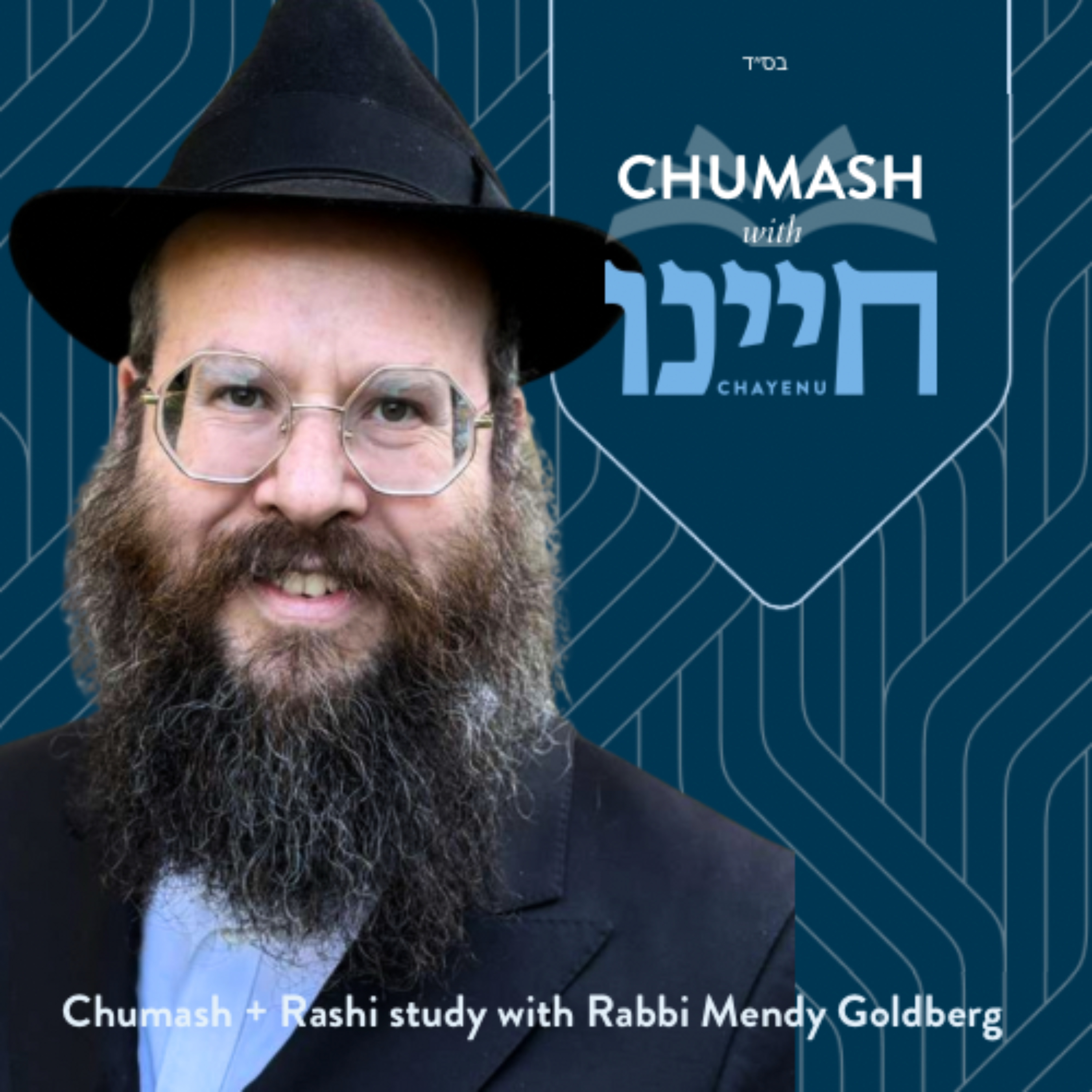
Learn the daily Chumash with Chayenu, hosted by Rabbi Mendy Goldberg.
-
332
Ha'azinu - 3rd Portion
Moshe informs the Jewish people how G-d would provide them with material bounty in the Land of Israel. But G-d also cautioned them that should they overindulge in this wealth, it would cause them to rebel against Him.
-
331
Ha'azinu - 2nd Portion
Moshe encourages the Jewish people to remember their history, recalling how G-d chose them to be His people, gave them the Torah, and shepherded them through the desert on the way from Egypt to the Land of Israel.
-
330
Ha'azinu - 1st Portion
The Poem of Testimony begins with Moshe calling upon both heaven and earth to bear witness to the Divine message that he was about to deliver to the Jewish people. This section turns to describe G-d’s justice system as perfectly balanced.
-
329
Ha'azinu - 7th Portion
After Moshe finished conveying the Poem of Testimony to the Jewish people, he encouraged them to pay heed to all its lessons, as well as to the Torah in general.G-d then instructs Moshe to ascend Mount Nevo and prepare for his own passing.
-
328
Ha'azinu - 6th Portion
Moshe tells the Jewish people that eventually the non-Jewish nations would appreciate them and praise them for remaining true to their covenant with G-d.
-
327
Ha'azinu - 5th Portion
Moshe informs the Jewish people that after they would receivetheir corrective punishment for their lapses in loyalty to G-d’s covenant, G-d would comfort them and punish those who had persecuted them.
-
326
Ha'azinu - 4th Portion
Moshe cautions the Jewish people that overindulgence in their wealth, would cause them to rebel against G-d. He would then punish them for their misdeeds, but would nonetheless never forsake them.
-
325
Ha'azinu - 4th Portion
Moshe cautions the Jewish people that overindulgence in their wealth, would cause them to rebel against G-d. He would then punish them for their misdeeds, but would nonetheless never forsake them.
-
324
Ha'azinu - 3rd Portion
Moshe informs the Jewish people how G-d would provide themwith material bounty in the Land of Israel. But G-d also cautioned them that should they overindulge in this wealth, it would cause them to rebel against Him.
-
323
Ha'azinu - 2nd Portion
Moshe encourages the Jewish people to remember their history, recalling how G-d chose them to be His people, gave them the Torah, and shepherded them through the desert on the way from Egypt to the Land of Israel.
-
322
Ha’azinu - 1st Portion
The Poem of Testimony begins with Moshe calling upon both heaven and earth to bear witness to the Divine message that he was about to deliver to the Jewish people. This section turns to describe G-d’s justice system as perfectly balanced.
-
321
Nitzavim-Vayeilech - 7th Portion
G-d addresses Yehoshua from the cloud at the entrance to the Tabernacle, charging him with the mission of leading the Jewish people into the Land of Israel. Moshe instructs the Levites to place the Torah scroll that he would soon write in the Ark of theCovenant, together with the Tablets of the Covenant that he received at Mount Sinai.
-
320
Nitzavim-Vayeilech - 6th Portion
G-d summons Moshe to the entrance to the Tabernacle. G-d speaks to him from a pillar of cloud that appeared over the Tabernacle’s entrance, informing him that He was going to dictate a poem to him that he should teach the Jewish people. The purpose of the poem was to inspire the Jewish people to remain loyal to G-d throughout any misfortunes that might befall them as a result of their misdeeds.
-
319
Nitzavim-Vayeilech - 5th Portion
Moshe summons Yehoshua and appoints him as his successor in the presence of the entire Jewish people; He then hands a Torah to the tribe of Levi. Moshe conveys G-d’s command to the Jewish people that they assemble once every seven years, during the festival of Sukkos, in order to hear their king read specific passages from the Torah (Hakhel). This ceremony was designed to instill renewed commitment to G-d’s covenant with them.
-
318
Nitzavim-Vayeilech - 4th Portion
Moshe tells the Jewish people that, in the final analysis, G-d is presenting them with the free choice to choose between good and evil. Moshe continues his final farewell address to the Jewish people by informing them that this day (7 Adar), was his 120th birthday, and would also be the day that he would die. Moshe reassures the Jewish people that although he was aboutto die, G-d will still and always be with His people. They therefore have nothing to fear from the nations then occupying the Land of Israel, which they are about to enter and conquer.
-
317
Nitzavim-Vayeilech - 3rd Portion
Moshe promises the Jewish people that in the future they would indeedenjoy the fulfillment of all of G-d’s blessings, given their return to Him, in contrast to their enemies’ fate. Moshe assures the Jewish people that they would always be able to know what G-d expects of them by studying the Torah. “It is close to you.”
-
316
Nitzavim-Vayeilech - 2nd Portion
Moshe informs the Jewish people that in the future, they would undergo periods of infidelity to G-d’s covenant and suffer as a result. Nonetheless, even then, the path of return to G-d would always be open. He prophesies regarding the ingathering of those exiled, and G-d ‘circumcising’ the barrier of their heart, in order to be able to love G-d.
-
315
Nitzavim-Vayeilech - 1st Portion
Moshe addresses the entire Jewish People, from the heads of tribes to the water-carriers for the purpose of sealing G-d’s covenant with them, and with all future generations. Moshe told the Jewish people that G-d was sealing His covenant not only with them but with all generations of Jews. Moshe explains why it is necessary to renew and strengthen the covenant that G-d first forged with the Jewish people at Mount Sinai. Perhaps in the intervening years, some of them began to think that they could avoid G-d’s corrective punishment if they would be disloyal to Him.
-
314
Ki Savo - 7th Portion
Moshe reassures the Jewish people that despite the threats he had just pronounced, they should be confident in their ability to remain true to G-d’s covenant and enjoy His protection.
-
313
Ki Savo - 6th Portion
Moshe continues to recount the blessing to the Jewish People if they remained faithful to their covenant with G-d. He then spells out many unfortunate consequences for the opposite behavior.
-
312
Ki Savo - 5th Portion
Moshe continues his instructions regarding the ceremony of affirmation of the covenant once the Jewish People enter Israel. He instructs the tribes how to divide upon the two mountains and which warnings the Levites shall issue to the people. Mosheadded his own blessings and warnings to those given by G-d at Mount Sinai.
-
311
Ki Savo - 4th Portion
In order to renew the covenant between G-d and the Jewishpeople upon their entry into the Land of Israel, G-d instructed the Jewish people to perform an elaborate ritual between Mount Gerizim and Mount Eival.
-
310
Ki Savo - 3rd Portion
Moshe begins to encourage the Jewish people to uphold their covenant with G-d that was forged at the Giving of the Torah on Mount Sinai. In return for keeping the covenant, G-d would hold them especially dear, above His love for all other people.
-
309
Ki Savo - 2nd Portion
Moshe reviews the laws regarding deadlines for giving the annual tithes of their produce. The Jewish farmer was required to declare that he had fulfilled his obligation to tithe his produce, and to ask G-d to bless the Jewish people in return.
-
308
Ki Savo - 1st Portion
Moshe teaches the Jewish people the laws regarding bringing the first fruits of their annual harvest to the Temple, which they would be required to observe once they enter the Land of Israel.
-
307
Ki Seitzei - 7th Portion
Moshe reviews with the Jewish people the laws governing employees’ wages, legal justice, consideration for the disadvantaged, resolving disputes, the punishment oflashes, work-animals, the obligation of a brother to marry his childless brother’s widow (“levirate” marriage), compensation for embarrassment, honesty in business, and the duty to remember how the nation of Amalek attacked the Jewish people when they left Egypt.
-
306
Ki Seitzei - 6th Portion
Moshe reviews with the Jewish people the laws regarding exemptions from military service, conduct when taking collateral on a loan, kidnapping, and the skin disease known as tzara’at.
-
305
Ki Seitzei - 5th Portion
Moshe reviews with the Jewish people the laws entitling workers in the field or vineyard to partake of the food they are harvesting, as well as the laws regarding divorce.
-
304
Ki Seitzei - 4th Portion
Moshe reviews with the Jewish people the laws regarding proper conduct in battle, slavery, prostitution, paying interest on loans, and keeping promises.
-
303
Ki Seitzei - 3rd Portion
Moshe reviews with the Jewish people the laws requiring them to build railings on the roofs of their homes in order to prevent people from falling, the laws prohibiting mixing wool and linen in garments, and the laws governing cases of suspected unchaste behavior, adultery, rape and forbidden marriages.
-
302
Ki Seitzei - 2nd Portion
Moshe reviews with the Jewish people the laws regarding stoning, returning lost items, helping others, cross-dressing, and sending away a mother bird before taking her eggs.
-
301
Ki Seitzei - 1st Portion
Moshe tells the Jewish people the laws of captives of war. He then reviewed the laws regarding inheritance and parental responsibility for their children’s behavior.
-
300
Shoftim - 7th Portion
Moshe then instructed the people how to lay siege to an enemy city, and told them that unwitnessed, unsolved murder must be atoned for by a specific ritual performed by the judges of the high court (the Sanhedrin) and those of the city closest to the site of the murder.
-
299
Shoftim - 6th Portion
Moshe teaches the Jewish people the laws of legal testimony and perjury. He then begins to instruct the Jewish people regarding how they were to conduct their conquest of the Land of Israel. Before battle, a specially appointed priest had to command the soldiers, in G-d’s name, to be courageous (and who is exempt from the battlefront).
-
298
Shoftim - 5th Portion
Moshe warns the Jewish people not to listen to false prophets, and reviewed the laws of Cities of Refuge for the accidental murderer.
-
297
Shoftim - 4th Portion
After dividing the priests into divisions which would take turns serving in the Tabernacle/Temple, Moshe encourages the Jewish people to turn only to G-d for all their needs, and not to seek ways to foretell the future (divination).
-
296
Shoftim - 3rd Portion
Moshe instructs the Jewish people to honor the priests, taking care to give them their allotments from their produce and flocks. They do not receive their own portion of land.
-
295
Shoftim - 2nd Portion
Moshe instructs the Jewish people to appoint a king over them, and some laws pertaining to the king.
-
294
Shoftim - 1st Portion
Moshe instructs the Jewish People to appoint judges and sheriffs throughout the Land of Israel to try cases and uphold the law. He further warned them against idolatrous practices.
-
293
Re'ei - 7th Portion
Moshe reviews with the Jewish people the laws of the three“pilgrim” festivals— Passover, Shavu’os, and Sukos—which they were required to celebrate in the Temple-city. Each festival must fall in a specific season.
-
292
Re'ei - 6th Portion
Moshe now teaches the Jewish people the law that the sabbatical year cancels loans. He then warned them not to let this fact prevent them from loaning money. He then taughtthem that when they dismiss their servants, they must give them a gift. In both cases, they should not worry about the expense, since G-d will provide them with the means to follow His laws.
-
291
Re'ei - 5th Portion
Moshe teaches the Jewish people that after they settle the Land of Israel and begin working the land, G-d has obligated them to set aside a portion of their produce for the poor, and to bring a tenth of their oil, wine, and grain to the Temple-city and consume it there. This ensured that the people would regularly visit Jerusalem (which was chosen to be the Temple-city) in order to renew their spiritual inspiration.
-
290
Re'ei - 4th Portion
Moshe instructs the Jewish people regarding how they must distinguish themselves from other peoples in order to remain true to their Divine mission. These instructions included the laws regarding bodily mutilation and kashrut (i.e., permitted vs. forbidden types of food).
-
289
Re'ei - 3rd Portion
Moshe tells the Jewish people that when they are confronted with a challenge to their faith (such as the prosperity of the wicked or of false prophets), they must remember that G-d is testing their loyalty and commitment to Him. This section also deals with the laws of Meisis (one who secretly incites others to worship false gods) as well as laws pertaining to an idolatrous city (Ir HaNidachas).
-
288
Re'ei - 2nd Portion
After detailing the laws governing centralized worship, Moshe reminds the Jewish people that although the blood of the sacrifices is “consumed” by G-d on the Altar, animal blood should not be consumed when they eat meat themselves.
-
287
Re'ei - 1st Portion
Moshe reminds the Jewish People that G-d gives them the choice between good and evil, and that their choice will result either in a life of blessings or one of curses. He then told them that when they enter the Land of Israel, they must eradicate all traces of idolatry from it, and that they must establish a centralized location for the sacrificial rites (which would eventually become the Temple in the city of Jerusalem).
-
286
Eikev - 7th Portion
Moshe promises the Jewish people that if they would keep G-d’s commandments, imitate His goodness, and cleave to the sages of the Torah, G-d would enable them to successfully drive out the nations that were occupying the Land of Israel.
-
285
Eikev - 6th Portion
Moshe praises the Holy Land. He then encourages the Jewish people to observe the commandments and thus be worthy of the ensuing reward and vice versa (the 2nd paragraph of Shema).
-
284
Eikev - 5th Portion
Moshe tells the Jewish people that G-d’s demands on them are not excessive, and certainly not disproportionate to the great mercy that G-d continues to show them.
-
283
Eikev - 4th Portion
After Moshe shattered the first set of tablets, he pleaded with G-d to forgive the Jewish people. G-d did forgive them and instructed Moshe to prepare two replacement tablets upon which G-d would inscribe the Ten Commandments again. He also recalls the passing of Aharon and the unique status of the tribe of Levi.
We're indexing this podcast's transcripts for the first time — this can take a minute or two. We'll show results as soon as they're ready.
No matches for "" in this podcast's transcripts.
No topics indexed yet for this podcast.
Loading reviews...
ABOUT THIS SHOW
Learn the daily Chumash with Chayenu, hosted by Rabbi Mendy Goldberg.
HOSTED BY
Chayenu
CATEGORIES
Loading similar podcasts...
Frequently Asked Questions
How many episodes does Chumash with Chayenu have?
Chumash with Chayenu currently has 50 episodes available on PodParley. New episodes are automatically indexed when they're published to the podcast feed.
What is Chumash with Chayenu about?
Learn the daily Chumash with Chayenu, hosted by Rabbi Mendy Goldberg.
How often does Chumash with Chayenu release new episodes?
Chumash with Chayenu has 50 episodes. Check the episode list to see recent publication dates and frequency.
Where can I listen to Chumash with Chayenu?
You can listen to Chumash with Chayenu on PodParley by clicking any episode. We provide an embedded audio player for direct listening, and you can also subscribe via your preferred podcast app using the RSS feed.
Who hosts Chumash with Chayenu?
Chumash with Chayenu is created and hosted by Chayenu.
URL copied to clipboard!