
PODCAST · education
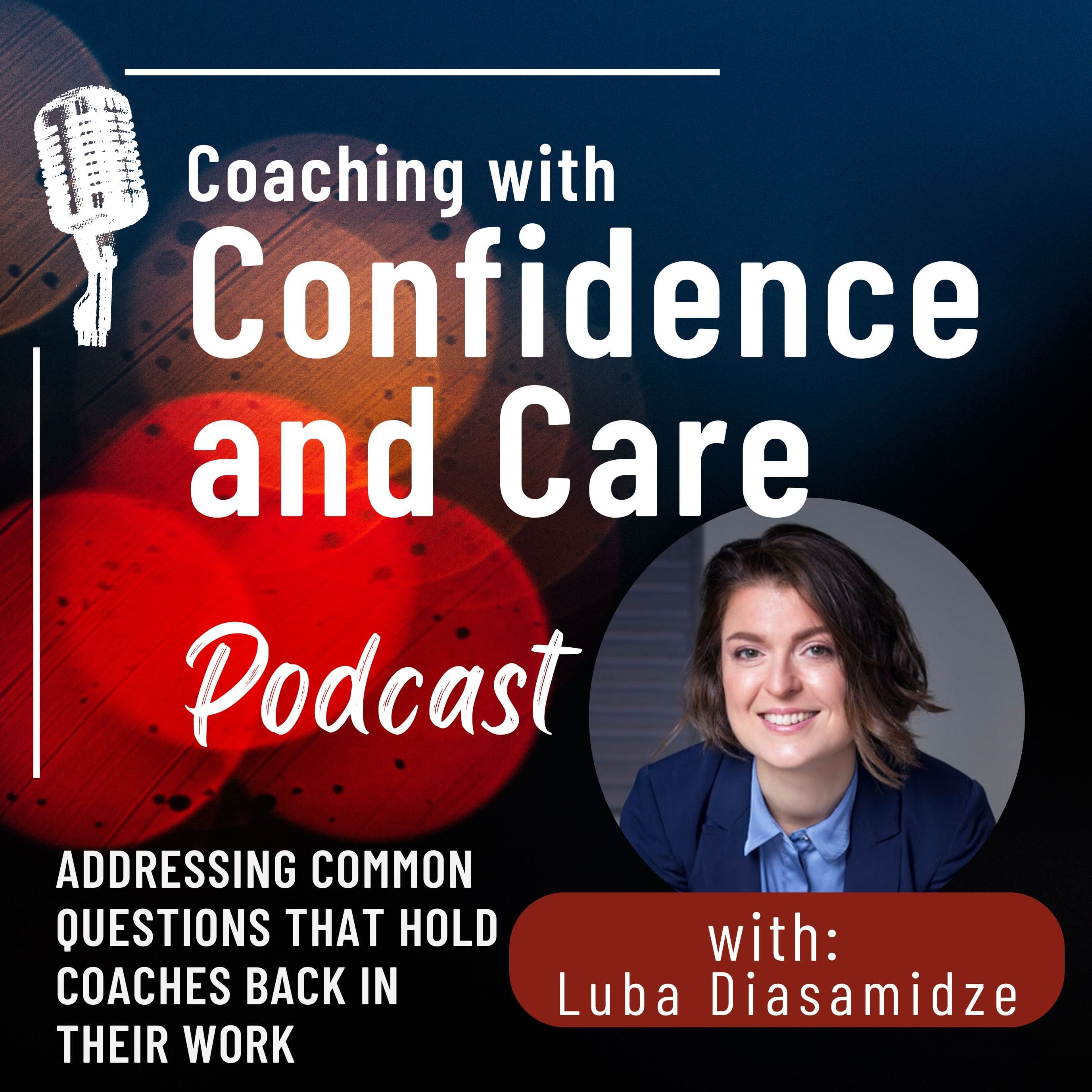
Coaching with Confidence and Care
by Luba Diasamidze PhD, PCC
AboutThe “Coaching with Confidence and Care” podcast, hosted by Luba Diasamidze, offers weekly episodes that provide reflections, practical insights, and answers to common questions in coach training, mentoring, and supervision.I am Luba Diasamidze, the founder of UpThink Coaching, an ICF-accredited provider of coach training programs, mentoring, and supervision. I am passionate about helping coaches unlock their superpowers and be the best they can be for their clients.This podcast is designed to support aspiring and new coaches, as well as those engaged in ongoing professional development. If you’re looking for ways to grow, experiment, gain insights into delivering impactful coaching sessions to shape your own confident and caring coaching style, this podcast is for you!Please subscribe if you enjoy the content. Connect with me on LinkedIn to share ideas or suggest topics for future episodes.Explore Our Resources:• If you are new to coaching: download our Signature FREE Guide
-
28
Rethinking Marketing for Coaches: From Avoidance to Inspiration
If the word "marketing" makes you feel uncomfortable or overwhelmed, you're definitely not alone. Many coaches struggle with visibility, self-promotion, consistency, or the belief that marketing somehow requires them to become someone they are not. In this episode, I share some personal reflections on how my relationship with marketing has evolved over the years and what helped me approach it in a way that feels more authentic, sustainable, and aligned with how I want to show up as a coach. I'm not a marketing expert, and this is not an episode about strategies, funnels, or hacks. Rather, it's an invitation to view marketing through a relational lens and to see it as an extension of the same qualities we bring into coaching: curiosity, care, empathy, and genuine interest in people. You'll hear about: Why many coaches struggle with marketing and why I don't see those struggles as personal flaws; How viewing marketing as relationship-building changed the way I approach visibility and consistency; Why getting clearer about who benefits most from working with you can make articulating your value much easier; How thoughtful marketing can normalize clients' experiences and help them feel seen and understood; How visibility can become a developmental practice and an opportunity to cultivate the same capacities we often help our clients develop. If this episode resonated with you, please share it with another coach who may be trying to find a more human and authentic way to approach marketing. And if you haven't already, subscribe so you don't miss future episodes, especially if you're interested in the deeper, relational, and emotionally informed side of coaching. Coming up next: Preparing for the ICF Credentialing Exam. Don't miss it if the exam is part of your development plan in the coming months. Let’s connect! Want to bring more presence, confidence, and clarity to your coaching? I am here for that. DM me on LinkedIn or visit upthinkcoaching.com to explore supervision, mentor coaching, or our accredited coach training programs. Our next PCC Path (Level 2) - "Beyond the Tools: Advanced Coaching in Emotional, Intercultural & Relational Spaces"- begins in September, and the ACC Path (Level 1) opens in November. Looking forward to supporting you on your journey.
-
27
Working with Resistant, Reluctant or Disengaged Clients
In this episode, I’m talking about one of the more uncomfortable dynamics in coaching: working with disengaged, resistant, or uncooperative clients. Many coaches take client disengagement personally or immediately assume something is “wrong” with the coaching process. But very often, resistance communicates something important about the client’s experience, the organizational context, the coaching relationship, or the way change itself is being perceived. My perspective is that disengagement should be treated as process information rather than personal failure. I wanted to approach this topic with more nuance and compassion, especially in organizational coaching where sponsorship dynamics, psychological safety, performance pressure, and lack of choice can significantly influence engagement. I talk about: Why clients may resist or disengage in coaching sessions, especially in organizational settings; Why over-functioning as a coach can unintentionally increase client passivity; The importance of rapport, transparency, and clarifying coaching expectations early on; How coaches may unknowingly contribute to resistance; What relational dynamics may actually be communicating; How to address ruptures in the coaching relationship instead of avoiding them. I share reflections from my own coaching practice, including situations where clients openly questioned the value of coaching, struggled to trust the process, or participated without genuine buy-in. These moments can feel uncomfortable, but they often contain valuable information about how people experience support, authority, vulnerability, and change. This episode is also an invitation to approach resistance with more curiosity instead of defensiveness. Sometimes the most productive thing a coach can do is slow down, acknowledge what is happening relationally, and create space for an honest conversation about the process itself. If you work with leaders, organizational clients, or simply want to develop a more relational approach to coaching, this episode will give you practical ideas for navigating disengagement without collapsing into rescuing, over-control, or self-doubt. In the next episode, we’ll continue the theme of resistance from a different angle. We’ll talk about coaches’ relationship with marketing and why so many well trained and highly skilled practitioners still struggle to talk about their work openly. I’ll share some reflections on how marketing often becomes emotionally loaded, what helped me rethink it in a healthier way, and how to communicate your value without feeling fake, pushy, or transactional. Enjoy other free materials: Free Coaching Course for People Leaders: upthinkcoaching.podia.com/basic-coaching-skills-for-new-leaders Mock ICF Credentialing Exam (PCC, MCC) from UpThink Coaching: upthinkcoaching.podia.com/mock-icf-credentialing-exam-pcc-mcc PCC Marker Demo: upthinkcoaching.podia.com/pcc-marker-demo-session Next ICF-Accredited Coach Training Programs (for coaches who want to work at depth): ACC Path: https://upthinkcoaching.com/coach-training-development/become-a-coach/ PCC Path: https://upthinkcoaching.com/coach-training-development/the-path-to-excellence-for-certified-coaches/
-
26
Working with Energy Shifts in Coaching
In this episode, I’m talking about energy shifts in coaching and what it actually means to work with them in a grounded, non-mystical way. For many coaches, this can feel unclear or even a bit uncomfortable. You might notice something change in the session, but then question yourself: did something really shift, is it relevant, or am I overinterpreting? Let’s bring more precision to this. Energy shifts are not about guessing or intuition in a vague sense. They are part of process information — observable changes in how the client is engaging in the moment. This can show up in pacing, tone, pauses, level of engagement, or emotional activation. I talk about: What energy shifts actually are and how to recognize them through observable, in-the-moment cues; Why process information matters just as much as content for coaching outcomes; How working with shifts supports deeper awareness and emotional processing; The link between noticing shifts and strengthening the coaching relationship; What happens when shifts are missed or ignored in a session. I share a few practical principles and also walk through real examples of how subtle changes in a client’s energy can open up deeper, more meaningful work, if you stay with them. If you want to move beyond content-focused coaching and develop more precision in how you work with what is happening in the session itself, this episode will give you a clear and practical way to approach it. In the next episode, we’ll look at a different challenge: working with uncooperative or disengaged clients. Stay tuned. Enjoy other free materials: Free Coaching Course for People Leaders: upthinkcoaching.podia.com/basic-coaching-skills-for-new-leaders Mock ICF Credentialing Exam (PCC, MCC) from UpThink Coaching: upthinkcoaching.podia.com/mock-icf-credentialing-exam-pcc-mcc PCC Marker Demo: upthinkcoaching.podia.com/pcc-marker-demo-session Next ICF-Accredited Coach Training Programs (for coaches who want to work at depth): ACC Path: https://upthinkcoaching.com/coach-training-development/become-a-coach/ PCC Path: https://upthinkcoaching.com/coach-training-development/the-path-to-excellence-for-certified-coaches/
-
25
Coaching Effectiveness: Key Factors and Measurement
In this episode, I’m talking about measuring coaching results and how to know if your work is actually effective. If you’re newer, this can be especially tricky. You don’t yet have a long track record, and it’s not always clear what you can confidently say about outcomes. So you hesitate or default to vague language, which does not sound convincing. Let’s look at what actually drives coaching effectiveness. It’s not just what the coach does. It’s a combination of client readiness, coach capability, the quality of the relationship, and the client’s real-life context. I talk about: What “ready for coaching” really means and how to recognise it during discovery calls; A range of factors that make a difference to results; The role of the working alliance (the coaching relationship); How context (timing, environment, support) can either support or block change; What levels of results you can observe. And I touch on how to use pre–post comparisons without turning coaching into evaluation, so you can track progress without losing the quality of the relationship. If you want a clearer way to talk about results and to understand what’s really changing for your clients, this episode will give you a practical structure to work with. In the next episode, we’ll talk about “energy shifts” in coaching: what that actually means and how to work with it. Enjoy other free materials: Free Coaching Course for People Leaders: upthinkcoaching.podia.com/basic-coaching-skills-for-new-leaders Mock ICF Credentialing Exam (PCC, MCC) from UpThink Coaching: upthinkcoaching.podia.com/mock-icf-credentialing-exam-pcc-mcc PCC Marker Demo: upthinkcoaching.podia.com/pcc-marker-demo-session Next ICF-Accredited Coach Training Programs (for coaches who want to work at depth): ACC Path: https://upthinkcoaching.com/coach-training-development/become-a-coach/ PCC Path: https://upthinkcoaching.com/coach-training-development/the-path-to-excellence-for-certified-coaches/
-
24
Working with Metaphors
In this episode, I am talking about working with metaphors in coaching — one of the most powerful ways to deepen awareness in a session. Metaphors show up naturally in how clients speak. We look at how to notice metaphors that actually matter, how to stay with them in a way that supports the client’s thinking, and how to use them to create meaningful shifts without turning the session into something abstract or disconnected from the client’s goal. I talk about: How to recognize which metaphors are worth exploring What makes a metaphor “alive” and useful in the moment How to explore a metaphor through simple, clean questions without leading the client Ways to deepen the metaphor using sensory detail and embodiment How to create shifts inside the metaphor and then connect them back to real action And where coaches may take a less effective path. I also share real question examples that support the metaphor work in different ways. If you’re a coach who wants to work at more depth without adding unnecessary complexity, this episode will give you a practical way to start using metaphors more intentionally and more effectively. In the next episode, we’ll shift the angle a bit and talk about the conditions that actually make coaching effective. I’ll bring in both research and field experience to explore what really drives impact in coaching conversations. If you want to watch an interview with an experienced Clean Language coach and watch a coaching demo that only uses metaphors, we have one on our YouTube Channel. Here's the link: https://youtu.be/V-rf5oZtdcE?si=7JbzWVUw0wB7eons Let's connect! Connect with me on LinkedIn (https://www.linkedin.com/in/luba-diasamidze/) or send an email at [email protected] Enjoy other free materials: Free Coaching Course for People Leaders: upthinkcoaching.podia.com/basic-coaching-skills-for-new-leaders Mock ICF Credentialing Exam (PCC, MCC) from UpThink Coaching: upthinkcoaching.podia.com/mock-icf-credentialing-exam-pcc-mcc PCC Marker Demo: upthinkcoaching.podia.com/pcc-marker-demo-session Next ICF-Accredited Coach Training Programs (for coaches who want to work at depth): ACC Path: https://upthinkcoaching.com/coach-training-development/become-a-coach/ PCC Path: https://upthinkcoaching.com/coach-training-development/the-path-to-excellence-for-certified-coaches/
-
23
When and How to Interrupt in Coaching Sessions
In this episode, I talk about interruptions in coaching — a topic that brings up a lot of questions and uncertainty for coaches. Many coaches were taught that good coaching means letting the client speak without interruption. So when a client talks for a long time, goes in circles, or drifts away from the goal of the session, coaches often hesitate. They wonder: Am I allowed to interrupt? Does that mean I’m not listening well enough? Will it damage the relationship? This episode looks at interruptions from the perspective of professional coaching competencies and real coaching practice. Interruption is not automatically a mistake. When it is done with a clear coaching purpose and in service of the client’s process, it can become a useful intervention. In this episode, I talk about: What core coaching competencies say about interruptions; What “a clear coaching purpose” for interruption actually means; How to contract with clients around interruptions so they understand when and why you might step in; How to navigate the relational side of interruptions, including fears about breaking rapport and why repair is a normal part of a strong coaching relationship; How to check your own internal motives before stepping in, so the intervention truly serves the client. I briefly walk through the most common questions I hear from coaches about interruptions: ethical concerns, fears about power dynamics, worries about damaging the relationship, and uncertainty about when the timing is right. If you’ve ever wondered whether interrupting a client is appropriate in coaching and how to do it in a way that supports awareness and forward movement this episode will give you a clearer way to think about it. In the next episode, we’ll talk about metaphors in coaching. When a client says something like “I feel stuck” or “It’s like I’m carrying the whole company on my back,” what do you actually do with that? How do metaphors open insight, and when can they take the conversation off track? Enjoy other free materials: Free Coaching Course for People Leaders: podia.com/basic-coaching-skills-for-new-leaders Mock ICF Credentialing Exam (PCC, MCC) from UpThink Coaching: podia.com/mock-icf-credentialing-exam-pcc-mcc PCC Marker Demo: podia.com/pcc-marker-demo-session Next ICF-Accredited Coach Training Programs (for coaches who want to work at depth): ACC Path: https://upthinkcoaching.com/coach-training-development/become-a-coach/ PCC Path: https://upthinkcoaching.com/coach-training-development/the-path-to-excellence-for-certified-coaches/
-
22
Leader as Coach: Laser Coaching. Effective 15-minute Sessions
In this episode, I am talking about laser coaching sessions: those short, 15–20-minute conversations that can create a shift when done well. Most leaders don’t have an hour per team member every week. And even if they want to coach more, they often don’t know how to make a short conversation meaningful. So they either avoid coaching altogether or they end up giving advice because it feels faster. This episode is about doing it differently. We look at how to make short conversations intentional, focused, and actually developmental (not disguised micromanagement). Not every topic belongs in a 15-minute space. I talk about: Why shorter sessions require a narrower goal and how to define it How to contract explicitly so people understand what you’re doing How to create momentum so the conversation doesn’t just circle around the problem How to check whether the options feel complete before moving to action And how ending with reflection helps people build independent problem-solving capacity I will also address the risk of going too deep when you don’t have enough time to integrate what you’ve unpacked. If you’re a leader experimenting with coaching, this episode will give you a simple structure you can try immediately and a way to hold the conversation so it actually moves somewhere. In the next episode, we’ll talk about something many coaches struggle with: talkative clients who go off on tangents and fill the entire space. How do you hold the space for them without shutting them down? How do you interrupt respectfully? Let’s talk about that. Enjoy other free materials: Free Coaching Course for People Leaders: upthinkcoaching.podia.com/basic-coaching-skills-for-new-leaders Mock ICF Credentialing Exam (PCC, MCC) from UpThink Coaching: upthinkcoaching.podia.com/mock-icf-credentialing-exam-pcc-mcc PCC Marker Demo: upthinkcoaching.podia.com/pcc-marker-demo-session Next ICF-Accredited Coach Training Programs (for coaches who want to work at depth): ACC Path: https://upthinkcoaching.com/coach-training-development/become-a-coach/ PCC Path: https://upthinkcoaching.com/coach-training-development/the-path-to-excellence-for-certified-coaches/
-
21
Leader as Coach: Key Coaching Moments at Work
In this episode, we explore what it really means for a leader to act as a coach and when it actually makes sense to do so. Many leaders want to incorporate coaching into their leadership style, yet struggle with the practical question: When should I coach, and when should I simply lead, direct, or mentor? This episode brings clarity to that distinction and offers a structured way to recognize real coaching opportunities in everyday leadership contexts. We explore: The most common trigger situations that signal a coaching opportunity Four core coaching intentions you can hold as a leader Coaching mindset qualities to cultivate as a leader How to “step out of coaching mode” ethically when expertise is needed. If you are a leader who wants to empower your people without giving up your expertise, this episode offers some real-world examples and practical guidelines. Coming up next: In the next episode, we move into laser coaching: how to design and deliver high-impact 15–20 minute conversations that create focus, ownership, and forward movement without turning into surface-level check-ins. Enjoy other free materials: Free Coaching Course for People Leaders: upthinkcoaching.podia.com/basic-coaching-skills-for-new-leaders Mock ICF Credentialing Exam (PCC, MCC) from UpThink Coaching: upthinkcoaching.podia.com/mock-icf-credentialing-exam-pcc-mcc PCC Marker Demo: upthinkcoaching.podia.com/pcc-marker-demo-session Next ICF-Accredited Coach Training Programs (for coaches who want to work at depth): ACC Path: https://upthinkcoaching.com/coach-training-development/become-a-coach/ PCC Path: https://upthinkcoaching.com/coach-training-development/the-path-to-excellence-for-certified-coaches/
-
20
How to Ask More Powerful Questions
In this episode, we explore what makes a coaching question truly powerful and why lists of powerful questions are useless. I see powerful questions as an emergent outcome of a coach’s presence, listening, relational attunement, and capacity to stay with uncertainty. Powerful questions do not come from performance or preparation; they arise when the right internal and relational conditions are in place. Much of the difficulty coaches experience with asking impactful questions has little to do with not knowing what to ask, and much more to do with how they listen, how attached they are to outcomes, and how comfortable they are with ambiguity, discomfort, and vulnerability, both their own and the client’s. In this episode, I explore: What defines a powerful question and how it differs from content-deepening or information-gathering questions How trust, relational presence, and generative listening create the conditions for impactful questions to emerge The role of timing, attunement, and emotional readiness in whether a question lands or falls flat How noticing what is not being said (somatic cues, emotional shifts, gaps, or contradictions) can lead to deeper inquiry Practical ways to work with frames of reference, assumptions, and systemic patterns in a client’s thinking Why powerful questions are closely linked to the coach’s own tolerance for ambiguity, complexity, and not knowing. If you find yourself searching for the “right” question, worrying about sounding “insightful enough”, or feeling pressure to perform as a coach, this episode offers a grounded, relational, and psychologically informed way to rethink what powerful questions really are and where they come from. Coming up next: In the next episode, we shift to a more practical focus on laser coaching: how to work effectively and with depth in short, focused conversations, particularly relevant for leaders and coaches working within tight time constraints. Enjoy Other Free Materials: Free Coaching Course for People Leaders: upthinkcoaching.podia.com/basic-coaching-skills-for-new-leaders Mock ICF Credentialing Exam (PCC, MCC) from UpThink Coaching: podia.com/mock-icf-credentialing-exam-pcc-mcc PCC Marker Demo: upthinkcoaching.podia.com/pcc-marker-demo-session Next ICF-Accredited Coach Training Programs (designed for coaches who want to work at depth): ACC Path: https://upthinkcoaching.com/coach-training-development/become-a-coach/ PCC Path: https://upthinkcoaching.com/coach-training-development/the-path-to-excellence-for-certified-coaches/
-
19
Establishing Measures of Success: How Do We Know a Session Worked
In this episode, let’s explore one of the most common questions that comes up in coach training and mentor coaching: how to establish clear and meaningful measures of success for a coaching session. Rather than treating measures of success as a technical requirement or a box to tick during contracting, let’s look at them as a relational practice that serves the client first. Measures of success are not there to help the coach manage the session; they help the client clarify what would make the conversation truly useful, satisfying, or complete for them. Much of the difficulty coaches experience with measures of success has little to do with not knowing how to ask the question, and much more to do with presence, listening, and the ability to stay with uncertainty. Working with measures of success often mirrors a coach’s own relationship with uncertainty, time, and results. In this episode, I explore: Common patterns that make measures of success feel elusive or “hard to get” How presence, deep listening, and curiosity allow success criteria to emerge naturally Different ways clients define success, including internal shifts, emotional resolution, learning, clarity, or a felt sense of completion Practical ways to recognize and co-create measures of success using the client’s own language If you find yourself unsure whether you are “doing contracting right,” or if measures of success sometimes feel awkward, forced, or overly formal, this episode offers a grounded and relational way to think about them. Coming up next: In the next episode, we shift to a very practical focus on the art of asking powerful questions by looking at what makes a question impactful, deep, and capable of opening something new in the client’s thinking. Enjoy Other Free Materials: Free Coaching Course for People Leaders: upthinkcoaching.podia.com/basic-coaching-skills-for-new-leaders Mock ICF Credentialing Exam (PCC, MCC) from UpThink Coaching: podia.com/mock-icf-credentialing-exam-pcc-mcc PCC Marker Demo: upthinkcoaching.podia.com/pcc-marker-demo-session Next ICF-Accredited Coach Training Programs (designed for coaches who want to work at depth): ACC Path: https://upthinkcoaching.com/coach-training-development/become-a-coach/ PCC Path: https://upthinkcoaching.com/coach-training-development/the-path-to-excellence-for-certified-coaches/
-
18
What Have You Unlearned This Year?
This final episode of the year is a reflective exploration of unlearning. In this final episode of the year, I spend some time with the idea of unlearning as making space for something new to emerge in our coaching. I look at unlearning not as erasing old patterns, but as creating the conditions for new responses to emerge. Much of what coaches struggle with in training, mentoring, and supervision is not a lack of knowledge, but difficulty letting go of control, performance, over-reliance on technique, or the need to be helpful in familiar ways. This episode looks closely at how those patterns form, what keeps them in place, and what helps loosen them safely. In this episode, I explore: Why unlearning is a necessary part of developing presence, listening, and relational responsiveness The difference between knowing something cognitively and being able to embody it What experienced coaches often need to unlearn as they move toward greater mastery Qualities that support an unlearning mindset The episode closes with a set of reflective questions you can use to look back on the past year not in terms of what you’ve learned, but what you’ve let go of, softened, or stopped doing in your coaching. If you’re ending the year in a reflective mood and thinking about how you want to grow next not just in skills, but in how you are as a coach, this episode offers a gentle place to pause before the new year begins. Coming up next: We start the new year with a practical focus on how to define clear and meaningful measures of success for a coaching session, especially when clients bring topics that feel big, vague, or abstract. Enjoy Other Free Materials: Free Coaching Course for People Leaders: upthinkcoaching.podia.com/basic-coaching-skills-for-new-leaders Mock ICF Credentialing Exam (PCC, MCC) from UpThink Coaching: podia.com/mock-icf-credentialing-exam-pcc-mcc PCC Marker Demo: upthinkcoaching.podia.com/pcc-marker-demo-session Next ICF-Accredited Coach Training Programs (designed for coaches who want to work at depth): Spring of 2026, exact dates TBC Check out our website
-
17
ICF Core Coaching Competencies Update 2025
This episode takes a careful look at the Revised ICF Core Coaching Competencies released in 2025 as a professional reflection on what these changes signal about the maturity of our field and the evolving role of the coach. I walk through each competency and highlight where language has shifted, where expectations have deepened, and where the emphasis has moved. We explore why some competencies remained unchanged, why others expanded, and what this tells us about how ICF now understands coaching practice in a global, complex, and increasingly relational context. In this episode, we cover: What remained stable and why that stability matters for the profession What’s really new in Competency 2 (Coaching Mindset), and why supervision and reflective practice are no longer optional What it means to have bias, culture, technology, and well-being explicitly named as professional responsibilities What the addition of “knowledge” in Competency 7 means and what it does not mean. Throughout the episode, I share reflections from my work as a coach, coach educator, mentor coach, and supervisor, including how these changes intersect with relational dynamics and the often-unseen impact a coach has on the learning space. If you’re preparing for an ICF credential, mentoring other coaches, supervising practitioners, or simply trying to stay up-to-date about how coaching is evolving, this episode may provide some food for thought about what is being asked of us now professionally. If the conversation resonates, feel free to share it with a colleague you’re already discussing these changes with. Coming up next: I’ll choose a final topic to close out the year. The theme is still taking shape. Join me for one more episode before the end of 2025. Would you like to support the podcast? Here’s a donation link: https://www.paypal.com/paypalme/LiubovDiasamidze Explore My Other Resources to Deepen Your Coaching Skills: Mock ICF Credentialing Exam (https://upthinkcoaching.podia.com/mock-icf-credentialing-exam-pcc-mcc ) PCC Marker Demo (https://www.youtube.com/watch?v=Jr9Layk-py8) Conversations with Credentialed Coaches about Various Coaching Niches and Approaches (https://www.youtube.com/@upthinkcoaching ) Let’s Connect. DM me on LinkedIn or visit upthinkcoaching.com to explore supervision, mentor coaching, or our accredited coach training programs. If you’re deepening your coaching practice and want accredited training that integrates emotional intelligence, relational depth, and intercultural awareness, visit https://upthinkcoaching.com/coach-training-development/ Our next PCC Path (Level 2) and ACC Path (Level 1) cohorts begin in spring of They are designed for coaches who care about coaching beyond the tools and techniques. If that’s you, reach out to schedule a call and explore.
-
16
Coaching Business Models for Private Practice
Every coach bumps into these questions: “How do I structure my practice? Which business model actually works for me and for my clients?” This episode takes a practical look at the most common B2C coaching business models and what it takes to make them sustainable. We walk through one-off sessions, fixed-term packages, retainers, tiered offers, and group programs. You’ll hear the pros and limitations of each model, along with the ethical nuances not to be overlooked. In this episode, we cover: The difference between one-off sessions and long-term work; What makes fixed-term packages predictable and effective and where they can get messy; Common ways to make retainers work; How group programs can help you scale your impact; Practical questions to help you choose a model aligned with your energy, values, financial goals and long-term vision. You’ll also hear about the emotional and operational load that affects your sustainability as a coach. If you’re a newer coach designing your practice, or an established coach rethinking how you want your business to run, this episode will help you make a grounded, informed decision rather than guessing or copying what others do. And if this conversation sparks ideas for you, feel free to pass it along to another coach who might be reimagining their business model too. Coming up next: We’ll look at the Revised ICF Core Coaching Competencies introduced in 2025: what’s changed, why the updates matter, and how to integrate the new logic into your coaching and mentor coaching practice. This one’s going to be important. Would you like to support the podcast? Here’s a donation link: https://www.paypal.com/paypalme/LiubovDiasamidze Explore My Other Resources to Deepen Your Coaching Skills: Mock ICF Credentialing Exam (https://upthinkcoaching.podia.com/mock-icf-credentialing-exam-pcc-mcc ) PCC Marker Demo (https://www.youtube.com/watch?v=Jr9Layk-py8) Conversations with Credentialed Coaches about Various Coaching Niches and Approaches (https://www.youtube.com/@upthinkcoaching ) Let’s Connect. DM me on LinkedIn or visit upthinkcoaching.com to explore supervision, mentor coaching, or our accredited coach training programs. If you’re deepening your coaching practice and want accredited training that integrates emotional intelligence, relational depth, and intercultural awareness, visit https://upthinkcoaching.com/coach-training-development/ Our next PCC Path (Level 2) and ACC Path (Level 1) cohorts begin in spring of They are designed for coaches who care about coaching beyond the tools and techniques. If that’s you, reach out to schedule a call and explore.
-
15
Coach and Client Responsibility
Every coach has faced that subtle tension “Am I doing enough for my client?” or “Should I feel responsible if they don’t act?” In this episode, we unpack the delicate balance between care and over-responsibility in coaching. Coaches often enter the profession because they genuinely want to help people grow. Yet that same empathy can quietly lead to blurred boundaries, such as extending sessions, feeling guilty about charging fees for cancellations, or taking on the client’s motivation as your own. Drawing on the ICF and EMCC Codes of Ethics, this episode explores what true professional responsibility means and what it doesn’t. You’ll hear about: Common ways coaches unintentionally take on too much responsibility; What professional codes actually say about coach and client responsibilities; How over-functioning affects the coaching relationship and client agency; Practical ways to stay grounded and trust the coaching process. If you’ve ever hesitated to remind a client of an agreement, felt guilty enforcing boundaries, or wondered how to hold care and professionalism at once, this episode is for you. We also touch on the inner work behind these dynamics: self-trust, validation, and the fear of not being “enough.” At its heart, sustainable coaching isn’t about doing more, but about doing what’s ours. If this conversation resonates, share it with another coach who might need the reminder that caring deeply doesn’t mean carrying the client. Coming up next: In the next episode, we’ll shift from what happens in sessions to the outer structure of your coaching business and various business models. We’ll look at how to design coaching engagements and fee structures that honor your time, reflect your values, and create clarity for clients from the start. You might find this useful: Episode 15 “Three-Party Agreements”: https://upthinkcoachingpodcast.podbean.com/e/three-party-agreements-coaching-in-organizations/ Would you like to support the podcast? Donation link (China-based): https://yoopay.cn/event/78450053 International: Paypal.me Explore My Other Resources to Deepen Your Coaching Skills: Mock ICF Credentialing Exam (https://upthinkcoaching.podia.com/mock-icf-credentialing-exam-pcc-mcc ) PCC Marker Demo (https://www.youtube.com/watch?v=Jr9Layk-py8) Conversations with Credentialed Coaches about Various Coaching Niches and Approaches (https://www.youtube.com/@upthinkcoaching ) Let’s Connect. DM me on LinkedIn (Luba Diasamidze) or visit upthinkcoaching.com to explore supervision, mentor coaching, or our accredited coach training programs. If you’re deepening your coaching practice and want accredited training that integrates emotional intelligence, relational depth, and intercultural awareness, visit https://upthinkcoaching.com/coach-training-development/ Our next PCC Path (Level 2) and ACC Path (Level 1) cohorts begin this fall, designed for coaches who care about coaching beyond the tools and techniques.
-
14
Working with Emotions in Coaching
Working with Emotions in Coaching If you’ve ever found yourself unsure about what to do when a client gets emotional (whether to explore it, hold space, or turn the client’s attention back to the content) this episode is for you. Many coaches hesitate around emotions, afraid of crossing into therapy or “doing it wrong.” Yet emotions are not off-limits. They’re essential to understanding who the client is and what truly matters to them. In this episode, we explore the real role of emotions in coaching and how to approach them confidently and ethically. You’ll hear about: Why emotions matter in coaching conversations; How to distinguish between coaching and therapeutic territories when emotions arise; What the ICF Core Competencies and MCC standards say about working with emotion; Non-directive ways to acknowledge and explore emotions without overstepping; How to stay grounded and present when clients express strong emotions; Why cultural awareness is key to understanding emotional expression in global coaching. We also touch on supervision and reflective practice as essential tools for developing your emotional presence as a coach. If this episode resonated, share it with another coach who’s learning to navigate emotion work with more ease and confidence. Explore My Other Resources to Deepen Your Coaching Skills: Mock ICF Credentialing Exam PCC Marker Demo Conversations with Credentialed Coaches about Various Coaching Niches and Approaches Let’s Connect. DM me on LinkedIn or visit upthinkcoaching.com to explore supervision, mentor coaching, or our accredited coach training programs. If you’re deepening your coaching practice and want accredited training that integrates emotional intelligence, relational depth, and intercultural awareness, visit upthinkcoaching.com. Our next PCC Path (Level 2) and ACC Path (Level 1) cohorts begin this November. They are designed for coaches who care about coaching beyond the tools and techniques.
-
13
Three-Party Agreements: Coaching in Organizations
Three-Party Agreements: Coaching in Organizations If you’re stepping into organizational coaching (or thinking about it) one of the first big questions is: how do you navigate a coaching engagement when there’s more than just you and the client at the table? That’s where three-party agreements come in. In this episode, I break down the essentials of three-party (or sponsored) engagements: what they are, why they matter, and how to set them up in a way that protects trust while also aligning with organizational goals. Whether you’re new to corporate coaching or looking to strengthen your contracting skills, this conversation will give you practical tools for building clarity, safety, and alignment from the start. You’ll hear about: Why a three-party agreement is best approached as a conversation first, document second; The must-have elements to include, from goals and confidentiality to feedback protocols and exit clauses; How to balance organizational expectations with the coachee’s autonomy and professional growth; What to watch out for when hidden agendas or performance management creep into the process; The role of culture and diversity in shaping agreements that actually work across contexts. If you found this episode helpful, please share it with a fellow coach who’s navigating organizational coaching or preparing for it. And if you haven’t yet, hit subscribe so you don’t miss future episodes, especially the next one, where we’ll dive into one of the most powerful aspects of coaching: working with emotions. Want to deepen your coaching practice with more confidence and clarity? I’d love to connect. DM me on LinkedIn (https://www.linkedin.com/in/luba-diasamidze/) or visit www.upthinkcoaching.com
-
12
What if a Client Does Not Make Progress in a Coaching Session?
When a Client Does Not Make Progress in a Coaching Session If you’ve ever left a coaching session wondering, “Was that enough?” or “Did my client actually make progress?” this episode is for you. Whether you’re a new coach or an experienced practitioner, the pressure to “deliver results” can lead to performance mode, second-guessing, and even subtle missteps in the coaching relationship. As a mentor coach and supervisor, I see this all the time. Coaches confusing visible “aha” moments with meaningful progress, or missing deeper signs of transformation that don’t look dramatic on the surface. In this episode, we unpack what progress actually means in a coaching session, how to sense it, and what to do when you’re not seeing it. You’ll hear about: The myth of the “big aha” and how it trips coaches into performance mode; How to notice when the client is circling around a surface topic to avoid something deeper; The coach’s role in creating psychological safety for emotional honesty and real insight; What to do when you feel you’re working harder than your client — and how to hand the process back; The link between progress and trust, and why emotional transparency matters more than perfectly framed questions. If this episode helped, please share it with a fellow coach who might need to hear it. And if you haven’t yet, hit subscribe so you don’t miss future episodes, especially if you’re curious about the deeper, relational side of coaching. Let’s connect! Want to bring more presence, confidence, and clarity to your coaching? I am here for that. DM me on LinkedIn or visit upthinkcoaching.com to explore supervision, mentor coaching, or our accredited coach training programs. Our next PCC Path (Level 2) - "Beyond the Tools: Advanced Coaching in Emotional, Intercultural & Relational Spaces"- begins in September: https://upthinkcoaching.com/coach-training-development/the-path-to-excellence-for-certified-coaches/ ACC Path (Level 1) opens in November: https://upthinkcoaching.com/coach-training-development/become-a-coach/ Looking forward to supporting you on your journey.
-
11
Episode 13: What Is a Coaching Mindset (not just for coaches)
Many coaches associate a “coaching mindset” with being positive, open, or reflective. But in practice, it’s something deeper and more disciplined. In this episode, we unpack what it truly means to embody a coaching mindset, beyond ICF definitions and into the psychological habits that shape how we show up. For coaches who and coaching leaders who have ever felt: Uncertain whether you're being present or subtly performing Caught between curiosity and the urge to fix Drained from maintaining “the right attitude” session after session This episode offers clarity, evidence, and honest reflection. You’ll learn: What lies beneath ICF’s “Embodies a Coaching Mindset” competency How curiosity, emotional regulation, and non-directiveness influence client outcomes Why a mindset shift often matters more than a new tool or question Common traps and how to work through them Simple practices to reset and return to presence Let’s stay in touch: Follow the show, connect with me on LinkedIn, or reach out if something in this episode sparked a reflection. And join us next time as we explore what to do when a client doesn’t make progress. If this episode helped, share it with a fellow coach who's in the same boat. Here's More: Do you want to bring more presence, confidence, and clarity to your coaching? I am here for that. DM me on LinkedIn (https://www.linkedin.com/in/luba-diasamidze/) or visit upthinkcoaching.com to explore supervision, mentoring, or our accredited coach training programs. Our next PCC Path (Level 2) program begins in September, and the ACC Path (Level 1) program opens in November. Download our FREE workbook "Reflective Practice For Coaches" at https://upthinkcoaching.com/for-coaches/ Looking forward to supporting you on your journey.
-
10
Episode 12: Finding Your First Coaching Clients
If you're a coach-in-training, a freshly certified practitioner, or simply someone who feels stuck between wanting to help and fearing you’re not “ready” yet, this episode is for you. You probably have a lot of questions about how to find clients, how to talk about your coaching, and whether it’s okay to charge for your services yet. As a coach educator, mentor and supervisor, I have worked with many coaches navigating these exact challenges. In this episode, I share honest, practical advice based on experience. Just the things that work. It is ok to be new. Being clear and transparent builds trust more than pretending to be an expert ever will. You’ll hear about: Ways to collect evidence of your skills, even early in your training; How to introduce yourself and your coaching authentically and ethically, with practical examples of phrases you can use; How to deal with rejection and why that’s not about you personally; Using CustDev interviews to connect and really understand what your future clients need; Practical ways to set your fees and offer packages that make sense for you and your clients. If this episode helped, share it with a fellow coach who's in the same boat. Let’s connect! Do you want to bring more presence, confidence, and clarity to your coaching? I am here for that. DM me on LinkedIn (https://www.linkedin.com/in/luba-diasamidze/) or visit upthinkcoaching.com to explore supervision, mentoring, or our accredited coach training programs. Our next PCC Path (Advanced Cohort) begins in September, and the ACC Path (Level 1) opens in November. Download our FREE workbook "Reflective Practice For Coaches" at https://upthinkcoaching.com/for-coaches/ Looking forward to supporting you on your journey.
-
9
Episode 11: Coaching the Who
What does it really mean to coach the “Who” and why do we talk about that often in coaching? In this episode of Coaching with Confidence and Care, I’m addressing one of the most frequently discussed ideas in coach training: coaching the whole person. You’ve probably heard the phrase in mentor feedback, ICF performance assessments, or coach training sessions. My goal for this episode is to explain it in a clear and practical way. If you’re working toward your PCC credential, or simply want to have more meaningful conversations with clients, I hope you’ll find this episode useful. We’ll explore: What “coaching the Who” really means and how it differs from "coaching the What"; The psychological foundations of identity and their connection to the “Who”; Reasons to do the Who work in coaching; Common traps that keep coaches stuck at the “What” level; Skills coaches need to develop to work at the level of identity Tune in and let’s explore it together. Get in touch: LinkedIn: https://www.linkedin.com/in/luba-diasamidze/ Email: [email protected] Website: www.upthinkcoaching.com\ Explore ICF-accredited coach training programs, mentor coaching and supervision: https://www.upthinkcoaching.com/coach-training-development
-
8
Finding Your Coaching Style
In this episode, we dive into one of the most personal and relatively common puzzles in coaching: “How do I find my own coaching style?” It’s the question that emerges during the certification, resurfaces during tricky sessions, and shows up again when we compare ourselves to other coaches. We explore what holds coaches back from showing up with authenticity, how our training might sometimes wire us to sound like someone else, and how to go about finding your voice (spoiler: this isn’t just about technique). I will also unpack what “inner permission” means in this context. The kind that lets you bring more of yourself into the session: your intuition, your language, and your edge. We’ll talk about a possible tension between being present and being polished, between being yourself and being “professional.” And we explore how you can bring your full presence to coaching without losing sight of yourself or your client. If you’ve ever found yourself wondering whether it’s okay to sound less like a textbook and more like you, then this episode is for you. Your coaching voice might be closer than you think. Get in touch: LinkedIn: https://www.linkedin.com/in/luba-diasamidze/ Email: [email protected] Website: www.upthinkcoaching.com Explore ICF-accredited coach training programs, mentor coaching and supervision: https://www.upthinkcoaching.com/coach-training-development/
-
7
Handling Disappointment in Coaching
Let’s face it — disappointment happens in coaching. Maybe your client expected more progress, or perhaps you feel coaching does not work for them. Something just does not feel right! In this episode of Coaching with Confidence and Care, I’ll talk about what might be causing that disappointment and how you can turn those tricky moments into opportunities for growth. We’ll explore how to address these feelings head-on, validate your client’s experience, and keep communication open to ensure that both you and your client are on the same page. I’ll also share some questions you can ask to keep your coaching relationship strong and aligned. This episode is for: Coaches who want to navigate those awkward moments with clients with empathy and confidence. Mentors looking for fresh insights to share with their mentees. Anyone curious about personal development and emotional dynamics in relationships. And don’t miss our next episode, where we’ll dive into balancing your unique coaching style while keeping the spotlight on your clients. Get in touch: LinkedIn: https://www.linkedin.com/in/luba-diasamidze/ Email: [email protected] Website: www.upthinkcoaching.com Explore ICF-accredited coach training programs, mentor coaching and supervision: https://www.upthinkcoaching.com/coach-training-development
-
6
Reflective Advent Calendar | Coaching. Podcast for Coaches.
In this episode of Coaching with Confidence and Care, I invite you to slow down with me and reflect on the year — not just on your coaching practice, but on yourself as a person and a professional After all, our coaching style is about how we show up, bringing into each session exactly what we carry within us — no more and no less. I’ll share my December tradition: a Reflective Advent Calendar. It is a playful yet meaningful way to connect with your experiences, both personal and professional. You’ll hear about five of my favorite reflection prompts, and these prompts will be my invitation to you to step back and appreciate the lessons this year has offered. Grab your favorite pen, settle in, and let’s reflect together. By the way, we have a wonderful free Reflective Practice Workbook for coaches. You can get your copy here: https://upthinkcoaching.com/for-coaches/ Connect with me on LinkedIn: https://www.linkedin.com/in/luba-diasamidze/ Explore Our Coach Training Programs, Mentoring and Supervision with Me: https://upthinkcoaching.com/coach-training-development/
-
5
Creating a Smooth Session Flow
In this episode of Coaching with Confidence and Care, I’m inviting you to explore a topic that comes up often in my work as a coach trainer, mentor, and supervisor: creating a smooth flow in coaching sessions. As coaches, we’ve all experienced sessions that feel like a seamless dance, and others that seem scattered or disjointed. What makes the difference? You will discover: The deeper role of trust in the coaching process—trust in the client, the session, and yourself. How to anchor insights within the client’s larger narrative for impactful outcomes. Practical ways to weave a cohesive session through clear agreements, presence, partnership and working with emerging insights. Whether you’re a newly trained coach or looking to refine your skills, this episode may offer some food for thought and actionable strategies to balance spontaneity with intentionality and help your clients achieve lasting results. Tune in. Connect with me on LinkedIn: https://www.linkedin.com/in/luba-diasamidze/ Explore Our Coach Training Programs, Mentoring and Supervision with Me: https://upthinkcoaching.com/coach-training-development/
-
4
Global Listening | Coaching Skills
Episode 6: Global Listening Seeing the Forest, Not Just the Trees In this episode of Coaching with Confidence and Care, I’m talking about a skill that can take your coaching to the next level: global listening. As coaches, we’re all familiar with active listening — it’s a foundational skill. But have you ever felt overwhelmed by a client’s lengthy story, unsure of which thread to follow? That’s where global listening comes in. It’s about stepping back, shifting your perspective, and tuning into the bigger picture. I’ll share my view on how global listening complements detailed listening, helping you avoid getting lost in the weeds and instead attune to the themes, patterns, and unspoken elements of a client’s narrative. You’ll also hear practical tips for cultivating this skill. If you want to refine your active listening, this episode will provide insights to help you hold space for complexity and bring more depth to your coaching conversations. Ready to expand your listening repertoire? Tune in! Connect with me on LinkedIn: https://www.linkedin.com/in/luba-diasamidze/ Explore Our Coach Training Programs, Mentoring and Supervision with Me: https://upthinkcoaching.com/coach-training-development/ In the next episode, we’ll explore how to create a fluid and seamless session flow. See you then!
-
3
Episode 5: Cultural Sensitivity for Coaches. Intercultural Coaching
Hi! In this episode of Coaching with Confidence and Care, I’m talking about cultural sensitivity and cultural humility for coaches. Coaching across cultures is such an exciting opportunity, but let’s be real — it’s not always straightforward. How do we navigate differences in communication styles, build trust, and manage our own biases while doing our best work at that? I’ll share stories from my years of intercultural coaching and coach training, with clients from over 45 countries, and break down what I’ve learned along the way. You’ll hear about handling cultural nuances, like how trust is built differently across cultures, or why “direct” feedback isn’t always a universal win. I’ll also offer practical tips — like using Hofstede’s Cultural Dimensions to understand where clients are coming from and shaping a coaching approach that feels respectful and inclusive. Whether you’re coaching globally, working with culturally diverse teams, or just curious about how cultural sensitivity and humility can enhance your practice, this episode brings you some insights and tools you can use right away. Tune in! Useful Links: https://geerthofstede.com/ - The 6-D model of national culture https://upthinkcoaching.com/for-coaches/ - Our free workbook "Reflective Practice for Coaches". Connect with me on LinkedIn: https://www.linkedin.com/in/luba-diasamidze/ Explore Our Coach Training Programs, Mentoring and Supervision with Me: https://upthinkcoaching.com/coach-training-development/
-
2
Episode 4: Deeper Coaching vs Therapy
In today’s episode, we explore a common question among coaches: where does deep coaching end and therapy begin? Whether you're a new coach or preparing for your advanced PCC credential, we’ll dive into the overlaps and distinctions, and how to navigate emotional conversations while staying true to your coaching role. www.upthinkcoaching.com [email protected] Connect: https://www.linkedin.com/in/luba-diasamidze/
-
1
Episode 3: What to do when a coaching topic is too big.
Have you ever had a client bring a topic so big it feels like too much for one session? It can make you wonder where to start. In this episode, we'll explore what to do in such situations. Knowing how to handle these moments is what helps you stay grounded and deepen your client’s trust. www.upthinkcoaching.com Connect on LinkedIn
-
0
Episode 2: How to Navigate a Client's Pessimism in Coaching Sessions
This episode is about the delicate balance between addressing challenges and highlighting strengths in coaching sessions. Get some ideas about how to help your clients harness both their optimistic and pessimistic tendencies to foster growth, resilience, and a stronger belief in their abilities.
-
-1
Episode 1: About the podcast
Key points: 0:04 - 0:58: I will introduce myself, the podcast, and my motivation. 1:28 - 2:24: Why many trained coaches struggle to pursue a career. 5:00 - 7:03: Defining self-confidence and its significance. 9:20 - 10:42: Reflecting on care, humility, empathy, and relationships. Next time: Use a positive lens in coaching to help clients build self-efficacy. Don’t miss it!
We're indexing this podcast's transcripts for the first time — this can take a minute or two. We'll show results as soon as they're ready.
No matches for "" in this podcast's transcripts.
No topics indexed yet for this podcast.
Loading reviews...
ABOUT THIS SHOW
AboutThe “Coaching with Confidence and Care” podcast, hosted by Luba Diasamidze, offers weekly episodes that provide reflections, practical insights, and answers to common questions in coach training, mentoring, and supervision.I am Luba Diasamidze, the founder of UpThink Coaching, an ICF-accredited provider of coach training programs, mentoring, and supervision. I am passionate about helping coaches unlock their superpowers and be the best they can be for their clients.This podcast is designed to support aspiring and new coaches, as well as those engaged in ongoing professional development. If you’re looking for ways to grow, experiment, gain insights into delivering impactful coaching sessions to shape your own confident and caring coaching style, this podcast is for you!Please subscribe if you enjoy the content. Connect with me on LinkedIn to share ideas or suggest topics for future episodes.Explore Our Resources:• If you are new to coaching: download our Signature FREE Guide
HOSTED BY
Luba Diasamidze PhD, PCC
CATEGORIES
Loading similar podcasts...
Frequently Asked Questions
How many episodes does Coaching with Confidence and Care have?
Coaching with Confidence and Care currently has 30 episodes available on PodParley. New episodes are automatically indexed when they're published to the podcast feed.
What is Coaching with Confidence and Care about?
AboutThe “Coaching with Confidence and Care” podcast, hosted by Luba Diasamidze, offers weekly episodes that provide reflections, practical insights, and answers to common questions in coach training, mentoring, and supervision.I am Luba Diasamidze, the founder of UpThink Coaching, an...
How often does Coaching with Confidence and Care release new episodes?
Coaching with Confidence and Care has 30 episodes. Check the episode list to see recent publication dates and frequency.
Where can I listen to Coaching with Confidence and Care?
You can listen to Coaching with Confidence and Care on PodParley by clicking any episode. We provide an embedded audio player for direct listening, and you can also subscribe via your preferred podcast app using the RSS feed.
Who hosts Coaching with Confidence and Care?
Coaching with Confidence and Care is created and hosted by Luba Diasamidze PhD, PCC.
URL copied to clipboard!