
PODCAST · society
Communication Skills for Working Women Podcast:Effective Communication, Healthy Relationships, Direct Communication
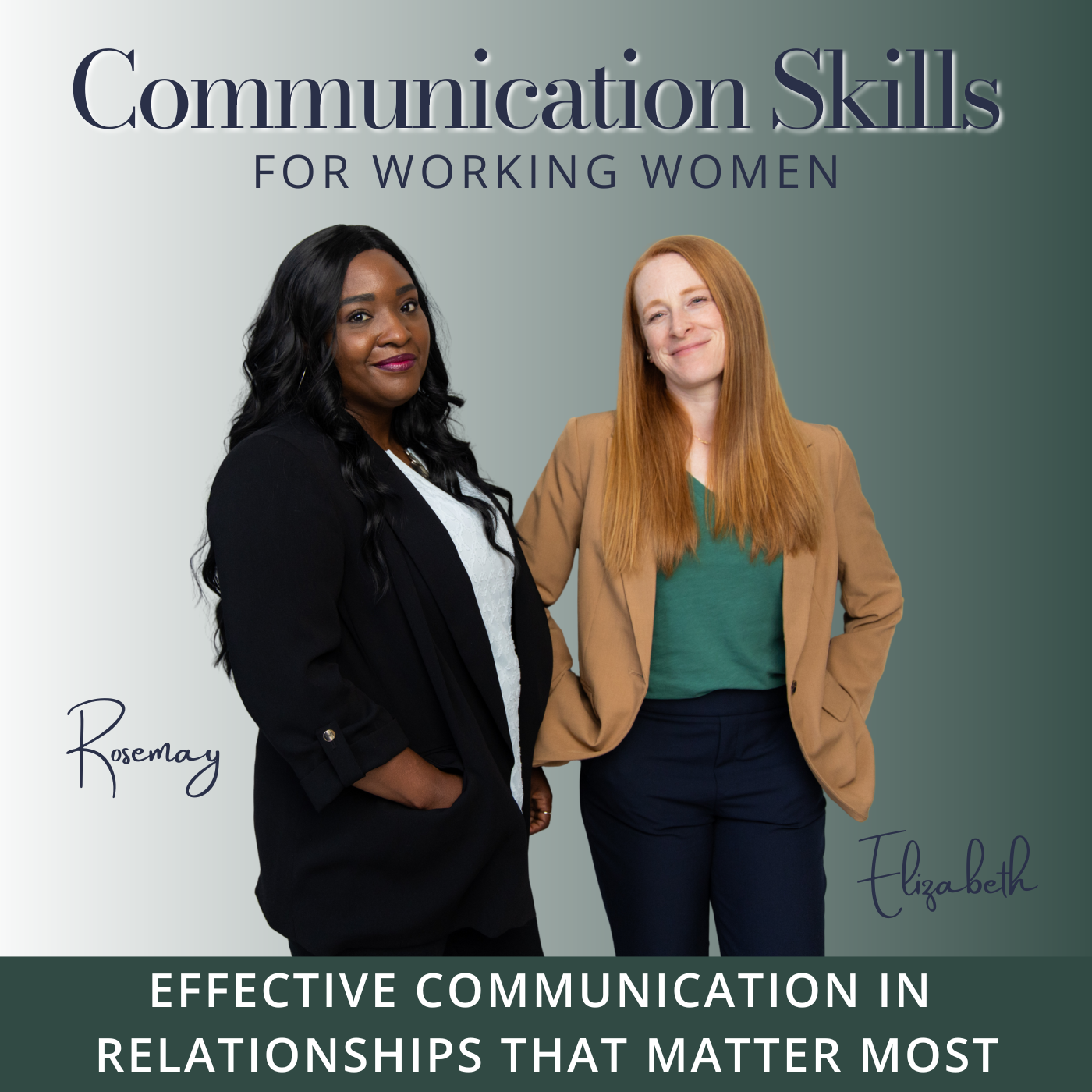
by Elizabeth Amorino, Certified Coach and Facilitator; Rosemay Webster, Licensed Therapist, PhD Candidate
Hi! We are Elizabeth and Rosemay two college friends.Rosemay has lived all over the world working in the field of psychology while Elizabeth has worked in organizational communication. Despite our different backgrounds we both struggled with communication skills. Unknowingly we both were trying so hard to be the women we thought we were ‘supposed’ to be. Compliant, agreeable, and kind. After years of consistently feeling unfulfilled, silenced and at odds within ourselves we individually found the confidence that comes through applying simple, yet effective communication skills. No more walking on eggshells or worrying about burning bridges. We’re excited to share what we’ve learned with you! Are you ready to learn skills to make you a calm, confident communicator at work and at home so you can show up the relationships that matter most to you? Join us and remember Speak Clearly & Listen Bravely.Connect with us at: [email protected] Webster on Link
-
73
068 I Jackie Phichith : Why Achievement Isn’t Enough (And What It Actually Means to Thrive)
🎁 FREE WORKSHOP: Thriving Through Transitions Are you entering a new chapter of life and wondering how to navigate the changes while still showing up for everyone around you? Join Elizabeth and Rosemay for Thriving Through Transitions, a FREE 60-minute workshop created for women navigating change and uncertainty. Choose the Time That Works for You: Monday, September 28 6:00 PM Mountain | 8:00 PM Eastern Thursday, October 1 8:00 PM Mountain | 10:00 PM Eastern Can't attend live? Register for the replay! 👉 REGISTER HERE Please share this workshop with a woman who may be navigating a major life transition right now. What You’ll Learn in this weeks episode: Why achievement and thriving are not the same thing How external validation disconnects you from your worth The shift from proving yourself to trusting yourself Guest: Jackie Phichith is a human behavior and transformation expert with 19 years of experience in leadership development and organizational change, helping individuals and organizations build more human-centered, resilient cultures. Insights from the episode: 👉 “People don’t need more achievement. They need to reconnect to their worth.” 👉 “You are not broken.” 👉 “The brilliance was always within” Connect with Jackie: LinkedIn: www.linkedin.com/in/jacquelinephichith Website: www.thelumenary.live
-
72
067 I Thriving Through Transitions : How to Communicate When Life Is Changing
🎁 FREE WORKSHOP: Thriving Through Transitions Are you entering a new chapter of life and wondering how to navigate the changes while still showing up for everyone around you? Join Elizabeth and Rosemay for Thriving Through Transitions, a FREE 60-minute workshop created for women navigating change and uncertainty. Choose the Time That Works for You: Monday, September 28 6:00 PM Mountain | 8:00 PM Eastern Thursday, October 1 8:00 PM Mountain | 10:00 PM Eastern Can't attend live? Register for the replay! 👉 REGISTER HERE Please share this workshop with a woman who may be navigating a major life transition right now. Thriving Through Transitions: How to Communicate When Life Is Changing What if the hardest part of a life transition isn’t the change itself—but figuring out how to communicate while you’re going through it? Maybe you’re starting a new job, becoming a mom, getting married, moving, watching your children leave home, caring for aging parents, experiencing loss, navigating a relationship change, or simply realizing that the life you’re living no longer quite fits. Transitions can be exciting, but they can also leave you feeling uncertain, overwhelmed, disconnected, or unsure of what you need. And here’s the challenge: life doesn’t stop just because you’re going through a major transition. You still have to show up at work. Answer the email. Have the difficult conversation. Communicate with your spouse, children, friends, coworkers, and boss. So how do you communicate clearly when you’re still trying to figure things out yourself? In this midweek episode of Communication Skills for Working Women, Elizabeth and Rosemay introduce their upcoming FREE Thriving Through Transitions Workshop and share two practical communication skills you can start using right now. In This Episode, You’ll Learn: 1. Get Clear on What Is Changing When everything feels like it is changing at once, it can be difficult to know exactly what is causing your stress or uncertainty. The first step is to name what is actually changing. You don't need to have your entire future figured out before you communicate what you're experiencing. Try saying: “I’m in a season of change right now, and I’m still figuring out what I need.” That simple statement can create clarity—for you and for the people around you. You don't need a five-year plan to communicate where you are today. 2. Say What You Need Once you have some clarity about what is changing, the next step is learning to communicate your needs. This can be especially difficult for women who are accustomed to being the person who handles everything, takes care of everyone else, and keeps things moving. But people can't always know what you need. Instead of hoping someone notices, try: “What would help me right now is…” Or: “I don’t need you to fix this. I just need you to listen.” Or: “I’m not sure exactly what I need yet, but I know I need some support.” Asking for support isn't weakness. It's brave communication. If You're Going Through a Life Transition, Remember: Get clear on what is changing. Say what you need. You don't have to have all the answers before you communicate. Whether you're navigating a career transition, empty nest, motherhood, marriage, divorce, relationship changes, grief, loss, aging parents, a new job, relocation, changing family dynamics, or a shift in your identity, learning how to communicate during uncertainty can help you feel more grounded and connected. And you don't have to figure it out alone. 🎁 FREE WORKSHOP: Thriving Through Transitions Are you entering a new chapter of life and wondering how to navigate the changes while still showing up for everyone around you? Join Elizabeth and Rosemay for Thriving Through Transitions, a FREE 60-minute workshop created for women navigating change and uncertainty. We'll go deeper into practical tools to help you: Get clear about what is changing Identify what you need Communicate your needs with confidence Navigate difficult conversations during times of change Stay connected to yourself and the people around you Move forward when you don't have all the answers Choose the Time That Works for You: Monday, September 28 6:00 PM Mountain | 8:00 PM Eastern Thursday, October 1 8:00 PM Mountain | 10:00 PM Eastern Can't attend live? Register for the replay! 👉 REGISTER HERE: [INSERT REGISTRATION LINK] Please share this workshop with a woman who may be navigating a major life transition right now. This Episode Is For You If… You're a working woman who is: Feeling overwhelmed by a major life change Starting a new job or changing careers Navigating an empty nest Adjusting to children growing up or moving out Becoming a mother or adjusting to motherhood Experiencing a relationship or marriage transition Navigating divorce or separation Caring for aging parents Experiencing grief or loss Moving or relocating Questioning your identity or purpose Feeling disconnected from yourself Unsure what you want next Struggling to ask for support Having difficult conversations at work or at home Trying to balance career and family responsibilities Feeling like the life you built no longer fits Wondering what comes next A Question to Consider What is changing in your life right now—and what do you need to communicate about it? You don't need to know exactly what comes next. You can start by getting clear about where you are today. If this episode resonated with you, share it with another woman who might need to hear it right now and leave us a review. Your review helps other working women find the podcast. Thanks for listening to Communication Skills for Working Women. Speak Clearly. Listen Bravely. Connect with us at: [email protected] Rosemay Webster on LinkedIn Elizabeth Amorino on LinkedIn We'd LOVE to hear from you.
-
71
066 I Karen Kaplan shares her 9/11 experience : When You Don’t Know What to Do Next: How to Move Forward Without Having All the Answers
[email protected] Rosemay Webster on LinkedIn Elizabeth Amorino on LinkedIn We'd LOVE to hear from you. What do you do when life changes in an instant and you have no idea what comes next? In this powerful episode of Communication Skills for Working Women, Elizabeth and Rosemay welcome Karen Lynn Kaplan, a speaker, advisor, and learning and development professional with more than 30 years of experience equipping leaders to navigate complexity, change, and uncertainty. Karen shares her deeply personal experience of being in New York City on September 11, 2001, and the lessons she carried forward from that experience. Her story opens the door to a conversation about something many working women face every day: How do you move forward when you don't have all the answers? Karen also introduces her IMPACT framework, a practical roadmap designed to help leaders turn complexity, chaos, and change into clear action and meaningful results. In This Episode, You’ll Discover: How to navigate uncertainty when circumstances are outside your control How to recognize when your intuition is speaking versus when your thoughts are taking over Why you don’t need to have everything figured out before taking the next step How movement can create clarity when you feel stuck A practical framework for turning complexity and change into action How women can lead with greater clarity and confidence A Conversation About Communication, Connection & Thriving At Communication Skills for Working Women, we believe thriving isn't about having everything under control. It's about learning how to communicate clearly, connect authentically, and keep moving forward—even when life doesn't go according to plan. Karen's story offers a powerful reminder that sometimes the path becomes clearer after we take the next step. Meet Karen Lynn Kaplan Karen Lynn Kaplan is a speaker, advisor, and learning and development professional with more than 30 years of experience working with leaders across four continents and the public, private, and nonprofit sectors. She is passionate about equipping women to lead with clarity and confidence. Through strategic insight, practical application, and storytelling, Karen helps leaders navigate complexity, speak to influence, and drive real results. Whether she's on stage or in a meeting room, Karen brings authenticity, energy, and a focus on immediately applicable strategies. She is based in Syracuse, New York. Your Takeaway You don't always get clarity before you move forward. Sometimes, you have to take the next step—and discover the clarity along the way. What is one area of your life where you're waiting for certainty before you move? Connect With Karen Want to learn more about Karen Lynn Kaplan and her work? https://www.karenlynnkaplan.com/ www.linkedin.com/in/karenlynnkaplan Enjoyed This Episode? If this episode resonated with you, follow Communication Skills for Working Women, leave a review, and share this episode with another woman who needs to hear it. Your review and share help more women discover practical communication skills that can help them feel more confident, connected, and capable. Speak Clearly and Listen Bravely.
-
70
065 I Clear Is Kind - But It’s Also Risky (Here’s How to Handle That)
Thriving Through Transition Workshop Register Here Are you going through a transition right now and still expected to work, lead, communicate, and keep it all together? Transitions can be exciting, hard, messy, or all three. And nobody really teaches us how to communicate through them. In this free workshop, we’re going to give you practical communication tools to help you navigate transition without losing yourself in the process. You’ll leave with a simple way to understand what’s happening, identify where communication is getting stuck, and know what to say next. So if you’re navigating a change big or small we’d love to have you join us. It’s free, it’s practical, and you’ll walk away with something you can actually use. Connect with us at: [email protected] Rosemay Webster on LinkedIn Elizabeth Amorino on LinkedIn We'd LOVE to hear from you. What You’ll Learn: Why clarity feels risky in real conversations How the “Acceptability Trap” impacts your communication How to stay grounded while feeling discomfort What to say when you need to be clear—even when it’s hard Go-To Phrases: 👉 “This feels uncomfortable—and that’s okay.” 👉 “Here’s what I think…” 👉 “What’s important to me is…” 👉 “That’s my perspective.” Action Step: Say one clear sentence in a moment that feels uncomfortable. CTA: Share this episode + leave a review to help others find the show. Thanks for listening! Remember - Speak Clearly and Listen Bravely.
-
69
064 I How to Stay Calm in Hard Conversations (Even When Emotions Rise)
Connect with us at: [email protected] Rosemay Webster on LinkedIn Elizabeth Amorino on LinkedIn We'd LOVE to hear from you. What You’ll Learn: Why emotions disrupt communication How to recognize when you’re getting reactive A 3-step process to stay grounded in real time Simple phrases to respond clearly under pressure Go-To Phrases: 👉 “I’m getting activated.” 👉 “Let me take a second.” 👉 “Here’s what I’m seeing…” 👉 “What’s important to me is…” Action Step: In your next hard conversation, pause once and give one clear response. CTA: Share this episode + leave a review to help others find the show. Thanks for listening! Remember - Speak Clearly and Listen Bravely.
-
68
063 I 3 Phrases to Stop Using at Work to be Clear Without Sounding Harsh
Connect with us at: [email protected] Rosemay Webster on LinkedIn Elizabeth Amorino on LinkedIn We'd LOVE to hear from you. What You’ll Learn in todays epidsode: Common phrases that weaken your communication Why softening language reduces clarity Simple swaps to sound more confident and direct Phrase Swaps: ❌ “I just…” → ✅ Remove it ❌ “I feel like…” → ✅ State the thought directly ❌ “Does that make sense?” → ✅ “What questions do you have?” Action Step: Remove one softening phrase today and notice the difference.
-
67
062 I Feeling Overwhelmed? The Secret to Clear Communication When Your Brain Is Overloaded
Connect with us at: [email protected] Rosemay Webster on LinkedIn Elizabeth Amorino on LinkedIn We'd LOVE to hear from you. What You’ll Learn: How mental overload impacts clarity A simple 3-step reset for real-time communication How to stop rambling and start simplifying Go-To Phrases: 👉 “I’m overloaded—I need a second.” 👉 “The main point is…” 👉 “The key thing here is…” 👉 “That’s what I’m seeing.” Action Step: In your next conversation, reduce your message to one clear thought. CTA: Share this episode + leave a review to help others find the show.
-
66
061 I Dr. Rene Roberts : Connecting with Your Story to Communicate in the Relationships that Matter Most
Connect with Us [email protected] Rosemay Webster on LinkedIn Elizabeth Amorino on LinkedIn What You’ll Learn: Why your setbacks are not disqualifications—but qualifications How to stop hiding your story and start using it as an advantage Guest: Dr. Rene Roberts is a board-certified Family Medicine physician and transformational speaker who empowers individuals to turn setbacks into their greatest advantage. Through her L.Y.M.I.T.S. Method™, she helps people communicate their worth even when the system says no. Connect with Dr. Rene: Website: www.drrenemd.com Instagram: @drrenemd
-
65
060 I Dr. Sweta : What You Wear Impacts How You Communicate (More Than You Think)
Connect with us: [email protected] Rosemay Webster on LinkedIn Elizabeth Amorino on LinkedIn What You’ll Learn: How clothing can support confidence, regulation, and self-expression Why connection to yourself impacts how you communicate A new way to think about presence, embodiment, and influence Guest: Dr. Sweta Chawla is a leadership coach, speaker, and facilitator who helps professionals reconnect to themselves and lead with greater impact through her Leadership Beyond the Ladder framework. Connect with Sweta: Website: www.drswetachawla.com LinkedIn: http://linkedin.com/in/drswetachawla Instagram: https://www.instagram.com/drswetachawla/ Ebook: https://www.drswetachawla.com/free-book
-
64
059 I Dr. Andrea Wojnicki : Do the words 'Tell Me About Yourself' Induce Anxiety? How to Introduce Yourself in 3 Simple Steps
Connect with us: [email protected] Rosemay Webster on LinkedIn Elizabeth Amorino on LinkedIn We'd LOVE to hear from you. What You’ll Learn: A simple structure (Present–Past–Future) to confidently introduce yourself Why accomplished women often undersell themselves—and how to change that How to think about personal brand as “being yourself on purpose” Guest: Dr. Andrea Wojnicki is an executive communication coach, Harvard Business School doctorate, and author of one of the most downloaded Harvard Business Review articles, “A Simple Way to Introduce Yourself.” She helps leaders build confidence and communicate clearly through practical frameworks. Connect with Andrea: Website: https://www.talkabouttalk.com/communication-coach/ LinkedIn: https://www.linkedin.com/in/andreawojnicki
-
63
058 I When You’re Put on the Spot and Your Brain Freezes. Try This Instead
Connect with us at: [email protected] Rosemay Webster on LinkedIn Elizabeth Amorino on LinkedIn We'd LOVE to hear from you. Episode Summary: Have you ever been put on the spot in a meeting or conversation and suddenly your mind goes blank? You know the moment. Someone turns to you and says, “What do you think?” And instantly, the pressure hits. Your brain starts racing: “Say something smart…” “Don’t mess this up…” “Why can’t I think right now?” So you either overthink, ramble, or say something you don’t fully mean only to think of the perfect response hours later. For many working women, this experience creates communication anxiety, especially in high-pressure moments at work or in important relationships. In this episode, we break down why your brain freezes when you’re put on the spot and give you a simple, practical mental script you can use in real time to respond with clarity and confidence. What You’ll Learn: Why your mind goes blank when you’re put on the spot in meetings or conversations How pressure and communication anxiety affect your ability to think clearly The difference between reacting and responding under pressure A simple 3-step mental script to organize your thoughts quickly How to stop rambling and speak clearly in high-stakes moments Practical phrases to help you feel more confident speaking up at work Who This Episode Is For: This episode is for working women who: Freeze or feel anxious when asked to speak unexpectedly Struggle with overthinking or rambling under pressure Want to improve communication skills in meetings and professional settings Are navigating leadership roles, career transitions, or increased visibility Want to feel more confident, clear, and in control when speaking in the moment Key Takeaways: 1. You’re not bad at thinking, you’re overloaded under pressure When you’re put on the spot, your brain shifts into protection mode. It’s trying to avoid judgment, mistakes, or saying the wrong thing which is why your mind either goes blank or into overdrive. 👉 The goal isn’t to think faster. It’s to have a simple structure to follow. 2. Buy yourself a moment before you respond Pausing is one of the most powerful communication skills you can use in high-pressure situations. 👉 Try: “That’s a good question—let me think for a second.” “Give me a moment to think about that.” This creates space to think clearly and signals confidence not hesitation. 3. Give one clear thought don’t say everything at once When you’re overwhelmed, you may try to organize your thoughts while speaking which leads to rambling or overexplaining. 👉 Try: “My initial thought is…” “The key thing I’m seeing is…” Focus on one clear point. You can always add more later. 4. Stay grounded don’t weaken your response After you speak, silence can feel uncomfortable. That’s when people often backtrack or soften their message. 👉 Try: “That’s my initial take.” “That’s where I’d start.” “Curious what others are thinking.” This keeps you engaged without undoing your clarity or confidence. The Core Shift: When you’re put on the spot, the pressure you feel isn’t a sign that you’re unprepared. It’s a signal that your brain is trying to protect you from judgment. But you don’t need to perform perfectly in the moment. You need a simple way to respond clearly. When you use a structured approach, you move from panic → to clarity and start building real confidence in how you communicate at work and in your relationships. Action Step: Before your next meeting or conversation, write down one simple sentence: 👉 “My initial thought is…” Practice saying it out loud. So when you’re put on the spot, you’re not starting from scratch—you have something steady to rely on. Go-To Phrases: “Let me think for a second.” “My initial thought is…” “The key thing I’m seeing is…” “That’s my take.” Connect & Share: If this episode resonated with you, share it with a friend who feels pressure when speaking up or struggles with communication anxiety in meetings. Leaving a review helps more working women learn how to think clearly, speak confidently, and respond with clarity in the moments that matter most. Closing Thought: Speak Clearly and Listen Bravely.
-
62
057 I What to Say When You Don’t Agree (Without Over-Explaining)
Connect with us at: [email protected] Rosemay Webster on LinkedIn Elizabeth Amorino on LinkedIn We'd LOVE to hear from you. What You’ll Learn: Why over-explaining weakens disagreement How to clearly express a different opinion A simple structure for speaking up in meetings Real phrases to use in the moment Go-To Phrases: 👉 “I see it differently.” 👉 “I don’t think this is the right direction.” 👉 “I think [clear point] because [one reason].” 👉 “That’s my perspective.” Action Step: Use the 3-part disagreement structure in your next conversation.
-
61
056 I How to Speak Up in Meetings Without Second - Guesing Yourself
Connect with us at: [email protected] Rosemay Webster on LinkedIn Elizabeth Amorino on LinkedIn We'd LOVE to hear from you. Episode Title: How to Speak Up in Meetings Without Second-Guessing Yourself What You’ll Learn: Why second-guessing stops you from speaking up How to move from thought → speech faster What to say when you’re unsure How to stay clear even when doubt shows up Go-To Phrases: 👉 “I want to add something here.” 👉 “One thought I have is…” 👉 “I’m not fully sure—but here’s what I’m seeing…” 👉 “That’s the main point I wanted to share.” Action Step: Speak once early in your next meeting using a simple entry phrase. Connect with us: [email protected]
-
60
055 I How to Be Direct Without Sounding Harsh (3 Simple Shifts That Actually Work)
Connect with us at: [email protected] Rosemay Webster on LinkedIn Elizabeth Amorino on LinkedIn We'd LOVE to hear from you. Episode Summary: Do you ever hold back from saying what you really mean because you don’t want to sound harsh, rude, or “too much”? For many working women, this is one of the biggest communication challenges especially in moments that matter most. You know what needs to be said, but instead of being direct, you soften your message, over-explain, or hedge your words. And the result? You leave the conversation feeling frustrated… misunderstood… or like you didn’t fully say what you meant. In this episode, we break down why being direct feels so uncomfortable, how communication anxiety and people-pleasing habits affect your delivery, and how to speak clearly at work and in your relationships without damaging trust or connection. You’ll learn 3 simple shifts that help you communicate with clarity and confidence, so you can be both direct and respectful in real conversations. What You’ll Learn: Why working women struggle to be direct in conversations and feedback How fear of sounding harsh leads to unclear communication The difference between clarity and tone (and why they matter) 3 simple communication shifts to help you speak clearly and confidently How to stop overexplaining and say what you mean in fewer words Practical phrases to help you be direct without feeling rude Who This Episode Is For: This episode is for working women who: Hold back from speaking clearly because they don’t want to sound harsh Struggle with people-pleasing, overexplaining, or softening their message Want to improve communication skills at work and in relationships Are navigating leadership, feedback conversations, or difficult discussions Want to feel more confident, respected, and understood when they speak Key Takeaways: 1. Clarity, not harshness, is what creates strong communication Most women try to make their message sound nicer—but the real issue isn’t tone. 👉 It’s lack of clarity. When your message is unclear, people feel it and that’s what creates tension in conversations. 2. Lead with clarity instead of cushioning your message Starting with phrases like “I don’t want this to sound harsh…” or “This might be nothing…” weakens your message before you even say it. 👉 Try: “I want to be direct…” “I noticed something I want to address.” “Here’s what I’m seeing.” Clear communication is respectful communication. 3. Separate what you say from how you say it Many women believe being direct will automatically sound rude but clarity and tone are not the same thing. 👉 Try: “I’d like us to try a different approach here.” “I have a concern I want to talk through.” Keep the message clear and let your tone carry warmth and respect. 4. Say less and trust your message Overexplaining often comes from trying to manage how others will react. But more words don’t create more understanding they create confusion. 👉 Try: “This approach isn’t working.” “We need to change direction here.” Then pause. This is how your message actually lands. The Core Shift: Being direct does not damage relationships. Being unclear does. When you speak clearly without overexplaining or softening you create trust, reduce confusion, and build confidence in how you communicate. You don’t need to say it perfectly. You need to say it clearly. Action Step: In your next conversation, try this simple formula: 👉 “I want to be direct…” 👉 [Say your clear sentence] 👉 Pause No cushioning. No overexplaining. Just clarity with calm delivery. Go-To Phrases: “I want to be direct…” “I noticed something I want to address.” “Here’s what I’m seeing.” “This approach isn’t working.” “We need to change direction here.” Connect & Share: If this episode resonated with you, share it with a friend who struggles to speak up clearly or worries about sounding harsh. Leaving a review helps more working women build communication confidence and learn how to express themselves clearly in the relationships that matter most. Closing Thought: Speak Clearly and Listen Bravely.
-
59
054 I Why Your Ideas Get Ignored (Even When You Say Them Right)
Connect with us at: [email protected] Rosemay Webster on LinkedIn Elizabeth Amorino on LinkedIn We'd LOVE to hear from you. Episode Summary: Have you ever walked away from a conversation thinking, “I said exactly what I meant… so why didn’t they listen to me?” For many working women especially those navigating career transitions, leadership growth, or evolving relationships the frustration isn’t a lack of good ideas. It’s that your ideas are being overlooked, dismissed, or not fully heard in meetings and important conversations. And over time, that leads to something deeper: communication anxiety, second-guessing, and overthinking every interaction. In this episode, we break down what we call the Communication Gap the space between what you’re thinking and how you actually speak up in the moment. You’ll learn why people don’t listen even when you’re saying the right thing, how overexplaining and people-pleasing habits weaken your message, and what to do differently so you can speak clearly, build communication confidence, and be heard at work and in your relationships. What You’ll Learn: Why working women often feel unheard in meetings and everyday conversations How communication anxiety and overthinking impact how others respond to you What creates the gap between your ideas and how they’re received 3 common communication habits that cause your ideas to be ignored How to speak clearly at work without overexplaining or softening your message Practical ways to build communication confidence and stop second-guessing yourself Who This Episode Is For: This episode is for working women who: Feel like people don’t listen or take their ideas seriously Want to improve communication skills in both work and relationships Are navigating career transitions, leadership roles, or personal growth Struggle with overthinking, overexplaining, or people-pleasing communication patterns Want to feel more confident speaking up and being heard in meetings and important conversations Key Takeaways: 1. The problem isn’t your ideas it’s how they come across in the moment When you’re managing how you’re perceived, your communication shifts in real time. This is why strong, thoughtful ideas sometimes get overlooked or ignored. 👉 This is the Communication Gap and it’s especially common for women navigating leadership and career growth. 2. Stop burying your point lead with clarity When you overexplain or build up to your point, people stop listening before you ever get there. 👉 Try: “Here’s my recommendation.” “The key issue is…” Leading clearly is one of the most important communication skills for being heard at work. 3. Remove language that weakens your message Softening phrases like “I just think,” “maybe,” or “I feel like” can make your communication sound uncertain even when you’re confident internally. 👉 Try: “I think we should…” “This isn’t working.” Clear, direct language builds trust and helps others respond to what you’re actually saying. 4. Say it once then let it land Overexplaining is one of the most common communication habits that causes people to tune out or miss your point. 👉 Try: “That’s my recommendation.” “That’s the main point.” Then pause. This is where being heard actually happens. The Core Shift: If people aren’t hearing you, it’s not because you’re not capable, intelligent, or prepared. It’s because overthinking, communication anxiety, and people-pleasing are changing how your message is delivered in real time. When you learn to speak clearly without overexplaining or softening you close the Communication Gap. And that’s how you move from feeling ignored… to being heard, respected, and understood in both your work and your relationships. Action Step: In your next meeting or conversation, practice this: 👉 Say your point in one clear sentence: “Here’s my recommendation…” Then stop. No overexplaining. No softening. No second-guessing. This is how you begin building real communication confidence—and start getting your ideas heard. Connect & Share: If this episode resonated with you, share it with a friend who feels overlooked or struggles with communication anxiety. Leaving a review helps more working women learn how to speak up, reduce overthinking, and be heard in the conversations that matter most. Closing Thought: Speak Clearly and Listen Bravely.
-
58
053 I Why You Can’t Stop Replaying Conversations (And What It’s Really Costing You)
Connect with us at: [email protected] Rosemay Webster on LinkedIn Elizabeth Amorino on LinkedIn We'd LOVE to hear from you. Episode Summary: Do you ever find yourself replaying a conversation long after it’s over analyzing what you said, what they meant, and what you should have done differently? For many working women navigating life and career transitions, this pattern of overthinking can feel constant. It shows up after meetings, difficult conversations, or even everyday interactions leaving you feeling anxious, uncertain, and emotionally drained. In this episode, we break down why your brain replays conversations, what’s really driving that anxiety, and how to stop the Overthinking Loop in the moment. You’ll learn simple, practical tools to help you move from second-guessing yourself to feeling clear, grounded, and confident in your communication. What You’ll Learn: Why women overthink conversations especially during stressful transitions How anxiety impacts communication in relationships and at work The difference between reflection and the “Overthinking Loop” Why your brain replays conversations to manage perception and acceptance A simple 3-step process to stop overthinking in real time How to build self-trust and emotional clarity after difficult conversations This episode is for working women who: Replay conversations and struggle to “turn off” their thoughts Feel anxious about how they’re perceived in relationships or at work Are navigating a transition (career shift, leadership growth, family changes) Tend to overthink, people-please, or second-guess themselves Want more peace, clarity, and confidence in their communication Key Takeaways: 1. Overthinking is about perceived acceptance not clarity When you replay conversations, you’re not actually improving your communication. 👉 You’re trying to manage how you were perceived. 2. Name the Overthinking Loop to interrupt it When you label the pattern, you create space between you and your thoughts. 👉 Try: “This is the Overthinking Loop.” “I’m replaying, not problem-solving.” 3. Separate facts from the story your brain is telling Your brain fills in gaps with assumptions but those are not facts. 👉 Try: “What do I actually know happened?” Then label the rest: “That’s a story not a fact.” 4. Close the loop instead of waiting to feel done Overthinking doesn’t resolve itself you have to decide to stop. 👉 Try: “I’ve thought about this enough.” “There’s nothing else to solve.” “I’m choosing to move on.” The Core Shift: Overthinking isn’t helping you communicate better. It’s trying to protect you from judgment. But what you actually need is closure not more analysis. When you learn to stop the loop, you reduce anxiety, strengthen self-trust, and show up more confidently in your relationships and workplace. Action Step: The next time you catch yourself replaying a conversation, use this 3-step reset: 👉 “This is the Overthinking Loop.” 👉 “What do I actually know happened?” 👉 “I’m done thinking about this.” Then intentionally move on shift your focus, your body, or your environment. Connect & Share: If this episode resonated with you, share it with a friend who overthinks their conversations or struggles with communication anxiety. Leaving a review helps more women find the tools to communicate clearly and confidently. Closing Thought: Speak Clearly and Listen Bravely.
-
57
052 I 3 Ways to Speak So People Actually Listen (Even If You’re Overthinking It)
Connect with us at: [email protected] Rosemay Webster on LinkedIn Elizabeth Amorino on LinkedIn We'd LOVE to hear from you. Episode Summary: If you’re a working woman navigating a career transition, shifting relationships, or increased anxiety at work or home, this episode will help you understand why you’re not being heard, even when you know exactly what you want to say. So many women between find themselves second-guessing their words, softening their message, or over-explaining in important conversations. Not because they lack confidence but because they are trying to be thoughtful, likable, and emotionally aware. In this episode, we break down the subtle communication habits that are quietly undermining your clarity and what to say instead so you can feel more confident, respected, and understood in the moments that matter most. What You’ll Learn: The “Acceptability Trap” and how it keeps you from being heard 3 common indirect communication habits that weaken your message Simple, in-the-moment phrases to help you speak clearly and confidently How to communicate with clarity without sounding harsh or aggressive This episode is for working women who: Are navigating a transition (career change, leadership role, family shift, identity growth) Feel anxious speaking up in meetings or important conversations Struggle with overthinking, people-pleasing, or fear of being misunderstood Want stronger, more confident communication in their relationships and workplace Key Takeaways: 1. Disclaimers weaken your message When you say things like “I could be wrong” or “just a thought,” you unintentionally signal uncertainty. 👉 Try instead: “Here’s what I’m seeing.” “Here’s my recommendation.” 2. Over-explaining dilutes your clarity When you lead with too much context, your main point gets lost. 👉 Try instead: “I recommend we move forward with option B.” (Pause. Let that be enough.) 3. Softening language invites others to override you Turning statements into questions or adding “maybe” reduces your authority. 👉 Try instead: “Let’s move forward with this.” “What questions do you have?” The Core Shift: Clarity is not rude. Clarity is respectful, especially in relationships that matter most. When you communicate clearly, you reduce anxiety, strengthen connection, and build trust in both professional and personal relationships. Action Step: In your next conversation, practice saying one clear sentence without softening or disclaiming: “Here’s what I’m seeing.” “I recommend…” Then pause. Let your words stand. If this episode resonated with you, share it with a friend who is navigating a transition or struggling to be heard. Leaving a review helps more women find the tools to communicate clearly and confidently. Speak Clearly and Listen Bravely.
-
56
051 I Unclear Communication at Work: Simple Communication Skills for Busy Women to Reduce Anxiety, Save Time, and Build Better Connection
Connect with us at: [email protected] Rosemay Webster on LinkedIn Elizabeth Amorino on LinkedIn We'd LOVE to hear from you. What if that moment at work isn’t small… What if it’s actually unclear communication? You’re sitting at your desk, focused, trying to manage your time and get through your to-do list. And then you hear it— A question, just… floating in the room. “Does anyone know where that file is?” “Are we still meeting at 2?” No name. No direction. No eye contact. And suddenly—you pause. Are they talking to me? Am I supposed to answer that? Should I ignore it? And just like that, your focus is broken. This is what unclear communication at work does. It interrupts your time. It increases anxiety at work. And it quietly weakens connection in the workplace. Because when communication is vague, indirect, or not directed to a person—everyone is left guessing. And guessing is exhausting. In this episode, Elizabeth shares a real-life example of how common this is in workplace communication, especially in collaborative or open office environments. Because while it may seem harmless, this kind of indirect communication creates distraction, confusion, and unnecessary mental load—especially for busy, middle-aged working women who are already balancing responsibilities at work and at home. The truth is—most of us were never taught clear, effective communication skills for working women. We were taught to be easygoing. To not interrupt. To keep things casual. But that often leads to unclear professional communication, where no one knows who is responsible, and everyone is managing low-level stress trying to figure it out. If you’ve ever felt distracted, overwhelmed, or slightly on edge in a work environment where communication feels indirect or unclear—this episode will give you simple, practical tools to shift that immediately. You’ll learn how to move from vague, indirect communication to clear communication, so you can reduce anxiety, save time, and build stronger connection at work. Because strong communication skills don’t just make you more effective— they help you feel calmer, more confident, and more connected in your daily life. 💡 In This Episode, You’ll Learn: Why unclear communication in the workplace increases anxiety and disrupts focus How indirect communication wastes time and creates confusion A simple shift to make your communication clear, direct, and effective How to build connection at work through intentional communication How to strengthen professional communication skills without adding more to your plate ✨ A Simple Shift to Try Today Clear is kind. Unclear is unkind. Direct is kind. Indirect is unkind. Say the name. Ask the question clearly. Create clarity instead of confusion. Because small shifts in communication create big shifts in how you experience your workday. 🎧 Share This Episode If this episode helped you rethink workplace communication and gave you a simple way to reduce anxiety at work, share it with a friend or colleague who wants clearer communication and stronger connection in their day. 🌿 Our Mission We help working women build communication skills, strengthen connection, and thrive without adding more overwhelm or taking more time than they have. Speak clearly… and listen bravely. Connect with us at [email protected]
-
55
050 I Passive Aggressive Emails: Simple Communication Skills for Busy Women Managing Anxiety, Connection, and Time
Connect with us at: [email protected] Rosemay Webster on LinkedIn Elizabeth Amorino on LinkedIn We'd LOVE to hear from you. What if that email didn’t bother you because you’re “too sensitive”… What if it actually wasn’t clear communication? You open your inbox, read the message, and pause. It sounds polite. It looks professional. But something about it feels off. So you reread it. And reread it again. Trying to figure out the tone. Trying to decide if you’re overreacting. Trying to figure out how to respond without making things worse in a professional setting. And suddenly, a simple email has taken your time, your energy, and your peace. This is what passive-aggressive emails do in the workplace. They create confusion instead of clear communication. They increase anxiety at work instead of building connection. And for busy women, they quietly drain the time and emotional bandwidth you don’t have to spare. In this episode, Elizabeth shares a real-life experience with passive-aggressive communication and how quickly it can impact your emotions, your confidence, and your ability to respond with strong professional communication skills. Because here’s the truth—most of us were never taught effective communication skills for working women. We were taught to be polite. To keep the peace. To not say the wrong thing. But that often leaves us stuck in unclear workplace communication, overthinking simple emails, and navigating difficult conversations at work without a clear strategy. If you’ve ever struggled with unclear tone, indirect feedback, or trying to maintain connection at work while managing your own emotional response, this episode will give you simple, practical tools you can use immediately. You’ll learn how to recognize passive-aggressive patterns, regulate your reaction, and respond with calm, confident clear communication—so you can protect your time, reduce stress, and show up with stronger emotional intelligence at work. Because better communication isn’t just about saying the right thing. It’s about creating clarity, building connection, and managing your energy in the middle of a full, busy life. 💡 In This Episode, You’ll Learn: How to recognize passive-aggressive emails in workplace communication Why indirect communication increases anxiety at work and wastes time A simple way to pause and regulate before responding How to use clear communication to handle difficult conversations at work How to strengthen communication skills while maintaining connection and professionalism ✨ A Simple Shift to Try Today You’re not responsible for how others communicate. But you are responsible for how you respond. Pause. Get clear. Then respond in a way that reflects your values, not your emotions. 🤝 Connect With Us We’d love to stay connected with you as you grow your communication skills, strengthen connection, and create more peace in your work and life. Follow along and reach out: Instagram: @YourPodcastHandle Facebook Group: Communication Skills for Working Women Email: [email protected] Come share your experience—have you navigated passive-aggressive communication at work? 🎧 Share This Episode If this episode helped you feel more confident navigating workplace communication and managing anxiety at work, share it with a friend or colleague who wants stronger communication skills and more ease in their day. 🌿 Our Mission We help working women build communication skills, deepen connection with themselves and others, and thrive without adding more overwhelm or taking more time than they have. Speak clearly… and listen bravely. Connect with us at [email protected]
-
54
049 I When Power Talks Down: Navigating the Anxiety of a Demeaning Coworker in a High Position
Connect with us at: [email protected] Rosemay Webster on LinkedIn Elizabeth Amorino on LinkedIn We'd LOVE to hear from you. What if the hardest part of your job… isn’t the workload but the way someone with power speaks to you? You’re in a meeting. You share an idea. And then it happens— A dismissive tone. A sarcastic comment. An interruption that shuts you down. No one says anything. The meeting moves on. But internally? You pause. You replay what just happened. You start adjusting how you show up. Maybe I should say less. Maybe I should prepare more. Maybe I should just stay quiet. This is what happens when power talks down in the workplace. And for many working women, this dynamic creates a very real layer of anxiety at work, self-doubt, and disconnection from your own voice. Because it’s not just about their behavior— It’s about how you start managing yourself around their behavior. Editing your voice. Second-guessing your ideas. Shrinking without even realizing it. In this episode, we unpack what it really means to navigate demeaning or condescending communication in the workplace, especially when it comes from someone in a higher position. And we do something different— We don’t just talk about what they are doing. We help you understand what’s happening internally for you. Because strong communication skills for working women aren’t just about knowing what to say— they’re about understanding the patterns that keep you silent, and learning how to shift them. You’ll also hear a powerful and honest story from Elizabeth—reflecting on a moment where she recognized this behavior in herself. A moment where her tone, her words, and her delivery caused others to second-guess themselves and hold back. And while that realization was difficult—it became a turning point. Because it led to growth. To awareness. And to a deeper commitment to clear, respectful communication—both at work and at home. This episode is not about blame. It’s about awareness, ownership, and learning how to navigate power dynamics in the workplace with clarity and self-respect. Because the truth is—we are all, at different times, on both sides of power. Using the Immunity to Change framework, we walk through a step-by-step approach to help you understand: Why you may be holding back in moments of tension What fears are driving your silence What hidden commitments are keeping you “safe” And how to begin shifting your communication—without escalating conflict 💡 In This Episode, You’ll Learn: How condescending communication in the workplace impacts confidence and connection Why women often adapt by shrinking, over-preparing, or staying quiet How internal fears increase anxiety at work and limit professional communication How to identify hidden commitments that keep you stuck in silence Simple, practical ways to communicate clearly and confidently in high-pressure situations ✨ A Simple Shift to Try Today You don’t need to change everything at once. Start small. In your next meeting or interaction: Say one idea clearly—without softening or over-explaining Pause instead of shrinking if interrupted Return to your point calmly: “I’d like to finish what I was saying.” Because clear communication is not confrontation— it’s self-respect in action. And when you begin to speak with even 10% more clarity and directness, you start to rebuild trust in your own voice. 🎧 Share This Episode If you’ve ever experienced difficult workplace communication or felt the impact of power dynamics at work, share this episode with a friend or colleague who may need support, language, and tools for navigating it. 🌿 Our Mission We help working women build communication skills, strengthen connection, and thrive, while managing anxiety, navigating complex workplace dynamics, and showing up with clarity, confidence, and self-trust. Until Next Time Speak clearly… and listen bravely.
-
53
048 I “Is There Space for Me Here?” Navigating Identity, Race, and Growth at Work
Connect with us at: [email protected] Rosemay Webster on LinkedIn Elizabeth Amorino on LinkedIn We'd LOVE to hear from you. What if the exhaustion you feel at work… isn’t about the workload? What if it’s coming from the constant effort of managing how you’re perceived? You walk into a meeting and immediately start thinking— How should I say this? How will this land? Am I being too direct… or not direct enough? You adjust your tone. You filter your words. You read the room before you even speak. And over time… It becomes exhausting. This is something many working women experience in workplace communication—especially when navigating identity, race, and unspoken expectations in professional environments. Because sometimes the challenge isn’t just doing your job. It’s figuring out how to show up in a space that may not have been designed with you in mind. In this episode, we talk about what it really means to grow professionally while navigating power dynamics in the workplace, identity, and the pressure to fit into existing norms of professional communication. If you’ve ever: Felt like you had to carefully manage your tone, your presence, or your reactions Worried about being seen as “too much” or “not enough” at the same time Questioned whether you can truly be yourself and still succeed This episode will give you language, clarity, and a new way to think about your experience. Because this isn’t just about confidence. This is about identity, communication skills, and development inside real-world systems. You’ll hear a powerful story about “Danielle”—a capable, thoughtful professional who described her workday as constantly calculating how she was coming across. Not just what she said—but how it might be interpreted. If she was direct, she worried about being labeled. If she was expressive, she worried about being dismissed. If she spoke up, she risked being seen as too much. If she stayed quiet, she felt invisible. And over time, her workplace communication became a performance—carefully managed, constantly adjusted. Externally, it worked. She was seen as professional and reliable. But internally? She was exhausted. Because navigating identity in the workplace often means balancing: Authenticity and acceptance Confidence and perception Connection and self-protection And that creates a unique kind of anxiety at work—one that isn’t always visible, but deeply felt. This episode introduces a powerful shift: Moving from automatic adaptation to intentional choice. Because strong communication skills for working women aren’t about shrinking to fit the environment— they’re about understanding the environment and choosing how you show up within it. 💡 In This Episode, You’ll Learn: How workplace norms and expectations shape professional communication Why managing perception can increase anxiety at work and emotional exhaustion How identity and race impact communication and connection in the workplace Why adapting your communication style is a skill—not a weakness How to move from automatic code-switching to intentional, strategic communication ✨ A Simple Shift to Try Today Instead of trying to change everything—start small. Choose one moment in your day to show up with slightly less self-editing. Share your idea without over-rehearsing. Let your natural tone come through. Not everywhere. Not all at once. But intentionally. Then reflect: What actually happened? What did I expect to happen? What felt different? Because confidence, clarity, and connection don’t come from waiting for the perfect environment— they come from practicing intentional communication within real ones. 🎧 Share This Episode If this episode gave you language for something you’ve felt but haven’t been able to name, share it with a friend or colleague navigating identity, communication, and connection at work. 🌿 Our Mission We help working women build communication skills, strengthen connection, and thrive, while managing anxiety, navigating complex workplace dynamics, and showing up with clarity and confidence. Until Next Time Speak clearly… and listen bravely.
-
52
047 I Navigating Power Without Losing Yourself: Growth Beyond People-Pleasing
Connect with us at: [email protected] Rosemay Webster on LinkedIn Elizabeth Amorino on LinkedIn We'd LOVE to hear from you. What if people-pleasing isn’t a flaw… What if it’s actually a stage of development? You say yes when you want to say no. You keep the peace instead of speaking up. You think about how everyone else will feel—before you even consider what you need. And over time… You start to feel tired. Resentful. Disconnected from yourself. This is the reality for so many working women navigating workplace communication, relationships, and expectations—especially when you care deeply about connection at work and at home. Because people-pleasing often looks like strong professional communication skills on the surface. You’re helpful. Flexible. Easy to work with. But underneath, it can create: Burnout Anxiety at work And a loss of clarity around your own needs, values, and boundaries In this episode, we explore how people-pleasing is not weakness—it’s part of adult development. Many women are socialized to prioritize harmony, relationships, and being accommodating—especially in multicultural environments where respect, collectivism, and connection are deeply valued. But over time, this can lead to unclear communication, difficulty with boundaries, and challenges navigating power dynamics in the workplace. Because when your focus is always on others, your own voice gets quieter. And eventually, you may find yourself asking: “What do I actually want?” This episode introduces a powerful shift—from people-pleasing to self-authorship. Learning how to stay connected in relationships—without losing yourself. If you’ve ever struggled with setting boundaries at work, avoiding difficult conversations, or managing anxiety around how others will respond, this episode will give you a clear, practical path forward. Because strong communication skills for working women aren’t just about being kind— they’re about being clear, direct, and grounded in your values. 💡 In This Episode, You’ll Learn: Why people-pleasing is part of adult development—not a personal failure How prioritizing harmony over honesty impacts workplace communication Why fear of conflict increases anxiety at work and weakens boundaries How cultural values influence communication styles and decision-making How to build self-authorship and set clear, respectful boundaries ✨ A Simple Shift to Try Today You can care about others… and still have boundaries. Instead of immediately saying yes, try: “I’m not able to take that on right now.” “I need more time to think about that.” Clear. Respectful. Direct. Because boundaries are not a rejection of connection— they are what make healthy connection possible. And when you communicate with clarity and intention, you don’t lose relationships— you strengthen them. 🎧 Share This Episode If this episode helped you rethink people-pleasing, boundaries, and communication at work, share it with a friend or colleague who wants stronger communication skills, less anxiety, and more confidence navigating relationships. 🌿 Our Mission We help working women build communication skills, strengthen connection, and thrive, while managing anxiety, protecting their time, and showing up with clarity and confidence in both work and life. Until Next Time! Speak clearly… and listen bravely.
-
51
046 I Why Confidence Feels Different for Women: A Developmental Perspective
Connect with us at: [email protected] Rosemay Webster on LinkedIn Elizabeth Amorino on LinkedIn We'd LOVE to hear from you. What if that moment at work isn’t small… What if it’s actually unclear communication? You’re sitting at your desk, focused, trying to manage your time and get through your to-do list. And then you hear it— A question, just… floating in the room. “Does anyone know where that file is?” “Are we still meeting at 2?” No name. No direction. No eye contact. And suddenly—you pause. Are they talking to me? Am I supposed to answer that? Should I ignore it? And just like that, your focus is broken. This is what unclear communication at work does. It interrupts your time. It increases anxiety at work. And it quietly weakens connection in the workplace. Because when communication is vague, indirect, or not directed to a person—everyone is left guessing. And guessing is exhausting. In this episode, Elizabeth shares a real-life example of how common this is in workplace communication, especially in collaborative or open office environments. Because while it may seem harmless, this kind of indirect communication creates distraction, confusion, and unnecessary mental load—especially for busy, middle-aged working women who are already balancing responsibilities at work and at home. The truth is—most of us were never taught clear, effective communication skills for working women. We were taught to be easygoing. To not interrupt. To keep things casual. But that often leads to unclear professional communication, where no one knows who is responsible, and everyone is managing low-level stress trying to figure it out. If you’ve ever felt distracted, overwhelmed, or slightly on edge in a work environment where communication feels indirect or unclear—this episode will give you simple, practical tools to shift that immediately. You’ll learn how to move from vague, indirect communication to clear communication, so you can reduce anxiety, save time, and build stronger connection at work. Because strong communication skills don’t just make you more effective— they help you feel calmer, more confident, and more connected in your daily life. 💡 In This Episode, You’ll Learn: Why unclear communication in the workplace increases anxiety and disrupts focus How indirect communication wastes time and creates confusion A simple shift to make your communication clear, direct, and effective How to build connection at work through intentional communication How to strengthen professional communication skills without adding more to your plate ✨ A Simple Shift to Try Today Clear is kind. Unclear is unkind. Direct is kind. Indirect is unkind. Say the name. Ask the question clearly. Create clarity instead of confusion. Because small shifts in communication create big shifts in how you experience your workday. 🎧 Share This Episode If this episode helped you rethink workplace communication and gave you a simple way to reduce anxiety at work, share it with a friend or colleague who wants clearer communication and stronger connection in their day.
-
50
045 I You’re Not “Too Much”: Understanding Identity Development at Work
Connect with us at: [email protected] Rosemay Webster on LinkedIn Elizabeth Amorino on LinkedIn We'd LOVE to hear from you. Show Notes In this episode, we cover: Adult identity development and workplace expectations Multicultural tensions in professional environments How to integrate—not split—your identity Practical ways to show up authentically Homework: Notice one moment this week where you adjust yourself—pause and ask why.
-
49
044 I The Hidden Cost of People-Pleasing in Professional and Personal Relationships
Connect with us at: [email protected] Rosemay Webster on LinkedIn Elizabeth Amorino on LinkedIn We'd LOVE to hear from you. Have you ever considered? Where do I tend to over-adjust in workplace interactions? When I communicate with certain people, do I feel like myself—or slightly off? What is my actual goal in these interactions: clarity or approval? Am I softening, over-explaining, or tiptoeing to manage someone else’s reaction? What am I worried would happen if I were more direct? What assumptions am I making about their power vs. mine? What would it sound like to communicate with both clarity and self-respect? In this episode, we’re unpacking how to communicate effectively when you’re navigating workplace gatekeepers—those individuals who hold influence without formal authority. If you’ve ever felt the need to manage someone’s mood, soften your message, or walk away from an interaction feeling slightly off, this conversation will resonate. We introduce a practical framework for staying grounded in unequal power dynamics—so you can communicate with clarity and self-respect without becoming overly accommodating or reactive. This episode is for professionals who want to feel more steady, aligned, and authentic in their communication—even in tricky or high-pressure interactions. Follow us on Facebook: Communication Skills for Working Women Share this episode with a colleague or friend navigating office dynamics Leave a review to help more women build confident, grounded communication If this episode resonated, your next step is simple: Pay attention to one interaction this week where you feel the urge to over-adjust. Instead of changing your message, practice delivering it with: More clarity More steadiness Less over-explaining This is how you build self-trust in real time. Remember: You don’t need to overpower the dynamic. You just need to stay anchored in yourself. Speak Clearly & Listen Bravely
-
48
043 I How Your Presence Shapes Your Relationships, Communication, and Confidence
Connect with us at: [email protected] Rosemay Webster on LinkedIn Elizabeth Amorino on LinkedIn We'd LOVE to hear from you. Have you ever walked away from a conversation thinking "that wasn't really me" — but you're not sure exactly what went wrong? Do you ever find yourself adjusting your tone, your words, or your whole communication style just to match the energy in the room — even when it doesn't feel right? Have you ever wanted to show up more genuinely but felt like the environment around you made that impossible? If any of that resonates, this episode is going to hit home. This episode is not about managing other people or changing the environment around you. It is about something quieter and honestly more powerful — learning to stay aligned with yourself no matter what is happening around you. Key reminder: Value-consistent communication is an internal practice before it's an external skill. This week, notice one conversation where you find yourself adjusting to the room instead of showing up as yourself. Before you speak, ask — what would it look like to say this in a way that actually feels like me? You don't have to change the environment. You don't have to say anything dramatic. Just make one small move toward alignment and notice how it feels. At Communicate Connect Thrive, we believe that confident communication starts on the inside — and this episode is the clearest example of that. When your words match your values, something settles. You walk away from conversations feeling whole instead of slightly off. That is what we are building toward together. If this episode spoke to you, share it with someone who is working on showing up more authentically — and leave us a review so more women can find this community. Connect with us! Instagram: @communicationskillsforwomen Website: communicateconnectthrive.com Email: [email protected] Until next time — speak clearly and listen bravely.
-
47
042 -1 I Get Curious : Feelings aren't Facts they are Information
Connect with us at: [email protected] Rosemay Webster on LinkedIn Elizabeth Amorino on LinkedIn We'd LOVE to hear from you. Feelings Aren't Facts
-
46
042 I Feelings Aren’t Facts: How to Stop Letting Emotions Control Your Communication
Have you ever read a text or email and immediately felt defensive — only to reread it later and realize it was completely neutral? Have you ever let a feeling — frustration, self-doubt, fear — make a decision for you before you had all the facts? Have you ever stayed quiet in a meeting, assumed someone was upset with you, or talked yourself out of speaking up — based entirely on how you felt in that moment? If any of that sounds familiar, this episode was made for you. One of the biggest things holding us back in our communication isn't our skills or our environment — it's the stories our feelings tell us before we have all the information. In this episode, we break down a real situation that illustrates exactly what it looks like when emotions hijack our communication — and what it looks like when we catch it in time. This week, notice one moment when a feeling starts writing a story for you before you have all the facts. Before you respond — pause. Reread. Ask yourself what your actual goal is. Then respond from that place instead. At Communicate Connect Thrive, we believe that the path from discomfort to confident communication runs straight through self-awareness — and this episode is exactly that. When you learn to separate how you feel from what is actually true, your communication becomes clearer, your relationships become stronger, and you stop creating problems that were never really there. If this episode resonated with you, share it with someone who needs to hear it — and leave us a review so more women can find this community. Connect with us! Instagram: @communicationskillsforwomen Website: communicateconnectthrive.com Email: [email protected]
-
45
41-1l Managing the Emotions After You Speak Up
Speaking up in high-stakes situations can be exhilarating—and exhausting. In this follow-up mini episode, we explore what happens after you share your voice, especially when you’re in a room where your identity or perspective feels hyper-visible. You’ll learn how to: Recognize and name the emotional activation that happens after speaking up Normalize the “emotional hangover” that often follows risk-taking Reality-check the negative stories your mind may create Anchor your confidence in your values, not others’ reactions Create a simple ritual to close the experience and support your nervous system If you’ve ever replayed a conversation in your head, felt post-speaking anxiety, or worried about how your words landed, this episode gives practical tools to stay grounded, resilient, and on your own side. Tip: Speaking up is a skill, and managing the aftermath is just as important as the act itself. Use these strategies to turn post-speech anxiety into self-support.
-
44
041 I 3 Confidence Shifts for Speaking Up When You Feel Outnumbered
Have you ever walked into a room and immediately felt the weight of being the only one — the only woman, the only person of color, the youngest, the newest? Do you ever monitor yourself so carefully that by the time you decide it's safe to speak, the moment has passed? Have you ever felt like your mistakes carry more weight than everyone else's? Feeling like the only one doesn't mean you're weak — it means you're navigating systems that weren't built with you in mind. This episode gives you practical tools to speak anyway. This week, notice one moment you feel different and stay quiet because of it. Name the worry, identify the commitment, and choose one small experiment. Speak once — just once — before you talk yourself out of it. Communicate Connect Thrive was built for moments exactly like this one. When you feel unseen, out of place, or like you're carrying more than your share — we want to help you find your footing and your voice. That is what this work is all about. Connect with us! Instagram: @communicationskillsforwomen Website: communicateconnectthrive.com Email: [email protected] Until next time — speak clearly and listen bravely. Caste By Isabel Wilkerson
-
43
040-1 I It's Hard to Respect Someone You Don't Agree With - Here's How to Do It Anyway
Communication Skills for Working Women - Facebook Group One Page Miracle Vivid Vision Value the individual even when you don't value their values. People matter, they are important and so are you. Take a deep breath and choose to be the person you want to be, the one that makes you proud, the one 'that fits'. Interested in Coaching? Message us on our Facebook page linked above!
-
42
040 I When Your Values Don’t Match Theirs: 3 Ways to Navigate Hard Conversations With Friends and Family
Have you ever heard someone you love say something harmful and completely frozen — not knowing whether to speak up or let it go? Have you ever stayed silent in a moment like that and replayed it for days? Do you ever feel like speaking your truth in certain relationships could cost you the relationship — or your safety? In this episode we walk through a six-step framework for navigating value misalignment with people you love — without abandoning who you are. Get clear on your goal — before you speak, know why you're speaking Look at what you're already doing — silence, subject-changing, and going along are strategies, not failures Name your worries — "If I speak up I'll lose them" / "If I stay quiet I'm complicit" Identify hidden commitments — what are you actually protecting underneath the worry? Design a small experiment — test your assumptions before assuming the worst Collect data, not self-blame — let evidence guide your next move, not guilt Key reminder: You are not required to risk your safety to preserve someone else's comfort. This week, pick one relationship where values feel misaligned. Work through the six steps on paper or before your next conversation. You don't have to fix anything. You just have to respond in a way that keeps you whole. At Communicate Connect Thrive, we believe clarity and dignity are the foundation of every meaningful conversation — and this framework puts both in your hands. If this resonated, share it with someone who needs it. Connect with us! Instagram: @communicationskillsforwomen Website: communicateconnectthrive.com Email: [email protected] Until next time — speak clearly and listen bravely. Brene Brown - Diary of a CEO Podcast
-
41
39-1 I How to take back your power
In this midweek drop, we explore how to stay grounded in your sense of agency at work—even when the world outside feels overwhelming. When stress is high, everyday workplace dynamics can start to feel intense, urgent, or even threatening. This episode breaks down how to move through those moments with more clarity, steadiness, and self-trust. We talk about the difference between power and pressure, why your nervous system may be reacting to more than just what’s happening at work, and how to reclaim small, meaningful moments of choice throughout your day.
-
40
039 I How to Hold Your Ground When Power Feels Intimidating
Does your chest tighten the moment you need to bring something to your manager's attention? Do you rehearse conversations with authority figures so many times that you either over-explain or avoid them altogether? Have you ever said nothing — not because you had nothing to say, but because the risk felt too high? Anxiety around authority isn't a professionalism problem — it's a nervous system response. This episode helps you communicate upward with clarity instead of panic. Name your goal — clear, grounded communication, not impressing anyone See what you're doing — over-explaining, apologizing excessively, delaying difficult conversations Name your worries — "I'll look incompetent" / "One wrong move could define me" Identify hidden commitments — staying safe, protecting your image, avoiding mistakes Test your assumptions — "Managers expect perfection" feels true but it's testable Four experiments to try: Lead with the headline Separate facts from feelings Ask for direction, not permission Say your point, stop, and let it land Key reminder: Authority doesn't require self-erasure. Clarity is not disrespect. This week, notice one interaction with authority that triggers anxiety. Name the worry, identify the hidden commitment, and choose one experiment. Communicate once without over-performing. At Communicate Connect Thrive, we believe you can hold both respect and self-trust at the same time — and this episode shows you exactly how. Power doesn't have to produce panic when you have a framework to stand on. Connect with us! Instagram: @communicationskillsforwomen Website: communicateconnectthrive.com Email: [email protected] Until next time — speak clearly and listen bravely.
-
39
038 - 1 I Feeling Evaluated (Judged) in Meetings? 3 Ways to Stay Calm and Communicate Clearly
In this episode you’ll learn: • Why feeling evaluated at work can trigger anxiety—even for experienced professionals • The simple attention shift that helps you regain confidence in meetings • How a quick pause and breath can reset your nervous system • Why having a clear communication goal makes meetings easier to lead • How staying flexible can improve collaboration and outcomes Key takeaway When you feel evaluated, your attention often turns inward. But strong communication happens when you return your focus to the purpose of the conversation. Try this in your next meeting Pause and breathe – regulate your body before responding Reconnect to your goal – ask: What am I here to accomplish? Stay flexible – allow new ideas and perspectives to emerge Remember You are doing better than you think. Speak clearly. And listen bravely.
-
38
038 I How to Stay Calm When You’re Being Judged, Reviewed, or Assessed
Does hearing "can I give you some feedback?" make your stomach drop before the person even finishes the sentence? Do you replay feedback on a loop long after the conversation is over? Have you ever walked away from feedback convinced it meant you were failing — when it may have just meant you were growing? Spiraling after feedback doesn't mean you're weak — it means your system is treating information like a threat. This episode helps you change that. Name your goal — stay grounded and curious instead of defensive or collapsed See what you're doing — overanalyzing tone, assuming the worst, withdrawing afterward Name your worries — "This confirms I don't belong" / "One mistake could define me" Identify hidden commitments — being seen as competent, not disappointing others Test your assumptions — "Good employees don't need this kind of feedback" is testable Four experiments to try: Ask for scope — how big a priority is this really? Clarify the behavior, not the self Reflect back what you heard Name growth without defensiveness Key reminder: Feedback is information, not identity. This week, notice one moment when feedback triggers anxiety. Pause before interpreting it. Name the worry and the assumption underneath it. Then choose one response experiment and stay curious instead of collapsing. Communicate Connect Thrive is built on the belief that discomfort is the doorway to insight — and nowhere is that more true than in how we receive feedback. This episode gives you the tools to walk through that door with your confidence intact. Connect with us! Instagram: @communicationskillsforwomen Website: communicateconnectthrive.com Email: [email protected] Until next time — speak clearly and listen bravely.
-
37
37 -1 I Power and Dynamics: Why Micoraggressions from Other Women Hurt
In This Episode We Discuss: What microaggressions between women can look like in the workplace Why these moments can feel especially painful or confusing Scarcity culture and the “only one seat at the table” phenomenon Internalized sexism and alignment with dominant workplace norms How race, sexuality, age, motherhood, neurodivergence, and class shape power dynamics among women The difference between intent and impact Moving from competition to collective advancement Key Themes Microaggressions Are Often Subtle but Cumulative Small comments about tone, ambition, appearance, or commitment can reinforce harmful stereotypes and signal who “belongs.” Diversity Changes the Power Conversation Not all women hold the same social power. Intersections of race, sexuality, disability, age, and motherhood status influence workplace experiences. Scarcity Fuels Competition When leadership representation is limited, women may unconsciously compete for proximity to power rather than collaborate. Intent Does Not Erase Impact Even well-meaning comments can reinforce exclusion. Awareness matters. Solidarity Is a Practice Supporting other women requires intention, not assumption. Reflection Questions Have I ever felt smaller after interacting with another woman at work? What specifically shifted? Where might I unconsciously judge other women for being “too much” or “not enough”? How has scarcity culture shaped the way I navigate leadership or visibility? If I hold power in my workplace, how am I using it to amplify others? Practical Takeaways Amplify other women’s ideas in meetings. Interrupt subtle dismissals. Credit contributions publicly. Examine internalized narratives about leadership, tone, and competence. Shift from competition to collaboration. Why This Matters Inclusive cultures aren’t built by accident. They’re built when individuals become conscious of how power moves — and choose to move differently. Diversity isn’t just about representation. It’s about how we distribute voice, validation, and opportunity. When women move from scarcity to solidarity, workplaces change. We would love to connect with you. Facebook: Communication Skills for Working Women Visit our website: communicateconnectthrive.com Email: [email protected]
-
36
037 I Why Workplace Tension Between Women Hits Differently — And How to Handle It
Microaggressions between women in the workplace are often subtle, confusing, and deeply invalidating. In this episode, we explore why they hurt more when they come from another woman—and how to respond with clarity, boundaries, and self-trust. In This Episode, We Cover: Why harm from within the group is harder to name How internalized sexism and scarcity show up relationally Four practical, psychologically grounded responses to microaggressions Why validation matters more than confrontation Key Takeaway: You don’t need to prove harm to protect yourself. Trusting your experience is enough. We would love to connect with you. Facebook: Communication Skills for Working Women Visit our website: communicateconnectthrive.com Email: [email protected]
-
35
036-1 | When the Ask Lands Wrong: How to Ask for Help at Work (Timing & Repair Matter)
We'd love to connect with you in the Facebook group: Communication Skills for Working Women You asked for help. You thought you were clear. And it landed… wrong. The tone shifted. The energy changed. Now you’re wondering if you just made yourself look incompetent. In this short solo episode of Communication Skills for Working Women, we talk about what to do when your ask doesn’t go the way you expected. Because sometimes it’s not incompetence. Sometimes it’s timing. Sometimes it’s stress. Sometimes it’s context you can’t see. And repair is part of professional communication. In This Episode You’ll Learn: Why asking for help can feel high-risk at work How timing affects how your request is received What to do instead of panicking when the energy shifts Why the first attempt is not the final verdict on your competence How to create space and revisit a conversation strategically Four ways to ask for help that signal initiative, not insecurity Four Strategic Experiments to Try at Work 1. Show Your Work Before You Ask “I’ve tried A and B and I’m not getting the result I need. Can you help me understand what I’m missing?” Signals effort. Protects credibility. Invites collaboration. 2. Frame the Ask Around Impact, Not Your Limitation Shift from “I’m confused” to “I want to make sure we get this right.” Leaders respond to outcomes. 3. Ask to Learn the System, Not Just Fix the Moment “I’d love to understand your process so I can handle this independently going forward.” Shows ownership and long-term thinking. 4. Name the Gap Without Apologizing for It “I don’t have visibility into X yet. Can you walk me through it?” Neutral. Clear. Direct. The Real Takeaway If your first ask lands wrong, that does not mean you are incompetent. You are allowed to: Pause. Revisit. Clarify. Try again. Asking for help is not a one-shot performance. It’s an experiment. And capable professionals don’t grow by struggling silently — they grow by asking strategically.
-
34
036 I Why Asking for Help Feels So Uncomfortable (and How to Make It Easier)
Do you ever sit with a problem longer than you should because asking for help feels like admitting you don't belong? Have you ever drafted an email asking for help, then closed it without sending? Does needing support feel like evidence that you're failing? The barrier to asking for help isn't pride — it's an internal system convinced that needing support means you're failing. This episode changes that story. Name your goal — ask in ways that signal resourcefulness, not limitation See what you're doing — waiting too long, asking peers instead of supervisors, over-apologizing Name your worries — "They'll think I'm not smart enough" / "Everyone else figured this out already" Identify hidden commitments — appearing self-sufficient, proving you deserve to be here Test your assumptions — "Competent people don't need much help" feels true but it's testable Four experiments to try: Show your work before you ask Frame the ask around impact, not your limitation Ask to learn the system, not just fix the problem Name what you don't know without apologizing for it Key reminder: Asking strategic questions is a competence signal — not a weakness signal. This week, notice one moment you need help but hesitate to ask. Name the worry, identify the assumption, and choose one experiment. Ask once before you talk yourself out of it. At Communicate Connect Thrive, we know that connection and growth happen when we're willing to be honest about what we need. Asking for help is one of the most powerful ways to do both. Connect with us! Instagram: @communicationskillsforwomen Website: communicateconnectthrive.com Email: [email protected] Until next time — speak clearly and listen bravely.
-
33
035-1 l Women, Marginalization & Imposter Syndrome at Work
In this short mid-drop episode, we continue to explore imposter syndrome—also known as the impostor phenomenon—and why it disproportionately impacts women, particularly those from marginalized communities.
-
32
035 I From Self-Doubt to Confidence: Tackling Imposter Syndrome When You’re New
Have you ever had a good idea in a meeting and talked yourself out of saying it before anyone could respond? Do you ever feel like you're one question away from being "found out"? Have you ever over-prepared, over-explained, and still felt like it wasn't enough? Imposter syndrome isn't a confidence problem — it's a protection strategy. In this episode we use our communication framework to understand what's really happening and how to show up anyway. Name your goal — credible presence, not perfection See what you're doing — over-preparing, staying quiet, adding disclaimers are all information Name your worries — "I'll sound inexperienced" / "They'll realize they made a mistake" Identify hidden commitments — protecting your reputation, avoiding early mistakes Test your assumptions — "Competent people don't hesitate" feels true but it's not Four experiments to try: Speak in drafts: "I'm still thinking this through, but one idea might be…" Ask strategic questions Drop the apology before your question Name your learning without disqualifying yourself Key reminder: Confidence is built through action — not certainty. This week, notice one moment imposter syndrome shows up. Identify the worry, the hidden commitment, and the assumption underneath it. Then choose one small experiment and speak once before you talk yourself out of it. Communicate Connect Thrive exists to help you move from discomfort to insight to confident visibility — and this episode is that formula in action. Connect with us! Instagram: @communicationskillsforwomen Website: communicateconnectthrive.com Email: [email protected] Until next time — speak clearly and listen bravely.
-
31
034 I 4 Ways to Check in on Quiet Friends Without Overthinking It
Reaching out to a quiet or withdrawn friend seems simple but for many of us, it feels surprisingly hard. In this episode, we explore why caring deeply doesn’t always translate into action, and how a maladaptive internal process can quietly keep us from making meaningful connection. In this episode, we unpack the fears, assumptions, and protective strategies that stop us from reaching out and offer practical, low-pressure ways to show up for the people we care about. This episode is for anyone who has thought, “I should check on them,” and then talked themselves out of it. In This Episode, You’ll Learn: Why reaching out to quiet friends triggers hesitation, overthinking, and avoidance How hidden commitments (like not wanting to intrude or say the wrong thing) block connection The common assumptions that keep us silent—and how to test them Why “no response needed” messages can be powerful Four simple, low-pressure strategies for reaching out Why consistency matters more than perfect words We would love to connect with you. Facebook: Communication Skills for Working Women Visit our website: communicateconnectthrive.com Email: [email protected]
-
30
033 I The Power and Risk of Getting Clear in Hard Conversations
An unscripted conversation about what happens when “tell me more” doesn’t lead to understanding but instead reveals pain, anger, and the limits of curiosity as well as how that insight can actually calm you. Ever try to get curious, ask questions, or say statements like “tell me more” and you are met with resistance or even anger? This can then increase your anxiety around conversations. In this episode we unpack a text message in real time - share our thoughts and insights - and leave you with some key take aways around tone, awareness and efforts in communication. Join us for this real conversation! Join our Facebook Group Interested in Coaching? Reach out here. Discussed Resources: Blind Spot Episode 027: 3 Tips on getting curious to transform your anxious conversations to calm Quick Explanation of the ‘Wise Mind’ (AI) Wise Mind is a core concept in Dialectical Behavior Therapy (DBT) representing the integration of your Emotional Mind (driven by feelings) and your Reasonable Mind (driven by logic and facts) to achieve balanced, intuitive, and effective decisions and actions, acting as a middle path or inner wisdom. It combines emotional awareness with rational thinking, allowing you to respond to situations with both clarity and compassion, leading to healthier choices and a life worth living.
-
29
032 I Communication Conflicts at Work & Why Good Intentions Make Them Worse
https://communicateconnectthrive.com/ Difficult conversations about discrimination, inequity, and exclusion often escalate not because of bad intentions, but because they activate deep internal protection systems. In this episode, we help listeners understand: Why defensiveness, silence, or over-explaining show up How hidden commitments protect identity at the expense of connection How to stay regulated and engaged during high-stakes conversations How to build real capacity for equity-centered dialogue over time In this episode: Why “good intentions” aren’t enough in conversations The four elements of the Immunity to Change framework How hidden commitments drive conflict behaviors Practical, interventions that reduce escalation Tools for facilitators and leaders navigating group conflict If you’re navigating difficult conversations around equity and belonging, you’re not failing you’re developing. Connection grows when we slow down enough to examine what’s happening inside.
-
28
031 I Neurodiversity at Work: Communication Shifts That Change Everything
Connect with us at: [email protected] Rosemay Webster on LinkedIn Elizabeth Amorino on LinkedIn We'd LOVE to hear from you. Neurodiversity at Work: Communication Shifts That Change Everything Neurodiversity isn’t a trend or a deficit, it’s a fact of human variation. In this episode, we examine how neurotypical assumptions shape workplaces, families, and relationships and why good intentions alone aren’t enough to create access. Rather than focusing on how neurodivergent people should adapt, this episode explores what neurotypical people can shift internally and systemically to support real inclusion. In This Episode: Why “treating everyone the same” isn’t neutral How neurotypical assumptions become invisible rules Why accommodations trigger resistance How hidden commitments preserve barriers How to distinguish fairness from sameness How to support difference without lowering standards
-
27
030 I Asking for a Raise or Anything Else You Need at Work
When was the last time you avoided asking for something you needed at work and what fear was really driving that avoidance? Do you find yourself waiting for someone to notice your value instead of advocating for yourself and what might that silence be costing you? What would change if you believed that asking for fair compensation was professional and appropriate, not greedy or entitled? Today we're sharing how to confidently ask for a raise (or any other need at work) so you can overcome hidden fears and advocate for yourself effectively. What you'll learn: Why "just ask" advice doesn't work (and what actually does) The hidden commitments keeping you from speaking up How to respond to "yes," "no," or "maybe later" Why asking for what you need is professional, not selfish Resources Raquel the Capacity Coach Communicate Connect Thrive Connect with us at: [email protected] Rosemay Webster on LinkedIn Elizabeth Amorino on LinkedIn We'd LOVE to hear from you.
-
26
029 I Say it Clearly. Resetting Your Voice for the New Year
In this episode of the Communication Skills for Working Women Podcast, we explore why clear communication isn’t just a skill issue—it’s often driven by hidden fears and internal protection systems. We guide you through a practical, compassionate process to understand what’s really getting in the way of speaking clearly and confidently at work. You’ll learn how well-intentioned habits like self-editing, rehearsing, and monitoring how you’re perceived are often strategies designed to protect belonging, approval, and safety. Rather than forcing yourself to “be bolder,” this episode shows you how to practice clarity in a way that feels grounded, authentic, and sustainable. Connect with us at: [email protected] Rosemay Webster on LinkedIn Elizabeth Amorino on LinkedIn We'd LOVE to hear from you.
-
25
028 I Leaving Anxiety Behind and Moving Forward with Stronger Communication
As the year comes to a close, this episode of the Communication Skills for Working Women Podcast invites you into a thoughtful year-end reflection focused on communication, emotional well-being, connection, and personal growth. In this episode, we walk through a powerful and practical reflection exercise centered on what to leave behind and what to take forward into the new year. This process can be used in your personal life, workplace, leadership teams, families, and relationships to create clarity, closure, and renewed confidence. We discuss how habits like taking offense, hiding, shame, anxiety, and disconnection can quietly undermine communication at work and at home—and how intentionally releasing them can open the door to calm, curiosity, creativity, and stronger relationships. You’ll hear personal stories and real-life examples that demonstrate how curiosity instead of offense, and reflection instead of reactivity, can transform communication and help working women thrive emotionally, relationally, and professionally. This episode also marks the closing of a chapter for the podcast and gently introduces the transition into a new season and direction ahead. The end of the year is an opportunity to honor both the good and the difficult experiences—and to decide what you will carry forward. By letting go of anxiety and offense and choosing curiosity, reflection, and connection, you create space to communicate clearly, connect deeply, and thrive in the year ahead. Connect with us at: [email protected] Rosemay Webster on LinkedIn Elizabeth Amorino on LinkedIn We'd LOVE to hear from you.
-
24
027 I 3 Tips on Getting Curious to Transform Your Anxious Conversations to Calm
We kick off the episode with a powerful reminder: curiosity is the antidote to anxious communication. We talk about the truth that most misunderstandings don’t come from lack of love—but from lack of clarity. When you stop filling in the blanks with anxious assumptions and instead get curious, communication becomes gentler, easier, and more productive. We also share 3 tips that can change everything. Let Curiosity Lead! Until next time Think Clearly and Listen Bravely! We would love to connect with you. Facebook: Develop confidence in relationships through effective communication skills Visit our website: communicateconnectthrive.com Email: [email protected]
We're indexing this podcast's transcripts for the first time — this can take a minute or two. We'll show results as soon as they're ready.
No matches for "" in this podcast's transcripts.
No topics indexed yet for this podcast.
Loading reviews...
ABOUT THIS SHOW
Hi! We are Elizabeth and Rosemay two college friends.Rosemay has lived all over the world working in the field of psychology while Elizabeth has worked in organizational communication. Despite our different backgrounds we both struggled with communication skills. Unknowingly we both were trying so hard to be the women we thought we were ‘supposed’ to be. Compliant, agreeable, and kind. After years of consistently feeling unfulfilled, silenced and at odds within ourselves we individually found the confidence that comes through applying simple, yet effective communication skills. No more walking on eggshells or worrying about burning bridges. We’re excited to share what we’ve learned with you! Are you ready to learn skills to make you a calm, confident communicator at work and at home so you can show up the relationships that matter most to you? Join us and remember Speak Clearly & Listen Bravely.Connect with us at: [email protected] Webster on Link
HOSTED BY
Elizabeth Amorino, Certified Coach and Facilitator; Rosemay Webster, Licensed Therapist, PhD Candidate
CATEGORIES
Loading similar podcasts...
Frequently Asked Questions
How many episodes does Communication Skills for Working Women Podcast:Effective Communication, Healthy Relationships, Direct Communication have?
Communication Skills for Working Women Podcast:Effective Communication, Healthy Relationships, Direct Communication currently has 50 episodes available on PodParley. New episodes are automatically indexed when they're published to the podcast feed.
What is Communication Skills for Working Women Podcast:Effective Communication, Healthy Relationships, Direct Communication about?
Hi! We are Elizabeth and Rosemay two college friends.Rosemay has lived all over the world working in the field of psychology while Elizabeth has worked in organizational communication. Despite our different backgrounds we both struggled with communication skills. Unknowingly we both were trying so...
How often does Communication Skills for Working Women Podcast:Effective Communication, Healthy Relationships, Direct Communication release new episodes?
Communication Skills for Working Women Podcast:Effective Communication, Healthy Relationships, Direct Communication has 50 episodes. Check the episode list to see recent publication dates and frequency.
Where can I listen to Communication Skills for Working Women Podcast:Effective Communication, Healthy Relationships, Direct Communication?
You can listen to Communication Skills for Working Women Podcast:Effective Communication, Healthy Relationships, Direct Communication on PodParley by clicking any episode. We provide an embedded audio player for direct listening, and you can also subscribe via your preferred podcast app using the RSS feed.
Who hosts Communication Skills for Working Women Podcast:Effective Communication, Healthy Relationships, Direct Communication?
Communication Skills for Working Women Podcast:Effective Communication, Healthy Relationships, Direct Communication is created and hosted by Elizabeth Amorino, Certified Coach and Facilitator; Rosemay Webster, Licensed Therapist, PhD Candidate.
URL copied to clipboard!