
PODCAST · education
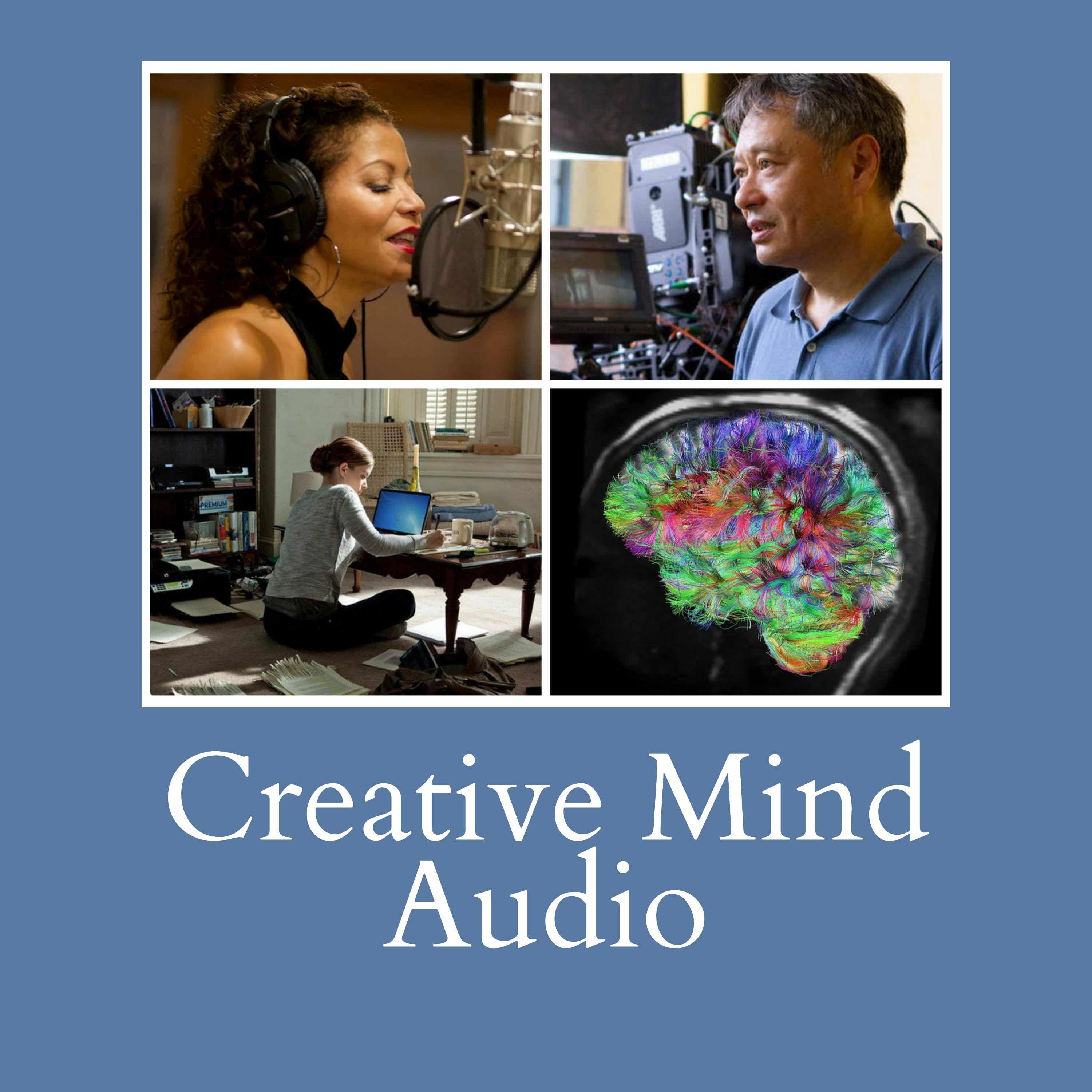
Creative Mind Audio
by Douglas Eby
Excerpts of interviews with artists, psychologists and others on creativity research, emotional health, high sensitivity, giftedness. Note: PAID episodes have free previews. thecreativemind.substack.com
Episodes
-
How we can resist despair and keep creating even in turbulent times
“This is precisely the time when artists go to work. There is no time for despair, no place for self-pity, no need for silence, no room for fear. We speak, we write, we do language. That is how civilizations heal.“ - Toni Morrison Actor and writer Amber Tamblyn reads comments by journalist…
more -
Highly sensitive and autistic women - Often a hidden world.
Therapist Julie Bjelland says "the reason we call it hidden is because many of the things that we experience as autistic women are in fact things that are internal, that are not actually seen by other people. "So I want to share some of those things. One of the things is this high intelligence…
more -
How CBT can help Neurodivergent people and others with emotional health challenges.
The Autism Research Institute notes “Anxiety disorders are the most common mental disorder in the United States, affecting about 18% of the general population. Research has shown that the incidence of anxiety in people with autism may be significantly higher than in the general population.”…
more -
How to support stress relief: use links between thoughts, behavior, feelings
This is a free preview of a paid episode. To hear more, visit thecreativemind.substack.com What is CBT? The Psych Central mental health site notes “Cognitive behavioral therapy (CBT) “is a type of evidence-based psychotherapy used to help treat a wide range of physical and mental health…
more -
How Dopamine affects the brain can be a key to improving our lives
This is a free preview of a paid episode. To hear more, visit thecreativemind.substack.com “We live in a world that’s designed to hijack your dopamine. We’re scrolling, sending another text, looking at videos. “Understanding what is happening in the brain is the key to changing our lives.…
more -
How to understand toxic relationships, and gain healthy ones
This is a free preview of a paid episode. To hear more, visit thecreativemind.substack.com Therapist Jessica Baum writes, “You might not use the word safety when talking about your relationships. But you do know the feeling of walking on eggshells, shrinking yourself to avoid conflict, or bracing...
-
Artists and Creators May Often Feel Insecure. How to Gain Confidence
This is a free preview of a paid episode. To hear more, visit thecreativemind.substack.com Do feelings of insecurity and self-doubt impact our creativity? Of course. In this audio and the related article, artists and psychologists express perspectives on our common feelings of insecurity and...
-
Stress in Early Life Leads to Adult Trauma and Nervous System Dysregulation
“From a young age, many of us learned to brace for life instead of relax into it. “This constant vigilance trains the nervous system to stay in survival mode: blocking rest, repair, and true healing.” Dr Cathleen King teaches neuroscience principles related to trauma and health recovery. This…
more -
What is our Shadow? From a talk by Jungian psychologist James Hollis
Dr. Hollis, a Jungian analyst, is author of multiple classes on the Jung Platform site. This is a brief audio excerpt from his free video talk Introduction to Jungian Shadow Work. The registration page summarizes: “In this introduction you will learn more about Carl Jung’s concept of the Shadow…
more -
Anxiety is hard enough to deal with. It's more challenging when we blame ourselves.
“It makes us feel very alone, isolated, different, less than.” Jeffrey Rutstein continues, “That’s one of the things that also makes anxiety so hard to bear. So many of us not only struggle with anxiety, but we blame ourselves for being anxious: ‘I know better, I shouldn’t be anxious here. ‘I…
more -
Releasing Emotional Blocks - from an interview with Amy B. Scher
"When we are storing these emotions in our body and they become stuck, they are preventing us from having the clear, clean, energetic flow through our muscles, glands and organs that we should. "I believe that that is essential for physical health. And I also believe that when we hold emotional...
-
How to navigate sensory overload and trauma as a highly sensitive person
Empaths and highly sensitive people "aren't just open to trauma. They're open to everything, and it can feel traumatic when you're young and don't have any guidance." - Dr. Judith Orloff "Our nervous system is picking up more information, receiving information that others don't, feeling things…
more -
How Polyvagal Theory and Therapy Help Trauma Recovery, with Dr. Cheryl Arutt
Psychologist Cheryl Arutt has found with her therapy clients that "Creative artists, actors and writers and people who do performances, have a different relationship with their trauma than regular people who don't consider themselves creatives." She notes “Polyvagal theory is a new way of…
more -
Autistic Women: Perspectives by Hannah Gadsby, Kayla Crome, Daryl Hannah, Sue Ann Pien, Zhara Astra, Julie Bjelland
"Autism informs everything that I do - it's you know my processing unit so it's how the information goes in and out. So it's always informed me. Since being diagnosed, it's helped me understand that I'm not a rubbish person - I just think about things differently." Hannah Gadsby "Autism doesn't...
-
"I need my stress to achieve." - No, "Stress makes you stupid.” Emily Fletcher of Ziva Meditation
Emily Fletcher – founder of Ziva Meditation – notes “Stress is actually keeping you from performing at the top of your game. “I tend to work with a lot of high performers. “My CEO clients will say ‘Emily, my stress is the thing that gives me my cutting edge, that’s the thing that keeps me, you...
-
Embracing Our Emotions with Ziva Meditation founder Emily Fletcher and actor Travis Van Winkle
This audio is from the video version of an episode of the podcast ("Why Isn't Everyone Doing This?") by Emily Fletcher - the episode is titled "Embracing Your Emotions with Travis Van Winkle." Host Emily Fletcher: "I am so delighted to share this conversation with you - today's guest is one of my...
-
How to Recover and Rewire to be More Resilient With Mind Fitness Training
This is a free preview of a paid episode. To hear more, visit thecreativemind.substack.com "Wild animals go through traumatic events all the time but they don't [usually] develop PTSD. Elizabeth Stanley, PhD adds, "Each time through this cycle [trauma and recovery] they add to their toolbox of...
-
Embracing neurodivergent people as positive and valuable in a workplace
"Have you heard the statistic that neurodiverse employees are 90 to 140% more productive than non-neurodiverse? Isn't that amazing?" Therapist Julie Bjelland, LMFT from "Episode 192- Embracing Neurodiversity with Julie and Willow" of her HSP and Neurodivergent Podcast. (Follow link to her site &...
-
Sensory Overload can lead to anxiety, fatigue. How to renew energy and calm?
As various researchers and therapists note, being a highly sensitive person or another form of neurodivergent, with different "neurological wiring," we can experience many positive qualities, such a greater appreciation of beauty and art, a heightened awareness of subtleties, emotional depth,...
-
What is being dysregulated, and how can we better process our emotions?
Therapist Emma McAdam: "If emotions are getting in the way of you living your life, you can learn how to slow down, think clearly..." Psychologist Melanie Joy notes "this is an incredibly dysregulating time for everyone, especially those of us who are highly sensitive." Dr Cathleen King: “That is...
-
Judith Orloff, MD on Transforming Strong Emotions
Judith Orloff MD is a NY Times bestselling author of multiple books, and is "a psychiatrist, an empath and intuitive healer, and is on the UCLA Psychiatric Clinical Faculty. "She synthesizes the pearls of traditional medicine with cutting edge knowledge of intuition, energy, and spirituality and...
-
Dysregulation and How to Improve Emotional Resilience with Psychologist Melanie Joy
Psychologist Melanie Joy notes this is an incredibly dysregulating time for everyone, especially those of us who are highly sensitive. This is an excerpt from her conversation with Andrea Weber for the Sensitive Empowerment Community. Dr Joy comments: "We're especially affected by violence…
more -
The complex experience of ADHD adults with Linda Roggli
Linda Roggli is one of the speakers at the Let's Talk 2E Conference For Adults, hosted by Julie Skolnick. Her live presentation was titled Free to Be ADHD (and 2e). The site for the Conference summarizes: Linda Roggli is a Professional Certified Coach (PCC), award-winning author and founder of…
more -
Negativity Bias can distort and deflate. How can we gain better emotional health?
"We don’t pay attention to all events and our corresponding emotional reactions in the same way. One negative event can taint an overall good day." Anne-Laure Le Cunff, PhD explains more about our brain's Negativity Bias: "It’s the same with interactions: you may have a good relationship with...
-
How stories help us explore our Shadow Self and gain emotional health
Fairy Tales & Jungian Shadow Work "Many of us are gifted with the ability to hold the darkness of others but we don't always know how to uncover it within ourselves." This Creative Mind Audio is an excerpt from much longer video interview with Melissa Kim Corter: The Alchemy of Fairy Tales &...
-
Trauma, Emotions and Health - from an interview with Dr Cathleen King
"Then I created a roadmap to guide me out of the dense fog of my illness and fear. I learned how to self-regulate my nervous system." Cathleen King, DPT, is a "doctor of physical therapy who teaches neuroscience principles, and is a mind-body practitioner." This audio is an excerpt from her...
-
How to understand and work with emotions so they benefit more than disrupt
Probably all of us don't like certain kinds or levels of emotion, and want to get away from them, sometimes in self-destructive ways. Psychologist Cheryl Arutt notes "Creative people do tend to be highly sensitive and an exquisite sensitivity is an asset when it comes to creating art...but that...
-
How self-acceptance is a foundation for a healthy and creative life
Self-acceptance, self-compassion, self-regard, healthy self-esteem... how do these impact us, including being creative? In this episode, a number of artists and psychologists talk about their perspectives and some of the research. Actor Michelle Rodriguez said, “I don’t think it’s narcissistic at...
-
Facing our Shadow for more creativity, authentic power and purpose
This is a free preview of a paid episode. To hear more, visit thecreativemind.substack.com "One of the most challenging parts of the critic in the Shadow is the inner critic. “When your inner critic has completely taken over, and you don't have the clarity to trust yourself, this becomes a...
-
How to Understand and Recover from Narcissistic and Toxic Family Dynamics
Meg Haworth, PhD recalls, "I grew up with a narcissistic parent in a toxic family system, and I also had all kinds of abuse growing up and spent a lot of time in my childhood being very sick." The image above is from one of her articles. She notes: “As women entrepreneurs, we already face the…
more -
Adverse Childhood Experiences and creativity - A Notebook AI Podcast
Most of us have a wide variety of emotional experiences as a child and teen, and as as adults, of course. These may include relatively minor and temporary hurts, but also abuse, even trauma. And these experiences can endure, especially when not addressed or healed, deeply impacting our lives and...
-
Getting past feeling flawed to being authentic and connecting better with others
"It is hard to change that feeling flawed piece...it's so seeped into your bones." Julie Bjelland, LMFT “Trauma results in this belief that we are different, that we’re not enough…”Aimie Apigian, MD “We often see that the pain cycle is ultimately cross wired with some type of underlying core…
more -
Working With Our Emotions To Be More Creative
This audio is a "podcast conversation" generated by AI program Notebook, based on text in my article How Working With Our Emotions Helps Us Be More Creative. Excerpts of longer comments in the article: "I am the kind of person that feels so much that if I didn’t have acting (and music), I would...
-
How to Thrive in a Chaotic World as a Highly Sensitive Person
"The modern world is often overwhelming and stressful for those of us with sensitive nervous systems." High Sensitivity therapist Julie Bjelland, LMFT adds, "Many of us have suffered from the challenges of high stress, anxiety, sensory overload, and mental health and physical health issues....
-
Highly Sensitive, Neurodivergent and Misunderstood. How Can We Be Ourselves?
Being a highly sensitive person, or neurodivergent in other ways, we may have grown up feeling misunderstood, and even like we were flawed. The first section of this audio is an excerpt from a related podcast episode with Julie Bjelland and Willow McIntosh, followed by comments by Dr. Aimie…
more -
How attachment trauma impacts our lives with Aimie Apigian, MD
Dr Aimie talks about “the effects of trauma on the fear of being seen for who we truly are, the fear of truly being known. “Trauma results in this belief that we are different, that we’re not enough, that there’s something about us that pushes people away or that we’re too much for other people....
-
Artists on supporting their mental health with life choices and therapy
This is a free preview of a paid episode. To hear more, visit thecreativemind.substack.com In the photo: Jameela Jamil: What do I do to manage my mental health? So I've had therapy. I had EMDR therapy. That's eye movement desensitization reprocessing therapy. I also have unfollowed anyone who...
-
How neuroscience and psychology help understand creativity with Shelley Carson, PhD
This is a free preview of a paid episode. To hear more, visit thecreativemind.substack.com "The differences between the brains of highly effective creative achievers and the brains of the rest of us are far less important than the commonalities." Shelley Carson continues in her book Your Creative...
-
Creativity and Mental Health and Recovery - excerpt from interview with Sarah Fay
This is a free preview of a paid episode. To hear more, visit thecreativemind.substack.com Author Sarah Fay recalls: "I received six diagnoses and my first one came when I was was 12 and a lot of [my memoir] Pathological is about that. "I think this is is something we're seeing now with young...
-
How we can overcome trauma and anxiety to gain health with Donna Jackson Nakazawa
“We’re the general contractors of our health, and there’s so many micro-changes we can make towards flourishing.” - Donna Jackson Nakazawa This audio is a brief excerpt of her interview video at the Reset Super Conference titled Trauma and immune responses in the brain. The Conference site...
-
Overcoming Adverse Childhood Experiences with Donna Jackson Nakazawa
Adverse Childhood Experiences (ACES): "That dysfunction can give us the message that I am not okay." Donna Jackson Nakazawa is an award-winning science journalist and speaker. This audio and video are from her interview for the 2024 Anxiety Super Conference, titled: "Overcoming Adverse Childhood...
-
How trauma drives anxiety and how to better regulate our system with psychologist Cheryl Arutt
"Many people in my practice are actors and performers and people who have a platform.” Dr. Cheryl Arutt is a trauma-informed Clinical & Forensic Psychologist, Certified EMDR therapist, and specializes in trauma recovery and creative artist issues. She finds, “A lot of times people will think that...
-
Highly sensitive people can be more prone to stress and trauma
"Sensitive people are more prone to stress because we are picking up so much more information from the internal and external environment." Dr. Natasha Fallahi, a mind-body health expert, functional medicine practitioner, known as “The Sensitive Doctor,” says trauma arises from overwhelm in...
-
How high sensitivity and autism overlap, plus some key differences
"Both groups of people tend to get overwhelmed by environmental stimuli." Jules De Vitto adds in a post that although both highly sensitive people (HSPs) and those with autism "may have sensory processing challenges, there are some key differences between the two conditions." In this brief…
more -
Artists and creative people are likely to be highly sensitive, or introverted, or both
This is a free preview of a paid episode. To hear more, visit thecreativemind.substack.com “I always felt awkward and shy.” Steven Spielberg “I wouldn’t say I have much of an outgoing personality." Idris Elba “I’m very sensitive in real life.” Jessica Chastain This is an audio version of one of…
more -
Feeling flawed as a neurodivergent child or adult - What can change that?
"It is hard to change that feeling flawed piece...it's so seeped into your bones because it's your inner child. It's stuff that you learned with a child's brain." ⏩ From Episode 195 Feeling Flawed of the HSP and Neurodivergent Podcast. From the original Show Notes: "In this conversation, Julie...
-
How our greediness for creative ideas can support nervous system dysregulation
» From the podcast: Cathleen King, DPT: “Sometimes those of us who are creatives, we have this greediness with ideas…we're indulging our ideas all the time. That is another form of nervous system dysregulation when you can't shut off your idea switch and just be in the present moment.” Willow...
-
How to Manage Our Energy, Negative Thoughts, and Overprocessing as a Highly Sensitive Person
Julie Bjelland is a psychotherapist specializing in high sensitivity, and author of many resources to help highly sensitive people (HSPs) worldwide. In this excerpt of one of her podcast episodes, she is joined by Willow McIntosh, the founder of Inluminance and leader of the High Sensory...
-
How a vibration wearable device can reduce stress, improve sleep and more
A number of wearable devices can help improve our physical and emotional health. In this audio, several people talk about the Apollo Neuro device, starting with Psychotherapist Julie Bjelland, LMFT. She comments that highly sensitive people have a "unique and deep sensitivity to our surroundings...
-
Gifted and Neurodivergent - How does our brainmind work differently?
This is a free preview of a paid episode. To hear more, visit thecreativemind.substack.com The first part of this episode is an excerpt from a Neurocuriosity Club Podcast episode: Megan Griffith asks her guest Jennifer Harvey Sallin "What do we need to know as gifted adults trying to navigate the...
We're indexing this podcast's transcripts for the first time — this can take a minute or two. We'll show results as soon as they're ready.
No matches for "" in this podcast's transcripts.
No topics indexed yet for this podcast.
Loading reviews...
ABOUT THIS SHOW
Excerpts of interviews with artists, psychologists and others on creativity research, emotional health, high sensitivity, giftedness. Note: PAID episodes have free previews.
thecreativemind.substack.com
HOSTED BY
Douglas Eby
CATEGORIES
Loading similar podcasts...
Frequently Asked Questions
How many episodes does Creative Mind Audio have?
Creative Mind Audio currently has 136 episodes available on PodParley. New episodes are automatically indexed when they're published to the podcast feed.
What is Creative Mind Audio about?
Excerpts of interviews with artists, psychologists and others on creativity research, emotional health, high sensitivity, giftedness. Note: PAID episodes have free previews. thecreativemind.substack.com
How often does Creative Mind Audio release new episodes?
Creative Mind Audio publishes regularly with 136 episodes available. Check the episode list for the typical release schedule.
Where can I listen to Creative Mind Audio?
You can listen to Creative Mind Audio on PodParley by clicking any episode. We provide an embedded audio player for direct listening, and you can also subscribe via your preferred podcast app using the RSS feed.
Who hosts Creative Mind Audio?
Creative Mind Audio is created and hosted by Douglas Eby.
URL copied to clipboard!