
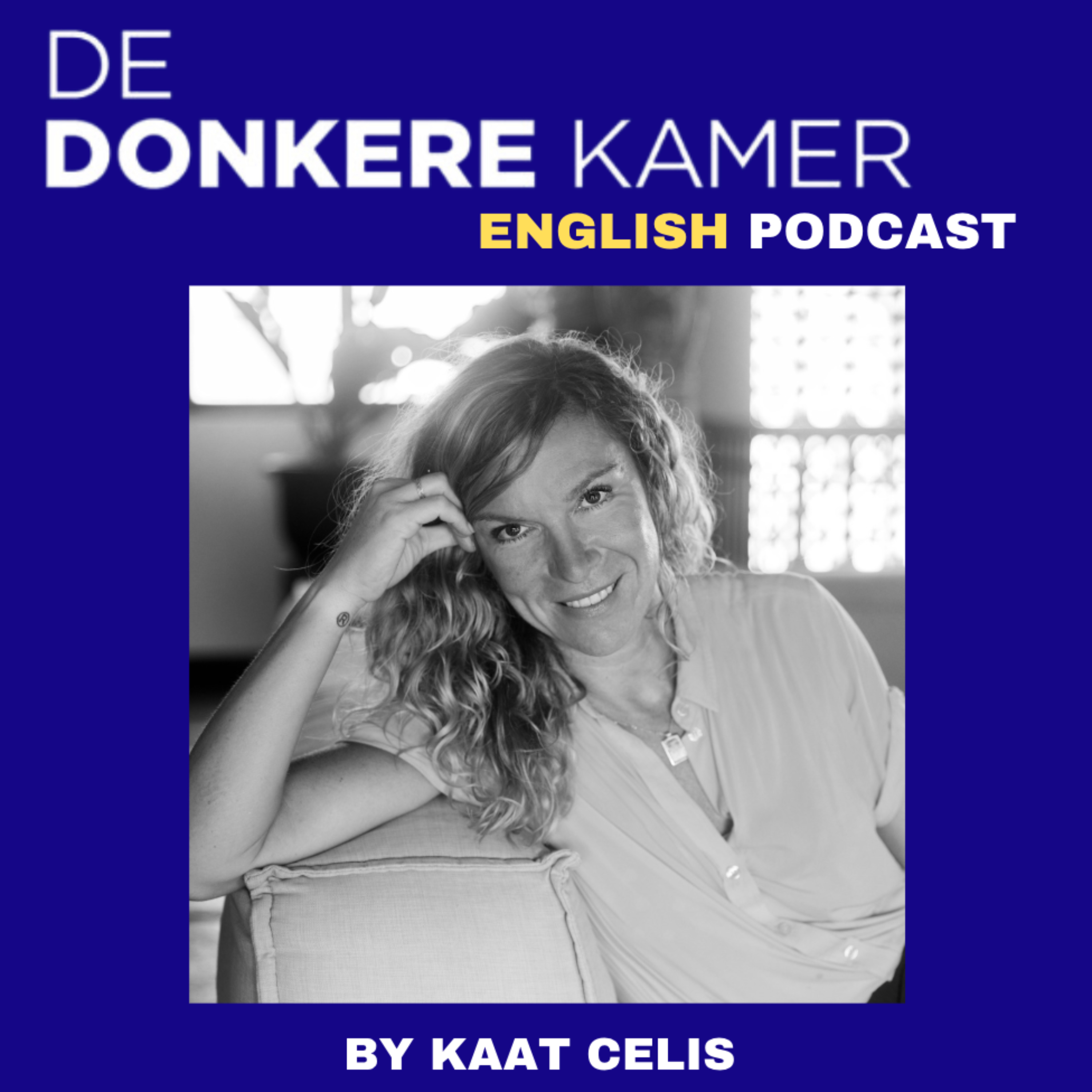
PODCAST · arts
De Donkere Kamer (English)
by Kaat Celis
De Donkere Kamer is the podcast for photographers who want to grow, behind the camera and in their business. Twice a week, host and photographer Kaat Celis shares a new episode: one solo conversation with her own reflections on creativity and craft, and one in-depth interview with respected names in international photography, including Anton Corbijn, Christopher Anderson, David Campany, and Harry Gruyaert. Together, these conversations explore what it takes to keep growing as a photographer, creatively and in business. New episodes every week. donkerekamer.com
-
26
#65 - Carolina Arantes, National Geographic Explorer, on First Generation, post-colonial identity and photographing women in France
My guest today is a Brazilian visual storyteller who lives between France and Brazil. Carolina Arantes grew up in São Paulo, studied photography and journalism, and later earned a master's degree in cultural project development. Questions of gender identity and the lasting effects of colonial history run through her work, which she develops in personal projects alongside the communities she photographs. She has received the Firecracker Grant and the Jean-Luc Lagardère Foundation Grant, was invited by the Centre Pompidou for the thematic year Elles Font l'Art in 2020, and has been a National Geographic Explorer since that same year. Her work is part of the BNF collection and has appeared in the New York Times and National Geographic. Her book First Generation was shortlisted by LensCulture for best photobook in 2023, and her project Tombamento won the Human Rights Grant from Fundo Brasil.We recorded this conversation live at Les Rencontres d'Arles, where her exhibition First Generation was on show for the first time in its complete form: eight years of portraits, interviews and found family archives, built around the daughters of African immigrants in France. Carolina tells me how she only allowed herself to call herself a photographer at 27, how a workshop with photographer Christopher Morris changed the course of her career, and why she built the project around listening before shooting. We talk about growing up between an artist mother and a business-minded father, what it means to belong to a country that doesn't always recognize you as part of it, and why editing, not shooting, is the hardest part of her process. She's also honest about the financial reality of staying in documentary photography, and what she still hopes to have contributed in five years.What you'll learn in this episodeWhy it took Carolina until she was 27 to call herself a photographer, even though she'd been shooting since her teens, and what changed when she moved to FranceHow a chance workshop with photographer Christopher Morris turned into years of assisting him on fashion and political assignments, and what that taught her about light and trustWhy First Generation took eight years to build, and how it grew out of watching African nannies raise children in a country that doesn't always recognize those children as fully FrenchHow she combined her own portraits with found family archives to show the culture and traditions her subjects grew up with at homeWhy she calls editing, not shooting, the hardest part of the process, and how she learned to "choose her diamonds" instead of holding on to every imageWhy she's honestly still questioning whether she can keep making a living from photography, and what that says about the state of the medium todayFree webinarWant to know what the photographers who keep growing actually do differently? In a free webinar, I walk you through the five patterns I see consistently, in this podcast, in masterclasses and in my one-on-one mentoring, and how you can apply them yourself. Sign up here: donkerekamer.com/webinar.Live show: De Donkere Kamer on stage in AmsterdamOn October 16, De Donkere Kamer goes on stage at Pakhuis de Zwijger in Amsterdam, in conversation with, among others, portrait photographer Nadav Kander. Tickets are 20 euros, so cost shouldn't be what holds you back. Get yours at donkerekamer.com/shows.Partner of this episodeCameranu: Alongside creativity, photographers simply need the right tools, whether that's a new lens or a camera you can rely on during a client shoot. The specialists at Cameranu think along with you and give honest advice. Head over to cameranu.be and use code DDK10 for 10% off your next purchase.
-
25
#64 - 5 insights from Tony Robbins' UPW seminar for photographers and entrepreneurs
Last week I sat in an arena in Cologne with 15,000 people, at Tony Robbins' seminar Unleash the Power Within. Four days, from early morning until late at night, together with five other entrepreneurial women from my Female Leaders club.In this episode I take you through five insights I brought home from there, and they apply just as much to your photography practice as to your life. Pattern recognition, and how a pattern of carelessness once got me stuck in a long insurance case. Repetition is the mother of all mastery, and why talent matters far less than the reps you put in. Proximity is power, and why the people around you help decide how far you get. Where focus goes, energy flows, something I even feel when I take a bend on my bike in the Alps. And peak state, and how you can shift it in a snap.Do you find this kind of insight useful? Let me know, because there might be a part two coming.What you'll learn in this episodeWhat pattern recognition is, and how a pattern of carelessness once got Kaat stuck in a long insurance case around the Edward Bertels exhibitionWhy "repetition is the mother of all mastery" and how reps, not talent, make the difference between photographers who keep growing and photographers who get stuckWhat "complexity is the enemy of execution" means, and why you need to break big goals into pieces to actually get them doneWhy "proximity is power" and how the people around you, personally and professionally, help decide how far you getHow "where focus goes, energy flows" works, with a concrete example from cycling about taking a bend downhillWhat a "peak state" is and how you can train it with a simple ten-minute morning exerciseFree masterclass, five patterns of successful photographersWhich patterns keep showing up in successful photographers? Kaat bundled them into a free online masterclass, based on conversations with dozens of international photographers. Sign up for free. Patagonia workshopIn February, Kaat is heading to a remote estancia in Argentinian Patagonia with Dutch photographer Bastiaan Woudt, for a week of photographing, deepening your practice and learning from each other. Eight spots, an intimate group, some are already taken. Full details here.Partner of this episodeCameranu Alongside creativity, you also just need the right tools as a photographer, whether that's a new lens or a camera you can rely on during a client shoot. Camera Nu's specialists think along with you and give you honest advice. Go to cameranu.be and use code DDK10 for 10% off.
-
24
#63 - How to Build a Personal Brand as a Photographer, Step by Step (2026)
Last time I told you why personal branding matters more than ever. Today I'll show you how to actually approach that, as a photographer, in 2026. I take you through my own path: starting a podcast as long form content, showing myself on my website, writing an about page (without AI, please), and figuring out what truly sets me apart from other photographers. I talk about a photographer I coach one-on-one who has the gift of putting people at ease, and about another who is a storyteller and suppressed that for a long time. I explain why I believe there are too many photographers who don't position themselves, and why a personal brand doesn't need to appeal to everyone to work. And I announce my strategy day: normally 1,500 euros, this week still at 799 euros, with code strategie.What you'll learn in this episodeWhy long form content, like a podcast or a blog, is the best first step to build your personal brand, and why Insta stories are the opposite of thatWhy an about page on your website builds so much trust with a client, and why you write it yourself instead of letting AI generate itHow to discover what makes you unique, in your image choices, your editing, your client contact, or a gift like putting people at easeWhy photographers who don't know what sets them apart will never reach the right clients, no matter how good their photos areWhy Kaat believes there are too many photographers, and why that's exactly why a personal brand matters so muchHow, like Stefan Vanfleteren and Rinus Van de Velde, you build an entire universe around your work instead of just a webshop, an exhibition or a bookWhy a personal brand doesn't need to appeal to everyone, and why that's exactly the pointstrategy dayThis week I'm putting my strategy day in the window, just once: a full day, one-on-one, in Antwerp or Amsterdam, lunch included. You choose the themes we dig into together, from personal branding to your portfolio, your website or your book project. Normally 1,500 euros, through Sunday midnight on September 6th at 799 euros (more than 700 euros off) with code strategie. Link here. partner of the episodeCameranuAlongside creativity, photographers simply need the right tools, whether that's a new lens or a camera you can rely on during a client shoot. The specialists at Camera Nu think along with you and give honest advice. Head over to cameranu.be and use code DDK10 for 10% off your next purchase.
-
23
#62 - Personal branding for photographers: Why It Will Matter More Than Ever in 2026
I’m going to tell you something you might not expect from someone who’s been sharing her personal story in her content for years: I wasn’t really into personal branding myself. For years, I built De Donkere Kamer without ever putting a face to it. In this episode—part 1 of a two-part series—I’ll explain what made me change my mind and why personal branding matters more today than ever before. There’s never been so much content, never so much AI-generated clutter, and an audience that’s both more critical and harder to engage than ever before. I’ll talk about my own boundaries—what I do share and what I never will—about the conversation with my husband Rik that revealed just how much the platform has come to define “me,” and about the photographer who contacted me to travel to Patagonia with him, based purely on a single personal episode. Personal branding doesn’t mean showing off your home or your family. It means making your perspective, your choices, and your taste visible—because that’s the only thing no one can take away from you.What You’ll Learn in This Episode- Why Kaat resisted personal branding for years, and what ultimately changed her mind- Why people today seek trust in a face and a name before they buy, and what that means for you as a photographer- What personal branding is—and isn’t: not a selfie culture, not oversharing, but making your perspective, your choices, and your taste visible- Why photographers so often think their photos should speak for themselves, and why that’s no longer enough today- How Kaat sets her own boundaries in what she shares, and why those boundaries actually provide peace of mind rather than limitation- Why photography, as a medium in crisis, offers so much room to stand out precisely because of thatMy strategy dayThis week, I’m offering a one-time special on my strategy day: a full day of one-on-one work where we’ll tackle the topics you want to address, from positioning and personal branding to your portfolio or book concept. Normally 1,500 euros, but this week through Sunday at midnight, it’s 799 euros with the code “strategy.” All info here. Partner of the episodeAs a photographer, in addition to creativity, you also simply need the right tools—whether that’s a new lens or a camera you can rely on during a client shoot. The specialists at Cameranu work with you to find the best solution and provide honest advice. Visit their site and use code DDK10 for a 10% discount.
-
22
#61 - What a trip to Alpe d'Huez taught me about letting go (and why I didn't quit)
This summer I set off on my bike from our house in the Auvergne, with Alpe d'Huez as the finish line. Four days, 500 kilometers and roughly 7,500 meters of elevation gain, on my own, from one chambre d'hôte to the next. I did it to cheer on my husband Rik, who climbed the col together with thirty colleagues from Mediafin for Climbing for Life, in support of the Diabetes Liga.In this episode, I take you along. Not as a travel report, but as a mirror. Because everything I ran into along the way, nerve pain in my foot that slowed me down from day one, an Oura ring flagging overtraining, a route I'd misjudged, a thunderstorm on the final climb, is something I recognize one-to-one in what I see every day with the photographers I coach. And in myself, as an entrepreneur.I'll tell you how I dealt with a body that wasn't cooperating, why pushing through is not the same as forcing yourself, how you let go of control without giving up, and why pausing to acknowledge a win matters just as much as the win itself. And I land on my biggest core value: freedom. Do you recognize something of yourself in pushing through when things get hard? Then this episode is for you.Highlights from this episodeThe starting point: why Kaat cycled to Alpe d'Huez, for Rik and Mediafin's Climbing for LifeDay one: 155 kilometers and over 2,000 meters of elevation gain, nerve pain in her foot, and an Oura ring flagging overtrainingThe decision not to stop, and why "ten kilometers at a time" workedWhy photographers stop too soon, right before the momentum arrives: "reculer pour mieux sauter"A misjudged route to the chambre d'hôte in the Vercors, and why letting go was the only optionThe final climb to Alpe d'Huez, in a thunderstorm, crossing the finish aloneWhat the trip confirmed about freedom as her biggest core value, and why that's the reason Kaat became an entrepreneurComing to Patagonia?Want to experience that combination of travel, challenge and depth yourself, camera in hand, alongside one of today's most renowned portrait photographers? In February 2027 I'm heading to a remote estancia near El Calafate, Patagonia, together with Bastiaan Woudt. Eight spots, a group that's well matched, and an experience that sends you home different than you arrived. All info at donkerekamer.com/patagonia. Not sure it's for you? Feel free to book a call with Kaat.Partner of this episodeCameranuAlongside creativity, photographers simply need the right tools, whether that's a new lens or a camera you can rely on during a client shoot. The specialists at Camera Nu think along with you and give honest advice. Head over here and use code DDK10 for 10% off.
-
21
#60 - Paolo Woods on photography, research and building long-term projects | De Donkere Kamer Podcast
What do you do when a subject simply isn't photogenic? Paolo Woods, born in The Hague and raised in Florence, built his entire career around that question. From an investigation into the oil industry to a book on tax havens and the five-year project Happy Pills on the pharmaceutical industry, he keeps choosing subjects where his first reaction is "oh no, what am I actually going to photograph here." In this episode, recorded during Les Rencontres d'Arles, Paolo talks about why research is his most important tool, how his mother unknowingly shaped his obsession with text and image, and why he spent four years as artistic director of the photography festival Cortona On The Move. IntroI recorded this episode during Les Rencontres d'Arles, with Paolo Woods: photographer, researcher, and artistic director of Cortona On The Move since 2022. His projects never take the obvious subject. He seeks out exactly the things he first thinks are impossible to photograph. From oil to tax havens to the pharmaceutical industry, he keeps finding a language to make the invisible visible.What you'll learn in this episodeWhy research is Paolo's most important tool for turning non-photogenic subjects into photographable ones.How he led Cortona On The Move for four years, and why he chose one strong yearly theme instead of "the best of photography."Why a lack of access, as with Federico Vespignani's work on Gaza, can actually produce stronger work.What the five-year project Happy Pills reveals about our obsession with control and happiness.Why, after years of collaboration, he's now working on his first fully personal, solo project.About the guestPaolo Woods was born in The Hague in 1970 to Dutch and Canadian parents, raised in Florence, and later lived in London, Paris, Haiti and Ivory Coast. He started out running a photography gallery in Florence and then built a career around long-term, research-driven projects: from Un Monde de Brutes (2003, on the oil industry) and American Chaos (2004, on the Western intervention in Afghanistan and Iraq), to Chinafrica on China's expansion into Africa, translated into eleven languages and sold more than 40,000 copies. That was followed by Veil On My Eyes on Iran, The Havens on tax havens (named one of the best photo books of 2015), and Happy Pills, a five-year project on the pharmaceutical industry that grew into a book, a touring exhibition and his first film. Since 2022 he has been artistic director of Cortona On The Move. His work has appeared in eight books and in The New York Times, Le Monde and The Guardian, with exhibitions from the US to China, and he has won two World Press Photo awards.Links and resourcesPaolo Woods, websiteCortona On The MoveLes Rencontres d'ArlesPrevious episode with Kira Pollack (on AI and photojournalism): #267 on De Donkere KamerOur partner: CameranuThis episode is brought to you in part by Cameranu. For your own photography gear, whether it's a new lens or a camera you can rely on during a client shoot, their specialists think along with you and give honest advice. As a listener of De Donkere Kamer, you get 10% off your next purchase with code DDK10Free webinarWhat growing photographers consistently do differently from everyone else: that's the subject of a free webinar, based on patterns Kaat has seen over the years in top photographers through this podcast, in masterclasses and in 1:1 mentoring. Five things, and how to apply them in your own way. Sign up here MasterclassesEvery month, De Donkere Kamer organizes an online masterclass with an international top photographer.August 27, 4:00 PM – Ebrahim Alipour (Iranian documentary photographer and World Press Photo winner) on how to build a project without budget, without access, and without a network.Coming up – Magnum photographer Peter van Agtmael, topic to be announced.You can join live or buy the replay for a small additional fee. All the info here
-
20
#59 - Why that restlessness during your holiday has nothing to do with summer
Do you feel restless the moment you go on holiday, while your business simply quiets down? In this solo episode, Kaat walks you through the difference between taking rest and actually experiencing it, and explains why a summer income gap is rarely a coincidence. She shares how she finds rest herself, not by sitting still, but by staying in motion, why the classic work-life balance doesn't work for her, and which questions you can ask yourself to figure out what your ideal holiday actually looks like.From there, she dives into revenue planning: how to calculate in advance what buffer you need for your holiday weeks, how to make your photography practice scalable, and why entrepreneurship runs in seasons. She closes with a personal message about belief: what you believe about yourself and your craft eventually becomes your reality.An episode for every photographer who wants more rest this summer, and no more surprise income gaps next year.What you'll learn in this episodeWhat rest means to Kaat personally, and why she doesn't believe in a classic work-life balanceWhich questions you can ask yourself to figure out what your ideal holiday looks likeHow to build a revenue plan so holiday weeks stop causing panicThe difference between an action plan and loose actions like "posting more on Instagram"How to make your photography practice scalable through recurring revenueWhy your beliefs help shape what you actually achieve in your businessThe Daily Frame – Kaat's summer podcast series, 28 days with 21 short episodes, made to keep photographers moving and creative throughout the summer. €10. Link in the show notes.Our podcast partner!CameranuFor honest advice on lenses and cameras you can rely on during a client shoot. Go to cameranu.be and use code DDK10 for 10% off.Ready to work on your photography or your business? At donkerekamer.com you'll find everything about mentoring, masterclasses and workshops.1:1 mentoring: donkerekamer.com/mentorMasterclasses: donkerekamer.com/masterclasses
-
19
#58 - From Magnum Photos to the Banlieue: William Keo on building bridges through photography
Recorded live at Les Rencontres d'Arles, this episode brings you into conversation with World Press Photo winner William Keo, a French photographer born into a family of Cambodian refugees. His work has taken him from NGO assignments in a Palestinian refugee camp in Lebanon and the Syrian refugee crisis, to conflict zones in Iraq, Syria, Ukraine and Israel/Palestine, and eventually into Magnum Photos, where he was represented from 2021 to 2024. William talks openly about being an introvert in an industry that rewards extroversion, about the years he spent testing his own limits as a young photojournalist, and about the project closest to his heart: Extra Muros, a deeply personal document of the French banlieue where he grew up. For this project, he received this year's World Press Photo Award. Together, Kaat and William talk about resilience, why photographers are terrible at editing their own work, why he believes a photo book outlasts everything else, and what it takes to build bridges between your images and the people who will never walk into a gallery.What you'll learn in this episodeHow William turned a low social battery and years of shyness into a way of connecting quickly and honestly with the people he photographs.Why he believes photographers are among the worst editors of their own work, and how an outside eye (Peter van Agtmael among others) reshaped the edit of his portfolio.What three years inside Magnum Photos taught him about identity as a photographer, and why he chose not to pursue full membership.How Extra Muros grew from small chapters shot among friends and neighbours into a World Press Photo-winning body of work about the French banlieue.Why he's convinced a photo book, not an exhibition or a magazine cover, is what actually resists through time.About the guestWilliam Keo (b. 1996, Paris) is a French photographer born into a family of Cambodian refugees. His work explores migration, social exclusion and intercommunity intolerance. He began his career working for NGOs, covering the Syrian refugee crisis, the conflict in Darfur, migration in Europe and the Rohingya humanitarian crisis, before turning to the cycles of violence following the fall of ISIS in Iraq and Syria, and international news including the war in Ukraine and the conflict in Israel and Palestine. He was represented by Magnum Photos from 2021 to 2024. His work has been published in The New York Times, National Geographic, Le Monde, Libération, Vogue and New York Magazine. For his ongoing personal project Extra Muros, documenting the lives of marginalised descendants of post-colonial immigrants in the French banlieue, he received a World Press Photo Award this year.William Keo, website World Press Photo, website MasterclassesWant more input like this? Join our online masterclasses with international top photographers. Next up: Iranian documentary photographer Ebrahim Alipoor on August 27 at 4 PM, on how to plan a project without budget, access or a network. After that, an in-depth class with Pieter van Agtmael. Join live or get the replay for a small additional fee. All info at here Free webinarAfter years of working with top photographers through this podcast, in masterclasses and in 1:1 mentoring, Kaat noticed a clear pattern: the photographers who keep growing all do a handful of things remarkably consistently. In a free webinar, she walks you through those five things and shows you how to apply them in your own way. It's free, and full of insight. Sign upPartner: CameraNUThis episode is supported by CameraNU. Need honest advice on your next lens, or a camera you can rely on during a client shoot? Their specialists think along with you. As a De Donkere Kamer listener, you get 10% off your next purchase with code DDK10 at cameranu.be.If you want to work on your own photography or your business, check out donkerekamer.com. That is where you'll find everything about mentoring, masterclasses and workshops.
-
18
#57 - What a week at the end of the world does to your photography, your business and the way you see
What happens when a photographer who's never taught before finally says yes? In this episode, Kaat takes you to Estancia El Condor, 40,000 hectares of untouched land at the foot of the Andes, where in February 2027 she's hosting, together with Dutch photographer Bastiaan Woudt, his very first workshop. Eight spots, one estancia, no phone signal, and a photographer whose work hangs in the Rijksmuseum and the Getty Museum.Kaat talks about the two trips she's already made to this place herself, about the condors with a four-meter wingspan, about why it took her years to convince Bastiaan, and about what happens to the way you see when you're cut off from the world for a week. She also shares what this means for your photography at a time when more images are generated than could ever actually be photographed.An episode for anyone wondering if this is the year to go somewhere almost nobody goes.Bastiaan Woudt has never taught a workshop before. Until now. In this episode, Kaat talks about the very first workshop by this renowned black-and-white photographer, held at an estancia in Patagonia so remote there's no phone signal. Eight spots, a week without distraction, and everything that does to your photography and the way you see.This episode is a personal update on the brand-new photography workshop to Argentine Patagonia that Kaat is hosting in February 2027, together with photographer Bastiaan Woudt. It's the first time Bastiaan has ever opened up his process to a group, and Kaat explains why this place, this photographer, and this moment come together.Why Bastiaan Woudt said no for years, and what finally changed his mind.What makes Estancia El Condor so special: 40,000 hectares, condors with a four-meter wingspan, and zero phone signal.How a week without distraction changes your photography and the way you see.What to actually expect from the workshop, from the daily reviews to the day on horseback.How admission works, what it costs, and how to apply.Bastiaan Woudt is a self-taught Dutch photographer known for his distinctive black-and-white portraits. He shoots for, among others, British Vogue and Harper's Bazaar, and his work is held in the collections of the Rijksmuseum and the J. Paul Getty Museum. You can hear more about him and how he works in episode #248 of the De Donkere Kamer Podcast (Dutch-language).Apply for the workshop (portfolio required)Episode #248, the full conversation with Bastiaan Woudt in DutchBastiaan Woudt, website/portfolioFollow Kaat on Instagram for updates from the estancia: @dedonkerekamer.com_beThe Daily Frame, summer seriesQuestions about the workshop: [email protected]: supplies the gear for the video and visual side of the podcast with the code DDK10 10 off
-
17
#56 - "It's not my voice, it's ours": Shirley den Hartog on carrying Erwin Olaf's legacy forward
For 25 years, Shirley den Hartog was photographer Erwin Olaf's manager, and today she leads the Estate Erwin Olaf as its director. In this episode, she looks back on his lifelong dream to be exhibited at the Stedelijk Museum in Amsterdam, a wish that came true two years after his death with the exhibition Freedom.Shirley talks about the arrangement that defined their partnership for almost three decades: she took care of the business, he took care of the art. She shares how that trust shaped his work, why she chose not to hire someone else to run his legacy, and what it means to make decisions for an artist who is no longer here.We also talk about the Catalogue she's now building, the ethical questions that come with archiving decades of work, and how she thinks about AI, sustainability and the future of photography.A conversation about trust, freedom and what it means to carry someone's life's work forward, not as a duty, but as a shared voice.What you'll learn in this episodeHow Erwin Olaf's lifelong dream of a Stedelijk Museum exhibition came true, two years after his deathWhy Shirley never knew what his artworks cost, and how that protected him as an artistWhat changes when you have to make decisions for someone who's no longer there to askWhy she chose to become the visible director of his estate, instead of hiring someone elseHow she thinks about AI, the ethics of archiving and the future of photography"It's not my voice. Our voice was together always. So I think if I talk, it's us always. It's not me. It's not him. It's us."About the guestShirley den Hartog met Erwin Olaf in 1997 as an intern and became his manager and close friend for 25 years. Since his passing, she has led the Estate Erwin Olaf as director, responsible for his legacy, his foundation and his artistic archive.Free webinarWant to know what the photographers who keep growing all have in common? Join Kaat's free webinar and learn the five things they do remarkably consistently, and how to apply them yourself. Sign up here Masterclass with Ebrahim AlipourWant more? Join our next online masterclass with Iranian documentary photographer Ebrahim Alipour, World Press Photo winner. He'll share how to build a project without budget, access or a network. August 27, 4 PM. Live or replay. donkerekamer.com/masterclassesPartner: CameranuThis episode is brought to you by Camera Nu. Whatever gear you need, their specialists think along with you and give you honest advice. Get 10% off your next purchase with code DDK10 at cameranu.be.
-
16
#55 - Nadav Kander: The electricity between two pictures
My guest today grew up in Johannesburg and has lived and worked in London since the 1980s. He started photographing at thirteen and learned part of the craft in the darkroom of the South African Air Force. He won the Prix Pictet in 2009 for Yangtze: The Long River, and that same year The New York Times Magazine dedicated an entire issue to his series Obama's People. In 2019, Steidl published The Meeting, his first book devoted entirely to portraiture. This September, a new exhibition called The Edge of Things opens at FOAM in Amsterdam.We recorded this conversation in his home on Ibiza, and it took a direction I hadn't expected. Nadav Kander talks about the years he spent going back through his archive with curator David Campany, and what it means to let images from different decades speak to each other rather than treating each project as a closed chapter. He explains why he never sets out to tell a story, he makes one, and why a picture is only ever completed once a viewer brings their own history to it.What you'll learn in this episodeWhy Nadav spent the last few years revisiting his entire archive with David Campany, and what he found there that he had missed twenty years earlierWhy he says "I don't tell stories, I make stories," and what that means for how he shows his workWhat eight minutes with President Obama actually looks like when three hours of preparation come before itWhy stillness and a kind of quiet tension are what make a photograph work for himWhat a childhood memory of being afraid of dark water has to do with his Color Fields work todayHow his wife Nicole's focus on climate science is starting to press on what he photographs next, and why he's struggling to bring that into his work without turning it into documentaryWe also hear about his upcoming trips to Greenland and back to the South Africa he grew up in.About Nadav KanderNadav Kander (born 1961, Tel Aviv) is a photographer based in London since the 1980s. He won the Prix Pictet in 2009 for Yangtze: The Long River, and his portraits of Barack Obama's first administration were the subject of a dedicated New York Times Magazine issue. His first book of portraiture, The Meeting, was published by Steidl in 2019. His work sits between the visible and the invisible, presence and disappearance.Links and resourcesNadav Kander's websiteThe Edge of Things, FOAM Amsterdam, opening 18 September through February, info The Edge of Things (book, Thames & Hudson)Dark Line: The Thames Estuary (book, Ghost)This summer: The Daily FrameGrowth matters for you too, so this summer I've put together The Daily Frame, a series of short audio clips, up to 15 minutes, sent to you every workday for four weeks, with tips on creativity, mindset and business. Listen from your beach chair or on a walk and stay in your flow all summer long. It's 10 euros, so don't let the price hold you back. Register here. Free webinar: The 5 things top photographers constantly do to growWant to know the real patterns behind how top photographers create, showcase and sustain their projects? Join my free 120-minute live webinar, where I share the recurring patterns top photographers worldwide use to stay confident, focused, unique and visible, drawn from hundreds of interviews, mentoring sessions and international experience. Reserve your spot
-
15
#54 - Back from summer break, with news from the end of the world
After a full month of summer break, De Donkere Kamer is back. I'm taking you through my summer between France and Belgium, from Les Rencontres d'Arles to a conversation with photographer Nadav Kander in Ibiza, and sharing my big news along the way: a photography workshop in Patagonia and a new season of live shows.At Les Rencontres d'Arles, I felt a photography world wrestling with uncertainty and change, partly because of the heat and the wildfires in the region. From now on, I'm also splitting De Donkere Kamer into two channels: my English interviews, like the one with Nadav Kander, will move to the English podcast channel, while this channel stays Dutch-language.From February 13 to 20, 2027, I'm organizing a multi-day workshop with photographer Bastiaan Woudt at Estancia El Condor in Patagonia, a remote 40,000-hectare ranch on the Chilean border. With a small, international group of eight photographers, I'll combine photography, hiking and horseback riding with sessions on both the creative and the business side of your practice.My autumn and winter are taking shape too. My live shows return on October 16 at Pakhuis de Zwijger in Amsterdam, with among others Nadav Kander, Robin de Puy, Bieke Depoorter and Wilfried de Jong, followed by shows on November 28 at C-Mine in Genk, February 7 at the Minard Schouwburg in Ghent, and April 14 at CC De Factorij in Zaventem.I'm also opening registration for my free webinar: The 5 things top photographers constantly do to grow. In this live, 120-minute session I walk you through the recurring patterns I see in top photographers worldwide, drawn from hundreds of interviews and mentoring sessions, and how you can turn that insight into action in your own work. You can save your spot hereThis episode comes to you with support from Cameranu. I go to Cameranu for my own gear. They think along with me, from a new lens to a camera I can rely on during a client shoot. As a De Donkere Kamer listener, you get 10% off with code DDK10 Patagonia workshop (February 13-20, 2027) Tickets for the showsCameranu, 10% off with code DDK10
-
14
#12 - Clément Chéroux, Director of Fondation Henri Cartier-Bresson: On curating, archives and keeping a legacy alive
My guest today is the director of the Fondation Henri Cartier-Bresson in Paris. Clément Chéroux is a French photography historian and curator who previously held senior curatorial positions at the Centre Pompidou, SFMOMA and MoMA in New York. We recorded this conversation live at Les Rencontres d'Arles, the photo festival that first mesmerized him decades ago, and where he studied photography himself before turning to research and curating.We talk about what a curator actually does, and why Clément insists he is not an artist even though he trained as a photographer. He tells me how a chance encounter on a train at sixteen, a photo exhibition installed inside the carriage, pulled him into this world, and why he chose quantity and research over making a single image at a time. We go into what it means to inherit the archive and the legacy of Henri Cartier-Bresson and Martine Franck, why he left a chief curator position at MoMA to take on that responsibility, and how the decisive moment still matters in the age of AI and smartphones. He also shares the small archival find, a family photograph, that changed how he understood an entire body of work.If you're curious how the person behind some of photography's most important exhibitions actually thinks, this one is for you.What you'll learn in this episodeWhat a curator's actual role is between the artist and the audience, and why Clément believes a curator should never think of himself as an artistHow he decides when to push a photographer toward an idea and when to step back, and why trust takes time to buildThe story of the small family photograph in an archive that revealed a photographer's twin brother, and how it changed the reading of his entire body of workWhy he chose researching, collecting and curating over photographing himself, and how that choice was really about quantity versus a single imageWhy he isn't afraid of the sheer quantity of images we're overwhelmed with today, and what that has to do with malleability as the true nature of the mediumWhat it means to be the director of the Fondation Henri Cartier-Bresson, why he calls it "keeping a language alive," and why he left a position as chief curator at MoMA to take it onWhy the decisive moment still matters in the age of AI and smartphones, and the one element of photography that attracts him mostAbout the guestClément Chéroux is the director of the Fondation Henri Cartier-Bresson in Paris, a French photography historian and curator born in Paris in 1970. Before joining the foundation, he held senior curatorial positions at the Centre Pompidou in Paris, the San Francisco Museum of Modern Art, and the Museum of Modern Art in New York. He earned a degree from the École Nationale Supérieure de la Photographie in Arles and a PhD in art history from the Sorbonne, and has been awarded the Prix Nadar and the Royal Norwegian Order of Merit. He has curated numerous exhibitions and books on photography, including the first Henri Cartier-Bresson retrospective after the photographer's death, at Centre Pompidou in 2014.Free webinarWant to know what the photographers who keep growing actually do differently? In a free webinar, I walk you through the five patterns I see consistently in this podcast, in masterclasses and in my one-on-one mentoring, and how you can apply them yourself. Sign up here.Partner of this episodeCameranu Alongside creativity, photographers simply need the right tools, whether that's a new lens or a camera you can rely on during a client shoot. The specialists at Cameranu think along with you and give honest advice. Head over to cameranu.be and use code DDK10 for 10% off your next purchase.If this conversation gave you something, share it with another photographer who might need it too. And if you want to work on your own photography or your business, check out donkerekamer.com, that's where you'll find everything about mentoring, masterclasses and workshops.
-
13
#11 - 6 business lessons from La Marmotte: 177km, 5,500m and four mountains in the French Alps
Last Sunday I rode La Marmotte, one of the toughest Gran Fondos in Europe: 177 kilometers, 5,500 meters of climbing, and four legendary mountains (the Glandon, the Télégraphe, the Galibier and the Alpe d'Huez, finishing on its famous 21 hairpin bends). My goal wasn't to race. It was to finish. And somewhere between Bourg-d'Oisans and that last hairpin bend, I found six business lessons I have to share with you.In this episode I take you along on that climb, not as a cycling story, but as a mirror for what it actually takes to build a photography business. Why the road is long and quiet before anyone notices you. Why willpower, not motivation, gets you through the hardest stretch. Why slowing down is sometimes the only way to reach the top. Why you don't have to do this alone, and why you shouldn't let other people's opinions talk you out of your own path. And the lesson I almost forgot: why taking care of yourself is not optional, it's your survival strategy.If you've ever wanted to quit right before your breakthrough, this one is for you.What you'll learn in this episodeWhy the road to success is long and quiet, and why that exact stretch, with no applause, no likes, is what separates the ones who keep going from the ones who quitHow to use willpower as a mental muscle, with a concrete example of how Kaat talked herself through the pain on the GalibierWhy "slower is faster," and how deliberately slowing down actually gets you to your goal faster than trying to do everything at onceWhy surrounding yourself with the right people (mentors, community, experts) beats reinventing the wheel on your ownHow to protect yourself from other people's opinions, fears and advice, and why there is no one-size-fits-all pathWhy rest and sleep aren't a luxury but your survival strategy as an entrepreneurMy mentoringReady for your own next climb? In my 1:1 mentorship, we map out exactly where you are now, where you want to go, and what you need to get there, so you don't have to figure it out alone. All info here. Questions or want to chat first? DM me on Instagram or send an email to [email protected] creativity, photographers simply need the right tools, whether that's a new lens or a camera you can rely on during a client shoot. The specialists at Camera Nu think along with you and give honest advice. Head over to cameranu.be and use code DDK10 for 10% off your next purchase.What's your La Marmotte? That climb where quitting would've been easier, but you kept going anyway. If this episode gave you something, share it with a photographer who might need it too, or leave a review, it helps this podcast reach more photographers worldwide.
-
12
#10 - Lucy Conticello (Director of Photography, M Le Monde) on photojournalism, AI and chairing World Press Photo
What does it actually take to chair the World Press Photo jury, the most watched photography award in the world? In this episode, I sit down in Paris with Lucy Conticello, Director of Photography for M, the weekend magazine of Le Monde, to find out. Lucy walks me through her unlikely path from studying archaeology in Rome to becoming one of the most respected photo editors in the industry, and why she never wanted to be a photographer herself. We talk about how M balances hard news with fashion and lifestyle, how Le Monde is navigating generative AI in a newsroom (including a mistake that made it into print), and what it was really like to chair this year's World Press Photo Awards jury: the regional voting system, the hidden clicker votes, the two weeks that get under your skin. We also dig into the funding crisis freelance photojournalists face today, and why Lucy believes the industry needs a shared fund to keep important stories alive. A conversation for anyone who wants to understand what happens on the other side of the assignment.What you'll learn in this episodeWhy Lucy chose editing over shooting, and why she believes most photographers struggle to edit their own workHow M Le Monde balances hard news with fashion, lifestyle and design in one magazineThe difference between traditional AI and generative AI in a newsroom, and why Le Monde bans the latter entirelyWhat actually happens inside the World Press Photo jury room: regional juries, consensus-building, and the hidden voteWhy freelance photojournalists are increasingly self-funding their own stories, and what Lucy thinks needs to changeWhat she looks for in a portfolio review, and why matching photographer to reviewer mattersAbout the guestLucy Conticello is Director of Photography for M, the weekend magazine of the French newspaper Le Monde. She started her career as a junior assistant photo editor for the Italian news weekly Liberal, before studying photography practice and history in Maine, US, and archaeology and art history in Rome. She has worked with Business Week, The New York Times, Nespresso, Courrier International, the International Herald Tribune, and agencies including SIPA Press, Magnum Photos and AFP. She is a frequent member of international photography juries, including the World Press Photo Awards, where she served as this year's chair, and regularly takes part in portfolio reviews at events worldwide.Partner of this episodeCameranu — for photographers who need more than creativity, also the right gear. Camera Nu's specialists give honest, personal advice on lenses and cameras you can rely on during a shoot. Use code DDK10 for 10% off your next purchase at cameranu.beFree webinar: the 5 consistent habits of top photographers who keep growing. Free, sign up here. Share & explore: if this conversation gave you something, share it with a photographer who might need it. For mentoring, masterclasses and workshops, visit donkerekamer.com.
-
11
#9 - Four skills to grow as a photographer and entrepreneur
In this solo episode of De Donkere Kamer, Kaat walks you through her own yearly planning and shares four skills you can train to really move forward in the year ahead, both as a photographer and as an entrepreneur. She starts from her own experience of the past year, when a schedule that was always too full left her no room to think about direction or growth, and explains how she broke that pattern.What you'll learn in this episodeWhy taking a critical look at your current situation is the starting point for any good yearly plan, and which question you need to ask yourself first.How to make choices faster, even if you're naturally inclined to keep everyone happy or to keep pushing decisions ahead of you.Why regular self-reflection helps you spot blind spots before they slow down your business.How to deal with the tension around a big decision, and why that tension often points to something you truly want.What kind of mentor Kaat wants to be in 2025, and which photographers her 1:1 mentoring is for.Links and resourcesCameranu (partner of this episode): Cameranu is Kaat's go-to for photography equipment. Go to cameranu.be and use code DDK10 for 10% off your next purchase.1:1 mentoring with Kaat: donkerekamer.com/mentorCONNECT membership: donkerekamer.com/connectContact: [email protected] you recognize yourself in the big dreams and ambitions Kaat talks about in this episode, but don't want to work on them alone? There's currently one spot open for February and two spots for March in the 1:1 mentoring program. Go to donkerekamer.com/mentor or email [email protected] to talk through your path forward.
-
10
#8 - Lara Gasparotto: "Photography was always a refuge"
In this episode I step away from my usual setup for something new: my very first live podcast recording, in front of an audience who got to ask their own questions once the conversation wrapped up. My guest is Belgian photographer Lara Gasparotto, whose intimate, dreamlike images move between tenderness and melancholy, always playing with the relationship between light and silence.In this episode, you'll hear about:Lara's Italian roots and how growing up in Liège, a city she describes as one that was "always trying to be destroyed," shaped her artistic pathHer sixth book, Refuge, made during a period when she went through depression for the first time, while friends of hers were fighting at the front in UkraineWhy she resists the word "artist" and finds it too pretentious to claim, even after ten years with gallery Stieglitz19How drawing and painting on her own photographs became a way back to something she loved as a teenager, before she ever picked up a cameraNature as a compass in her work, the "wolf pack" of friends from Liège who shaped who she is, and becoming a mother at three and a half years into this new chapterHer social engagement, from a project in Ukraine to work in Congo to an upcoming collaboration with the Schunck Museum in Indonesia on the region's colonial pastAbout Lara GasparottoLara Gasparotto (born 1989, Liège) is a Belgian photographer represented by Stieglitz19 for the past ten years. She studied at Saint-Luc École supérieure des arts and picked up a camera for the first time at fifteen, handed to her by photographer Thomas Chable. Her work has been exhibited internationally and often draws comparisons to Sally Mann and Francesca Woodman, though her own influences come more from painting, film and literature than from photography itself.This episode's partner: CameranuThis episode was recorded in collaboration with Cameranu. They understand better than anyone that as a photographer you need more than creativity alone, you also need the right tools, whether that's a new lens or a camera you can rely on during a client shoot. Their specialists think along with you and give you honest advice.As a listener of De Donkere Kamer, you get 10% off your next purchase with the code DDK10 (capitals) at cameranu.be.Free webinarSomething I've noticed for a while now, across the strongest photographers I speak to in this podcast, in masterclasses, and in my 1:1 mentoring, is how consistent their patterns are. In a free webinar I walk you through those five patterns and show you how to apply them in your own way. It's free to join and you'll walk away with concrete insights. Sign up here. Did this live podcast format work for you? Let me know by DM or send an email to [email protected].
-
9
#7 - Tomas van Houtryve on Notre-Dame, borders and photography as a language
In this episode, Kaat sits down in Paris with Tomas van Houtryve, the Belgian-American photographer and filmmaker who has lived in the city since 2006. Tomas was selected by National Geographic to document Notre-Dame after the devastating fire of 2019, and his book on the project comes out at the end of October or beginning of November. They talk about that years-long, almost intimate relationship with the cathedral, about language and national borders as a recurring thread in his work, and about why he picks a different technique for every project, from drone photography to 19th-century wet plate collodion. AI, curiosity as a driving force, and his new research into the relationship between people and nature in the Alps also come up.What you'll learn in this episodeHow Tomas got access to Notre-Dame, and what it meant to spend months climbing around it in a hazmat suit.Why he deliberately switches between techniques, and how each one opens a different window onto the same subject.How, inspired by Hokusai's 36 views of Mount Fuji, he found a fresh way to look at one of the most photographed monuments on earth.Why borders (language, land, religion) have fascinated him for years, from the Belgian language border to North and South Korea.How he thinks about the future of photography now that AI-generated images are getting harder to tell apart from real ones.About the guestTomas van Houtryve is a photographer, filmmaker and researcher, born in 1975 and based in Paris. His work weaves together investigative journalism, philosophy and metaphor, and has been recognized with honors including the Pulitzer Fellowship, the Hasselblad Foundation Research and Development Award, the ICP Infinity Award and a World Press Photo Award. He is a fellow at Columbia University's Institute for Ideas and Imagination in Paris and is currently working on a project about the shifting relationship between people and nature in the Alps.This episode is brought to you by CameranuKaat turns to Cameranu herself when it comes to gear. Their specialists think along with you and give you honest advice, whether you're after a new lens or a camera you can rely on during a client shoot. Listeners of De Donkere Kamer get 10% off with code DDK10 at cameranu.be.Free webinar: what growing photographers do differentlyThrough her work with top photographers, in masterclasses and in 1:1 mentoring, Kaat keeps noticing the same patterns in the photographers who keep growing. In a free webinar, she walks you through the five things these photographers consistently do, with practical insights you can apply yourself. Sign up here for freeMore from De Donkere KamerWant to grow as a photographer yourself? Discover the options for 1:1 mentoring, masterclasses and the CONNECT membership at donkerekamer.com.
-
8
#6 - Jonas Bendiksen (Magnum Photos) on AI, fake news and the Book of Veles
In 2021, Magnum photographer Jonas Bendiksen published a photo book that looked in every way like classic photojournalism. He waited for someone to notice that something was off. That moment never came. Not a single critical comment, not even from his own colleagues at Magnum. The Book of Veles tells the story of a Macedonian town that made money from fake news during the 2016 US election, but the people in the photos didn't exist. They were computer-generated. Jonas kept the hoax going for six months and eventually had to create a fake profile himself just to set his own unmasking in motion.In this conversation we talk about how Jonas grew up in Tønsberg, why he joined Magnum Photos in 2004, and why he moved his family from Manhattan to a small community in Norway to protect his creative process. We also talk about the panic behind The Book of Veles, why he refuses to keep working in the AI space even though it would be the smart commercial move, and what he thinks photography can offer that AI cannot replace.In this episode:Why Jonas made a fully fictional photo book with AI-generated images and let his own peers believe it was real journalismHow he had to plant a fake profile to force his own hoax into the openWhy he believes photography's problems started long before AI, and what he means by "we photographers have always been the biggest machine learning system of them all"Why he moved his family from Manhattan to a small village in NorwayWhy fixing his sailboat means just as much to him as taking picturesAbout Jonas Bendiksen Jonas Bendiksen began his career at nineteen as an intern at Magnum Photos in London, before leaving for Russia to photograph the fringes of the former Soviet Union. He joined Magnum Photos in 2004 and has worked for Geo, Newsweek, Vanity Fair and National Geographic. With The Book of Veles he created one of the most talked-about experiments at the intersection of photography and AI. He lives in Norway with his family, splitting his time between commissions, personal projects and his sailboat.LinksJonas Bendiksen at Magnum PhotosThe Book of VelesThis episode is brought to you by Camera Nu. They think along with you about the right equipment for your photography, from a new lens to a camera you can rely on during a client shoot, and always give honest advice. Listeners of De Donkere Kamer get 10% off with code DDK10 at cameranu.be.In this episode, Kaat also shares the five patterns she keeps seeing in photographers who keep growing, patterns she has picked up through the podcast, her masterclasses and her 1:1 mentoring. She walks through all five in a free webinar, with concrete ways to apply them yourself. You can sign up here.
-
7
#5 - Lee-Ann Olwage on documentary photography, dementia in Africa and World Press Photo
My guest today just won World Press Photo Story of the Year for Valim-babena, her project about dementia in Madagascar made for GEO Magazine. Lee-Ann Olwage is a South African documentary and portrait photographer whose work centers on identity, collaboration and celebration, and in this conversation she takes us into the four years and five reporting trips it took to find a way to tell this story with tenderness instead of shock.What you'll learn in this episodeWhy Lee-Ann decided never to take the most shocking image she could have made, and what that reveals about how she approaches a story.How The Big Forget came to be, her long-term project on dementia across different African communities, and why so many local languages have no word for the disease.What changed for her when her own father was diagnosed with dementia, just days before her reporting trip to Madagascar.Why she calls herself lucky, while also having stood outside a prison for six months trying to get access to a story.How nine years of working as a set decorator on film sets shaped her visual style as a documentary photographer.Her advice to young photographers: build your own visual voice, expect a lot of no's, and find other work that buys you the freedom to make what you loveAbout the guestLee-Ann Olwage is a documentary and portrait photographer from South Africa, born in Durban in 1986. She won World Press Photo Story of the Year 2025 with Valim-babena, and previously won World Press Photo Awards in 2020 and 2023. She is a member of Native Women Photograph and African Women in Photography, and her work has appeared in major international newspapers and magazines. Her work centers on identity, collaboration and celebration, using photography as a form of co-creation.This episode is brought to you by Cameranu. They understand better than anyone that as a photographer you need more than creativity, you also need the right tools, whether that's a new lens or a camera you can rely on during a client shoot. Their specialists think along with you and give honest advice. Listeners of De Donkere Kamer get 10% off their next purchase with code DDK10 at cameranu.be.After years of working with top photographers through this podcast, in masterclasses, and in one-on-one mentoring, Kaat noticed something: the photographers who keep growing all do a handful of things remarkably consistently. Not talent, not luck, but a set of patterns that repeat across every single one of them. In this free webinar, Kaat breaks down those five things and shows you exactly how to apply them to your own photography and business, whatever stage you're at. It's free, it's practical, and it's the shortcut she wishes someone had given her years ago. Sign up here. Links and resourcesLee-Ann Olwage's websiteFree webinar "The 5 things growing photographers consistently do"
-
6
#4 - Fiona Shields (The Guardian): on trust, AI and choosing the images that matter
In this episode Kaat sits down with Fiona Shields, Head of Photography for The Guardian and The Observer, recorded in Amsterdam while Fiona was chairing the World Press Photo jury. Fiona has led the photo desk at The Guardian for 25 years, and she takes us through what that job actually looks like day to day: running a global team publishing 24/7, staying close to photo editing herself a few days a week, and making fast calls on images that reach millions of readers.The conversation covers AI and the trust problem it creates for photojournalism, why The Guardian now works with local photographers instead of flying someone in to parachute into a story, what a busy photo editor needs from your pitch (send a PDF, not a WeTransfer link), and how Fiona deals with the emotional weight of covering conflict week after week. She also shares how she landed in photography almost by accident, after a teacher pushed her toward a journalism course, and why she still believes a single photograph can do something a video can't.What you'll learn in this episodeWhat it takes to lead a photo desk that publishes across print and web, 24 hours a dayHow AI is changing trust in photojournalism, and how The Guardian is thinking about verificationWhy local photographers now get picked over parachuting an outsider into a storyHow to pitch a busy photo editor so your email actually gets openedHow Fiona processes the emotional weight of editing images from Gaza, Ukraine and other conflicts, without losing the ability to do the jobAbout the guest-Fiona Shields is Head of Photography for The Guardian and The Observer. She grew up in Scotland, trained as a journalist in London and discovered early on that picture editing, not writing, was where she belonged. She has spent 25 years at The Guardian, and in 2024 she chaired the international jury of the World Press Photo Contest in Amsterdam. Along the way she has overseen the paper's coverage of 9/11, the Iraq and Afghanistan wars, COVID-19, and the wars in Ukraine and Gaza.Links and resourcesThe Guardian: theguardian.comWorld Press Photo: worldpressphoto.orgWomen Photograph (directory for female and non-binary photographers): womenphotograph.comThis episode is brought to you by Cameranu. When Kaat needs new gear, whether it's a lens or a camera she can trust on a client shoot, this is where she goes. Their specialists think along with you and give honest advice. As a De Donkere Kamer listener, you get 10% off your next purchase with the code DDK10 at cameranu.be.free webinarI'll walk you through the five things photographers who keep growing all do consistently, and how to apply them your own way, in a free webinar. Sign up here
-
5
#3 - Edward Burtynsky on photographing the cost of progress
IntroIn this episode Kaat sits down with Canadian photographer Edward Burtynsky in London, right after the opening of his biggest retrospective ever at the Saatchi Gallery. They talk about the furnace room where his father taught him to develop his first roll of film, the helicopter doors he still flies with off, and the four decades he has spent photographing what industry does to the natural world. Edward also opens up about running his own print lab since 1985, about carrying both the artist and the entrepreneur in himself, and about why he still believes in hope as a form of action.This episode is sponsored by Cameranu. As a photographer you need more than creativity, you also need the right equipment, and Camera Nu's specialists give honest, personal advice, whether you're looking for a new lens or a camera you can rely on during a client shoot. Use code DDK10 at cameranu.be for 10% off your next purchase.What you'll learn in this episodeHow Edward got his first camera and darkroom for 25 dollars from a widow in St. Catharines, and what his very first roll of film taught him about the way he still shoots today.Why he decided as early as 1983 to dedicate his career to the relationship between humans and nature, long before climate change became a mainstream topic.How he builds his large murals today, locking a drone into a fixed position and stitching together dozens of high resolution frames.Why he has run his own print lab since 1985, and what that taught him about running a business.How he balances being an artist with leading a team of production staff and curators, and a studio that ships exhibitions around the world.Halfway through, Kaat shares the five things the top photographers she works with, through this podcast, her masterclasses and her 1:1 mentoring, all do consistently, and how you can apply them yourself. It's free, sign up here. About the guestEdward Burtynsky is a Canadian photographer known worldwide for his large scale images of industrial landscapes, mines, quarries and the human imprint on nature. His work has been shown in major museums and galleries around the world, and formed the basis of the documentary films Manufactured Landscapes and Watermark. His retrospective, curated together with a longtime collaborator, is currently on show at the Saatchi Gallery in London, spread across eight rooms with murals and large format prints. If this conversation gave you something, share it with another photographer who might need it too. Want to work on your own photography or your business? Everything about mentoring, masterclasses and workshops is on donkerekamer.com.
-
4
#2 Joumana El Zein Khoury on rebalancing World Press Photo, AI, and why culture is a basic need
Joumana El Zein Khoury has spent her career building bridges between culture under pressure and the people who need to see it. Born in Beirut in 1975 and now based in the Netherlands, she previously led the Prince Claus Fund and worked with the Arab Image Foundation in Beirut before becoming executive director of the World Press Photo Foundation in 2021, right in the middle of the pandemic.In this episode, Joumana talks about:Why she calls herself a "democratic dictator," and how she led World Press Photo through a full organizational transitionWhy the foundation introduced selection criteria requiring at least one local and one female or non-binary winner per region, and what actually changed as a resultHow World Press Photo deals with AI-generated and AI-edited images in a photojournalism contest, and where it draws the lineWhy she believes culture is as basic a human need as food or shelter, and what that means for displaced and refugee communitiesWhat it's like to look at thousands of the world's most difficult images every year, and how she finds her own balanceWhy the World Press Photo archive, turning 70 next year, might be her biggest personal project yetThis episode is a look inside one of the most influential organizations in photojournalism, and the woman rethinking whose stories get told, and how. You can find more of World Press Photo's work, exhibitions and archive at worldpressphoto.org.This episode of De Donkere Kamer podcast is proudly supported by Cameranu, specialist in cameras, lenses and photography gear.FREE WEBINAR: The 5 things top photographers constantly do to grow. Discover the real, proven patterns top photographers use to stay inspired, finish their projects, and keep their creative identity intact, without losing themselves in a crowded market. Reserve your free spot now Want personal, one-on-one feedback on your own photography? Book a review session with Kaat, a tailor-made 90-minute conversation about your practice and your questions. More info here
-
3
#1 Gaël Turine on photographing climate change, addiction in America, and staying loyal to slow storytelling
My guest today is Belgian documentary photographer and photojournalist Gaël Turine. Raised in a family of documentary filmmakers, he found his calling early: a childhood year spent on a small island in the Indian Ocean planted a lifelong need to travel, observe, and tell stories through images. Decades later, that same instinct led him to turn his camera on his own country, walking the flooded river valleys of Wallonia for two years to document the long, slow aftermath of a climate disaster most of the world had already stopped watching.We talk about why he chose black and white panoramic landscapes over the human portraits he's known for, what it means to fund and shape a personal project from scratch, the ephemeral but intense encounters he has with the people he photographs, and why he still doesn't fully trust short-form video and algorithms as a home for serious documentary work. We also get into his television work for Arte, his dream project on cooperatives around the world, and the farmhouse in the Ardennes he escapes to when the work gets too heavy.This episode is proudly supported by Cameranu, my partner for camera gear in Belgium and the Netherlands. It's where I send the photographers I work with when they're looking for honest advice and equipment that can actually keep up with serious work. As a listener of this show, you get 10% off with code [CODE].In this episode you'll learn:Why Gaël chose black-and-white panoramic landscapes instead of portraits to document the Wallonia floodsHow he secured government funding for a two-year personal project, and what he offered in returnWhat "activism through documentary" looks like when the story is about your own countryWhy he still doesn't trust algorithms and short-form video as a home for serious photojournalismHow his farmhouse in the Ardennes shapes both his creative process and his ability to disconnectAbout the guest:Gaël Turine is a Belgian documentary photographer and photojournalist based in Brussels. Raised by two documentary-making parents, he has spent 25 years covering stories for international magazines, teaches documentary journalism at the Université libre de Bruxelles, and produces documentaries for Arte. His long-term project on the Wallonia floods, Mémoire des Rivières, was exhibited at the Musée de la Photographie in Charleroi.Website Gael Turine. Want to build a photography practice that lasts decades, not seasons? Explore 1:1 mentoring with Kaat. Find all info here.
-
2
Welcome to De Donkere Kamer podcast!
Welcome to De Donkere Kamer. My name is Kaat Celis, I'm a photographer and entrepreneur myself, and this is the podcast for photographers who want to go further, creatively and in business.Twice a week, I bring you two new episodes: one solo conversation where I share my own reflections on creativity, on building a photography practice, and on what it really takes to keep choosing this path, and one in-depth interview with some of the most respected names in international photography, from Anton Corbijn to Christopher Anderson to David Campany to Nadav Kander.This is the new English home for those conversations, and you don't have to wait for episode one. There's already a full archive waiting for you, years of interviews with some of the biggest names in photography, so start wherever speaks to you most.If you're a photographer who wants to grow, both behind the camera and in your business, you're in the right place. Subscribe, and I'll see you in the next episode
We're indexing this podcast's transcripts for the first time — this can take a minute or two. We'll show results as soon as they're ready.
No matches for "" in this podcast's transcripts.
No topics indexed yet for this podcast.
Loading reviews...
ABOUT THIS SHOW
De Donkere Kamer is the podcast for photographers who want to grow, behind the camera and in their business. Twice a week, host and photographer Kaat Celis shares a new episode: one solo conversation with her own reflections on creativity and craft, and one in-depth interview with respected names in international photography, including Anton Corbijn, Christopher Anderson, David Campany, and Harry Gruyaert. Together, these conversations explore what it takes to keep growing as a photographer, creatively and in business. New episodes every week. donkerekamer.com
HOSTED BY
Kaat Celis
Loading similar podcasts...
Frequently Asked Questions
How many episodes does De Donkere Kamer (English) have?
De Donkere Kamer (English) currently has 25 episodes available on PodParley. New episodes are automatically indexed when they're published to the podcast feed.
What is De Donkere Kamer (English) about?
De Donkere Kamer is the podcast for photographers who want to grow, behind the camera and in their business. Twice a week, host and photographer Kaat Celis shares a new episode: one solo conversation with her own reflections on creativity and craft, and one in-depth interview with respected names...
How often does De Donkere Kamer (English) release new episodes?
De Donkere Kamer (English) has 25 episodes. Check the episode list to see recent publication dates and frequency.
Where can I listen to De Donkere Kamer (English)?
You can listen to De Donkere Kamer (English) on PodParley by clicking any episode. We provide an embedded audio player for direct listening, and you can also subscribe via your preferred podcast app using the RSS feed.
Who hosts De Donkere Kamer (English)?
De Donkere Kamer (English) is created and hosted by Kaat Celis.
URL copied to clipboard!