
PODCAST · health
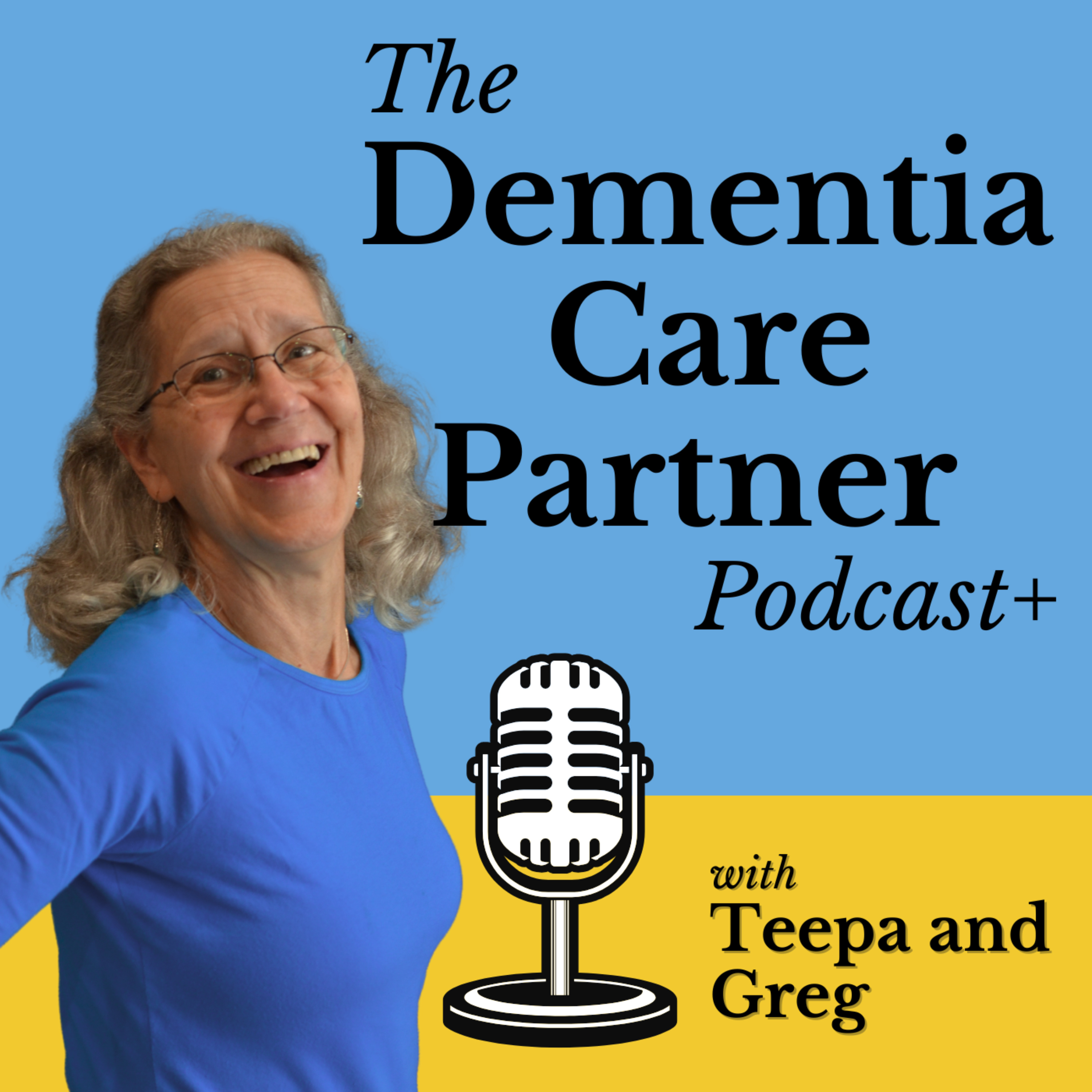
Dementia Care Partner Podcast with Teepa Snow
by Teepa Snow's Positive Approach to Care
This is the Dementia Care Partner Podcast, a podcast to help you navigate the senior care maze. Learn and laugh with us as we discuss creative solutions and ideas to common and uncommon dementia care challenges, and how to make sense of the senior care industry and options even if you're not a professional. Are you caring for a person living with dementia? We would love to hear from you! Send us a note at [email protected] and tell us what you'd like for us to discuss! You can also visit our website at www.teepasnow.com.
-
0
372: Why Trying to Trick Someone Living with Dementia Almost Always Backfires
When an article promises so-called tricks to get a person living with dementia to eat, bathe, or go to bed, Greg and Teepa stop to question both the word and the mindset behind it. They explain why these suggestions often assume that the individual can't tell what's happening (they often can) and how this tactic can erodes trust. They then walk through connection-based strategies that start with curiosity instead: acknowledging what the person is reacting to, seeking information, and being willing to change your own approach when the brain change makes the old one stop working.Learn more at teepasnow.com.
-
-1
371: Dementia Headlines: Fact or Fiction?
Exercise grows new brain cells. This drink lowers your Alzheimer's risk by 32 percent. This food shrinks your brain. If you have ever tumbled down an internet rabbit hole of dementia headlines, this episode is for you. Greg reads Teepa a stack of real headlines pulled from just the first six months of the year, and together they sort out what deserves your attention and what is simply not true. Teepa explains how brain change is multifactorial and cannot be magically cured by one magic food, drink, or habit; the truth about research on so-called quick fixes, and why chasing sensational claims often leaves care partners feeling more frightened and more blamed than before. Every brain change journey is different. There's no if-A-then-B here — but there are skills, and they can be learned. Need support with a specific situation? Positive Approach to Care® offers a complimentary 30-minute consultation that can help you start to see the bigger picture and build on what's already working.
-
-2
370: Being a Lone Ranger is the Riskiest Role for a Care Partner
Some headlines stop you cold. Care partners have a 63% higher mortality rate than people the same age who aren't supporting someone. In this episode, Greg and Teepa look past this statistic and ask a better question: who exactly is dying early? Teepa's answer, drawn from forty-five years of experience, is that the risk isn't in supporting another individual — it's in doing it alone, without knowledge, without skill building, and without anyone to call. You'll hear why nobody can take care of them like I do is a warning sign rather than a badge of honor, what happens to the person living with dementia when the lone care partner goes down first, and why learning to pause and breathe is truly essential for survival. If you're carrying this alone, you don't have to. The Care Partner Support Series from Positive Approach to Care® is a place to bring your real questions, build practical skills, and connect with people who understand the road you're on. No judgment, no overwhelm, just support and a next step. Explore more about the Care Partner Support Series (link).
-
-3
369: I’m Not Thirsty: A Statement Worth Exploring
Heat waves can be dangerous for people living with dementia, and the reason is not what most care partners assume. In this episode, Teepa and Greg explain why the sense of thirst fades with age and brain change, why a wet mouth can convince the brain it has had enough, and why a person who is genuinely dehydrated may tell you with total confidence that they already drank. You will also hear why cold water is often the wrong offer and what to try instead, and how pushing fluids can turn you into the threat. If this episode has you thinking about someone you support and wondering how to keep them safe without taking over, Teepa's Living at Home with Mid- to Later-Stage Dementia video walks through finding the balance between helping and encouraging independence and offering personal care that builds trust. It is approximately ninety minutes of practical techniques you can put to use right away.
-
-4
368: What Does Home Really Mean When Dementia is in the Picture?
A Dutch care community started placing life-size stickers of residents' own front doors on their room entrances. It's a lovely idea. So why doesn't it always land? In this episode, Teepa Snow and host Greg Phelps discuss why a person living with dementia may not be looking for their most recent home at all. They might be looking for their mother's house. Or the home they had when they were first married. What you'll hear: • Why environmental cues work for some people and distress others • How to explore a familiar object without correcting someone • Why packing up and wanting to go home is so common • What to try when a single change isn't enough Explore more about the concept of home as Teepa shows you how to shape a space so it supports abilities, encourages independence, and lowers stress for all. Check out Designing a Supportive Dementia Care Environment for more information.
-
-5
367: What's So Special About Music in Dementia Care?
If you have been following Teepa for any amount of time, you're familiar with how much she incorporates music and rhythm when supporting people living with dementia. This episode, Teepa and Greg discuss the reasons why music and rhythm is so effective at getting folks up and moving. You don't have to be a music therapist to incorporate these strategies!Want to go deeper?You don't need to stop there. Positive Approach to Care® (PAC™) offers learning experiences that help care partners at every level put Teepa's approach into everyday practice.🔹 Start with the basics: Accepting the Challenge introduces you to Teepa's foundational approach to dementia care — including the role that connection, movement, and rhythm play in supporting people living with brain change.→ Streaming version: Link→ Course version: Link🔹 Go hands-on: Champion Courses build the practical skills to put what you've learned — including techniques like music and rhythmic engagement — into confident, consistent action.→ Link🔹 Connect regularly: The Care Partner Support Series is a space to keep learning, keep practicing, and stay connected with a community who truly understands.→ Link
-
-6
366: Can Over-the-Counter Meds Cause Dementia?
According to one recent study, there are two specific over-the-counter medications that can cause a 44% increase in the risk for developing dementia. Does this mean I have to throw out everything I have in my medicine cabinet? Join us this week as Teepa discusses why medications and dementia are a tricky correlation, and why medical providers' familiarity with the Beers List can be very helpful.Want to go deeper?The more you understand about brain change and the factors that affect it, the better equipped you are to ask the right questions — and to support the people around you. Positive Approach to Care® (PAC™) offers learning experiences for care partners and professionals alike.🔹 For families and care partners: Champion Courses give you a deeper understanding of how the brain changes in dementia — and what that means for everyday decisions, including conversations with medical providers.→ Link🔹 For healthcare professionals and educators: The Dementia Educator Certification (Tier 2) is designed for those who want to go beyond personal care knowledge and equip others with evidence-informed approaches to dementia.→ Link🔹 Not sure where to start? Accepting the Challenge is an accessible introduction to Teepa's approach — a strong first step before diving into the clinical side of things.→ Streaming version: Link→ Course version: Link
-
-7
365: Questions from Our Audience
This week, Teepa addresses two questions that were submitted by our listeners. The first question relates to getting curious if we notice a sudden change in a person living with dementia. The second question was related to alcohol consumption and if there is a connection to an increased risk of developing dementia. If you have asked yourself either of these questions recently, you'll be interested in learning Teepa's insights.Want to go deeper?Questions like these deserve more than a quick answer. If you're finding yourself curious — and wanting to learn more — Positive Approach to Care® (PAC™) has resources that can help you keep building your knowledge and confidence.🔹 Start exploring: Accepting the Challenge is a great first step if you're new to Teepa's approach and want a solid foundation to build from.→ Streaming version: Link→ Course version: Link🔹 Keep the questions coming: The Care Partner Support Series is a recurring opportunity to bring your real questions directly to Teepa and learn alongside a community of care partners.→ Link
-
-8
364: You Gotta Have a Plan!
Reach, throw, go. If you see someone showing signs of distress while in the water, those three options could help potentially save a person's life. The same concept applies in dementia care, as Teepa and Greg discuss in this week's episode. If a person living with dementia is showing you signs of distress through their words or actions, having a plan in place could make a radical difference in how a situation plays out.Want to go deeper?A plan only works if you have the skills to back it up. Positive Approach to Care® (PAC™) offers structured learning experiences that help care partners and professionals build ready-to-use strategies — so when a moment arises, you're not starting from scratch.🔹 Build your skills: Champion Courses equip you with a practical, step-by-step approach to dementia care — including how to recognize and respond when someone is showing signs of distress.→ Link🔹 Get ongoing support: The Care Partner Support Series gives you a regular space to learn, ask questions, and plan alongside other care partners.→ Link🔹 Bring this training experience to your team: If you're a professional or work within an organization, the Dementia Educator Certification (Tier 2) prepares you to teach and support others in building their own plans.→ Link
-
-9
363: What Type of Hydration is Most Effective?
As those of us in the northern hemisphere head into summer, with record high temperatures forecasted for many, Teepa and Greg address a question that was submitted by our audience: is water sufficient at hydrating a person living with dementia or are electrolyte-focused drinks better? As with most things related to dementia care, the answer is not simple and straightforward. One of the considerations discussed is the importance of how water is offered, as well as the necessity of understanding an individual’s preferences for different types of liquids.Want to go deeper?Knowing what to do is one thing — having the skills to carry it out with confidence is another. If you're ready to build a stronger foundation in dementia care, Positive Approach to Care® (PAC™) offers a range of learning options designed to meet you at any stage of the journey.🔹 New to PAC? Start with Accepting the Challenge — an accessible introduction to Teepa's approach to dementia care.→ Streaming version→ Course version🔹 Ready to go further? Champion Courses give you practical, hands-on skills you can use right away.🔹 Looking for ongoing support? The Care Partner Support Series connects you with a community of care partners on a regular basis.
-
-10
360: Is Doomscrolling Rewiring Our Brains — and What Does That Mean for Dementia Care?
Is brain rot caused by screen time just a Gen Z problem — or does it affect everyone supporting those living with dementia? The term brain rot was coined by Henry David Thoreau in 1854 to describe the preference for simple ideas over complex ones. Today, endless scrolling and passive screen time have made it a modern epidemic — and it has real implications for dementia care. In this episode, Teepa Snow and Greg Phelps explore the difference between passive observation and active engagement, why that distinction matters for people living with brain change, and how care partners can use conversation, curiosity, and connection to stimulate meaningful interaction. You'll learn: Why passive TV watching and internet scrolling look similar in the brain — and why that matters How active conversation creates cognitive demand that passive media simply can't What care partners can do differently to encourage real engagement How Positive Approach to Care® courses and video resources can help you build true engagement skills Whether you're supporting at home or in a facility, the tools you use to connect make a difference. This episode will change how you think about screen time — for your person, and for yourself. Ready to build real engagement skills? Positive Approach to Care® Champion Courses give you practical, hands-on tools to connect more meaningfully with those you're supporting — and skill demonstration is required, not just course completion.
-
-11
359: Does Supporting Someone Living with Dementia Shorten your Life Span?
A headline statistic claims care partners have a 63% higher mortality rate than non-caregivers the same age — but subsequent research tells a very different story. In this episode, dementia care educator Teepa Snow breaks down what the science actually shows, why your attitude and circumstances at the start of your care journey matter more than most people realize, and what the key differences are between care partners who thrive and those who burn out.Whether you're a family care partner or a professional, Teepa’s Positive Approach to Care® offers practical guidance on the questions you should be asking yourself right now — and where to turn if the answers concern you.If this episode raises questions about where you are in your own journey — or where to go next — we'd love to help. A no-cost 30-minute consultation with our team can help you find the right path forward for your specific situation. Schedule your complimentary 30-minute consult
-
-12
358: Rethinking Brain Change with Neuroplasticity in Mind
When someone we’re supporting is living with dementia, it's easy to start cataloging the losses. They can't remember the name of the restaurant. They can't find the word. They can't follow the plan. But what if can't is only half the story?In this episode of the Dementia Care Partner Podcast, Teepa Snow and host Greg Phelps reframe one of the most quietly damaging habits in dementia care: noticing what's lost instead of noticing what's changing. The word dementia itself points to loss — but the brain is also doing something else. It's adapting. It's rewiring. And the way a care partner responds can either expose the loss or build a bridge to what's still there.In this conversation:Why brain change is a more accurate — and more useful — frame than brain lossNeurodegeneration versus neuroplasticity, and why both are happening at onceA real-time example of how the same question, asked two different ways, either shames or supportsHow to listen for the data a person is giving you, even when the words aren't clearWhy forgiving yourself as a care partner isn't optional — it's an essential skillWhere to start when you don't know where to start: training, community, and the resources Positive Approach to Care® offers across YouTube, LinkedIn, Facebook, and beyondThis episode is an invitation to stop swinging at every pitch and start learning the game. You won't hit a home run every time. Neither does Teepa. The true skill is in what you do after the miss.For more dementia care resources and support for care partners, visit teepasnow.com.#DementiaCare #PositiveApproachToCare #TeepaSnow #CarePartner #BrainChange #Neuroplasticity #PAC
-
-13
357: Three Hearing Aids Later, They Still Won't Wear Them — Here's Why
Three hearing aids. Two sets of dentures. Glasses that keep going missing. If you're a care partner who feels like you're throwing money away on devices that get rejected or lost, this episode is for you.In this conversation, Teepa and Greg unpack one of the most frustrating patterns families face: when a person living with dementia refuses the very devices meant to help them. The surprising insight? The problem often isn't the device — it's brain change.In this episode, Teepa explains:Why hearing loss is sometimes actually brain change — and why simply turning up the volume makes things worseHow switching between near and far vision creates brain fatigue (and why an individual might stop eating because of it)Why dentures can block the sensory feedback a person relies on to chew and enjoy foodWhen to put the hearing aid in — and when to take it outHow to shift from giving care to partnering in careYou'll walk away with a new lens for understanding refusal, and practical ways to support the person you love.If today's episode opened up more questions than it answered, here's a great place to keep learning. Accepting the Challenge is a three-hour on-demand training led by Teepa Snow and Melanie Bunn, RN — an effective resource whether you're new to dementia care or refreshing what you already know. Across sixteen modules, you'll learn how to use the Positive Physical Approach™ in real moments, how to navigate mealtimes and personal care without conflict, and how to build meaningful days together, and how dementia changes memory, language, and impulse. It's the foundational knowledge a lot of care partners wish someone had handed them on day one: Accepting the Challenge.🎧 New episodes of the Dementia Care Partner Podcast every week.Have a question you'd like Teepa to explore on the show? Email Greg at [email protected] and cc [email protected] more about Teepa Snow and Positive Approach to Care® at teepasnow.com.#DementiaCare #PositiveApproachToCare #TeepaSnow #CarePartner #PAC
-
-14
356: Rethinking Environments for People Living with Dementia
What makes an environment truly supportive for a person living with dementia — and for their care partners, as well? In this episode, Teepa walks Greg through an evolution of one of her most-used frameworks: the four Fs and four Ss of supportive environments, now expanded to 4+1.The original four Fs ask whether a space feels Friendly, Familiar, Functional, and Forgiving. The four Ss ask whether an environment offers the right Space, Sensory match, Social match, and Surface-to-surface contact. But Teepa kept noticing something was missing — like a hand without its thumb. So she added Flexible to the Fs (because brain change keeps shifting, and rigid environments stop working) and Satisfaction to the Ss (because a space can check every box and still leave someone seeking rather than settling).Teepa also shares how she tested this update with Positive Approach to Care® mentors and trainers in the field before bringing it forward — and why satisfaction must belong to everyone in the space, not just the person living with dementia.If you're thinking about a home setup, a care community, or simply why a loved one seems restless in a room that seems like it should work, this conversation provides practical aspects to consider.In this episode:Why the original 4 Fs and 4 Ss needed a thumbFlexibility as a response to ongoing brain changeWhat satisfaction really means in a shared spaceHow Teepa trials new ideas with the PAC mentor communityWant to take this conversation from framework into practice? Teepa's streaming program Designing a Supportive Dementia Care Environment provides over two hours of room-by-room guidance for setting up a home that works for both you and the person in your care — covering the spaces, routines, and small adjustments that protect quality of life as brain change unfolds.Watch it here: https://shop.teepasnow.com/product/designing-a-supportive-dementia-care-environment-streaming/Learn more about Teepa Snow and Positive Approach to Care at teepasnow.com.Have a topic you'd like Teepa and Greg to explore? Email [email protected] and cc [email protected].#DementiaCare #PositiveApproachToCare #TeepaSnow #CarePartner #PAC
-
-15
355: When Being Right Makes Everything Wrong
You know you're right — but does saying so actually help? In this episode, dementia care expert Teepa Snow and host Greg Phelps explore one of the most common traps care partners fall into: the impulse to correct. Whether it's a misremembered fact, an outdated term, or a flat-out wrong take, the instinct to set the record straight can quietly damage the relationship you're working so hard to protect.Teepa shares why curiosity is more powerful than correction — and how reframing what someone says, rather than rebutting it, keeps the conversation moving forward without anyone feeling attacked or embarrassed. She also reveals why the skills that make you a better care partner have a funny way of improving every relationship in your life.In this episode:• Why "being right" can mean losing the relationship• How to use curiosity to redirect — without arguing• The art of restating what someone said so they feel heard, not corrected• Why these skills work on your kids, your spouse, and your coworkers tooThere's a line in Teepa's new Dementia Care Partner Guide that captures what today's episode is really about: let go of what is missing, and learn to celebrate and use what remains. That shift — from correcting to connecting, from caregiver to care partner — is what the whole book is built around.Inside, you'll find the updated GEMS® States of Brain Change, a photo-by-photo walkthrough of Hand-under-Hand®, Positive Action Starters, Visual-Verbal-Touch Cueing, and bonus resource cards you can use right away. If you're ready to make life worth living all the way through the journey, this is where to start. Pick up your copy at shop.teepasnow.com.🎧 Subscribe to the Dementia Care Partner Podcast on Spotify or Apple Podcasts so you never miss a new episode.📩 Have a question or topic you'd like Teepa to explore? Email Greg at [email protected]#DementiaCare #PositiveApproachToCare #TeepaSnow #CarePartner #PAC
-
-16
354: When Being Right Isn't Worth It: Rethinking The Need to Correct
On a recent walk in the woods, Greg overheard a small but telling exchange: a daughter snapped at her mother for misremembering who once owned a camera. It was a tiny correction — and a familiar one. In this episode, Teepa Snow and Greg Phelps unpack why our reflex to set the record straight can quietly erode the relationships that matter most.Teepa walks care partners through a more useful question than Am I right? Instead, ask yourself: Is it worth it? Worth it in five minutes? Five hours? Five years? Worth it when this conversation is the last one you'll remember?You'll learn:· Why correcting a person living with dementia often feels like an attack, even when it's well-intentioned· How to slow down and use curiosity instead of confrontation ("So you're thinking it was me that owned that type of camera?")· A practical reframe for everyday moments — wet pants, spilled soup, mistaken identities — that protects dignity and the relationship· Why it's better to be kind than to be right is a skill, not just a sayingWhether you're supporting a spouse, parent, or client, this conversation will help you trade the urge to correct someone for the power to preserve your connection.If today's conversation made you stop and think about how you show up in those moments — the corrections, the arguments — check out Improving Communications in Dementia Care. It goes well beyond today's episode with five hours of hands-on skill-building that changes not just what you say, but how you connect.Subscribe to the Dementia Care Partner Podcast on Spotify or Apple Podcasts so you never miss a new episode. Have a question or topic you'd like Teepa to explore? Email Greg at [email protected]#DementiaCare #PositiveApproachToCare #TeepaSnow #CarePartner #PAC
-
-17
353: Hearing Loss: An Early Sign of Dementia Or An Early Sign?
A recent study found that people under 70 with hearing loss who used hearing aids had a 61% lower risk of dementia — and that kind of headline is hard to ignore. But does that mean hearing aids will protect your loved one from dementia? In this episode, Teepa and Greg take a closer look at what the research actually tells us, why hearing loss may be an early identifier of brain change rather than a cause, and what truly helpful communication looks like — with or without hearing aids. If you're navigating communication challenges with someone living with brain change and want practical, real-world guidance, Positive Approach to Care® on-demand streaming videos are a great place to start. Learn at your own pace and build skills you can use the same day. Browse the full library at: https://shop.teepasnow.com/product-category/online-video/?utm_source=social&utm_medium=organic_social&utm_campaign=4499760-New%20Podcast%20Dropped
-
-18
352: Lifestyle Changes and Dementia Risk: Why Small Steps Beat Big Overhauls
A headline says lifestyle changes can improve cognition — and that sounds like great news. But what happens when the ask is so big it becomes another source of stress? In this episode, Teepa and Greg unpack why sweeping lifestyle changes often backfire, how to find smaller shifts that can be maintained, and what it really means to involve the person living with brain change in decisions about their own life. Because care without the person isn't care — it's something else entirely. Ready to build the communication skills that make lifestyle conversations less of an uphill climb? The PAC Champion Courses are short, skill-focused trainings designed to help you lead with connection — so you're prepared for real moments, not just theory. Explore the Champion Courses and find the level that's right for where you are right now.
-
-19
351: How to Protect Seniors from Financial Fraud Before It's Too Late
Financial fraud targeting seniors is on the rise—and it's often not a stranger who’s the culprit. In this episode, Teepa and Greg unpack the full picture of elder financial exploitation: from crimes of opportunity by paid workers to complex, long-running schemes carried out by people closest to the individual. You'll hear why people living with brain change are especially vulnerable, why they often hide what happened, and what early, practical steps you can take to protect the people you support—without triggering fear or paranoia. If you want to go deeper on this topic, The Caregiver's Game: Unraveling Financial Deceit in the Shadows of Dementia is a powerful read that includes strategies for helping to prevent financial exploitation of those living with dementia: Click HereThe earlier you put protections in place, the better. Head to teepasnow.com to explore resources that can help you take those first practical steps with confidence.
-
-20
350: When Incontinence Happens – And How’s It’s Related to Brain Change
It's one of the most common — and least talked about — parts of the dementia journey. In this episode, Teepa and Greg take on the topic many care partners struggle to bring up: incontinence. You'll hear why brain change is the real driver, how to have a respectful, dignity-first conversation with the person you're supporting, and the practical strategies and products can actually help — for both women and men. Teepa mentioned this product as one quality resource to try: Premium Overnight Plus Underwear. To take advantage of their $9.99 trial, which includes a 20-piece Trial Pack of Premium Underwear, 2 free Travel Packs, and 2 free Travel Wipes, Click Here. If you're navigating this challenge and aren't sure where to turn, PAC offers complimentary consultations where you can ask questions, receive guidance, and find out what resources fit your situation. You don't have to figure this out alone. Schedule a complimentary consultation
-
-21
349: When Dementia Changes Appetite: It’s Not Being Picky—It’s Brain Change
Appetite changes in dementia can look completely different from one person to the next—and that’s exactly why this episode matters. Greg and Teepa break down what might really be going on when appetite changes occur (from anxiety and impulse changes to not recognizing food or not knowing how to start eating) and why labeling them as just being picky often misses the true issue. Stay with it for practical, dignity-first ways to notice the why behind eating changes and respond in a way that actually helps. If you’re experiencing mealtime challenges and you’d like help in sorting through your particular situation, we’re here to support you. Every situation is unique, and we want to offer guidance tailored to your needs. Click the this link to schedule a complimentary 30-minute consult.
-
-22
348: Predicting Dementia Isn’t the Breakthrough—What You Do Next Is
So-called breakthrough headlines can spark a lot of fear—and a lot of assumptions. In this episode, Greg and Teepa unpack what headlines such as depression doubles dementia risk and AI can predict Alzheimer years in advance actually mean — and what they don’t. Learn to consider practical questions and the choices that matter, even when predictions feel scary. If sensational headlines leave you feeling unsettled, you don’t have to sort it out alone. The Care Partner Support Series is a safe place to bring your questions, learn practical strategies, and connect with others who are on the same journey—without judgment and without overwhelm. If you’re looking for a little more confidence in how you respond day to day, the Care Partner Support Series is a next step worth checking out.
-
-23
347: Workplace Violence Isn’t Part of the Job—It’s a Training Gap
Workplace violence and burnout don’t come out of nowhere—and in this episode, Teepa and Greg dig into the uncomfortable reasons behind it. You’ll hear how a task-first, us vs. them culture and a lack of dementia-specific skill-building can escalate everyday moments into refusal, fear, and trauma for everyone involved. Stick around for the practical shifts that change the whole dynamic: leading with relationship, understanding brain change, and building skills that reduce risk. If your team is dealing with burnout, refusals, or escalating moments, the PAC Champion Courses are a practical next step—short, skill-focused trainings that build a shared approach for how you show up, connect, and respond when things get tense. They’re designed to help staff move from “I’m just trying to get the task done” to “I know what to do next,” with tools that can be used the same day. Explore the Champion Courses and see which level fits where your team is right now.
-
-24
346: Start the Conversation About Brain Change
Ever wish you had a simple way to help your community or organization better understand dementia/brain change—without it being scary or overwhelming? In this episode, Teepa and Greg unpack the newly updated Getting to Know Dementia Community Training Kit (now with refreshed videos, updated PowerPoints, and refined interactive activities) and explain how you can run one session or link all six into a series. You’ll also hear how it helps people move from improved awareness to the realization of I might need a team—and here’s my next step. If you’ve been wanting an easy-to-use training resource that helps provide the transition from curiosity to real understanding, this is for you. The Getting to Know Dementia Community Training Kit provides everything you need to guide a meaningful learning experience with a group, even if you’re not sure where to start. It’s practical, adaptable, and designed to help people feel more prepared to respond with support (not judgment).
-
-25
345: How to Preserve Dignity and Purpose in Dementia Care
For many of us, the scariest part of dementia isn’t the diagnosis itself—it’s the fear of losing our purpose, value, and roles. In this episode, Teepa Snow and Greg Phelps explore how to protect dignity while abilities shift by using substitution instead of subtraction. When a role needs to change, Teepa shares practical ways to offer a new job first—so the person isn’t left feeling sidelined. You’ll also hear why waiting for a crisis makes everything harder, and how the PIPES approach can help you plan role changes with more calm, clarity, and partnership.Feeling the shift in roles at home? Start with the Family Care Partner Starter Kit to build shared language, reduce friction, and keep your person involved in meaningful ways—one step at a time.This episode is educational and not medical advice.This podcast is distributed on third-party platforms (including Spotify and Apple Podcasts) to make listening more accessible and convenient for our community. Our presence on any platform does not indicate endorsement of that platform, its owners, its policies, moderation decisions, advertising practices, or any other content hosted or shared there. The views and opinions expressed in this episode are those of the speakers and do not necessarily reflect the views of Positive Approach to Care® (PAC™).
-
-26
344: When Choosing Memory Care, Start with the Person
When it’s time to move someone you’re supporting into a new living setting, it’s tempting to search for a perfect checklist. In this episode, Teepa Snow and Greg Phelps invite you to start with something more person-centered: Who is your person, what matters most to them, and what kind of day are you hoping they can still have? They explore real-world tradeoffs (distance vs. access, great medical care vs. great lifestyle), and offer practical touring tips—like visiting at different times, including evenings and weekends—so you can make a more informed, compassionate choice.Want a simple tool you can use immediately? Grab the GEMS® State Tool—an in-the-moment reference guide to help you recognize someone’s GEMS state and choose a better support response during stressful transitions.This podcast is distributed on third-party platforms (including Spotify and Apple Podcasts) to make listening more accessible and convenient for our community. Our presence on any platform does not indicate endorsement of that platform, its owners, its policies, moderation decisions, advertising practices, or any other content hosted or shared there. The views and opinions expressed in this episode are those of the speakers and do not necessarily reflect the views of Positive Approach to Care® (PAC™).
-
-27
343: Alzheimer and Dementia Care Education Week: What to Learn First
In honor of National Alzheimer and Dementia Care Educators Week (Feb 14–21), Teepa Snow and Greg Phelps take on a specific headline that reads: You can be a dementia therapy practitioner by next week. They unpack why quick certification promises can miss what matters most—building real, person-centered skills that help you respond to brain change in the moment, with confidence and respect.Ready to move beyond quick-fix dementia training? Join the Positive Approach to Care® Dementia Trainer Certification (live online) to build practical, person-centered skills you can use—and teach. Next live online dates: Feb 17–18, 2026This podcast is distributed on third-party platforms (including Spotify and Apple Podcasts) to make listening more accessible and convenient for our community. Our presence on any platform does not indicate endorsement of that platform, its owners, its policies, moderation decisions, advertising practices, or any other content hosted or shared there. The views and opinions expressed in this episode are those of the speakers and do not necessarily reflect the views of Positive Approach to Care® (PAC™).
-
-28
342: Dementia Is Not Just Alzheimer Disease
Is dementia the same thing as Alzheimer disease? Not exactly, and that difference can matter a lot when new symptoms show up.In this episode, Teepa Snow and Greg Phelps explain that dementia is an umbrella term and Alzheimer disease is one specific type of dementia under that umbrella. They then discuss the way that each form of dementia, with its specific pattern of brain change, can result in different real-life challenges—such as how visual hallucinations and frequent falls are far more common in some forms (like Lewy body dementia) and why sudden hallucinations in someone diagnosed with Alzheimer dementia may be a cue to look for something else that may be going on (illness, medication issues, etc.). In this episode, you’ll learn:• What dementia means—and why it’s not one single diagnosis• The basics of what’s often typical in Alzheimer patterns over time • Why hallucinations, delusions, and sudden body changes can be important to noticeWant a deeper dive beyond today’s episode? Watch Teepa’s Understanding Different Dementias (12-part recorded series) to learn common patterns, changes to notice, and how your approach can shift based on the type of dementia.This podcast is educational and not medical advice. If symptoms change suddenly or feel urgent, consider contacting a licensed healthcare professional.This podcast is distributed on third-party platforms (including Spotify and Apple Podcasts) to make listening more accessible and convenient for our community. Our presence on any platform does not indicate endorsement of that platform, its owners, its policies, moderation decisions, advertising practices, or any other content hosted or shared there. The views and opinions expressed in this episode are those of the speakers and do not necessarily reflect the views of Positive Approach to Care® (PAC™).
-
-29
341: Too Much Dementia Advice? Start with A Simple Pause
When you or someone you know is diagnosed with dementia, the advice avalanche soon follows: diets, supplements, medications, gadgets, and more. In this episode, Teepa Snow and Greg Phelps slow it all down and start where care partners actually need to start: pause, take a breath, and take inventory.Teepa explains why a dementia diagnosis can mean many different things—and why jumping straight into trying to fix things can create more fear and confusion. Instead, she offers a steadier path: get curious about what’s happening right now, name what you’re feeling, and reduce the urgency so you can make clearer decisions.You’ll also hear a simple, powerful reset that helps someone move out of panic mode: “Are you okay?”—a small interruption that creates space for real support.Helpful next step (product tie-in): If you want personalized guidance (without chasing fast fixes), consider a Care Partner Consult with a PAC-trained mentor—an individual conversation to talk through what’s happening and identify practical first steps to move forward.To inquire, email [email protected] content is available on Spotify to make it easy for our community to listen to. Our presence on Spotify does not indicate endorsement of Spotify, or its owners, its policies, moderation decisions, advertising, or any content shared on the platform. The views and opinions expressed during this episode are those of the speakers and do not necessarily reflect the views of Positive Approach to Care® (PAC™)
-
-30
340: Before You’re Drowning: Why Care Partners Need Support Sooner—Not Later
Families supporting individuals living with dementia can face challenges such as sleepless nights, isolation, and not being prepared with a backup plan for care. In this candid conversation, Teepa Snow explains why waiting for a crisis makes everything harder—and how early, family-wide support can protect relationships, reduce burnout, and prevent care partners from feeling like they’re carrying everything alone. Waiting until a crisis makes everything harder — especially for care partners already stretched thin. Challenging Behaviors: Using a Positive Approach® helps families recognize unmet needs behind distress, respond earlier, and prevent situations from escalating.This podcast is distributed on third-party platforms (including Spotify and Apple Podcasts) to make listening more accessible and convenient for our community. Our presence on any platform does not indicate endorsement of that platform, its owners, its policies, moderation decisions, advertising practices, or any other content hosted or shared there. The views and opinions expressed in this episode are those of the speakers and do not necessarily reflect the views of Positive Approach to Care® (PAC™).
-
-31
339: Did We Promise This? Rethinking Marriage, Dementia, and What Care Partnering Really Means
Should dementia really be written into wedding vows—or is that the wrong question altogether? In this thought-provoking conversation, Teepa Snow and Greg explore what care partnering truly means, and why it doesn’t always mean providing hands-on care. They also explore the ways that couples can rethink roles, strengths, and shared commitment as life—and brain change—reshapes the relationship. Care partnering isn’t just about tasks — it’s about relationships, roles, and shared humanity. A Family’s Journey Through Dementia — A Play brings these realities to life through storytelling, humor, and honest moments that reflect how couples and families adapt together over time. This DVD invites us to rethink partnership, recognize strengths beyond hands-on care, and explore what commitment can look like as life and brain change evolve.This podcast is distributed on third-party platforms (including Spotify and Apple Podcasts) to make listening more accessible and convenient for our community. Our presence on any platform does not indicate endorsement of that platform, its owners, its policies, moderation decisions, advertising practices, or any other content hosted or shared there. The views and opinions expressed in this episode are those of the speakers and do not necessarily reflect the views of Positive Approach to Care® (PAC™).
-
-32
338: When Families Are Caught Off Guard: Choosing Care That Truly Fits
When a hospital stay or other occurrence reveals unexpected brain change, families are often forced to make fast care decisions without a clear roadmap. In this episode, Teepa Snow is joined by senior advisor Tim Walsh to unpack why knowing what you’re shopping for matters—and how hands-on skill-building can change the way families, advisors, and communities support people living with dementia. When families are suddenly thrust into making care decisions, knowing how to help often matters more than knowing what to do. It’s All in Your Approach® focuses on the practical, hands-on skills that change everyday interactions — reducing distress, building trust, and truly supporting the person living with brain change. This DVD reinforces the episode’s message that informed choices and skill-building can transform care outcomes, even when families feel unprepared.This podcast is distributed on third-party platforms (including Spotify and Apple Podcasts) to make listening more accessible and convenient for our community. Our presence on any platform does not indicate endorsement of that platform, its owners, its policies, moderation decisions, advertising practices, or any other content hosted or shared there. The views and opinions expressed in this episode are those of the speakers and do not necessarily reflect the views of Positive Approach to Care® (PAC™).
-
-33
337: Looking Ahead with Purpose: Hope for Dementia Care in 2026
As 2025 comes to a close, dementia care expert Teepa Snow reflects on progress made—and shares what gives her hope for the year ahead: stronger foundations, global connection, and care that truly delivers what it promises. This forward-looking conversation invites care partners, professionals, and organizations to rethink awareness, skill-building, and what it really means to create communities that work well for everyone. If we’re going to build dementia care that truly delivers on its promises, we need a shared understanding of how brain change unfolds — and how support must shift along the way. Progression of Dementia: Seeing GEMS® — Not Just Loss offers a hopeful, practical framework for recognizing abilities, adjusting expectations, and responding with intention at every stage. This DVD supports the future-focused conversation in this episode by helping care partners, professionals, and communities build stronger foundations rooted in skill, awareness, and respect.This podcast is distributed on third-party platforms (including Spotify and Apple Podcasts) to make listening more accessible and convenient for our community. Our presence on any platform does not indicate endorsement of that platform, its owners, its policies, moderation decisions, advertising practices, or any other content hosted or shared there. The views and opinions expressed in this episode are those of the speakers and do not necessarily reflect the views of Positive Approach to Care® (PAC™).
We're indexing this podcast's transcripts for the first time — this can take a minute or two. We'll show results as soon as they're ready.
No matches for "" in this podcast's transcripts.
No topics indexed yet for this podcast.
Loading reviews...
ABOUT THIS SHOW
This is the Dementia Care Partner Podcast, a podcast to help you navigate the senior care maze. Learn and laugh with us as we discuss creative solutions and ideas to common and uncommon dementia care challenges, and how to make sense of the senior care industry and options even if you're not a professional. Are you caring for a person living with dementia? We would love to hear from you! Send us a note at [email protected] and tell us what you'd like for us to discuss! You can also visit our website at www.teepasnow.com.
HOSTED BY
Teepa Snow's Positive Approach to Care
Loading similar podcasts...
Frequently Asked Questions
How many episodes does Dementia Care Partner Podcast with Teepa Snow have?
Dementia Care Partner Podcast with Teepa Snow currently has 34 episodes available on PodParley. New episodes are automatically indexed when they're published to the podcast feed.
What is Dementia Care Partner Podcast with Teepa Snow about?
This is the Dementia Care Partner Podcast, a podcast to help you navigate the senior care maze. Learn and laugh with us as we discuss creative solutions and ideas to common and uncommon dementia care challenges, and how to make sense of the senior care industry and options even if you're not a...
How often does Dementia Care Partner Podcast with Teepa Snow release new episodes?
Dementia Care Partner Podcast with Teepa Snow has 34 episodes. Check the episode list to see recent publication dates and frequency.
Where can I listen to Dementia Care Partner Podcast with Teepa Snow?
You can listen to Dementia Care Partner Podcast with Teepa Snow on PodParley by clicking any episode. We provide an embedded audio player for direct listening, and you can also subscribe via your preferred podcast app using the RSS feed.
Who hosts Dementia Care Partner Podcast with Teepa Snow?
Dementia Care Partner Podcast with Teepa Snow is created and hosted by Teepa Snow's Positive Approach to Care.
URL copied to clipboard!