
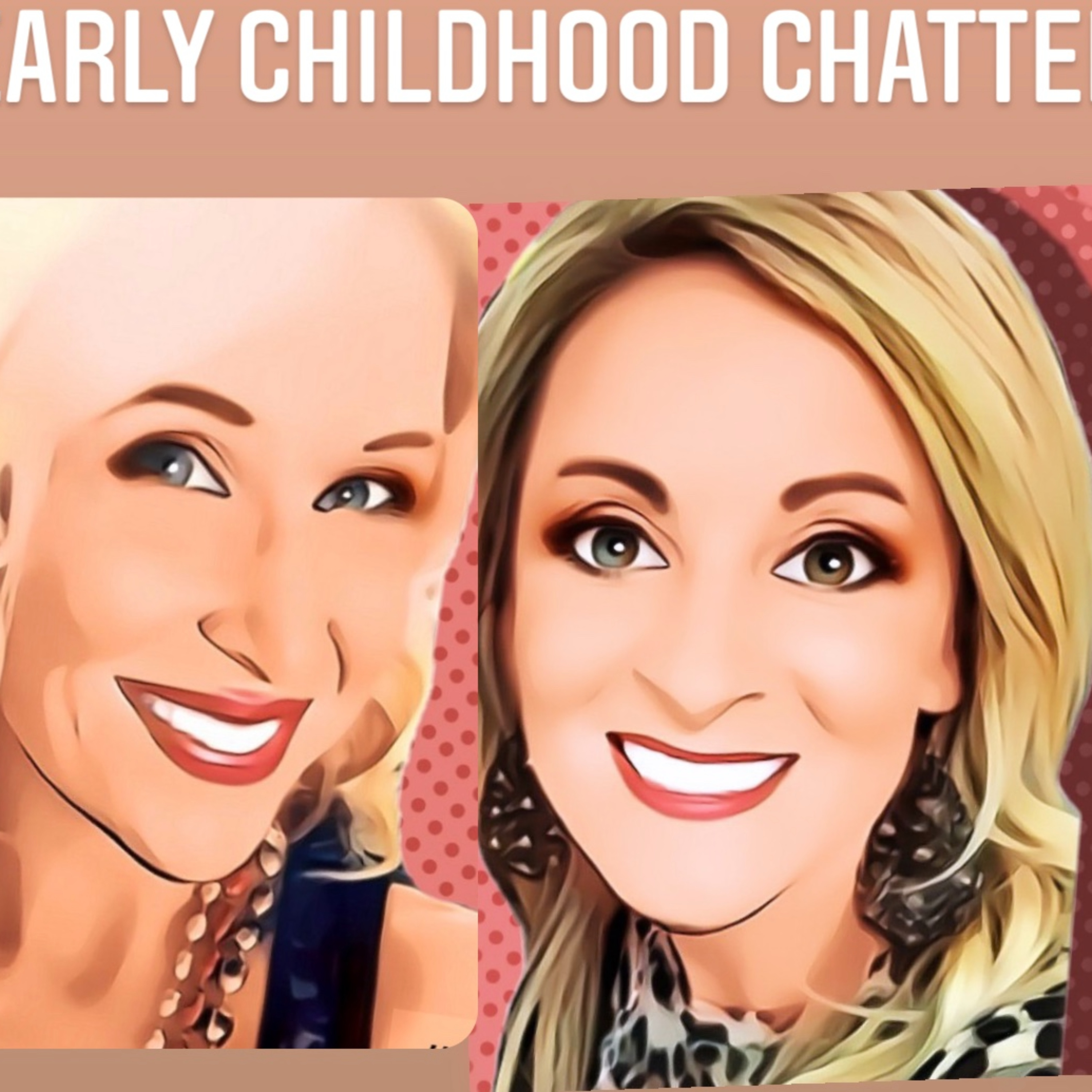
PODCAST · education
Early Childhood Chatter
by Dr. Stephanie Heald and Dr. Tisha Shipley
Dear listeners,Thank you for your support and for listening to our podcast. Please note that we will no longer be publishing new episodes after October 1, 2025. Our current site will remain open for past episodes and additional content. For new updates and more content, please visit unEdited chatter. We appreciate your continued support! Thank you!Tisha and Steph
-
134
Final Episode
Dear listeners,Thank you for your support and for listening to our podcast. Please note that we will no longer be publishing new episodes after October 1, 2025. Our current site will remain open for past episodes and additional content. For new updates and more content, please visit unEdited chatter. We appreciate your continued support! Thank you!Tisha and Steph
-
133
135-Social Emotional Learning with the book Pony Punch
In this session, Amy Seck introduces her new book, Pony Punch—a powerful social-emotional tool for teachers and families. Inspired by the animals on Amy’s homestead in South Central Kansas, this heartwarming story teaches children the value of kindness, patience, and empathy in a fun and unexpected way. It reminds us that because we don’t always know someone’s past, they may act, look, or respond differently than we expect. Ways to connect with Amy (Founder of Beloved Books Publishing Co.)Website: www.belovedbookspublishingco.com
-
132
134 - Parental Perceptions of Screen-Based Media
Dr. Crystal Parker will discuss the benefits of screen-based media when it is used thoughtfully with young children. Drawing from her recent research on parental perceptions of screen-based media and its influence on preschoolers, she will share practical ways to transform passive screen time into an engaging, interactive experience. By co-viewing and actively participating in your child’s media consumption, you can enhance their learning, promote positive social interactions, and create opportunities for meaningful connections.If you would like a closed captioning version of this podcast, please contact [email protected].
-
131
133 - Biting and Development
Kathy Banks explains that biting in infants and toddlers, though challenging for families and caregivers, is often a natural part of development as young children explore and learn about their world. She will discuss the reasons behind this behavior and offer guidance on managing it while fostering prosocial development. This conversation will help providers navigate behavior policies with a deeper understanding of biting in early childhood.If you would like a closed captioning version of this podcast, please contact [email protected].
-
130
132 - First Five Email Resource
Kelly Pitzer will introduce the First Five Program, a free daily email offering practical ideas and activities to strengthen student relationships and build a positive class community. She will highlight its three core components—connect, care, and character—and explore features such as memes, questions, at-the-door greetings, quick connects, check-ins, mindfulness, positivity, quotes, and videos. Kelly will share her favorite aspects of the program and how she integrates them into her classroom.If you would like a closed captioning version of this podcast, please contact [email protected].
-
129
131 - Building Relationships
Dr. Lauren Loquasto notes, “To work with young children is to expect the unexpected, often big questions asked or statements made at the most unexpected time.” In this podcast, Dr. Lauren will help parents and educators explore how to use this natural curiosity to authentically drive deeper learning in classroom settings and also a powerful bridge to build strong trusting relationships with young children. When children's questions are encouraged and met with meaningful learning opportunities, they develop a growth mindset and gain confidence in themselves as capable, curious, and trusted learners.If you would like a closed captioning version of this podcast, please contact [email protected].
-
128
130 - First Steps of a Little Artist: Embracing a Unique Way to Learn Music for Everyone
Dr. Erman Türkili discusses the importance of early childhood music education and its role in shaping creativity, emotional intelligence, and a lifelong love of learning. Drawing insights from his book, First Steps of a Little Artist, he shares practical strategies for making music accessible to all children, including those with developmental challenges, and explores how music can become a vital tool for connection and self-expression.If you would like a closed captioning version of this podcast, please contact [email protected].
-
127
129 - Pancake School: Flipping Pancakes (Emotions) Can Be a Superpower!
Debbie Wolski explains the practicality of using pancake flipping as the visual for flipping unwanted emotions! If you wait too long to flip any pancake, it will eventually burn. Keeping in mind that every pancake has two sides, opposite sides, we can flip that negative feeling to the opposite before it burns! This should be reinforced by the adult in the child’s life being a good example and flipping their negative feelings often and successfully.
-
126
128 - Games in Early Childhood Education
In this podcast episode, Sara McBryde explores the significant role of games in early childhood education, discussing how they facilitate cognitive, social, and emotional development. The benefits of both structured and unstructured play in games help improve problem-solving skills and encourage cooperation and creativity. Games provide a supportive environment where children can experiment, make decisions, and learn from their mistakes. Join us as we dive into practical examples and insights on how games can be an essential tool for nurturing young learners.
-
125
127 - Fostering a Positive Classroom Environment
Rob Sanders understands that a positive classroom environment is established before the first child arrives and goes beyond the physical space. (Of course, who doesn’t learn better in a classroom that is stimulating and enjoyable?) A positive classroom environment begins in the heart and mind of an educator. A teacher’s attitudes, perspectives, and actions shape the environment, fostering connections and encouraging meaningful interactions. From personal greetings to open discussions and a sense of safety, a positive atmosphere is built through intentional choices. This positivity is contagious. Students naturally mirror what they see. Fortunately, resources like books can support this effort, and Rob will introduce us to his book, We Are a Class, and share how classroom pledges can be integral to the classroom environment.If you would like a closed captioning version of this podcast, please contact [email protected].
-
124
126 - Playful Professional Learning
Alicia Oldham asks our listeners to rethink how they teach early childhood education courses and provide professional learning for teachers in the classrooms. Many adults who work with children have lost the ability to play, be curious, and find joy in the moment alongside the child. In order to truly connect with a child and best grow with them, we need to rediscover the shared language of play we once knew. By cultivating a playful mindset in educators and college students through interactive learning and reflective practices, we can bridge the gap between theory and practice, fostering a more meaningful and joyful learning experience for both adults and children.If you would like a closed captioning version of this podcast, please contact [email protected].
-
123
125 - The Evolution of Calm-Down Corners
Calm-down corners began as a way to support students with escalating and disruptive behaviors by providing a space to self-regulate and calm themselves. Laurie Tess will share the importance of recognizing less obvious emotions that might also benefit from a mindful and calming approach to emotional regulation. She will share what educators might put in these areas, along with thoughts on monitoring and intervening.If you would like a closed captioning version of this podcast, please contact [email protected].
-
122
124 - Compassionate and Productive Conversations with Families
When a conversation about a child’s development is hard for us to lead, it is likely also hard for families to hear. We must approach conversations with compassion. We so desperately want families to take our advice and seek evaluation that we forget to fulfill our primary obligation to be supporters of children and families. In this episode, Cindy Terebush will share the experience that changed how she approaches conversations with families, what support looks like during tough conversations, and strategies for compassion and partnership.If you would like a closed captioning version of this podcast, please contact [email protected].
-
121
123 - Early Education Leadership - Improving ECE Through Consulting, Curriculum, Higher Education, and Student Parent Advocacy
Dr. Ariel Sylvester talks about her experience in the field of early childhood education and what has led her to become an entrepreneur and leader in the field of ECE. Dr. Sylvester explains why it is important for early education leaders to support current educators in the field to help improve their practice. She explains how she does this through her early education consulting business. Dr. Sylvester has also created an empathic studies curriculum and will speak about the inspiration behind this curriculum and what she hopes early educators and students will gain through this curriculum. In her role at DePaul University, she mentors, advises and instructs future early educators while also advocating for student parents to have access to affordable child care while on college campuses. Dr. Sylvester concludes this session by speaking about her hopes for the future of ECE.If you would like a closed captioning version of this podcast, please contact [email protected].
-
120
122 - How to Build Creative Connections with Your Little One
Kristina Lucia shares about the importance of healthy communication. Identifying and understanding both our own feelings and those of others is a skill that requires continuous practice and nurturing. When we develop this awareness, we can empathize more deeply and connect with others, strengthening our communication. Effective communication fosters healthy relationships. Kristina Lucia offers simple, practical daily exercises to help integrate these skills into your routine, setting the foundation for meaningful and effective communication with your child.If you would like a closed captioning version of this podcast, please contact [email protected].
-
119
121-Connecting with Families
Rex Kreuder explains why it is vital for teachers to personally connect with parents of the children in their classroom. Good two-way communication between families and school is necessary for student success. This collaboration leads to informed decision-making about the child’s learning experiences and helps ensure that the child’s individual needs are met both at home and in the school setting. By encouraging a student’s family to help complement what the child is learning at school it is a win-win situation for all.
-
118
120 - Myth Busting with Melissa: Process Art Misconceptions and the Role of Product Art in the Classroom
Join Dr. Melissa Smith as she debunks common myths about process art in early childhood education, from concerns about messiness to doubts about its educational benefits and how to showcase student creations. Discover how to reframe these misconceptions, balance process, and product art, and implement practical strategies that foster creativity while maintaining structure. Whether you’re a process art advocate or just exploring the approach, this episode will inspire you to embrace exploration, celebrate individuality, and say yes to the mess!If you would like a closed captioning version of this podcast, please contact [email protected].
-
117
119 - Walk the Line
Dr. Michelle Otstot explains the "Walk the Line" activity, a key Practical Life exercise in a Montessori early childhood classroom. The activity is designed to foster motor development, concentration, coordination, emotional regulation, and cognitive skills. She emphasizes how this simple exercise aids children's independence and social awareness while promoting a sense of balance, both physically and emotionally.If you would like a closed captioning version of this podcast, please contact [email protected].
-
116
118 - Child Care Providers are the Backbone of Our Economy
Jessica Sager discusses the child care cliff that educators and families are facing following the expiration of pandemic relief funds in September. If you would like a closed captioning version of this podcast, please contact [email protected].
-
115
117 - Fueling Student Well-Being and Academic Success
Breanna Boyd, Founder and CEO of FeedWells, a nationally recognized organization, addresses food insecurity by nourishing students' bodies and minds. Through student-curated, locally-sourced nutritious meals and educational initiatives, FeedWells empowers students with both sustenance and knowledge. If you would like a closed captioning version of this podcast, please contact [email protected].
-
114
116 - The Project Approach: Brain Building with Deep Learning
Melissa Thiebaut inspires us with an overview of The Project Approach. If you would like a closed captioning version of this podcast, please contact [email protected].
-
113
115 - Building Positive Parent-Teacher Partnerships
Celeste Venezuela shares that partnerships are everything! Building parent-teacher partnerships are essential for the success, development, and growth of a child. The more we build connections with parents, the more we can help create balance between home and school. This will in turn create consistency and stability for child and parent. Together we can do so much more. If you would like a closed captioning version of this podcast, please contact [email protected].
-
112
113 - Early Intervention is a Leapfrog to Reading
Dr. Rhonda Idris delves into early intervention for children with developmental needs, offering insights from her roles as a parent, educator, and early childhood professor. She emphasizes the importance of addressing developmental delays openly, reducing parental guilt, and expanding awareness of screening and monitoring resources. Her approach encourages families and educators to leverage available support systems, empowering children to build emergent literacy skills and reach their developmental potential. If you would like a closed captioning version of this podcast, please contact [email protected].
-
111
114 - Help Your Child Develop a Rich Vocabulary
Collette Hiller shares several ways to help children develop their vocabularies using good, rich words. If you would like a closed captioning version of this podcast, please contact [email protected].
-
110
112 - Academic Conversations in the Classroom
Andrea Lara explains how academic conversations have transformed classroom engagement by encouraging students to think critically, analyze information, and consider diverse perspectives. These conversations not only strengthen language skills but also help students articulate their thoughts, express ideas clearly, and use academic vocabulary—all essential for academic success. By actively engaging with material through discussion, students build a sense of community, benefit from peer-to-peer learning, and develop valuable teamwork and communication skills. If you would like a closed captioning version of this podcast, please contact [email protected].
-
109
111 - Raising the Voices of ECEs through Podcasting
Carla Ward shares how the more ECE podcasts there are, the more the voices of Early Childhood Educators are heard around the world. Podcasting is an opportunity to empower other educators. It is a way for us to support each other on a bigger scale, sharing strategies and experiences that others can learn from. And it aligns with ECEs commitments to continuous learning and improving Early Childhood Education.
-
108
110 - Naptime, Story time and STEM: The Importance of STEM Exploration in Early Education
Kate Barrand, President & CEO of Horizons for Homeless Children, is here to share her experience of how offering STEM-based learning activities has positively impacted the lives of children experiencing homelessness. Many children, especially those living in poverty or who are members of linguistic and ethnic minority groups, lack exposure to STEM opportunities. It's critical we better recognize how we can close this opportunity gap and its consequences. If you would like a closed captioning version of this podcast, please contact [email protected].
-
107
109 - Stretch Your Brain
Dr. Michelle Otstot discusses how to differentiate learning using the “Stretch Your Brain” strategy. Specifically, this strategy is theoretically grounded by Gardner’s Multiple Intelligences and leans heavily on Universal Design for Learning. If you would like a closed captioning version of this podcast, please contact [email protected].
-
106
108 - The five “F’s” to being an “A+” Administrator
Claire Kabine talks about the five “F”s to being an A+ Administrator. If you would like a closed captioning version of this podcast, please contact [email protected].
-
105
107 - Goodnight, Hairiette
Tanya Wright shares with us about her book Goodnight, Hairiette. https://www.youtube.com/watch?v=S-eP9klTCas If you would like a closed captioning version of this podcast, please contact [email protected].
-
104
106 - Behavior Mastery
Ron Shuali, M.Ed., shares how to choose to create a win-win classroom environment. If you would like a closed captioning version of this podcast, please contact [email protected].
-
103
105 - Secrets to Early Academic Success: How to Keep Kids Engaged
Chrissy Chen, of Boys & Girls Clubs of America, will delve deep into insights about youth development and ways for young learners to fall in love with learning and in turn reach their full potential.Boys & Girls Clubs offer engaging, impactful youth development experiences to more than 3.6M youth. Club programming, including arts, education, health and wellness, sports and recreation, leadership and service, and workforce readiness combined with high-quality youth development practice is designed to enable all young people to reach their full potential and experience academic success, good character, and citizenship, and a healthy lifestyle.If you would like a closed captioning version of this podcast, please contact [email protected].
-
102
104 - Filling Your J.A.R.: (Re)Framing the Narrative of Resilience for Early Childhood Professionals
Dr. Meghan L. Green shares how resilience and self-care are interconnected concepts that contribute to our overall well-being and ability to cope with challenges. Resilience refers to our capacity to bounce back from adversity, adapt to change, and maintain a positive outlook. Self-care involves engaging in activities that promote an individual’s physical, mental, and emotional well-being, while communal care focuses attention on the holistic needs of everyone. As early childhood staff members continue to shoulder the brunt of challenges throughout these stressful times, it has become imperative that we (re)frame the narrative of resilience to one that shifts our thinking from surviving to thriving.If you would like a closed captioning version of this podcast, please contact [email protected].
-
101
103 - InsideU: Digital Application for Social Emotional Learning
Dr. Sam Hubley shares how he is leading a novel collaboration with Pixar Animation Studios to adapt the Disney/Pixar film Inside Out into a social emotional learning program called InsideU. InsideU is a cost-free, web-based application designed for 6–12 year-olds that includes online learning modules on emotional awareness and regulation. InsideU employs the conceptual model of Entertainment Education and includes a series of episodes that are interactive, choose your-own-adventure stories.https://www.colorado.edu/crowninstitute/insideuIf you would like a closed captioning version of this podcast, please contact [email protected].
-
100
102 - Loose Parts for Play
Veronica Green shares how to lead children in loose play experiences and build environments that truly create authentic play experiences.If you would like a closed captioning version of this podcast, please contact [email protected].
-
99
101 - ABCDs of Writing Lesson Objectives
Dr. Amy Johnson shares the ABCDs of writing lesson plan objectives. If you would like a closed captioning version of this podcast, please contact [email protected].
-
98
100 - One Hundred Things to Celebrate
Drs. Heald and Shipley take a moment to reflect on the past 100 episodes and give you a glimpse of what's to come! Thank you so much for sharing this time and space with your friends at Early Childhood Chatter. We appreciate you so much.:) Steph and Tisha If you would like a closed captioning version of this podcast, please contact [email protected].
-
97
99 - The Early Educator’s Partnership with Families
In this episode, Cindy Terebush shares how we can begin building positive partnerships with families in early childhood education.If you would like a closed captioning version of this podcast, please contact [email protected].
-
96
98 - Unveils a Paradigm Shift in Education, Elevating Creativity and Efficiency for Educators
Jose Florido shares how AI has certainly shaken up the education sector and many teachers are looking to learn how to tactfully capitalize on this technology. For educators, AI brings a unique opportunity to break from the traditional mold of lesson plans and incorporate creative audio-visual storytelling to better connect with students while saving time in lesson preparation; ultimately maximizing the amount of time teachers can dedicate to actively interacting with students. Jose strongly believes in the importance of combining education and technology to elevate learning, and AI is the latest tech that can push this initiative forward. If you would like a closed captioning version of this podcast, please contact [email protected].
-
95
97 - Helping Your Child Become a Better Reader
Dr. Michelle Simecek knows firsthand parents often want to help their children become better readers, but do not always know how to do so. As a Reading Specialist, the one question she received over and over was, "How do I help my child learn to read?" This episode explores some easy ways that parents can support their child's reading development at home without stress. If you would like a closed captioning version of this podcast, please contact [email protected].
-
94
96 - Bored Stiff - Engaging our Learners
Dr. Maura Kelley knows every day is different in education. Every learner is different and may require varying ways to engage with the material. This episode covers strategies that can reach all students and get them involved in their learning.If you would like a closed captioning version of this podcast, please contact [email protected].
-
93
95 - Empowering Families to Stay Connected
Heidi Harris discusses how we can empower families and stay connected for positive partnerships in ECEA. If you would like a closed captioning version of this podcast, please contact [email protected].
-
92
94 - Sign Language in Classrooms: Language and Support for Challenging Behaviors
Tonya Hayes share excellent strategies for using sign language in the ECE classroom. If you would like a closed captioning version of this podcast, please contact [email protected].
-
91
92 - Gardening with Kids for Preschools, Teachers, and Families
Jessica Horn shares inspirational ideas to engage children and families in gardening. If you would like a closed captioning version of this podcast, please contact [email protected].
-
90
91 - Peace Be with Me
Jane Hildenbrand shares ways peace and happiness can be supported in the early childhood education environment. If you would like a closed captioning version of this podcast, please contact [email protected].
-
89
90 - Transforming Early Childhood Education through Augmented Reality
Dr. Savannah Thomas, founder of Lumikidz, shares ways to prepare students for the digital world. If you would like a closed captioning version of this podcast, please contact [email protected].
-
88
89 - Learning Happens Best with Relationships
Ann McKitrick, MS, the founder of Nurtured Noggins, shares how we have the ability to speak into children’s lives, educating and changing their mindset through relationships. If you would like a closed captioning version of this podcast, please contact [email protected].
-
87
88 - Best Practice – Best for Who?
Camille Lachar discusses best practices in quality care for early childhood education. If you would like a closed captioning version of this podcast, please contact [email protected].
-
86
87 - Early Learning – The Catalyst to Education Equity
Leah Walker shares how we can build family and community partnerships that deliver access, excellence, and equity for all learners.If you would like a closed captioning version of this podcast, please contact [email protected].
-
85
86 - Understanding Mental Health in Early Learners
Willie Spears, critically acclaimed speaker, shares an innovative and relevant approach to understanding and positively supporting mental wellness. If you would like a closed captioning version of this podcast, please contact [email protected].
We're indexing this podcast's transcripts for the first time — this can take a minute or two. We'll show results as soon as they're ready.
No matches for "" in this podcast's transcripts.
No topics indexed yet for this podcast.
Loading reviews...
ABOUT THIS SHOW
Dear listeners,Thank you for your support and for listening to our podcast. Please note that we will no longer be publishing new episodes after October 1, 2025. Our current site will remain open for past episodes and additional content. For new updates and more content, please visit unEdited chatter. We appreciate your continued support! Thank you!Tisha and Steph
HOSTED BY
Dr. Stephanie Heald and Dr. Tisha Shipley
CATEGORIES
Loading similar podcasts...
Frequently Asked Questions
How many episodes does Early Childhood Chatter have?
Early Childhood Chatter currently has 50 episodes available on PodParley. New episodes are automatically indexed when they're published to the podcast feed.
What is Early Childhood Chatter about?
Dear listeners,Thank you for your support and for listening to our podcast. Please note that we will no longer be publishing new episodes after October 1, 2025. Our current site will remain open for past episodes and additional content. For new updates and more content, please visit unEdited...
How often does Early Childhood Chatter release new episodes?
Early Childhood Chatter has 50 episodes. Check the episode list to see recent publication dates and frequency.
Where can I listen to Early Childhood Chatter?
You can listen to Early Childhood Chatter on PodParley by clicking any episode. We provide an embedded audio player for direct listening, and you can also subscribe via your preferred podcast app using the RSS feed.
Who hosts Early Childhood Chatter?
Early Childhood Chatter is created and hosted by Dr. Stephanie Heald and Dr. Tisha Shipley.
URL copied to clipboard!