
PODCAST · health
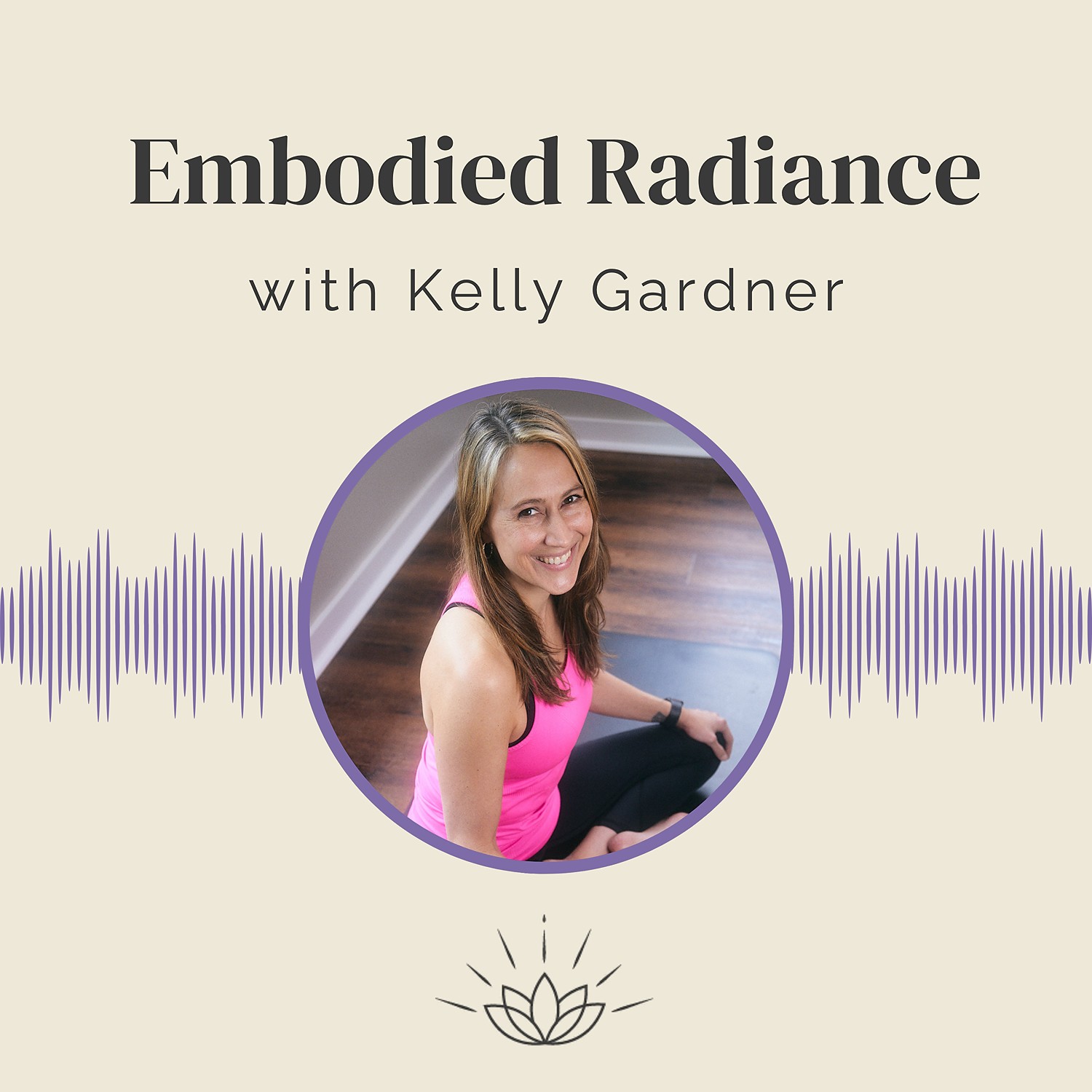
Embodied Radiance Podcast
by Kelly Gardner
This podcast is all about bringing yoga and life coaching together so you can bridge the gap between what you practice on the mat and how you live your life.
-
3
4. Take It Back: The Power of Permission
Summary:Have you been waiting for someone to tell you that you're ready? In this episode, we explore the yoga principle of asteya — non-stealing — and turn it inward to examine the surprising ways we steal from ourselves through self-imposed limits and inherited conditioning. We'll look at how the culturescape taught us that permission lives outside of us, and how to take it back. Using Brené Brown's powerful permission slip practice, you'll leave this episode with a tool to reclaim your own authority and start giving yourself the permission you've been waiting for. The power was always yours. Transcript:Have you ever found yourself waiting to feel ready? Waiting to believe that you know enough, that you do enough, that you are enough before you finally allow yourself to fully show up? Waiting for some invisible force to tap you on the shoulder and say, "Okay, now you're ready. You have permission." Today we're talking about permission, who has it, who gave it away, and how to take it back.Hey, it's Kelly G, Radiance Coach. Welcome to the Embodied Radiance podcast, episode number four.Okay, so in episode two I talked a little bit about how we absorb stories and conditioning from the world around us, and all of that started way before we were old enough to question the conditioning, to question the stories that we were being taught. There was no choice. We were born into many of these stories.One of the most pervasive stories that is impressioned upon us is that power lives outside of us, that someone or something else gets to decide when we're ready, when we're enough, when we have permission to use our voice, to take up space, to want what we want, to show up fully in our lives.And the tricky part is we don't even know who it is we're waiting on. There's no face, no name, no specific person, just this vague sense that someone somewhere out there hasn't said yes yet. That's our cultural conditioning at work within us.And I did this for years. I kept waiting to know enough, like somewhere out there was an entity, a committee, some authority that was going to eventually declare me ready to put myself out there in the world. So I kept learning and growing and preparing, and the permission never came, because it was never theirs to give.One of the foundational ethical principles of yoga is the yama asteya. It's traditionally understood as non-stealing, and typically from the perspective of stealing from others. But what about how we steal from ourselves?Because every time we shrink to make other people more comfortable, every time we wait for permission that was always ours to give, every time we talk ourselves out of wanting what we actually want, we're stealing from ourselves. We're stealing from our own potential, our own joy, our own life. And this can look like not speaking up so that others can feel more comfortable, or waiting until you are convinced you know enough to finally show up and put yourself out there, or not letting yourself want what you truly want, or even putting yourself last so consistently that you forget you're even on the list.Asteya asks us to stop stealing from others and from ourselves. And the first step is recognizing where the theft is happening.This is also the niyama svadhyaya in action, which is self-study, turning the lens inward and getting really honest about where we've been giving our own power away. We'll be coming back to svadhyaya a lot because it lives underneath almost everything we're gonna talk about here.Let me tell you about one of my most favorite tools that I use for myself and that I recommend and use with my clients.Brene Brown introduced me to the idea of permission slips, and it quickly became one that I used very frequently, and still do. The concept is super simple, and it is super powerful. It is this idea that you can give yourself the permission that you've been waiting for someone else to grant you. All you do is use the sentence stem, "I give myself permission to..."It works so well and on a deep and subconscious level because it pulls the subconscious limit into your conscious mind. The moment you say, "I give myself permission to take up space," or, "I give myself permission to not have it all figured out yet," you realize two things simultaneously. Number one, that you were waiting on that permission, and number two, that you always had the authority to give it to yourself.So this is asteya and svadhyaya working together. You're studying yourself honestly and reclaiming what was always yours, taking your power back when you see the limits that you've been living according to.In the last episode, I talked about the witness consciousness, the part of you that can see. The witness can see where you've been waiting, can see where you've been stealing from yourself. I'm not pointing this out to bring up shame or blame or judgment or criticism. This is stepping into that part of ourselves that can see the patterns so that we have a choice to change them, and permission slips are a really accessible tool to be able to do something about those limits.Okay, so I wanna invite you to try it right now wherever you are. You don't have to think too hard about it. Just complete this sentence out loud or in your head right now: I give myself permission to... And just let whatever arises, arise. Whatever comes up, that's your wisdom. That's the witness telling you something.You can do that anytime, anywhere. You can also take this into a deeper practice. When you have a few moments, and literally you can set a timer for three minutes if you'd like, or two. It doesn't have to take long. But when you have a few moments, sit down with a piece of paper and just let it flow. At the top of your paper write, "I give myself permission to..."And then just see what comes. Don't edit, don't judge. There's no need to second-guess, just let it flow. Just write. You might surprise yourself.When you do this, this can be around a specific thing, like an upcoming meeting or an event, or maybe it's for a specific timeframe, like, okay, for today I give myself permission to...Or it can be more general, something that you've been wrestling with or some limit that you see that comes up frequently for you.And if you're not sure where to start, just get curious. Where have I been waiting to step up in my life? Where have I been waiting to take action? Where have I been waiting to know enough or to feel enough? What have I been telling myself I'm not ready for?So I want you to remember that there is no committee, there is no entity waiting to declare that you are ready. The permission was always yours. It has always been yours. Every time you give it to yourself, you are taking back what you were programmed to believe didn't belong to you, but it really has all along.So this is how you take your power back, one permission slip at a time. Give it a try. Let me know what you think. So until next time, give yourself permission. Keep practicing. I'm practicing right along with you. And let your life shine.Music by Rory Gardnerwww.yourradiantsoul.com
-
2
3. WAIT: The Art of Catching Your Thoughts
Summary:Your mind is always talking — the question is whether you're listening. In this episode, we explore witness consciousness through Yoga Sutra 1.3 and introduce WAIT — a simple, playful acronym that activates your inner witness and interrupts the autopilot of the mind. You'll learn why you are not your thoughts, and how one simple question can change your relationship with your own mind. Awareness is always the first step — and now you have a tool to get there.Transcript: Have you ever found yourself stuck replaying an interaction with someone or thinking about something you did over and over and over? Or maybe you found yourself in a spiral of worry in the middle of what- if palooza? In the last episode, I introduced the idea of the stories in our mind, and today I wanna give you the simplest possible tool to interrupt those stories.Hey, it's Kelly G, your Radiance Coach. Welcome to the Embodied Radiance Podcast, episode number three.In the last episode, we talked about the fact that our mind defaults to old stories and conditioning when we aren't paying attention to it. It is going to try to pull up thoughts that we have had over and over because that doesn't use any energy at all. We are wired for the path of least resistance.And I also mentioned in the last episode that it is possible to change our thoughts, and it is, but before you can change anything, you actually have to see what is happening. You have to be able to see what your mind is doing. You can't work with what you can't see. If you are doing something without conscious awareness of it, you're not going to consciously do anything to change it. So awareness is always the first step.Now, if we take ourselves back once again to the Yoga Sutras, the traditional texts of yoga philosophy, Sutra 1.3 tells us that beneath all of the noise in our mind, there is a part of us that can simply witness what is happening. That part of us doesn't react. It doesn't judge. It doesn't get swept away. It just watches.And in yoga, this is what we call the witness consciousness. It's the part of you that can be aware of what your mind is doing without automatically believing your thoughts, without automatically identifying with what you're thinking or getting swept away by what's happening in your mind.Most of us spend most of our lives inside our thoughts. We are identified by them. We are run by them. We can even be convinced that we are our thoughts. But the witness consciousness within us reminds us that you are not your thoughts. You are the one who can watch them. You are the one who can tune in and see what your mind is doing, what patterns are there, what habits your mind has. And this distinction is everything.Okay, so let's go back to the intro of the episode. I mentioned that I was gonna introduce a really simple tool for noticing your thoughts. So in my own practice of working to notice what my mind is doing behind my back, outside of my conscious awareness, I was using the question, "What am I thinking? What am I thinking?"And one day, I remember exactly, I was sitting in my car tuning in, and I just said it really slowly, "What am I thinking?" And all of a sudden, I noticed the acronym W.A.I.T., W.A.I.T. And I thought, "Oh, this is perfect." It's a little playful. It's simple. It's really easy to remember.I wasn't trying to create a tool. I just noticed that when I asked myself the question, "What am I thinking?" it had a way of snapping me back into awareness, and I could shorten that down into this simple tool using the acronym W.A.I.T. And honestly, sometimes what really works in my mind is to step into a smartass tone to really snap myself out of what my mind is doing.So sometimes it sounds like, "Wait. Wait." Like, "Wait just a minute." And it really brings me into the moment to pause, to tune in. So W.A.I.T. stands for what am I thinking. That is the entire tool. It is the one question that activates the witness consciousness, that part of you that can see your thoughts without believing them, without buying into them, or getting swept away with them, and W.A.I.T. Is how you wake that part of you up.So this question, "What am I thinking?" does two things simultaneously. It interrupts the autopilot or the spiral that your mind may be in. In other words, it interrupts the regularly scheduled programming, and it creates a moment of curiosity. And in that moment, you're not judging the thought, you're not trying to fix it, you're not shaming yourself for having it.The point is really just to become aware of it. Become aware of what your mind is doing: the patterns, the habits that your mind has when we're not watching. In yoga philosophy, the practice of returning again and again without judgment, without frustration, that is the real work. Not the practice of having no thoughts, the practice of returning as many times as you need. And every time you use "wait," you are practicing. Every single time. You are stepping in to the witness consciousness that can help you become aware.Now, once you're there, you wanna stay in curiosity rather than trying to fix it. Awareness is the win for right now. When you ask, "What am I thinking?" and you tune in, you might find worry, you might find an old story, you might find a thought you really don't love having or that you didn't even realize you were having, and you don't have to do anything with it right now.Just knowing it's there, just seeing it is enough. That is the witness doing her work. Change is possible, and this is where it starts: with awareness, and without rushing to do the next step yet. We wanna stay in awareness first.Okay, so let's try it right now. Wherever you are, driving, walking, folding laundry, just pause for a second and ask yourself, "Wait, what am I thinking?"And just notice what's there. Not good or bad, not right or wrong. Just become the witness. Get curious about what your mind is doing. Can you see the thought without becoming it? Without getting swept away with it? And that's it. That's the whole practice. You can use this anytime, anywhere. The moment you realize you're spiraling, or you're checked out, or you just feel a little off, wait and check in. It just takes about three seconds.And over time, this can really change your relationship with your own mind. So remember, you are not your thoughts. You are the one who can watch them. And now you have a tool to remind you of that anytime, anywhere. Until next time, practice returning and let your life shine.Music by Rory Gardnerwww.yourradiantsoul.com
-
1
2. Mind Your Mind: The Story You Are Living
Summary:You've been living inside a story — and chances are, you didn't write it. In this episode, we explore Yoga Sutra 1.2 and the connection between your thoughts, your feelings, and the results you're creating in your life. You'll learn why the mind defaults to old conditioning, why story isn't the enemy, and how leading with the heart changes everything. Awareness of your thoughts is always the first step — and that's exactly where we begin.Transcript:Most of us were never taught to question our thoughts. We just inherited them and started living according to those thoughts as if they were proven facts. Hey, it's Kelly G, your Radiance Coach. Welcome to the Embodied Radiance podcast, episode number two. In the first episode, we talked about the power of presence, how the now practice is a way that we can return to being present in this moment.Notice, open, wow. So here's what becomes possible once we're actually here. We can start to tune into the stories in our mind and get curious about how those stories are shaping everything. The stories that are playing in our mind are made up of thoughts, and today we're gonna talk about what your mind is doing, why it's doing it, and how we can work with it instead of being unconsciously run by it.And this is where yoga and life coaching meet in a really powerful way. So let's go back to the traditional text of yoga philosophy, the Yoga Sutras. And if we look at Sutra 1.2, it tells us that the overarching purpose of yoga is to still the fluctuations in the mind. The long-term goal here is to create peace in our minds.Now, our minds are always moving. They're generating thoughts and stories and reactions, but even more frequently than that, they're recalling thoughts that we've had previously, especially thoughts that we've had a lot of times. Our minds are recalling stories that we've been taught, that we've heard over and over, the subconscious messages that we've received through advertising and through entertainment.Yoga isn't telling us that the point is to stop the mind or to have no thoughts. And in fact, this is a common misconception that frustrates a lot of people when they're trying to learn to meditate. Because the mind has thoughts, the mind pulls up stories, the mind runs all over and notices things. It's constantly processing so much information. So when we sit down to meditate and there are still thoughts, that doesn't mean anything has gone wrong.That's a whole other conversation, but it stems from this misnomer that we should be able to just have big periods of no thoughts at all. So the point isn't to just have no thoughts. The point is to no longer be unconsciously ruled by conditioned patterns in your mind.The work is to begin to notice what your mind is doing so that you can then choose. This is the basis of living your yoga practice, and it turns out life coaching has tools that can support exactly this. The mat gives us the space to open ourselves to this practice, to meet ourselves just as we are from a place of loving acceptance. And coaching gives us tools to dig in with curiosity when we're off the mat and in our real lives.So in our minds, when we start noticing what's happening, we're gonna see that there is a process that occurs. In any given situation, we're gonna find ourselves in a circumstance, an interaction. Whatever it is in that moment, our mind is going to have a thought about what we're experiencing. That thought is then going to influence how we feel.And as humans, we are feeling beings, even if we're not sure or we don't recognize that we are. We are very much driven by how we want to feel or avoiding how we don't want to feel. So those feelings then create our actions. They drive our actions. We either do something or we do nothing. Either way, that creates a result in our life.And this process happens all throughout the day, over and over and over, without our conscious awareness if we're not looking for it, and it all begins with a thought.And when we don't tune into our mind, it's going to default to old patterns, inherited stories and beliefs, conditioning that was chosen for us by the world around us. And spoiler alert, allowing your mind to unconsciously run using stories that you didn't choose for yourself can cause a lot of problems.Those problems are what I call mind drama, not as a judgment, but as a description. The mind doing what minds do when they're left unattended. And to conserve energy, your mind is going to use messages that you have absorbed from your family, from schooling, from our culture, from religion, from media and entertainment... and those can become your default story.Until we choose to tune in and see what stories our mind is telling us, most of us are living out a narrative that we never consciously chose for ourselves. When we're living according to a narrative that we didn't choose for ourselves, it gets in the way of our remembering who we truly are. It gets in the way of our ability to show up in the world from a place of authenticity and creativity. It can block our power and our ability to make the impact that we believe we can make in the world.Now, stories aren't the problem, but unconscious stories are. Remember, stories are just made up of thoughts, and the human brain is a meaning-making machine. We understand the world through stories. We connect through stories to ourselves and to others.And the thoughts that we have, the stories that we tell ourselves impact every single relationship that we are in with others, with the world around us, and with ourselves.Many of these stories are not our own. They are stories that we were born into, and they're full of expectations and rules that we didn't create.And those expectations and rules subconsciously direct how we live our lives. But when we start to notice and take control of those stories, we can also use our thoughts, use our stories to create safety and impact and healing.The goal isn't to erase the stories, it's to become the author of them, and that means that we must also be open to the possibility that we can change our thoughts.As we start minding our minds, I wanna offer one other important guideline. We must also tap into the wisdom of our hearts to lead the way. The mind is such a powerful tool, but wisdom lives in both places. When we bring our heart into this process, we move out of the mind's analysis and into deeper embodied wisdom, something more integrated, more whole.What we're after here is what I'm calling compassionate responsibility, taking ownership of what our mind is doing and creating without using what we find against ourselves. Shame and blame are not helpful here. We're gonna come back to this concept of compassionate responsibility in a future episode because it deserves its own real space. But for now, I invite you to hold it as this intention, curiosity over criticism when we're noticing the stories we're telling ourselves.So let's take a moment to tune in to a simple thought awareness practice. I want to invite you into the now practice to set yourself up in this moment. Notice what's happening.Notice where your mind is. Come into this moment. Open your posture. Open your body, your mind with a full breath in and out. And then wow yourself. Think of one thing that is working for you in your life right now.Now, from there, I invite you to bring to mind something, anything in your life right now that feels a little stuck or heavy, a little frustrating, something that is rubbing against youAnd then get curious and ask yourself, "What is the story you're telling yourself about this situation?" Not the facts necessarily, but the meaning you're making of what's happeningAs you do that, I invite you to just notice. No fixing, no judging, no blame or shame. You're just gathering information here, looking at what's happening And finally from here, place your hand on your heart and ask yourself, "Is this story mine, or did I absorb it or inherit it?""Does this story move me forward or is it keeping me stuck?"You don't have to have the answer to those questions right now. I invite you to just let them live in you, and this can be the beginning of starting to notice, getting curious about the stories that your mind offers to you as you move throughout the day. And doing that from a place of compassion without blaming or shaming or shoulding or criticizing yourself for anything that you see.This is the practice, to notice, open and breathe, to be your own friend as you unwind the patterns that may be guiding your life that you didn't even choose. Yoga Sutra 1.2 tells us that yoga is about what we do with the mind. And now you have a coaching lens to support that because awareness of your thoughts is where everything begins to shift.Thanks for tuning in. And until next time, I invite you to keep minding your mind with the support of your heart. It's all a practice in letting your life shine.Music by Rory Gardnerwww.yourradiantsoul.com
-
0
1. Begin NOW: The Practice of Presence
Summary:Something brought you here today — maybe a quiet ache for more meaning, more ease, more of yourself. In this episode, we explore Yoga Sutra 1.1 and the transformative power of presence, and I introduce the NOW practice — a simple three-step awareness tool you can use anywhere to return to yourself. Because awareness is where your power lives, and it always begins right here, right now.Transcript:Hey, it's Kelly G, your Radiance Coach. Welcome to the Embodied Radiance podcast, episode number one.Something brought you here today. Whatever it was, maybe it was curiosity, maybe it was the desire to learn or the ache for something more, or just wanting to learn more about how to live into your yoga.Whatever the reason was, I want you to know that you are in the right place. The transformative power of yoga and life coaching has changed my life, and it is my intention here to bring those two things together so that you can close the gap between what you practice on the mat and how you actually live your life.Along the way, we're going to explore what can get in the way, the programming, the patterns, the stories of perfecting and proving, the things that you've been carrying that maybe weren't yours to carry. But we're also gonna explore what becomes possible when you begin to shift all of that. So this is really about learning to live from a place of authenticity, feeling good in being yourself, and from that place, knowing that you can let go of unhelpful conditioning and create more meaning and joy and purpose and connection in your life.We have lots to look at, lots to explore. We'll be spending time with things like what your mind is doing, what embodiment means and how to practice it, what happens in your nervous system and how you can support it, feeling your emotions. And along the way, we're going to be building this foundation of self-trust.Hi, I'm Kelly Gardner or KellyG, and I am your radiance coach. I'm a trauma therapist turned life and leadership coach and a yoga therapist. And I've spent many years working with women who are very wise and deeply committed to their own growth, but also feel like there is still something missing. This podcast is my hope to support you if that is your experience, and I'm so glad you're here.Before we really dive in, I want you to do something with me right now, just a quick now practice.So first, notice where your body is in space. Notice any signals or sensations that your body is telling you. Next, I invite you to open your posture. That may mean lengthening up through your spine or widening out by dropping the shoulders down.And then open your body and your mind with a nice, full, big breath in and out. And finally, I invite you to take a moment to wow yourself by noticing something good in this moment. Anything, big or small, something that is working Okay. So this was a practice in bringing you to the now, into this moment. So now, let's continue on. We'll come back to that.In the Yoga Sutras, which are the traditional foundational texts of yoga philosophy, the first phrase that opens up the Sutras is pretty simple. That phrase is, "And now, the exposition of yoga." Now the information of what yoga is. And there's something really powerful about the fact that the Sutras open with the word now.Because yoga works in relationship with this moment. Not yesterday, not when you're finally ready, not once you have perfected it or fixed yourself, but right now. The time for yoga is now. The practice of being in the now invites us into awareness, into presence, being fully here, right here, right now in this moment, mind and body in the same place.When we lean into this type of mindful awareness, it then opens us up to the choices that we have. Without awareness, change is completely up to chance. If we're not aware, we're not gonna do anything to change it. Now, most of us in our lives have been trained into lots of ways to not live in the now, to in fact kind of be anywhere but now.We've learned lots of ways to distract and to numb out, and to be too busy to recognize what we're feeling or thinking, what we're experiencing in the now. In our conditioning, we can live for approval that we haven't received yet, or we can really put things on hold, waiting until we're calmer or more prepared or thinner or whatever that ideal is.We've been taught in many ways that who we are right now in this moment isn't quite enough. So awareness of the present moment isn't just a mindfulness practice. It's really an act of reclamation, coming back to ourselves so that we can choose how to move forward. Now, everything that you've experienced up to this very moment has led you to now.And whether your path has felt beautiful or really painful and messy, or joyful and exciting, or a mix of all of the above, you are here. And when you are present and aware, you have the power to choose how to move forward. You have the power to choose who you're going to become next. You have the power to create whatever it is that you want for yourself, for your life, for your future self.So the time is now. When we're disconnected from the present moment, we can tend to live inside automatic reactions. We can live on autopilot. We can live according to someone else's rules and expectations and old conditioning that doesn't actually serve us. Or we can find ourselves living in a nervous system that is bracing based on survival and protection. But awareness interrupts the autopilot.Awareness reorients us to ourselves in this moment, and it gives us the power to intentionally choose what's next. Awareness is one of the most foundational practices of yoga and life coaching. It's a tool of discovery, and what you are discovering is yourself. When we come into awareness, when we come into the present moment, our mind gets clearer.We're fully here with what is happening in the moment. And from that place, we are more resourceful and more creative and more powerful in how we respond to life. So practicing awareness doesn't necessarily mean we're immediately trying to fix or change ourselves. We're really just gathering information.But because of our conditioning, many of us have learned to turn anything we notice, any awareness, into criticism and self-criticism. Awareness is not meant to become another weapon for you to use against yourself. It means noticing, learning, without judging, without holding what we find against ourselves.It's about being willing to turn inward, see what is there, and be with it long enough to gain clarity. It's noticing, witnessing, and becoming curious instead of automatically becoming critical. When we notice, we can tune into our intuition, our inner wisdom, and what our body is telling us. The purpose of awareness is not to judge ourselves, but to become informed so that we can choose.If we aren't aware, that choice isn't there. If we always start with awareness, we can intentionally plan what we do next. We can intentionally plan our lives and who we are and how we experience our days. Every moment gives us another opportunity to begin again.And now, let's practice again. So I want to formally introduce you to an acronym that I have been using to help with the practice of being present right now, and the acronym uses the word now: notice, open, and wow.So let's practice. The N stands for notice. This means noticing when you aren't present in the moment, when you're spiraling out, when your mind is a million miles away. So it may be you notice that you are trying to win an argument in your head, or you are replaying a situation over and over and over. Or maybe you notice that you are what-ifing and worst case scenario-ing what could happen in the future.When you notice, bring yourself into your body. Notice where your body is in space, the environment around you, and what your body is doing. The O stands for open. Once you've noticed and brought yourself into your body, we want to open our posture. So open your posture by maybe lengthening up through the spine or rolling the shoulders back and down.And then open your mind and your body with a full breath in and out. Breathing in, taking up more space as your ribs widen out, breathing out completely. This brings us into a space of possibility. And the W stands for wow. Find one thing that is working or going well in this moment, no matter how big or small.This may be something that you really enjoy, something you're grateful for, something you're appreciating. This is a way to let your nervous system know that right now in this moment, something is okay, and that's enough. This recognition, wowing yourself with good that is available, changes your energy, and from there you can move forward in a really intentional way.So I invite you to take a big breath here. Notice where your body is in space. Open your posture. Take up more space physically. Take a big breath in and out, and wow yourself with the good that is available. Find one thing that is going right.Now take a moment to notice what shifted, even slightly, as you did that. This practice brings us into presence, into awareness right now. And from that mindful awareness, we have more power than we do when we are on autopilot.So I invite you, as you move through your day, get curious about what changes when you return to now.Bring yourself back to the moment. What would change if presence became your practice? If your mind starts replaying the past or spiraling to the future, if you notice that your mind is somewhere other than where your body is, come back to the now practice. Notice, open, wow. And then you can move forward from there.Radiance isn't about shining for everyone else. It's what happens when you come back to yourself, and that's what we're building here. So until next time, come back to now and let your life shine.Music by Rory Gardnerwww.yourradiantsoul.com
We're indexing this podcast's transcripts for the first time — this can take a minute or two. We'll show results as soon as they're ready.
No matches for "" in this podcast's transcripts.
No topics indexed yet for this podcast.
Loading reviews...
Loading similar podcasts...
Frequently Asked Questions
How many episodes does Embodied Radiance Podcast have?
Embodied Radiance Podcast currently has 4 episodes available on PodParley. New episodes are automatically indexed when they're published to the podcast feed.
What is Embodied Radiance Podcast about?
This podcast is all about bringing yoga and life coaching together so you can bridge the gap between what you practice on the mat and how you live your life.
How often does Embodied Radiance Podcast release new episodes?
Embodied Radiance Podcast has 4 episodes. Check the episode list to see recent publication dates and frequency.
Where can I listen to Embodied Radiance Podcast?
You can listen to Embodied Radiance Podcast on PodParley by clicking any episode. We provide an embedded audio player for direct listening, and you can also subscribe via your preferred podcast app using the RSS feed.
Who hosts Embodied Radiance Podcast?
Embodied Radiance Podcast is created and hosted by Kelly Gardner.
URL copied to clipboard!