
PODCAST · education
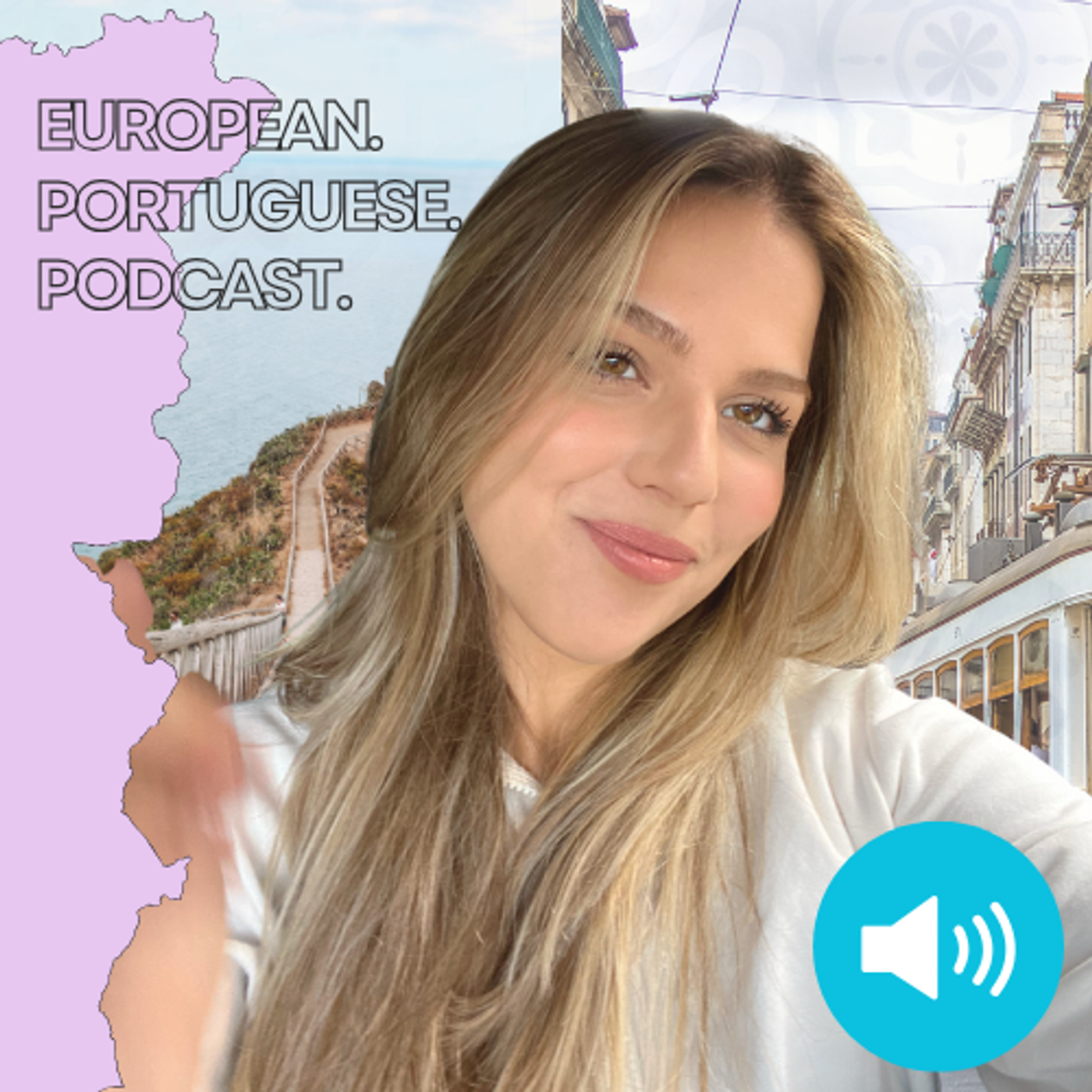
European Portuguese Podcast
by Ana
Welcome to the European Podcast! Here you'll hear me talk about the most random and yet helpful things to start understanding Portuguese. If you want to follow my content and resources, or download the audio files for free with the transcriptions, follow me on https://www.patreon.com/collection/1880705 Have fun!
-
13
Falar, morar, jogar, etc.... ( To speak, to live, to play...)
TranscriçãoOlá a todos, bem-vindos ao European Portuguese Podcast. Hoje vou falar sobre verbos regulares. Eu prometo que isto é muito mais fácil do que parece.Então, vocês provavelmente sabem: eu, tu, ele, ela, nós, vocês, eles, elas. Então, cada pessoa tem uma letra. Tipo, isto é o mais fácil: cada pessoa tem uma letra.Eu é sempre "o". Então: eu falo, eu ando, eu como, eu gosto. Então é sempre "o".Tu é com "s". Então: tu falas, tu gostas, tu comes, tu bebes, tu andas.Com ele, ela e você, tipo, acaba em "a" ou "e". But the easier way to explain this is like you take the R. All verbs end with a R, like falar, gostar, comer, beber. You take the R. Seria algo como: falar fica "fala", acabar "acaba", gostar "gosta". Então: ela gosta, ela come, ela bebe, ela anda, ela fala. Então, either ends with a A or E.Nós é sempre "mos". Então: nós falámos, gostámos, andámos, brincámos, jogámos.E eles/elas é com "m". Então: andam, gostam, falam, andam, brincam. You see?Então, um texto completo seria: "Eu gosto muito do verão. Eu gosto do verão porque eu gosto da praia, mas tu gostas mais da primavera porque tu não gostas do calor. Ele gosta do inverno porque ele gosta de neve, mas nós, nós gostamos muito do outono porque nós gostamos de setembro, por exemplo. E por último, eles, eles não gostam do inverno porque eles não gostam de frio, eles gostam mais de calor".Então, é algo assim. Obrigada a todos mais uma vez e é tudo por agora.Translation: Hello everyone, welcome to the European Portuguese Podcast. Today I am going to talk about regular verbs. I promise that this is much easier than it looks.So, you probably know: eu, tu, ele, ela, nós, vocês, eles, elas (I, you, he, she, we, you all, they). So, each person has a letter. Like, this is the easiest part: each person has a letter.Eu (I) is always "o". So: eu falo (I speak), eu ando (I walk), eu como (I eat), eu gosto (I like). So it is always "o".Tu (you) is with "s". So: tu falas, tu gostas, tu comes, tu bebes, tu andas.With ele, ela and você (he, she, and formal you), like, it ends in "a" or "e". But the easier way to explain this is like you take the R. All verbs end with an R, like falar, gostar, comer, beber. You take the R. It would be something like: falar becomes "fala", acabar (to finish) "acaba", gostar "gosta". So: ela gosta, ela come, ela bebe, ela anda, ela fala. So, either ends with an A or E.Nós (we) is always "mos". So: nós falámos, gostámos, andámos, brincámos, jogámos.And eles/elas (they) is with "m". So: andam, gostam, falam, andam, brincam. You see?So, a full text would be: "I like summer very much. I like summer because I like the beach, but you like spring more because you don't like the heat. He likes winter because he likes snow, but we, we like autumn very much because we like September, for example. And finally, they, they don't like winter because they don't like cold, they like heat more."So, it is something like that. Thank you all once again and that is all for now.
-
12
Alto ou baixo? (Tall or short?)
TranscriçãoOlá malta, bem-vindos a mais um episódio de European Portuguese Podcast. Hoje vou falar sobre aparência física. Pensei, okay, talvez posso ensinar algumas palavras novas sobre a aparência e talvez na próxima vez vou falar sobre personalidade, mas hoje vou falar sobre algo mais físico.Então, talvez muitos conhecem a palavra "alto". Alto, alta, is tall. E short é "baixo" e "baixa". Eu acho que em Portugal as pessoas são um pouco mais baixas do que nos países do norte da Europa. No norte da Europa são mais altos. No norte da Europa as pessoas também são mais claras, light skinned, they have lighter skin than us.Então, as pessoas são "loiras", blonde, olhos azuis, blue eyes. Em Portugal, nós temos cabelo castanho, olhos castanhos, mais... somos um pouco mais morenos. Depende da pessoa. Por exemplo, a minha mãe tem olhos verdes e cabelo castanho e não é baixa, mas não é alta, é média. Mas por exemplo, o meu pai é muito moreno, muito, muito, muito moreno. O meu irmão também. Tem olhos castanhos, quase pretos, cabelo castanho escuro.Eu... bem, sou morena com olhos castanhos, mas eu tento ser um pouco diferente, então eu pinto o cabelo de loiro. É uma fase. É uma fase que dura há seis anos, no futuro logo vemos. Mas originalmente o meu cabelo é castanho também.Claro, depois temos o "ruivo". Ruivo is ginger, que não temos muito em Portugal, mas ainda temos alguns. Não sei como aconteceu, mas eu tenho alguns amigos e amigas com cabelo ruivo, naturalmente. Mas depois os olhos são castanhos. Olhos castanhos é o mais normal aqui.Também algumas pessoas usam óculos, glasses. Eu uso às vezes, especialmente para trabalhar, mas hoje em dia quase todas as pessoas precisam de usar óculos. Que mais? Barba. Então algumas pessoas usam barba ou bigode. Bigode is mustache. Ah, e claro, não posso esquecer das pessoas que não têm cabelo. Nós dizemos "carecas" em português, is bald.Se nos referimos à idade, age, então usamos "novo", "velho". Novo is young and velho is old, mas para ser educado, diríamos "mais velho". Tipo, aquela pessoa é mais velha, is older. É mais velho, mais novo.Então, vou fazer uma descrição total de alguém. Tipo, okay, pode ser o Cristiano Ronaldo. Ele é alto, acho eu. Ele é alto, é magro, tem o cabelo castanho, olhos castanhos, é moreno. Não sei se tem barba. Não sei, acho que não. Não sei. Às vezes é fases deles. Okay, outra pessoa que eu vou descrever, talvez uma personagem. Pode ser a Daenerys de Game of Thrones. Então, ela é baixa, ela é bonita, é loira, olhos azuis. É isso. Eu acho que é isso. Então, percebem a ideia.Então, obrigada por ouvirem mais uma vez e é tudo por agora.Translation: Hello guys, welcome to another episode of the European Portuguese Podcast. Today I am going to talk about physical appearance. I thought, okay, maybe I can teach some new words about appearance and maybe next time I will talk about personality, but today I am going to talk about something more physical.So, maybe many of you know the word "alto". Alto, alta, is tall. And short is "baixo" and "baixa". I think that in Portugal people are a bit shorter than in the northern European countries. In Northern Europe they are taller. In Northern Europe people are also fairer, light-skinned, they have lighter skin than us.So, people are "loiras", blonde, olhos azuis, blue eyes. In Portugal, we have cabelo castanho (brown hair), olhos castanhos (brown eyes), more... we are a bit more "morenos" (darker-haired/skinned). It depends on the person. For example, my mother has green eyes and brown hair and she isn't short, but she isn't tall, she is medium. But for example, my father is very moreno, very, very, very moreno. My brother too. He has brown eyes, almost black, dark brown hair.Me... well, I am morena with brown eyes, but I try to be a bit different, so I dye my hair blonde. It's a phase. It's a phase that has lasted for six years, we'll see in the future. But originally my hair is brown as well.Of course, then we have "ruivo". Ruivo is ginger, which we don't have much of in Portugal, but we still have some. I don't know how it happened, but I have some male and female friends with ginger hair, naturally. But then the eyes are brown. Brown eyes are the most common here.Also some people wear óculos, glasses. I wear them sometimes, especially for work, but nowadays almost everyone needs to wear glasses. What else? Barba (beard). So some people wear a beard or bigode (mustache). Oh, and of course, I can't forget people who don't have hair. We say "carecas" in Portuguese, which is bald.If we refer to idade, age, then we use "novo", "velho". Novo is young and velho is old, but to be polite, we would say "mais velho". Like, that person is mais velha, is older. Is older, younger.So, I'm going to do a full description of someone. Like, okay, it could be Cristiano Ronaldo. He is tall, I think. He is tall, he is thin, he has brown hair, brown eyes, he is moreno. I don't know if he has a beard. I don't know, I think not. I don't know. Sometimes it's a phase for them. Okay, another person I'm going to describe, maybe a character. It could be Daenerys from Game of Thrones. So, she is short, she is beautiful, she is blonde, blue eyes. That's it. I think that's it. So, you get the idea.So, thank you for listening once again and that's all for now.
-
11
Feminino e Masculino- A culpa é do latim? (Female and male - Should we blame latim?)
TranscriçãoOlá a todos, bem-vindos a mais um episódio de European Portuguese Podcast. Quem gosta de história? Eu gosto muito de história. Na escola era, tipo, a minha disciplina favorita. Então, eu queria falar um bocadinho sobre feminino e masculino em português e para isso vou mencionar brevemente algo sobre história.Então, como vocês sabem, português, a língua portuguesa tem muito feminino e masculino. Por exemplo, temos a casa e o carro. Então, "casa" é uma palavra feminina e "carro" é uma palavra masculina. Normalmente se termina com "a" é feminino, "casa", e se termina com "o" é masculino, tipo "carro".Agora, porquê? Tipo, por que é que isso acontece? Basicamente a culpa é do latim. Tenho que ser honesta, a culpa é do latim, porque o latim tem nomes, adjetivos em feminino, masculino, plural, singular. Então, espanhol, português, francês, italiano, todas as línguas que tenham como base o latim, têm feminino, masculino, singular, plural. Tudo isso. Então, se querem culpar, culpem o latim.Inglês... Inglês tem algumas coisas similares, mas não o feminino e o masculino. Por exemplo, em inglês só têm the: the house, the car, the sun, the bird, the dog. Nós temos o sol, a casa, o cão, a menina, o menino. Então nós sempre fazemos distinção entre feminino e masculino.Agora, uma coisa importante é que quando uma palavra é feminina, tudo o resto é feminino. Todos os adjetivos vão ser femininos. Okay, então... I'll explain, wait, wait, don't get confused with adjectives and all what... I'll explain.Então, se eu falo "a menina", então eu vou dizer "bonita". I wouldn't say "a menina bonito". Então é: "a menina é bonita", "o menino é bonito". E eu diria: "a Ana é portuguesa". I wouldn't say "português", "português" is masculine. Então eu diria: "ele", tipo, "o João é português", "a Ana é portuguesa".E se for plural, por exemplo, "as meninas", then would be "bonitas". Wouldn't be "bonita" or "bonito", "bonitos". Seria: "as meninas bonitas", "o menino bonito", "os meninos bonitos". You get it? Tipo, se uma coisa é feminina, tudo é feminino. Se é plural, tudo é plural.Então, às vezes eu ouço, sometimes I hear some students saying things like: "oh, a rapariga é muito bonito" ou "Portugal é muito bonita, muito bonitas". Tipo, não... não faz sentido, doesn't really make sense, 'cause if it is "a rapariga", then it needs to be "a rapariga é bonita". "As raparigas são bonitas". "Portugal é bonito". Yeah, Portugal is male, don't know who decided that.Então, okay, espero ter explicado um pouco e, tipo, se for muito confuso, então digam-me, and I'll explain this in another way if you want me to, just feel free to tell me if you feel like this is really confusing. Mas, tipo, basicamente é isto: algo é feminino, tudo é feminino. Algo é masculino, tudo é masculino. Se é singular, tudo é singular, se é plural, tudo é plural. É basicamente isto.Então, obrigada mais uma vez e é tudo por agora.Translation: Hello everyone, welcome to another episode of the European Portuguese Podcast. Who likes history? I like history very much. In school it was, like, my favorite subject. So, I wanted to talk a little bit about feminine and masculine in Portuguese, and for that, I am going to briefly mention something about history.So, as you know, Portuguese, the Portuguese language has a lot of feminine and masculine. For example, we have a casa (the house) and o carro (the car). So, "casa" is a feminine word and "carro" is a masculine word. Normally, if it ends with "a" it is feminine, "casa," and if it ends with "o" it is masculine, like "carro."Now, why? Like, why does this happen? Basically, the fault lies with Latin. I have to be honest, it’s Latin's fault, because Latin has nouns and adjectives in feminine, masculine, plural, and singular. So, Spanish, Portuguese, French, Italian—all the languages that have Latin as a base have feminine, masculine, singular, plural. All of that. So, if you want to blame someone, blame Latin.English... English has some similar things, but not the feminine and the masculine. For example, in English you only have "the": the house, the car, the sun, the bird, the dog. We have o sol (the sun), a casa, o cão (the dog), a menina (the girl), o menino (the boy). So we always make a distinction between feminine and masculine.Now, an important thing is that when a word is feminine, everything else is feminine. All the adjectives are going to be feminine. Okay, so... I'll explain, wait, wait, don't get confused with adjectives and all what... I'll explain.So, if I say "a menina", then I am going to say "bonita" (pretty). I wouldn't say "a menina bonito." So it is: "a menina é bonita," "o menino é bonito." And I would say: "a Ana é portuguesa" (Ana is Portuguese). I wouldn't say "português," "português" is masculine. So I would say: "ele" (he), like, "o João é português," "a Ana é portuguesa."And if it’s plural, for example, "as meninas", then it would be "bonitas." It wouldn't be "bonita" or "bonito," "bonitos." It would be: "as meninas bonitas," "o menino bonito," "os meninos bonitos." You get it? Like, if one thing is feminine, everything is feminine. If it’s plural, everything is plural.So, sometimes I hear, sometimes I hear some students saying things like: "oh, a rapariga é muito bonito" (the girl is very handsome/masculine pretty) or "Portugal é muito bonita, muito bonitas." Like, no... it doesn't really make sense, because if it is "a rapariga," then it needs to be "a rapariga é bonita." "As raparigas são bonitas." "Portugal é bonito." Yeah, Portugal is male, don’t know who decided that.So, okay, I hope to have explained a little bit and, like, if it is very confusing, then tell me, and I'll explain this in another way if you want me to, just feel free to tell me if you feel like this is really confusing. But, like, basically it’s this: if something is feminine, everything is feminine. If something is masculine, everything is masculine. If it’s singular, everything is singular; if it’s plural, everything is plural. It’s basically this.So, thank you once again and that’s all for now.
-
10
Isto, Isso ou Aquilo? ( This or that)
TranscriçãoOlá a todos, bem-vindos ao European Portuguese Podcast. Hoje vou falar sobre isto, isso ou aquilo, uma das dúvidas mais... comuns em português.Então, isto em inglês significa this. Então, por exemplo: isto é o meu episódio. O que é isto? What is this? Isto é um carro. This is a car. Então, isto é para coisas, objetos, que estão perto de nós. Tipo, literalmente perto de nós, like on us.O próximo é isso. O que é isso? What's that? Oh, isso é um presente, um presente para a minha namorada. Isso é bom? Is that good? Sim, sim, é muito bom. Então, isso é para um objeto que está perto de nós, mas não em nós. It's close to us but it's not on us. So it's close to someone else, I would say. Está perto da outra pessoa, no meio, it's kind of in the middle.Então temos isto, isso e aquilo. The last one, aquilo, é para algo que está longe de nós, it's far from us. Tipo: o que é aquilo lá ao fundo? What's that over there? Aquilo é um carro, eu acho. That's a car, I think. O que é aquilo? Aquilo é um pássaro. That's a bird.Então, temos:Isto: para perto, on us, tá em nós. Tipo: isto é a minha camisola. This is my camisola.Isso: tipo in the middle. Isso é a tua camisola. That's your shirt.Aquilo: over there. Aquilo é uma camisola? That over there is a shirt?.Então, usei uma camisola para o exemplo, mas talvez não é o melhor exemplo. Mas então, estes três é como dizemos em inglês this or that. Em inglês são só dois, you only have two, mas em português temos três. Temos um para o meio, one in the middle, que é "isso".Então, espero que tenha sido um pouco mais clara a diferença do inglês e do português e que possa ter ajudado um pouco. Obrigada e é tudo por agora.Translation:Hello everyone, welcome to the European Portuguese Podcast. Today I'm going to talk about "isto", "isso", or "aquilo", one of the most... common doubts in Portuguese.So, "isto" in English means "this". So, for example: isto é o meu episódio (this is my episode). O que é isto? (What is this?). Isto é um carro (this is a car). So, "isto" is for things, objects, that are near us. Like, literally near us, like on us.The next one is "isso". O que é isso? (What's that?). Oh, isso é um presente (that is a gift), a gift for my girlfriend. Isso é bom? (Is that good?). Yes, yes, it’s very good. So, "isso" is for an object that is near us, but not on us. It's close to us but it's not on us. So it's close to someone else, I would say. It’s near the other person, in the middle, it's kind of in the middle.So we have isto, isso, and "aquilo". The last one, aquilo, is for something that is far from us, it's far from us. Like: o que é aquilo lá ao fundo? (what's that over there at the back?). Aquilo é um carro, eu acho (that’s a car, I think). O que é aquilo? Aquilo é um pássaro (that’s a bird).So, we have:Isto: for near, on us, it’s on us. Like: isto é a minha camisola (this is my sweater).Isso: like in the middle. Isso é a tua camisola (that’s your shirt).Aquilo: over there. Aquilo é uma camisola? (Is that sweater over there?).So, I used a sweater for the example, but maybe it’s not the best example. But then, these three are how we say in English "this or that". In English there are only two, you only have two, but in Portuguese we have three. We have one for the middle, one in the middle, which is "isso".So, I hope the difference between English and Portuguese has been a bit clearer and that it might have helped a bit. Thank you and that’s all for now.
-
9
Fazer perguntas. (Questions.)
TranscriçãoOlá a todos, bem-vindos novamente ao European Portuguese Podcast e hoje vou falar sobre um tema que muitas pessoas acham um pouco difícil de aprender em português, mas que com alguma prática fica fácil. É fazer perguntas.Então, eu vou começar por dizer algumas palavras que podem ajudar para começar uma pergunta. A primeira é "quem". "Quem" é usado para pessoas, who. Quem é a tua melhor amiga? Quem é a tua cantora favorita? Quem é o teu artista favorito? Quem é o teu vizinho? Quem é o teu namorado? Okay, então estas são algumas com "quem".Outra é "como". "Como" é muito importante. É literalmente traduzido how. Como estás? Como está a tua família? Como está o tempo? Como está o trabalho? Como te sentes ultimamente? Então "como" também é muito importante.Outra é "qual". "Qual" é traduzido às vezes para inglês como what, mas eu acho que "qual" seria melhor traduzido como which one. É mais para escolhas. Então, quando precisamos escolher algo entre algumas opções, "qual" é o perfeito. Por exemplo: Qual é a tua música favorita? Precisas escolher uma. Qual é a tua profissão? Qual é a tua cor favorita? Qual é a tua equipa de futebol?.Até agora falámos então sobre: quem é, como é ou como está e qual é.Próxima: "onde". Onde, eu já falei sobre onde. Onde fica? Onde é? Ou para uma situação temporária: Onde está? Onde está o João? Onde está a Maria? Onde fica o Alentejo? Onde fica o supermercado? Onde é Coimbra? Para uma cidade, por exemplo.Seguinte é "quando". "Quando" significa literalmente when. Quando tens férias? Quando vais trabalhar? Quando estás disponível? Quando é que queres ir beber um café?.Sim, porque ainda não falei sobre o "é que". Mas podemos dizer só "como" ou "como é que", "onde", "onde é que", "quando", "quando é que". Então, o "é que" é algo que podes adicionar ou não, depende de ti. Acho que é muito normal ouvirmos as pessoas na rua, no café, usar o "é que", porque torna a frase, a pergunta, um pouco mais pessoal, tipo... é mais informal, não é tão formal.Tipo: Onde é que vai... onde é que vais trabalhar? Onde é que fica a casa de banho? Como é que está a tua família? E "como está a tua família?" é um pouco mais formal, eu acho. O "é que" acrescenta um pouco, não sei, emoção.Okay, então próximo: "o quê". "O quê" ou "quê" significa what. Este é o nosso what. O quê? O que é que se passa? What's happening? O que é que se passa? O que é que precisas? Porque "o que" com "é que" fica "o que é que". O que é que vais fazer amanhã? O que é que vais fazer amanhã? O que é que estás a pensar comer hoje à tarde? O que é que queres ver na televisão? Então, "o que é que". Pode ser só "o que" ou "o que é que".Próximo: "quanto". Quanto custa? Quantos anos? Quanto é que é? Pode ser novamente "quanto é que". Quanto é que custa a cerveja? Quanto é que custa o vinho? Ou então só "quanto". Quanto é uma cerveja? Quanto custa o pão? Por exemplo.E finalmente: "porquê". "Porquê" significa why. Por que é que estás a trabalhar agora? Por que é que não me atendes o telefone? Por que é que não falas comigo?.E a resposta seria "porque". Então "porquê" is why, "porque" is because. Por que é que não falas comigo? Porque estou chateado. Por exemplo.Então vimos: quem ou quem é que, como ou como é que, qual, qual é que, onde ou onde é que, quando, quanto, o quê ou o que é que e porquê.Espero que possa ter sido útil e é tudo por agora.Translation: Hello everyone, welcome again to the European Portuguese Podcast and today I am going to talk about a topic that many people find a bit difficult to learn in Portuguese, but that with some practice becomes easy. It is making questions.So, I am going to start by saying some words that can help to start a question. The first one is "quem". "Quem" is used for people, who. Who is your best friend? Who is your favorite singer? Who is your favorite artist? Who is your neighbor? Who is your boyfriend?. Okay, so these are some with "quem".Another one is "como". "Como" is very important. It is literally translated how. How are you? How is your family? How is the weather? How is work? How have you been feeling lately?. So "como" is also very important.Another one is "qual". "Qual" is sometimes translated into English as what, but I think that "qual" would be better translated as which one. It is more for choices. So, when we need to choose something among some options, "qual" is the perfect one. For example: What is your favorite music?. You need to choose one. What is your profession? What is your favorite color? What is your football team?.Until now we talked then about: who is, how is or how are you, and which/what is.Next one: "onde". Onde, I already talked about onde. Where is it (located)? Where is it?. Or for a temporary situation: Where is (someone/something)?. Where is João? Where is Maria? Where is Alentejo (located)? Where is the supermarket (located)?. Where is Coimbra? For a city, for example.Next is "quando". "Quando" means literally when. When do you have holidays? When are you going to work? When are you available? When do you want to go drink a coffee?.Yes, because I haven't talked yet about the "é que". But we can say just "como" or "como é que", "onde", "onde é que", "quando", "quando é que". So, the "é que" is something that you can add or not, it depends on you. I think it's very normal to hear people on the street, at the cafe, using the "é que", because it makes the sentence, the question, a bit more personal, like... it's more informal, it's not so formal.Like: Where is it that you go... where is it that you are going to work? Where is it that the bathroom is located? How is it that your family is doing?. And "how is your family?" is a bit more formal, I think. The "é que" adds a bit, I don't know, emotion.Okay, so next: "o quê". "O quê" or "quê" means what. This is our what. What? What is it that is happening? What's happening? What's happening? What is it that you need?. Because "o que" with "é que" becomes "o que é que". What is it that you are going to do tomorrow? What is it that you are going to do tomorrow? What is it that you are thinking about eating this afternoon?. What is it that you want to watch on television?. So, "o que é que". It can be just "o que" or "o que é que".Next: "quanto". How much does it cost? How many years? How much is it?. It can be again "quanto é que". How much is it that the beer costs? How much is it that the wine costs?. Or then just "quanto". How much is a beer? How much does the bread cost? For example.And finally: "porquê". "Porquê" means why. Why is it that you are working now? Why is it that you don't answer the phone for me? Why is it that you don't talk to me?.And the answer would be "porque". So "porquê" is why, "porque" is because. Why is it that you don't talk to me? Because I am upset. For example.So we saw: quem or quem é que, como or como é que, qual, qual é que, onde or onde é que, quando, quanto, o quê or o que é que and porquê.I hope it might have been useful and that's all for now.
-
8
É português de Portugal ou do Brasil? ( Is it from Portugal or Brasil?)
Transcription: Olá a todos, bem-vindos ao European Portuguese Podcast. Before I start, I just wanted to let you know guys that uh you can actually read the transcription, okay? It's on the about part of the episode, if you click, you can read both in Portuguese and English. But if you can't find it or if you want access to more content or the full transcriptions, you can always check my link to Patreon and you'll have all the content.Okay. Então, hoje pensei em falar um pouco sobre as diferenças do português de Portugal e português do Brasil. E sim, eu sei, português do Brasil soa mais bonito, todas as pessoas dizem isso e eu acho que compreendo porquê. Acho que é mais musical. Então, português do Brasil é mais aberto, as vogais, as palavras. O português de Portugal é um pouco mais fechado. Temos a boca mais fechada quando falamos e não separamos propriamente as palavras umas das outras, então é uma grande mistura quando falamos. Pode ser um pouco confuso, eu compreendo.Mas bem, não vou falar muito sobre qual é o mais bonito ou não, porque é uma questão de opinião, se bem que eu acho... português do Brasil ganha, mas enfim. Vou falar sobre palavras e expressões que talvez tu pensas que são de Portugal, mas são do Brasil. Então, se tem um "G", o som "dj" é do Brasil. Nós não dizemos "bom dja", nós dizemos "bom dia". "Boa noite", "boa tarde" é do Brasil; nós dizemos "boa noite", "boa tarde".Outra coisa... nós não dizemos "legal", nós dizemos "fixe". When something is cool, we say "fixe". Nós não dizemos "oi", nós dizemos "olá". Que mais? Uh... por exemplo, no Brasil eles dizem "celular". Nós dizemos "telemóvel". Telemóvel is cell phone. Nós dizemos "autocarro", eles dizem "ônibus". Nós dizemos "comboio" e eles dizem "trem".Mas há outras, há outras palavras. Por exemplo, for bathroom, nós dizemos "casa de banho" e eles dizem "banheiro". E muitos, muitos alunos dizem "banheiro" em Portugal, mas não é uma palavra portuguesa. Temos "banheira", mas banheira it's a bathtub in Portuguese. Então "banheiro" não é uma palavra que nós usamos. Nós compreendemos, mas não usamos. Que mais? Uh... "frigorífico" (fridge), eles dizem "geladeira". Ah, e uma muito importante: "pequeno-almoço". Pequeno-almoço is breakfast e no Brasil dizem "café da manhã". Então, esta é uma grande diferença.Que mais? "Sumo" e "suco". "Sumo" é português de Portugal, "suco" é português do Brasil.Uh... que mais? Talvez uma grande diferença é que no Brasil usam gerúndio. Gerúndio é tipo "falando", "gostando", "andando", "cantando", "amando". Nós dizemos "estou a falar", "estou a amar", "estou a compreender". Então, talvez essa é uma grande diferença também.Mas se preciso falar sobre diferenças, a maior de todas é "você" e "tu". No Brasil eles usam "você", não usam "tu" propriamente. Talvez algumas regiões, mas não propriamente. Em Portugal, só usamos "você" para ser educados. Então, com pessoas mais velhas ou numa situação formal, dizemos "você", mas normalmente sempre dizemos "tu". "Tu" é mais informal. No Brasil, "você" é para todas as situações. Acho que esta é a maior diferença.Então, por exemplo, para "você" nós dizemos "como está?". "Como está? Tudo bem com você? Tudo bem consigo?". Isto é muito formal em Portugal. No Brasil isto é normal. Informal em Portugal seria: "Olá, tudo bem? Como estás? Tudo bem contigo?". Então isto é o... o mais normal em Portugal.Acho que estas são as maiores diferenças. Então, mais uma vez, se quiserem ouvir a transcrição total, por favor vejam o link de Patreon e fiquem à vontade. It was a pleasure having you here again e é tudo por agora.Translation: Hello everyone, welcome to the European Portuguese Podcast. Before I start, I just wanted to let you know guys that uh you can actually read the transcription, okay? It's on the about part of the episode, if you click, you can read both in Portuguese and English. But if you can't find it or if you want access to more content or the full transcriptions, you can always check my link to Patreon and you'll have all the content.Okay. So, today I thought about talking a little bit about the differences between Portuguese from Portugal and Portuguese from Brazil. And yes, I know, Portuguese from Brazil sounds more beautiful, everyone says that and I think I understand why. I think it’s more musical. So, Portuguese from Brazil is more open, the vowels, the words. Portuguese from Portugal is a bit more closed. We have our mouths more closed when we speak and we don't properly separate the words from one another, so it’s a big mix when we speak. It can be a bit confusing, I understand.But well, I’m not going to talk much about which one is more beautiful or not, because it’s a matter of opinion, although I think... Portuguese from Brazil wins, but anyway. I’m going to talk about words and expressions that maybe you think are from Portugal, but are from Brazil. So, if it has a "G", the "dj" sound is from Brazil. We don't say "bom dja" (good day), we say "bom dia". "Boa noite" (good night), "boa tarde" (good afternoon) is from Brazil; we say "boa noite", "boa tarde".Another thing... we don't say "legal" (cool), we say "fixe". When something is cool, we say "fixe". We don't say "oi" (hi), we say "olá" (hello). What else? Uh... for example, in Brazil they say "celular". We say "telemóvel". Telemóvel is cell phone. We say "autocarro", they say "ônibus" (bus). We say "comboio" and they say "trem" (train).But there are others, there are other words. For example, for bathroom, we say "casa de banho" and they say "banheiro". And many, many students say "banheiro" in Portugal, but it’s not a Portuguese word. We have "banheira", but banheira it’s a bathtub in Portuguese. So "banheiro" is not a word that we use. We understand it, but we don't use it. What else? Uh... "frigorífico" (fridge), they say "geladeira". Ah, and a very important one: "pequeno-almoço". Pequeno-almoço is breakfast and in Brazil they say "café da manhã". So, this is a big difference.What else? "Sumo" and "suco" (juice). "Sumo" is Portuguese from Portugal, "suco" is Portuguese from Brazil. Uh... what else? Maybe a big difference is that in Brazil they use the gerund. The gerund is like "falando" (speaking), "gostando" (liking), "andando" (walking), "cantando" (singing), "amando" (loving). We say "estou a falar" (I am speaking), "estou a amar", "estou a compreender". So, maybe that is a big difference too.But if I need to talk about differences, the biggest of all is "você" and "tu" (you). In Brazil they use "você", they don't use "tu" properly. Maybe some regions, but not properly. In Portugal, we only use "você" to be polite. So, with older people or in a formal situation, we say "você", but normally we always say "tu". "Tu" is more informal. In Brazil, "você" is for all situations. I think this is the biggest difference. So, for example, for "você" we say "como está?" (how are you?). "Como está? Tudo bem com você? Tudo bem consigo?". This is very formal in Portugal. In Brazil this is normal. Informal in Portugal would be: "Olá, tudo bem? Como estás? Tudo bem contigo?". So this is the... the most normal in Portugal.I think these are the biggest differences. So, once again, if you want to hear the full transcription, please check the Patreon link and feel free. It was a pleasure having you here again and that’s all for now.
-
7
É educado dar beijinhos ou não? (Is it polite to kiss or not?)
Transcription: Olá a todos e bem-vindos novamente ao European Portuguese Podcast. Hoje vou falar sobre cumprimentos greetings, em português. Então, este é um tema interessante porque cada cultura tem cumprimentos diferentes. Por exemplo, em algumas partes do mundo é educado A pessoa inclinar o corpo para cumprimentar, mas não há muito contacto físico.Em outras partes do mundo, as pessoas são um pouco mais diretas e formais. E depois temos alguns países no sul da Europa. Vou falar principalmente sobre estes no sul da Europa que se cumprimentam com contacto físico. Então, um extremo é Itália. Os italianos são muito expressivos. Então, eles dão beijos abraços.Eles mexem o corpo, as mãos. Já os franceses diminuíram isso um pouquinho. Dão beijinhos, mas não são tão expressivos como os italianos. Os portugueses Podem ser uma mistura. Então, é normal, se eu encontrar amigos, dar dois beijinhos. Normalmente tanto a homens como mulheres, essa é a situação normal. Pode ser num contexto formal ou informal.É costume dar dois beijinhos. E interessante que começamos da esquerda para a direita porque em alguns países, como na França, é o contrário é da direita para a esquerda e isso causa algumas confusões às vezes. Mas também é normal cumprimentar-se em situações mais formais com um passo ao bem, handshake.Então, isso vai depender. Mas entre família e amigos, é muito costume dois beijinhos. Principalmente entre mulheres e homens, ou mulheres e mulheres. Os homens uns aos outros. Depende, alguns têm os seus próprios cumprimentos entre amigos, mas normalmente um passou bem, a handshake. E depois perguntamos normalmente, então, tudo bem? E nem sempre esperamos pela resposta. É educado perguntar. Agora, ouvir a resposta... Já nem sempre é necessário, mas eu acho que isso já é uma coisa mais geral do mundo. Espero que possa ter ajudado de alguma forma. Obrigada por terem ouvido e é tudo por agora.Translation Hello everyone and welcome again to the European Portuguese Podcast. Today I’m going to talk about greetings in Portuguese. So, this is an interesting topic because each culture has different ways of greeting. For example, in some parts of the world it is polite for a person to bow when greeting, but there isn’t much physical contact. In other parts of the world, people are a bit more direct and formal. And then we have some countries in Southern Europe. I’m going to talk mainly about these Southern European countries, where people greet each other with physical contact. So, one extreme example is Italy. Italians are very expressive. So, they give kisses and hugs.They move their bodies and their hands a lot. The French have reduced this a little. They give kisses, but they are not as expressive as Italians. The Portuguese can be a mix. So, it’s normal that if I meet friends, I give two kisses. Normally to both men and women, this is the usual situation. It can be in a formal or informal context.It is customary to give two kisses. And it’s interesting that we start from left to right, because in some countries, like France, it’s the opposite. It goes from right to left, and this sometimes causes confusion. But it’s also normal to greet in more formal situations with a handshake.So, it depends. But among family and friends, two kisses are very common. Especially between women and men, or women and women. Men greeting other men depends — some have their own greetings among friends, but normally it’s a handshake. And then we usually ask, “So, are you okay?”And we don’t always expect an answer. It’s polite to ask. Now, listening to the answer… that’s not always necessary, but I think that’s something more general around the world. I hope this helped in some way. Thank you for listening, and that’s all for now.
-
6
Ser e Estar ( To be)
Transcription: Olá a todos novamente e sejam bem-vindos mais uma vez ao European Portuguese Podcast. Hoje pensei em falar sobre uma das dúvidas mais comuns em português que é ser ou estar. Em inglês só há uma tradução que é "To be"- (The verb to be) I am, you are, he is, she is . Mas em português nós temos dois verbos que se traduzem para To be.Então, quais são? É o ser ou estar. Talvez vocês já ouviram antes: "Eu sou". Eu sou a Ana. Eu sou portuguesa. Sou professora. Sou... divertida ou, não sei, características pessoais: alta ou baixa, loira ou morena. Então, estão a compreender. "Sou", o verbo ser, é mais para coisas que não mudam facilmente na vossa vida. É permanente. It's permanent. Então, é para a profissão para a nacionalidade, para características físicas. Então, tudo o resto é estar. Por exemplo, localização, sentimentos. "Eu estou em casa". "Eu estou cansada". "Eu estou doente". "Eu estou a trabalhar". "Eu estou... a almoçar com os meus amigos". Então, nós usamos "estar" muito. É temporário... Muda. It changes. It's temporary. Então, este nós usamos na nossa vida diária para tudo.Por exemplo, nós não dizemos: "Portugal está pequeno". Porque... É uma coisa que não vai mudar, dificilmente. Então, o correto seria dizer: "Portugal é pequeno". É uma coisa permanente, estável. Que mais? Por exemplo, nós não dizemos: "O Alentejo está bonito." Porque isso significa que está bonito agora, só agora. Mas se queremos dizer que o Alentejo é uma região bonita então usamos o permanente. O Alentejo é bonito. E um último, para terminar, e é o mais engraçado. This is a funny one. Nós não dizemos: "eu sou doente". Porque... isso significa que eu sou permanentemente uma pessoa doente. Ou até pode significar algo mais mental ou crónico. "cI'm a sick person". Então, há algumas dúvidas, pode causar algumas dúvidas. O certo, o correto é dizer: "Eu estou doente". Então, eu sou portuguesa mas eu estou em Portugal. Ou eu sou saudável - healthy, mas estou doente. Eu sou professora e estou a trabalhar. Então, acho que dá para, para compreender, mais ou menos. Então, ser é permanente e estar é mais para situações temporárias. Ok. Acho que já falei por alguns minutos. Vou ficar por aqui. Obrigada por terem ouvido. E é tudo por agora.Translation: "Hello everyone again and welcome once more to the European Portuguese Podcast. Today I thought I would talk about one of the most common doubts in Portuguese, which is ser or estar. In English there is only one translation, which is “to be” — the verb to be: I am, you are, he is, she is. But in Portuguese we have two verbs that translate to to be.So, which ones are they? It’s ser or estar. Maybe you have heard this before: “Eu sou.” I am Ana. I am Portuguese. I am a teacher. I am… fun, or, I don’t know, personal characteristics: tall or short, blonde or brunette. So, you’re starting to understand. “Sou”, the verb ser, is more for things that don’t change easily in your life. It’s permanent.So, it’s used for profession, nationality, and physical characteristics. So, everything else is estar. For example, location and feelings. “I am at home.” “I am tired.” “I am sick.” “I am working.” “I am having lunch with my friends.” So, we use estar a lot. It’s temporary… it changes. It’s temporary. So, we use this one in our daily life for almost everything.For example, we don’t say: “Portugal is small” using estar. Because… it’s something that is not going to change, at least not easily. So, the correct thing to say would be: “Portugal is small” using ser. It’s something permanent and stable. What else? For example, we don’t say: “Alentejo is beautiful” using estar. Because that would mean it’s beautiful just now, only at this moment. But if we want to say that Alentejo is a beautiful region, then we use the permanent verb. Alentejo is beautiful.And one last example, to finish, and this one is the funniest. This is a funny one. We don’t say: “I am sick” using ser. Because that would mean that I am permanently a sick person. It could even mean something more mental or chronic. “I’m a sick person.” So, this can cause some confusion. The correct thing to say is: “I am sick” using estar.So, I am Portuguese, but I am in Portugal. Or I am healthy, but I am sick. I am a teacher and I am working. So, I think this helps you understand it more or less. So, ser is permanent and estar is more for temporary situations.Ok. I think I’ve been talking for a few minutes now. I’ll stop here. Thank you for listening. And that’s all for now."
-
5
Membros da família ao som da carrinha do pão. (Family members to the sound of the bread van.)
Transcription: Olá a todos novamente, bem-vindos ao... Oh meu Deus, não sei se é possível ouvir. Isto... foi a carrinha do pão. Então, basicamente, a carrinha que vende pão passa todos os dias aqui à mesma hora e então... Ok, por que não, deixar estar no podcast? Talvez é algo interessante para saberem sobre... Portugal. Temos carrinhas que vendem pão todos os dias à mesma hora e apitam bastante, ok, é isso. Mas não relacionado com o que eu queria ensinar, hoje eu ia falar sobre família. Então, família portuguesa é sempre algo interessante de se falar, porque... acho que as famílias ainda são muito unidas em Portugal. É.. é normal as famílias juntarem-se às vezes para fazerem almoços... ou jantares. Isso é algo que eu acho muito bonito.Por exemplo, é costume o avô e a avó- os avós, fazerem parte da vida dos netos. Os avós têm uma grande influência, por acaso, na vida dos netos. Eles ajudam a criá-los até... até muitos anos. Às vezes porque os pais estão a trabalhar. É assim, a licença de maternidade... só dura alguns meses e depois disso os pais precisam voltar a ir trabalhar.Tanto o pai como a mãe. E por isso, os bebés ou as crianças precisam ficar com alguém e muitas vezes ficam com os avós. Então, eles, eles têm uma grande influência na vida dos miúdos. Então, ok, já falei sobre o pai, mãe, avós, filhos. Humm, por exemplo, no meu caso, os meus pais tiveram dois filhos eu e o meu irmão. O meu irmão é mais velho, eu nasci... tipo, oito anos depois dele.Então, posso dizer que é engraçado crescer com irmãos mais velhos. Mas também tenho um tio. O meu tio, irmão da minha mãe, também cresceu connosco. Então, também é uma pessoa muito próxima de nós. Então, já falei sobre muitas pessoas. Pai/mãe, avós, tio/tia. Mais... Irmão/irmã. Não falei ainda sobre primos. Também tenho alguns primos e primas.Mas não estão muito perto da minha idade. Então nunca tive muito em comum com eles. Mas também são uma parte importante da família. E... Acho que já referi imensos membros da família neste espaço. E era isso que eu queria falar hoje. Por isso muito obrigada por terem ouvido mais um bocadinho e espero encontrar-vos em breve.É tudo por agora!Translation:"Hello everyone again, welcome to… Oh my God, I don’t know if you can hear this. This… was the bread van. So, basically, the van that sells bread passes by here every day at the same time and so… Ok, why not leave it in the podcast? Maybe it’s something interesting for you to know about… Portugal. We have vans that sell bread every day at the same time and they honk a lot, ok, that’s it. But not related to what I wanted to teach, today I was going to talk about family. So, Portuguese family is always something interesting to talk about, because… I think families are still very close in Portugal. It’s… it’s normal for families to get together sometimes to have lunches… or dinners. That’s something I think is very beautiful.For example, it’s common for the grandfather and the grandmother — the grandparents — to be part of the grandchildren’s lives. Grandparents actually have a big influence on the grandchildren’s lives. They help raise them until… until many years later. Sometimes because the parents are working. It’s like this, maternity leave… only lasts a few months and after that the parents need to go back to work.Both the father and the mother. And because of that, babies or children need to stay with someone and many times they stay with the grandparents. So, they, they have a big influence on the kids’ lives. So, ok, I’ve already talked about father, mother, grandparents, children. Umm, for example, in my case, my parents had two children, me and my brother. My brother is older, I was born… like, eight years after him.So, I can say that it’s funny growing up with older siblings. But I also have an uncle. My uncle, my mother’s brother, also grew up with us. So, he’s also a very close person to us. So, I’ve already talked about many people. Father/mother, grandparents, uncle/aunt. More… Brother/sister. I haven’t talked about cousins yet. I also have some male and female cousins.But they’re not very close to my age. So I never had much in common with them. But they’re also an important part of the family. And… I think I’ve mentioned lots of family members in this space. And that was what I wanted to talk about today. So thank you very much for listening a little bit more and I hope to meet you soon.That’s all for now!"
-
4
Onde fica? (Where is?)
Transcription: Olá a todos, bem-vindos outra vez ao European Portuguese Podcast. Hoje estou a pensar a falar sobre direções, que é algo que não sei se ainda é tão necessário assim falar, porque honestamente eu uso o GPS para tudo. Mas já me aconteceu alguma situação em que fui a um restaurante e precisei perguntar “onde é a casa de banho” ou “onde fica a casa de banho”.Então, eu acho que nessas circunstâncias é bom saber algumas palavras de português. Especialmente se precisamos ir ao banco, à casa de banho ou.... ou até um ingrediente no supermercado. Já me aconteceu precisar perguntar “onde fica.... o leite?” ou algo assim. Então, para estas circunstâncias eu acho que a expressão principal para se aprender é “onde é”, ou “onde fica”. It means where is. Acho que é tipo a mais essencial, esta expressão. Então se precisam saber a localização de algo, só precisam usar esta expressão. Então, é algo mais ou menos assim: “Desculpe, (it means excuse me) desculpe, onde fica o banco?” Ou, “desculpe, onde é a casa do banho?”. Ou algo mais educado ainda, “desculpe, podia dizer-me” (could you tell me) “Podia dizer-me onde fica a casa de banho”, ou “onde é o banco”, “onde é o supermercado”. Pronto, é isso. Agora, para a resposta, talvez ouçam algo como “em frente”, que é “straight ahead”, or “in front of something”, ou “à esquerda” “left” ou “direita”, “right”. Epá, tudo o resto.... não vale a pena perder muito tempo. Normalmente, é suficiente saber “em frente”, “direita”, “esquerda”. É isso. Então, “desculpe, onde fica o restaurante?” - “O restaurante fica em frente e à direita.” Pronto, é isso. Se eu pudesse escolher uma expressão para um iniciante aprender, seria: “onde é” ou “onde fica”. A palavra “onde” é muito usada. Então, espero que isso possa ter ajudado de alguma forma. Muito obrigada por ouvirem novamente.Espero encontrar-vos em breve. E é tudo por agora!Translation: "Hello everyone, welcome back to the European Portuguese Podcast. Today I’m thinking about talking about directions, which is something I’m not sure is still that necessary to talk about, because honestly I use GPS for everything. But I’ve already had some situation where I went to a restaurant and needed to ask “where is the bathroom” or “where is the bathroom located”.So, I think that in those circumstances it’s good to know some Portuguese words. Especially if we need to go to the bank, to the bathroom, or even ask for an ingredient in the supermarket. I’ve already needed to ask “where is the milk” or something like that. So, for these circumstances I think the main expression to learn is “onde é”, or “onde fica”. It means where is. I think it’s like the most essential one, this expression. So if you need to know the location of something, you just need to use this expression. So, it’s something more or less like this. “Excuse me, where is the bank?” Or, “excuse me, where is the bathroom?” Or something even more polite, “excuse me, could you tell me”, (could you tell me) - “Could you tell me where the bathroom is”, or “where is the bank”, “where is the supermarket”. That’s it. Now, for the answer, you might hear something like “em frente”, which is “straight ahead”, or “in front of something”, or “à esquerda” “left” or “direita”, “right”? Honestly, everything else is not worth spending too much time on. Normally it’s enough to know “straight ahead”, “right”, “left”. That’s it. So, “excuse me, where is the restaurant?”-“The restaurant is straight ahead and to the right.” That’s it. If I could choose one expression for a beginner to learn, it would be “where is”. The word “onde” is very used. So, I hope this might have helped in some way. Thank you very much for listening again.I hope to meet you soon. And that’s all for now."
-
3
Um café e um pastel de nata?
Transcription: Olá a todos, bem-vindos novamente ao European Portuguese Podcast e hoje vamos falar sobre outra coisa muito importante de aprender em português, que é fazer pedidos no restaurante no café ou na pastelaria. Então, em primeiro lugar vou só falar um bocadinho sobre a diferença. Restaurante, todos, todos sabem, não é? Restaurant é igual mesmo em inglês. Café e pastelaria é um bocadinho igual e diferente ao mesmo tempo. Porque... num café as pessoas podem ir beber café, cerveja, vinho, alguns... aperitivos, salgados, alguns também têm bolos, e até servem refeições prontas. Então, há vários tipos de cafés. Já a pastelaria, normalmente... hum...Também depende do tipo da pastelaria. Algumas são iguais a um café, mas nós chamamos pastelaria. Mas normalmente, então, a pastelaria é mais para pão, então, podem comprar pão, bolos... Acho que as pessoas vão à pastelaria... Para tomar o pequeno almoço, ou um lanche. Para beber um chá. Comer um pastel de nata. Ou outros bolos.Claro depois tem a padaria. Que também pode ser só pão. Ou bolos. You know what? Está a ficar mais confuso do que o que eu pensei. Então... A minha recomendação é, é o que eu faço, - Entrem. Entrem e, tipo, percebam a vibe. Se é um café cheio de pessoas e vocês querem estar num sítio assim, força. Se preferem um sítio mais calmo. Pá, normalmente a pastelaria é um bocado mais calmo. Então, talvez seja esse o sítio que, que preferem nessa situação. Agora, coisas que podem dizer. Então... Normalmente eu digo algo como: "Bom dia, tudo bem?" Não, mentira eu não diria tudo bem. Não, eu não acho. A menos que eu conheça a pessoa, eu não diria tudo bem.Algo mais tipo: "Olá, bom dia, eu quero um café, um pastel de nata" ou: "Bom dia, eu queria um pastel de nata e um galão, por favor." "Quanto custa?" ou, "quanto é tudo?". Então, podem usar "eu quero" ou "eu queria". É um pouco mais educado dizer "queria". Podem perguntar o preço, dizer "quanto custa?", "quanto é?", "quanto é tudo?". E normalmente ela pergunta, ela ou ele, o empregado, pergunta: "É tudo? Mais alguma coisa?" O que significa, tipo, anything else? E normalmente eu digo: "sim, é tudo, obrigada". E depois, às vezes perguntam "É com dinheiro ou cartão?" Dinheiro is cash, cartão is card. Então depois depende. E eu acho que é isso também. Ok, falei um pouco sobre coisas muito aleatórias hoje. Espero que possa ajudar de alguma forma. Obrigada e é tudo por agora.Translation: Hello everyone, welcome back to the European Portuguese Podcast, and today we’re going to talk about another very important thing to learn in Portuguese, which is how to order in a restaurant, café, or pastry shop. So, first of all, I’m just going to talk a little bit about the difference. Restaurant — everyone, everyone knows, right? Restaurant is exactly the same in English. Café and pastry shop are a little bit the same and different at the same time. Because… in a café people can go to drink coffee, beer, wine, some… snacks, savoury things, some also have cakes, and they even serve ready-made meals. So, there are several types of cafés. As for the pastry shop, normally… um…It also depends on the type of pastry shop. Some are the same as a café, but we call them a pastry shop. But normally, so, the pastry shop is more about bread, so you can buy bread, cakes… I think people go to the pastry shop… to have breakfast, or a snack. To drink a tea. Eat a custard tart. Or other cakes.Of course, then there’s the bakery. Which can also be just bread. Or cakes. You know what? This is getting more confusing than I thought. So… my recommendation is, it’s what I do — go in. Go in and, like, feel the vibe. If it’s a café full of people and you want to be in a place like that, go for it. If you prefer a calmer place. Well, normally the pastry shop is a bit calmer. So maybe that’s the place you prefer in that situation. Now, things you can say. So… normally I say something like: “Good morning, how are you?” No, lie, I wouldn’t say “how are you?”. No, I don’t think so. Unless I know the person, I wouldn’t say “how are you?”.Something more like: “Hello, good morning, I want a coffee, a custard tart” or: “Good morning, I would like a custard tart and a galão, please.” “How much does it cost?” or “how much is everything?”. So, you can use “I want” or “I would like”. It’s a bit more polite to say “I would like”. You can ask the price, say “how much does it cost?”, “how much is it?”, “how much is everything?”. And normally she asks, she or he, the waiter, asks: “Is that all? Anything else?” Which means, like, anything else? And normally I say: “Yes, that’s all, thank you.” And then, sometimes they ask “Cash or card?” Cash is dinheiro, card is cartão. So then it depends. And I think that’s it as well. Ok, I talked a bit about very random things today. I hope it can help in some way. Thank you and that’s all for now.
-
2
Realistic greetings! (Cumprimentos realistas)
Transcription: Olá novamente, bem-vindos outra vez ao European Portuguese Podcast. Ainda não desisti. Continuo com a esperança que algumas pessoas vão querer ouvir o que eu tenho para dizer. Que, honestamente, não é nada que salve o mundo. Mas, ok pode ajudar algumas pessoas a salvar o seu português.Então, estava a pensar em hoje falar sobre algumas expressões que nós usamos para cumprimentar-nos. Porque... tipo, nas aulas nós sempre falamos sobre "bom dia, tudo bem, muito prazer, o meu nome é, eu chamo-me, eu sou", mas na vida real... Nós mudamos um bocadinho "a coisa". Não é assim tão simples. Então, eu vou dizer algumas expressões que nós usamos muito. Por exemplo, se eu vejo um amigo meu, eu vou dizer algo como: "Olá, então, tudo bem? Que tal? Como é que vais?". Se eu encontro alguém da minha família, eu digo algo como: "Olá, há tanto tempo! Então, como está tudo? Como está a família?". Então, um pouco mais drama, mais dramático. Que mais.. Se eu encontro o presidente, ou tipo alguém numa situação muito formal... Então, talvez eu vou falar algo como: "Olá, muito prazer tudo bem? Sou a Ana. Como posso tratá-lo?" Então, algo um pouco mais formal. E depois, quando alguém me pergunta, "tudo bem?" Não precisamos dizer sempre, "sim, tudo bem e tu?" Podemos dizer algo como... "Tudo e contigo". Ou, normalmente, a resposta é sempre positiva. Tipo "tudo e contigo? Sim, e tu?" Mas, se queremos mudar um pouco, podemos dizer... "Pá, nem por isso. Aconteceu alguma coisa. Não... não estou bem". Ou então, "mais ou menos"... Significa.. que não é bom nem mau, é mais ou menos, so-so. Para dizer adeus não precisamos de dizer sempre "tchau, adeus" podemos dizer "então vá, tchau, adeus, adeus, até amanhã". Pensem em todas as palavras que aprenderam e usem todas."Então vá, tchau, adeus, adeus, até amanhã, tchau tchau, até para a semana. Vemo-nos depois, adeus, adeus." Usem todas. Essa é a maneira mais ... mais normal, mais natural de soar português. É dizer tudo, tudo. Pronto. Acho que passou rápido. Espero que possa ter sido útil. E até breve. Tchau. É tudo por agora.Translation: "Hello again, welcome back to the European Portuguese Podcast. I still haven’t given up. I’m still hoping that some people will want to listen to what I have to say. Which, honestly, is nothing that’s going to save the world. But, well, it might help some people save their Portuguese.So, I was thinking that today I could talk about some expressions we use to greet each other. Because… like, in class we’re always talking about “good morning, how are you, nice to meet you, my name is, I’m called, I am”, but in real life… we change things a little bit. It’s not that simple. So, I’m going to share a few expressions that we use a lot. For example, if I see a friend of mine, I’ll say something like: “Hey, so, you good? How’s it going? How are things?”. If I meet someone from my family, I’ll say something like: “Hi, it’s been so long! So, how’s everything? How’s the family?” So, a bit more drama, a bit more dramatic. What else…If I meet the president, or like someone in a very formal situation… then maybe I’ll say something like: “Hello, nice to meet you, how are you? I’m Ana. How should I address you?” So something a bit more formal.And then, when someone asks me “you ok?” we don’t always need to say “yes, I’m fine, and you?” We can say something like… “All good, and you?” Or normally the answer is always positive. Like: “All good, and you? Yeah, and you?”. But if we want to change it a little, we can say… “Hmm, not really. Something happened. No… I’m not ok.” Or “so-so”… meaning it’s neither good nor bad, it’s just so-so.To say goodbye we don’t always have to say “bye, goodbye”. We can say: “Alright then, bye, see you, see you tomorrow.” Think about all the words you’ve learned and use all of them.“Alright then, bye, see you, goodbye, see you tomorrow, bye bye, see you next week, see you later, bye, goodbye.” Use them all. That’s the most… the most normal, most natural way to sound Portuguese. It’s to say everything, everything. Right. I think that was quick. I hope it was helpful. And see you soon. Bye. That’s all for now!"
-
1
Self-introduction! (Apresentação)
Transcription: Olá a todos, muito prazer, o meu nome é Ana e bem-vindos ao European Portuguese Podcast. Então, vou começar por falar um pouco sobre mim. Eu tenho 25 anos e moro no Alentejo, que para quem não sabe é uma região muito calma em Portugal. Tipo, extremamente calma, fica no interior, um pouco longe do mar, mais ou menos duas horas, quer dizer, de onde eu moro são duas horas, não todo o Alentejo.É muito calmo, muitas ovelhas, muitas vacas, e não tem muitos shoppings, para ser honesta. E, não vou mentir estou um bocado... nervosa, é a primeira vez que estou a falar... para nada, mas ok, eu vou tentar, eu vou tentar, então... mais coisas, gosto de música, gosto mesmo muito de música, comecei a tocar guitarra com 8 anos e gosto de cantar, às vezes canto música ao vivo em restaurantes ou hotéis...É... é uma das minhas grandes paixões. Mas não é a única, porque eu sou um pouco artista. Que mais? Gosto muito de pintar - não sou muito boa nisso, não vou mentir. Mas gosto mesmo muito de pintar, desenhar... E gosto de aprender novos instrumentos, ultimamente estou a tentar aprender mais piano, guitarra elétrica... mas é um processo.Ainda é um processo. Hum, mais coisas sobre mim. É mais fácil falar sobre o que eu não gosto, eu acho. Então, não gosto muito de desporto. Não é que, não goste, mas não sou muito boa nisso. Mas pronto, é uma coisa essencial. Também não vou mentir, não faço nada regularmente. Às vezes começo a fazer desporto e tipo continuo, durante uns meses e paro o dobro dos meses e às vezes começo novamente e é um processo, como eu disse. Mas eu acho que está uma boa apresentação. Eu acho que falar sobre mim durante alguns minutos é um pouco aborrecido- para mim própria, claro, para mim própria. Então, acho que vou ficar-me por aqui. Por isso, encontramos-nos em breve. E... É tudo por agora!English translation: Hello everyone, nice to meet you, my name is Ana, and welcome to the European Portuguese Podcast. So, I’ll start by talking a little about myself. I’m 25 years old and I live in Alentejo, which, for those who don’t know, is a very calm region in Portugal. Like, extremely calm. It’s inland, a bit far from the sea — about two hours away; I mean, from where I live it’s two hours, not the whole Alentejo.It’s very quiet, lots of sheep, lots of cows, and not many shopping malls, to be honest. And, I won’t lie, I’m a bit… nervous. It’s the first time I’m speaking… for nothing, but okay, I’ll try, I’ll try. So… more things: I love music, I really do. I started playing guitar when I was 8, and I like to sing. Sometimes I sing live music in restaurants or hotels…It’s… one of my great passions. But it’s not the only one, because I’m a bit of an artist. What else? I really enjoy painting — I’m not very good at it, I won’t lie — but I really enjoy painting, drawing… And I like learning new instruments. Lately, I’ve been trying to learn more piano and electric guitar… but it’s a process.It’s still a process. Hmm, more things about me… It’s easier to talk about what I don’t like, I think. So, I don’t really like sports. Not that I hate it, but I’m not very good at it. But, well, it’s essential. I also won’t lie, I don’t do anything regularly. Sometimes I start doing sports and continue for a few months, then stop for twice as long, and sometimes start again. It’s a process, like I said.But I think this is a good introduction. I think talking about myself for a few minutes is a bit boring — for myself, of course, for myself. So, I think I’ll stop here. So, we’ll meet again soon. And… that’s all for now!
We're indexing this podcast's transcripts for the first time — this can take a minute or two. We'll show results as soon as they're ready.
No matches for "" in this podcast's transcripts.
No topics indexed yet for this podcast.
Loading reviews...
ABOUT THIS SHOW
Welcome to the European Podcast! Here you'll hear me talk about the most random and yet helpful things to start understanding Portuguese. If you want to follow my content and resources, or download the audio files for free with the transcriptions, follow me on https://www.patreon.com/collection/1880705 Have fun!
HOSTED BY
Ana
Loading similar podcasts...
Frequently Asked Questions
How many episodes does European Portuguese Podcast have?
European Portuguese Podcast currently has 13 episodes available on PodParley. New episodes are automatically indexed when they're published to the podcast feed.
What is European Portuguese Podcast about?
Welcome to the European Podcast! Here you'll hear me talk about the most random and yet helpful things to start understanding Portuguese. If you want to follow my content and resources, or download the audio files for free with the transcriptions, follow me on...
How often does European Portuguese Podcast release new episodes?
European Portuguese Podcast has 13 episodes. Check the episode list to see recent publication dates and frequency.
Where can I listen to European Portuguese Podcast?
You can listen to European Portuguese Podcast on PodParley by clicking any episode. We provide an embedded audio player for direct listening, and you can also subscribe via your preferred podcast app using the RSS feed.
Who hosts European Portuguese Podcast?
European Portuguese Podcast is created and hosted by Ana.
URL copied to clipboard!