
PODCAST · business
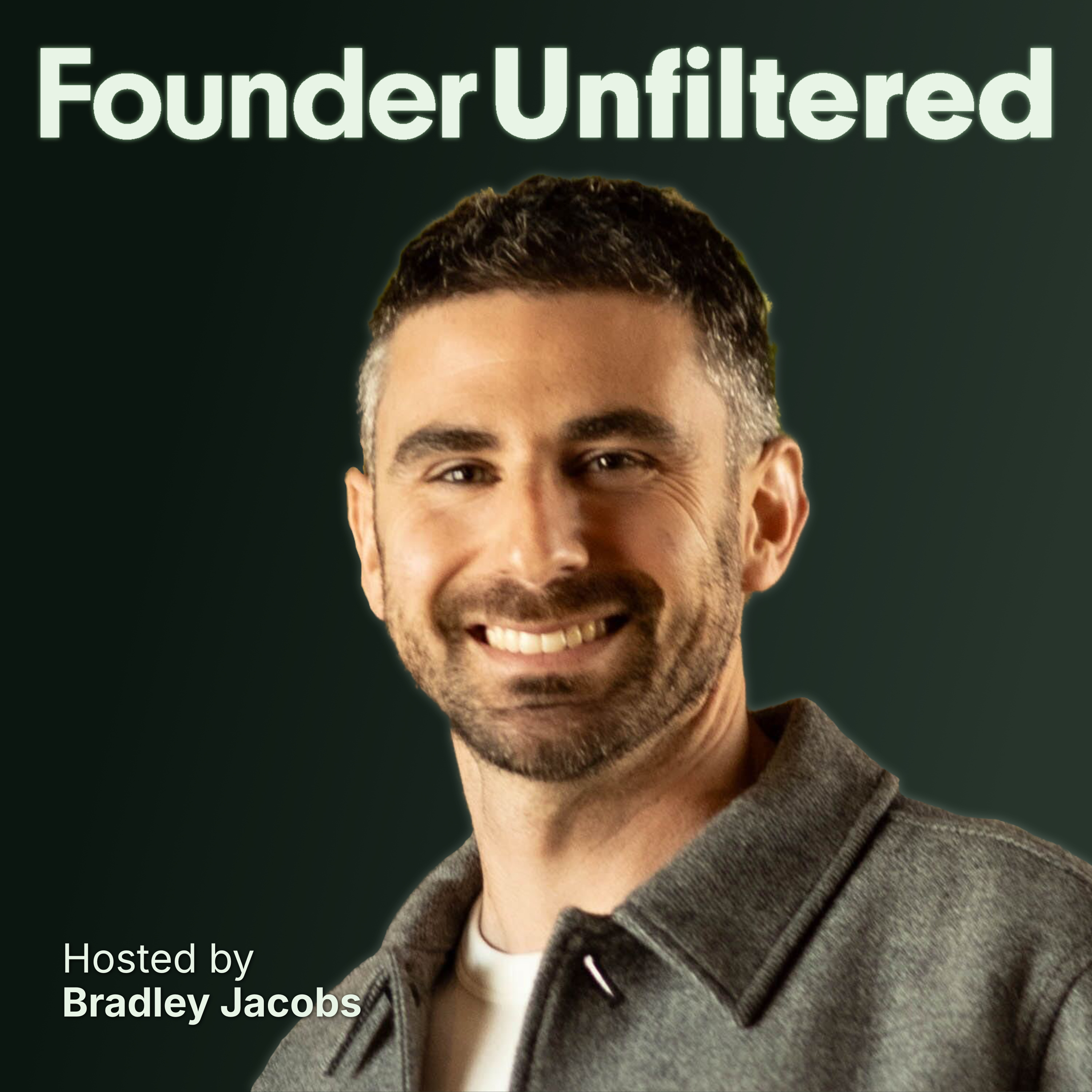
Founder Unfiltered - What Founders Think But Never Say
by Mylance
Formerly Six Figure Secrets of Fractional Experts, Founder Unfiltered is the show about the stuff founders don't talk about: the identity crisis when you go from operator to leader, the weird shame of self-promotion, the gap between who you are and who your business needs you to be. Hosted by Bradley Jacobs, founder of Mylance — a LinkedIn thought leadership platform for B2B founders — this show gets into the psychology, the patterns, and the honest conversations that actually move the needle. No hacks. No hype. Just the raw truth about what's really holding you back.
-
132
Stop Selling Your Product. Start Selling How You Think with Simon Bowen
This episode changed how I see my own business.Most founders think their product is the thing they sell. It isn't. Your thinking is the real product.I sat down with Simon Bowen, founder of the Models Method and creator of the Genius Model, a system he's used for nearly 30 years to help founders and consultants turn complex expertise into visual frameworks that actually close deals. Simon's work spans 30 countries and industries from defense to one-on-one coaching, and he's spent his career helping people get out of their own heads long enough to see what they actually know.We get into why "uniqueness" is a trap in a world flooded with AI-generated marketing copy. Simon breaks down his framework for company genius: the 20% that's truly yours (your original perspective, shaped by your story) integrated with the 80% you've curated from everything else in your industry. We talk about why purpose doesn't make the sale, why the sale is made in the how, and Simon walks through a real example of finding "the ache," the deep, often unnamed problem underneath the problem a customer says they have.If you've ever struggled to explain what makes you different, or felt like imposter syndrome was creeping in because so much of what you do isn't "original," this conversation will change how you think about your own value.Build your founder brand with Mylance: https://mylance.coConnect with Bradley Jacobs: https://www.linkedin.com/in/bradley-r-jacobs/00:00 Intro to Simon Bowen00:56 Simon's origin story02:35 Ideas start as a drawing04:10 Facilitating rooms that disagree05:24 The real Pareto principle06:44 Getting rooms to the breakthrough09:24 What is company genius10:09 Make me safe, help me win11:04 Why AI breeds sameness12:00 Thinking is the real product13:15 The founder's story as a lens15:13 The laundromat example begins18:03 Curate, create, integrate19:02 Imposter syndrome reframed20:28 Purpose, mechanics, and magic21:29 Consistency builds reliability22:15 Culture creates character23:13 The believability crisis25:12 Purpose doesn't make the sale26:55 The sale is made in the how28:44 What AI can't replace32:02 What the market really wants34:19 Introducing "the ache"36:02 The acne treatment example39:05 Three levels of problem40:59 Naming the ache42:00 Why founders forget their own ache44:34 Closing thoughts on business46:01 Business as the cornerstone of community48:37 Where to find Simon Bowen
-
131
90% Market Share in 6 Months: The Wild Ride of Running Uber at 24
I was recently a guest on Cassidy Warren's podcast, For Your Own Good, and the conversation went so long and covered so much that I wanted to bring it here too. This is part one of a three-part series pulled from that interview, and it goes all the way back to when I was 24 years old, joining Uber and getting handed the Raleigh, North Carolina market.My job was simple to say and brutal to execute: beat Lyft. We launched on the exact same day, with basically the same product, and six months later we had 90% market share. I walk through exactly how that happened, the five-mile launch radius, the obsession with five-minute ETAs, the live recruiting with a backpack full of iPhones and cash incentives, and the sheer amount of experimentation inside a very tight discipline.I also get into launching Uber Eats in Miami from scratch in six weeks, saying no to an entire city team who wanted a flashy launch party, and instead building the actual marketplace first. Restaurants, eaters, couriers, in that order. This is what it looks like to own a market as if it's your own company before you actually know what you're doing, and to do it anyway.Build your founder brand with Mylance: https://mylance.coConnect with Bradley Jacobs: https://www.linkedin.com/in/bradley-r-jacobs/00:00 Intro and episode setup00:46 Uber at 24, goal to beat Lyft01:27 Uber Eats Miami preview02:01 90% market share explained02:41 Early Uber culture, Wild West03:36 Launch day vs Lyft in Raleigh04:19 Five mile radius strategy04:58 Six months later, 90% share05:43 Focusing on one KPI06:33 Experimentation within discipline06:58 Incentive experiments explained07:29 Managing events and driver supply08:12 Pitching drivers on gig economy09:07 Background checks and security09:52 Signing up riders at UNC10:54 Organic growth over paid ads11:41 Who do you trust, then and now12:41 Comparing to AI hype today13:52 Communicating with skeptical users14:30 Answering 500 driver emails weekly15:52 Building a text expander system16:28 Transition to launching Uber Eats17:14 Getting picked for Uber Eats launch18:09 Six week launch challenge in Miami19:06 Three sided marketplace explained19:36 Metrics needed to launch20:07 Killing the launch party idea21:05 Biggest Uber Eats launch to date22:10 Becoming a leader under pressure23:07 Jumping in wherever needed24:03 Conflict on a commission team25:04 Offered the Miami GM role26:08 Reflecting on ownership mindset27:23 Talking to restaurant partners28:37 Explaining the restaurant pitch29:10 Ghost kitchens and on demand lunch31:02 Why the restaurant model failed32:20 DoorDash winning on volume33:12 Backpack full of iPhones story34:49 Copying competitor features35:23 Why Uber tracked Lyft so closely36:26 Live dashboards and supply scores37:39 Why lost riders rarely return38:18 Lesson on owner over optimization39:32 Door to door restaurant signups40:04 Closing and part two preview
-
130
I Watched $47 Billion Disappear at WeWork. Here's the Leadership Lesson That Actually Changed Me with Robin Daniels
My guest this week, Robin Daniels has held executive roles at Salesforce, LinkedIn, Box, Matterport, and WeWork, and he's now Chief Business Officer at Zensai. He watched WeWork's valuation swing from $20 billion to $47 billion to nothing in the span of a single year, and what he took from that isn't a war story, it's a way of leading.We get into the delusion that fuels great founders, the fine line between visionary and reckless, and why people always buy with emotion and support with logic, no matter how "B2B" the sale looks. Robin shares the courage it took to buy a one-way ticket from Copenhagen to California at 21, why high performers fear not trying more than failing, and how he made the brutal transition from doer to leader by learning to trust his team and optimize for speed. We also talk honestly about imposter syndrome, self-promotion, and the question he asks people frozen by the fear of posting: can your ego handle a few people thinking you're wrong?His core argument is one I keep coming back to: you can't control outcomes, you can only control your inputs and your outputs, so reward how people show up, not just what they hit. Robin's book, The Human Success Playbook, is out now.Build your founder brand with Mylance: https://mylance.coConnect with Bradley Jacobs: https://www.linkedin.com/in/bradley-r-jacobs/00:00 Meet Robin Daniels01:18 The Uber and WeWork parallels03:00 The founder's useful delusion06:00 Buy with emotion, support with logic08:30 Market B2B like B2C10:50 A one-way ticket to California at 2114:30 Fear of not trying vs fear of failing17:40 From doer to leader20:00 Why micromanagement kills teams23:00 Optimize for speed and trust25:30 The mistake that shaped his leadership28:00 Imposter syndrome at every level30:30 The voice that says you're a fraud32:00 Getting started on LinkedIn35:00 The 90-9-1 content model38:00 Can your ego handle the judgment39:30 Why worshipping outcomes backfires43:00 Reward how people show up47:40 The Human Success Playbook49:50 Where to find Robin
-
129
AI and the Founder Opportunity (Pt 4 of 4): What AI Can't Copy
This is part four of my four-part series on AI and the founder opportunity, and it's the one that answers the question I get asked the most: once AI makes it easy for anyone to build a product or service, what's actually left to protect?I walk through why AI is a multiplier, not a moat. The technology gets you to market fast, but so does everyone else's. What separates one founder from the next isn't the product, it's trust, credibility, and the story only you can tell. I share the honest version of my own journey building Mylance since 2020, including the products I sold and the ones I shut down, and why I don't count any of it as failure.I also get into the real reason most people never do this: not laziness, but fear of judgment. And I close with the four things I'd focus on if I were starting over: know what you're passionate about, validate there's a business in it, get honest about what's holding you back, and pick a strategy and stick with it for years, not weeks.No books or resources referenced in this one, just the lessons from building and rebuilding Mylance since 2020.Build your founder brand with Mylance: https://mylance.coConnect with Bradley Jacobs: https://www.linkedin.com/in/bradley-r-jacobs/Timestamps00:00 Welcome & what we're building00:39 Recap: the AI series so far02:20 AI is a multiplier, not a moat03:15 Why customers choose you03:46 Products I built and killed06:41 Your story is the differentiator08:28 Why founders hide instead of market09:37 The real reason: fear, not laziness10:58 Consistency over years, not weeks13:01 Recap: short game vs long game14:08 4 keys to set yourself up right15:52 Wrap up
-
128
Dr. Ruth Gotian Studied Nobel Winners, Astronauts & Olympians — Here’s What She Found
I sat down with Dr. Ruth Gotian, a success researcher and executive coach who has spent her career studying the world's highest performers, Nobel laureates, NASA astronauts, and Olympic champions, to figure out what they actually do differently when the pressure is real.What surprised me most is how often these elite performers say "I don't know." They're not protecting their egos, they're staying curious and pulling knowledge from outside their lane. We dug into why imposter syndrome is actually a sign of your success, why high achievers fear not trying more than they fear failing, and why focusing on your next goal beats obsessing over the ultimate one.We also got into self-promotion, the thing so many founders avoid. Ruth's take reframed it for me: it's not about you, it's about the value and the people you put the spotlight on. And she shared a networking system, the 24/7/30 rule, that any founder can use right now.Resources mentioned: Ruth's book The Success Factor, her LinkedIn Learning courses, and the free Passion Audit at RuthGotian.com.Build your founder brand with Mylance: https://mylance.coConnect with Bradley Jacobs: https://www.linkedin.com/in/bradley-r-jacobs/00:00 What elite performers do differently01:15 The subway that sparked the research03:30 No one teaches you how to succeed05:00 The surprising power of "I don't know"07:00 Reading isn't it, open your mind09:30 Get out of your lane to learn11:30 Ego and saying "I don't know"14:00 Your five people set your baseline16:30 Think next goal, not ultimate goal19:00 They're terrified too20:30 Imposter syndrome is a strength22:30 Failure is just data25:00 Saying yes only to aligned goals28:00 Giving value across seasons30:30 Self-promotion is really value-giving33:30 Becoming a LinkedIn Top Voice36:00 Don't fear giving away your secrets39:00 Breaking through the praise plateau42:00 What got you here won't get you there44:30 Using AI for real human connection47:30 The 24/7/30 networking rule50:00 Remember your why
-
127
AI and the Founder Opportunity (Pt 3 of 4): Finding Your Product-Market Fit
This is part three of my four-part series on how AI is reshaping the workforce, and it's the one I promised would be tactical. If you've listened to parts one and two, you know about the macro shift and the inner-game work, this episode is the playbook.I walk through the exact mistake most founders make: they get excited about an idea, build it, then go looking for customers, only to discover they built the wrong thing. I share the step-by-step process I used about a year ago to launch a brand-new product at Mylance, one that had paying customers before we'd even built it.You'll hear how I wrote out my hypotheses, ran real customer conversations instead of asking leading questions, built a no-code MVP I could ship in a day, and used the Sean Ellis score to know when I'd actually found product-market fit. I also talk about how tools like Claude Code, Lovable, and Base44 have made building fast, but figuring out what to build is still the hard part.Part four, on building trust and a sustainable customer experience, drops in two weeks.Build your founder brand with Mylance: https://mylance.coConnect with Bradley Jacobs: https://www.linkedin.com/in/bradley-r-jacobs/00:00 Intro and what Mylance does00:50 Recap of parts one and two01:30 What this episode delivers02:15 The mistake most founders make03:00 Step 1: write your hypotheses04:15 Bradley's own hypothesis example05:30 Step 2: real customer conversations07:00 Talk to real ideal customers08:00 Step 3: brainstorm the MVP08:45 Build fast with AI/no-code tools10:00 Get customers onto the MVP11:15 The Sean Ellis score and PMF12:30 Why founders skip this step13:15 Recap, Part 4 coming in 2 weeks
-
126
"Nobody Cares About You" | Mark Samuel on Failure, Pivots & Founder Health
I sat down with Mark Samuel for an episode that pushed back on a lot of startup gospel. Mark's a serial CPG entrepreneur. He built Iwon Organics into thousands of retail doors before licensing it, had a global brand in Fitmark that was acquired, and he's now building MARK'S, a better-for-you snack company. He also hosts the Let's Eat podcast, where he's interviewed over 250 CPG founders and operators.We got into why getting onto the shelf is the easy part and why velocity in the door is the metric that actually matters. Mark challenged my own belief that winners are simply the ones who never quit. His reframe: "keep going" means keep moving your feet, not keep pushing a product that's clearly not working. We talked about how to tell a real pivot from a sunk cost, the emotional weight of carrying private investors' money, and why he puts his own health ahead of family and work, in that order.It's an honest, unfiltered conversation about identity, failure, and starting over. No books or external resources were mentioned in this episode.Build your founder brand with Mylance: https://mylance.coConnect with Bradley Jacobs: https://www.linkedin.com/in/bradley-r-jacobs/Connect with Mark Samuel: https://www.linkedin.com/in/markalansamuel/00:00 Welcome + meet Mark Samuel00:48 Iwon Organics: scaled then licensed03:00 Getting in the door is the easy part04:51 The emotional weight of investor money07:02 The numbers speak for themselves11:13 Marks' go-to-market: Amazon + DSD09:25 Pushback: do winners just never quit?09:46 "Keep going" means move your feet16:36 How to know: pivot or move on15:58 The Poppy outlier story21:00 Health, family, work — in that order24:53 Marks as a health & wellness platform25:25 Discipline over motivation25:45 On resilience27:00 What drives him now + brand position31:13 "Nobody cares about you" — the takeaway31:43 Where to find Mark
-
125
AI and the Founder Opportunity (Pt 2 of 4): Why Founders Stay Small
In this episode — part two of my four-part series, AI and the Founder Opportunity — I get into the real stuff that keeps founders stuck. Not the tactics, not the tools. The fear.After talking with thousands of founders, I keep seeing the same patterns. Fear of judgment and rejection. Not knowing which move to make next. And that subtle, quiet thing where you're going through the motions but never quite giving it everything you've got — leaving yourself a back door just in case it doesn't work out.I talk about why action is the only thing that actually moves the needle on these blocks. Not therapy, not journaling (though those have their place) — but taking small, uncomfortable steps forward anyway. I share how I work with my own business coach, and why if you can't afford one, buying a smart friend tacos once a week might be the best investment you can make.I also get into why this moment — with AI making it easier than ever to build, test, and launch — is a massive opportunity for founders who are willing to stop waiting for the perfect idea, the right co-founder, or one more dollar in the bank. The riches are in the niches, and the tools to go after them have never been more accessible.No books or external resources were mentioned in this episode beyond a brief reference to 10x Is Easier Than 2x (highly recommended by Bradley).Build your founder brand with Mylance: https://mylance.co Connect with Bradley Jacobs: https://www.linkedin.com/in/bradley-r-jacobs/
-
124
Are You Playing to Win, or Playing Not to Lose in Your Business? with Dr. Angela Kerek
Most founders I talk to already know what they need to do — they just aren't doing it. In this episode, I find out why.Dr. Angela Kerek is a former professional tennis player, big law finance partner, and now founder of Active Giving — and her framework for sustainable performance completely reframed how I think about fear, self-sabotage, and what it actually means to give your all.We talked about the difference between playing to win versus playing to avoid losing, and how that same psychology that showed up on the tennis court follows us into every pitch, every client call, and every revenue goal we set. Angela shared how she realized she'd never truly given 100% in her entire career — not because she couldn't, but because if she gave everything and still lost, she'd have no excuse left. We dug into how to build a value system that's truly your own, why movement is one of the most underrated tools for mental resilience, and what it really looks like to live a sustainable, high-performing life without burning out. No books or external resources were mentioned in this episode. Find Angela and Active Giving at angelakeriek.com and activegiving.de.Build your founder brand with Mylance: https://mylance.co Bradley Jacobs: https://www.linkedin.com/in/bradley-r-jacobs/ Connect with Angela Kerek: https://www.linkedin.com/in/angelakerek/00:00 Welcome & guest intro00:44 Angela's background02:39 Learning to succeed without losing yourself06:38 Winning in business vs. winning in sport07:35 Defining success on your own terms11:04 Process focus & planning the night before12:48 We know what to do — so why don't we?13:59 Self-sabotage: the fear beneath the avoidance14:53 Playing to win vs. playing not to lose19:58 Fear of giving your all — and still failing20:14 What we can and can't control21:23 What to actually do about it23:27 Building your own universe25:00 Blocking out the noise — from everyone26:27 Training the mind to come back to itself29:42 Why building a business is so hard30:16 Uncertainty and the hardest part of founding32:02 Closing thoughts & last advice32:18 Never stop following your dreams34:10 Where to find Angela & Active Giving34:49 Wrap-up
-
123
AI and the Founder Opportunity (Pt 1 of 4): The Macro, the Opportunity, and the Fear
The AI revolution isn't coming — it's already here. Bradley Jacobs breaks down what the wave of tech layoffs actually signals and why he sees it as a massive opening for founders and solo entrepreneurs.With the cost and complexity of building software plummeting, Bradley argues that anyone with niche expertise can now create tailored solutions for underserved audiences that big companies will never touch. A focused, one- or two-person business serving a specific audience? More viable today than it has ever been — and getting more so by the month.But the real barrier isn't technical or financial. It's mindset. Bradley gets honest about fear, imposter syndrome, and the habit of playing small — drawing on quotes from Lady Gaga and Emma Watson to show that self-doubt is universal. The people who break through aren't fearless; they just act anyway. This episode sets the stage for a four-part series exploring the opportunity in front of every founder right now.Build your founder brand with Mylance: https://mylance.coConnect with Bradley Jacobs: https://www.linkedin.com/in/bradley-r-jacobs/00:00 Welcome & episode overview01:15 Big tech layoffs & what they signal03:30 AI is still in its infancy05:00 The niche founder opportunity07:45 Custom solutions for underserved audiences10:00 Why being miserable at work isn't required12:30 What really holds founders back: fear15:00 Imposter syndrome — Lady Gaga & Emma Watson17:30 Playing big despite the fear19:45 Bradley's personal fear of playing big21:30 Miniseries roadmap: episodes 2, 3 & 423:00 DM Bradley & Mylance CTA
-
122
Take the Blame, Give the Credit: The Leadership Mindset That Scales with Asim Khaliq
Most founders start their companies with a clear vision — and then accidentally become the biggest obstacle to that vision. Asim Khaliq has built seven companies and generated over $800 million in revenue, and he's seen this pattern play out over and over again.Bradley sits down with Asim to unpack why the founder mindset that launches a company is often the very thing that stalls it. Asim breaks down the difference between delegation and true decision design — and why most founders who think they're delegating are still bottlenecking everything. He also shares his framework for failure: fail often, fail cheap, fail fast. It's not about avoiding failure — it's about making sure each one only costs you $500, not $50,000.They also get into what's actually changing in e-commerce and business right now. Asim's take on AI is refreshingly practical: stop chasing every new tool, and figure out how AI fits your operations. And on the question of passion? Asim gives a honest answer — most great businesses are boring, and accepting that is part of what makes you a great founder.Learn More: Build your founder brand with Mylance: https://mylance.co Connect with Bradley Jacobs: https://www.linkedin.com/in/bradley-r-jacobs/00:00 Introduction & Asim's background00:51 Why the founder is the problem02:53 Delegation vs. decision design04:57 Staying close to your customer06:20 Humility and the best founders07:39 Key founder skills: culture, resilience, listening10:46 Fail often, fail cheap, fail fast13:23 Taking blame, giving credit15:23 How Asim builds personal resilience17:37 What's working (and not) in the market19:45 Practical AI use cases for e-commerce21:42 How to choose AI tools without overwhelm22:39 Claude vs. ChatGPT as strategic advisors23:47 Building a business that can survive AI25:55 Passion in entrepreneurship — the honest take27:51 Why great businesses are boring28:54 Where to find Asim
-
121
The Original Idea for Mylance Was a Fool’s Errand
What if the biggest threat to your consulting business isn't competition — it's you trying to solve too many problems at once? Bradley Jacobs, founder and CEO of Mylance, shares the real story behind building Mylance from scratch: the bloated first pitch, the advisors who never called him out, and the cycle of adding products instead of cutting them.From a coaching program to bookkeeping to a custom outbound software tool to a done-for-you content agency — Bradley kept stacking solutions on top of solutions, all while drifting further from what actually worked. It took stripping everything back down to a no-code MVP built in Notion and Google Sheets to find real traction. The lesson: going deep on one problem for one customer beats going wide on ten.If you're a founder or independent consultant wondering why your business feels scattered, this episode will help you see the pattern — and give you the clarity to cut what's not working.Learn More:Build your founder brand with Mylance: https://mylance.coConnect with Bradley Jacobs: https://www.linkedin.com/in/bradley-r-jacobs/00:00 Welcome & Mylance intro00:45 The original Mylance pitch (Jan 2020)02:10 "HR for Freelancers" — the full vision03:30 Year one: coaching program takes off04:45 Adding bookkeeping to the mix05:30 Raising money, hiring a CTO, building software06:45 The core mistake: solving too much07:30 Advisors who couldn't spot the problem08:45 Emotional attachment to what you've built09:50 Shutting down coaching, pivoting to lead gen11:00 ZoomInfo-style software + done-for-you agency12:00 Repeating the mistake with content creation13:00 The AI reset — starting from scratch13:45 Back to user interviews: LinkedIn clarity14:20 The no-code MVP that actually worked14:50 One sentence rule & wrap-up
-
120
How AI is Reshaping the Founder Journey (From the Inside Out) with Manuj Aggarwal
Most founders are using AI wrong — and it's quietly burning them out. I sat down with Manuj Aggarwal, founder and Chief Innovation Officer at TetraNoodle Technologies, who has been working in AI since 2005 and now sits at the crossroads of artificial intelligence, neuroscience, and psychology. His central argument: unfiltered AI output is like crude oil for the mind — it overwhelms, it bypasses your values, and it makes you busier without making you better.Manuj walks us through his seven-pillar AI Merge framework, designed to help founders engage with AI in a way that's actually aligned with who they are — their purpose, identity, relationships, creativity, time, peace of mind, and embodiment. He references the Japanese concept of ikigai as a practical starting point for purpose discovery, and explains why the founders who truly win in this era will be the ones who know themselves deeply first. He also shares the story of how he literally fired himself as CEO of his own company, replacing that role with an AI-powered digital twin — and why it's working better than he expected.If you're overwhelmed by AI noise, canceling plans to stay home and "just work," or chasing every new tool without a clear reason — this conversation will reframe everything. Manuj's message is counterintuitive but powerful: slow down, go outside, talk to real people, and use AI as a precision instrument rather than a crutch.Learn More: Build your founder brand with Mylance: https://mylance.co Connect with Bradley Jacobs: https://www.linkedin.com/in/bradley-r-jacobs/00:00 Welcome & intro: Manuj Aggarwal00:41 Manuj's background & origin story02:23 20 years in AI before ChatGPT03:09 AI's real impact on the founder mind06:56 Outsourcing decisions to AI: the risk07:08 Why AI doesn't know your values09:17 How to use AI the right way09:31 The 7-pillar AI Merge framework13:44 Breaking the addiction of working from home14:37 The evolutionary shift happening right now16:40 AI as the "middle 50%" of the past17:12 What is a digital twin for founders?20:24 How well does it actually work?21:32 Too many AI tools — how to choose22:11 Focus on problems, not tools24:05 Can you clone Elon Musk or Steve Jobs?24:40 Why someone else's nervous system won't help you26:46 How do you actually find your purpose?26:56 Ikigai, purpose, and the new economy
We're indexing this podcast's transcripts for the first time — this can take a minute or two. We'll show results as soon as they're ready.
No matches for "" in this podcast's transcripts.
No topics indexed yet for this podcast.
Loading reviews...
ABOUT THIS SHOW
Formerly Six Figure Secrets of Fractional Experts, Founder Unfiltered is the show about the stuff founders don't talk about: the identity crisis when you go from operator to leader, the weird shame of self-promotion, the gap between who you are and who your business needs you to be. Hosted by Bradley Jacobs, founder of Mylance — a LinkedIn thought leadership platform for B2B founders — this show gets into the psychology, the patterns, and the honest conversations that actually move the needle. No hacks. No hype. Just the raw truth about what's really holding you back.
HOSTED BY
Mylance
CATEGORIES
Loading similar podcasts...
Frequently Asked Questions
How many episodes does Founder Unfiltered - What Founders Think But Never Say have?
Founder Unfiltered - What Founders Think But Never Say currently has 13 episodes available on PodParley. New episodes are automatically indexed when they're published to the podcast feed.
What is Founder Unfiltered - What Founders Think But Never Say about?
Formerly Six Figure Secrets of Fractional Experts, Founder Unfiltered is the show about the stuff founders don't talk about: the identity crisis when you go from operator to leader, the weird shame of self-promotion, the gap between who you are and who your business needs you to be. Hosted by...
How often does Founder Unfiltered - What Founders Think But Never Say release new episodes?
Founder Unfiltered - What Founders Think But Never Say has 13 episodes. Check the episode list to see recent publication dates and frequency.
Where can I listen to Founder Unfiltered - What Founders Think But Never Say?
You can listen to Founder Unfiltered - What Founders Think But Never Say on PodParley by clicking any episode. We provide an embedded audio player for direct listening, and you can also subscribe via your preferred podcast app using the RSS feed.
Who hosts Founder Unfiltered - What Founders Think But Never Say?
Founder Unfiltered - What Founders Think But Never Say is created and hosted by Mylance.
URL copied to clipboard!