
PODCAST · society
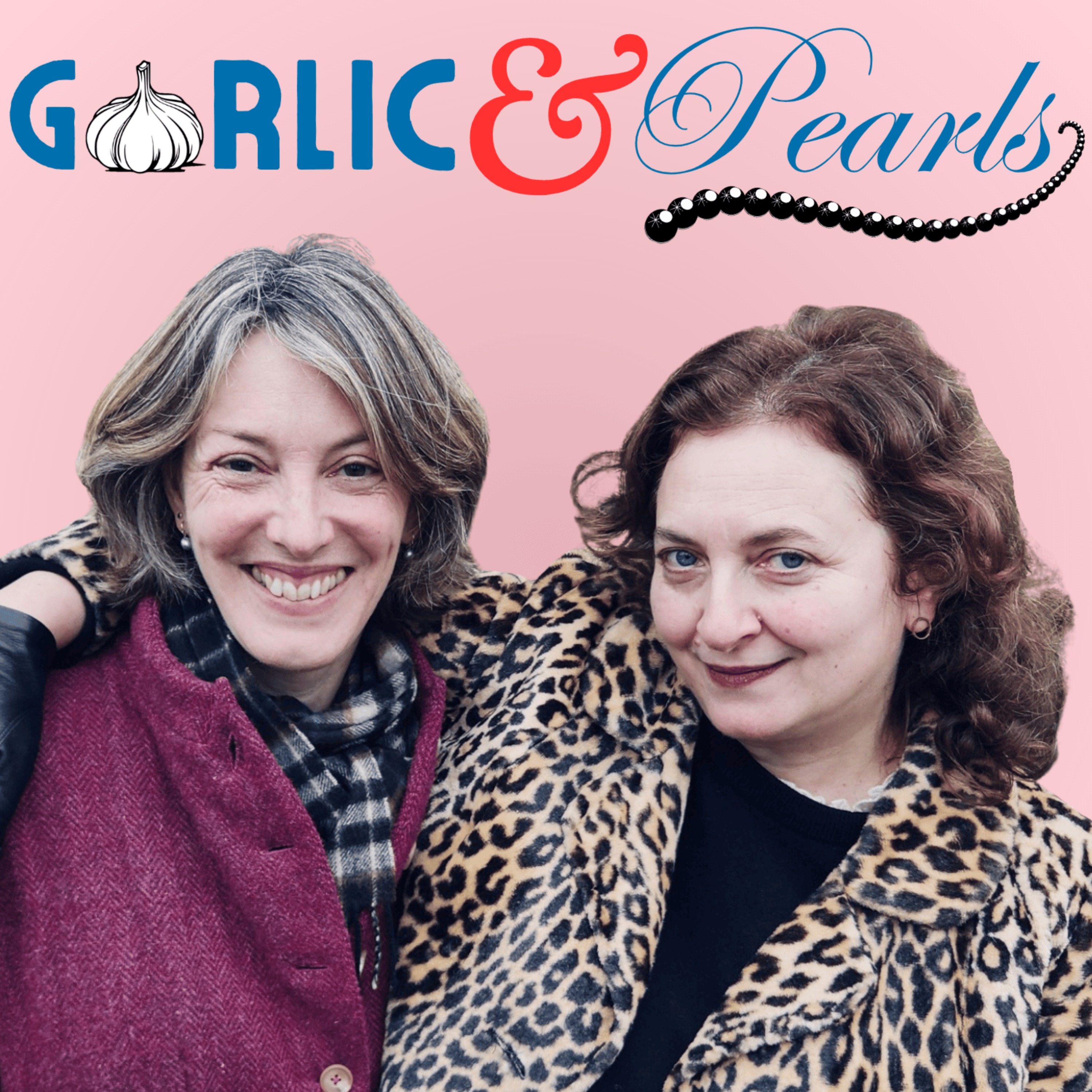
Garlic & Pearls
by Muriel Zagha and Suzanne Raine
Suzanne and Muriel examine a series of very different things – from a film to a kitchen utensil, a model train to a bar of soap – that define British or French attitudes, each explaining her cultural background to the other and trying to get to the essence of what makes the British British and the French French. Hosted on Acast. See acast.com/privacy for more information.
-
107
Summer Postcards: Ginger Beer
Lashings of ginger beer all around and nostalgia galore as Suzanne explains the refreshing drink's quasi-parodic Famous Fives connection and unpicks the origins and history of ginger beer, taking in the trading of the exotic ginger root, its feeding into the British obsession with beer, fermenting and experimentation, some Victorian tales of temperance leagues, brown bottles, scoby and vinaigrières, the investigations of distinguished botanist Henry Marshall Ward into the alien entity of the ginger plant, the great split between ginger beer and ginger ale, Henry Crabbe's brewing dynasty and its connection to whisky, and finally, above and beyond nostalgia, the irrepressible resurgence of the craft and savoir-faire of ginger-beer brewing today. Anyone for a Moscow Mule? Hosted on Acast. See acast.com/privacy for more information.
-
106
Summer Postcards: Bonjour Tristesse
Muriel faces up to the melancholy that comes to us all towards the end of summer, and find a Gallic expression of it in the 1954 novel Bonjour Tristesse, a huge bestseller and succès de scandale set on the French Riviera. The book launched the career of its teenage author Françoise Sagan – herself an iconic forerunner of the rebellious French youthquake of the 1960s. Is the story – a timeless Greek-style tragedy charting the catastrophic consequences of deregulated insouciance – immoral or was Sagan actually a moralist? And then there is the book's 1958 Hollywood film adaptation by Otto Preminger starring Jean Seberg. which, with its mix of Technicolor and black-and-white, brings to life a dark story set in the sunniest, most colourful place. Hosted on Acast. See acast.com/privacy for more information.
-
105
Summer Postcards: Summer Pudding
Suzanne presents Muriel with the magnificent dome of scarlet studded with berries that is summer pudding and reveals the dessert's intriguing origins, which lie in 19th-century hydropathy. What inspired the British to deploy a plain, uncompromising pudding made of bread and native fruit as a health food? Suzanne seeks out the original recipe of the pudding, which turns out to be the tip of the iceberg of a history of spa towns and hydropathic hotels powered by the idea of water as a cure-all, and its eccentric and sometimes fanatical Victorian promoters. Fashionable in the 1920s, summer pudding then fell into obscurity until its triumphant restoration to the British repertoire in the 1980s. An asphalt inventor, a knitwear manufacturer and a colonial missionary guest star. Hosted on Acast. See acast.com/privacy for more information.
-
104
Summer Postcards: Melons
What is the quintessential French summer food? Melon, of course, of the orange-fleshed and deeply aromatic variety. In the summer, Muriel explains, the French go into a sort of melon frenzy, chasing the perfect ambrosial experience, and this brings with it the agony of choice. Selecting the right melon is an inexact science, at once thrilling and anxious-making. Weighing up a melon in the palm of your hand is a Gallic ritual as old as time. Melons also come with a rich cultural hinterland: they have long inspired poets and moralists. To the French, there is something subtly existential about the promise of delight and the repeated quest for excellence in a sea of indifferent fruit. Hosted on Acast. See acast.com/privacy for more information.
-
103
Summer Postcards: Ice Cream Vans
Can you hear the clarion call of a tinny version of 'Green Sleeves'? That familiar cheery chime is calling us to the ice cream van, plying its way all over the UK in the summer. Suzanne explores its history, its British-American mash-up of creativity, crucial Italian connection, technical challenges and complex regulations. Who invented Mr Whippy? How did the 99 chocolate flake come to be? Who is best at converting an ordinary van into a magical driving machine that dispenses ice cream? And should Suzanne and Muriel consider an alternative career ? The Garlic & Pearls theme tune would make an irresistible chime for their van... Hosted on Acast. See acast.com/privacy for more information.
-
102
Summer Postcards: Topless Sunbathing
The golden age of topless sunbathing in France lasted a little over a decade, from the 1970s to the tail end of the 1980s. French women pioneered it and were also first to abandon it. But how and why? Muriel retraces the story of a particular aspect of Gallic art de vivre which was highly codified and attempted to recast the social contract between women and society. How natural was it? How cultural? Did it have more to do with feminism – of the French kind – or with fashion? And what would Coco Chanel have made of it? Hosted on Acast. See acast.com/privacy for more information.
-
101
Summer Postcards: Scampi Fries
Another case of Suzanne pinpointing the essence of Britain; another first-time taste experience for Muriel! What are scampi fries but fish and chips, pubs and the British seaside holiday all condensed into a tiny mouthful of fishy saltiness. Covering ground from Georgian recipes of Italianate dishes of langoustines to extruded snacks of the 1980s, Suzanne tells the story of how the whole of Britain was fitted into a small crunchy bag. Hosted on Acast. See acast.com/privacy for more information.
-
100
Summer Postcards: Pastis
In the wake of the banning of absinthe in France in 1915, a new apéritif was born, redolent with aniseed and liquorice, a taste at once medicinal and full of the joie de vivre we associate with the South of France. But what does 'pastis' mean? Who invented it? In what way did it have political implications? And why is it so central to French apéritif culture? Hosted on Acast. See acast.com/privacy for more information.
-
99
Stripy Tops: From Devil's Cloth to Top French Icon
Muriel tells the story of the stripy Breton top and wonders how a pattern – stripes – once considered sacrilegious and satanic gradually became the epitome of French elegance. We explore the evolving cultural history of a powerful symbol, the role of seaside holidays, of sailor suits as the preferred outfits of smart children, and the formalisation of the uniforms of the French Navy. Coco Chanel, Pablo Picasso, Jean Cocteau, Jean-Paul Gaultier and a lot of zebras put in an appearance. Are stripy tops a means of clothing oneself in maritime courage, freedom and adventure? Hosted on Acast. See acast.com/privacy for more information.
-
98
Pub Quizzes: The Nation's Favourite 'Brit of Fun'!
Biros at the ready as Suzanne takes Muriel on a tour of a very British obsession: the pub quiz. Did it begin on a mythical night in Yorkshire in 1946? Is it one of the primary ways in which the British relate to each other socially? And if so, why? Can the Zoom quiz be credited for keeping the nation together during Covid? Are the best pub quizzes, Suzanne asks, ultimately where the British sense of terroir is located? Warning: this episode contains a veritable avalanche of punning. What's your team name, by the way? The Spanish Inquizzition? I Am Smartacus? Or simply: Quizzy McQuizface? Hosted on Acast. See acast.com/privacy for more information.
-
97
The Institut Français du Royaume-Uni: Britain's Official Portal into French Culture!
With French historian Charlotte Faucher as her guide, Muriel explores the madly ornamental pink-brick Art Deco wonder that is the French Cultural Institute in South Kensington. Though the building dates from 1939, the idea of setting up a French Institute in Britain as a gateway to a better understanding between our two nations arose in 1910, the brainchild of Marie d'Orliac, an enigmatic figure who was also very good at reinventing herself. Nowadays South Kensington is a hub of French soft power, but how did it all begin, and what was the impact of the two World Wars on the project, especially the arrival in 1940 of an obscure officer called Charles de Gaulle and his 'certain idea of France'? Join us for a fascinating peek into a beguiling engine of soft power and the people that gave it meaning! Hosted on Acast. See acast.com/privacy for more information.
-
96
The Letter J: The Mind-Blowing Creation Story of a British Sound
This episode, full of suspense and mystery, is brought to you by the letter J! In the English language, the letter and its distinctive sound are deployed in their glory, whereas the French soften the letter J (as in je or bijou). The letter's story, which comes to full expression in 1629, is bound with that of the printing press. Who invented the letter J? Suzanne retraces the evolution of this exciting, propulsive letter – and how it acquired its shape – by way of the monumental King James Bible undertaking and the cast of dedicated medieval Cambridge scholars who carried it out. It is a story of the quest for legibility, clarity, directness and transparency – a very British story that would, Suzanne thinks, make a wonderful film. But who should play the letter J, the mischievous letter trying to make its mark on the page? Hosted on Acast. See acast.com/privacy for more information.
-
95
The Great Paris Flood of 1910: The City of Light vs Nature!
In 1910, Paris was an ultra-modern electrified metropolis at the height of its confidence, insouciance and triumphant glamour. Then came the winter rains, and the Seine began inexorably to rise, causing chaos and devastation. Parisians living near the river soon found themselves getting about the streets in rowing boats and on improvised wooden walkways. The man of the moment was the then prefect of Paris, the gallant and indefatigable Louis Lépine, who patrolled the city in a frock coat and top hat , his smart trousers tucked into wellies, and seemed to be everywhere at once. Muriel tells an apocalyptic story of resilience and survival, and of the III Republic being put to the test. Hosted on Acast. See acast.com/privacy for more information.
-
94
Bell Ringing: Unique Performing Art and England's 'Loud Noise to the Glory of God'!
Starting with the glorious 1934 novel The Nine Tailors by queen of crime Dorothy L. Sayers, set in the mystical, liminal landscape of the Fens and in the haunting world of ancient bell ringing, Suzanne explores the English art of campanology. Ringing in rounds requires intense mental and physical discipline – in the novel, the intrepid Lord Peter Wimsey rings bells for nine hours solid – and this communal activity already bound villages together in Tudor times. How did England evolve a form of music – the voice of a village – that is written as a sequence of numbers? Suzanne patiently walks Muriel through the mechanics of belfries and the mind-boggling mathematics of change ringing, strike intervals and vertiginous extents. Hosted on Acast. See acast.com/privacy for more information.
-
93
Debora Robertson: What We Get Wrong About France
Suzanne and Muriel welcome as a special guest the food writer and journalist Debora Robertson. a perceptive observer of French village life in the South-West – and the French psyche – in her Substack, Lickedspoon. She describes what it's like to be an exotic Brit in the French countryside and shares on-the-ground anecdotes about French behaviour. We find out which is more important, croissants or yoghurts? Is the baguette still sacred? Is the French administration really the embodiment of evil? Is it possible for the French to enjoy British food? What are the byzantine rules of kissing people hello? Are bidets a Good Thing or a Bad Thing? Are the French rude? What is normal for France and what do you have to do to fit in? And much more! Hosted on Acast. See acast.com/privacy for more information.
-
92
Zebra Crossings: Freedom, Safety and British Science in Black and White!
How, wonders Suzanne, did Britain come to gift the Big Z to the entire world? And how did Britain become a place where pedestrians can expect, in most cases, to find a crossing in the right place? The presence of zebra crossings is the fruit of a long evolution involving bitter parliamentary debates and the tension between limiting speed and protecting an Englishman's freedom of the highway. We meet the transformative figures of Leslie Hore-Belisha, inventor of the driving test and the flashing Belisha beacon, and Dr George Charlesworth, – aka 'Dr Zebra' – whose studies in contrast perception led to Britain leading the way in road safety worldwide: 'Listener, if you seek his monument, look around you.' Hosted on Acast. See acast.com/privacy for more information.
-
91
The 100th Episode: Our Peak-Britain and Peak-France Chart-Toppers!
Muriel and Suzanne raise a shaken, not stirred pickled-onion-and-Orangina cocktail to toast a vintage episode of the podcast. Now 100 hours into exploring Britishness and Frenchness, they each select their 5 favourite episodes presented by the other and reflect on what they have discovered along the way. An overflowing cornucopia of garlic, pearls, revelations, surprises and cultural aperçus, this landmark episode throws some light on the results of G&P's inquiries and highlights many gems in the podcast's catalogue. Did your favourite make the cut? Hosted on Acast. See acast.com/privacy for more information.
-
90
May 68: How and Why France Dreamed Up Another Revolution
Muriel wonders why the May 68 uprisings happened so expansively and explosively in the France of De Gaulle and not in Howard Wilson's Britain. She takes Suzanne back to a time of flying cobblestones and bourgeois Maoist students on the barricades. What triggered the events, what fanned the fire? How much of a revolution was May 68, really? What political and social fracture has it left in French society? And what is its legacy in terms of imagery and myth? Glorious utopia of social break-down? Hosted on Acast. See acast.com/privacy for more information.
-
89
The Blue Willow Pattern: A Tale of Romance, Bone and Clay
Suzanne takes Muriel on a journey to a faraway land, travelling into the hidden depths of a dinner plate. Its famous pattern – trees, a pagoda, a bridge, a boat, a fence – tells a version of Romeo and Juliet's story set in Imperial China. The plate was first made in England in the 18th century, but the story and its memorable characters – an eminent mandarin, his beautiful daughter, an ardent young man, a resourceful maid – were retrofitted to the plate as part of a story of cross-cultural admiration, imitation and adaptation that unfolded in Staffordshire in the 1780s. But how did Josiah Spode rewrite the pottery rule book? And how has the allure of Blue Willow lasted to this day? Hosted on Acast. See acast.com/privacy for more information.
-
88
The Laughing Cow: The Quintessential French Cheese
In France, a country with a multiplicity of cheeses, only one achieves national unity: the humble Vache qui rit – or Laughing Cow. But what are the origins of this product? Invented in the wake of the Great War as a trailblazing 'fromage moderne', it shares a terroir with the more prestigious Comté, which is also one of its ingredients. Paradoxically, Muriel suggests, this processed melted cheese – part Proustian madeleine and part gateway to gastronomy – is an expression of the French passion for le fromage. And Suzanne also receives something she didn't know she needed: a moo box! Hosted on Acast. See acast.com/privacy for more information.
-
87
The Monarch of the Glen: The Surprisingly Passionate Tale of Landseer's Emblematic Masterpiece
An imposing stag stands in a dramatic landscape, in a famous painting hanging in pride of place in the National Scottish Gallery. But what are we really looking at, asks Suzanne. An accomplished oil painting by a Victorian master? A great icon for Scotland? Is is the painting a case of cultural appropriation and the encapsulation of 'Balmorality'? Does it matter if Landseer lost his head to the romance of Scotland? And who was he, and why did he paint the famous stag? It's a rollicking tale of tormented artistic temperament and the peregrinations of a painting, featuring the early days of marketing and mass reproduction, a very French case of cherchez la femme, a delicious recipe for potatoes and the foreshadowing of action painting – with tea. Hosted on Acast. See acast.com/privacy for more information.
-
86
The French Garden: Making Nature Artificial, Mathematical and Political!
What makes a garden distinctly French? A geometrical layout, straight lines of regular topiary and not a hair out of place! How, Muriel asks, did the jardin à la française develop as an expression of French thought and sensibility? Together, one man, royal gardener André Le Nôtre, and his king, Louis XIV the monarch absolute, turbo-charged an ornamental tradition imported from Italy to create Versailles, with its heliocentric design and extraordinary display of mastery of man over nature. Wonderful artistry or neurotic obsession with power? Certainly, French gardens speak intensely of political ideas as well as aesthetics. Suzanne wonders where all Gallic insouciance has gone. Jean-Jacques Rousseau guest-stars. Hosted on Acast. See acast.com/privacy for more information.
-
85
Labrador Retrievers: Did the British Invent the Perfect Dog?
There are over a million Labradors in the UK, but where did this sturdy marvel of bright countenance and sweet temper originate? Is it really possible to invent a dog? Yes, says Suzanne, though she concedes that the seed of the Labrador breed came from the now extinct Newfoundland St. John's water dog, with his double layer of fur and his webbed feet. Gasp at the breeding achievements of top sportsmen Colonel Peter Hawker and successive Earls of Malmesbury and Dukes of Buccleuch! Thrill at a whole cast of illustrious dogs who either that had their portrait painted or received awards for bravery! Also featured: a British canine scandal, a Nancy Mitford connection and a nail-biting game of 'Guess the Dictator!' Hosted on Acast. See acast.com/privacy for more information.
-
84
The Flâneur: Why The French Walk More Slowly Than The British
Monocles and canes at the ready! Muriel traces the 19th-century origins of a familiar and somewhat raffish figure of Frenchness. Part boulevardier, part dandy, part poet, the flâneur is a leisurely observer of the urban landscape. But where did he come from? What is his legacy? And can there be such a thing as a British flâneur? Hosted on Acast. See acast.com/privacy for more information.
-
83
Daffodils: The Poetic Icon that Means Booming Business for Britain
Suzanne explores the British adoration of the yellow, trumpet-like, optimistic daffodil, the harbinger of spring. The evocative words of William and Dorothy Wordsworth, poetry and prose, bracket this episode, in which we discover that daffodils are also about economics. The UK cultivates 90% of the global daffodil supply. The numbers are staggering: hundreds of millions of flowers are grown annually and must all be harvested by hand. But how? We also meet a bunch of Victorian daffodil obsessives, from Scottish enthusiast Peter Barr, whose quest for seeds took him, astride a donkey, all over the Pyrenees, where he was mistaken for a bandit; Reverend George Herbert Engleheart, clergyman and father of the modern daffodil; and Quaker plantswoman Sarah Backhouse – aka 'The Genius' – who turned daffodils pink! Hosted on Acast. See acast.com/privacy for more information.
-
82
The Café Waiter: Working-class hero? Towering Figure of Haughty Frenchness?
Café waiters are omnipresent in French life and in French culture as a sort of regiment – serried ranks of men in their black-and-white uniform with tremendous esprit de corps. But who are they really, Muriel asks, and how did they become such stock figures of Frenchness, and even objects of study for French philosophy? What makes a good café waiter? Is it to do with natural ability, physical fitness, French reserve, or the joys of performance? What is the etiquette of interacting with a café waiter? And what are the rules of the traditional café waiters race? Hosted on Acast. See acast.com/privacy for more information.
-
81
Cagoules: The Great British Cover Up
How to solve a problem like the British weather? It's easy if you invent the right British garment with a French name, whose origins and evolution Suzanne unveils: it's a story of ancient hooded spirits, anoraks, Royal Marines, the great outdoors, textile manufacturing, fashion and practicality, and – in a surprising twist – anti-Republican conspiracies in 1930s France. Hosted on Acast. See acast.com/privacy for more information.
-
80
French Baddies in Film: Bad Eggs and Dark Horses
Muriel unravels the reasons why so many film villains happen to be French. From dissolute sophisticates to duplicitous manipulators and downright sadistic megalomaniacs, what do these colourful imaginary French figures tell us about Frenchness? Hosted on Acast. See acast.com/privacy for more information.
-
79
Ken Loach's Kes: Urchin Rebel Bonds With Wild Kestre in Quintessential British Film
Suzanne explores a masterpiece which is 'like being knocked out' – a cri de coeur about downtrodden youth, devastating tragedy and the tyranny of class. But Ken Loach's Kes is also a dream of escape, wondrous lyrical beauty and the call of the wild. And what of A Kestrel for a Knave, the film's source novel, and its revered author Barry Hines? What do they tell us about how a story rooted in South Yorkshire working-class experience, once told in print and film, gave a whole community their voice and also reached universal resonance? Hosted on Acast. See acast.com/privacy for more information.
-
78
A Very French Scandal: Naked Woman at Picnic! Manet’s revolutionary Déjeuner sur l'herbe
Muriel examines a madly famous succès de scandale. What’s going on in Edouard Manet’s 1863 painting of an outdoors scene featuring four people, one of whom is stark naked? Is it a riddle? A transgressive prank? Napoleon III guest stars as the originator of the offbeat Salon des Refusés, and an enigmatic life model breaks the fourth wall. Hosted on Acast. See acast.com/privacy for more information.
-
77
The Guinness Book of Records: Superlative feats! Nature's wonders! Fun for dictators!
Suzanne tells Muriel a very British story of surprise global success, which began at a shooting party in 1951 with a dispute over the speed of a golden plover. A dramatic cast of fact finders and record breakers includes Guinness Brewery managing director Sir Hugh Beaver, identical twins of exceptional retentive memory Norris and Ross McWhirter, and Presidents of Turkmenistan Gurbanguly Berdimuhamedow and his son Sherdar. What made the Book such a success? What challenges did it face? And where in the world has the highest concentration of white marble buildings? Hosted on Acast. See acast.com/privacy for more information.
-
76
Brittany: The French Wild West - Celtic Identity, Pancakes, Memories of Dukes and Power!
Why does 'Brittany' (in local dialects Breizh and Bertègn) sound so much like 'Britain'? Because this Western region of France, once known as Armorique, was profoundly shaped by an influx of 5th-century Celt migration from the British Isles. One of the six Celtic nations, it represents an enmeshing of our two cultures and isn't quite part of mainstream France. Muriel narrates the region's turbulent history of annexation by the Kingdom of France through a series of strategic marriages – almost all of them to the same Breton Duchess. Plus mythical tales of drowned cities, a controversial Breton comic-strip heroine, home-grown Breton Cola, and your reminder to eat pancakes for Candlemas, like the French! Hosted on Acast. See acast.com/privacy for more information.
-
75
Football: Britain's Gift to the World!
Suzanne moves the goalposts and gives football the Garlic & Pearls treatment: it's a story where passions run high, from obsessive devotion to dogged attempts to ban the sport, whether because of its riotous violence of because it's deemed unsuitable for ladies. A cast of colourful characters keep the ball moving: Henry VIII, Mary Queen of Scots, the five-foot-tall Lady Florence Dixie and her husband Lord ABCD, Nettie Honeyball and legendary scorer Lily Parr ... But how did quicksilver come into it? And where was the world's oldest extant football discovered, hinting at protection from witchcraft? Hosted on Acast. See acast.com/privacy for more information.
-
74
French Brothels of the Golden Age: Sex, theatricality, escapism!
Oh là là! From the Belle Epoque to the Jazz Age rose famous French brothels such as Le Chabanais, the One Two Two or the Sphynx. This vanished world, its outlandish themed rooms and enigmatic army of female denizens, live on in the iconography that they inspired and that remains forever wedded to French identity. The future Edward VII guest stars as a designer of unusual furniture. Hosted on Acast. See acast.com/privacy for more information.
-
73
A Study in Silver: The cryptic British world of precious metals, their hallmarks, assays, and guilds
Suzanne illuminates the origins and meaning of hallmarking, which began in the 13th century under Edward I – aka Edward Longshanks – as part of his wider effort to stabilise the kingdom by means of statutes. Though the French king Louis IX appears as a guest star, this is a case of Britain being far more systematic and precise than France while, in typical British fashion, devising a resilient system capable of evolving through the centuries. Where were the native silver and gold mines of Britain? And did you know that you could have your own hallmark made? Hosted on Acast. See acast.com/privacy for more information.
-
72
La dictée: How did a school spelling test become a French obsession and symbol of Frenchness?
Muriel goes back to school to explore how in France the spelling test called la dictée became the backbone of French education. Who introduced it and why? Is it fascistic or democratic? And how did a school exercise become a beloved popular cultural event shared by the nation? It's a very Gallic tale of Republican alphabetisation, unification and nation-building, and Muriel joins in by pitting herself against Emperor Napoleon III in taking on a famously exacting dictée! Hosted on Acast. See acast.com/privacy for more information.
-
71
The Christmas Tale Face-Off: A Christmas Carol or Les Misérables?
In our last episode of 2025, Suzanne and Muriel consider soberly which is more atmospheric and replete with the spirit of Christmas - is it Dickens with Michael Caine and a cast of Muppets, or is it a pivotal bit of melodrama in Victor Hugo's social saga? Hosted on Acast. See acast.com/privacy for more information.
-
70
The Christmas Drink Face-Off: Indulgent Irish Cream or astringent coupe de champagne?
Cheers! Santé! Suzanne retraces the history of a 1970s Soho brainwave of deliciousness and Muriel obeys the traditional Pavlovian call of Champenois fizz Hosted on Acast. See acast.com/privacy for more information.
-
69
The Christmas Telly Face-Off: Reithian British Monument or Gallic social satire?
Suzanne brings a whole lotta Christmas to the table and parses the delights of the double issue of the Radio Times; Muriel unpacks a cult French sitcom about two contrasting lifestyles of the bourgeoisie Hosted on Acast. See acast.com/privacy for more information.
-
68
The Christmas Carol Face-Off: Pre-Raphaelite Poetry or Socialist Manifesto?
Suzanne makes a compelling case for the evocative beauty of In the Bleak Midwinter and its landscape imagery infused with spirituality; Muriel wonders how Minuit, Chrétiens, a rousing carol authored by a Socialist firebrand and a stage composer, made it into the French Catholic choral canon. Hosted on Acast. See acast.com/privacy for more information.
-
67
The Christmas Treat Face-Off: Quality Street or marrons glacés?
Muriel and Suzanne are swapping seasonal treats: masses of cheerful multicoloured candy vs a handful of meticulously crafted products of the terroir. Both delicious, but what do they say about the British and the French at Christmas? Hosted on Acast. See acast.com/privacy for more information.
-
66
The Christmas Chart-Topper Face-Off: Beguiling Pop or Kitsch Cosiness?
Suzanne takes a punt at the 2025 Christmas No1 and crowns 1984 as the very best vintage of British Christmas charts; Muriel explains how and why the French Christmas No1, a 'secular carol' by venerated crooner Tino Rossi, remains unchanged since 1946. Hosted on Acast. See acast.com/privacy for more information.
-
65
Metal Detectors: What goes 'beep beep' all over the land and is typically British? The gentle army of treasure seekers hoping to find an Anglo-Saxon hoard!
In which Suzanne unearths the story of a major British hobby and its relationship with landscape and the romance of the past. Why are the British obsessed with metal detecting? What is their Arthurian code of practice? What are portable antiquities? Who are the night hawkers? What does all this reveal about British attitudes to liberty, in stark contrast to France? Includes helpful pointers about buying the best metal detector, and Alexander Graham Bell as an unexpected star of the show! Hosted on Acast. See acast.com/privacy for more information.
-
64
French Politicians and Clairvoyants: The French worship Reason and critical thinking, don't they? So why do Presidents (and mayors), who serve the French Republic, love the occult so much?
Muriel tackles an awkward truth: the French may love rigour and rationality – France is the nation of Descartes, after all – but they are also susceptible to the allure of psychics, the alignment of the stars, and angels calling on the phone from beyond. How has this survived the advent of the Enlightenment and the Revolution? And what does it mean in terms of our relationship to super-forecasting and superstition, Suzanne wonders. Hosted on Acast. See acast.com/privacy for more information.
-
63
The British Tax Year: The French tax year is aligned on the calendar year, but not the British. Why not? Popes, Catholicism, the Reformation!
In which Suzanne investigates profound differences between our two cultures by asking why the British tax year is not, like in France, aligned onto the calendar year. The answers, which astonish Muriel, are deeply rooted in Britain's relationship to the Continent. It's a story of mathematics and astrology, Popes, bishops and archbishops, Catholicism and the Reformation, and, of course, Acts of Parliament, which opens a vertiginous crack in time. Elizabeth I, John Dee and Isaac Newton all guest star. Hosted on Acast. See acast.com/privacy for more information.
-
62
Greatest Play Ever! Britain vs France, part 2. The Bald Prima Donna - Zany Avant-Garde on the Paris Left Bank
In the second half of our theatrical diptych, Muriel tells Suzanne about the 'atomic bomb' of the French theatre, an experimental Absurdist masterpiece by Romanian-French playwright Eugène Ionesco that became a classic of the French stage. It has neither plot nor psychology – only a lot of uneasy comic momentum, poking fun at the bourgeoisie. But how has it lasted so long? And why is it about British people? Hosted on Acast. See acast.com/privacy for more information.
-
61
Greatest Play Ever! Britain vs France, part 1. The Mousetrap - Agatha Christie's Not So Cosy West End Whodunnit
Suzanne and Muriel consider the brilliance, longevity and significance of Agatha Christie's murder mystery play The Mousetrap, which has been running since 1952. Set in a country house isolated by bad weather, the play is a model of distinctly British sweet-and-sour eruption of violence in a cosy setting, and replete with red herrings and eccentric characters. The police inspector arrives on skis! It also taps into wider postwar unease: Christie evokes a newly unstable world, a shifting class structure and an air of paranoid watchfulness. But can Muriel and Suzanne guess the culprit? Can you? Hosted on Acast. See acast.com/privacy for more information.
-
60
The Paris Catacombs: palace of death, gigantic memento mori and a way of solving the problem of excess bones
It's Halloween and Muriel encourages Suzanne to think about the Gallic bones displayed and staged in the Paris Catacombs in a neo-classical early-19th-century mise-en-scène at once macabre and meditative. We also discover a contemporary underground scene of fun-loving secret explorers and hear about the time Suzanne dug up a medieval monk in Hampshire. Hosted on Acast. See acast.com/privacy for more information.
-
59
Graham Robb: The Real Making of Britain and France: A myth-busting, panoramic trip through time and space
Following on from his book The Discovery of France, Graham Robb has produced another fascinating work of exploration, The Discovery of Britain. Graham's observations are rooted in extensive travel all over both countries on a Victorian invention, the bicycle, reconnecting with old pathways, landscapes and forgotten people. He shares with Suzanne and Muriel what he discovered about nomads and tribes, hedgerows and standing stones, Ptlolemaic maps and the corporal punishment of saints with nettles. How did France gradually colonise itself into a centralised nation? How many beacons were needed to communicate from Cornwall to Sunderland? And what can you learn at ground level about two countries where so much of the past is visible in front of you? Hosted on Acast. See acast.com/privacy for more information.
-
58
Rhyming Slang: A distinctly British and creative code that's definitely not 'brown bread'
Would you Adam and Eve it? Suzanne tutors her 'old China' Muriel in a coded language that is full of wit, inventions and surprises. Rooted in old street cant and secret words identified in the 1850s, rhyming slang expresses the earthiness and supple playfulness inherent in the ways in which the British use their language. Does a French equivalent exist? And what's rhyming slang for Garlic & Pearls? Hosted on Acast. See acast.com/privacy for more information.
We're indexing this podcast's transcripts for the first time — this can take a minute or two. We'll show results as soon as they're ready.
No matches for "" in this podcast's transcripts.
No topics indexed yet for this podcast.
Loading reviews...
ABOUT THIS SHOW
Suzanne and Muriel examine a series of very different things – from a film to a kitchen utensil, a model train to a bar of soap – that define British or French attitudes, each explaining her cultural background to the other and trying to get to the essence of what makes the British British and the French French. Hosted on Acast. See acast.com/privacy for more information.
HOSTED BY
Muriel Zagha and Suzanne Raine
Loading similar podcasts...
Frequently Asked Questions
How many episodes does Garlic & Pearls have?
Garlic & Pearls currently has 50 episodes available on PodParley. New episodes are automatically indexed when they're published to the podcast feed.
What is Garlic & Pearls about?
Suzanne and Muriel examine a series of very different things – from a film to a kitchen utensil, a model train to a bar of soap – that define British or French attitudes, each explaining her cultural background to the other and trying to get to the essence of what makes the British British and the...
How often does Garlic & Pearls release new episodes?
Garlic & Pearls has 50 episodes. Check the episode list to see recent publication dates and frequency.
Where can I listen to Garlic & Pearls?
You can listen to Garlic & Pearls on PodParley by clicking any episode. We provide an embedded audio player for direct listening, and you can also subscribe via your preferred podcast app using the RSS feed.
Who hosts Garlic & Pearls?
Garlic & Pearls is created and hosted by Muriel Zagha and Suzanne Raine.
URL copied to clipboard!