
PODCAST · education
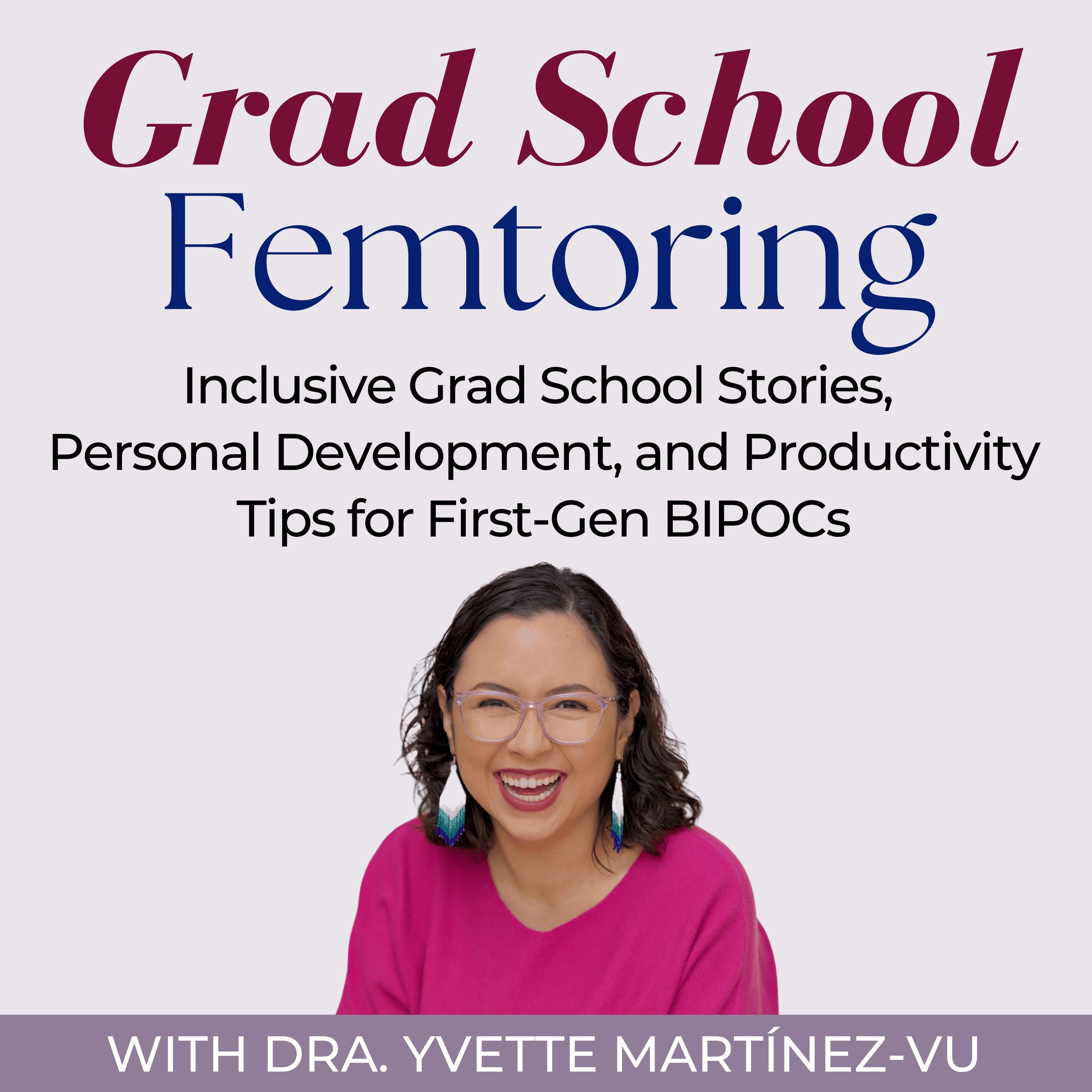
Grad School Femtoring: Inclusive Grad School Stories, Personal Development, and Productivity Tips for First-Gen BIPOCs
by A podcast on thriving in graduate school for first-generation BIPOC students, offering insights on academic success, career development, mental health, and navigating diversity and inclusion in higher education.
The Signal Award-winning Grad School Femtoring Podcast provides first-generation BIPOC students and professionals with conversations about graduate school and growth to help you sustainably achieve your goals. I’m your host, Dra. Yvette Martinez-Vu, a first-gen Chicana, mama, neurodivergent, and chronically ill grad school and productivity coach, consultant, author and speaker. For over fifteen years I’ve been empowering first-gen students of color along their personal and professional journeys, and I’m really excited to support you too.Listen every Friday to solo and guest episodes where you’ll be listening in on inclusive grad school stories. You'll also learn more about grad school and academic success, career and professional development, personal development and mindset, productivity and time management, social justice and community building, wellbeing and mental health, money and financial literacy, first-gen student of color experiences, and more! This podcast is a proud memb
-
388
388: Exploring STEM PhD Careers Through a GSF Externship with Reem Salem
In this episode of the Grad School Femtoring Podcast, I speak with Reem Salem, a fourth-year molecular engineering PhD candidate at the University of Chicago, about career development for STEM PhD students. Drawing from the research she conducted during her Grad School Femtoring externship, Reem shares why graduate students need greater access to career guidance, mentorship, and opportunities to explore the many paths available beyond academia. We discuss how to identify and communicate the transferable skills you are already developing through your doctoral training. Reem also offers practical steps for exploring careers that align with your strengths and values.In this episode, you will learn:What research reveals about the career development needs and pathways of STEM PhDsHow limited mentorship and professional networks affect historically excluded and first-generation graduate studentsHow to identify transferable skills within your doctoral research and trainingWhy career exploration can begin before you know exactly where you want to end upHow to approach career planning as a gradual and systematic process grounded in your strengths and valuesWork with meIf you are exploring new career paths or navigating a major academic or professional transition, I offer personalized coaching to help you clarify your goals, communicate your strengths, and create an action plan aligned with your capacity and values. Learn more at: https://gradschoolfemtoring.com/coaching/Connect with today’s guestsConnect with Reem Salem on LinkedIn: https://www.linkedin.com/in/reem-yasser-salemFree resourcesDownload the Career Development Brief for STEM PhDs: https://gradschoolfemtoring.com/career-development-brief-stem-phd-students/Download the Grant-Writing Toolkit for STEM Graduate Students: https://gradschoolfemtoring.com/grant-writing-toolkit-stem-graduate-students/Download your Grad School Femtoring Resource Kit: https://gradschoolfemtoring.com/kit/Explore moreListen to more episodes on Career and Professional Development: https://gradschoolfemtoring.com/podcast_catergory/career-and-professional-development/ Support the podcast with a one-time or monthly donation: https://donate.stripe.com/bJedR8dGRcs6ewGdwq38401 Access transcripts and additional resources: https://gradschoolfemtoring.com/podcast/Audio and transcript edited by Yessi Sanchez: https://www.linkedin.com/in/yessisanchez/This podcast is a proud member of the Genuina Media network.The Grad School Femtoring Podcast is for educational purposes only and is not a substitute for therapy or other professional services. Hosted by Simplecast, an AdsWizz company. See pcm.adswizz.com for information about our collection and use of personal data for advertising.
-
387
387: Seven Graduate School Myths That Hold Students Back
In this episode of the Grad School Femtoring podcast, I unpack seven common graduate school myths that can leave students questioning their abilities, belonging, support systems, timelines, and career prospects. These myths can be especially harmful for historically excluded students—including those who are first-generation, BIPOC, disabled, neurodivergent, chronically ill, parenting, caregiving, and nontraditional students—who are navigating uneven access to resources and insider knowledge. I explain why graduate school success depends on learned skills, supportive relationships, and sustainable practices rather than intelligence, independence, constant productivity, or a perfectly linear path. You will also learn how to treat struggle as information, build a broader support team, ask for help before challenges become a crisis, account for your changing capacity, and begin exploring career possibilities before the final year of your program. In this episode, you will learn: Why academic confidence often reflects prior exposure, resources, mentorship, and insider knowledge How to interpret struggle as information about the support, accommodations, strategies, or rest you may need Why one advisor cannot meet every need and how a broader support team can fill important gaps How to ask for help by sharing relevant context, explaining what you have tried, and making a specific request Why rest, revised timelines, pauses, and redirection can all be part of a successful graduate journey How to begin translating your skills and exploring career options before completing your degree Work with me Explore my coaching services for culturally relevant support as you navigate graduate school, build sustainable systems, strengthen your support network, and plan your next steps: https://gradschoolfemtoring.com/coaching/ Free resource Download your Grad School Femtoring Resource Kit: https://gradschoolfemtoring.com/kit/ Explore more Listen to more episodes on Grad School Hidden Curriculum: https://gradschoolfemtoring.com/podcast_catergory/grad-school-hidden-curriculum/ Support the podcast with a one-time or monthly donation: https://donate.stripe.com/bJedR8dGRcs6ewGdwq38401 Access transcripts and additional resources: https://gradschoolfemtoring.com/podcast/ Audio and transcript edited by Yessi Sanchez: https://www.linkedin.com/in/yessisanchez/ This podcast is a proud member of the Genuina Media network. The Grad School Femtoring Podcast is for educational purposes only and is not a substitute for therapy or other professional services. Hosted by Simplecast, an AdsWizz company. See pcm.adswizz.com for information about our collection and use of personal data for advertising.
-
386
386: How to Calculate the ROI of Grad School
In this episode of the Grad School Femtoring Podcast, I explain how to calculate the return on investment, or ROI, of graduate school. As admissions season begins, many prospective students are asking whether an advanced degree makes financial sense. I walk you through the data you can use to make a more informed decision, including expected salaries, the full cost of attendance, lost wages, completion rates, and time to degree. I also invite you to consider the personal, professional, and community returns that may matter alongside salary. Through a simplified break-even calculation and a set of values-based questions, you can evaluate whether a particular program will bring you closer to the work, impact, autonomy, and long-term well-being you want. In this episode, you will learn: How to compare your earning potential with a bachelor’s degree and an advanced degree Which expenses to include when calculating the full cost of graduate school Why lost wages, retirement contributions, and time away from the workforce matter when calculating the ROI of grad school How completion rates, attrition, and time to degree affect a program’s potential return How to estimate the number of years it may take to recover your graduate school investment How to weigh financial outcomes alongside intellectual fulfillment, professional autonomy, community impact, and personal values Work with me Explore grad admissions consulting support as you clarify your goals and decide whether grad school aligns with the future you want: https://gradschoolfemtoring.com/consulting Free resource Download your Grad School Femtoring Resource Kit: https://gradschoolfemtoring.com/kit/ Explore more Read the full blog post on "How to Calculate the ROI of Grad School": https://gradschoolfemtoring.com/how-to-calculate-the-roi-of-graduate-school/ Listen to more episodes on Financial Literacy and Grad Funding: https://gradschoolfemtoring.com/podcast_catergory/financial-literacy-and-grad-funding/ Support the podcast with a one-time or monthly donation: https://donate.stripe.com/bJedR8dGRcs6ewGdwq38401 Access transcripts and additional resources: https://gradschoolfemtoring.com/podcast/ Audio and transcript edited by Yessi Sanchez: https://www.linkedin.com/in/yessisanchez/ This podcast is a proud member of the Genuina Media network. The Grad School Femtoring Podcast is for educational purposes only and is not a substitute for therapy or other professional services. Hosted by Simplecast, an AdsWizz company. See pcm.adswizz.com for information about our collection and use of personal data for advertising.
-
385
385: What I Wish I Knew Before Grad School: 3 Truths Every Student Should Know
In this episode of the Grad School Femtoring podcast, I share three truths I wish I understood before starting graduate school. For first-generation, BIPOC, neurodivergent, and other students navigating unfamiliar academic spaces, graduate school can feel like entering a cultural system with its own language, expectations, hierarchies, and unwritten rules. I reflect on my experience of feeling behind and explain why struggling to understand the hidden curriculum does not mean you do not belong. I also explore how productivity culture can tie your sense of worth to your output and why mentorship, femtorship, and community care are essential parts of a sustainable graduate school experience. Through three reflection prompts, I invite you to name the expectations affecting your sense of belonging, identify where you may be overworking to prove yourself, and consider who you can reach out to for support. In this episode, you will learn: Why graduate school functions as a cultural system with unwritten rules beyond academic requirements. How unclear expectations, departmental politics, and unstructured time can affect your sense of belonging. How doing less, resting more, and setting boundaries can protect your wellbeing. Why mentorship, femtorship, and community care are essential to navigating graduate school. Three reflection questions to help you seek clarity, reduce overwork, and identify support. Work with me Explore 1:1 coaching for culturally relevant support as you navigate graduate school, protect your capacity, and build sustainable systems: https://gradschoolfemtoring.com/coaching/ Free resource Download your Grad School Femtoring Resource Kit: https://gradschoolfemtoring.com/kit/ Explore more Listen to more episodes on Grad School Hidden Curriculum: https://gradschoolfemtoring.com/podcast_catergory/grad-school-hidden-curriculum/ Support the podcast with a one-time or monthly donation: https://donate.stripe.com/bJedR8dGRcs6ewGdwq38401 Access transcripts and additional resources: https://gradschoolfemtoring.com/podcast/ Audio and transcript edited by Yessi Sanchez: https://www.linkedin.com/in/yessisanchez/ This podcast is a proud member of the Genuina Media network. The Grad School Femtoring Podcast is for educational purposes only and is not a substitute for therapy or other professional services. Hosted by Simplecast, an AdsWizz company. See pcm.adswizz.com for information about our collection and use of personal data for advertising.
-
384
384: Navigating Cancelled Grad Admissions and How to Create a Plan A, B, and C (Replay)
In this episode of the Grad School Femtoring podcast, I discuss what to do in a time when more graduate programs are pausing or cancelling admissions and why having a Plan A, Plan B, and Plan C matters more than ever. If you're applying to graduate school, especially master's or PhD programs, this episode will help you navigate an increasingly unpredictable admissions landscape with greater awareness. Drawing from my work supporting applicants for sixteen years, I explain why admissions outcomes are being shaped by broader institutional and funding challenges, not just your individual qualifications. I unpack the systemic factors contributing to paused admissions, including budget constraints and funding disruptions, and share practical strategies for adapting your application plans. You'll learn how to approach this admissions cycle strategically, how to strengthen your options if your original plans change, and how to make decisions that align with your long-term goals rather than reacting from fear or uncertainty. My hope is that you'll walk away with a stronger sense of agency and a reminder that you always have options, even when higher education feels unpredictable. In this episode, you will learn: Why some graduate programs are pausing or canceling admissions and what those changes mean for applicants. How to develop a strategic Plan A for applying during a competitive admissions cycle. How to use a gap year intentionally to strengthen your future graduate school applications. When gaining professional experience before graduate school may be the strongest long-term strategy. How to identify your graduate school non-negotiables and make values-aligned application decisions. Work with me If you're preparing graduate school applications and want personalized guidance throughout the process, I offer one-on-one graduate admissions consulting to help you build a strategic school list, strengthen your application materials, prepare for interviews, and evaluate funding offers Learn more about my graduate school consulting services here: https://gradschoolfemtoring.com/consulting Free resource Download your Grad School Femtoring Resource Kit: https://gradschoolfemtoring.com/kit/ Explore more Listen to more episodes on Applying to Grad School: https://gradschoolfemtoring.com/podcast_catergory/applying-to-grad-school/ Support the podcast with a one-time or monthly donation: https://donate.stripe.com/bJedR8dGRcs6ewGdwq38401 Access transcripts and additional resources: https://gradschoolfemtoring.com/podcast/ Audio and transcript edited by Yessi Sanchez: https://www.linkedin.com/in/yessisanchez/ This podcast is a proud member of the Genuina Media network. The Grad School Femtoring Podcast is for educational purposes only and is not a substitute for therapy or other professional services. Hosted by Simplecast, an AdsWizz company. See pcm.adswizz.com for information about our collection and use of personal data for advertising.
-
383
383: How to Plan Your Week Around Your Energy and Capacity Instead of Your To-Do List
In this episode of the Grad School Femtoring podcast, I introduce a different way to think about weekly planning by changing your focus from simply managing your time to understanding your energy and capacity. This episode is for students and professionals who feel like they're constantly falling behind despite having a planner, calendar, or productivity system. Drawing from patterns I see in coaching and my own lived experience, I explain why traditional planning often overlooks the realities of balancing work, caregiving, disability, chronic illness, neurodivergence, and other responsibilities that impact just how much capacity we have in any given week. I explore the differences between time, energy, and capacity and explain why recognizing these distinctions can help you create a more sustainable planning process. I also share a practical framework for planning your week around your current capacity, discuss the planning fallacy and why buffer time matters, and encourage you to reflect on the expectations you've inherited about productivity. My goal is to help you build a planning system that reflects your values, supports your wellbeing, and allows you to make meaningful progress on your goals without constantly measuring yourself against an idealized version of what you think you should be able to accomplish. In this episode, you will learn: How to distinguish between time, energy, and capacity when planning your week. Why traditional planning systems often lead to frustration, guilt, and unrealistic expectations. A capacity-aware planning process for prioritizing meaningful work more sustainably. How to match cognitively demanding tasks to your highest-energy periods. Why buffer time and recovery should be planned intentionally rather than treated as an afterthought. Reflective questions to help you build a planning system that aligns with your current reality and long-term goals. Work with me If you're feeling stuck in graduate school or navigating a major professional transition, I offer one-on-one coaching to help you build sustainable systems, clarify your priorities, and make meaningful progress toward your goals. Learn more about my services here: https://gradschoolfemtoring.com/coaching/ Free resource Download your Grad School Femtoring Resource Kit: https://gradschoolfemtoring.com/kit/ Explore more Listen to more episodes on Sustainable Productivity Strategies: https://gradschoolfemtoring.com/podcast_catergory/sustainable-productivity-strategies/ Support the podcast with a one-time or monthly donation: https://donate.stripe.com/bJedR8dGRcs6ewGdwq38401 Access transcripts and additional resources: https://gradschoolfemtoring.com/podcast/ Audio and transcript edited by Yessi Sanchez: https://www.linkedin.com/in/yessisanchez/ This podcast is a proud member of the Genuina Media network. The Grad School Femtoring Podcast is for educational purposes only and is not a substitute for therapy or other professional services. Hosted by Simplecast, an AdsWizz company. See pcm.adswizz.com for information about our collection and use of personal data for advertising.
-
382
382: Is an MBA Worth It? The Pros and Cons of an MBA with Nicole Moreno-Deinzer
In this episode of the Grad School Femtoring Podcast, I sit down with entrepreneur and MBA graduate Nicole Moreno-Deinzer to explore one of the most common questions I hear from students and professionals: Is an MBA actually worth it? If you're considering grad school as a way to advance your career, pivot into a new field, or strengthen your entrepreneurial skills, this conversation will help you think more critically about whether an MBA aligns with your goals, finances, and stage of life. Drawing from both Nicole's experience and the questions I frequently hear in my coaching practice, we unpack what this decision really involves. Together, we discuss the practical benefits and trade-offs of pursuing an MBA, including the knowledge you gain, the value of professional networks, and the realities of balancing grad school with work, family, and financial responsibilities. Nicole shares how she evaluated programs, why she ultimately chose an MBA, and what she wishes prospective students would consider before enrolling. Whether you're exploring entrepreneurship, pursuing leadership opportunities, or deciding if another graduate degree makes sense for you, this episode offers a thoughtful framework for making an informed decision. In this episode, you will learn: How to determine whether an MBA aligns with your long-term career or business goals. The academic, professional, and networking benefits that MBA programs can provide. The financial and time commitments you should evaluate before applying. Questions to ask when comparing MBA programs and identifying the right fit. Alternative pathways that may help you reach your goals without pursuing an MBA. Work with me If you're deciding whether graduate school is the right next step, I can help you evaluate your options, identify programs that align with your goals, and navigate the application process with confidence. Learn more about my grad admissions consulting services at: https://gradschoolfemtoring.com/consulting Connect with today's guest Nicole Moreno-Deinzer: https://justnicoleco.com Ala Mode Branding: https://alamodebranding.com/ Free resource Download your Grad School Femtoring Resource Kit: https://gradschoolfemtoring.com/kit/ Explore more Listen to more episodes on Career and Professional Development: https://gradschoolfemtoring.com/podcast_catergory/career-and-professional-development/ Support the podcast with a one-time or monthly donation: https://donate.stripe.com/bJedR8dGRcs6ewGdwq38401 Access transcripts and additional resources: https://gradschoolfemtoring.com/podcast/ Audio and transcript edited by Yessi Sanchez: https://www.linkedin.com/in/yessisanchez/ This podcast is a proud member of the Genuina Media network. The Grad School Femtoring Podcast is for educational purposes only and is not a substitute for therapy or other professional services. Hosted by Simplecast, an AdsWizz company. See pcm.adswizz.com for information about our collection and use of personal data for advertising.
-
381
381: How to Build a Flexible Note-Taking System for Academic Reading
In this episode of the Grad School Femtoring Podcast, I show you how to build a flexible note-taking system that helps you read more strategically, retain information more effectively, and reduce cognitive overload. This episode is for students, academics, and professionals who may feel overwhelmed by academic reading, struggle to remember what they read, or find themselves rereading the same articles because their current system isn't working for them. I explain why note-taking should function as an external memory system rather than a record of everything you've read. I discuss how to create a centralized and sustainable system that supports your current capacity, introduce multimodal approaches for reading and annotating academic literature, and encourage you to design a process that works with your learning style, energy, and long-term goals. In this episode, you will learn: How to build a note-taking system that reduces cognitive load and improves information retrieval. Why centralized, consistent notes make qualifying exams, dissertations, and research or writing projects more manageable. How to create a customized reading template that captures the information most relevant to your work. Ways to adapt your reading and note-taking process using multimodal and accessibility-friendly strategies. How to design a flexible system that reflects your current capacity and circumstances. Work with me If you're looking for personalized support with building sustainable work systems, I'd love to support you through one-on-one coaching. Learn more at https://gradschoolfemtoring.com/coaching/ Free resource Download your Grad School Femtoring Resource Kit: https://gradschoolfemtoring.com/kit/ Explore more Listen to more episodes on Sustainable Productivity Strategies: https://gradschoolfemtoring.com/podcast_catergory/sustainable-productivity-strategies/ Support the podcast with a one-time or monthly donation: https://donate.stripe.com/bJedR8dGRcs6ewGdwq38401 Access transcripts and additional resources: https://gradschoolfemtoring.com/podcast/ Audio and transcript edited by Yessi Sanchez: https://www.linkedin.com/in/yessisanchez/ This podcast is a proud member of the Genuina Media network. The Grad School Femtoring Podcast is for educational purposes only and is not a substitute for therapy or other professional services. Hosted by Simplecast, an AdsWizz company. See pcm.adswizz.com for information about our collection and use of personal data for advertising.
-
380
380: Why You’re Stuck: Identifying the Hidden Bottleneck Blocking Your Progress
In this episode of the Grad School Femtoring Podcast, I explore why so many of us feel stuck even when we're working incredibly hard toward our goals. If you've ever assumed that you simply need to try harder, better time management, or another productivity tool, this episode is for you. Drawing from patterns I've observed through coaching grad students, working professionals, and career changers, I explain how identifying the real bottleneck in your work can help you make meaningful progress with greater clarity and less frustration. I introduce the concept of bottlenecks and apply it to common challenges in graduate school, career transitions, and professional development. I walk through five hidden constraints that frequently emerge in my coaching conversations. Throughout the episode, I encourage you to shift your attention from treating symptoms to addressing root causes so you can make more sustainable progress toward the goals that matter most. In this episode, you will learn: How to identify the hidden bottleneck that is slowing your progress instead of treating surface-level symptoms. Why working harder or becoming more organized may not solve the real problem. How five common bottlenecks show up in graduate school, career transitions, and professional life. How cognitive offloading and external systems can reduce mental load and free up working memory. Why aligning your most demanding work with your highest energy can improve sustainable productivity. Work with me If you're navigating graduate school, a dissertation, or a major career transition, personalized coaching can help you identify your bottlenecks, build sustainable systems, and make consistent progress toward your goals. Learn more about 1:1 coaching: https://gradschoolfemtoring.com/coaching/ Free resource Download your Grad School Femtoring Resource Kit: https://gradschoolfemtoring.com/kit/ Explore more Listen to more episodes on Sustainable Productivity Strategies: https://gradschoolfemtoring.com/podcast_catergory/sustainable-productivity-strategies/ Support the podcast with a one-time or monthly donation: https://donate.stripe.com/bJedR8dGRcs6ewGdwq38401 Access transcripts and additional resources: https://gradschoolfemtoring.com/podcast/ Audio and transcript edited by Yessi Sanchez: https://www.linkedin.com/in/yessisanchez/ This podcast is a proud member of the Genuina Media network. The Grad School Femtoring Podcast is for educational purposes only and is not a substitute for therapy or other professional services. Hosted by Simplecast, an AdsWizz company. See pcm.adswizz.com for information about our collection and use of personal data for advertising.
-
379
379: Building a Meaningful Life Through Uncertainty: Lessons from Disability Culture
In this episode of the Grad School Femtoring Podcast, I reflect on what disability culture has taught me about building a meaningful life through uncertainty while navigating one of the most difficult seasons my family has experienced. Drawing from my lived experience as a parent, caregiver, coach, and someone with chronic illnesses and neurodivergence, I explore how disability culture offers powerful ways of thinking about grief, adaptation, accessibility, interdependence, and self-determination. Whether you're navigating graduate school, a demanding career, caregiving, burnout, chronic illness, or another major life transition, this episode invites you to reconsider how you respond to uncertainty with greater compassion. Throughout this episode, I share reflections inspired by disability culture and the ways it has reshaped my understanding of identity, productivity, and what it means to build a meaningful life alongside changing circumstances. I discuss how grief and joy can coexist, why acceptance creates space for adaptation, and how accessibility and interdependence can help us participate more fully in our work and lives. I also explore how these ideas can support graduate students and professionals seeking more sustainable ways to pursue their goals while honoring their current reality. In this episode, you will learn: How disability culture offers a different framework for navigating uncertainty and life transitions. Why grief and joy can coexist and what that means for personal growth. How acceptance and adaptation can support sustainable progress without abandoning meaningful goals. What accessibility and interdependence can teach us about participating more fully in work, school, and everyday life. How to align your goals with your current energy, capacity, and circumstances to build a more sustainable future. Work with me If you're navigating graduate school, a career transition, leadership, burnout, or another major life change, personalized coaching can help you build sustainable systems that align with your goals and capacity. Learn more at: https://gradschoolfemtoring.com/coaching/ Free resource Download your Grad School Femtoring Resource Kit: https://gradschoolfemtoring.com/kit/ Explore more Listen to more episodes on Disability and Neurodivergence: https://gradschoolfemtoring.com/podcast_catergory/disability-and-neurodivergence/ Support the podcast with a one-time or monthly donation: https://donate.stripe.com/bJedR8dGRcs6ewGdwq38401 Access transcripts and additional resources: https://gradschoolfemtoring.com/podcast/ Audio and transcript edited by Yessi Sanchez: https://www.linkedin.com/in/yessisanchez/ This podcast is a proud member of the Genuina Media network. The Grad School Femtoring Podcast is for educational purposes only and is not a substitute for therapy or other professional services. Hosted by Simplecast, an AdsWizz company. See pcm.adswizz.com for information about our collection and use of personal data for advertising.
-
378
378: Compassionate Accountability for Academics and Creatives with Camila Lacques-Zapien
In this episode of the Grad School Femtoring podcast, I sit down with my friend returning guest Camila Lacques-Zapién, a coach who supports academics, creatives, professionals, and leaders. Together, we explore what compassionate accountability really means and why so many first-generation, BIPOC, and community-centered individuals have learned to associate accountability with pressure, shame, or overwork instead of care and self-trust. Drawing from our coaching experiences, we discuss how creating supportive and relational spaces can help people reconnect with their values, honor their capacity, and reach their goals more sustainably. Throughout our conversation, we examine how accountability can be rooted in consent, self-awareness, and compassion rather than external expectations. We discuss common barriers that keep people feeling stuck, including burnout, fear, guilt, shame, and limited capacity, while also exploring how coaching creates space for reflection, creativity, and more grounded decision-making. Whether you're navigating graduate school, building a creative practice, leading others, or pursuing your next professional goal, this episode offers a framework for moving forward in a way that honors both your humanity and your aspirations. In this episode, you will learn: How to redefine accountability as a practice grounded in consent, self-trust, and compassion. Why separating your identity from your work can reduce shame and increase clarity. How to identify the underlying reasons you feel stuck before trying to push through. Why honoring your capacity can strengthen long-term progress and follow-through. How coaching creates space to reflect, build self-trust, and make values-aligned decisions. Work with me If you're looking for personalized support and sustainable strategies to help you navigate graduate school, your career, or a major project, I'd love to support you through coaching: https://gradschoolfemtoring.com/coaching/ Connect with today's guest Camila Lacques-Zapién’s website: https://alacamila.com/ Instagram: https://www.instagram.com/ala__camila/ Free resource Download your Grad School Femtoring Resource Kit: https://gradschoolfemtoring.com/kit/ Explore more Listen to more episodes on Sustainable Productivity Strategies: https://gradschoolfemtoring.com/podcast_catergory/sustainable-productivity-strategies/ Support the podcast with a one-time or monthly donation: https://donate.stripe.com/bJedR8dGRcs6ewGdwq38401 Access transcripts and additional resources: https://gradschoolfemtoring.com/podcast/ Audio and transcript edited by Yessi Sanchez: https://www.linkedin.com/in/yessisanchez/ This podcast is a proud member of the Genuina Media network. The Grad School Femtoring Podcast is for educational purposes only and is not a substitute for therapy or other professional services. Hosted by Simplecast, an AdsWizz company. See pcm.adswizz.com for information about our collection and use of personal data for advertising.
-
377
377: Graduate PLUS Loans Are Ending: What You Need to Know Before Accepting an Offer
In this episode of the Grad School Femtoring Podcast, I discuss one of the most significant recent changes to graduate education financing: the end of Graduate PLUS loans and what this means for prospective and current graduate students. Drawing from years of experience supporting first-generation and BIPOC students through graduate admissions and funding decisions, I explain how this policy change may affect master's, PhD, and professional degree students and why understanding the true cost of graduate school matters now more than ever. I walk you through several funding scenarios, clarify common misconceptions about grad school loans, and share the questions every student should ask before accepting an offer of admission. Throughout the episode, I highlight the hidden curriculum of graduate school financing and offer practical strategies to help you make informed decisions about borrowing, funding gaps, and long-term financial planning. In this episode, you will learn: How the elimination of Graduate PLUS loans may affect master's, PhD, and professional degree students Why graduate student loans are typically unsubsidized and how interest accrual works How to calculate the full cost of attendance beyond tuition alone What funding gaps to identify before committing to a graduate program Which questions to ask financial aid offices about funding, loan disbursement, and support programs How to compare graduate school offers with greater financial clarity and confidence Work with me If you're applying to graduate school and want support evaluating funding offers, understanding financial aid packages, or making informed admissions decisions, learn more about my graduate admissions consulting services at https://gradschoolfemtoring.com/consulting Free resource Download your Grad School Femtoring Resource Kit: https://gradschoolfemtoring.com/kit/ Explore more Listen to more episodes on Financial Literacy and Grad Funding: https://gradschoolfemtoring.com/podcast_catergory/financial-literacy-and-grad-funding/ Support the podcast with a one-time or monthly donation: https://donate.stripe.com/bJedR8dGRcs6ewGdwq38401 Access transcripts and additional resources: https://gradschoolfemtoring.com/podcast/ Audio and transcript edited by Yessi Sanchez: https://www.linkedin.com/in/yessisanchez/ This podcast is a proud member of the Genuina Media network. The Grad School Femtoring Podcast is for educational purposes only and is not a substitute for therapy or other professional services. Hosted by Simplecast, an AdsWizz company. See pcm.adswizz.com for information about our collection and use of personal data for advertising.
-
376
376: What 100K Downloads Taught Me About Consistency, Success, and Hard Seasons
In this episode of the Grad School Femtoring Podcast, I reflect on reaching 100K podcast downloads during one of the hardest seasons of my life as a parent and what that unexpected milestone taught me about consistency, progress, and success. Through my own lived experience and the patterns I see in coaching first-generation, BIPOC, and historically excluded students and professionals, I explore why many of us have inherited definitions of consistency that create unnecessary shame and make it harder to stay connected to our goals. I discuss why consistency is better understood as a relationship rather than a streak, how adaptation and flexible systems support long-term sustainability, and why purpose matters when external outcomes are slow or uncertain. I also share practical strategies rooted in capacity-based planning, maintenance goals, and reconnection so you can make meaningful progress while honoring the realities of changing seasons, competing responsibilities, and limited capacity. In this episode, you will learn: How to redefine consistency beyond streaks and rigid expectations Why adaptation and flexible systems support long-term sustainable success How to practice capacity-based planning based on your current energy and responsibilities Why maintenance is a meaningful form of progress during difficult seasons How to measure consistency by your willingness to reconnect with what matters Practical ways to stay connected to writing, career, health, and/or personal goals across changing levels of capacity Work with me If you're navigating a major milestone or trying to build sustainable systems that align with your capacity and long-term goals, I'd love to support you through one-on-one coaching. Learn more here: https://gradschoolfemtoring.com/coaching/ Free resource Download your Grad School Femtoring Resource Kit: https://gradschoolfemtoring.com/kit/ Explore more Listen to more episodes on Sustainable Productivity Strategies: https://gradschoolfemtoring.com/podcast_catergory/sustainable-productivity-strategies/ Support the podcast with a one-time or monthly donation: https://donate.stripe.com/bJedR8dGRcs6ewGdwq38401 Access transcripts and additional resources: https://gradschoolfemtoring.com/podcast/ Audio and transcript edited by Yessi Sanchez: https://www.linkedin.com/in/yessisanchez/ This podcast is a proud member of the Genuina Media network. The Grad School Femtoring Podcast is for educational purposes only and is not a substitute for therapy or other professional services. Hosted by Simplecast, an AdsWizz company. See pcm.adswizz.com for information about our collection and use of personal data for advertising.
-
375
375: What Sustainable Productivity Looks Like During High-Stress Seasons
In this episode of the Grad School Femtoring Podcast, I offer a more personal take on what sustainable productivity can look like during high-stress seasons. Drawing from my own experience navigating ongoing medical challenges within my family, I explore how stress, caregiving responsibilities, uncertainty, and limited capacity can affect our ability to function day to day. I discuss why chronic stress can make executive functioning more difficult, how to identify what is essential during challenging periods, and ways to reduce cognitive load without sacrificing your long-term wellbeing. I also share practical strategies for adjusting expectations, creating support systems, and approaching productivity with greater compassion so that you can sustain yourself through difficult seasons. In this episode, you will learn: How chronic stress can affect planning, prioritization, decision-making, and emotional regulation Why sustainable productivity during difficult seasons requires discernment and adaptation How to identify what is essential and let go of nonessential commitments Practical ways to reduce cognitive load through simplification, systems, and support How to create a minimum viable week that aligns with your current capacity Questions to use during weekly capacity check-ins to adjust expectations and prevent burnout Work with me If you're navigating a major academic, professional, or life transition and want compassionate accountability, structure, and support, I invite you to explore one-on-one coaching: https://gradschoolfemtoring.com/coaching/ Free resource Download your Grad School Femtoring Resource Kit: https://gradschoolfemtoring.com/kit/ Explore more Listen to more episodes on Sustainable Productivity Strategies: https://gradschoolfemtoring.com/podcast_catergory/sustainable-productivity-strategies/ Support the podcast with a one-time or monthly donation: https://donate.stripe.com/bJedR8dGRcs6ewGdwq38401 Access transcripts and additional resources: https://gradschoolfemtoring.com/podcast/ Audio and transcript edited by Yessi Sanchez: https://www.linkedin.com/in/yessisanchez/ This podcast is a proud member of the Genuina Media network. The Grad School Femtoring Podcast is for educational purposes only and is not a substitute for therapy or other professional services. Hosted by Simplecast, an AdsWizz company. See pcm.adswizz.com for information about our collection and use of personal data for advertising.
-
374
374: Writing Authentically and Choosing an Aligned Career Path in Academia with Dr. Leslie Wang
In this episode of the The Grad School Femtoring Podcast, I talk with Dr. Leslie Wang about writing authentically, values misalignment in academia, and choosing a career path that feels aligned with your long-term wellbeing. This episode is for anyone who feels exhausted by the pressure to constantly perform, produce, and prove themselves while questioning whether their current path still reflects who they are and how they want to live. We explore how academia, like many professional spaces, can shape people into prioritizing external validation over internal alignment, and how signs like dread, resentment, perfectionism, burnout, and comparison often point toward deeper values misalignment. Dr. Wang shares how she transitioned from a tenured professor to a coach supporting scholars with writing, publishing, and career decisions rooted in values-alignment. We also discuss how graduate students can approach career exploration more intentionally, how to identify your internal compass, and how to write for real readers instead of only writing for gatekeepers. In this episode, you will learn: How to identify early signs of values misalignment in academia Why external achievement alone often does not create long-term fulfillment How core values can guide career decisions and sustainable work practices Ways to approach writing more authentically while maintaining scholarly rigor How to identify an ideal reader beyond your dissertation committee or reviewers Why graduate students benefit from considering multiple career paths instead of defaulting to the tenure track Work with me If your institution, organization, or team is looking for workshops on sustainable productivity, executive functioning, leadership development, or culturally responsive student support, learn more here: https://gradschoolfemtoring.com/speaking/ Learn more about my coaching services for graduate students and professionals: https://gradschoolfemtoring.com/coaching/ Connect with Dr. Leslie Wang Your Words Unleashed: https://yourwordsunleashed.com Dr. Wang on LinkedIn: https://www.linkedin.com/in/leslie-k-wang-phd-a813227/ Free resource Download your Grad School Femtoring Resource Kit: https://gradschoolfemtoring.com/kit/ Explore more Listen to more episodes on Personal Development and Mindset: https://gradschoolfemtoring.com/podcast_catergory/personal-development-and-mindset/ Support the podcast with a one-time or monthly donation: https://donate.stripe.com/bJedR8dGRcs6ewGdwq38401 Access transcripts and additional resources: https://gradschoolfemtoring.com/podcast/ Audio and transcript edited by Yessi Sanchez: https://www.linkedin.com/in/yessisanchez/ This podcast is a proud member of the Genuina Media network. The Grad School Femtoring Podcast is for educational purposes only and is not a substitute for therapy or other professional services. Hosted by Simplecast, an AdsWizz company. See pcm.adswizz.com for information about our collection and use of personal data for advertising.
-
373
373: Why Many High Achievers Struggle With Follow-Through
In this episode of the Grad School Femtoring Podcast, I unpack why so many high achievers struggle with follow-through, even when they are so incredibly committed to their goals. Drawing from patterns I regularly see in coaching and consulting sessions, I explore why follow-through is far more complex than simply “trying harder” or becoming more disciplined and focused. I discuss how executive functioning skills, perfectionism, cognitive overload, systemic pressures, and being in survival-mode all shape our ability to maintain consistency over time. I also share sustainable productivity strategies that can help reduce overwhelm, support emotional resilience, and create more compassionate systems for pursuing meaningful goals. In this episode, you will learn: Why follow-through depends on executive functioning skills and environmental conditions How burnout, cognitive overload, and survival mode affect long-term consistency The role perfectionism plays in procrastination, avoidance, and overwhelm How to reduce cognitive load through external systems and clearer task planning Why matching goals to your current capacity supports sustainable progress What compassionate accountability and supportive community can look like Work with me If you are looking for support with sustainable productivity, executive functioning, dissertation completion, or long-term project planning, learn more about my coaching services: https://gradschoolfemtoring.com/coaching/ Sign up for my next Compassionate Accountability Retreat on May 29-30: https://gradschoolfemtoring.com/retreats/ Free resource Download your Grad School Femtoring Resource Kit: https://gradschoolfemtoring.com/kit/ Explore more The two episodes mentioned today were episode 315 on executive functioning skills to master your mental workspace and episode 316 on action-oriented executive functioning skills. Listen to more episodes on Sustainable Productivity Strategies: https://gradschoolfemtoring.com/podcast_catergory/sustainable-productivity-strategies/ Support the podcast with a one-time or monthly donation: https://donate.stripe.com/bJedR8dGRcs6ewGdwq38401 Access transcripts and additional resources: https://gradschoolfemtoring.com/podcast/ Audio and transcript edited by Yessi Sanchez: https://www.linkedin.com/in/yessisanchez/ This podcast is a proud member of the Genuina Media network. The Grad School Femtoring Podcast is for educational purposes only and is not a substitute for therapy or other professional services. Hosted by Simplecast, an AdsWizz company. See pcm.adswizz.com for information about our collection and use of personal data for advertising.
-
372
372: The Truth About Non-Linear Paths in Grad School with Bianca Alba
In this episode of the Grad School Femtoring Podcast, I speak with Bianca Alba about the realities of taking a non-linear path through graduate school, career transitions, and life as a first-generation working-class Latina. Bianca shares her experience working multiple jobs while completing her master’s degree, navigating higher education without a financial safety net, and confronting the pressure many first-gen students face to “do everything right” in order to succeed. Together, we unpack the emotional and structural realities that shape non-linear journeys and why so many students feel forced into survival mode while trying to pursue their goals. In our conversation, we discuss the financial and emotional realities of working through grad school and the importance of building supportive communities that sustain us through uncertainty and transition. Bianca also reflects on her experience working in public health, job loss despite years of dedication and advancement, and eventually stepping into entrepreneurship. This episode is ultimately about giving yourself permission to move at your own pace, redefining success, and creating a life that aligns with your values. In this episode, you will learn: Why many first-generation students take non-linear paths through graduate school and careers What graduate programs often misunderstand about working-class and first-gen students How survival mode and burnout can shape academic and professional experiences Why job stability is never guaranteed, even after “doing everything right” How community, purpose, and self-compassion can support long-term sustainability Work with me You are invited to join my upcoming Compassionate Accountability Retreat on May 29-30. Sign up here: https://gradschoolfemtoring.com/retreats/ If you are navigating graduate school, burnout, executive functioning struggles, or major academic and career decisions, I offer personalized coaching and sustainable productivity support for first-generation BIPOC students and professionals. Learn more about coaching: https://gradschoolfemtoring.com/coaching/ Connect with today’s guest Bianca on IG: https://www.instagram.com/thislatinatravels/ Bianca on LinkedIn: https://www.linkedin.com/in/biancaalba/ This Latina Travels: https://thislatinatravels.com/ Free resource Download your Grad School Femtoring Resource Kit: https://gradschoolfemtoring.com/kit/ Explore more Listen to more episodes on Navigating Higher Education: https://gradschoolfemtoring.com/podcast_catergory/navigating-higher-education/ Support the podcast with a one-time or monthly donation:https://donate.stripe.com/bJedR8dGRcs6ewGdwq38401 Access transcripts and additional resources:https://gradschoolfemtoring.com/podcast/ Audio and transcript edited by Yessi Sanchez:https://www.linkedin.com/in/yessisanchez/ This podcast is a proud member of the Genuina Media network. The Grad School Femtoring Podcast is for educational purposes only and is not a substitute for therapy or other professional services. Hosted by Simplecast, an AdsWizz company. See pcm.adswizz.com for information about our collection and use of personal data for advertising.
-
371
371: Six Strategies for Managing Academic Writing Revisions Without Overwhelm (Replay)
In episode 371 of the Grad School Femtoring Podcast, I walk through six practical strategies for managing academic writing revisions without spiraling into overwhelm. If you’re working on a manuscript, dissertation, proposal, or another long-term writing project and feeling behind, scattered, or emotionally exhausted, this episode is for you. Drawing from recent conversations with my one-on-one coaching clients and my own experiences navigating intensive revisions, I share approaches that can help you create a more sustainable and personalized process for moving your work forward. I discuss how to assess your available time, energy, and capacity before setting revision goals, and I break down different ways to structure your work sessions depending on your deadlines and cognitive load. I also explore how to prioritize essential revisions and create more flexible systems that support progress without pushing yourself into burnout. The goal is to identify strategies that align with your circumstances, workload, and wellbeing. In this episode, you will learn: How to assess your available time, energy, and capacity before tackling revisions Why counting and categorizing revision comments can reduce overwhelm and improve planning How to distinguish between developmental edits, line edits, and formatting revisions A practical framework for deciding what revisions are essential versus nice to have How to organize revision work by section and prioritize high-impact changes first How alternating between heavy and light revision days can help with pacing and sustainability Work with me If you’re looking for support with sustainable productivity, academic writing, executive functioning, or navigating graduate school, I’d love to support you through one-on-one coaching. Learn more about coaching: https://gradschoolfemtoring.com/coaching/ Free resource Download your Grad School Femtoring Resource Kit: https://gradschoolfemtoring.com/kit/ Explore more Listen to more episodes on Dissertation and Writing Strategies: https://gradschoolfemtoring.com/podcast_catergory/dissertation-and-writing-strategies/ Support the podcast with a one-time or monthly donation: https://donate.stripe.com/bJedR8dGRcs6ewGdwq38401 Access transcripts and additional resources: https://gradschoolfemtoring.com/podcast/ Audio and transcript edited by Yessi Sanchez: https://www.linkedin.com/in/yessisanchez/ This podcast is a proud member of the Genuina Media network. The Grad School Femtoring Podcast is for educational purposes only and is not a substitute for therapy or other professional services. Hosted by Simplecast, an AdsWizz company. See pcm.adswizz.com for information about our collection and use of personal data for advertising.
-
370
370: Grief, Guilt, and Shame in Grad School: When Your Experience Isn’t What You Imagined
In episode 370 of the Grad School Femtoring Podcast, I talk about what it means to experience grief, guilt, and shame in grad school, especially when your journey does not match what you originally imagined. This episode is for graduate students who feel disconnected from their expectations, are navigating unexpected challenges, or are carrying emotional weight tied to their academic experience. I draw from patterns I consistently see in my coaching work to name and validate these experiences. I walk through how grief, guilt, and shame show up in graduate school, particularly for first-generation, BIPOC, neurodivergent, and chronically ill students navigating the hidden curriculum and systemic barriers. I introduce practical ways to process these emotions while still staying connected to your goals, including redefining progress, separating capacity from identity, and building supportive systems. In this episode, you will learn: How to identify and name grief tied to unmet expectations in grad school The difference between guilt and shame and how each impacts your decision-making How systemic factors and the hidden curriculum shape your academic experience Ways to separate your capacity from your sense of identity and self-worth How to redefine progress using a process-oriented and sustainable framework Why community and support systems are essential when navigating emotional challenges Work with me If you are navigating a difficult season in grad school or a major transition and want structured and compassionate support, I offer one-on-one coaching designed to help you build sustainable systems and make tangible progress on your goals. Learn more and schedule a consultation: https://gradschoolfemtoring.com/coaching/ Free resource Download your Grad School Femtoring Resource Kit: https://gradschoolfemtoring.com/kit/ Explore more Listen to more episodes on wellbeing and mental Health: https://gradschoolfemtoring.com/podcast_catergory/wellbeing-and-mental-health/ Support the podcast with a one-time or monthly donation: https://donate.stripe.com/bJedR8dGRcs6ewGdwq38401 Access transcripts and additional resources: https://gradschoolfemtoring.com/podcast/ Audio and transcript edited by Yessi Sanchez: https://www.linkedin.com/in/yessisanchez/ This podcast is a proud member of the Genuina Media network. The Grad School Femtoring Podcast is for educational purposes only and is not a substitute for therapy or other professional services. Hosted by Simplecast, an AdsWizz company. See pcm.adswizz.com for information about our collection and use of personal data for advertising.
We're indexing this podcast's transcripts for the first time — this can take a minute or two. We'll show results as soon as they're ready.
No matches for "" in this podcast's transcripts.
Loading reviews...
ABOUT THIS SHOW
The Signal Award-winning Grad School Femtoring Podcast provides first-generation BIPOC students and professionals with conversations about graduate school and growth to help you sustainably achieve your goals. I’m your host, Dra. Yvette Martinez-Vu, a first-gen Chicana, mama, neurodivergent, and chronically ill grad school and productivity coach, consultant, author and speaker. For over fifteen years I’ve been empowering first-gen students of color along their personal and professional journeys, and I’m really excited to support you too.Listen every Friday to solo and guest episodes where you’ll be listening in on inclusive grad school stories. You'll also learn more about grad school and academic success, career and professional development, personal development and mindset, productivity and time management, social justice and community building, wellbeing and mental health, money and financial literacy, first-gen student of color experiences, and more! This podcast is a proud memb
HOSTED BY
A podcast on thriving in graduate school for first-generation BIPOC students, offering insights on academic success, career development, mental health, and navigating diversity and inclusion in higher education.
CATEGORIES
Loading similar podcasts...
Frequently Asked Questions
How many episodes does Grad School Femtoring: Inclusive Grad School Stories, Personal Development, and Productivity Tips for First-Gen BIPOCs have?
Grad School Femtoring: Inclusive Grad School Stories, Personal Development, and Productivity Tips for First-Gen BIPOCs currently has 19 episodes available on PodParley. New episodes are automatically indexed when they're published to the podcast feed.
What is Grad School Femtoring: Inclusive Grad School Stories, Personal Development, and Productivity Tips for First-Gen BIPOCs about?
The Signal Award-winning Grad School Femtoring Podcast provides first-generation BIPOC students and professionals with conversations about graduate school and growth to help you sustainably achieve your goals. I’m your host, Dra. Yvette Martinez-Vu, a first-gen Chicana, mama, neurodivergent, and...
How often does Grad School Femtoring: Inclusive Grad School Stories, Personal Development, and Productivity Tips for First-Gen BIPOCs release new episodes?
Grad School Femtoring: Inclusive Grad School Stories, Personal Development, and Productivity Tips for First-Gen BIPOCs has 19 episodes. Check the episode list to see recent publication dates and frequency.
Where can I listen to Grad School Femtoring: Inclusive Grad School Stories, Personal Development, and Productivity Tips for First-Gen BIPOCs?
You can listen to Grad School Femtoring: Inclusive Grad School Stories, Personal Development, and Productivity Tips for First-Gen BIPOCs on PodParley by clicking any episode. We provide an embedded audio player for direct listening, and you can also subscribe via your preferred podcast app using the RSS feed.
Who hosts Grad School Femtoring: Inclusive Grad School Stories, Personal Development, and Productivity Tips for First-Gen BIPOCs?
Grad School Femtoring: Inclusive Grad School Stories, Personal Development, and Productivity Tips for First-Gen BIPOCs is created and hosted by A podcast on thriving in graduate school for first-generation BIPOC students, offering insights on academic success, career development, mental health, and navigating diversity and inclusion in higher education..
URL copied to clipboard!