
PODCAST · health
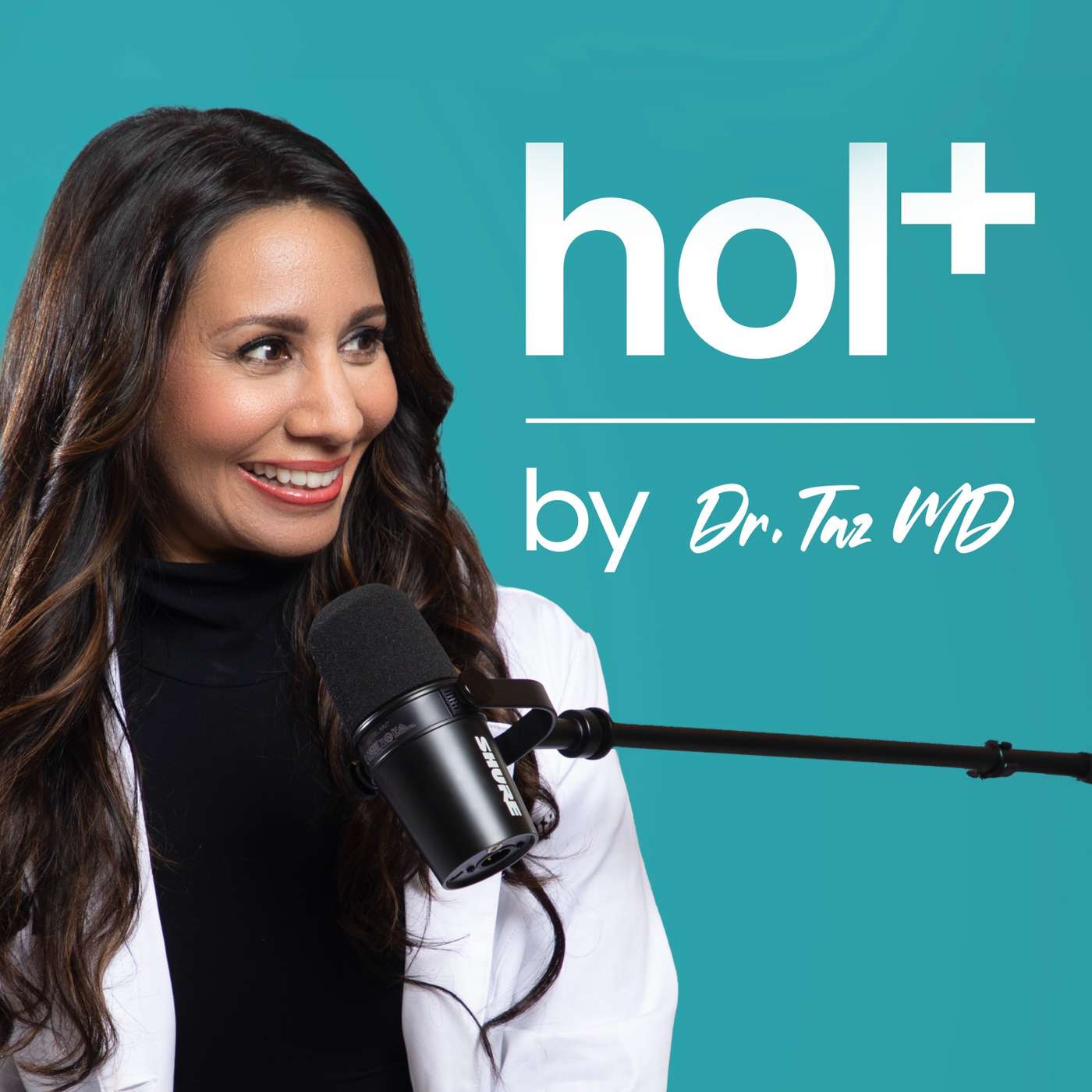
hol+ with Dr. Taz MD | The Future of Medicine is Holistic
by Dr. Taz MD
hol+ with Dr. Taz MD is redefining modern medicine through a comprehensive, evidence-based holistic approach; integrating functional medicine, integrative medicine, and time-tested healing systems to treat the whole human, not just symptoms.Hosted by Dr. Tasneem Bhatia (Dr. Taz), triple board-certified physician in integrative, functional, and holistic medicine, bestselling Penguin Random House author, and founder of hol+; a comprehensive evidence-based holistic medicine platform with clinics in Atlanta, New York City, and Los Angeles, and virtual care available nationwide.At the heart of hol+ is a revolutionary framework: the Five Body Map- physical, mental, emotional, energetic, and social/community bodies that create whole health. This whole-human approach connects hormone imbalances, gut dysfunction, microinflammation, cortisol dysregulation, metabolic disease, autoimmune conditions, perimenopause, and stress-driven illness to the full spectrum of who we are; body, mind, and s
-
377
Why Women Shouldn’t Work Out Fasted: Cycle Syncing, Blood Sugar, and Hormones with Alisa Vitti
Join The Circle and use code "PODCAST": https://holplus.co/circle/ What if the fasting, workouts, and eating patterns that are supposed to improve your metabolism are actually working against your hormones? In this episode of hol+ with Dr. Taz MD, women’s hormone expert Alisa Vitti explains why women in their reproductive years have a second biological clock that most health and fitness advice completely ignores. Known as the infradian rhythm, this approximately month-long cycle affects metabolism, cortisol, immune function, brain activity, energy, appetite, and exercise performance.Alisa breaks down the follicular, ovulatory, luteal, and menstrual phases and explains how nutritional needs, metabolism, and stress tolerance change throughout the cycle. She shares how the Cycle Syncing Method can help women adjust their food, exercise, recovery, and daily routines to better support these biological changes.Dr. Taz and Alisa also challenge some of the most popular advice given to women about intermittent fasting and fasted exercise. Alisa explains why she believes women should fuel before working out, why glucose is needed to build lean muscle, and how combining carbohydrates with protein and fat may support blood sugar stability and workout performance.Alisa shares her personal experience with PCOS, maintaining a significant weight loss, losing additional body fat by eating more, and intentionally building muscle as she approaches 48. She explains why blood sugar regulation is the first step she recommends for women experiencing PMS, PCOS, infertility, fibroids, perimenopause, or other hormonal concerns.The conversation also explores progesterone, estrogen dominance, cortisol, HRT, ovarian aging, hot flashes, strength training, environmental exposures, and the habits that may help women protect their hormonal health throughout every stage of life.In this episode:Why women have both circadian and infradian biological rhythmsHow the menstrual cycle affects metabolism, cortisol, immunity, and the brainWhat happens during the follicular, ovulatory, luteal, and menstrual phasesWhy women may need more calories during the luteal phaseHow blood sugar instability may affect cortisol and progesteroneWhy Alisa says women should never work out in a fasted stateWhat to eat before strength training to support lean muscleHow Alisa structures protein, carbohydrates, and meal timing throughout her dayWhy strength training is important during every phase of the cycleHow to modify cardio and recovery throughout the menstrual cycleWhy eating more helped Alisa lose additional body fat and build muscleThe relationship between blood sugar, PCOS, PMS, and perimenopauseHow fasting recommendations may change after menopauseWhere HRT fits into a broader hormone-support strategySimple habits that may support healthier hormonal agingWhether ovarian aging can be slowed or partially reversedAbout Alisa Vitti:Alisa Vitti is a women’s hormone and functional nutrition expert, bestselling author, and creator of the Cycle Syncing Method. She is the founder of FLO Living and creator of the MyFLO app, which helps women adjust their nutrition, fitness, and lifestyle practices to the different phases of their menstrual cycle. After experiencing PCOS, weight challenges, acne, and an absent menstrual cycle in her teens and early twenties, Alisa began studying nutrition, functional endocrinology, and women’s hormonal health. Her experience became the foundation for FLO Living and her bestselling books, WomanCode and In the FLO.Connect with Alisa Vitti:https://floliving.com/https://www.instagram.com/alisa.vitti/About Dr. Taz:Dr. Tasneem Bhatia (Dr. Taz) is a triple board-certified integrative medicine physician, bestselling author, and founder of hol+, a multi-location integrative medicine practice.Learn more: https://doctortaz.com/aboutStay Connected:Connect further with hol+ at https://holplus.co/ and don’t forget to like, subscribe, and hit the notification bell to stay updated on future episodes of hol+.Book a Hol+ Consultation:https://holplus.co/locations/virtual/Follow Dr. Taz on Instagram:https://www.instagram.com/drtazmd/https://www.instagram.com/liveholplus/Subscribe to the audio podcast:https://holplus.transistor.fm/subscribeSubscribe to the video podcast:https://www.youtube.com/@DrTazMD/podcastsProduced by https://ClipGrowth.com (Producer: Pat Gostek)
-
376
Dr. Zach Bush: How the Microbiome Affects Metabolism, Brain Health, and Chronic Disease
Join The Circle and use code "PODCAST": https://holplus.co/circle/ What if chronic disease, declining energy, cognitive issues, and fertility challenges are not isolated problems, but signs of a deeper disconnection from the natural world?In this episode of hol+ with Dr. Taz MD, Dr. Zach Bush explores the relationship between human health and the health of our environment. Drawing from his background in internal medicine, endocrinology, cancer research, and hospice care, he explains how his search for the root causes of disease led him from the hospital and laboratory to the microbiome, soil science, and regenerative agriculture.Dr. Bush describes mitochondria as essential generators of cellular energy and explains how the microbes living within and around us help support metabolism, immunity, neurological function, and communication throughout the body. He shares his perspective on how chemical agriculture, declining biodiversity, and changes in our food systems may be affecting these biological relationships.Dr. Taz and Dr. Bush also discuss the rise of obesity, insulin resistance, autoimmune disease, cognitive decline, chronic fatigue, and infertility. Dr. Bush presents his theory that these conditions may be connected through a broader decline in metabolic energy and our increasing separation from nature.The conversation ultimately turns toward hope and practical action. Dr. Bush explains why restoring soil, supporting regenerative farmers, growing food, strengthening local communities, and spending more time in direct contact with nature may help rebuild both human and planetary health. He also shares how something as simple as growing a mint plant can begin restoring a family’s relationship with living food.In this episode:Dr. Bush’s journey from conventional medicine to microbiome and soil researchWhat mitochondria do and why they are essential for cellular energyHow the microbiome influences metabolism, immunity, and brain functionThe relationship between soil health, food quality, and human healthHow chemical agriculture may disrupt biological communicationWhy Dr. Bush describes modern illness as nature deficit disorderHis theory connecting metabolic decline with chronic disease and fertilityWhy supplements cannot fully replace a healthy food systemHow regenerative agriculture can support human and planetary healthSimple ways to reconnect your family with food, soil, and natureWhy community and human connection may be essential parts of healingAbout Dr. Zach Bush:Dr. Zach Bush is a triple board-certified physician specializing in internal medicine, endocrinology and metabolism, and hospice and palliative care. His work has focused on the relationships between the microbiome, human health, environmental health, food systems, and regenerative agriculture. After years of working in conventional medicine and biomedical research, Dr. Bush began exploring how soil health, biodiversity, and chemical exposure may influence human metabolism and chronic disease. His work helped give rise to Project Biome and Farmer’s Footprint, initiatives focused on regenerative food systems and restoring the relationship between human and planetary health.Connect with Dr. Zach Bush:https://zachbushmd.com/https://www.instagram.com/zachbushmd/https://farmersfootprint.us/About Dr. Taz:Dr. Tasneem Bhatia (Dr. Taz) is a triple board-certified integrative medicine physician, bestselling author, and founder of hol+, a multi-location integrative medicine practice.Learn more: https://doctortaz.com/aboutStay Connected:Connect further with hol+ at https://holplus.co/ and don’t forget to like, subscribe, and hit the notification bell to stay updated on future episodes of hol+.Book a Hol+ Consultation:https://holplus.co/locations/virtual/Follow Dr. Taz on Instagram:https://www.instagram.com/drtazmd/https://www.instagram.com/liveholplus/Subscribe to the audio podcast:https://holplus.transistor.fm/subscribeSubscribe to the video podcast:https://www.youtube.com/@DrTazMD/podcastsProduced by https://ClipGrowth.com (Producer: Pat Gostek)
-
375
Living With Stage 4 Cancer for 20 Years: Integrative Oncology, Curing vs. Healing, and the Mind-Body Connection with Kris Carr
Join The Circle and use code "PODCAST": https://holplus.co/circle/ Kris Carr was 31 when she was diagnosed with a rare, incurable stage four sarcoma. More than 20 years later, her tumors remain stable and her work has helped people around the world take a more active, compassionate role in their health.In this episode of hol+ with Dr. Taz MD, Kris shares how she moved from fear and uncertainty toward self-trust, acceptance, and a whole-person definition of healing. She explains what it meant to become the CEO of her health, find doctors she trusted, explore integrative care, and change her relationship with food and her body.But Kris’s biggest turning point came about 10 years into her journey. Despite good scans and a thriving career, she realized she still felt like a failure because she had not made cancer disappear. That moment led her to distinguish between curing and healing, and to begin caring for her mind and emotional life as intentionally as she cared for her physical body.Kris and Dr. Taz discuss grief, fear, anger, trauma, perimenopause, gut health, stress, supplement overwhelm, and the five foundational wellness pillars that can make healthy living feel more practical and accessible.In this episode:Receiving a rare stage four cancer diagnosis at 31Becoming the CEO of your health without rejecting medical careFinding supportive food and lifestyle practices through trial and errorMaking peace with food after years of deprivation and body pressureMoving from what you are eating to what is eating youUnderstanding the difference between curing and healingBuilding emotional literacy around grief, anger, fear, and shameSimplifying wellness through five foundational pillarsStarting with stress support and gut health when everything feels overwhelmingAbout Kris Carr:Kris Carr is a New York Times bestselling author, wellness leader, and cancer thriver. Her wellness journey began in 2003, when she was diagnosed with a rare stage four cancer. Since then, she has dedicated her work to helping people take an active, compassionate role in their health and care for the whole person: body, mind, and spirit.Kris is the author of seven books covering cancer support, plant-forward nutrition, wellness, and emotional health. Her latest book, I’m Not a Mourning Person, explores grief, loss, and the difficult emotions that emerge when life changes unexpectedly. She is also the host of the Made to Thrive podcast and the founder of a wellness community offering education, coaching, and practical resources.Connect with Kris Carr:https://kriscarr.com/https://www.instagram.com/crazysexykris/About Dr. Taz:Dr. Tasneem Bhatia (Dr. Taz) is a triple board-certified integrative medicine physician, bestselling author, and founder of hol+, a multi-location integrative medicine practice.Learn more: https://doctortaz.com/aboutStay Connected:Connect further with hol+ at https://holplus.co/ and don’t forget to like, subscribe, and hit the notification bell to stay updated on future episodes of hol+.Book a Hol+ Consultation:https://holplus.co/locations/virtual/Follow Dr. Taz on Instagram:https://www.instagram.com/drtazmd/https://www.instagram.com/liveholplus/Subscribe to the audio podcast:https://holplus.transistor.fm/subscribeSubscribe to the video podcast:https://www.youtube.com/@DrTazMD/podcastsProduced by https://ClipGrowth.com (Producer: Pat Gostek)
-
374
The Cortisol Crisis: Why Modern Life Keeps Your Family Stressed, Wired, and Exhausted
Join The Circle (use code PODCAST): ➡️ https://holplus.co/circle/Are you tired throughout the day but unable to switch off at night? Are you experiencing anxiety, brain fog, disrupted sleep, blood sugar swings, or stubborn belly fat?In this episode of Hol+, Dr. Taz examines what she calls the modern cortisol crisis and explains how chronic stress can affect the body far beyond your emotional health.You’ll learn how cortisol is supposed to rise and fall throughout the day, what can happen when that rhythm becomes disrupted, and why screens, artificial light, processed foods, caffeine, overscheduling, isolation, and poor sleep may keep the body in a prolonged stress response.Dr. Taz also walks through four commonly described stages of cortisol dysregulation, from elevated daytime cortisol to feeling wired at night and eventually completely depleted. She explains how cortisol may interact with blood sugar, weight, inflammation, reproductive hormones, thyroid function, mood, and cognitive health.The episode concludes with practical ways to support a healthier stress response through consistent sleep, morning light, balanced meals, nutrient support, time in nature, intentional recovery, and stronger family connection.In this episode: How cortisol functions as part of the stress response• Why high cortisol may contribute to palpitations, blood sugar instability, and belly fat• What it means to feel tired during the day but wired at night• Four commonly described stages of cortisol dysregulation• How chronic stress can affect hormones, mood, and inflammation• How cortisol patterns may be evaluated• Why sleep and light exposure are foundational• How nutrition and meal timing may support recovery• Why stress regulation should involve the entire familyThe symptoms discussed in this episode can have many possible causes. “Adrenal fatigue” is not recognized as a formal diagnosis by major conventional medical organizations. Speak with a qualified healthcare professional before changing your treatment, diet, supplements, or hormones.Learn more about cortisol testing and stress-related symptoms:https://holplus.co/services/cortisol-stress/Learn more about hol+ and schedule an appointment:https://holplus.co/Listen to more episodes of the hol+ podcast:https://holplus.co/podcast/Stay Connected:Dr. Taz: https://www.instagram.com/drtazmd/Hol+: https://www.instagram.com/liveholplus/Hol+ Show: https://www.instagram.com/holplushow/Subscribe to the audio podcast: https://holplus.transistor.fm/subscribeSubscribe to the video podcast: https://www.youtube.com/@HolPlusShow/podcastsGet your copy of ➡️ The Hormone ShiftChapters00:00 Why We’re Living Through a Cortisol Crisis 00:58 Signs of Chronic Stress in Adults and Children 03:10 What Cortisol Does in the Body 04:42 High Cortisol, Blood Sugar, and Belly Fat 06:26 How Cortisol Affects the Brain, Mood, and Inflammation 09:30 Why Modern Life Keeps Cortisol Elevated 12:58 How Technology and Poor Sleep Affect Children 13:43 How Food, Sugar, Alcohol, and Caffeine Affect Cortisol 15:17 Nature, Isolation, and Family Stress 17:47 Why Conventional Medicine May Miss Cortisol Dysfunction 18:41 The Four Stages of Cortisol Dysregulation 21:33 How to Reset Your Sleep and Cortisol Rhythm 23:19 What to Eat When Your Cortisol Is Disrupted 24:29 Nutrient Deficiencies and Hormone Imbalances 25:52 Building Recovery Time Into a Stressful Life 27:29 How to Test Your Cortisol Levels 28:55 Creating a Holistic Cortisol Recovery Plan 30:09 How to Lower Cortisol Across the Entire FamilyProduced by https://ClipGrowth.com (Producer: Pat Gostek)
-
373
How Grief Affects the Body: Physical Symptoms, the 6 Stages of Grief, and Finding Meaning After Loss with David Kessler
Can grief cause physical symptoms? Learn how loss may affect cortisol, inflammation, hormone balance, heart health, sleep, energy, and the nervous system. Grief is not only an emotional experience. It can affect the brain and body, yet many people feel pressured to stay strong, move on, or process their loss alone. In this episode, grief expert David Kessler explains what grief does to us physically and emotionally, why grief must be witnessed, and how meaningful healing can begin.We explore the five stages of grief, why they are not linear, and the misconceptions surrounding denial, anger, bargaining, depression, and acceptance. David also shares how losing his 21-year-old son led him to identify meaning as the sixth stage of grief and explains why meaning is not found in the tragedy itself, but in what we choose to do afterward.David and Dr. Taz discuss the physical symptoms of grief, broken heart syndrome, post-traumatic growth, isolation, grief in men, and what to say when someone you love is grieving. They also explain why grief can result from divorce, betrayal, job loss, illness, lost identity, or the loss of the future you expected, not only the death of a loved one.This conversation is for educational purposes and should not replace individualized medical or mental health care. Chest pain and other concerning physical symptoms should always be evaluated by a qualified healthcare professional.Subscribe for weekly conversations about physical, emotional, and spiritual health, and comment below: What do you wish more people understood about grief?About David Kessler:David Kessler is one of the world’s leading experts on grief and loss. He co-authored two books with Elisabeth Kübler-Ross, including On Grief and Grieving, and later introduced meaning as the sixth stage of grief in his bestselling book Finding Meaning.His first book, The Needs of the Dying, received praise from Mother Teresa. David has also served as an LAPD specialist reserve for traumatic events and with the Red Cross disaster services team. He is the founder of Grief.com, which provides resources, support groups, and training for people experiencing grief and the professionals who support them.Connect with David Kessler:https://grief.com/https://www.instagram.com/iamdavidkessler/https://www.facebook.com/IamDavidKessler/https://www.tiktok.com/@iamdavidkesslerAbout Dr. Taz:Dr. Tasneem Bhatia (Dr. Taz) is a triple board-certified integrative medicine physician, bestselling author, and founder of hol+, a multi-location integrative medicine practice.Learn more: https://doctortaz.com/aboutStay Connected:Connect further with hol+ at https://holplus.co/ and don’t forget to like, subscribe, and hit the notification bell to stay updated on future episodes of hol+.Book a Hol+ Consultation:https://holplus.co/locations/virtual/Follow Dr. Taz on Instagram:https://www.instagram.com/drtazmd/https://www.instagram.com/liveholplus/Subscribe to the audio podcast:https://holplus.transistor.fm/subscribeSubscribe to the video podcast:https://www.youtube.com/@DrTazMD/podcastsProduced by https://ClipGrowth.com (Producer: Pat Gostek)
-
372
Stem Cell Therapy Explained: Benefits, Risks, Exosomes, Anti-Aging and What Patients Should Know | Dr. Joy Kong
Can stem cell therapy help the body repair itself? Learn how stem cells may influence inflammation, immune function, tissue regeneration, brain health, and aging.Stem cell therapy is one of the most talked-about areas of regenerative medicine, but not all stem cells or treatments are the same. In this episode, Dr. Joy Kong explains how stem cells work, why their source matters, and what patients should investigate before choosing a treatment or clinic.We explore the differences between bone marrow, fat-derived, and umbilical cord-derived stem cells, along with IV infusions, local injections, PRP, and exosomes. Dr. Kong also discusses emerging research and clinical observations involving chronic inflammation, neurological health, joint pain, skin, hair loss, aging, and cancer.Many of the treatments and potential applications discussed remain experimental and are not established treatments for the conditions mentioned. This conversation is for educational purposes and should not replace individualized medical advice.Subscribe for weekly health and longevity breakdowns, and comment below: Would you ever consider stem cell therapy?If you are managing chronic inflammation, exploring ways to support healthy aging, or looking for personalized cancer support, explore related Hol+ care options here:Inflammation:https://holplus.co/conditions/inflammation/Longevity and Anti-Aging:https://holplus.co/services/longevity-anti-aging/0:00 Can Stem Cells Help the Body Heal?0:57 Meet Dr. Joy Kong7:28 What Is a Stem Cell?14:49 Bone Marrow, Fat, and Umbilical Cord Stem Cells17:10 How to Evaluate Stem Cell Quality and Safety23:00 IV Stem Cells, Injections, PRP, and Exosomes33:45 Stem Cells and Cancer40:26 Brain Health and Neurological Conditions42:20 Skin, Hair, Anti-Aging, and Weight Loss48:01 The Future of Stem Cell Medicine55:19 Stem Cell Costs and Overseas Clinics59:04 Dr. Kong’s Approach to Health and LongevityAbout Dr. Joy Kong:Dr. Joy Kong is a UCLA-trained, triple board-certified physician specializing in anti-aging and regenerative medicine. She is the founder of the American Academy of Integrative Cell Therapy, where she educates physicians about stem cell therapy and other regenerative treatments.After beginning her career in psychiatry, Dr. Kong became interested in stem cells after learning about their potential applications beyond conventional symptom management. Her work now focuses on regenerative medicine, stem cell therapy, peptides, longevity, and educating patients and physicians about this rapidly developing field.Connect with Dr. Joy Kong:https://joykongmd.com/https://www.instagram.com/dr_joy_kong/https://www.youtube.com/@joykongmdhttps://chara-health.com/podcast/About Dr. Taz:Dr. Tasneem Bhatia (Dr. Taz) is a triple board-certified integrative medicine physician,bestselling author, and founder of hol+ a multi-location integrative medicine practice.Learn more: https://doctortaz.com/aboutStay Connected:Connect further to Hol+ at https://holplus.co/ - Don’t forget to like, subscribe, and hit the notification bell to stay updated on future episodes of hol+.Book a Hol+ Consultation: https://holplus.co/locations/virtual/Follow Dr. Taz on Instagram:https://www.instagram.com/drtazmd/https://www.instagram.com/liveholplus/Subscribe to the audio podcast: https://holplus.transistor.fm/subscribeSubscribe to the video podcast: https://www.youtube.com/@DrTazMD/podcastsProduced by https://ClipGrowth.com (Producer: Pat Gostek)
-
371
Breast Cancer Surgeon Reveals the Truth About Mammograms, Metabolic Health, Toxic Overload and Cancer Treatment | Dr. Jenn Simmons
https://holplus.co/appointments Are we over-treating breast cancer? Learn why metabolic dysfunction may be the real driver behind many diagnoses and how to rethink treatment.Approximately 20 to 30 percent of screen detected breast cancer cases are treated unnecessarily. This video challenges the current standard of breast cancer treatment by focusing on the underlying metabolic health factors that often go unaddressed. If you are concerned about the current approach to screening or are looking for a more preventative perspective, this discussion provides a critical look at how we diagnose and manage the disease.We break down the three major drivers that contribute to long-standing metabolic dysfunction. By identifying these root causes, we can move toward a more accurate breast cancer diagnosis and more effective, targeted strategies for long-term health.Subscribe for weekly health and metabolic disease breakdowns, and comment below with your thoughts on these new findings.If you are navigating cancer treatment or recovery, concerned about inflammation, or want personalized support for your hormones and nutrition, explore related Hol+ care options here:Cancer Support:https://holplus.co/services/cancer-support/Inflammation:https://holplus.co/conditions/inflammation/Hormone Balancing:https://holplus.co/services/hormone-balancing/0:00 Rethinking Breast Cancer Care1:04 Meet Dr. Jen Simmons2:59 A Family History of Cancer6:53 When the Doctor Becomes the Patient12:53 Why We Focus on the Wrong Thing18:51 Navigating a Diagnosis23:24 The Flaws in Mammographic Screening35:17 A New Paradigm for Breast Health*About Dr. Jenn Simmons:*Dr. Jenn Simmons is an Integrative Oncologist, Breast Surgeon, Author, Podcast Host, and the founder of PerfeQTion Imaging. Her journey into breast cancer care began with a personal tragedy. At the age of 16, Dr. Jenn's cousin, acclaimed singer-songwriter Linda Creed, died of metastatic breast cancer just weeks after Whitney Houston's recording of her iconic song, "The Greatest Love of All," topped the charts. This loss became a defining moment, inspiring Dr. Jenn to dedicate her life to transforming how we approach breast cancer treatment and prevention.Dr. Jenn became Philadelphia's first fellowship-trained breast surgeon and spent 17 years leading the field. However, her perspective changed significantly when she became a patient herself. Through this personal experience, Dr. Jenn saw how broken the conventional medical system can be. This led her to discover and embrace functional medicine, a revelation that sparked her journey towards a more holistic approach to breast cancer care.Connect with Dr. Jenn Simmons:https://www.realhealthmd.com/https://www.instagram.com/drjennsimmons/https://www.youtube.com/@dr.jennsimmonsAbout Dr. Taz:Dr. Tasneem Bhatia (Dr. Taz) is a triple board-certified integrative medicine physician,bestselling author, and founder of hol+ a multi-location integrative medicine practice.Learn more: https://doctortaz.com/aboutStay Connected:Connect further to Hol+ at https://holplus.co/ - Don’t forget to like, subscribe, and hit the notification bell to stay updated on future episodes of hol+.Book a Hol+ Consultation: https://holplus.co/locations/virtual/Follow Dr. Taz on Instagram:https://www.instagram.com/drtazmd/https://www.instagram.com/liveholplus/Subscribe to the audio podcast: https://holplus.transistor.fm/subscribeSubscribe to the video podcast: https://www.youtube.com/@DrTazMD/podcastsProduced by https://ClipGrowth.com (Producer: Pat Gostek)
-
370
The Hidden Cortisol-Gut Connection: Why Stress Can Block Weight Loss, Disrupt Blood Sugar, and Increase Belly Fat
Join The Circle (use code PODCAST): ➡️ https://holplus.co/circle/Why aren’t you losing weight, even when you’re eating well, exercising, taking hormones, or using a GLP-1? If the scale will not budge, stubborn belly fat keeps returning, or your cravings and energy feel impossible to control, cortisol may be blocking your progress.In this solo episode of hol+, Dr. Taz explains how chronic stress and disrupted cortisol patterns affect your metabolism. She breaks down the connection between cortisol, blood sugar, insulin, inflammation, gut health, and visceral fat, revealing why weight loss can stall even when you feel like you are doing everything right.You’ll also learn how cortisol patterns can change throughout the day, why a stressful event may affect your blood sugar for hours, and how chronic stress can alter your appetite, digestion, hormones, and response to weight-loss medications.In this episode:Why weight loss can stall despite diet and exerciseHow cortisol affects your metabolismSigns your natural cortisol rhythm may be disruptedWhy you may feel tired all day but wired at nightThe connection between stress, blood sugar, and insulinHow cortisol increases cravings for sugar, salt, and comfort foodsWhy stress can promote visceral belly fatHow chronic inflammation blocks metabolic progressWhy GLP-1 medications may appear to stop workingHow stress affects digestion and the gut microbiomeWhy cortisol may contribute to bloating, constipation, or diarrheaWhat a four-point cortisol test can revealHow lowering cortisol can support metabolic healthLearn more about cortisol testing, stress-related weight gain, and the hol+ approach:https://holplus.co/services/cortisol-stress/Learn more about hol+ and schedule an appointment:https://holplus.co/Listen to more episodes of the hol+ podcast:https://holplus.co/podcast/If you know someone who is struggling to lose weight despite doing everything right, share this episode with them. Subscribe for new episodes about hormones, metabolism, gut health, inflammation, healthy aging, and whole-person healing every week.Stay Connected:Dr. Taz: https://www.instagram.com/drtazmd/Hol+: https://www.instagram.com/liveholplus/Hol+ Show: https://www.instagram.com/holplushow/Subscribe to the audio podcast: https://holplus.transistor.fm/subscribeSubscribe to the video podcast: https://www.youtube.com/@HolPlusShow/podcastsGet your copy of ➡️ The Hormone ShiftChapters00:00 Why You’re Not Losing Weight Despite Diet and Exercise01:21 How High Cortisol Causes Weight Gain03:37 High Cortisol Symptoms: Tired All Day, Awake at Night04:24 How Cortisol Affects Blood Sugar and Insulin Resistance06:47 How to Break the Chronic Stress and Cortisol Loop08:56 Why Blood Sugar Spikes Cause Fat Storage10:13 Why Stress Causes Sugar and Salt Cravings14:12 How Chronic Inflammation Blocks Weight Loss19:57 How Stress and Cortisol Affect Gut Health23:40 How to Test Cortisol When Weight Loss StallsProduced by https://ClipGrowth.com (Producer: Pat Gostek)
-
369
95% of Breast Cancer Has Nothing to Do With Your Genes | Dr. Kristi Funk
What if breast cancer risk is not determined only by your genes or family history? In this episode, Dr. Taz sits down with double board-certified breast cancer surgeon and lifestyle medicine physician Dr. Kristi Funk to discuss why breast cancer is becoming more common, especially among younger women, and what women can do to better understand and potentially reduce their risk.Dr. Funk explains why 95% of women diagnosed with breast cancer do not have a BRCA mutation and why 87% do not have a first-degree relative with the disease. Together, Dr. Taz and Dr. Funk explore how food, alcohol, exercise, body weight, stress, inflammation, environmental toxins, sleep, and hormone therapy may influence breast health.They also break down some of the most confusing questions surrounding breast cancer screening and treatment. Do mammograms cause cancer? Is ultrasound a good alternative? When should women begin breast exams? Are some cases of stage zero breast cancer being overtreated? And how much does menopause hormone therapy actually increase breast cancer risk?Breast cancer screening is important, but screening and prevention are not the same thing. Understanding your individual risk factors can help you have better conversations with your doctor and make more informed decisions about your health.If you are navigating cancer treatment or recovery, concerned about inflammation, or want personalized support for your hormones and nutrition, explore related Hol+ care options here:Cancer Support:https://holplus.co/services/cancer-support/Inflammation:https://holplus.co/conditions/inflammation/Hormone Balancing:https://holplus.co/services/hormone-balancing/About Dr. Kristi Funk:Dr. Kristi Funk is a double board-certified breast cancer surgeon, lifestyle medicine physician, bestselling author, and international speaker. She graduated from Stanford University and received her medical degree from UC Davis before completing her surgical residency and breast cancer fellowship.Dr. Funk previously served as Director of the Cedars-Sinai Breast Center and co-founded the Pink Lotus Breast Center in Los Angeles, where she continues to practice. She has helped thousands of women navigate breast health and breast cancer, including Angelina Jolie and Sheryl Crow. She is also the author of Breasts: The Owner’s Manual and the founder of the Cancer-Kicking! Summit.Connect with Dr. Kristi Funk:https://www.instagram.com/drkristifunkhttps://pinklotus.com/About Dr. Taz:Dr. Tasneem Bhatia, also known as Dr. Taz, is a triple board-certified integrative medicine physician, bestselling author, and founder of hol+, a multi-location integrative medicine practice.Learn more: https://doctortaz.com/aboutStay Connected:Connect further to Hol+ at https://holplus.co/ - Don’t forget to like, subscribe, and hit the notification bell to stay updated on future episodes of hol+.Book a Hol+ Consultation: https://holplus.co/locations/virtual/Follow Dr. Taz on Instagram:https://www.instagram.com/drtazmd/https://www.instagram.com/liveholplus/Subscribe to the audio podcast: https://holplus.transistor.fm/subscribeSubscribe to the video podcast: https://www.youtube.com/@DrTazMD/podcastsHost & Production TeamHost: Dr. Taz; Produced by ClipGrowth.com (Producer: Pat Gostek)Chapters0:00 Why breast cancer is rising6:20 Why most cases are not genetic14:53 The biggest breast cancer risk factors34:25 How stress and inflammation affect risk40:33 Breast exams, mammograms, and screening49:40 Are we overtreating stage zero breast cancer?57:20 Hormone therapy and breast cancer risk
-
368
Always Tired and Low on Energy? Dr. Taz Explains Biological Bankruptcy, Mitochondria, NAD and “Zombie Cells”
Join The Circle (use code PODCAST): ➡️ https://holplus.co/circle/Why are you always tired, even after getting enough sleep? If you wake up exhausted, struggle with brain fog, rely on caffeine, or lose your energy halfway through the day, the problem may begin inside your cells.In this solo episode of hol+, Dr. Taz explains why your body may be “biologically bankrupt,” meaning it is using energy faster than it can rebuild it. She breaks down three hidden causes of low energy: mitochondria that are not producing enough power, declining NAD levels, and old “zombie cells” that remain in the body and increase inflammation.You’ll also learn simple ways to support your energy, including better sleep, moderate exercise, stress management, intermittent fasting, and nutrients such as magnesium, B vitamins, CoQ10, and quercetin.In this episode:Why you may still feel tired after sleepingHow your cells create energyThe connection between fatigue and brain fogWhat mitochondrial dysfunction meansWhy NAD matters for energy and cellular repairWhat “zombie cells” areHow inflammation drains your energyWhy caffeine and sugar only provide a temporary boostHow sleep and exercise help rebuild cellular energyPractical ways to stop running on emptyLearn more about hol+ and schedule an appointment:https://holplus.co/Listen to more episodes of the hol+ podcast:https://holplus.co/podcast/If you know someone who is always tired or struggling with low energy, share this episode with them. Subscribe for new episodes about hormones, gut health, inflammation, healthy aging, and whole-person healing every week.Stay Connected:Dr. Taz: https://www.instagram.com/drtazmd/Hol+: https://www.instagram.com/liveholplus/Hol+ Show: https://www.instagram.com/holplushow/Subscribe to the audio podcast: https://holplus.transistor.fm/subscribeSubscribe to the video podcast: https://www.youtube.com/@HolPlusShow/podcastsGet your copy of ➡️ The Hormone ShiftChapters00:00 Why Your Energy Never Seems to Last00:48 Chi, Prana and the Body’s Energy01:49 Why Our Cells Are Running on Empty02:54 What Is Biological Bankruptcy?04:01 The 3 Pillars of Cellular Energy05:08 How Mitochondria Produce Energy06:24 Oxidative Stress and Mitochondrial Damage07:39 How Mitochondrial Dysfunction Accelerates Aging08:29 Chronic Fatigue, Long COVID and Cellular Energy09:48 Your Fatigue Has an Address10:14 Join The Circle11:00 Why NAD Is Essential for Cellular Repair11:44 Why NAD Levels Decline12:13 The NAD and Inflammation Cycle13:41 What Are Senescent or “Zombie” Cells?15:22 How Zombie Cells Drive Inflammaging15:57 What Fatigue May Reveal About Your Health16:35 Cellular Energy, Focus and ADHD17:24 How to Reverse Biological Bankruptcy17:46 Sleep and Mitochondrial Repair18:15 Exercise and Mitochondrial Renewal18:41 CoQ10, Magnesium and B Vitamins19:04 Rebuilding NAD Levels19:39 How to Clear Out Zombie Cells19:59 Intermittent Fasting and Autophagy20:13 Cortisol and Mitochondrial Dysfunction21:02 Final TakeawaysProduced by https://ClipGrowth.com (Producer: Pat Gostek)
-
367
How Supermodel Carol Alt Rebuilt Her Health Through Food and Found Her Energy Again
What’s Carol Alt’s secret to glowing skin, boundless energy, and youthful vitality at 64?In this episode of Hol+, Dr. Taz MD sits down with the iconic supermodel, entrepreneur, and raw food advocate to reveal the powerful truths behind aging well, naturally. From reversing signs of aging to healing chronic health issues with food, Carol shares how raw nutrition, enzyme therapy, and a deeply holistic lifestyle transformed her health in her 30s, and why she’s never looked back.You’ll learn the raw, unfiltered truth (pun intended) about how Carol rebuilt her body from the inside out, the rituals that keep her glowing into her 60s, and her philosophy that the closer you eat to God, the better your body functions. From raw tiramisu to trail mix, from detox protocols to spiritual mindset shifts, this is a must-watch episode for anyone who wants to age with grace, energy, and empowerment, without surgery or shortcuts. If you’re listening to this and thinking, “My symptoms feel connected, but no one is helping me connect the dots,” join the Circle here: 👉 https://holplus.co/circleCarol opens up about:• The moment she knew cooked food was draining her life force• Her enzyme-rich daily routine that supports digestion, skin, and energy• How she healed chronic health problems (like candida) by going raw• Why beauty really does start in your 20s, and what to do now if you didn’t know• Her take on fats, fasting, juicing, and eating with intention• How mindset, discipline, and food all fuel her glow at 64If you’re dealing with fatigue, low energy, hormone changes, or want to support healthy aging from the inside out, explore related Hol+ care options here:Longevity and Anti-Aging:https://holplus.co/services/longevity-anti-aging/Hormone Imbalance:https://holplus.co/conditions/hormone-imbalance/Menopause & Perimenopause:https://holplus.co/conditions/menopause-perimenopause/About Carol AltDubbed The Face by The Fashion Industry, Carol Alt is a pioneer and chameleon in the fashion, entertainment and Health industries; she is constantly on the lookout for new challenges. Since her days as the world’s most renowned Supermodel, Carol has gone on to be multi-award winning actor, successful entrepreneur, best-selling author on Raw Food and Nutrition, and the host of A Healthy You & Carol Alt on FOX News Channel.Follow Carol Althttps://carolalt.com/https://instagram.com/modelcarolalt About Dr. Taz:Dr. Tasneem Bhatia, also known as Dr. Taz, is a triple board-certified integrative medicine physician, bestselling author, and founder of hol+, a multi-location integrative medicine practice.Learn more: https://doctortaz.com/aboutStay Connected:Connect further to Hol+ at https://holplus.co/ - Don’t forget to like, subscribe, and hit the notification bell to stay updated on future episodes of hol+.Book a Hol+ Consultation: https://holplus.co/locations/virtual/Follow Dr. Taz on Instagram:https://www.instagram.com/drtazmd/https://www.instagram.com/liveholplus/Subscribe to the audio podcast: https://holplus.transistor.fm/subscribeSubscribe to the video podcast: https://www.youtube.com/@DrTazMD/podcastsHost & Production TeamHost: Dr. Taz; Produced by ClipGrowth.com (Producer: Pat Gostek)Chapters00:00 Health, aging, and your daily choices01:00 Meet Carol Alt02:20 Why beauty begins earlier than we think03:49 Why Carol changed her diet at 3608:12 Her biggest dieting mistake and raw food basics17:31 Raw food, digestion, and rebuilding nutrition20:50 What Carol noticed after changing her diet23:25 How to begin and what to remove first27:30 Juicing, fasting, cravings, and practical food swaps35:30 Aging after 60, oils, beauty, spirituality, and final advice
-
366
The Testosterone Problem in Men: Dr. Brandon Smith on Low T, Sleep Apnea, TRT & What Men Need to Know
What happens when men’s health gets reduced to one testosterone number? In this episode of hol+, Dr. Taz sits down with Dr. Brandon Smith, MD, a conventionally trained physician practicing at hol+, for a practical and eye-opening conversation about men’s health, low testosterone, sleep apnea, TRT, GLP-1s, muscle, stress, hormones, and why so many men are waiting too long to get proactive about their health.Together, they explore why men’s health needs a reframe, especially in a medical culture where many men are taught to only go to the doctor when something is clearly broken. Dr. Smith shares what he sees in the exam room, from younger men asking about testosterone before starting a family, to men in their 40s, 50s, and 60s realizing they have spent years pushing through fatigue, stress, brain fog, weight changes, low libido, poor sleep, or changes in performance without knowing where to start.Dr. Taz and Dr. Smith also unpack why low testosterone is not always a simple testosterone problem. Dr. Smith explains the difference between total testosterone and free testosterone, why one lab number is only a snapshot, why testosterone can fluctuate throughout the day, and why morning testing matters. They also discuss why symptoms, context, body composition, sleep, stress, inflammation, chronic illness, and lifestyle all need to be part of the conversation before jumping straight to testosterone therapy.This conversation takes a closer look at one of the most overlooked drivers of low testosterone: sleep apnea. Dr. Smith explains why disrupted sleep can create a stress signal in the body, why men may not realize they are waking up throughout the night, and why the body may lower reproductive hormones when it does not feel safe, rested, or recovered. They also discuss how fasting, chronic stress, high cortisol, poor recovery, and underlying medical conditions can affect hormone levels.If you’re listening to this and thinking, “I know something is off in my body, but I don’t know where to start,” join the Circle here: 👉 https://holplus.co/circleMen’s health is not just about testosterone, TRT, libido, or muscle. It is shaped by sleep, stress, metabolism, body composition, inflammation, blood sugar, chronic illness, movement, recovery, hormone signaling, and the way men are often conditioned to ignore symptoms until they become impossible to avoid. In this episode, Dr. Taz and Dr. Smith look at men’s health through a whole-body lens, where the goal is not just replacing a number, but understanding why the body is responding the way it is.Learn more about support related to this conversation:Men’s Health:https://holplus.co/services/mens-health/Hormone Imbalance:https://holplus.co/conditions/hormone-imbalance/Book a Hol+ Consultation: https://holplus.co/locations/virtual/Dr. Smith shares why most testosterone deficiency is often secondary, meaning the issue may not start in the testes, but in the brain’s signal to the testes. He explains how sleep apnea, diabetes, kidney disease, heart disease, infections, stress, and poor recovery can all push testosterone levels down. He also explains why a more complete workup may include LH, FSH, sleep history, body composition, lifestyle patterns, symptoms, and a deeper look at what is getting in the way of healthy hormone signaling.Dr. Taz and Dr. Smith also discuss the different approaches men may hear about, including testosterone injections, creams, pellets, Clomid, lifestyle changes, and GLP-1 medications. Dr. Smith explains why the right path depends on the individual, including whether the biggest barrier is sleep, weight, joint pain, libido, motivation, metabolic health, or body composition. They also discuss why strength training, muscle mass, and movement are essential parts of the men’s health conversation, especially for long-term resilience and aging.If you are navigating low testosterone, low libido, fatigue, brain fog, weight gain, poor sleep, sleep apnea, high stress, low motivation, muscle loss, GLP-1 questions, TRT decisions, or the feeling that something is off but you are not sure what to test first, this episode offers a more complete way to understand what your body may be trying to tell you.About The Guest:Dr. Brandon Smith, MD, is a conventionally trained physician practicing at hol+. His background includes biochemistry, conventional medicine, integrative health, movement, fitness, and a deep interest in helping patients connect the dots between symptoms, lifestyle, labs, and long-term health. In his work with patients, Dr. Smith focuses on asking better questions, understanding the whole person, and creating practical, personalized plans around diet, sleep, stress, exercise, hormones, and metabolic health.About Dr. Taz:Dr. Tasneem Bhatia (Dr. Taz) is a triple board-certified integrative medicine physician,bestselling author, and founder of hol+ a multi-location integrative medicine practice.Learn more: https://doctortaz.com/aboutStay Connected:Connect further to Hol+ at https://holplus.co/ - Don’t forget to like, subscribe, and hit the notification bell to stay updated on future episodes of hol+.Book a Hol+ Consultation: https://holplus.co/locations/virtual/Follow Dr. Taz on Instagram:https://www.instagram.com/drtazmd/https://www.instagram.com/liveholplus/Subscribe to the audio podcast: https://holplus.transistor.fm/subscribeSubscribe to the video podcast: https://www.youtube.com/@DrTazMD/podcastsHost & Production TeamHost: Dr. Taz; Produced by ClipGrowth.com (Producer: Pat Gostek)Chapters00:00 Why Men’s Health Needs a Reframe01:20 Why Men Avoid the Doctor03:35 What Brings Men Into the Clinic06:00 Why Younger Men Are Asking About Testosterone07:25 What Testosterone Actually Is09:15 Why One Testosterone Test Is Not Enough10:10 The Best Time to Test Testosterone11:15 Total Testosterone vs Free Testosterone14:00 Is Testosterone Therapy Always the Answer?15:25 Sleep Apnea and Low Testosterone18:05 Stress, Fasting, and Hormones20:05 Symptoms of Low Testosterone22:15 When to Consider a Sleep Study24:30 Why Most Low Testosterone Is Secondary26:10 Cortisol, Stress, and Testosterone28:20 Testosterone Shots, Creams, Clomid, and Pellets32:20 Lifestyle Changes That Can Raise Testosterone35:00 Why Muscle Matters for Men’s Health40:00 How Often Men Should Strength Train43:00 GLP-1s, Weight Loss, Muscle, and Testosterone47:30 Why Men Need a Whole-Body Health Partner50:20 What Makes Dr. Brandon Smith Feel Whole
-
365
74-Year-Old Jane Seymour: Forget Everything You Know About Healthy Eating
What if aging gracefully is not about trying to look younger, but about staying energized, purposeful, healthy, and connected to yourself? In this episode, Dr. Taz sits down with Jane Seymour to talk about healthy aging, beauty from the inside out, energy after 70, and the daily habits that help her keep showing up with vitality.Jane shares how she thinks about sleep, movement, supplements, intermittent fasting, beauty standards, Botox, mindset, and living with purpose. Together, Dr. Taz and Jane explore why aging does not have to mean slowing down, and how women can support their bodies, chemistry, skin, energy, and confidence at every stage of life.If you’re listening to this and thinking, “My symptoms feel connected, but no one is helping me connect the dots,” join the Circle here: 👉 https://holplus.co/circleStop following confusing diet trends that make you miserable. Learn how to prioritize your actual body function over endless food lists.We are constantly bombarded with instructions on how much kale, blueberries, or celery we need to eat by a certain time every day. This video breaks down why most popular nutritional advice is completely impractical for the average person. Instead of tracking arbitrary ingredients, focus on understanding how your body function works so you can make sustainable choices that actually matter.This approach is for anyone tired of the noise surrounding healthy diet habits. By cutting through the hype, you can stop obsessing over specific superfoods and start building a routine that fits your lifestyle. If you are overwhelmed by conflicting diet trends, this perspective offers a simpler way to view your health.If you’re dealing with fatigue, low energy, hormone changes, or want to support healthy aging from the inside out, explore related Hol+ care options here:Longevity and Anti-Aging:https://holplus.co/services/longevity-anti-aging/Hormone Imbalance:https://holplus.co/conditions/hormone-imbalance/Menopause & Perimenopause:https://holplus.co/conditions/menopause-perimenopause/About Jane Seymour:A multiple Emmy and Golden Globe winner, recipient of the Officer of the British Empire (OBE) bestowed upon her by Queen Elizabeth II, Jane Seymour has proven her talents in virtually all media, the Broadway stage, motion pictures and television. As iconic star of the beloved TV series “Dr. Quinn: Medicine Woman,” she became a role model to young women and girls throughout the world with her inspiring rendition of a woman who can courageously dare, achieve, and improve anything a man can do, investing it with that “woman’s touch” of caring humanity. Seymour currently stars in the leading role in Harry Wild for Acorn TV and BBC America as a retired college professor who cannot quite manage to stay quietly retired to the dismay of her police inspector son. Beyond her acting career, Seymour has made significant contributions as a producer and philanthropist. She has been involved in numerous charitable initiatives, including the creation of the Open Hearts Foundation, which supports nonprofit organizations aligned with her mother's philosophy of selfless giving. Seymour’s artistic endeavors extend to her work as a sculptor and painter, with notable exhibitions and collaborations, including designing limited-edition champagne bottles and receiving accolades for her contributions to the fine arts. Today, she continues to inspire others through her art, philanthropic efforts, and motivational speaking, all while balancing her roles as a mother and grandmother.Follow Jane Seymour:https://JaneSeymour.comhttps://instagram.com/janeseymourAbout Dr. Taz:Dr. Tasneem Bhatia, also known as Dr. Taz, is a triple board-certified integrative medicine physician, bestselling author, and founder of hol+, a multi-location integrative medicine practice.Learn more: https://doctortaz.com/aboutStay Connected:Connect further to Hol+ at https://holplus.co/ - Don’t forget to like, subscribe, and hit the notification bell to stay updated on future episodes of hol+.Book a Hol+ Consultation: https://holplus.co/locations/virtual/Follow Dr. Taz on Instagram:https://www.instagram.com/drtazmd/https://www.instagram.com/liveholplus/Subscribe to the audio podcast: https://holplus.transistor.fm/subscribeSubscribe to the video podcast: https://www.youtube.com/@DrTazMD/podcastsHost & Production TeamHost: Dr. Taz; Produced by ClipGrowth.com (Producer: Pat Gostek)Chapters0:00 Jane Seymour on staying present, purposeful, and healthy2:15 Why aging does not mean you are “done”5:40 Breaking age barriers in Hollywood8:30 Jane Seymour’s mindset around energy and purpose11:10 Her daily routine for sleep, fasting, and supplements15:20 Movement, core strength, and listening to your body20:05 Why “less is more” with wellness routines25:40 Beauty from the inside out32:15 Botox, aging naturally, and Hollywood beauty standards38:50 What makes Jane Seymour feel whole
-
364
Chinese Medicine Explained: Dr. Jordan Barber on Qi, Acupuncture, Herbs & Why Personalization Matters
Acupuncture and Traditional Chinese Medicine offer a different way to understand the body, especially when it comes to chronic pain, pelvic floor dysfunction, stress, digestion, anxiety, inflammation, nervous system dysregulation, and unexplained symptoms.In this episode of hol+, Dr. Taz sits down with Dr. Jordan Barber, clinician, educator, published researcher, licensed acupuncturist, and author of Thinking in Chinese Medicine: A Patient’s Guide to Acupuncture, Herbs, and Healing, for a grounded conversation about what Chinese medicine actually is, why it has been misunderstood in the West, and how it can help us see chronic pain, pelvic floor dysfunction, stress, symptoms, and whole-body health through a more connected lens.Together, they explore why Chinese medicine is not just acupuncture, herbs, or “energy work,” but a way of thinking. Dr. Barber explains how Traditional Chinese Medicine looks at the whole person, including sleep, digestion, emotions, stress, relationships, movement, pain patterns, and the way someone experiences life. He also breaks down how the word qi became simplified into “energy,” why that translation can be misleading, and why Chinese medicine is often more practical, physiological, and science-informed than many people realize.Dr. Barber shares his own path into Chinese medicine after working in IT, living through 9/11 in New York City, and experiencing chronic health issues that conventional care did not resolve. After trying acupuncture, Chinese herbs, and dietary changes, he saw a major improvement in his recurring sinus issues and began to understand health through a completely different framework.If you’re listening to this and thinking, “My symptoms feel connected, but no one is helping me connect the dots,” join the Circle here: 👉 https://holplus.co/circleChinese medicine is not just about needles. It is about patterns, relationships, the nervous system, circulation, metabolism, pain signals, emotional stress, and the body’s ability to return to balance. In this conversation, Dr. Taz and Dr. Barber discuss why chronic disease is often connected to the mind, why stress can reshape the body, and why patient agency is such a central part of healing.They also explore how Chinese medicine approaches chronic pain, including biomechanics, inflammation, central sensitization, scar tissue, nerve entrapment, neuromodulation, dry needling, electroacupuncture, and vagus nerve stimulation. Dr. Barber explains how acupuncture may help regulate pain signals and support the body’s ability to shift out of a chronic stress state.Dr. Taz and Dr. Barber also take a deeper look at pelvic floor dysfunction, a condition that can affect both women and men in ways many people do not recognize. They discuss hidden signs such as urinary leaking, pelvic pain, pain after bowel movements, tailbone pain, hip pain, back pain, erectile dysfunction, painful sex, and symptoms that may be dismissed or misunderstood for years.This episode also explores why TikTok herbal advice can be risky, why Chinese herbs should be personalized, and why the question “What are the best Chinese herbs?” is often the wrong place to start. Dr. Barber explains why ginger may help one person and aggravate another, why formulas are traditionally customized, and why Chinese medicine has always been rooted in matching the treatment to the person.If you are navigating chronic pain, pelvic floor symptoms, stress, nervous system dysregulation, digestive issues, unexplained symptoms, or curiosity about acupuncture and Traditional Chinese Medicine, this episode offers a grounded, science-informed, and deeply practical way to understand what your body may be trying to communicate.Learn more about support related to this conversation:Chinese Medicine: https://holplus.co/services/chinese-medicine/Acupuncture: https://holplus.co/services/acupuncture/Integrative Mental Health: https://holplus.co/services/integrative-mental-health-services-for-emotional-wellbeing/Arthritis / Chronic Joint Pain: https://holplus.co/conditions/arthritis-chronic-joint-pain/About The Guest:Dr. Jordan Barber is a clinician, educator, author, published researcher, and licensed acupuncturist known for explaining Chinese medicine without mysticism or oversimplification. His published work includes research on acupuncture and dry needling in the Journal of Medical Acupuncture. He is a former faculty member in bioscience and acupuncture, serves on the NCCAAOM AI Task Force, and is the author of Thinking in Chinese Medicine: A Patient’s Guide to Acupuncture, Herbs, and Healing. His work focuses on pain, pelvic floor dysfunction, psychosocial medicine, and helping bridge Chinese medicine with modern clinical understanding.About Dr. Taz:Dr. Tasneem Bhatia, also known as Dr. Taz, is a triple board-certified integrative medicine physician, bestselling author, and founder of hol+, a multi-location integrative medicine practice.Learn more: https://doctortaz.com/aboutStay Connected:Connect further to Hol+ at https://holplus.co/ - Don’t forget to like, subscribe, and hit the notification bell to stay updated on future episodes of hol+.Book a Hol+ Consultation: https://holplus.co/locations/virtual/Follow Dr. Taz on Instagram:https://www.instagram.com/drtazmd/https://www.instagram.com/liveholplus/Subscribe to the audio podcast: https://holplus.transistor.fm/subscribeSubscribe to the video podcast: https://www.youtube.com/@DrTazMD/podcastsConnect with Dr. Jordan Barber:https://www.instagram.com/jbarberlac/Host & Production TeamHost: Dr. Taz; Produced by ClipGrowth.com (Producer: Pat Gostek)Chapters00:00 Pain, Suffering, and Changing Perception00:19 Meet Dr. Jordan Barber00:39 Chinese Medicine and the Mind Body Connection01:21 Dr. Barber’s Research and Background01:46 Dr. Taz Introduces the Episode02:07 Dr. Taz’s Personal Connection to Chinese Medicine02:53 From IT to Acupuncture After 9/1104:09 How Acupuncture Changed Dr. Barber’s Health05:28 Dr. Taz’s Healing Journey with Chinese Medicine06:59 Acupuncturists, Herbalists, and Chinese Medicine Credentials10:18 How to Choose a Chinese Medicine Practitioner11:31 What Chinese Medicine Really Is12:36 Health, Disease, and the Chinese Medicine Model13:29 Dr. Taz Introduces The Circle14:14 Is Chinese Medicine an Energetic System?15:06 Why Chinese Medicine Is Not Just Energy Work16:31 Acupuncture, fMRI, and Real Physiological Effects17:36 Why Chinese Medicine Should Not Be Called Alternative19:07 A Brief History of Chinese Medicine21:51 How Chinese Medicine Came to the West23:01 Lineage...
-
363
The No. 1 Rising Cancer in Women: Dr. Kemi Doll on Uterine Cancer, Fibroids, HRT & What Women Need to Know
What happens when the womb is treated as separate from the rest of women’s health? In this episode of hol+, Dr. Taz sits down with Dr. Kemi Doll, double board-certified gynecologic oncologist, equity scientist, researcher, coach, and author of A Terrible Strength: The Hidden Crisis of the Black Womb and Your Survival Guide to Healing, for a powerful conversation about womb health, uterine cancer, fibroids, HRT, health equity, and why so many women are still being taught to normalize symptoms that deserve care.Together, they explore why womb health is not only about pregnancy, fertility, or menopause, but a lifelong part of women’s physical, emotional, hormonal, and whole-body health. Dr. Doll shares how her grandmother’s death in childbirth, her mother’s near-death experience, and her own work as a gynecologic cancer surgeon shaped her mission to bring the uterus back into the center of women’s health.Dr. Taz and Dr. Doll also discuss why uterine cancer is rising, why Black women are twice as likely to die after a uterine cancer diagnosis, and how gaps in research, screening, and diagnostic tools may leave women of color especially vulnerable. They unpack the role of ultrasound, endometrial thickness, post-menopausal bleeding, and why women need clearer conversations with their providers when something feels off.This conversation also takes a closer look at the explosion of hormone replacement therapy, or HRT, and the questions every woman with a uterus should be asking. Dr. Doll explains why estrogen without proper progesterone protection can increase uterine cancer risk, why some women may not understand the role progesterone plays, and why monitoring the uterus matters when using hormones.If you’re listening to this and thinking, “I know something is off in my body, but I don’t know where to start,” join the Circle here: 👉 https://holplus.co/circleWomb health is not just about periods, pregnancy, fibroids, or menopause. It is shaped by hormones, stress, inflammation, medical history, race, research gaps, diagnostic bias, body literacy, emotional suppression, and the way women are taught to silence or normalize pain. In this episode, Dr. Taz and Dr. Doll look at the womb as a vital part of women’s health that deserves attention across every stage of life.Learn more about support related to this conversation:Cancer Support: https://holplus.co/services/cancer-support/ Hormone Imbalance: https://holplus.co/conditions/hormone-imbalance/Dr. Doll shares why fibroids often begin earlier and become more severe for Black women, why many women are not believed until symptoms become unbearable, and how chronic stress, anger suppression, vitamin D deficiency, and delayed care can all become part of a larger womb health crisis. She also explains why some women may still have options beyond surgery, while others need honest, compassionate conversations about myomectomy, hysterectomy, fertility preservation, and quality of life.Dr. Taz and Dr. Doll also explore the connection between traditional medicine, Chinese medicine, science, and what Dr. Doll calls “womb suffering.” They discuss why women need better language for their symptoms, why bringing an advocate to medical appointments can help, and why prioritizing your womb in your 30s, 40s, 50s, and beyond may change the trajectory of your health.If you are navigating fibroids, heavy bleeding, endometriosis, pelvic pain, post-menopausal bleeding, HRT, menopause, hysterectomy decisions, fertility concerns, or the feeling that your symptoms have been dismissed, this episode offers validation, education, and a deeper way to understand what your body may be trying to tell you.About The Guest:Dr. Kemi Doll is a double board-certified gynecologic oncologist, equity scientist, researcher, coach, speaker, and author dedicated to advancing healing, liberation, and leadership for Black women in medicine and beyond. Her groundbreaking research on racial disparities in endometrial cancer has been funded by the NIH, PCORI, and the Robert Wood Johnson Foundation, and has been featured in The New York Times, NPR, BET, and Good Morning America. She is the author of A Terrible Strength: The Hidden Crisis of the Black Womb and Your Survival Guide to Healing.About Dr. Taz:Dr. Tasneem Bhatia (Dr. Taz) is a triple board-certified integrative medicine physician,bestselling author, and founder of hol+ a multi-location integrative medicine practice.Learn more: https://doctortaz.com/aboutStay Connected:Connect further to Hol+ at https://holplus.co/ - Don’t forget to like, subscribe, and hit the notification bell to stay updated on future episodes of hol+.Book a Hol+ Consultation: https://holplus.co/locations/virtual/Follow Dr. Taz on Instagram:https://www.instagram.com/drtazmd/https://www.instagram.com/liveholplus/Subscribe to the audio podcast: https://holplus.transistor.fm/subscribeSubscribe to the video podcast: https://www.youtube.com/@DrTazMD/podcastsConnect with Dr. Kemi Doll:https://kemidoll.comhttps://www.instagram.com/kemidoll/Get your copy of A Terrible Strength: The Hidden Crisis of the Black Womb and Your Survival Guide to HealingHost & Production TeamHost: Dr. Taz; Produced by ClipGrowth.com (Producer: Pat Gostek)Chapters00:00 Uterine Cancer Is Rising02:27 Why Dr. Taz Wanted This Conversation03:32 Dr. Kemi Doll’s Personal Connection to Womb Health06:04 Why Womb Health Goes Beyond Pregnancy07:16 Why Medicine Has Missed the Womb09:05 The Uterus, Menstruation, and Scarless Repair11:25 Uterine Cancer, Diagnosis, and Delayed Care12:42 What Doctors Look for on Ultrasound13:15 Why the Research May Not Protect Black Women14:26 Why There Is No Standard Uterine Screening15:19 Why Women Normalize Pain and Heavy Bleeding18:08 HRT, Estrogen, Progesterone, and Uterine Cancer Risk20:41 The Womb Health Crisis for Black Women21:43 Why Fibroids Affect Black Women Differently24:20 Anger Squelching, Chronic Stress, and Fibroids25:45 Chinese Medicine, Liver Stagnation, and Estrogen28:23 Estrogen, Progesterone, and Fibroid Growth30:15 Vitamin D and Slowing Fibroid Growth31:25 Medical Options Beyond Surgery35:06 When Fibroids Become Harder to Treat Holistically40:08 Why Women’s Pain Gets Dismissed50:01 How Young Women Can Advocate for Themselves53:45 Bringing an Advocate to the Doctor54:00 Prioritizing Womb Health in Your 30s58:05 Menopause, HRT, and Protecting the Uterus
We're indexing this podcast's transcripts for the first time — this can take a minute or two. We'll show results as soon as they're ready.
No matches for "" in this podcast's transcripts.
No topics indexed yet for this podcast.
Loading reviews...
ABOUT THIS SHOW
hol+ with Dr. Taz MD is redefining modern medicine through a comprehensive, evidence-based holistic approach; integrating functional medicine, integrative medicine, and time-tested healing systems to treat the whole human, not just symptoms.Hosted by Dr. Tasneem Bhatia (Dr. Taz), triple board-certified physician in integrative, functional, and holistic medicine, bestselling Penguin Random House author, and founder of hol+; a comprehensive evidence-based holistic medicine platform with clinics in Atlanta, New York City, and Los Angeles, and virtual care available nationwide.At the heart of hol+ is a revolutionary framework: the Five Body Map- physical, mental, emotional, energetic, and social/community bodies that create whole health. This whole-human approach connects hormone imbalances, gut dysfunction, microinflammation, cortisol dysregulation, metabolic disease, autoimmune conditions, perimenopause, and stress-driven illness to the full spectrum of who we are; body, mind, and s
HOSTED BY
Dr. Taz MD
Loading similar podcasts...
Frequently Asked Questions
How many episodes does hol+ with Dr. Taz MD | The Future of Medicine is Holistic have?
hol+ with Dr. Taz MD | The Future of Medicine is Holistic currently has 15 episodes available on PodParley. New episodes are automatically indexed when they're published to the podcast feed.
What is hol+ with Dr. Taz MD | The Future of Medicine is Holistic about?
hol+ with Dr. Taz MD is redefining modern medicine through a comprehensive, evidence-based holistic approach; integrating functional medicine, integrative medicine, and time-tested healing systems to treat the whole human, not just symptoms.Hosted by Dr. Tasneem Bhatia (Dr. Taz), triple...
How often does hol+ with Dr. Taz MD | The Future of Medicine is Holistic release new episodes?
hol+ with Dr. Taz MD | The Future of Medicine is Holistic has 15 episodes. Check the episode list to see recent publication dates and frequency.
Where can I listen to hol+ with Dr. Taz MD | The Future of Medicine is Holistic?
You can listen to hol+ with Dr. Taz MD | The Future of Medicine is Holistic on PodParley by clicking any episode. We provide an embedded audio player for direct listening, and you can also subscribe via your preferred podcast app using the RSS feed.
Who hosts hol+ with Dr. Taz MD | The Future of Medicine is Holistic?
hol+ with Dr. Taz MD | The Future of Medicine is Holistic is created and hosted by Dr. Taz MD.
URL copied to clipboard!