
PODCAST · business
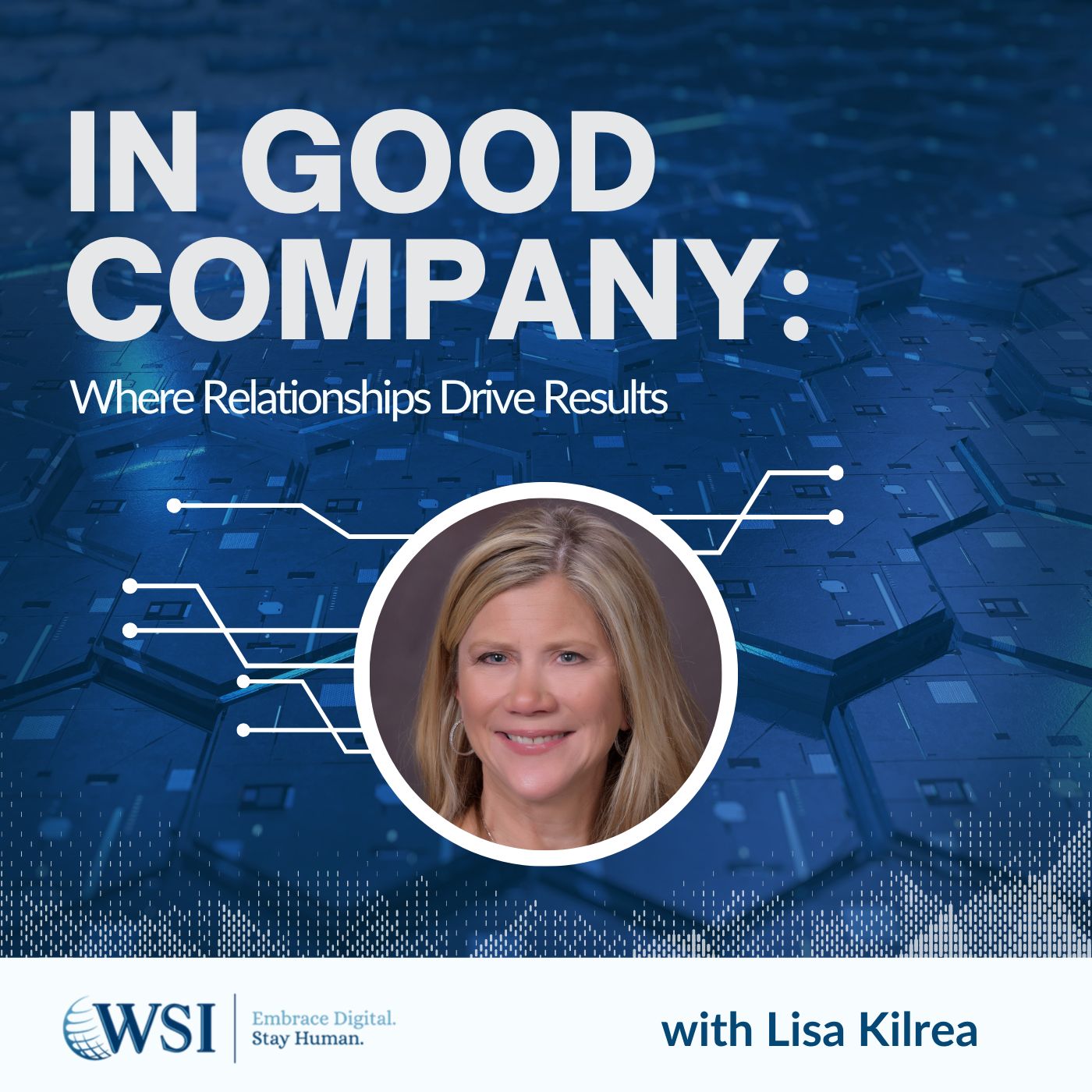
In Good Company
by Lisa Kilrea
In Good Company, where relationships drive results, with your host, Lisa Kilrea. In each episode, we explore how great leaders build trust, inspire teams, and turn meaningful connections into real success.
-
25
Turning Kitting Into Strategic Advantage With Wesley Murphy
Wesley Murphy is the Vice President of Operations at Peoria Production Solutions, a self-supporting nonprofit that provides kitting, assembly, and fulfillment services for manufacturers across multiple industries. PPS is known for operational efficiency, ISO-certified quality standards, and inclusive employment opportunities for people with disabilities. In his role, Wesley leads large-scale operational programs, focusing on quality, inventory visibility, and on-time execution. He is passionate about building trusted partnerships and fostering operational excellence. In this episode… Kitting may seem like a straightforward process, but for manufacturers managing complex supply chains, tight labor markets, and urgent customer demands, it can become a strategic advantage. When every component, deadline, and inventory movement matters, how can companies reduce complexity while maintaining quality, speed, and trust? For Wesley Murphy, building structured kitting programs brings multiple products together into one organized, trackable SKU. Drawing from his expertise in large-scale kitting, assembly, fulfillment, and operations, Wesley explains that effective kitting helps manufacturers improve turnaround times, simplify inventory management, and give customers everything they need in one complete kit. He also highlights the value of flexible operational support during redirects, warehouse shutdowns, urgent disruptions, and production gaps, where the right partner can step in quickly to receive product, correct issues, and keep orders moving. His approach illustrates the role of ERP systems, WMS platforms, Power BI dashboards, SOPs, inspections, and open communication between operations, quality, and client teams in improving visibility, preventing rework, and strengthening execution. In this episode of In Good Company: Where Relationships Drive Results, host Lisa Kilrea sits down with Wesley Murphy, VP of Operations at Peoria Production Solutions, to discuss how kitting supports supply chain efficiency and operational resilience. They explore how bundled components become unique SKUs, how shared data improves inventory visibility, and how communication strengthens quality, execution, and client partnerships.
-
24
Building Business Through Relationships with Amy Hughes
Amy Hughes is the Chief Marketing, Ecommerce, and Sales Leader at ClearBags, a leading provider of flexible packaging solutions known for offering more than 5,000 in-stock products and custom packaging options for businesses worldwide. Under her leadership, ClearBags has continued its impressive growth, celebrating more than 34 years in business and expanding its reach to global markets while embracing innovations like AI-driven e-commerce. Amy brings over 25 years of experience in brand marketing and business development, with a proven track record of building strong partnerships and fostering cross-functional collaboration. Passionate about customer relationships and continuous innovation, Amy is deeply committed to understanding evolving buyer behavior and translating those insights into impactful solutions. In this episode… In a crowded digital marketplace, how do businesses stand out when products and services begin to feel interchangeable? Is differentiation still about price and features, or does it now depend on something deeper — like how well a company understands the people it serves? For Amy Hughes, the answer starts with turning the customer's voice into a core driver of growth. Drawing from over 25 years of experience in sales, marketing, and brand leadership, Amy explains that sustainable advantage comes when organizations consistently translate customer insights into tailored solutions that deepen relationships beyond transactions into long-term partnerships. She emphasizes that aligning sales, marketing, and product development is essential to breaking down silos, strengthening collaboration, and accelerating meaningful innovation. Her perspective reflects the reality that today's informed buyers expect a consultative, insight-led experience, raising expectations around education, responsiveness, and expertise at every touchpoint. In this episode of In Good Company: Where Relationships Drive Results, host Lisa Kilrea sits down with Amy Hughes, Chief Marketing, Ecommerce, and Sales Leader at ClearBags, and discusses customer-centric innovation in a commoditized industry. They explore how ClearBags is evolving through digital transformation, cross-functional alignment, and the thoughtful use of AI. Amy also shares practical insights on breaking down internal barriers, anticipating customer needs, and strengthening relationships that drive long-term growth.
-
23
Intuition and Innovation: Entrepreneurial Lessons With Laurent Cohen
Laurent Cohen is the CTO and Co-founder of GetOblic, a voice-first AI platform that deploys pre-trained AI-powered voice receptionists at scale for local businesses, and is a seasoned entrepreneur with over 30 years of experience building and scaling companies across Europe and the United States. Under his leadership, his platforms have launched 1.8 million voice agents, handling hundreds of minutes of daily interactions and making AI-driven growth accessible to businesses of all sizes. Known for his creativity and strong intuition, Laurent builds systems that turn emerging technologies into practical solutions, especially for small, local companies. In this episode… Creativity can be hard to contain inside a traditional career path. For entrepreneurs who sense where technology is headed before the market catches up, how do you know when an opportunity is worth chasing? According to Laurent Cohen, a serial entrepreneur with decades of experience building companies across Europe and the United States, the answer starts with intuition. He shares that every major venture he has built began with a gut feeling, from recognizing the promise of the internet in the 1990s to seeing AI as more than a tool, but a new kind of currency for business growth. His perspective is a reminder that innovation is not just about spotting the next trend; it is about trusting your instincts, reducing friction, and building solutions people can actually use. In this episode of In Good Company: Where Relationships Drive Results, Lisa Kilrea is joined by Laurent Cohen, CTO and Co-founder of GetOblic, to discuss intuition, innovation, and AI-driven entrepreneurship. Laurent explores recognizing opportunity early, why AI is a growth engine for small businesses, and how trust shapes adoption. Laurent also shares advice on bootstrapping and building strong partnerships.
-
22
A Human Approach To AI and Modernization With Christopher Carter
Christopher Carter is the Chairman and CEO of Approyo, Inc., a global SAP, cloud, and AI solutions company that helps organizations migrate, manage, and optimize their SAP environments. With more than 25 years of experience in enterprise technology, Chris is known for guiding businesses through digital transformation, cloud modernization, and AI adoption. He is also a technology entrepreneur, speaker, and best-selling author of the Mastering SAP series, where he shares practical insights on SAP, cloud strategy, and emerging technologies. In this episode… Technology may be changing how businesses operate, but it is not changing the need for trust, leadership, and human connection. As AI and cloud modernization become bigger priorities, how can companies move forward without losing sight of the people guiding that change? For Christopher Carter, the answer starts with "bigger, better, faster, stronger humans leveraging AI." Drawing from his experience as a technology entrepreneur, author, and digital transformation leader, Chris explains that AI works best when companies have internal champions, executive buy-in, clear guardrails, and a willingness to train people rather than replace them. His perspective is a reminder that modernization is not just about adopting new tools; it is about helping teams use those tools with purpose, confidence, and trust. In this episode of In Good Company: Where Relationships Drive Results, Lisa Kilrea is joined by Christopher Carter, Chairman and CEO of Approyo, Inc., to discuss a human approach to AI and modernization. They explore AI adoption, SAP cloud migration, and leadership through change. Chris also shares advice on building relationships, culture, and continuous learning.
-
21
Turning Messy Data Into Opportunity With Andrew Brooks
Andrew Brooks is the Founder and CEO of Contextual.io, an AI orchestration platform that helps businesses of all sizes accelerate production-ready AI solutions. He is a serial entrepreneur best known for building and scaling multiple high-growth companies, including SmartThings (acquired by Samsung), and has contributed to billions of connected devices worldwide. A Princeton chemistry graduate and elite endurance athlete, Andrew's leadership blends technical expertise with a passion for innovation and creation. In this episode… Messy data has a reputation for being a liability, something to clean up before any real progress can happen. But what if the very chaos organizations try to avoid is actually where the biggest opportunities live? For Andrew Brooks, the key lies in rethinking how organizations approach complexity. Drawing from his experience as a seasoned technology entrepreneur, he explains that AI thrives in environments where data is unstructured and processes aren't perfectly defined. Rather than waiting for ideal conditions, he points out that AI can normalize and extract value from that messiness, turning overlooked information into actionable insight. The real shift is moving from seeing AI as just a tool for automation to recognizing its potential to unlock entirely new ways of working and creating value. In this episode of In Good Company: Where Relationships Drive Results, Lisa Kilrea is joined by Andrew Brooks, Founder and CEO of Contextual.io, to discuss how AI is transforming the way organizations think about messy data. They explore why imperfect data is often more valuable than expected, how AI drives both efficiency and new revenue opportunities, and what businesses get wrong about readiness. Andrew also shares advice on identifying and strengthening competitive moats with AI.
-
20
Building Culture During Rapid Change With Chelsea Byers
Chelsea Byers is the Founder and CEO of JumpPoint Consulting, where she partners with visionary leaders to help early-stage businesses achieve growth, scale, and operational success. With a background in education and technology, Chelsea has played a key role in scaling multiple high-growth companies, authored the book Course Correct, and is recognized for advising executives on resilience and authentic leadership. She brings a unique perspective from her early career as a math teacher, blending analytical rigor with a passion for people and culture. In this episode… Rapid growth has a way of exposing what's really happening beneath the surface of a company. When everything is moving fast and stakes are high, how do leaders build a culture that actually holds up under pressure? For Chelsea Byers, the key lies in being intentional about culture from the very beginning. Drawing from her experience scaling high-growth companies, she explains that strong leaders don't treat culture as a "nice to have," but as a system that requires clear values, shared language, and consistent reinforcement. Without that, she notes, culture defaults to something far less productive — often driven by fear, competition, and misalignment. The takeaway is clear: if leaders don't actively shape culture, it will shape itself, and not always in ways that support long-term success. In this episode of In Good Company: Where Relationships Drive Results, Lisa Kilrea is joined by Chelsea Byers, Founder and CEO of JumpPoint Consulting, to discuss building culture during rapid change. They explore maintaining alignment as teams scale, balancing speed with sustainability, and the role of authenticity in leadership. Chelsea also shares insights on building trust and staying grounded in your values while navigating growth.
-
19
Advancing Surgical Innovation Through Partnership and Technology With Chris Martin
Chris Martin is the Vice President of OEM and New Technologies at Thompson Retractor, a company specializing in surgical exposure systems that enable efficient and safe access to anatomy during medical procedures. Under his leadership and with over 15 years at Thompson Retractor, Chris has helped expand the company's reach beyond traditional hospital sales into strategic OEM partnerships with major implant manufacturers, contributing to significant growth and innovation within the industry. In this episode… Innovation in healthcare rarely happens in isolation. It's built through collaboration, trust, and a deep understanding of what surgeons truly need in the operating room. So what does it take to turn partnership into real surgical progress? Drawing from his experience as a leader in surgical product development and collaboration, Chris Martin explains that true innovation comes from aligning expertise. He describes how partnerships allow each side to focus on what they do best, whether that's implants or surgical access, rather than trying to do everything at once. By combining strengths and reducing complexity for surgeons, these collaborations ultimately lead to safer, more efficient procedures and better patient outcomes. In this episode of In Good Company: Where Relationships Drive Results, Lisa Kilrea is joined by Chris Martin, Vice President of OEM and New Technologies at Thompson Retractor, to discuss how strategic partnerships drive surgical innovation. They explore the shift from direct sales to OEM collaboration, the role of stability and exposure in surgical success, and how trust fuels long-term adoption. Chris also talks about staying relevant amid emerging technologies like robotics.
-
18
Building Customer-Driven Innovation in Industrial Markets With Scott Rolston
Scott Rolston is the President of Stucchi USA, a leading manufacturer specializing in hydraulic quick disconnect couplings for industries such as construction, agriculture, industrial, and oil and gas. Under Scott's leadership, Stucchi USA has grown from an organic startup to a major player in the fluid power industry, earning recognition for its customer-focused innovation and operational excellence. With over 30 years of experience, Scott combines deep technical knowledge with a passion for building strong relationships across OEMs, distributors, and end users. In this episode… In industrial markets, innovation rarely starts in a lab. It takes shape in the field, shaped by pressure, downtime, and real-world constraints. But what happens when companies truly build solutions around those realities instead of just the product? Drawing from his experience as a seasoned leader in fluid power, Scott Rolston explains that innovation begins by deeply understanding the customer's application, not just the component itself. He emphasizes that what may seem like a simple product often sits at the center of safety, uptime, and productivity challenges once it's exposed to real-world variables like vibration, pressure, and operator behavior. This perspective shifts the focus from selling parts to solving business-critical problems, making innovation more practical, impactful, and aligned with how customers actually operate. In this episode of In Good Company: Where Relationships Drive Results, Lisa Kilrea is joined by Scott Rolston, President of Stucchi USA, to discuss building customer-driven innovation in industrial markets. They explore how to differentiate in commoditized spaces, why safety and productivity are reshaping expectations, and how real-world feedback drives product development. Scott also shares insights on turning strong partnerships into a competitive advantage.
-
17
Creating Lasting Connections in Architecture With Baran Mutlu
Baran Mutlu is the Director of Sales at AKDO, a global supplier of luxury natural stone, tiles, and surface materials used in residential and commercial design projects. As an industry leader for over 30 years, AKDO has expanded its reach to around 200 showrooms nationwide and grown its presence in both residential and large-scale commercial projects, with a focus on innovation and cutting-edge design. Baran brings an international perspective to the business, shaped by his education at Babson College and a family heritage of entrepreneurship. In this episode… Great design doesn't happen in isolation. It's built through a web of trust, timing, and collaboration that often determines whether a vision comes to life or falls short. What really makes those connections last? According to Baran Mutlu, a relationship-driven sales leader in the design materials space, strong partnerships are the single most important factor in long-term success. He explains that in a competitive industry, it's not just about having the best product, but about nurturing genuine, organic relationships built on trust and consistency. From calling in favors on tight deadlines to securing exclusive materials before they hit the market, those connections create a competitive advantage. Ultimately, it's this mutual support system that turns one-time transactions into lasting collaboration. In this episode of In Good Company: Where Relationships Drive Results, Lisa Kilrea is joined by Baran Mutlu, Director of Sales at AKDO, to discuss how relationships shape success in architecture and design. He shares how trust influences supplier and designer partnerships, why observation is key early in your career, and how global collaboration requires understanding personal motivators. Baran also talks about balancing service with business growth.
-
16
Embedding AI Into Robotics for High-Mix Manufacturing Environments With Rand Owens
Rand Owens is the Head of Marketing at GrayMatter Robotics, which delivers AI-powered robotic solutions to help high-mix manufacturers improve quality and throughput in surface finishing processes. With more than 15 years of marketing leadership, Rand has helped scale multiple B2B technology organizations, including building the foundational marketing team at Motive (formerly KeepTruckin) and supporting its growth to $170 million in revenue. He is passionate about mentoring diverse teams, developing holistic go-to-market strategies, and creating repeatable playbooks for sustainable growth. In this episode… Manufacturing has long depended on human intuition. The trained eye that knows when something is slightly off. But what happens when that expertise is hard to find, harder to retain, and nearly impossible to scale? According to Rand Owens, a growth-focused marketing leader with deep experience in scaling industrial technologies, the answer lies in embedding intelligence directly into the machines themselves. He explains that AI-powered robotics can now see, adapt, and even "learn" in real time, making decisions once reserved for highly skilled operators. Instead of rigid automation, these systems continuously refine their approach based on each unique part, much like a craftsman adjusting their technique on the fly. The result is a shift from inconsistent, labor-dependent output to scalable precision that transforms how manufacturers operate. In this episode of In Good Company: Where Relationships Drive Results, Lisa Kilrea is joined by Rand Owens, Head of Marketing at GrayMatter Robotics, to discuss embedding AI into robotics for high-mix manufacturing environments. They explore why traditional automation struggles with variability, how AI enables adaptive, real-time decision-making on the factory floor, and why labor challenges are driving adoption.
-
15
Making AI Practical and Profitable for Real Businesses With Ken McLoud
Ken McLoud is the Founder of Laconic Technology, a technology company focused on helping businesses harness the power of artificial intelligence and custom software to streamline operations, boost efficiency, and unlock growth. Drawing on his experience in AI engineering and strategic consulting, he partners with clients to design solutions that integrate smoothly with existing systems and deliver measurable business results. Prior to founding Laconic Technology, Ken worked as a Design Engineer at Ruger Firearms, where he leveraged his technical expertise to develop innovative products. In this episode… Artificial intelligence is everywhere right now, but most conversations still revolve around tools, prompts, and hype. So what actually happens when a company stops chasing AI trends and starts using the technology to solve real business problems? According to Ken McLoud, a seasoned engineer who has spent years building complex systems, the first step is shifting the question entirely. Instead of asking where they can deploy AI, businesses should start by identifying the real constraint in the system and attacking that problem directly. In practice, that often means automating repetitive tasks, improving lead generation, or building systems that analyze opportunities and make smarter decisions at scale. When companies focus on the right problem first, AI becomes a practical tool for measurable impact rather than a shiny experiment. In this episode of In Good Company: Where Relationships Drive Results, Lisa Kilrea is joined by Ken McLoud, Founder of Laconic Technology, to discuss how businesses can implement AI in ways that actually drive revenue and efficiency. Ken explains why "we need AI" is often a red flag, how custom systems differ from simple AI integrations, and where B2B companies are missing the biggest opportunities. Ken also shares advice on identifying the real business constraints AI should solve.
-
14
AI for Manufacturers: How To Start Using AI in Manufacturing — WSI Webinar Series Part 3
Lisa Kilrea is the Founder of WSI eResults, a leading digital marketing agency that specializes in helping manufacturers, distributors, and B2B companies grow through AI-powered, data-driven strategies. With over 20 years of entrepreneurial experience and a proven track record, Lisa has led WSI Results to deliver standout lead generation and revenue growth in the industrial sector. Her background includes work with major brands like Quaker Oats and BP Petroleum, and she's known for pioneering innovative marketing tactics that blend traditional expertise with cutting-edge digital solutions. In this episode… In a world where technology is evolving at lightning speed, businesses are increasingly turning to artificial intelligence to boost efficiency and improve decision-making. But as AI becomes more mainstream, a critical question arises: How can manufacturers move beyond pilot projects and make AI a scalable, impactful part of their operations? For Lisa Kilrea, the key to success lies in a structured, roadmap-driven approach. She emphasizes that AI is not just a tool but a transformational journey. It's therefore imperative for manufacturers to first build a strong foundation, enabling them to identify, implement, and scale AI initiatives effectively. Through strategic implementation and ongoing optimization, companies can turn AI from a shiny new tech into a core business driver that delivers measurable results. In this episode of In Good Company: Where Relationships Drive Results, part three of WSI's webinar series, Lisa Kilrea discusses how manufacturers can take AI pilots from mere experiments to scalable successes. She explores how AI adoption starts with creating a strong foundation, then moves through stages of enablement and identification before scaling solutions across the organization. Lisa also shares insights on the importance of governance and employee training to foster AI adoption.
-
13
AI for Manufacturers: How To Start Using AI in Manufacturing — WSI Webinar Series Part 2
Lisa Kilrea is the Founder of WSI eResults, a leading digital marketing agency that specializes in helping manufacturers, distributors, and B2B companies grow through AI-powered, data-driven strategies. With over 20 years of entrepreneurial experience and a proven track record, Lisa has led WSI Results to deliver standout lead generation and revenue growth in the industrial sector. Her background includes work with major brands like Quaker Oats and BP Petroleum, and she's known for pioneering innovative marketing tactics that blend traditional expertise with cutting-edge digital solutions. In this episode… In today's fast-paced, technology-driven world, AI is no longer a far-off concept — it's transforming industries right before our eyes. For manufacturers, the challenge isn't just about keeping up with innovation; it's about strategically incorporating AI to drive tangible results. So, how can manufacturers begin their AI journey, and where do they start? According to Lisa Kilrea, a digital marketing and AI expert, manufacturers should first focus on leveraging AI that is already embedded within the tools they're using. She emphasizes that AI doesn't always require adopting groundbreaking new technologies; in many cases, it is already integrated into existing platforms such as CRMs, ERPs, and customer service systems. These systems can help automate repetitive tasks and boost productivity, creating immediate value without overhauling existing processes. The key takeaway here is simple: AI isn't about replacing humans, but enhancing their capabilities, leading to better customer service and more efficient operations. In this episode of In Good Company: Where Relationships Drive Results, part two of WSI's webinar series, Lisa Kilrea discusses how manufacturers can start using AI to improve their processes. She explains the five stages of AI adoption, from existing tools to advanced AI copilots. Lisa also discusses practical examples, like AI's role in demand forecasting and automating quoting processes, which streamline operations and enhance business outcomes.
-
12
AI for Manufacturers: How To Start Using AI in Manufacturing Part 1 of WSI's Webinar Series
Lisa Kilrea is the Founder of WSI eResults, a leading digital marketing agency that specializes in helping manufacturers, distributors, and B2B companies grow through AI-powered, data-driven strategies. With over 20 years of entrepreneurial experience and a proven track record, Lisa has led WSI Results to deliver standout lead generation and revenue growth in the industrial sector. Her background includes work with major brands like Quaker Oats and BP Petroleum, and she's known for pioneering innovative marketing tactics that blend traditional expertise with cutting-edge digital solutions. In this episode… AI isn't coming to manufacturing someday. It's already reshaping how work gets done, from the shop floor to the front office. The real question isn't whether AI matters, but how manufacturers can start using it in a practical, strategic way without wasting time or money. Lisa Kilrea explains that the smartest place to begin is with strategy, not software. She compares random AI experiments to "random acts of marketing," noting that without a clear plan, even powerful tools won't deliver meaningful ROI. The takeaway is simple but powerful: AI becomes transformative when it's tied directly to business goals, measurable wins, and a structured roadmap. In this episode of In Good Company: Where Relationships Drive Results, part 1 of WSI's webinar series, Lisa Kilrea talks about how manufacturers can start using AI strategically. She outlines what AI is and why it matters now, outlines the AI spectrum from basic tools to copilots, and shares real-world manufacturing use cases with measurable ROI. Lisa also demystifies the AI Readiness Assessment and how to identify quick wins that prove value fast.
-
11
Building Trust and Innovation in Surgical Retraction With Madeline Witt
Madeline Witt is the Marketing Manager at Thompson Retractor, a company that designs and manufactures table-mounted surgical retractor systems used in complex procedures such as liver, spine, and cervical surgeries. Over her nine-year tenure at Thompson, Madeline has held leadership roles spanning Assistant Product Manager to Clinical Specialist, and her unique hands-on experience in the operating room has helped shape the company's products and relationships with surgeons nationwide. In this episode… In the complex world of surgical procedures, the tools and systems used can mean the difference between success and failure. When it comes to spinal surgeries, precision and stability are critical, and even the smallest deviation can lead to major complications. So, what happens when an existing system doesn't measure up to the surgeon's needs, and what drives innovation in this field? According to Madeline Witt, a seasoned expert in surgical retraction systems, the key to improving surgical tools lies in direct feedback from the field. She explains that real-world input is crucial for creating reliable, stable, and efficient systems. In particular, feedback from surgeons struggling with existing retraction systems led Thompson Surgical to develop the anterior lumbar ring retractor, a solution that addresses these critical needs. This innovation, born out of collaboration with surgeons, is all about providing a tool that surgeons can trust, allowing them to focus on the procedure rather than constantly adjusting their equipment. In this episode of In Good Company: Where Relationships Drive Results, Lisa Kilrea is joined by Madeline Witt, Marketing Manager at Thompson Retractor, to discuss how surgical innovation is shaped by the people using the tools. Madeline shares how Thompson Surgical's anterior lumbar ring retractor was designed with direct surgeon feedback in mind, emphasizing the value of stable, hands-free retraction.
-
10
Leading Commercial Strategy and Growth in MedTech With Chris Reese
Chris Reese is the Senior Vice President of Sales at NeuroPace, a medical device company dedicated to improving the lives of people with drug-resistant epilepsy through advanced neurostimulation technology. With nearly two decades of leadership experience, Chris has played key commercial roles at leading medtech companies — including driving over $800 million in value during Vertiflex's acquisition by Boston Scientific and leading US sales for the ENT business at Medtronic. A former US Marine, he brings a unique blend of military discipline, startup grit, and Fortune 500 expertise to his work, making him an influential mentor and champion for developing future medical sales professionals. In this episode… In highly regulated industries like medtech, growth rarely comes from moving fast and cutting corners. It comes from earning trust, aligning teams, and making smart decisions when the stakes are high, but what does that really look like in practice? For Chris Reese, a sales leader in the medical device industry, the answer starts with people. He believes that sustainable growth happens when teams are aligned around purpose, patient impact, and mutual accountability. Chris shares how strong relationships, healthy tension across functions, and leaders who show up consistently create the conditions where both people and performance can thrive. In this episode of In Good Company: Where Relationships Drive Results, Lisa Kilrea is joined by Chris Reese, Senior Vice President of Sales at NeuroPace, to discuss leading commercial strategy and growth in medtech. They explore navigating regulation without losing momentum, building trust across sales, marketing, and clinical teams, and developing leaders who balance empathy with high standards.
-
9
Building Lasting Relationships and Innovating in Surgical Device Marketing With Madeline Witt
Madeline Witt is the Marketing Manager at Thompson Retractor, a company that designs and manufactures table-mounted surgical retractor systems used in complex procedures such as liver, spine, and cervical surgeries. Over her nine-year tenure at Thompson, Madeline has held leadership roles spanning Assistant Product Manager to Clinical Specialist, and her unique hands-on experience in the operating room has helped shape the company's products and relationships with surgeons nationwide. In this episode… Strong relationships don't just shape careers, they shape entire industries, especially when the stakes are as high as patient care. In a world where innovation moves quickly, how do medical device companies earn trust that lasts for decades? For Madeline Witt, the key lies in building genuine, long-term partnerships with the surgeons and teams who rely on these tools every day. She explains that Thompson works alongside surgeons from their earliest training through the full span of their careers, learning directly from their feedback and evolving needs. That kind of consistency doesn't just improve products, it helps make surgery better together. In this episode of In Good Company: Where Relationships Drive Results, Lisa Kilrea is joined by Madeline Witt, Marketing Manager at Thompson Retractor, to discuss building lasting relationships while innovating in surgical device marketing. They explore surgeon-driven product development, the value of firsthand clinical experience, and how trust supports long-term adoption. Madeline also shares advice on caring for people beyond business.
-
8
How Great Leaders Build Trust in Uncertain Times With Dean E. Carter
Dean E. Carter is the CEO of Instill, a company dedicated to driving cultural transformation within organizations through advanced AI and real-time organizational intelligence. With a proven track record of stabilizing at-risk engagements and building billion-dollar businesses, Dean has held senior executive and board leadership roles at renowned companies such as Patagonia, Sears, Fossil, and Guild, and is the co-author of the #1 bestselling book Employee Experience Design. He is widely recognized for developing innovative employee experiences, nurturing the next generation of leaders, and shaping workplace cultures that balance both business performance and human wellbeing. In this episode… Uncertainty has a way of exposing the cracks in leadership. When pressure mounts and answers are unclear, what actually keeps people aligned, motivated, and willing to stay in the boat together? According to Dean E. Carter, a longtime people-first leadership thinker, trust is built through everyday actions, not grand speeches. He points to simple but powerful moments, like keeping your word, listening with intent, and leaving people and organizations better than you found them, as the real foundations of leadership. In times of disruption, those habits become the difference between teams that fragment and teams that rise together In this episode of In Good Company: Where Relationships Drive Results, Lisa Kilrea is joined by Dean E. Carter, CEO of Instill, to discuss how leaders build trust in uncertain times. They explore why trust breaks down when leaders default to process over people, how relationships drive performance even in crisis, and what it means to design employee experiences with — not for — your teams. Dean also shares advice on using transparency, consistency, and learning to lead people through change with confidence.
-
7
Redefining Customer Focus and Innovation in US Manufacturing With Eric Strickler
Eric Strickler is the Head of Marketing at Functional Devices, a company that manufactures electronic control products for HVAC, building automation, and industrial control systems. Under Eric's leadership, Functional Devices produces more than 4 million products annually, with a field failure rate of less than one in 16,000, and its Relay in a Box line has become synonymous with quality and reliability in the sector. With a diverse background spanning sales, marketing, and B2B consulting, Eric brings a customer-centric and data-driven approach to driving growth and operational excellence. In this episode… Manufacturing in the US has never been simple, but staying innovative while keeping customers at the center is a different kind of challenge. What does it really take for a manufacturing company to remain relevant, competitive, and trusted over decades without losing sight of the people it serves? According to Eric Strickler, a seasoned manufacturing and operations leader, the answer starts and ends with genuine customer focus. He explains that at the strongest companies, this mindset isn't a slogan but a shared behavior, from leadership all the way to the production floor, where even the smallest component is treated as mission critical. That kind of discipline creates reliability, trust, and staying power in an industry where failure of a single part can bring an entire system down. In this episode of In Good Company: Where Relationships Drive Results, Lisa Kilrea is joined by Eric Strickler, Head of Marketing at Functional Devices, to discuss redefining customer focus and innovation in US manufacturing. They explore how customer-centric thinking drives long-term competitiveness, why simplicity and quality fuel product longevity, and how marketing and operations must align to create demand.
-
6
Making Automation Accessible and Effective for Modern Manufacturers With Joel Onyshuck
Joel Onyshuk is the Vice President of Sales at Formic, a company that helps manufacturing leaders address labor and operational challenges through robots-as-a-service for end-of-line automation. Under Joel's leadership, Formic has worked with thousands of manufacturers to deliver rapid automation solutions that drive operational savings, such as 20% reductions in OPEX costs and dramatic productivity improvements. Joel is also a podcast host and content creator, known for his relational approach to leadership and insights on innovation, growth, and building strong business cultures. In this episode… As manufacturing demands intensify, automation is no longer a luxury — it's a necessity. Yet automation still feels out of reach for many. What if the biggest barrier isn't the technology itself, but the way we think about adopting it? According to Joel Onyshuk, a seasoned manufacturing sales leader with extensive experience in high-growth environments, the answer lies in removing friction from the process entirely. He explains that automation works best when it's treated like a service, not a massive capital gamble, allowing teams to point to a problem and have it solved without disruption. That shift doesn't just accelerate adoption, it changes how manufacturers compete, adapt, and stay resilient in a fast-moving industry. In this episode of In Good Company: Where Relationships Drive Results, Lisa Kilrea is joined by Joel Onyshuk, Vice President of Sales at Formic, to discuss making automation accessible and effective for modern manufacturers. They explore how robots-as-a-service lowers barriers to automation, why software is becoming just as critical as hardware, and how automation helps address labor and productivity challenges.
-
5
Navigating SEO in an AI-Driven World With Lisa Kilrea
Lisa Kilrea is the Founder of WSI eResults, a leading digital marketing agency that specializes in helping manufacturers, distributors, and B2B companies grow through AI-powered, data-driven strategies. With over 20 years of entrepreneurial experience and a proven track record, Lisa has led WSI Results to deliver standout lead generation and revenue growth in the industrial sector. Her background includes work with major brands like Quaker Oats and BP Petroleum, and she's known for pioneering innovative marketing tactics that blend traditional expertise with cutting-edge digital solutions. In this episode… Search used to feel predictable. Today, it's happening everywhere at once, inside AI tools, chat interfaces, and platforms that never existed a few years ago. So how do businesses stay visible when the rules of discovery keep changing? For Lisa Kilrea, the answer starts with a mindset shift. Drawing from her experience as a digital marketing strategist focused on complex B2B buying journeys, Lisa explains that SEO has evolved into "search everywhere optimization," where being cited by AI tools matters as much as ranking on Google. She points to how buyers now do deep research inside large language models before ever visiting a website, compressing the sales cycle and raising the stakes for authority and trust. The takeaway is clear: companies that adapt early don't just keep up, they gain a measurable edge as search behavior transforms. In this episode of In Good Company: Where Relationships Drive Results, Lisa Kilrea, Founder of WSI eResults, is interviewed by Chad Franzen of Rise25 to discuss navigating SEO in an AI-driven world. They explore why SEO is now the backbone of digital strategy for manufacturers, how AI tools are reshaping buyer research and conversions, and what "search everywhere optimization" really means in practice. Lisa also shares advice on measuring SEO success through conversions instead of vanity metrics.
-
4
Creating Measurable Digital Marketing Success for Manufacturers With Lisa Kilrea
Lisa Kilrea is the Founder of WSI eResults, a leading digital marketing agency that specializes in helping manufacturers, distributors, and B2B companies grow through AI-powered, data-driven strategies. With over 20 years of entrepreneurial experience and a proven track record, Lisa has led WSI Results to deliver standout lead generation and revenue growth in the industrial sector. Her background includes work with major brands like Quaker Oats and BP Petroleum, and she's known for pioneering innovative marketing tactics that blend traditional expertise with cutting-edge digital solutions. In this episode… Digital marketing can feel like a gamble for manufacturers, especially when results don't show up overnight. With long sales cycles, technical buyers, and constantly changing platforms, how do you actually measure success and know you're investing in the right places? According to Lisa Kilrea, a digital marketing strategist with extensive experience in the manufacturing space, success starts with treating digital marketing as an investment, not an expense. She explains that measurable results come from strategy-first thinking, setting realistic expectations, and understanding that quick wins like paid ads play a different role than long-term drivers like SEO. When those pieces work together, manufacturers can build credibility, fill their pipeline, and see ROI that far outweighs the initial spend. In this episode of In Good Company: Where Relationships Drive Results, Lisa Kilrea, Founder of WSI eResults, is interviewed by Chad Franzen of Rise25 to discuss creating measurable digital marketing success for manufacturers. They cover why strategy must come before tactics, how to set realistic timelines for leads and ROI, and the power of an integrated, multi-channel approach.
-
3
Driving Business Growth Through Inclusion and Purpose With Dan LaTurno
Dan LaTurno is President and CEO of Peoria Production Solutions, a Peoria, Illinois–based contract manufacturing company dedicated to providing meaningful employment opportunities for individuals with disabilities. Under Dan's leadership since 2019, the company has nearly doubled its annual sales from $18 million to over $34 million, expanded to two locations, and grown its workforce from 140 to more than 220 workers, with a remarkable turnover rate of just 2%. With over 30 years of experience in manufacturing and operations management, Dan is recognized for his commitment to inclusive hiring and for championing opportunities for neurodiverse individuals and people on the autism spectrum. In this episode… In an era where diversity and inclusion are often buzzwords, how do you create an environment where these values are genuinely at the heart of your business strategy? Can an organization thrive while also making a meaningful impact on the lives of individuals often overlooked by traditional hiring practices? For Dan LaTurno, the answer lies in embracing inclusion as both a core value and a business advantage. Dan believes that the key to success is not just focusing on profit margins but creating opportunities for those who face the greatest barriers to employment. His company operates as a nonprofit yet performs with the efficiency of a for-profit business. The focus is clear: employ individuals with disabilities and provide them with a supportive and respectful workplace, where their unique skills are not only welcomed but celebrated. In this episode of In Good Company: Where Relationships Drive Results, Lisa Kilrea is joined by Dan LaTurno, President and CEO of Peoria Production Solutions, to discuss the intersection of business growth and inclusion. They explore how Dan's leadership has propelled the company's impressive growth while staying true to its mission of employing individuals with disabilities. Dan also offers valuable insights into navigating the challenges of scaling while staying aligned with core values.
-
2
Building Resilience, Fostering Talent, and Humanizing Progress in Business With Pam Cumpata
Pam Hoffman-Cumpata is a Forum Leader at Renaissance Executive Forums, where she provides leadership coaching and consulting to help executives grow and solve challenges. She has extensive experience in the banking and economic development sectors, having previously served as the Senior Vice President at Blackhawk Bank and the President of the McHenry County Economic Development Corporation, where she focused on creating primary jobs and economic growth in the region. Pam has also held leadership roles at LaSalle Bank and American National Bank and Trust Company, honing her expertise in commercial banking and business strategy. Through her current work, she continues to empower business leaders and organizations to thrive in a constantly evolving market. In this episode… In business, setbacks often feel like roadblocks — something to avoid at all costs. But what if these challenges, instead of hindering our progress, could be the very fuel we need to grow and transform? From failures to unexpected twists, it's the way we respond to adversity that shapes not only our career paths but also the future of the organizations we lead. How do we embrace these moments of vulnerability and turn them into strengths? Pam Cumpata, drawing from her diverse career in banking, economic development, and now consulting, has a unique perspective on this. She believes that resilience isn't about avoiding failure; it's about getting back up after being knocked down. Pam explains that this mindset has been crucial to her work with leaders today, where she helps them not only solve problems but also build sustainable growth by fostering talent and encouraging a culture of resilience. According to Pam, the key is to never stop learning, adapting, and most importantly, staying human in the face of technological advancements like AI, which she views as a tool, not a replacement for human connection. In this episode of In Good Company: Where Relationships Drive Results, Lisa Kilrea is joined by Pam Hoffman-Cumpata to discuss how to build resilience and foster talent in business. They dive into the importance of adaptability, the value of continuous learning, and how we can humanize progress in a rapidly evolving professional landscape. Pam also highlights the transformative impact of bringing students into the manufacturing world and the value of providing real-world career exposure to young people.
-
1
Embracing Digital Transformation in Manufacturing and B2B Sectors With Lisa Kilrea
Lisa Kilrea is the Founder of WSI eResults, a leading digital marketing agency that specializes in helping manufacturers, distributors, and B2B companies grow through AI-powered, data-driven strategies. With over 20 years of entrepreneurial experience and a proven track record, Lisa has led WSI Results to deliver standout lead generation and revenue growth in the industrial sector. Her background includes work with major brands like Quaker Oats and BP Petroleum, and she's known for pioneering innovative marketing tactics that blend traditional expertise with cutting-edge digital solutions. In this episode… Many manufacturers are figuring out how to modernize without losing what already works. The pressure to adopt new tools can feel overwhelming, especially when traditional methods have carried the business for decades. But what happens when staying the same becomes riskier than changing? According to Lisa Kilrea, a long-time digital strategist for industrial and B2B companies, the shift starts with a clear plan rather than a rush into tactics. She explains that too many businesses leap into digital efforts before understanding their buyers, their goals, or even whether their website can support the traffic they hope to attract. Drawing from years of guiding manufacturers, she compares random marketing efforts to "random acts of kindness" — nice in theory, ineffective in practice. In her view, digital transformation is less about flashy technology and more about building a foundation that sustains long-term growth. In this episode of In Good Company: Where Relationships Drive Results, Lisa Kilrea, Founder of WSI eResults, is interviewed by Chad Franzen of Rise25 to discuss how manufacturers and B2B companies can successfully embrace digital transformation. She breaks down the importance of strategy before execution, why modern SEO means being discoverable everywhere, and how AI is reshaping both marketing and operations. Lisa also shares advice on creating content that meets today's search and buyer expectations.
We're indexing this podcast's transcripts for the first time — this can take a minute or two. We'll show results as soon as they're ready.
No matches for "" in this podcast's transcripts.
No topics indexed yet for this podcast.
Loading reviews...
ABOUT THIS SHOW
In Good Company, where relationships drive results, with your host, Lisa Kilrea. In each episode, we explore how great leaders build trust, inspire teams, and turn meaningful connections into real success.
HOSTED BY
Lisa Kilrea
CATEGORIES
Loading similar podcasts...
Frequently Asked Questions
How many episodes does In Good Company have?
In Good Company currently has 25 episodes available on PodParley. New episodes are automatically indexed when they're published to the podcast feed.
What is In Good Company about?
In Good Company, where relationships drive results, with your host, Lisa Kilrea. In each episode, we explore how great leaders build trust, inspire teams, and turn meaningful connections into real success.
How often does In Good Company release new episodes?
In Good Company has 25 episodes. Check the episode list to see recent publication dates and frequency.
Where can I listen to In Good Company?
You can listen to In Good Company on PodParley by clicking any episode. We provide an embedded audio player for direct listening, and you can also subscribe via your preferred podcast app using the RSS feed.
Who hosts In Good Company?
In Good Company is created and hosted by Lisa Kilrea.
URL copied to clipboard!