
PODCAST · kids
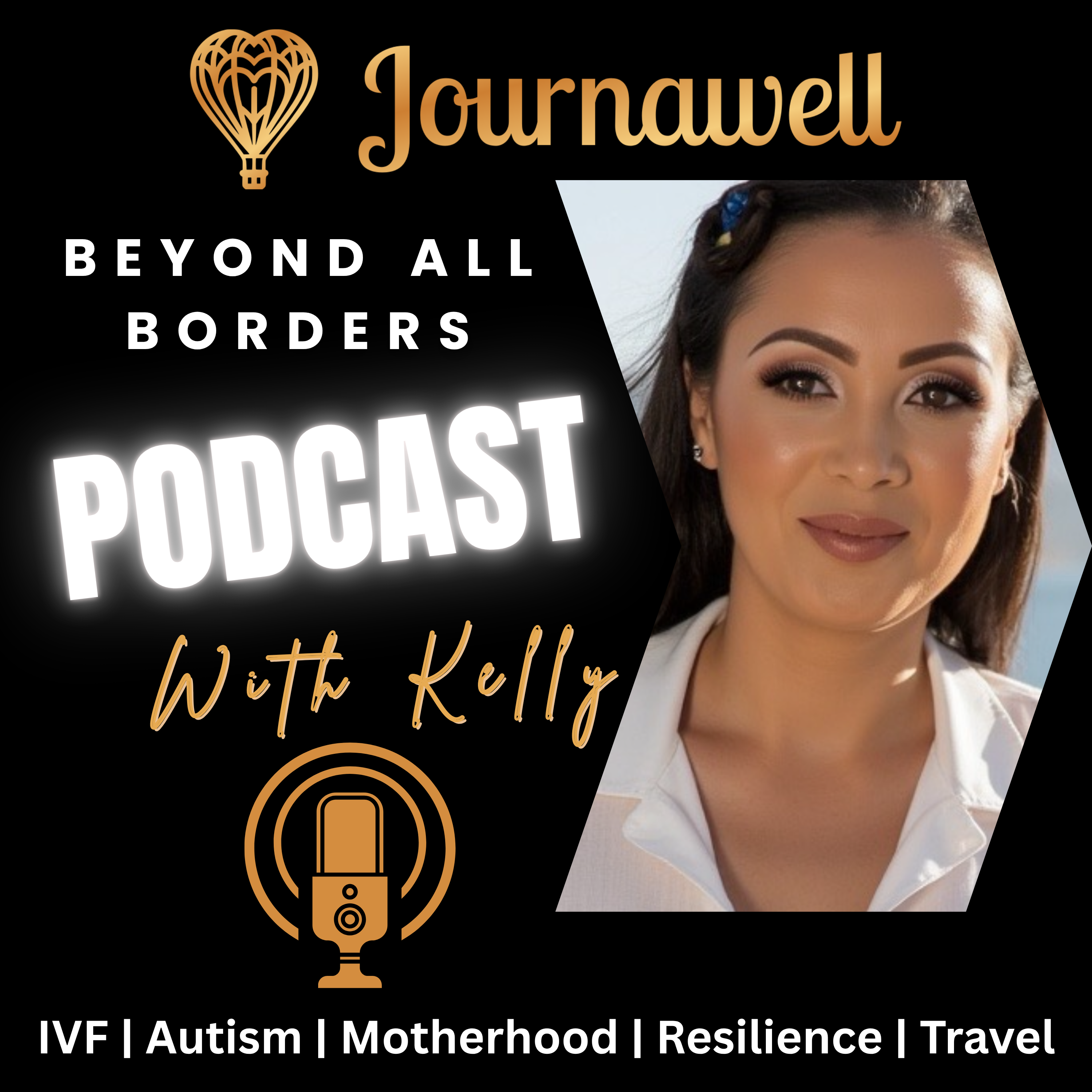
Journawell: Beyond All Borders
by Kelly Halls
Beyond All Borders is the flagship podcast from Journawell, where honest conversations meet real life.Every episode explores the borders we face throughout our lives. Some are physical, taking us across countries, cultures and new experiences. Others are the invisible borders we place on ourselves through fear, self-doubt, grief, expectations, labels, limiting beliefs, illness, infertility, neurodiversity, parenting, career changes and life's unexpected challenges.Hosted by Kelly Halls, founder of Journawell, Beyond All Borders is about breaking down those borders, challenging the beliefs that hold us back, and discovering what's possible on the other side. Through honest conversations with people who have lived these experiences, alongside experts, advocates and professionals, each episode offers practical advice, fresh perspectives and inspiring stories that help listeners move forward with greater confidence.Whether w
-
7
SEN School or Mainstream? What’s Best for Your Child?
Episode 7: SEN School or Mainstream? What’s Best for Your Child?How do you know whether mainstream or specialist education is right for your autistic child?After spending months fighting for an EHCP and a place at an outstanding specialist school for my three-year-old son, Forrest, I finally got the placement I believed he needed.Then, unexpectedly, I started questioning whether I had made the right decision.In this episode of Beyond All Borders, I talk honestly about the emotional and practical reality of choosing between mainstream and specialist education, and why there may not be one simple answer.Forrest currently has a blended placement. He spends three days each week at his specialist SEN nursery and two days at the mainstream nursery he already knows and loves. For now, it feels like we're getting the best of both worlds.But what happens when he reaches Reception?Do we move to five days of specialist education? Could a blended approach continue? Would mainstream help his communication and social development, or could he be physically included in a classroom while still being excluded from what is happening around him?I also talk about the emotions I wasn't prepared for when Forrest started specialist education, including the uncomfortable questions about his needs, his future and whether some of my fears are actually about what the words special school represent to me.Ultimately, I've realised I'm not loyal to mainstream education or specialist education.I'm loyal to my child.The question isn't simply which type of school is better. It's where is Forrest safe, happy, regulated, learning, communicating and thriving?🎧 Chapters00:00 – Navigating Special vs. Mainstream EducationWhy I fought for specialist education and why I'm now questioning that decision.08:56 – The Emotional Toll of Educational ChoicesThe guilt, anxiety and constant questioning that can come with making decisions about your child's future.17:13 – The Dilemma of Inclusion vs. IsolationIs being in a mainstream classroom always inclusion? And what does specialist education mean for a child's experience of the wider world?25:44 – Funding and Future ConsiderationsOur current blended nursery arrangement, funded childcare, the EHCP and what could happen when Forrest reaches Reception.In this episode, I talk about:SEN school versus mainstream educationAutism and choosing the right schoolEHCPs and specialist placementsBlended mainstream and specialist educationCommunication, sensory and toileting needsInclusion versus simply being presentThe emotional reality of SEND parentingWorries about independence and the futureWhy SEND parents shouldn't be told to “be grateful”Letting your child's needs guide educational decisions💬 I want to hear from youIf your child attends a mainstream or specialist school, how did you decide?Did your child move from mainstream to specialist education, or the other way around? Have you managed a split or blended placement? And, looking back, would you make the same choice again?Please share your experience in the comments. These are difficult decisions, and hearing from families further along the journey can help other parents understand the options available to them.Follow Beyond All BordersSubscribe to Beyond All Borders by Journawell for honest conversations about autism, SEND parenting, family life, EHCPs and navigating the parts of life nobody gives us a handbook for.Because no one should have to navigate life alone.
-
6
How I got DNA testing for the whole family free on the NHS: In Search for Answers for Autism
In this episode of Beyond All Borders, Kelly talks about something that can become a huge part of life as a SEND parent: the constant search for answers.From the moment your child receives an autism diagnosis, there can be so many questions. Is there something genetic? Are there other underlying factors? Is there anything that could support communication, development, diet or everyday life?Kelly shares some of the investigations her family has undertaken, including whole genome sequencing, which looked for genetic conditions that could help explain Forrest’s autism diagnosis. She also discusses their recent folate receptor antibody testing (FRAAT) and why they are waiting for those results before deciding what to explore next.The conversation moves into gut health, the microbiome and nutrition. Kelly talks about being curious but cautious about claims surrounding the gut-brain connection, while wanting to investigate whether nutritional deficiencies or dietary changes could better support Forrest.Kelly also shares her recent ADHD diagnosis, sensory sensitivity and what she has learnt about neurodivergence within the wider family.Kelly talks honestly about the reality of raising an autistic child, including Forrest’s restrictive diet and the exhausting cycle of serving the same safe foods because you know they will actually be eaten.She also shares a recent experience on public transport which raises a bigger question: what does disability actually look like?After being challenged while using an accessible area on a train, despite wearing a sunflower lanyard and travelling with her disabled son, Kelly discusses hidden disabilities, judgement and why families should not have to prove they are “disabled enough” to use accessible spaces.Kelly also shares how the Hidden Disabilities Sunflower lanyard has made travelling through airports easier for their family, helping staff recognise that Forrest may need additional patience and support.This episode is about continuing to ask questions, advocate, investigate and learn, while trying to give your child the best possible support.Please remember: this episode shares Kelly and her family’s personal experiences. It is not medical advice. Testing, medication, supplements and dietary interventions should be discussed with an appropriately qualified healthcare professional.Chapters00:00 – Introduction to Kelly’s Autism Testing Journey01:21 – Whole Genome Sequencing and Primary Diagnosis03:10 – Testing for Folate Receptor Antibodies and Treatment Options04:57 – Investigating the Gut Microbiome and Dietary Support06:15 – Kelly’s Personal Experience with ADHD and Genetic Predisposition08:03 – Parenting Challenges and Advocacy in Public Spaces10:18 – Diet Management and Food Restrictions for Her Son13:41 – Using Disability Lanyards and Accessibility Tips17:31 – Travel Experiences and Public Interactions21:20 – Awaiting Test Results and Future Plans💬 Join the conversation: Have you explored genetic testing, FRAAT testing, dietary support or other avenues following your child’s autism diagnosis? What has helped your family? Share your experiences in the comments.🌐 Journawell: journawell.com🎙️ Beyond All Borders📱 Follow our journey across TikTok @kellyjacehalls, Instagram and Facebook.Subscribe to Beyond All Borders for honest conversations about autism, ADHD, SEND parenting, family life and the challenges that come with it.
-
5
How I Found My Dream Job While Caring for an SEN Child
How I Found My Dream Job While Caring for an SEN ChildJournawell: Beyond All Borders, Episode 5Can you build a career while raising a child with additional needs?In Episode 5, Kelly Halls talks about employment, career changes and balancing work with being the parent of a non-speaking SEN child.Kelly's career began in teaching and careers advice before moving into the criminal justice sector, supporting people in prisons and probation into employment and training. During COVID, working from home changed the direction of her career.After IVF, becoming a mum and later facing redundancy, Kelly realised she needed a career that could fit around her family while still allowing her to progress.She applied for around 100 to 200 remote jobs before finding a remote training role. That position introduced her to Salesforce and led her to retrain, gain Salesforce Administrator and Business Analyst certifications and eventually secure a Civil Service role.Chapters00:00 – Introduction to Employment and Parenting ChallengesKelly introduces her career journey, from teaching and careers advice to HMP Pentonville, probation services and working remotely.06:06 – Navigating Career Changes and Job ApplicationsBecoming a mum and facing redundancy forced Kelly to rethink her career. She discusses applying for remote roles and finding work that could fit around family life.12:51 – Building Skills for Remote Work OpportunitiesKelly explains how she retrained in Salesforce, gained certifications and used transferable skills to pursue new opportunities. She also explains why she applies when she meets around 60 to 70% of a job's requirements.19:25 – Balancing Work and Family LifeKelly discusses securing her Civil Service role and balancing work, nursery and family responsibilities. She also shares interview advice, the STAR method and the value of volunteering.In This EpisodeKelly discusses why you don't need to meet 100% of a job description before applying. Transferable skills matter, and many parts of a new job can be learnt once you're actually doing it.She also shares what she has learnt from being both a candidate and hiring manager. For competency and scenario questions, Kelly recommends STAR: Situation, Task, Action and Result, giving the interviewer a complete example rather than a short answer.Volunteering was another part of her career change. Kelly volunteered with an autism charity to gain hands-on Salesforce experience, building practical skills while giving something back.But employment isn't only about earning money. For Kelly, working means maintaining an identity outside motherhood, developing professionally, having financial independence and being able to provide more opportunities for her family.Working while raising an SEN child still involves juggling nursery, appointments, childcare and the need to remain accessible when your child needs you.This episode isn't about suggesting every SEN parent's circumstances are the same. It's about challenging the assumption that becoming a parent carer automatically means your career has to end.Your route could be remote work, retraining, volunteering, freelancing, changing industries or starting your own business.What can you realistically do, and what do you need to learn to get there?If you're an SEN parent who works, tell us what you do and how you balance it. If you're considering returning to work or changing careers, we'd love to hear what you'd like to do next.No one should have to navigate life alone.Follow Journawell: Beyond All Borders for conversations about autism, SEN parenting, IVF, careers, family life and more
-
4
How I Beat the Council | EHCP & SEN School Placement Nailed: What Nobody Tells You
How I Beat the Council: EHCP & SEN School Placement Nailed | What Nobody Tells YouIn this episode of Beyond All Borders, Kelly Halls shares how she secured her son Forrest's Education, Health and Care Plan (EHCP) and the specialist SEN school placement she wanted for him.Kelly started the process when Forrest was around two and a half. He was autistic, non-speaking, still in nappies and had significant communication and developmental needs. His mainstream nursery was supporting him, but Kelly was already thinking ahead to primary school.She explains why she requested the EHC needs assessment herself, what happened when Essex County Council refused to assess Forrest, her experience of mediation and why she prepared an appeal to the SEND Tribunal.When Essex eventually agreed to assess but an educational psychologist shortage threatened delays, Kelly paid around £1,300 for a private EP assessment. Essex accepted and used the report, but later refused to reimburse her. She challenged the decision through the complaints process and ultimately the Local Government and Social Care Ombudsman, which found in her favour.The journey continued through draft and final EHCPs, placement panels and another Tribunal appeal.In This Episode• What an EHCP is and how the process works• Requesting an EHC needs assessment yourself• Essex's refusal to assess• Mediation and SEND Tribunal• Getting the council to agree to assess• Paying privately for an educational psychologist• Draft and final EHCPs• Fighting for a specialist SEN school placement• Placement panels and school consultations• Keeping the Tribunal appeal open• Securing Forrest's specialist school• Blending specialist and mainstream nursery• Challenging the £1,300 EP cost• Ombudsman decision and refund• Why documenting everything mattersTimestamps00:00 - Understanding the EHCP Process04:56 - Facing Rejections and Mediation10:09 - Securing the Draft EHCP15:19 - Finalising the EHCP and School Acceptance20:33 - Achieving a Blended Nursery PlanUseful SEND ResourcesIPSEA - SEND law and EHCP advicehttps://www.ipsea.org.ukEssex SEND IASS - Free SEND information and advicehttps://www.essexsendiass.co.ukThis episode shares our personal experience and is not legal advice.Find Us🌐 Journawell: https://journawell.com🎙️ Apple Podcasts: https://podcasts.apple.com/it/podcast/journawell-beyond-all-borders/id6794880683?l=en-GB▶️ YouTube: https://www.youtube.com/@Journawell-beyondallborders📱 TikTok: @kellyjacehallshttps://www.tiktok.com/@kellyjacehalls📸 Instagram: @journawellhttps://www.instagram.com/journawell/💙 Facebook: https://www.facebook.com/journawellBecause no one should have to navigate life alone.
-
3
How I got my 2 year old his Autism Diagnosis on the NHS in 6 Months
How We Got Our Two-Year-Old Diagnosed With Autism Within Six MonthsIn Episode 3 of Beyond All Borders, Kelly Halls shares her son Forrest's autism journey, from the first developmental concerns to receiving his diagnosis at two and a half years old.Kelly talks about missed milestones, limited eye contact, speech delays, the autism research rabbit hole, nursery concerns and the emotional reality of knowing something was different while desperately wanting to be wrong.She explains how she navigated health visitors, NHS services, Right to Choose and the assessment process, including why she kept pushing when she felt valuable time was being lost.The episode also covers DLA, speech and language, hearing and vision assessments, genetic testing, Section 23 and why documenting everything became so important when preparing for Forrest's future education.This is our family's experience. Autism assessment pathways and waiting times vary across England.In This Episode• Early developmental concerns and missed milestones• Limited eye contact and response to name• The autism research "rabbit hole"• Health visitor and nursery involvement• Right to Choose and pushing to join the waiting list• Speech, hearing and vision assessments• Applying for DLA before diagnosis• Forrest's autism assessment and diagnosis• The emotional impact of diagnosis• Whole genome sequencing and genetic testing• Section 23 and SEND support• Preparing for EHCP and specialist educationTimestamps00:00 - Introduction to Our Autism Journey09:10 - The Emotional Rollercoaster of Diagnosis15:44 - The Impact of Diagnosis on Family Life24:23 - Looking Ahead: Education and SupportUseful InformationDLA: A child does not necessarily need an autism diagnosis to apply for Disability Living Allowance. Eligibility is based on their additional care and/or mobility needs compared with another child of the same age. DLA is not means-tested.Section 23: Under the Children and Families Act 2014, certain NHS health bodies have a duty to notify the local authority when they believe a child under compulsory school age has, or probably has, SEN or a disability. A Section 23 notification is not an EHCP application and does not automatically result in an EHCP.Coming NextNext, I'll share our EHCP and specialist SEN placement journey, including refusal, mediation, Tribunal, educational psychology and ultimately securing the specialist provision we wanted for Forrest. I won't be naming his school.Find Us🌐 Journawell: https://journawell.com🎙️ Apple Podcasts: https://podcasts.apple.com/it/podcast/journawell-beyond-all-borders/id6794880683?l=en-GB▶️ YouTube: https://www.youtube.com/@Journawell-beyondallborders📱 TikTok: @kellyjacehallshttps://www.tiktok.com/@kellyjacehalls📸 Instagram: @journawellhttps://www.instagram.com/journawell/💙 Facebook: https://www.facebook.com/journawellBecause no one should have to navigate life alone.
-
2
Choosing Clinics: IVF Abroad Top Tips and Advice
Choosing to have IVF abroad can feel exciting, overwhelming and sometimes frightening, especially when you're faced with so many countries, clinics and opinions.In this episode of Beyond All Borders, Kelly shares a practical, supportive guide to researching IVF treatment overseas. Drawing on her own experience, she walks through the steps that helped her make informed decisions, from choosing a destination and comparing clinics to planning travel, understanding costs and managing the emotional side of fertility treatment.Whether you're only beginning to explore IVF abroad or you're ready to shortlist clinics, this episode will help you break the process into manageable steps so you can move forward with greater confidence.In this episodeHow to choose a country that suits your circumstances, budget and comfort levelWhy it's important to involve your partner or support network in the decision-making processHow to research IVF clinics using reviews, patient experiences and direct communicationEssential questions to ask about treatment costs, medication, embryo storage and aftercarePlanning travel, accommodation, appointments and emergency contactsWhy trusting your instincts matters when something doesn't feel rightKelly's reflections on what she would do differently if starting againHow taking one small step at a time can make the entire journey feel less overwhelmingChapter Guide00:00 Welcome and introduction01:14 Choosing a country for IVF abroad03:25 Preparing emotionally and building your support network06:06 Finding a clinic that feels right10:19 Understanding treatment costs and asking the right questions13:33 Planning travel, accommodation and treatment timings15:12 Trusting your instincts15:42 What Kelly would do differently20:30 Breaking the journey into manageable steps22:03 Moving beyond fear and taking action23:09 Closing thoughtsKey TakeawayYou don't need to have every answer before you begin.Start with one practical question, whether that's deciding on your budget, researching countries or making a shortlist of clinics. Every small step builds confidence and brings you closer to making the right decision for you.Helpful ResourcesFor additional research and planning, you may find these resources useful:• Journawell: https://journawell.com• WhatClinic: https://www.whatclinic.com• ChatGPT: https://chatgpt.com• Claude AI: https://claude.ai• Google Gemini: https://gemini.google.comThese tools can help you compare clinics, prepare questions for consultations, understand treatment options and organise your research. Always verify important medical information directly with your chosen fertility clinic and healthcare professionals.Visit Journawell for guides, trusted information and real-life experiences in fertility, IVF, parenting, autism, wellbeing and life's journeys.https://journawell.com YOUTUBE
-
1
The Real Cost of IVF Abroad: What Nobody Tells You!
Kelly Halls shares her personal journey of undergoing IVF abroad and the emotional, financial, and practical aspects of the process. She emphasizes the affordability, safety, and ease of undergoing IVF abroad, encouraging others to explore this option for their fertility journey.TakeawaysAffordability and accessibility of IVF abroadEmotional and practical benefits of undergoing IVF abroadChapters00:00 The Journey to IVF Abroad02:24 Preparing for IVF in Turkey09:33 Cost Comparison: IVF Abroad vs. Home Country17:12 Emotional and Practical Considerations20:39 The Benefits of IVF AbroadWatch the video version on youtube HERE
We're indexing this podcast's transcripts for the first time — this can take a minute or two. We'll show results as soon as they're ready.
No matches for "" in this podcast's transcripts.
No topics indexed yet for this podcast.
Loading reviews...
ABOUT THIS SHOW
Beyond All Borders is the flagship podcast from Journawell, where honest conversations meet real life.Every episode explores the borders we face throughout our lives. Some are physical, taking us across countries, cultures and new experiences. Others are the invisible borders we place on ourselves through fear, self-doubt, grief, expectations, labels, limiting beliefs, illness, infertility, neurodiversity, parenting, career changes and life's unexpected challenges.Hosted by Kelly Halls, founder of Journawell, Beyond All Borders is about breaking down those borders, challenging the beliefs that hold us back, and discovering what's possible on the other side. Through honest conversations with people who have lived these experiences, alongside experts, advocates and professionals, each episode offers practical advice, fresh perspectives and inspiring stories that help listeners move forward with greater confidence.Whether w
HOSTED BY
Kelly Halls
Loading similar podcasts...
Frequently Asked Questions
How many episodes does Journawell: Beyond All Borders have?
Journawell: Beyond All Borders currently has 7 episodes available on PodParley. New episodes are automatically indexed when they're published to the podcast feed.
What is Journawell: Beyond All Borders about?
Beyond All Borders is the flagship podcast from Journawell, where honest conversations meet real life.Every episode explores the borders we face throughout our lives. Some are physical, taking us across countries, cultures and new experiences. Others are the invisible borders we place on ourselves...
How often does Journawell: Beyond All Borders release new episodes?
Journawell: Beyond All Borders has 7 episodes. Check the episode list to see recent publication dates and frequency.
Where can I listen to Journawell: Beyond All Borders?
You can listen to Journawell: Beyond All Borders on PodParley by clicking any episode. We provide an embedded audio player for direct listening, and you can also subscribe via your preferred podcast app using the RSS feed.
Who hosts Journawell: Beyond All Borders?
Journawell: Beyond All Borders is created and hosted by Kelly Halls.
URL copied to clipboard!