
PODCAST · business
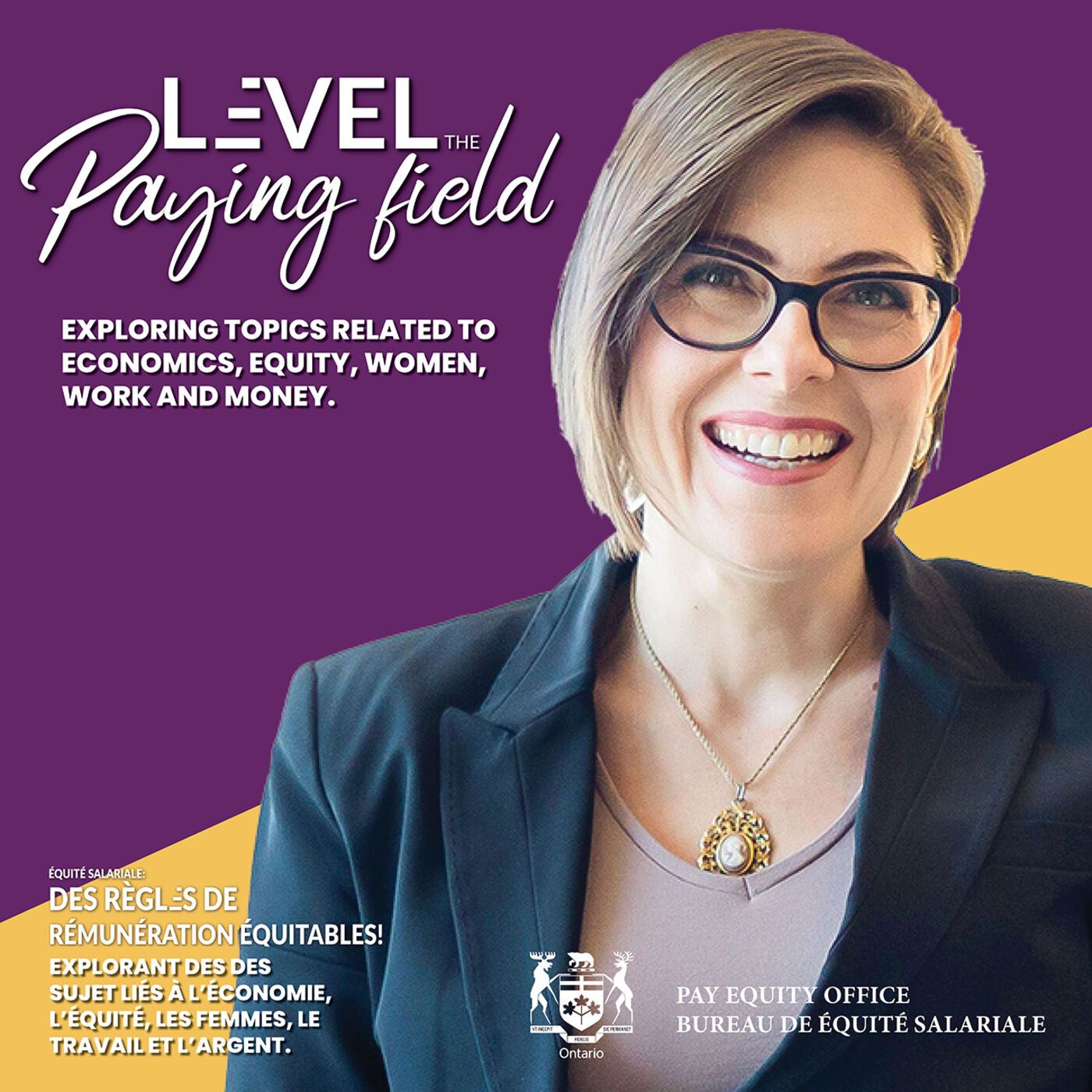
Level the Paying Field
by Pay Equity Office of Ontario
Welcome to Level the Paying Field where we explore issues related to economics, equity, women, work and money. This series of conversations explores topics impacting women working in Ontario and is published by Ontario’s Pay Equity Office. Part of our inspiration for launching this series was how, in the midst of a global pandemic which disproportionally impacted women around the world, global multilateral organizations came together to inaugurate the first ever International Equal Pay Day on September 18th 2020. This was an initiative led by United Nations members including Australia, Canada, Germany, Iceland, New Zealand, Panama, South Africa and Switzerland with a total of 105 UN member states co-sponsoring the resolution to establish September 18th as “International Equal Pay Day”.Through this series, we hope to elevate the equity conversation to make the world a more equitable place for women to work, live, and thrive, and support closing the gender wage gap.Podcast in Engli
-
23
Reel Justice: How Women in Films Fought Back
Can a movie change the world—or at least your workplace? Kadie Philp dives into the legacy of the “9 to 5” movement and how Hollywood films have shaped, reflected, and sometimes challenged gender roles in the workforce. From office revolutions in the 1970s to Barbie’s 2023 existential crisis, Kadie explores how female characters—whether breaking glass ceilings or stuck under them—have fought for dignity, equity, and representation. Listen For:0:55 Birth of the 9 to 5 Movement 5:19 Working Girl and the One-Woman-Only Ladder7:31 Lara Croft and the Rise of the Female Action Hero10:33 Beyond Elle Woods: Telling Stories of Women of Colour13:08 The Money Gap: Who’s Really Getting Paid?14:14 Cultivation Theory: Why Representation Shapes Reality15:16 Barbie Breaks the System Ontario Pay Equity OfficeWebsite | Level the Paying Field Website
-
22
Beyond the Gallery Wall: Advocating for Gender Equity in the Arts
When you walk into an art gallery, whose stories are being told—and whose are left out? Kadie Philp sits down with artist and mother Alexa Mazzarello to explore the persistent gender disparities in the art world, from pay inequity to the underrepresentation of female artists in major collections and leadership roles. They discuss the long legacy of feminist artists challenging the status quo, the unique struggles of mother artists, and how collectives like the 44.4 Mother Artist Collective are pushing for change. Alexa also shares her personal experience navigating the art world as a mother and how her project Failure to Progress sheds light on gendered biases in healthcare. This conversation is a powerful reminder of why representation in art matters—and what’s at stake when women’s voices are left out of the picture. Listen For:1:30 The difficulty of quantifying underrepresentation in the art world4:59 Making History, Not Just Art9:56 How the 44.4 Mother Artist Collective empowers women artists26:03 Family-Friendly Art Spaces – The Mothra Residency GUEST: Alexa MazzarelloWebsite | Alexa Mazzarello Studio | Instagram | Studio Instagram Ontario Pay Equity OfficeWebsite | Level the Paying Field Website
-
21
Level Up: Women’s Role in the Gaming Industry
When you picture a gamer, who comes to mind? If a woman wasn’t your first thought, it’s time to rethink the stereotype. Women now make up nearly half of all gamers in Canada, and their growing presence is reshaping the industry—not just as players, but as developers, designers, and decision-makers. Kadie Philp talks with Dr. Andrea Braithwaite, senior teaching professor at Ontario Tech University and Vice President of the Canadian Game Studies Association, to explore the evolution of female representation in video games, the barriers women still face in the industry, and what needs to change for true gender equity. From the early Girls’ Games Movement of the ‘90s to today’s fight for fair pay and leadership roles, they discuss how gaming has progressed—and where it still has a long way to go. Listen For:10:59 Women in Game Development: Still a Boys' Club?20:28 Women Are Playing—So Why Don’t We See Them?26:44 Gender Discrimination Lawsuits: Did They Change Anything?31:22 Pay Transparency in Gaming GUEST: Andrea Braithwaite, Ph.DBluesky | Website | Email | Canadian Game Studies Association Links Mentioned:GDC 2024 State of the Game Industry Report ESA 2024 Essential Facts About the US Video Game Industry ReportESA Canada Reports Ontario Pay Equity OfficeWebsite | Level the Paying Field Website
-
20
Breaking Barriers: Haley Daniels on Gender Equity in Sports
What does it take to break barriers in sports? Kadie Philp is joined by Olympian and trailblazer Haley Daniels to share her fight for gender equity in women's canoeing—both in getting it recognized as an Olympic sport and in securing equal funding and representation. From facing blatant discrimination to proving that women’s sports are just as marketable and competitive, Haley's journey is a reflection of how equity in sports mirrors broader societal struggles and why true change requires everyone’s support. They unpack the systemic challenges female athletes still face today, including the persistent gender pay gap, lack of sponsorship, and media biases. Haley also highlights the progress being made—like the rise of sold-out women’s sporting events and increased allyship from male athletes. Listen For:5:05 The financial fight: Funding disparities in women’s sports10:03 The media bias: How female athletes are still judged on appearance14:14 The gender divide: Why sports are uniquely difficult to equalize18:50 The professional gap: Why female athletes shouldn’t have to work two jobs GUEST: Haley DanielsWebsite | Facebook | X | LinkedIn | Instagram Ontario Pay Equity OfficeWebsite | Level the Paying Field Website
-
19
Punk, Pop, and Pay Gaps: Gender in the Music Industry
Music has always been more than just entertainment—it’s a powerful tool for protest, a megaphone for the unheard, and a force for social change. Kadie Philp sits down with Dr. Norma Coates, associate professor at Western University, to explore the intersection of music, gender, and activism. From the defiant blues singers of the 1920s to modern icons like Taylor Swift and Beyoncé, they discuss how women in music have consistently challenged injustice, reshaped cultural narratives, and fought for economic and social equality. Listen For:10:24 Women in Punk: Screaming Against the Status Quo19:47 MTV, Madonna, and the Sexualization of Female Artists28:27 The Spice Girls, Britney Spears, and “Girl Power” in the 2000s37:35 Race, Gender, and the Music Industry’s Ongoing Gaps GUEST: Norma Coates, Ph.DLinkedIn Ontario Pay Equity OfficeWebsite | Level the Paying Field Website
-
18
Lights, Camera, Equality: TV’s Role in Social Change
Have you ever considered how your favourite TV show influences the way you see gender roles? Kadie Philp sits down with Dr. Andrea Braithwaite, a senior teaching professor at Ontario Tech University, to explore how television has shaped—and been shaped by—women’s roles in society. From the pioneering influence of I Love Lucy to the feminist power of Buffy the Vampire Slayer, and the cultural impact of Schitt’s Creek, they discuss how television has both reinforced and challenged gender norms. They also examine how technological shifts—like the rise of streaming services—have changed the way stories about women are told, and how Canadian TV plays a unique role in pushing the conversation forward. Plus, they tackle the ongoing fight for pay equity in Hollywood and the power of storytelling in driving real-world social change. Listen For:5:06 How the ’60s and ’70s saw women taking on new roles on screen 14:21 Golden Girls – the show that tackled feminism, aging, and sexuality head-on18:06 Shonda Rhimes & Normalizing Diversity34:11 The ongoing struggle for fair wages for women in Hollywood GUEST: Andrea Braithwaite, Ph.D Bluesky | Website | Email | Canadian Game Studies Association Links Mentioned:GDC 2024 State of the Game Industry Report | ESA 2024 Essential Facts About the US Video Game Industry Report | ESA Canada Reports Ontario Pay Equity OfficeWebsite | Level the Paying Field Website
-
17
Level the Paying Field I Season 3 I Trailer
In Season Three of Level the Paying Field, host Kadie Philp and the Ontario Pay Equity Office spotlight the fight for pay and gender equity across the arts and entertainment industries. From visual artists and athletes to musicians, actors, and game developers, this season unpacks how women are represented—and compensated—in pop culture.Featuring voices like Alexa Mazzarello, Haley Daniels, Norma Coates, and Andrea Braithwaite, we hear powerful insights into systemic gaps and inspiring stories of women reshaping their industries. This season, we’re asking:➡️ Who gets to be seen and heard?➡️ Who profits from creativity?➡️ What’s changing—and what still needs to? Level the Paying Field isn't just a podcast—it's a call to action.Join us in exploring the intersection of culture, visibility, and equity in the creative world.
-
16
S2E6 - Confronting bias to close the gender wage gap
Kadie Ward, Commissioner and CAO of Ontario's Pay Equity Commission, and Dr. Anthony Greenwald, Professor Emeritus, University of Washington, and co-author of “Blindspot: Hidden Biases of Good People”, discuss hidden or implicit biases that contribute to the gender wage gap. Together, they review possible approaches to remedying discriminatory biases.The papers referred to in this episode can be found at: Project Implicit (Implicit Association Tests) Implicit-Bias Remedies: Treating Discriminatory Bias as a Public-Health Problem To see the full Level the Paying Field series, visit www.levelthepayingfield.ca.
-
15
S2E5 - Labour market bias
The labour market never started off level for women and men. Women have and continue to be clustered in the “5Cs”: cleaning, catering, cashiering, clerical and caring. Dr. Sarah Kaplan, Director, Institute for Gender and the Economy (GATE), talks to Kadie Ward, Commissioner and CAO of Ontario's Pay Equity Commission, about gender’s role in today’s labour market, and whether we are moving to a meritocracy. To see the full Level the Paying Field series, visit www.levelthepayingfield.ca.
-
14
S2E4 - Care and “domestic” bias
How does the gendered nature of the care economy impact wages across the sectors? Katherine Scott, Senior Researcher of the Canadian Centre for Policy Alternatives, joins Commissioner Kadie Ward to reflect on the need to reassess the value of care work and what the path forward may look like.The papers referred to in this episode can be found at: A Bumpy Ride Tracking women’s economic recovery amid the pandemic Women, work and COVID-19 Priorities for supporting women and the economy To see the full Level the Paying Field series, visit www.levelthepayingfield.ca.
-
13
S2E3 - Paternity leave and maternal bias
Parental leave: motherhood penalty vs. fatherhood bonus. Kadie Ward, Commissioner and CAO of Ontario's Pay Equity Commission, is joined by Maya Roy to look into how we can encourage more equal distribution of parental leave between parents. The Pay Equity Solution for Small Business Do-It-Yourself Toolkit referred to in this episode can be found at: Pay Equity Solution for Small Business Do-It-Yourself Toolkit. To see the full Level the Paying Field series, visit www.levelthepayingfield.ca.
-
12
S2E2 - Biases from daycare to workplaces
Bias begins very early in life influencing how girls and women see themselves as leaders. Early intervention is crucial. Dr. Julie Cafley, executive director of Catalyst Canada, joins Kadie Ward, Commissioner and CAO of Ontario's Pay Equity Commission, to discuss how to bust these biases once and for all. To see the full Level the Paying Field series, visit www.levelthepayingfield.ca.
-
11
S2E1 - What is the Gender Wage Gap?
What is the Gender Wage Gap (GWG), and how is it measured? What are gender gaps and how are they related to the GWG? Kadie Ward, Commissioner and CAO of Ontario's Pay Equity Commission, speaks with Paulette Senior, President and CEO of the Canadian Women’s Foundation. The Girl Guides Canada report referred to in this episode can be found at: Girls on the Job: Realities in Canada. To see the full Level the Paying Field series, visit www.levelthepayingfield.ca.
-
10
Level the Paying Field | Season 2
Level the Paying Field is a six-part series that seeks to uncover the invisible drivers of the gender wage gap. This show is hosted by Kadie Ward, Commissioner and CAO of Ontario's Pay Equity Commission.It's taken over 20 years to close the gender wage gap by 8%. Progress is being made, and yet the gap persists in part because 70% of the gap remains unexplained. Join us in exploring the invisible drivers of the gender wage gap together with leading experts and renowned researchers.Season two of Level the Paying Field seeks to uncover hidden biases in the labour market and illuminate how to confront and eliminate them. In order to level the paying field, join us in elevating the equity conversation to make the world a more equitable place for women to work, live and thrive and support closing the gender wage gap.Watch episodes of Level the Paying Field at www.levelthepayingfield.ca.Podcast in English only. Visit website for transcripts.La série « Équité salariale : des règles de rémunération équitables! » est une série de six épisodes dans laquelle on cherche à démasquer les facteurs invisibles de la disparité salariale entre les sexes. Cette émission est animée par Kadie Ward, commissaire à l’équité salariale et directrice générale de l’administration (DGA) à la Commission de l’équité salariale de l’Ontario. Il a fallu plus de 20 ans pour réduire de 8 % l’écart salarial entre les hommes et les femmes. Des progrès ont été réalisés, mais l’écart persiste, en partie parce que 70 % de celui-ci reste inexpliqué. Joignez‑vous à nous pour examiner les facteurs invisibles associés à l’écart salarial entre les hommes et les femmes avec des spécialistes et des personnes de renom du milieu de la recherche. Lors de la deuxième saison de la série « Équité salariale : des règles de rémunération équitables! », on entend mettre au jour les préjugés cachés sur le marché du travail et expliquer comment leur faire face et les éliminer. Joignez‑vous à nous pour nourrir la discussion sur l’équité salariale afin de faire du monde un endroit plus juste où les femmes peuvent travailler, vivre et s’épanouir, et pour soutenir la réduction de l’écart salarial entre les hommes et les femmes. Regardez les épisodes de la série « Équité salariale : des règles de rémunération équitables! » sur le site Web https://levelthepayingfield.ca/.Podcast en anglais seulement. Visitez le site Web pour les transcriptions.
-
9
Bonus Cut, Dismantling Power Gaps
Women are often told to be more assertive, but what happens when women actually advocate for themselves? Commissioner Ward explores these experiences with Janelle Benjamin when she tried to negotiate for better salary + benefits and what she does differently now. On dit souvent aux femmes de se faire valoir, mais que se passe-t-il lorsque les femmes défendent leurs intérêts?La commissaire Ward explore ces expériences avec Janelle Benjamin qui raconte sa tentative de négocier pour obtenir un meilleur salaire et de meilleurs avantages sociaux et ce qu’elle fait différemment aujourd’hui.
-
8
Bonus Cut, Future of Work
Commissioner Ward, CAO of Ontario’s Pay Equity Commission and Monika Queisser, Head of the Social Policy Division of OECD explore occupational clustering and the future of work. La commissaire Ward, directrice générale de la Commission de l’équité salariale de l’Ontario, et Monika Queisser, chef de la division des politiques sociales de l’OCDE, explorent le regroupement des emplois et l’avenir du travail.
-
7
Increasing Equity Through Shared Parental Leave | Accroître l’équité grâce au congé parental partagé
In this conversation, Commissioner and CAO of Ontario’s Pay Equity Commission, Kadie Ward, speaks with fatherhood advocate and member of the Dad Central Ontario Steering Committee, Ed Gough Jr. Ed discusses the widespread benefits of taking paternity leave and how disruptions introduced by the pandemic may have presented new opportunities for fathers to be more engaged at home.Podcast in English only. Visit website for English and French transcripts. GUESTEd Gough Jr., Member of the Dad Central Ontario Steering CommitteeRELEVANT LINKSHome – Dad CentralÀ PROPOS DE CET ÉPISODEAu cours de cette discussion, la commissaire et directrice générale de l’administration de la Commission de l’équité salariale de l’Ontario, Kadie Ward, s’entretient avec Ed Gough Jr., champion de la paternité et membre du comité directeur de Dad Central Ontario. Ed discute des avantages largement répandus de la prise d'un congé de paternité et de la manière dont les perturbations engendrées par la pandémie ont pu offrir aux pères de nouvelles possibilités de s'engager davantage à la maison.Balado en anglais seulement. Visitez le site Web pour obtenir les transcriptions en anglais et en français. INVITÉEd Gough Jr., membre du comité directeur de Dad Central OntarioLIENS PERTINENTSAccueil – Dad Central
-
6
International Perspectives | Perspectives internationals
How would we consider women’s worth if women had been considered “persons” in Canada before 1927? Together with Federal Pay Equity Commissioner Jensen, Commissioner Ward explores this question while looking at Pay Equity Legislation provincially and federally as well as new AI and-data driven software tools that analyze and help close the gender pay gaps. Podcast in English only. Visit website for transcripts. HOSTSKadie Ward, Commissioner and CAO, Pay Equity Commission of OntarioKaren Jensen, Federal Pay Equity Commissioner, Canadian Human Rights CommissionGUESTSKatica Roy, Founder, Pipeline EquityMargrét Vilborg Bjarnadottir, Founder, Pay AnalyticsRELEVANT LINKSCanadian Human Rights CommissionFederal Pay Equity ActAbout PayAnalyticsAbout Pipeline Equity Comment jugerions‑nous de la valeur des femmes si la femme avait été considérée comme une « personne » au Canada avant 1927? Comme la commissaire fédérale à l’équité salariale Jensen, la commissaire Ward explore cette question tout en examinant les lois provinciale et fédérale sur l’équité salariale, ainsi que les nouveaux outils logiciels axés sur l’IA et les données qui analysent l’écart salarial entre les sexes et aident à le combler.Podcast en anglais seulement. Visitez le site Web pour les transcriptions.HôtesKadie Ward, commissaire et directrice générale de l’administration, Commission de l’équité salariale de l’OntarioKaren Jensen, commissaire fédérale à l’équité salariale, Commission canadienne des droits de la personne IntervenantsKatica Roy, fondatrice, Pipeline EquityDr Margrét Vilborg Bjarnadottir, fondateur, Pay AnalyticsLien utileCommission canadienne des droits de la personneLoi sur l’équité salariale (justice.gc.ca)À propos de PayAnalyticsAbout Pipeline Equity
-
5
Women of Colour in the Workplace | Les femmes de couleur dans le milieu de travail
Lean In Canada has published a report looking at racialized women at work in Ontario. Commissioner Ward speaks with Lean In Canada to learn more about what they discovered. Visit website for transcripts. Podcast en anglais seulement. Visitez le site Web pour les transcriptions. Visit website for transcripts. GUEST: Seghen Woldai, Director of Engagement, Lean In Canada Board MemberLean In Canada a publié un rapport qui examine la condition des femmes racialisées dans la population active ontarienne. La commissaire Ward s’entretient avec Lean In Canada pour en savoir davantage sur ce que l’organisme a appris. Podcast en anglais seulement. Visitez le site Web pour les transcriptions.Intervenante: Seghen Woldai, membre du conseil de Lean In Canada
-
4
Women, Work, and Inequity and Women of the Pandemic | Les femmes, Le travail et L’iniquité et les femmes de la pandémie
The story of the pandemic was different for women. Author and Journalist Lauren McKeon argues that, in many ways, the story of the pandemic is the story of women. In her most recent book, Women of the Pandemic, she documents how “women have never before played such a vital, essential role in a global crisis,” and that “they’ve also been the ones who suffered the most”. Lauren’s research covers gender inequalities, gender and power, gender and inclusion, as well as racialized aspects of both gender and power for working women. In this conversation Lauren shares what her research has uncovered about women, work and inequity. Podcast in English only. Visit website for transcripts. GUEST: Lauren McKeon, Deputy Editor at Reader’s Digest Canada and the author of Women of the Pandemic: Stories from the Front Lines of COVID-19.L’histoire de la pandémie a été différente pour les femmes. L’auteure et journaliste Lauren McKeon soutient que, de bien des façons, l’histoire de la pandémie est l’histoire des femmes. Dans son tout dernier livre, Women of the Pandemic, elle démontre que jamais auparavant les femmes n’ont joué un rôle aussi vital et essentiel lors d’une crise mondiale et que ce sont elles qui ont souffert le plus. Les recherches de Lauren portent sur les inégalités entre les sexes, les sexes et le pouvoir, les sexes et l’inclusion, ainsi que sur les aspects racialisés des sexes et du pouvoir pour les femmes qui travaillent. Dans cette discussion, Lauren partage ce que ses recherches ont révélé à propos des femmes, du travail et de l’iniquité. Podcast en anglais seulement. Visitez le site Web pour les transcriptions. Intervenante: Lauren McKeon, éditrice déléguée chez Reader’s Digest Canada et auteure de Women of the Pandemic: Stories from the Front Lines of COVID-19.
-
3
Technology and Gender-Based Inequality | La technologie et l’inégalité fondée sur le sexe
It’s not intuitively obvious that the distinction between gender roles and gender discrimination would arise or change as a result of technology, but Dr. Debora Spar makes a compelling case for this in her recent book Work, Mate, Marry, Love: How Machines Shape our Human Destiny. Starting with the invention of the plow she argues “patriarchy has its origins in the Neolithic Revolution” and brings her readers through a journey of the interplay between technological change and broader social structures including gender discrimination. In this conversation, Dr. Spar gives insight on the impacts of technology on gender roles, gender constructs, the value of “women’s work”, and how changing social responses to technology may actually help us evolve past “constructed norms” and into equality. Podcast in English only. Podcast in English only. Visit website for transcripts. GUEST: Debora Spar, Jaime and Josefina Chua Tiampo Professor of Business Administration at Harvard Business School and Senior Associate Dean for Business and Global SocietyRELEVANT LINKS: https://www.deboraspar.com/ Il n’est pas intuitivement évident que la distinction entre les rôles des sexes et la discrimination fondée sur le sexe surviendrait ou changerait en raison de la technologie, mais la Dre Debora Spar en fait un argument convaincant dans son récent livre Work, Mate, Marry, Love: How Machines Shape our Human Destiny. Évoquant d’abord l’invention de la charrue, elle soutient que « le patriarcat tire ses origines de la révolution néolithique » et emmène ses lecteurs dans un voyage à travers l’interaction entre le changement technologique et les structures sociales plus larges, y compris la discrimination fondée sur le sexe. Dans cette discussion, la Dre Spar apporte un éclairage sur l’incidence de la technologie sur les rôles des sexes, les idées reçues à l’égard des sexes, la valeur du « travail de femme » et la façon dont l’évolution des réponses sociales à la technologie peut réellement nous aider à dépasser les « normes préconçues » et à cheminer vers l’égalité. Podcast en anglais seulement. Visitez le site Web pour les transcriptions. Intervenant: La Dre Debora Spar, Jaime et Josefina Chua Tiampo, professeure d’administration des affaires à la Harvard Business School et doyenne adjointe principale de Business and Global SocietyLien utile : https://www.deboraspar.com/
-
2
Myth-Busting the Gender Wage Gap | Mythe – éliminer l’écart salarial entre les sexes
Ask men and women why the gender wage gap exists, and you will get a variety of answers, most of them based on common “myths” about women, work, and compensation. In this episode, we deconstruct some of these myths with the help of subject matter experts. Podcast in English only. Visit website for transcripts. GUESTSJanelle Benjamin, Founder of All Things EquitableEd Gough Jr., Member of the Dad Central Ontario Steering CommitteeIan Howcroft, Executive Director, Skills OntarioAlyson Colón, Associate Director, Institute for Gender and the Economy at the University of Toronto’s Rotman School of ManagementRELEVANT LINKSFinal Report and Recommendations of the Gender Wage Gap Strategy Steering Committee (ontario.ca)The gender wage gap in Canada: 1998 to 2018 (statcan.gc.ca)Why don’t women advance through the corporate world like men do? Seven reasons why, and three women’s stories – The Globe and MailDo Women Ask? (researchgate.net)Table 14-10-0296-01 Labour force characteristics by occupation, monthly, unadjusted for seasonality (x1,000)Parental leave: Why we need to talk about fatherhood | Gender and the Economy (gendereconomy.org)Equal is not equitable: A look at gender-neutral parental leave policies in academia | Gender and the Economy (gendereconomy.org)Demandez aux hommes et aux femmes si l’écart salarial entre les sexes existe et vous obtiendrez un éventail de réponses, pour la plupart inspirées de « mythes » répandus à propos des femmes, du travail et de la rémunération. Dans cet épisode, nous levons certains de ces mythes avec l’aide d’experts en la matière.Podcast en anglais seulement. Visitez le site Web pour les transcriptions. IntervenantsJanelle Benjamin, Founder of All Things EquitableEd Gough Jr., membre du comité directeur de Dad Central OntarioIan Howcroft, directeur général, Skills OntarioAlyson Colón, directrice adjointe, Institute for Gender and the Economy, Rotman School of Management de l’Université de TorontoLien utile Rapport final et recommandations du Comité directeur de la Stratégie pour l’équité salariale entre les sexes (ontario.ca)L’écart salarial entre les sexes au Canada : 1998 à 2018Caractéristiques de la population active selon la profession, données mensuelles non désaisonnalisées (statcan.gc.ca)
-
1
International Equal Pay Day: A Global Call to Action | Journée internationale de l’égalité de rémunération –: appel à l’action dans le monde
In this conversation, Commissioner Kadie Ward speaks with Emanuela Pozzan, a Senior Specialist on Gender Equality with the ILO. She is part of the “Equal Pay International Coalition” Secretariat (EPIC). EPIC is a coalition of the ILO, UN Women, and the OECD. She also speaks with Monika Queisser, Senior Counsellor to the Director of Employment, Labour and Social Affairs Directorate and the Head of Social Policy Division at OECD. The Pay Equity Commission of Ontario has enjoyed long-term collaboration with the EPIC and the ILO. Podcast in English only. Visit website for transcripts. GUESTSEmanuala Pozzan, Senior Specialist on Gender Equality, International Labour OrganizationMonika Queisser, Senior Counsellor to the Director of Employment, Labour and Social Affairs Directorate and the Head of Social Policy Division at the Organization for Economic Development and CooperationRELEVANT LINKSInternational Equal Pay DayEPICDans cette discussion, la commissaire Kadie Ward s’entretient avec Emanuela Pozzan, spécialiste principale de l’égalité des sexes rattachée à l’OIT. Elle fait partie du secrétariat de la Coalition internationale pour l’égalité salariale (EPIC). L’EPIC est une coalition réunissant l’OIT, ONU Femmes et l’OCDE. Elle s’entretient également avec Monika Queisser, conseillère principale du directeur de la Direction de l’emploi, du travail et des affaires sociales et chef de la Division des politiques sociales de l’Organisation de coopération et de développement économiques (OCDE). La Commission de l’équité salariale de l’Ontario jouit d’une collaboration de longue date avec l’EPIC et l’OIT.Podcast en anglais seulement. Visitez le site Web pour les transcriptions. InvitéesEmanuela Pozzan, spécialiste principale de l’égalité des sexes, Organisation internationale du TravailMonika Queisser, conseillère principale du directeur de la Direction de l’emploi, du travail et des affaires sociales et chef de la Division des politiques sociales de l’Organisation de coopération et de développement économiquesLiens utiles Journée internationale de l’égalité de rémunérationEPIC
We're indexing this podcast's transcripts for the first time — this can take a minute or two. We'll show results as soon as they're ready.
No matches for "" in this podcast's transcripts.
No topics indexed yet for this podcast.
Loading reviews...
ABOUT THIS SHOW
Welcome to Level the Paying Field where we explore issues related to economics, equity, women, work and money. This series of conversations explores topics impacting women working in Ontario and is published by Ontario’s Pay Equity Office. Part of our inspiration for launching this series was how, in the midst of a global pandemic which disproportionally impacted women around the world, global multilateral organizations came together to inaugurate the first ever International Equal Pay Day on September 18th 2020. This was an initiative led by United Nations members including Australia, Canada, Germany, Iceland, New Zealand, Panama, South Africa and Switzerland with a total of 105 UN member states co-sponsoring the resolution to establish September 18th as “International Equal Pay Day”.Through this series, we hope to elevate the equity conversation to make the world a more equitable place for women to work, live, and thrive, and support closing the gender wage gap.Podcast in Engli
HOSTED BY
Pay Equity Office of Ontario
Loading similar podcasts...
Frequently Asked Questions
How many episodes does Level the Paying Field have?
Level the Paying Field currently has 23 episodes available on PodParley. New episodes are automatically indexed when they're published to the podcast feed.
What is Level the Paying Field about?
Welcome to Level the Paying Field where we explore issues related to economics, equity, women, work and money. This series of conversations explores topics impacting women working in Ontario and is published by Ontario’s Pay Equity Office. Part of our inspiration for launching this series was how,...
How often does Level the Paying Field release new episodes?
Level the Paying Field has 23 episodes. Check the episode list to see recent publication dates and frequency.
Where can I listen to Level the Paying Field?
You can listen to Level the Paying Field on PodParley by clicking any episode. We provide an embedded audio player for direct listening, and you can also subscribe via your preferred podcast app using the RSS feed.
Who hosts Level the Paying Field?
Level the Paying Field is created and hosted by Pay Equity Office of Ontario.
URL copied to clipboard!