
PODCAST · news
Lost in Science
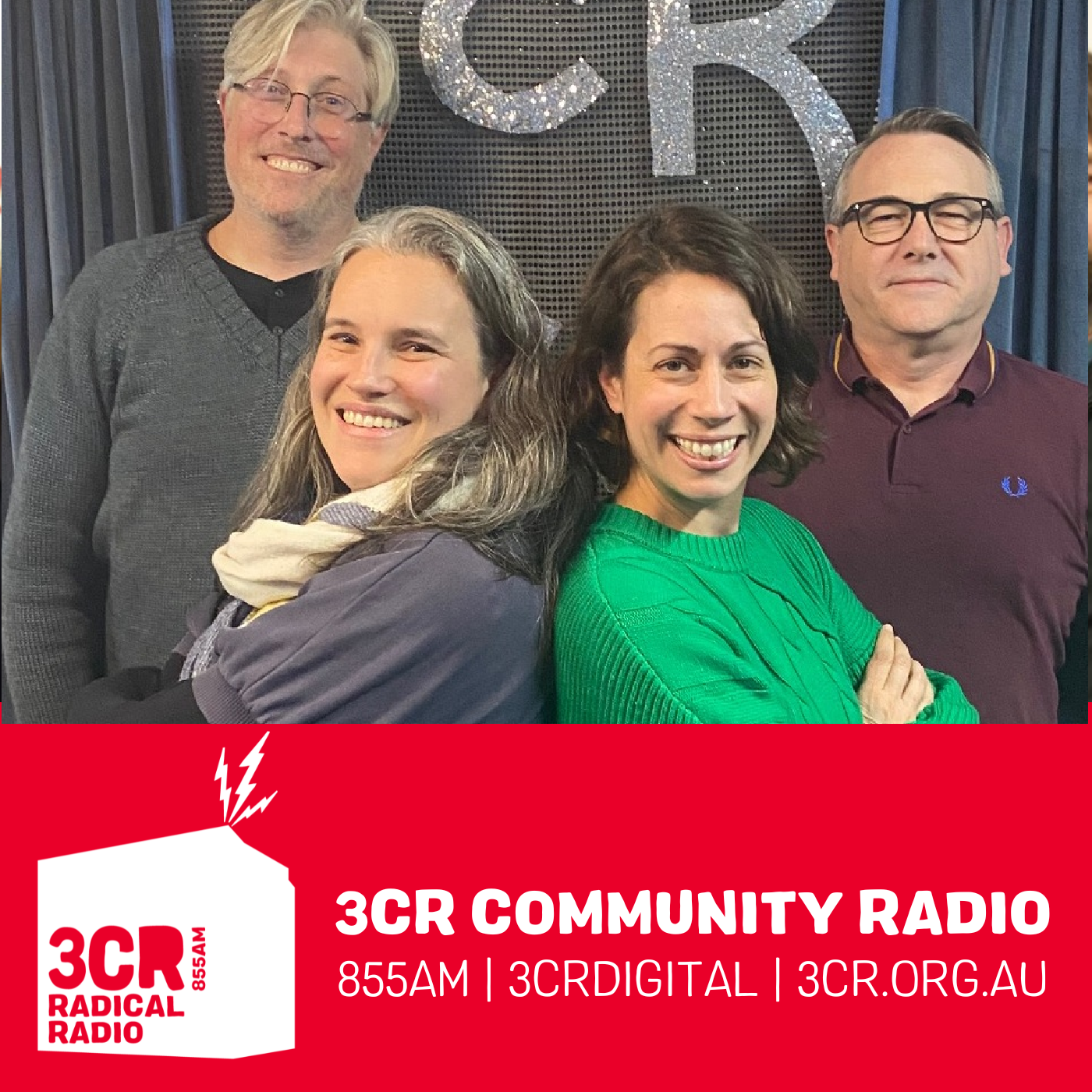
by Chris Lassig, Stuart Burns, Claire Farrugia and Linden Ashcroft.
Lost in Science is your weekly hit of mind-blowing science, strange facts, and big ideas. From cutting-edge discoveries to the science behind everyday life, our curious and passionate hosts make it fun, fast, and fascinating. If it’s weird, wonderful, or just worth knowing - we’re on it.
Episodes
-
Nobel Prizes 2026 - neutrinos, optogenetics, and left-right molecules
Stu, Linden and Chris break down this years science Nobel Prizes: the Physics Prize for the IceCube neutrino observatory; the Physiology & Medicine Prize for controlling nerve cells with light via optogenetics; and the Chemistry Prize for figuring out how biological molecules are only right- or...
-
Unimelb SciComm takeover 2026
This week we welcome three students from the University of Melbourne's Science Communication program. Meredith, Maeve and Annisa share the science stories they've gotten lost in recently: the power of periods, bioplastics loved by worms, and the impact of light exposure on our heart.
-
Bull? IT! (with butterfly wings)
The team discuss the use of AI technology in education, whether its use is making students less able to complete their studies, whether it's harder to assess that when they use it, whether the technology is making us less intelligent, and whether its output is any good. Linden also discusses with...
-
Dark matter discovery & elevated El Niño
This week, Chris digs into a curious signal in the hunt for dark matter that may be a sign of a new particle responsible for 85% of the matter of the universe; and Linden and Kate breeze through the current record-breaking El Niño event, and what it may or may not mean for global and local…
more -
Ig Nobels 2026
Chris, Stu and Linden discuss the winners of this year's Ig Nobel prizes, from simultaneously soiled underpants to milky cockroaches. This is the 36th year of the awards celebrating science that make you laugh, then make you think.
-
The Missing Middle and the 2026 Eureka prizes
Stu talks to Nicola Sockhill about her research into urban vegetation, and how only planting grass and trees might not be the best use of space as far as planting for people; and biodiversity and we discuss some of the stand-out winners of the 2026 Eureka prizes awarded earlier this month.
-
Fighting felines and Flipper fishing
This week, Chris talks to Dr Julia Henning from Adelaide University about how bad humans are at understanding cat behaviour, particularly knowing the difference between play-fighting and wanting to be left alone; and Naina talks to the team about a new observation of bottlenose dolphins in...
-
Historic Eclipses and Volcanoes
Lost in Science is made at the studios of 3CR in Melbourne who turn 50 this year. We uncovered archival material of the station covering an eclipse of the sun in 1976 from the Grampians in Victoria. Kate Bongiovanni tells us about some amazing volcano history, including some inventions that are…
more -
Black hole stars and cola cures
Was Soundgarden on the money when they predicted black hole suns? Can Coke fix an upset stomach? Join Stu, Chris and Linden to find out on this week's episode of Lost in Science.
-
Scientific adventures
This week Linden interviews two guests who have undertaken grand adventures in the name of research. Science communicator and trainer Emma Donnelly followed her fascination with the science of champagne all the way to France, while climate scientist and communicator Kate Bongiovanni undertook an...
-
Covid booster research with Claire Von Mollendorf
Stu catches up with research scientist Associate Professor Claire von Mollendorf from the Murdoch Children's Research Centre to find out about ongoing research into the effectiveness and protection offered by COVID-19 vaccination programs in Australia and in less developed nations.
-
Interstellar isotopes and new testing for embryos
Chris discusses the latest insights from 3I-Atlas, the interstellar comet that has been careening through our solar system. Linden chats to Dr Kathryn Gurner, a clinical research embryologist from Melbourne IVF, about a recent pilot study exploring a non-invasive way to check for abnormalities in...
-
Screen stories and space sugar
Linden explores the science behind reading on a screen vs reading on paper, while Stu discusses "organic" chemicals found in space, including a recent discovery of a type of sugar. Screens and sugar: this week's episode is a toddler's dream!
-
Fungi for Land: The kingdom of fungi
Stu talks to Dr. Sapphire McMullan-Fisher from the University of New England school of environmental and rural science about the weird world of Australian fungi which is also the topic of a book called Fungi for Land which she has co-authored with Roz Hart a fungi expert from Western Australia
-
Artificial cells and carbon capture
This week, Chris checks out the sensation of human-made SpudCells, which are not exactly alive but can do many of the things living cells can, as announced recently in press releases rather than peer review; and Stu checks in on carbon capture and storage for removing greenhouse gases from the...
-
Pickle juice & Venus flytraps
This week, Stu investigates whether there’s any science behind the use of pickle juice for muscle cramps, as observed in use in the World Cup; while Chris reveals some recent research by physicists on how Venus flytraps are able to snap shut so quickly.
-
Lost in Science 1.0
Another step back in time to an earlier iteration of the show where former hosts present a range of stories on biodiversity and strange animal discoveries.
-
Science of Quicksand & Attractive Mozzie Repellent
This week on Lost in Science, Chris gets stuck into the science of quicksand, exploring how this famous movie menace is actually a fascinating non-Newtonian fluid. Meanwhile, Claire investigates surprising new research into DEET, the world's most popular insect repellent, revealing that…
more -
Step Back in Time
In honour of our home stations 3CR's 50th anniversary we are delving deep into the archives for a show full of former presenter's stories
-
The making of a museum with Ben Francischelli
Linden chats to Ben Francischelli about the birth and life of Prehistoric Bayside, a museum in Melbourne's southeast dedicated to marine fossils found in the area. In this extended chat, Ben explores how his career has led to building his own museum collection, what that involves, and the...
-
Type1Screen with Dr. John Wentworth
Stu catches up with Dr. John Wentworth from the Royal Melbourne Hospital to talk about Type1Screen, a nationwide project aiming to identify people at risk of developing Type 1 diabetes in order to develop treatments to prevent progression of the illness. See https://type1screen.org/ for more details
-
Time, Species and David Attenborough
This week on Lost in Science, Stu explores new research into how animals perceive time differently — and how that perception is tied to the pace of their lives. Why does a fly seem to react in slow motion compared to us, and what does that reveal about survival, metabolism and evolution?Also on…
more -
Pointy things and leaches
Chris follows the trail of research trying to answer the question of why sharp things in nature like teeth and stingers all have a similar shape, and whether it’s due to evolution or physics; and Linden latches onto leaches, how they’re still used in medicine but are also inspiring robots and...
-
Happy Dog Science Project with Dr Mia Cobb
Linden chats to Dr Mia Cobb, Chaser Innovation and John McKenzie Research Fellow at The University of Melbourne. Mia shares her career journey that led her to be a canine welfare researcher. Dogs do so much for us, but how can we use science to make sure we are giving them their best lives?
-
Chimpan A to Chimpan Zee and all natural nukes
While people talk about the weather in speculative terms, it's interesting to note that chimps may do the same, but they also share some darker human traits we may not be so proud of. And Stu finds that (of course) not everything natural is safe or good, exploring the natural (but extinct)…
more -
Imperfect AI physicians, and perfect pasta physics
This week, Stu looks into the accuracy of AI as a medical search tool, and finds that published studies give mixed results; and Chris expands on last year's Ig Nobel Prizes to find out more about the physics of a perfect pasta sauce, and the role of emulsifiers.
-
Australia's Artemis Assistance & Citizen Science Month
Claire and Linden talk all things Artemis II this week, with a special focus on how Australia is contributing to the program. We congratulate amateur astronomers from southeastern Queensland for their recent award, and explore how you can take part in international Citizen Science Month. To find…
more -
Baby brain rewiring & cabbage kitchen chemistry
This week on Lost in Science, Claire dives into something very close to home — pregnancy — unpacking fascinating new research showing how both first and second pregnancies can reshape the brain for the long term, and what those changes might actually mean for how we think, feel and parent.Plus,...
-
Dino Sails in the Sunset and Oils ain't Oils
This week we go from fossils to fossil fuels, as Chris looks into the misclassification of the Dimetrodon and wonders why they didn't get bigger via giant spiders, and Stu drills down into the realities of Australia's oil reserves, and why our supply isn't what some people think it is.
-
CO2 in blood and artificial dinosaur eggs
This week, Chris checks out a study showing carbon dioxide levels in human blood rising with greenhouse gas emissions, and contemplates the health effects; and Linden unearths a Taiwanese study that crafted artificial dinosaur eggs to determine whether the oviraptor Heyuannia sat on their nest to...
-
Sharks, Parasites & Oldest Known Rock Art
This week on Lost in Science, Claire chats with veterinary parasitologist Professor Shokoofeh Shamsi about the recent spate of shark encounters and why we still don’t fully understand animal behaviour in these moments. From parasites to changing ocean environments, it turns out there’s a whole...
-
Post Punk Physics and Toxic Tick Bites
Stu looks into the scientific origin of a famous album cover and how it reveals the legacy of a pioneering female astrophysicist, and Chris looks into the strange story of a tiny insect bite that can lead to anaphylaxis of a carnivorous kind.
-
International Women's Day 2026
For our International Women's Day Special, Linden and Claire talk statistics around how to Balance the Scales for women in STEM in Australia. We also hear from women in STEM from across Australia about what International Women's Day means to them.
-
Reef atmosphere & parasite infections
This week, Linden talks to atmospheric chemist Rob Ryan about the effect on coral of changes in the air over the Great Barrier Reef; and Stu updates us on some recent findings on parasites, including a self-experiment from a researcher’s encounter with a sand flea (Tunga penetrans).
-
Echidna egg evolution & AI changing suspicious minds
This week on Lost in Science, Claire dives headfirst into the evolutionary echidna-and-egg conundrum: which came first — the placental mammal or the mammalian egg of our humble monotreme cousins? Then Stu explores fascinating new research into how artificial intelligence might help bring people...
-
The science of auroras, and the winter Olympics
How can skiiers and ice skaters go so fast? It turns out, we're still not sure! And what ingredients are needed to see the northern or southern lights? Find out with Chris and Linden on this week's episode of Lost in Science. Additional show notes:To receive alerts from the Bureau of…
more -
Tracking the Buruli ulcer in Victoria
Welcome back the team for a new year, and Stu talks to Professor Tim Stinear from the Doherty institute and Director of the WHO collaborative centre on Buruli ulcer about a project tracking the prevalence of the ulcer using environmental surveillance to assess presence and provenance of the...
-
Summer series: ADHD & water fluoridation
Continuing our January tradition of playing highlights from the past year, Chris responds to media reports of possible over-diagnosis and over-medication of ADHD by looking at the data and current research and best practice; meanwhile Claire gets her teeth into a new, large longitudinal study…
more -
Summer series 3: Euan Ritchie, Clancy Lester and Australian conservation
This week Linden revisits two conversations from 2025 with champions of conservation: Professor Euan Ritchie from Deakin University and Clancy "The Bee Man" Lester. Euan and Linden discuss the 'de-extinction' of the dire wolf that was reported back in April 2025, and Clancy recounts his…
more -
Summer Series: Ted Vanderfeen and the robots in space
Our summer series continues this week with an interview with Ted Vanderfeen, a scientist who works on space faring robotics to help explore strange new worlds.
-
Summer Series: Young Australian of the Year 2025
While we take a break we are revisiting some of our favourite stories and interviews in our summer series. This week we revisit the interview with Young Australian of the Year Dr Katrina Wruck, a groundbreaking green chemist working to break down harmful "forever chemicals." As the first Torres...
-
2025 in memoriam & quiz
Is it 2026 already? We farewell the year just gone, by remembering famous scientists who died in 2025, plus Chris tests our memory with his annual quiz of unforgettable science stories.
-
Lost in Christmas 2025
In this Christmas episode (our last for 2025!) the team looks at some Christmas adjacent science. Chris brings us up to date with the latest on our interstellar visitor 3I Atlas (spoiler, it's not aliens), Claire turns up the heat on the real reason Christmas cookies taste so good (hint: it's...
-
Tammy Lee, FameLab International winner
This week Linden interviews Tammy Lee, PhD student at UWA in Perth who was crowned the winner of FameLab International in Switzerland in November. This means Australia is officially home to the world's best science communicator! Tammy talks through her research, as well as the process of taking...
-
Flashback - Santa’s Maths and Christmas trees
This week on Lost in Science, in the lead-up to Christmas — and before our official festive special — we’re diving into the archives to revisit two of our all-time favourite holiday stories. Cat crunches the numbers on Santa’s impossibly busy Christmas Eve, using maths and physics to reveal just...
-
Algal blooms and funding blues
Linden and Chris talk about the funding cuts to Australian science, and Claire chats with A/Prof Jochen Kaempf from Flinders University about the algal bloom that continues off the South Australian coast.
-
Moss in space & fluoride in water
This week, Stu lets us into the secret world of moss, how they're different to other plants, and how they're so hardy they can even survive on the outside of spacecraft; and Claire gets her teeth into a new, large longitudinal study that showed water fluoridation did not harm cognition or IQ....
-
PM Science Prizes and Dr. Grace on earthquakes
Chris and Linden talk through the Prime Minister's Science prize, awarded in early November, and Linden chats with Dr. Grace Sethanant, and earthquake expert, about her work on Australia's weird earthquakes.
-
CRISPR Cures and Physics of Packing
This week on Lost in Science Stu checks in on the cutting edge of CRISPR — the revolutionary gene-editing technology promising to change how we treat diseases. Is it living up to the hype? And as we head into the holiday season, Chris is getting practical with physics, applying maths and motion…
more -
Lost in Science Fiction Flashback
Revisiting some past stories from episodes of Lost in Science Fiction, we look at the science contained in (and the science inspired by) Star Wars, 2001: a Space Odyssey, and Ad Astra
We're indexing this podcast's transcripts for the first time — this can take a minute or two. We'll show results as soon as they're ready.
No matches for "" in this podcast's transcripts.
TOPICS IN THIS SHOW
Loading reviews...
ABOUT THIS SHOW
Lost in Science is your weekly hit of mind-blowing science, strange facts, and big ideas. From cutting-edge discoveries to the science behind everyday life, our curious and passionate hosts make it fun, fast, and fascinating. If it’s weird, wonderful, or just worth knowing - we’re on it.
HOSTED BY
Chris Lassig, Stuart Burns, Claire Farrugia and Linden Ashcroft.
Loading similar podcasts...
Frequently Asked Questions
How many episodes does Lost in Science have?
Lost in Science currently has 597 episodes available on PodParley. New episodes are automatically indexed when they're published to the podcast feed.
What is Lost in Science about?
Lost in Science is your weekly hit of mind-blowing science, strange facts, and big ideas. From cutting-edge discoveries to the science behind everyday life, our curious and passionate hosts make it fun, fast, and fascinating. If it’s weird, wonderful, or just worth knowing - we’re on it.
How often does Lost in Science release new episodes?
Lost in Science releases new episodes frequently with a large back catalog of 597 episodes. Check the episode list for recent publication dates.
Where can I listen to Lost in Science?
You can listen to Lost in Science on PodParley by clicking any episode. We provide an embedded audio player for direct listening, and you can also subscribe via your preferred podcast app using the RSS feed.
Who hosts Lost in Science?
Lost in Science is created and hosted by Chris Lassig, Stuart Burns, Claire Farrugia and Linden Ashcroft..
URL copied to clipboard!