
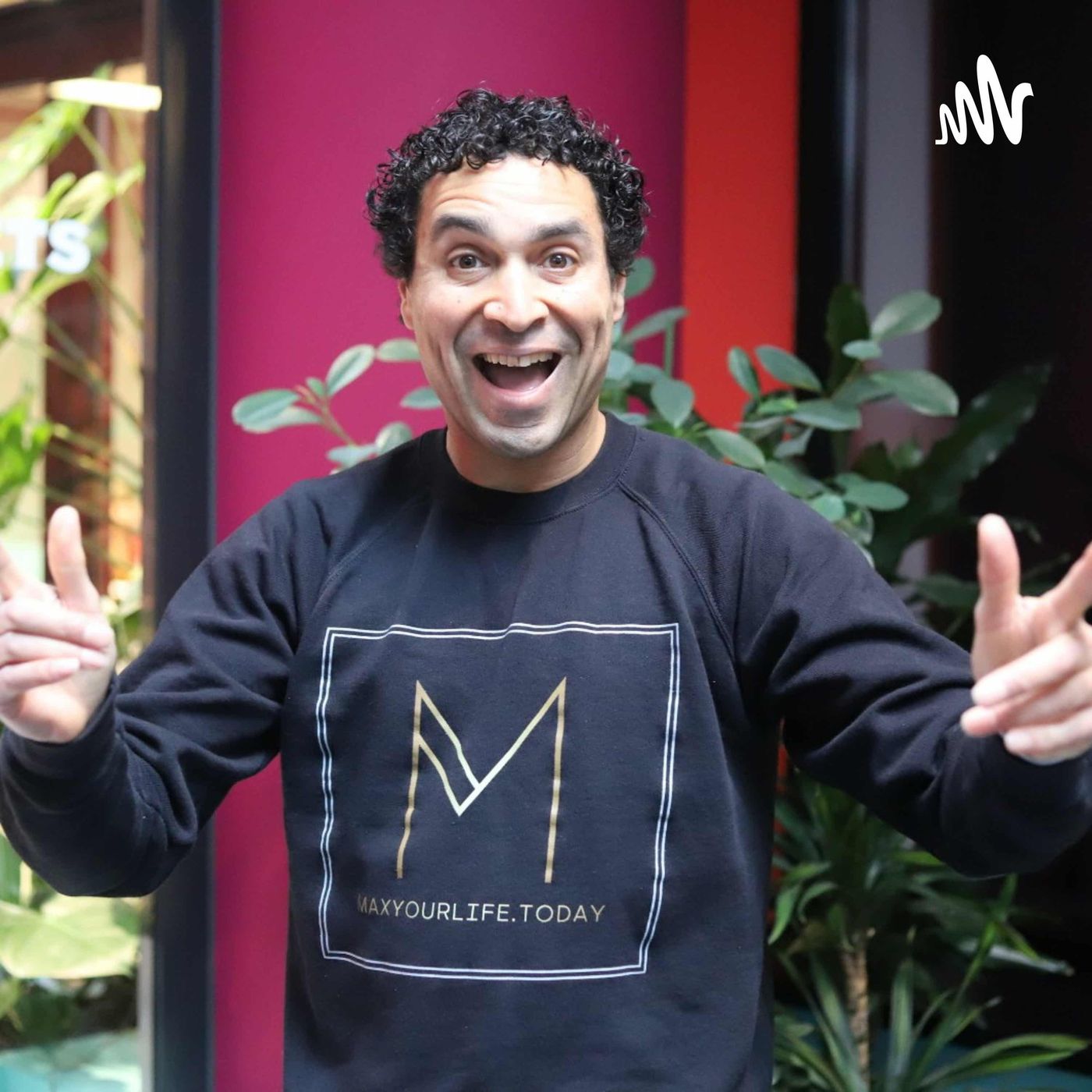
PODCAST · education
Maxyourlife.today
by Shorombo Mooij
Dagelijks praktische tips, inspirerende interviews, life hacks en nog veel meer om jou te helpen het maximale uit jezelf te halen. Maxyourlife.today, niet gisteren, niet morgen, vandaag. maxyourlifetoday.substack.com
-
109
No Motivation, But You Still Need to Perform. Now What?
Thank you to everyone who tuned into my live video! Join me for my next live video in the app. To hear more, visit maxyourlifetoday.substack.com
-
108
The Perfect Morning Routine Doesn’t Exist
The habit that energises you one morning may create more stress the next.Running, meditation, extra sleep and cold exposure can all have a place in a morning routine. But their effect depends on your current state, natural rhythm, responsibilities and season of life.Shorombo Mooij explores this with Anna Steinzeig, who has a background in neuroscience and works as a speaker and consultant in workplace performance and wellbeing.They discuss:👉 how to recognise your natural chronotype without relying on genetic testing;👉 why designing your morning often begins with your evening;👉 what family life, travel and changing daylight do to your routine;👉 when exercise or cold exposure may add activation you do not need;👉 how to distinguish ordinary habit resistance from a signal that your body needs something different;👉 why flexible categories work better than rigid rituals;👉 how a morning routine can support performance without turning your life into a performance project.The deeper question is not whether you have the “right” routine.It is whether your routine supports the person you are and the life you are living now.Chapters00:00 — High performance as a human being01:22 — Are you really a morning person?04:26 — How to recognise your natural chronotype07:34 — Why your morning starts the evening before09:35 — When real life conflicts with your ideal rhythm13:21 — How rigid schedules create more stress18:39 — Parenting, personal time and imperfect routines23:37 — Daylight, seasons and the internal clock28:02 — What do you need this particular morning?31:10 — When running or cold exposure may be too much33:15 — Your routine should change with your season39:21 — Why humans are not high-output computers47:38 — Flexible frameworks instead of fixed rituals54:38 — Sending your brain the signal that you are safe58:48 — Why your morning should also be enjoyable01:00:48 — Performance should support a good lifeLinksMore about meWebsite: https://www.shorombomooij.com/LinkedIn: https://www.linkedin.com/in/shorombo/Substack: https://maxyourlifetoday.substack.com/More about AnnaLinkedIn: https://www.linkedin.com/in/asteinzeig/ To hear more, visit maxyourlifetoday.substack.com
-
107
The Real AI Upgrade Does Not Begin With Technology — It Begins With the Human
How to Use AI Without Losing Yourself — With Meagan KlaijCan AI help us become better humans—or could it slowly weaken our creativity, critical thinking, and independence?In this episode, high-performance coach Shorombo Mooij speaks with Meagan Klaij, Agentic AI Solutions Architect at Microsoft, about using artificial intelligence intentionally, responsibly, and in a way that genuinely improves your life.About this seriesShorombo Mooij is a high-performance coach who helps ambitious people design their lives in a way that allows them to reach their full potential while creating a life that genuinely fulfills them.His mission is to help people take greater ownership of their time, focus, energy, personal growth, and overall quality of life. At the heart of his work is one central question:How do you get the best out of yourself and your life?In How to Thrive in Life in the Age of AI, Shorombo explores how artificial intelligence is changing the way we think, work, create, learn, and live.Through conversations with experts, builders, thinkers, and intentional individuals, the podcast investigates how we can use AI to enhance our lives without losing the things that truly matter—our creativity, critical thinking, relationships, well-being, autonomy, and humanity.What You’ll LearnDuring this episode we explore the human side of AI: personal growth, mental health, growth mindset, privacy, creativity, behavioral change, and the importance of taking responsibility for your own development.You will also learn why the most important AI transformation does not begin with better technology. It begins with the person using it.How AI can support self-reflection, journaling, and personal growthWhy personalized AI can become an echo chamberHow better questions lead to more valuable AI answersWhy a growth mindset is essential when learning AIHow the ADKAR framework supports lasting behavioral changeWhy intentional AI use matters more than maximum productivityHow AI can strengthen creativity while also weakening human skillsWhy privacy, AI literacy, and critical thinking are becoming essentialHow to take responsibility for your own AI educationEpisode SummaryMeagan works at the intersection of artificial intelligence, human behavior, and change management. Although her role at Microsoft is technical, her main interest is helping people understand, adopt, and use AI responsibly.She explains how AI can help people reflect on their habits, identity, thoughts, and mental well-being. However, Shorombo points out that an AI assistant can also become an echo chamber that simply confirms what you already believe.This leads to a deeper conversation about questioning. Prompting is not only a technical skill—it is a thinking skill. The quality of the answers you receive depends heavily on the clarity, context, and depth of the questions you ask.Meagan also explains the difference between a fixed mindset and a growth mindset. Because AI is developing too quickly for anyone to master completely, the goal is not to know every tool. The goal is to remain curious, experiment, and learn through repetition.Using the ADKAR change-management framework, they explore the five stages of successful change:Awareness — understanding why change is necessaryDesire — identifying what the change offers you personallyKnowledge — learning what you need to knowAbility — applying that knowledge in practiceReinforcement — making the new behavior stickThe conversation also becomes personal. Meagan discusses imposter syndrome, technical learning challenges, and privacy concerns when using consumer AI tools.Shorombo shares how AI helped him turn ideas into polished articles—but also reduced his patience for writing when he introduced it too early in the creative process.The lesson: do not only ask whether you should use AI. Ask where, when, and why you want to use it.Timestamps00:00 Introduction: Thriving in the age of AI01:52 Meagan’s role at Microsoft and the human side of AI05:48 Responsible AI and the skills humans need07:48 Will AI make people less intelligent?11:37 Using AI for mental health and self-reflection16:09 The danger of AI echo chambers18:30 Why better questions create better answers19:43 Why everyone needs AI literacy24:25 Moving from a business background into AI26:42 Fixed mindset versus growth mindset29:58 Why you do not need to master AI35:44 Active and passive resistance to change36:01 The ADKAR framework explained42:32 Imposter syndrome and personal AI challenges44:37 Privacy and consumer AI tools46:30 Deepfakes and AI-generated misinformation47:43 Awareness and intentional AI use49:42 How AI can weaken the creative process54:12 Responsible AI and technical safeguards55:39 Why we need to upgrade the human using AI58:40 Can governments keep pace with AI?01:04:02 Taking responsibility for your AI education01:07:47 Final thoughtsAbout Meagan KlaijMeagan Klaij is an Agentic AI Solutions Architect at Microsoft. Her background includes international business, languages, sales, change management, and AI transformation.Her work focuses on helping organizations and individuals understand, adopt, and use AI in a responsible and human-centered way.Resources MentionedAtomic Habits by James ClearA book about behavioral change, identity-based habits, and the power of small, consistent improvements.Mindset by Carol DweckAn exploration of fixed and growth mindsets and how our beliefs about ability affect learning and development.RosebudAn AI-supported journaling and reflection application discussed during the episode.ADKAR by ProsciA change-management framework based on Awareness, Desire, Knowledge, Ability, and Reinforcement.Connect With the GuestsShorombo Mooijhttps://www.shorombomooij.comMeagan Klaijhttps://www.linkedin.com/in/meaganklaijContinue the ConversationWhich human skill do you want to preserve as AI becomes more capable?Listen to the full conversation, follow the show for future episodes, and share this episode with someone who wants to use AI without losing the things that make life meaningful.Apply to be a guest:https://www.maxyourlife.today/invite-ai-to-thrive-live-interview To hear more, visit maxyourlifetoday.substack.com
-
106
“I didn’t want to become a different person”
As he prepared to build another company, Joey Hayes realised that ambition alone would not be enough. The harder question was whether he could become more focused and disciplined without losing the social, energetic life that made him who he was.For a long time, Joey Hayes believed he should be able to figure it out himself.He had built a career, developed a strong network and was preparing to start another company. He is the kind of person people naturally gravitate towards: social, energetic and good at creating real relationships. One of his former managers at Booking.com used to tell him that he could be tougher in difficult negotiations than she could, simply because people liked him.But there was another side to that energy.“My mind was always moving,” Hayes says. “There were always a million things and a million ideas bouncing around.”At the end of the year, with a new entrepreneurial chapter ahead of him, he reached a point where the old approach no longer felt sustainable. “I wanted to take more control of myself, my habits, my actions,” he says. “I thought I could do it on my own. But then I realised I always think that way.”The question became unavoidable: was he going to make a genuine shift, or keep repeating the same pattern with more pressure attached to it?“I was about to start another company,” he says. “I didn’t want it to go like the last one did. I knew I had to change something to be successful, but I wasn’t really sure what.”The fear behind disciplineFor many ambitious people, the resistance to structure is not laziness. It is identity.Hayes did not simply worry about whether coaching would work. He worried about what it might turn him into. Would more structure mean becoming rigid, overly serious, less spontaneous? Would getting his life together cost him the parts of himself he actually enjoyed?“I had this weird fear that my personality would change,” he says. “Not necessarily that I would become a worse person. Just different.”It is a familiar tension among founders, high performers and people with highly active minds. They want more focus, better health and greater consistency. But they do not want to trade their freedom, creativity or social life for a perfectly optimised existence.“I didn’t think I could continue to enjoy my life and get my s**t together at the same time,” Hayes says. “I’m still figuring it out. But where I stand now, I realise I can have a really active social life, have a lot of fun and still be a high operator.”That realisation changed the premise entirely.The goal was not to become a different Joey. It was to create conditions in which the best parts of Joey—his energy, relationships and ambition—could work together rather than compete.Small changes, real consequencesThe changes themselves were not dramatic. No extreme morning regime. No life built around deprivation.Instead, Hayes started with practical shifts: planning the next day before going to sleep, identifying one real priority, writing down ideas instead of acting on them immediately and paying more attention to how his body and energy affected his decisions.“Planning the day before was something I never did,” he says. “I used to wake up and think, ‘Ah, what am I doing today?’ Just waking up and understanding what my day was going to look like made a difference.”He also had to reassess the belief that doing many things at once was a strength.“I thought it was a superpower to do a million things at once,” he says. “And I still do a lot. But now I’m able to prioritise what is important right now, instead of getting super distracted by things that don’t have value in the moment.”There were physical changes too. Hayes reduced his coffee intake from six to eight cups a day to two. He adjusted his exercise habits and began treating sleep, movement and recovery as useful information rather than inconvenient interruptions.“Now I sleep like a normal person,” he laughs.The point was not to follow a universal routine. It was to become more aware of what worked for him: when to push, when to walk, when to train and when to slow down.More than productivityIt would be easy to frame Hayes’s story as one of improved productivity. That would also miss the point.“The company has gone really well,” he says. “But my physical health has also gotten significantly better. I have much more space to think. I’m much better at prioritising things. I make more time for important relationships in my life.”He has also found a more workable rhythm between his full-time role and the startup he is building.Those outcomes are connected. Greater focus is not merely about getting more done; it reduces the background noise of an overloaded life. When every idea, task and opportunity demands immediate attention, even a productive person can live in a constant state of internal agitation.The work, Hayes says, helped make his life more intentional without making it smaller.“I expected it to be more regimented—super strict,” he says. “But it was really at my own pace, while still holding myself accountable and being held accountable.”That distinction matters. There is a difference between borrowing someone else’s discipline and building a way of operating you can actually sustain. The former may produce a short burst of change. The latter gradually becomes part of how you make decisions.Building without losing yourselfHayes’s story is not a before-and-after fantasy. He is explicit that he is still figuring things out. But his baseline has changed.The person who once assumed he had to carry everything alone now sees support as part of serious personal and professional development. The person who feared that discipline would erase his identity has discovered that the right structure can protect it.“I think it takes the support of a professional to really make that change,” he says. “Especially if you’ve already been having that conversation with yourself.”For people entering a bigger chapter—starting a company, changing careers, building a team or simply recognising that their current way of living cannot carry their ambitions indefinitely—that may be the more useful question.Not: How do I force myself to become more productive?But: What needs to change in the design of my life for my ambition, health, relationships and attention to stop fighting each other?Hayes has found his own answer in a life that is more structured but not narrower; more focused but not less alive.And perhaps that is the real promise of sustainable high performance: not becoming someone else, but becoming more capable of being yourself—consistently.Are you at this crossroad too?If you recognize this tension in your own life or business and would love to have a chat about how I can help you, you can schedule a free strategy call here. Just answer a few questions and see if you are eligible.Schedule your strategy call here. To hear more, visit maxyourlifetoday.substack.com
-
105
You Are Not Just Training AI. AI Is Training You
In this conversation, Shorombo Mooij and neuroscientist Anna Steinzeig explore how AI is changing not only how we work, but also how we think, focus, create and connect.Their central conclusion is simple:AI is an instrument, but repeated use of that instrument also trains the person using it.Used intentionally, AI can strengthen creativity, accelerate learning and help people bring ideas into the world. Used carelessly, it can weaken independent thinking, shorten attention spans, reinforce biases, overstimulate the nervous system and replace real human interaction.The goal is therefore not to avoid AI, but to remain conscious of what we outsource, what we continue practising ourselves and what kind of person our AI habits are shaping us into.A conversation about AI, performance and what it means to stay humanShorombo opened the conversation by explaining the idea behind his new video series, How to Thrive in the Age of AI.The intention is not simply to talk about tools, productivity or automation. It is to explore how people can use AI to improve their lives without losing sight of the things that make life meaningful.He described himself as optimistic about the opportunities of the current age. AI is creating possibilities that would have been almost unimaginable only a few years ago.At the same time, he sees an enormous personal risk.If people use these tools without awareness, AI may not only change their work. It may change their relationship with attention, creativity, effort, human connection and even themselves.That was why he invited Anna Steinzeig, a human neuroscientist specialising in human performance, to join him.Anna added that her work is not limited to neuroscience. She also draws from psychology and system psychodynamics.Her mission, she explained, is to bridge the gap between what science knows and what ordinary people can actually apply in their daily lives.She also wanted to clarify what she means by performance.For Anna, performance is not about achieving at any cost. It should go hand in hand with happiness and satisfaction.She described it as a kind of performance that you do not constantly need to recover from.Shorombo immediately recognised this as close to his own philosophy of aligned performance.High performance, he said, should not be about appearing successful to the outside world or becoming productive for the sake of productivity.The real game is life.For ambitious people, creating and building may be an important part of happiness. But when performance leads to burnout, the point has been missed.From there, the conversation moved to the central question:What is AI doing to us?The problem did not begin with AIAnna first widened the frame.She argued that AI cannot be understood separately from the broader technological and informational environment in which people already live.The problem began before generative AI.We were already living in an age of information abundance and attention scarcity.Anna recalled that when she was young, her parents sometimes struggled to find a book they wanted to read. Books were shared among friends, and people waited their turn.Today, the situation is almost reversed.There is more information available than anyone could consume in a lifetime.Books, articles, videos, podcasts and social media compete continuously for attention.AI multiplies this abundance because people no longer even need to search in the way they once did.Instead of going to a library, comparing sources or browsing the internet, they can simply ask a question and receive an immediate answer.According to Anna, that ease changes the problem from access to agency.The question is no longer:“Can I find the information?”It is:“Who decides what receives my attention?”She described modern life as part of an attention economy in which companies compete to capture, hold and monetise human focus.AI adds another layer because it is increasingly present throughout the working day.For many founders, creators and professionals, it is not merely entertainment.It is becoming part of how they think and work.Attention directs neuroplasticityThe conversation then moved into neuroplasticity.Anna explained that neuroplasticity is the brain’s ability to adapt, learn and change.Children absorb a great deal almost automatically. Adult brains are more established, which means change generally requires greater direction.For adults, Anna said, two elements are especially important:attention and intention.Attention tells the brain what matters.Intention helps determine the desired direction of development.Shorombo summarised this as the need to be intentional with what we repeatedly focus on.Anna agreed, but added an important warning:Plasticity happens whether we direct it or not.Change is not automatically positive.People are continuously reinforcing some pathways while allowing others to weaken.The question is therefore not whether the brain is changing.The question is:Who is sitting behind the steering wheel?This became one of the most important themes of the interview.Every repeated interaction with AI becomes a form of training.When someone uses AI to enhance a capability, it may support growth.When someone uses it to replace a capability, that capability may gradually weaken.The difference between enhancing and outsourcingShorombo then raised the distinction between shaping professional capabilities and outsourcing them.Becoming a better writer with the help of AI is not necessarily a problem.But relying on AI to do all the writing may be.The same applies to research, analysis, communication and idea generation.If people outsource the cognitive processes involved in these activities, they may also stop training critical human abilities.Shorombo connected this to his own experience.As someone with a highly active, ADHD-like brain, he naturally generates many ideas.When he first began using ChatGPT, the experience felt almost addictive.Before AI, an idea might remain in his mind for a while. He could let it develop, return to it later and eventually write about it.After AI became available, every idea could be expanded immediately.He could develop a concept at any time and in almost any place.At first, this felt extraordinary.He described it as a honeymoon phase.At one point, he found himself choosing between going out for drinks with someone and continuing to talk with ChatGPT.The choice felt easy.AI was always available and endlessly willing to explore whatever topic interested him.It could follow him down intellectual rabbit holes without becoming distracted or bored.But eventually, he noticed that the experience was changing him.When every idea becomes urgentShorombo began to feel anxious.An idea no longer felt like something that could simply exist.Every idea created an urge to do something with it immediately.His nervous system seemed to be learning a new command:Now. Explore it now. Develop it now. Turn it into something now.Instead of allowing ideas to mature, he felt compelled to process them instantly.That was when he realised he was training his brain to become more dependent on stimulation and immediate action.Anna responded that this pattern resembles the underlying structure of addiction.The mechanisms may differ in intensity, but repeated behaviour combined with reward creates stronger habits.AI is especially compelling because it communicates in a human-like way.It listens, responds and frequently affirms.It may tell the user that an idea is brilliant or insightful.For someone who lacks intellectually engaging conversations in everyday life, this can be extremely attractive.Shorombo explained that superficial social interaction had never interested him much.Casual Friday drinks and conversations “about nothing” were difficult for him.AI offered the opposite.It could provide continuous intellectual stimulation, reflection and novelty.For his brain, that was far more rewarding than scrolling through social media.Why AI can become so compellingAnna connected this to loneliness.People are increasingly isolated, while AI offers something that resembles constant companionship.It is always ready to listen to fears, ambitions and ideas.It does not reject the user, become impatient or require emotional reciprocity.That can make it unusually easy to prefer the digital interaction over the human one.The reward system also plays a role.AI can provide answers, stimulation and progress immediately.A question produces an answer.An idea produces ten new ideas.A concept becomes a plan, video or article.This creates very short reward loops.Later in the conversation, Anna explained that dopamine is important not only for immediate pleasure but also for sustaining action toward future rewards.When people continuously train themselves to expect reward now, activities that require patience and long-term effort can become harder.Building a business, mastering a craft, developing a relationship or writing something meaningful still requires uncertainty, repetition and delayed gratification.AI can accelerate parts of the process.But it cannot make depth instant.The quiet dystopian version of AIShorombo asked Anna to describe what might happen if someone used AI in exactly the wrong way.What would the personal dystopian version look like?Anna started with writing.When people fully outsource their writing, they may lose more than the ability to formulate sentences.They may lose an important instrument for thinking.Writing forces people to structure ideas, notice contradictions and clarify what they believe.Shorombo agreed strongly with this.Anna then moved to critical thinking.When AI provides an answer, the user should still ask:* Where did this information come from?* What is the source?* Is there evidence that contradicts it?* What assumptions are being made?* How certain is the conclusion?* What in
-
104
We're indexing this podcast's transcripts for the first time — this can take a minute or two. We'll show results as soon as they're ready.
No matches for "" in this podcast's transcripts.
No topics indexed yet for this podcast.
Loading reviews...
ABOUT THIS SHOW
Dagelijks praktische tips, inspirerende interviews, life hacks en nog veel meer om jou te helpen het maximale uit jezelf te halen. Maxyourlife.today, niet gisteren, niet morgen, vandaag. maxyourlifetoday.substack.com
HOSTED BY
Shorombo Mooij
CATEGORIES
Loading similar podcasts...
Frequently Asked Questions
How many episodes does Maxyourlife.today have?
Maxyourlife.today currently has 6 episodes available on PodParley. New episodes are automatically indexed when they're published to the podcast feed.
What is Maxyourlife.today about?
Dagelijks praktische tips, inspirerende interviews, life hacks en nog veel meer om jou te helpen het maximale uit jezelf te halen. Maxyourlife.today, niet gisteren, niet morgen, vandaag. maxyourlifetoday.substack.com
How often does Maxyourlife.today release new episodes?
Maxyourlife.today has 6 episodes. Check the episode list to see recent publication dates and frequency.
Where can I listen to Maxyourlife.today?
You can listen to Maxyourlife.today on PodParley by clicking any episode. We provide an embedded audio player for direct listening, and you can also subscribe via your preferred podcast app using the RSS feed.
Who hosts Maxyourlife.today?
Maxyourlife.today is created and hosted by Shorombo Mooij.
URL copied to clipboard!