
PODCAST · business
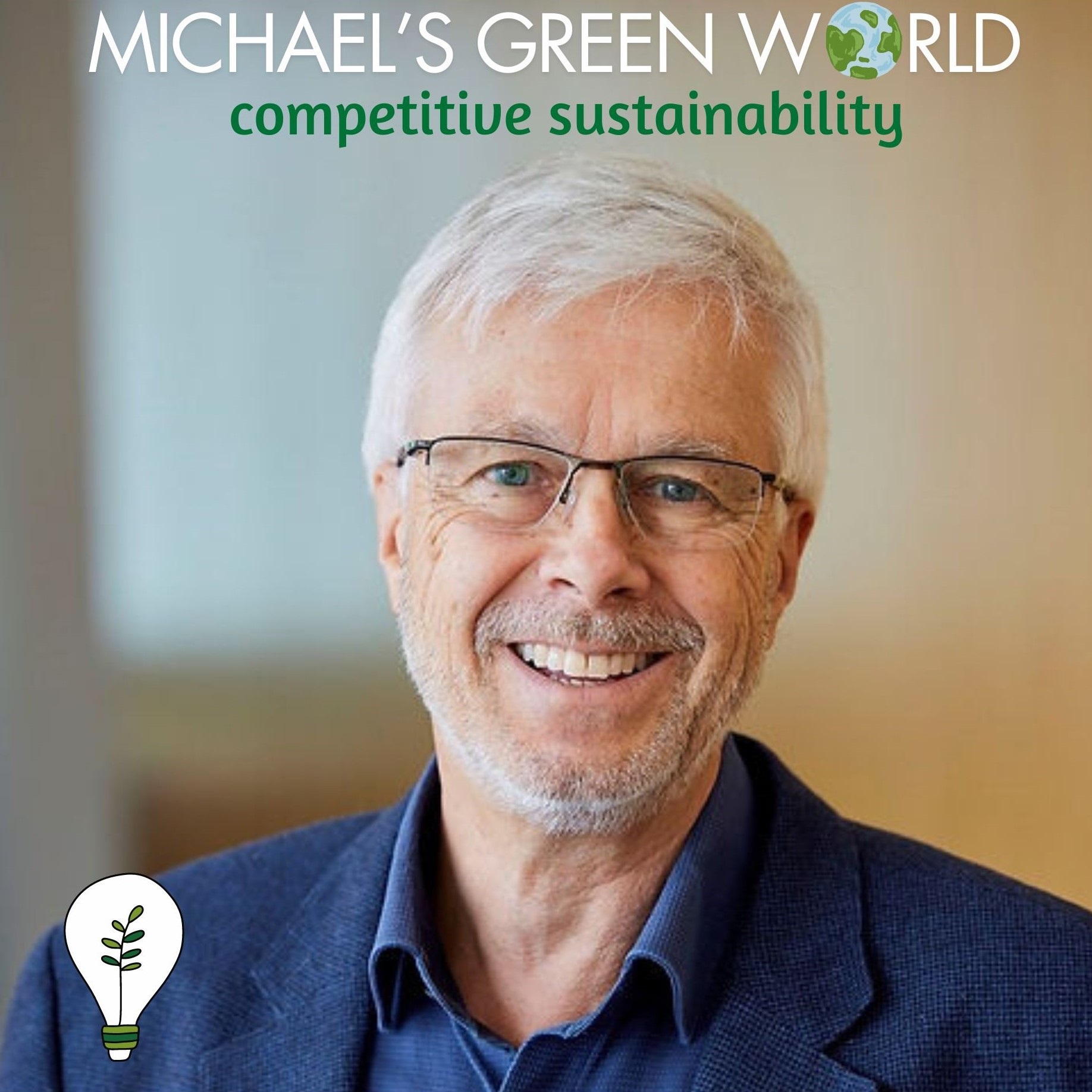
Michael's Green World
by Michael Wilhelm Herzog
Hi, I’m Michael.After years as an engineer and corporate manager, I founded my own consulting firm focused on sustainability solutions. Since retiring, I’ve been tackling puzzles that align seemingly conflicting interests and discovering win-win strategies with my clients. I also support a project dedicated to ocean ecology. My wife Karin and my son Alex were the first to suggest a podcast for me. As a natural optimist and father of two wonderful kids, I tend to resist gloomy predictions about our future. We probably live in the best world we ever had, with the promise of making a meaningful life accessible for a growing part of the world population, but it is imperative to keep this spirit alive. Therefore, I’ve created an antidote to scepticism: ‘Michael’s Green World.’
Episodes
-
#24P - The Ocean Race: Do Percurso de Regata a uma Força em Defesa do Oceano (dobragem com ElevenLabs)
A The Ocean Race começou como uma das aventuras mais exigentes da vela internacional. Hoje, é também uma plataforma global ao serviço de mudanças positivas para o oceano. Michael Herzog conversa com Lucy Hunt, Ocean Impact Director da The Ocean Race, sobre a forma como o desporto de alta…
more -
#24F – The Ocean Race : du parcours de régate à une force pour l’océan (doublage avec ElevenLabs)
The Ocean Race a commencé comme l’une des aventures les plus exigeantes de la voile internationale. Aujourd’hui, c’est aussi une plateforme mondiale au service d’un changement positif pour l’océan. Michael Herzog s’entretient avec Lucy Hunt, Ocean Impact Director de The Ocean Race, sur la manière...
-
#24B - The Ocean Race: Vom Regattakurs zur Kraft für den Ozean (Dubbing mit ElevenLabs)
The Ocean Race begann als eines der härtesten Abenteuer des internationalen Segelsports. Heute ist es zugleich eine globale Plattform für positive Veränderungen für den Ozean. Michael Herzog spricht mit Lucy Hunt, Ocean Impact Director bei The Ocean Race, darüber, wie Spitzensport Menschen mit...
-
#24A - The Ocean Race: From Racetrack to Force for the Ocean
The Ocean Race began as one of the toughest adventures in international sailing. Today, it is also a global platform for positive change for the ocean. Michael Herzog speaks with Lucy Hunt, Ocean Impact Director at The Ocean Race, about how elite sport can connect people with ocean science,...
-
#23ES – Buceadores cazan redes fantasma (AI dubbed via ElevenLabs)
En este episodio de Michael’s Green World, Michael Herzog conversa con Sabine Kerkau, buceadora técnica de pecios y presidenta de la Baltic Sea Nature & Heritage Protection Association e.V., sobre peligrosas operaciones de recuperación de redes fantasma en el mar Báltico. Hablamos de pecios, mala...
-
#23F – Des plongeurs traquent les filets fantômes (dubbed by Artificial Intelligence)
Dans cet épisode de Michael’s Green World, Michael Herzog s’entretient avec Sabine Kerkau, plongeuse technique spécialisée dans les épaves et présidente de la Baltic Sea Nature & Heritage Protection Association e.V., au sujet des dangereuses opérations de récupération de filets fantômes en mer...
-
#23P – Mergulhadores Caçam Redes Fantasma (dubbed via A.I. elevenlabs)
Neste episódio de Michael’s Green World, Michael Herzog conversa com Sabine Kerkau, mergulhadora técnica de naufrágios e presidente da Baltic Sea Nature & Heritage Protection Association e.V., sobre perigosas operações de recuperação de redes fantasma no Mar Báltico. Falamos sobre naufrágios…
more -
#23A - Divers Hunt Ghost Nets (dubbed via A.I. - elevenlabs)
In this episode of Michael’s Green World, Michael Herzog speaks with Sabine Kerkau, technical wreck diver and President of the Baltic Sea Nature & Heritage Protection Association e.V., about dangerous ghost-net recovery operations in the Baltic Sea. We talk about wrecks, poor visibility, cold...
-
#23B – Taucher jagen Geisternetze
In dieser Episode von Michael’s Green World spricht Michael Herzog mit Sabine Kerkau, technischer Wracktaucherin und Präsidentin der Baltic Sea Nature & Heritage Protection Association e.V., über gefährliche Geisternetz-Bergungen in der Ostsee. Es geht um Wracks, schlechte Sicht, Kälte, Tiefe,...
-
#22A Who Keeps the Power Grid Stable? (AI dubbed via elevenlabs)
How does a power grid stay stable when thousands of producers feed electricity into it at the same time? A conversation with Tobias Andrist, CEO of EBL. Recorded at EBL headquarters in Liestal.
-
#22B Wer hält das Stromnetz stabil?
Wie bleibt ein Stromnetz stabil, wenn tausende Produzenten gleichzeitig einspeisen? Ein Gespräch mit Tobias Andrist, CEO der EBL. Aufgenommen am Hauptsitz in Liestal.
-
#21B - Kein Green Premium – Wie Innovation Nachhaltigkeit marktfähig macht (Teil 2) {KI gedubbt}
{TEIL 2} Ein Gespräch mit den IMD-Professoren Fréderic Dalsace und Goutam Challagalla über „No Green Premium“ und den Wandel von Nachhaltigkeit als Right to Play hin zu Innovation als Right to Win. Mit realen Unternehmensbeispielen und Einblicken in ihr im Harvard Business Review vorgestelltes…
more -
#21A - No Green Premium – Sustainability Needs Innovation to Win Customers (Part 2)
{PART 2} A conversation with IMD professors Frédéric Dalsace and Goutam Challagalla on “no green premium” and the shift from sustainability compliance as a right to play toward innovation as a right to win. Real-world business cases and insights from their HBR-published book Clean Winners…
more -
#20B - Kein Green Premium – Wie Innovation Nachhaltigkeit marktfähig macht (Teil 1) {KI gedubbt}
Ein Gespräch mit den IMD-Professoren Frédéric Dalsace und Goutam Challagalla über „no green premium“ und den Wandel von Nachhaltigkeits-Compliance als 'right to play' hin zu Innovation als 'right to win'. Praxisnahe Business-Beispiele und Einblicke aus ihrem im Harvard Business Review...
-
#20A - No Green Premium – Sustainability Needs Innovation to Win Customers (Part 1)
A conversation with IMD professors Frédéric Dalsace and Goutam Challagalla on “no green premium” and the shift from sustainability compliance as a right to play toward innovation as a right to win. Real-world business cases and insights from their HBR-published book Clean Winners, launched in…
more -
#19A - A New Approach to Electrification – Removing Barriers, Engaging Communities (Dubbed)
Electrification is the backbone of the energy transition – from heat pumps and e-mobility to industrial processes, storage, and smart grids. But very few people grasp what our power systems will actually need to deliver by 2050 if Europe is serious about decarbonization. Professor Deetmar Gräber...
-
#19B – Ein neuer Weg zur Elektrifizierung – Hürden abbauen, Vertrauen schaffen
Elektrifizierung gilt als Rückgrat der Energiewende – Wärmepumpen, E-Mobilität, Industrieprozesse, Speicher, Smart Grids. Doch kaum jemand macht sich klar, was unser Stromsystem bis 2050 tatsächlich leisten muss, wenn Europa ernsthaft dekarbonisieren will. Professor Dietmar Gräber von der TH Ulm...
-
#18F - Du Four à la Filière – Vers une Récupération Propre des Métaux Précieux (version doublée par IA via ElevenLabs)
Dans cet épisode de Michael’s Green World, nous rencontrons Don Weatherbee (PDG) et Kara Wood de Regenx Tech Corp. – une jeune entreprise canadienne de cleantech qui repense la manière dont les métaux du groupe du platine sont extraits des catalyseurs diesel usagés, réduisant ainsi notre…
more -
#18B - vom Schmelzen zum Skalieren – Edelmetalle sauber zurückgewinnen (KI-vertont mit ElevenLabs)
In dieser Folge von Michael’s Green World treffen wir Don Weatherbee (CEO) und Kara Wood von Regenx Tech Corp. – einem kanadischen Cleantech-Startup, das den Rückgewinnungsprozess von Platingruppenmetallen aus Diesel-Katalysatoren neu denkt. Ziel ist es, unsere Abhängigkeit vom Bergbau zu...
-
#18A - From Smelting to Scaling – Recovering Precious Metals
In this episode of Michael’s Green World, we meet Don Weatherbee (CEO) and Kara Wood from Regenx Tech Corp. – a Canadian cleantech startup that’s rethinking how platinum group metals are recovered from diesel catalytic converters, helping reduce our dependency on mining and the environmental and...
-
#17P - Nos Bastidores de Faro: Como preparamos um simpósio (Vozes dubladas de IA)
Junta-te a nós nos bastidores do Simpósio Redes Fantasma e Conservação Marinha em Faro, Portugal – um evento único de um dia que reúne cientistas marinhos, ONGs, autoridades públicas, desenvolvedores de tecnologia, representantes do Rotary, estudantes e atores costeiros para enfrentar a ameaça…
more -
#17B Hinter den Kulissen von Faro: Wie wir ein Symposium vorbereiten (deutsch via dubbing durch ElevenLabs)
Begleite uns hinter die Kulissen des Redes-Fantasma- und Meeresschutz-Symposiums in Faro, Portugal – ein einzigartiges eintägiges Event, das Meereswissenschaftler:innen, NGOs, Behörden, Technologieentwickler, Rotary-Vertreter:innen, Studierende und Küstenakteure zusammenbringt, um der Bedrohung...
-
#17A - Backstage at Faro: Preparing a Symposium
https://redes-fantasma.org/symposium Join us behind the scenes of the Redes Fantasma and Marine Conservation Symposium in Faro, Portugal – a unique one-day event that brings together marine scientists, NGOs, public authorities, tech developers, Rotary representatives, students, and coastal actors...
-
#16A - Why self-sufficiency does not prevent power outages. (AI cloned voices)
Can the energy transition lead to more blackouts? How must solar systems interact with other energy sources in the power grid? And is more international cooperation needed? The CEO of an energy utility explains the systemic interdependencies – and what we as a society must do now. Cédric…
more -
#16F - Pourquoi l'autosuffisance n'empêche pas les coupures d'électricité. (Voix clonées IA)
La transition énergétique peut-elle provoquer davantage de blackouts ? Comment les installations solaires doivent-elles interagir avec d’autres sources d’énergie dans le réseau ? Et faut-il renforcer la coopération internationale ? Le CEO d’un fournisseur d’énergie nous explique les liens...
-
#16B - Warum Autarkie den Stromausfall nicht verhindert!
Kann die Energiewende häufigere Blackouts verursachen? Wie müssen Solaranlagen im Stromnetz mit anderen Energieträgern zusammenspielen? Braucht es mehr internationale Zusammenarbeit? Der CEO eines Energieversorgers erklärt die Zusammenhänge und was wir als Gesellschaft jetzt tun müssen.
-
#15F - Trop de puissance - pas assez de système?
Un toit solaire, une batterie, deux voitures électriques – et pourtant, le réseau veut renforcer la ligne ?
-
#15A - Too Much Power – Not Enough System?
Digital power generation meets outdated grid logic. In this episode, I speak with Christoph Bucher, Professor of Photovoltaic Systems at the Bern University of Applied Sciences in Switzerland, bfh.ch/en.
-
#15B - Zu viel Strom – zu wenig System?
Smarte Solaranlagen, Speicher und E-Autos erzeugen und steuern Strom dezentral – doch sie treffen auf ein Stromsystem, das noch immer für einseitige Erzeugung und passive Verbraucher gemacht ist. Ich spreche in dieser Folge mit Christoph Bucher, Professor für Photovoltaiksysteme an der...
-
#14H - सूरज की रोशनी से भाप तक - भारत के लिए सौर ऊर्जा उपशीर्षक
नवंबर 2024 में, दीपक गढ़िया, जो सनराइज़ CSP इंडिया के चेयरमैन हैं, को उनके बेटे के साथ ICONIC Achievers Award से सम्मानित किया गया। यह सम्मान उनके सोलर थर्मल सॉल्यूशंस में किए गए क्रांतिकारी योगदान को पहचानता है, खासकर BIGDISH टेक्नोलॉजी में, जो शुरुआती प्रोटोटाइप से विकसित होकर 500m² के फाइनल...
-
#14B - Von Sonnenlicht zu Dampf - Solarenergie für sonnige Regionen
Im November 2024 wurde Deepak Gadhia, Vorsitzender von Sunrise CSP India, gemeinsam mit seinem Sohn mit dem ICONIC Achievers Award für seine Arbeit im Bereich solarthermischer Lösungen ausgezeichnet. Diese Ehrung würdigt ihre bahnbrechenden Beiträge zur Entwicklung und Implementierung von...
-
#14A - From Sunlight to Steam - Solar Heat for Sunny Regions
In November 2024, Deepak Gadhia, Chairman of Sunrise CSP India, was honoured with the ICONIC Achievers Award for his work in solar thermal solutions, alongside his son. This recognition highlights their groundbreaking contributions to the development and implementation of solar concentrator...
-
#13B - Wellen des Wandels: Grassroots-Meeresnaturschutz
Eine Unterhaltung mit der Gründerin von Ocean Patrol in Peniche/PT. Website: https://www.ocean-patrol.org/ Take vom 14. November 2024 Sie können die Ocean Patrol Association (OPAA) unterstützen, indem Sie über ihre offizielle Website spenden: Bank: Banco Crédito Agrícola IBAN: PT50 0045 5222 4034...
-
#13P - Ondas de Mudança: Conservação dos oceanos a partir das bases
Entrevista com Ophélie Reis, fundadora da OPAA, Ocean Patrol Association. Original recording in English, Translated and voices cloned, (Portuguese) Take of November 14, 2024
-
#13A - Waves of Change: Grassroots Ocean Conservation
Interview with Ophélie Reis, founder of OPAA, Ocean Patrol Association on November 14, 2024 in Peniche.
-
#12A - Storing Power, Securing the Future
In this episode, Dr. Andreas Piepenbrink, the CEO of E3/DC (Hager Group), explains what it takes beyond technology and good ideas to make the energy transition even more successful and why a well-regulated market economy is so crucial. Stay tuned – it’s going to be exciting!
-
#12B - Strom speichern, Zukunft sichern!
In dieser Episode erklärt uns Dr. Piepenbrink, der Chef von E3/DC (Hager Group) was es neben Technologie und guten Ideen noch braucht, um die Energiewende noch erfolgreicher zu gestalten, und warum eine klug regulierte Marktwirtschaft dabei so wichtig ist. Bleibt dran – es wird spannend!
-
#11B - KI verbessert das Vertrauen in die Nachhaltigkeit in der Lieferkette
Guest: Yasha Tarani @ #ClimateChoice Website Climate Choice: https://theclimatechoice.com/de https://www.linkedin.com/in/yashatarani/?originalSubdomain=de
-
11A - Building Trust for a Decarbonized Supply Chain
Guest: Yasha Tarani @ #ClimateChoice Website Climate Choice: https://theclimatechoice.com/de https://www.linkedin.com/in/yashatarani/?originalSubdomain=de
-
#10B - Myzel ersetzt Plastik in Verpackungen
Mycrobez, ein Startup aus Basel in der Schweiz ist auf dem Weg, der Industrie im grossen Stil eine kompostierbare Verpackungslösung anzubieten: Plastikverpackungen durch nachhaltige Alternativen zu ersetzen, die aus Pilzgeflechten bestehen, die auf organischen Abfällen wachsen. Heute sprechen wir...
-
10A - Mycelium replaces plastics in packaging
Mycrobez, a startup from Basel, Switzerland, is on its way to offering the industry a large-scale compostable packaging solution: replacing plastic packaging with sustainable alternatives made from fungal networks grown on organic waste. Today, we’ll talk about their journey, the challenges they...
-
#9A - Sustainability Reporting in the Digital Age
Digital processes and artificial intelligence will greatly simplify data collection and compliance for companies! This will save resources in the future and allow a stronger focus on impactful sustainability measures. A true contribution to sustainability! With our guest Dr. Ubbo Aßmus, we…
more -
#9B - Nachhaltigkeitsreporting im digitalen Zeitalter
Digitale Prozesse und Künstliche Intelligenz werden den Unternehmen die Datenerfassung und Compliance stark vereinfachen! So können zukünftig Resourcen gespart werden und der Fokus kann besser auf wirkungsvolle Nachhaltigkeitsmaßnahmen gelegt werden. Ein echter Beitrag zur Nachhaltigkeit! Mit...
-
#8A - Connected For Change
Our guest, Professor Harald Kopp from Furtwangen University, an expert and speaker at international conferences on digital transformation and sustainability, offers valuable insights into creating and implementing a sustainability strategy. Guest:...
-
#7A - Climate Archive in the Ice Cap
Guest: Dr. Martin Anklin, Researcher and Physicist (Forscher und Physiker), Switzerland https://www.linkedin.com/in/martin-anklin-79172412?utm_source=share&utm_campaign=share_via&utm_content=profile&utm_medium=ios_app...
-
#7B - Klima-Archiv in der Eiskappe
Gast: Dr. Martin Anklin, Researcher and Physicist (Forscher und Physiker), Switzerland https://www.linkedin.com/in/martin-anklin-79172412?utm_source=share&utm_campaign=share_via&utm_content=profile&utm_medium=ios_app...
-
#6B - Kompostierbare Windeln für eine gesunde Natur
Kompostierbare Windeln für eine gesunde Natur: Innovation zum Schutz der Meere vor Plastikmüll und für eine bessere Zukunft unserer Kinder. Gast: Sue Allison-Rogers aus Tasmanien/Australien, [email protected], eenee.com Host: https://www.mwh-consulting.ch/ Mail: [email protected] Linkedin:...
-
#6A - Compostable Nappies for a Healthy Environment
Why are compostable nappies not the norm?
-
#5A (English) - Mother Tongue Matters
Originally recorded in German, this conversation has been seamlessly transformed into English by advanced AI technology. A vision more than a decade in the making has finally become a reality, offering high-quality and affordable translation. This breakthrough allows sustainability experts to...
-
#5B (Deutscher Take) - Muttersprache zählt
Guest: Amir Kehonjic, Head of Sales at vidby AG (https://vidby.com) https://www.linkedin.com/in/amir-kehonjic/
We're indexing this podcast's transcripts for the first time — this can take a minute or two. We'll show results as soon as they're ready.
No matches for "" in this podcast's transcripts.
No topics indexed yet for this podcast.
Loading reviews...
ABOUT THIS SHOW
Hi, I’m Michael.After years as an engineer and corporate manager, I founded my own consulting firm focused on sustainability solutions. Since retiring, I’ve been tackling puzzles that align seemingly conflicting interests and discovering win-win strategies with my clients. I also support a project dedicated to ocean ecology. My wife Karin and my son Alex were the first to suggest a podcast for me. As a natural optimist and father of two wonderful kids, I tend to resist gloomy predictions about our future. We probably live in the best world we ever had, with the promise of making a meaningful life accessible for a growing part of the world population, but it is imperative to keep this spirit alive. Therefore, I’ve created an antidote to scepticism: ‘Michael’s Green World.’
HOSTED BY
Michael Wilhelm Herzog
CATEGORIES
Loading similar podcasts...
Frequently Asked Questions
How many episodes does Michael's Green World have?
Michael's Green World currently has 57 episodes available on PodParley. New episodes are automatically indexed when they're published to the podcast feed.
What is Michael's Green World about?
Hi, I’m Michael.After years as an engineer and corporate manager, I founded my own consulting firm focused on sustainability solutions. Since retiring, I’ve been tackling puzzles that align seemingly conflicting interests and discovering win-win strategies with my clients. I also support a project...
How often does Michael's Green World release new episodes?
Michael's Green World has 57 episodes. Check the episode list to see recent publication dates and frequency.
Where can I listen to Michael's Green World?
You can listen to Michael's Green World on PodParley by clicking any episode. We provide an embedded audio player for direct listening, and you can also subscribe via your preferred podcast app using the RSS feed.
Who hosts Michael's Green World?
Michael's Green World is created and hosted by Michael Wilhelm Herzog.
URL copied to clipboard!