
PODCAST · health
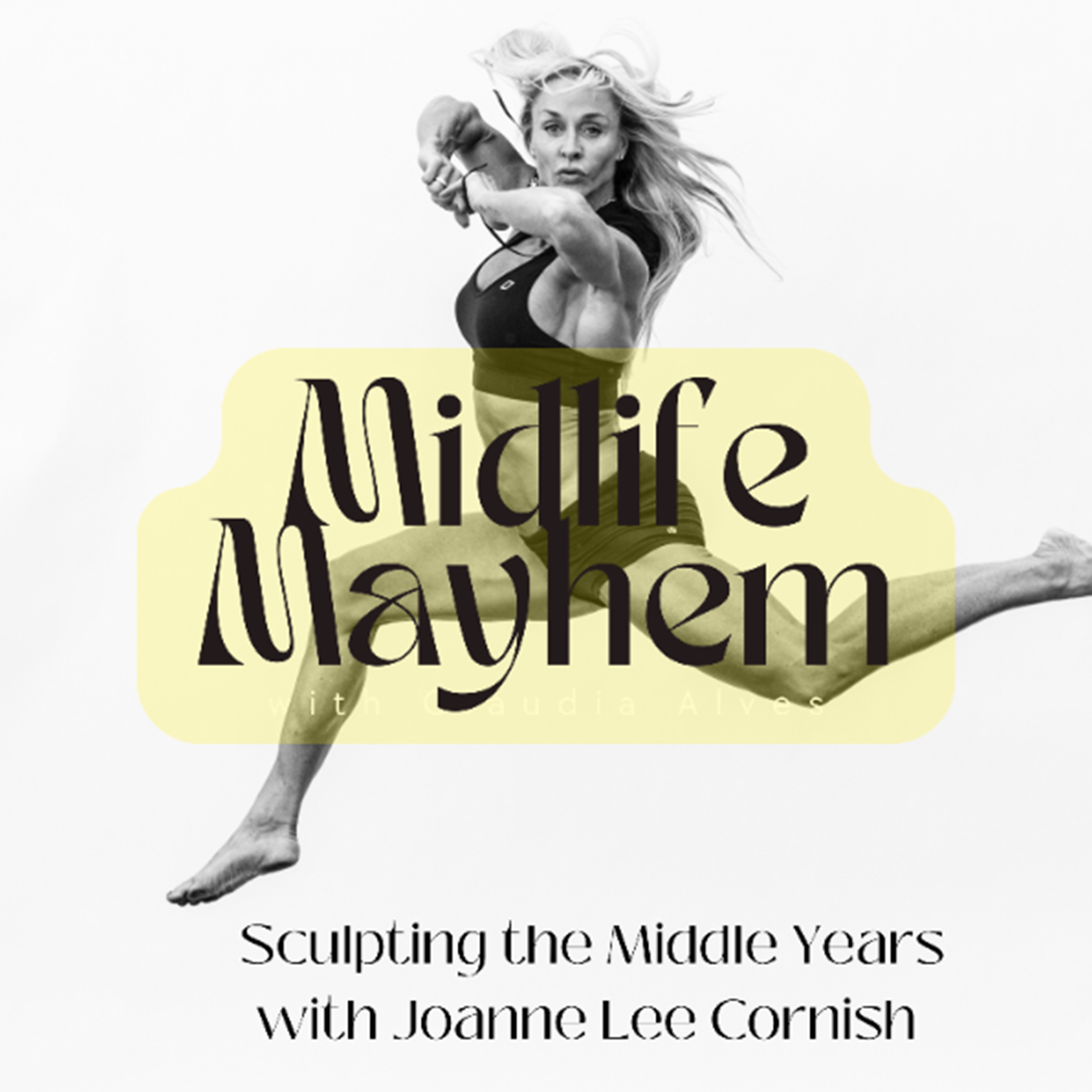
Midlife Mayhem
by joanne lee cornish
Midlife Mayhem hosted by body composition expert, Joanne Lee Cornish is intended to explain the madness that can occur during midlife. Offering information and solutions to help you avoid what most people experience in Midlife. Aimed at both men and women. Joanne can help those who want to be helped
Episodes
-
I WROTE GOODBYE LETTERS TO MY PARENTS - and I was prepared!
This week’s episode is the one piece of advice I’d give anyone approaching midlife, dealing with it, or coming out the other side: be prepared. We almost always wait until we’re in a situation to educate ourselves about it. We’re sitting in a pool of night sweats, googling what causes them. We’ve...
-
MIDLIFE PIVOT - UP OR DOWN, BUT NEVER SIDEWAYS
Midlife Is a Life Pivot: Why I’m Running Mastering Midlife Again in 2026 Mastering Midlife 2026 runs October 26 – November 21 Join Mastering Midlife → www.midlifemonth.com For the first time since March, I’m running a live program again. And honestly, I felt like I needed to. I've spent much of...
-
Better Legs After 50 - do tell
Better Legs After 50! What 5 New Studies Say About Muscle, GLP-1s & Creatine What if a cheap, well-studied supplement could specifically help the muscle most of us lose first after 50 — our legs? That’s the finding I didn’t see coming this week, and it’s why I’m actually leading with something...
-
LEAN MASS IS NOT MUSCLE MASS
The scale says “lean mass.” Your strength tells the fuller story. If you’re using a GLP-1, moving through menopause, or simply trying to stay strong as you get older, losing weight isn’t the only thing that matters. What you’re losing—and what you’re keeping—matters more. In this episode of…
more -
Should Women Rule the World vs Men Over 70
Subject: Should Women Rule the World? (Depends Which Decade) Hey there, this episode is dedicated to my SIL and brother who are "Stranded in Albuquerque," which sounds like a bad movie :) Love you much and good luck getting home tomorrow.... New episode of Midlife Mayhem is live, and this one got...
-
Sue's Hair Regrowth Journey
Midlife Hair Loss: Sue McLea’s Hair Regrowth Story & Why She Chose MONAT Hair thinning and hair loss are among the biggest frustrations I hear from women in midlife. Our hair can feel like part of our identity, so watching it become thinner, more fragile or seeing our scalp where we never used to...
-
Big Boned, Big Thighs & the Truth Your Tape Measure Won't Tell You
Midlife Mayhem — Episode Show Notes Hey there, Two Instagram posts sent me down a rabbit hole this week, and I couldn't wait to bring it to you. Post one: a woman says if you can't wrap your fingers around your wrist, you're "big boned" — not overweight, just built bigger. Post two: if your thigh...
-
Crepey Skin, Sagging Skin & the Science of GHK-Cu
If you’re fit, strong and taking care of yourself — but suddenly feel like your skin didn’t get the memo — this episode is for you. Crepey skin. Sagging skin. Wrinkly skin. Skin that suddenly seems too big for your body. It is one of the biggest frustrations I hear from women and men in midlife....
-
TURKEY TEETH - MY EXPERIENCE
Why I Went to Istanbul for Dental Work — and Why I Chose Esnan What happens when dental work that has lasted more than 30 years finally needs replacing — and you realize you don't necessarily want to have it done in the United States? In this episode of Midlife Mayhem, I’m sharing my entire...
-
Fat Is Not Free
Dietary Fat Is NOT a Free Food: Have We Become Too Comfortable With Fat? For decades, we were terrified of dietary fat. Everything was low-fat, fat-free or reduced-fat, and eating fat was almost automatically associated with gaining body fat. Then the pendulum swung. We learned more about...
-
Teenage Boys, Puberty & Body Image: The Conversation We're Not Having
Teenage Boys, Puberty & Body Image: The Conversation We're Not Having Most people assume body image struggles during puberty are a girls' issue. They're wrong. In this episode of Midlife Mayhem, Joanne shares why so many teenage boys are quietly struggling with their bodies—and why parents…
more -
Would You Trade Your Hair for 10 Pounds?
🎁 Listener Discount As a thank you for listening to Midlife Mayhem, I'm giving you 20% off with the code FIRSTTIMER. Despite the name, this is a one-time-use code, so even if you've ordered from me before, you can still use it—as long as you haven't used the FIRSTTIMER code previously. Whether...
-
Think You're Going Bald? Think Again.
Is Menopause Really to Blame? The Truth About Hair Loss in Midlife 🎁 Every episode of Midlife Mayhem includes an exclusive listener discount! As a thank you for listening, every podcast episode will feature a special discount code. Listen to this episode to hear the code, which can be used on my...
-
This "Natural" Supplement Sent My Friend to Hospital—Twice
Ashwagandha Sensitivity: Why a "Stress Supplement" Can Make Some People Feel Worse 🎁 Every episode of Midlife Mayhem includes an exclusive listener discount! As a thank you for listening, every podcast episode will feature a special discount code. Listen to this episode to hear the code, which…
more -
When Hormones Change a Marriage
🎉 Fourth of July Specials (Ends July 5) ✨ 20% OFF Blue Theory™ GHK-Cu Face Serum & Face Oil Use code BLUETHEORY at checkout. ✨ 15% OFF 5-Amino-1MQ & SLU-PP-332 Use code FOURTH at checkout. These discounts expire July 5, and there won't be another holiday promotion until Labor Day. When Hormones...
-
Can You Actually Reverse Crepey Skin? The Science Behind GHK-Cu
GHK-Cu: The Science Behind One of the Most Powerful Ingredients for Mature Skin July 4 Holiday Savings (Ends July 5) Blue Theory™ Skincare: Save 20% with code BLUETHEORY Supplements: Save 15% with code FOURTH ⏰ Both offers expire July 5, and the next holiday sale won't be until Labor Day, so if...
-
SELF SABOTAGE - avoiding the work we know is necessary
Self-Sabotage, Negative Lumping & The Hidden Reasons We Stay Stuck Why do intelligent, capable people keep getting in their own way? In this episode of Midlife Mayhem, Joanne dives into one of the most frustrating human behaviors: self-sabotage. Whether it's body composition, business,...
-
Coffee, Saunas & Alzheimer's: What the Researchers Didn't Expect
Why Sweating & Coffee Might Be Saving Your Brain Could your morning coffee and your occasional sauna session be doing more than helping you wake up or relax? In this episode of Midlife Mayhem, Joanne dives into two fascinating studies that have Alzheimer's researchers paying close attention. One...
-
THE FRAGILITY THRESEHOLD
Strength Training, the Fragility Threshold & Why Exercise Isn't Enough Most people think that if they're active, they're doing enough to age well. But there's a huge difference between being active and being strong. In this episode of Midlife Mayhem, Joanne dives into one of the most important...
-
The Psychology of Weight Regain
The Psychology of Weight Regain: Why The Battle Isn't On The Scale Most people think weight loss is the hard part. After more than 30 years coaching body composition, I'm convinced that's not totally true. In fact, the anxiety can kick in when the weight is gone In this episode, I explore one of...
-
The Enhanced Games That Didn't Go As Planned
🎙️ The Enhanced Games: The Experiment That Accidentally Proved Hard Work Still Wins When the Enhanced Games were announced, most people expected one thing: Enhanced athletes dominating the competition. The concept was simple. Allow athletes to openly use performance-enhancing drugs under medical...
-
PARKINSONS - WHAT WE MISSED
Parkinson’s Disease, Dopamine, Gut Health & The Signs We Missed Why Parkinson’s may begin decades before the tremor — and what families need to understand This week’s podcast is a very personal one for me. We’re talking about Parkinson’s disease — but far beyond the “shaky hand” most people…
more -
Scans, Radiation & What You’re Really Saying Yes To
New Podcast: “It’s Just a Scan”… Until It Isn’t Quick question… When your doctor says, “Let’s just do a scan,” do you know what that actually means? Because most people don’t. And as we get older, scans start stacking up: one leads to another… then a follow-up… then a “just to check.” This…
more -
Estrogen Patch Shortage — What’s Really Going On
Estrogen Patch Shortage — What’s Really Going On In this episode of Midlife Mayhem, Joanne breaks down a growing issue affecting thousands of women right now—the estrogen patch shortage—and why it’s not as simple as “just a supply problem.” This isn’t about insurance games or pharmaceutical...
-
Gym Mistakes, Food Traps & a Medical Miss That Shouldn’t Happen
This Week in Coaching: What Went Wrong (That Didn’t Have To) This episode is a bit different. I’m pulling straight from my week, because what shows up in coaching isn’t random—it’s patterns. And most of the time I’m sitting there thinking… 👉 this didn’t need to happen. Three situations stood out...
-
Do You Need Carbs To Build Muscle?
🚨 Let’s address the fear head-on… Carbohydrates have become one of the most misunderstood—and frankly, feared—nutrients in the world of body composition. And I get it. If fat loss has been your focus, cutting carbs works. It lowers insulin, improves insulin sensitivity, and often unlocks fat…
more -
THE COMMON COLD
🎧 THE COMMON COLD — What’s REALLY Going On Inside Your Body (And Why It’s Not What You Think) You think you “caught a cold”… but that’s not actually what happened. In this episode of Midlife Mayhem, I’m recording this in real time—full head cold, blocked nose, zero taste, and all—because it’s…
more -
A New Med for an Old Problem, Navigating Hormones & The Chilli That Took Me Down
Weekly Insulin, Testosterone & a Lesson I Should Have Known 🚨 NEW: ONCE-WEEKLY INSULIN A new insulin, Insulin icodec, has just been approved. 👉 One injection per week 👉 Instead of daily (or multiple daily) injections That’s a major shift in how diabetes can be managed—and more importantly, how...
-
Optimal Protein Intake: 0.8g vs 1g Per Pound Explained
How Much Protein Do You REALLY Need? (And Why I’m Not Changing My Mind) 💥 Episode Summary Everyone’s talking about protein again… and now the narrative is shifting. “Studies say you don’t need that much.” “0.7g per pound is enough.” “Stop overdoing protein.” Sounds convenient, doesn’t it? In…
more -
Leptin Explained: Why You’re Always Hungry & Why Fat Loss Gets Hard
Leptin: The Hormone That Can Make You Hungry… or Not Hello Midlife Mayhem— Today we’re talking about something that explains a LOT when it comes to fat loss and appetite: 👉 Leptin And I’ll start with this— I recently did a podcast on appetite, and while the information was solid… I didn’t fully...
-
NNMT, Cancer & Fat Loss: The Hidden Link You Need to Understand
NNMT, Cancer Risk & 5-Amino-1MQ – Where Science Ends and Assumptions Begin Alright… this one is interesting. Because I talk a lot about 5-Amino-1MQ— mainly in the context of fat loss, metabolic health, and keeping weight off long term. But recently, I was in a conversation with a doctor… and he...
-
Insulin: Fat Storage or Muscle Tool?
Insulin Isn’t the Enemy: Why Carbs Might Actually Help You Build Muscle Show Notes Before we dive in, a couple of quick reminders. My Muscle Month program starts March 29, and it only runs once a year. If you’ve been thinking about joining, this is the time. The program walks you through exactly...
-
The Gallbladder Explained: Digestion, Gallstones, and Weight Loss
The Gallbladder: What It Does, Why It Gets Removed, and Why Rapid Weight Loss Can Cause Problems 🎯 Muscle Month Starts March 29 Enrollment is now open for Muscle Month, my once-a-year program focused entirely on building muscle and improving body composition in midlife. If you’ve spent years...
-
BINGO! (ARMS)
💪 Muscle Month starts March 29 (in a couple of weeks!) If you want to actually build muscle with strategy — not random reps — this is where it happens: 👉 www.musclemonth.com 💃 Bingo Arms (Triceps) — Why Women Get Them… and Men Usually Don’t Hello hello. Today we’re talking about ladies’…
more -
APPETITE IDENTITY
Appetite: Is It Really Hunger… or Something You Learned? Join Muscle Month — starts March 29 If this episode speaks to you, and you know it’s time to better understand food, muscle, metabolism, and the way your body actually works, Joanne’s once-a-year Muscle Month program begins March 29. Muscle...
-
QUADS DOMINANCE & PANCAKE ASS
💪 Muscle Month Starts VERY Soon — March 29! If you want to understand your body in a way most trainers never will… If you want to stop guessing in the gym… If you want to build shape intentionally instead of accidentally… 👉 www.musclemonth.com 🍑 Quad Dominance in Women (And Why Your Glutes...
-
WEAK GLUTES - NO SUCH THING!
💪 Muscle Month Starts March 29 If you’re ready to build muscle properly — including glutes that actually fire — join me here: 👉 www.musclemonth.com And if you’re supporting your metabolism alongside your training: ⚡ 5-Amino-1MQ & SLU-PP-332 available at 👉 www.joanneleestore.com 🍑 Weak Glutes?...
-
Bone Bank: The Investment You Didn’t Know You Were Making
🦴 Your Bone Bank And Why Midlife Is Where It Gets Real Hello hello — welcome back to Midlife Mayhem. Quick update first: 🔥 Muscle Month is back on. 📅 March 29 – April 25 👉 www.musclemonth.com This is my favourite program to coach because we build muscle properly. And after today’s topic…
more -
RED LIGHT THERAPY - why a mask is not a bed
🔴 Red Light Therapy — The Bit Nobody Explains Properly Red light therapy is not one thing. People hear “red light” and assume a face mask, a mat, a sauna, and a $3,000 panel are all just different price points of the same thing. They’re not. They are doing different jobs in the body. And if you...
-
Leg Hair, Estrogen Patches & Taco Bell
🤨 Three Topics That Should Never Be in the Same Episode (But Are) Today we’re talking about: Why women mysteriously stop growing leg hair as they age Why your estrogen patch might feel like it “stopped working” And why Taco Bell Supreme has sent my client to the ER every single time she eats it...
-
THE FEAR OF PROTEIN
Muscle Month starts Feb 16 — quick note before we dive in If you enjoy this podcast, please consider Muscle Month. I simply can’t do topics like this true justice in a short podcast. Muscle Month is where I teach the actual physiology behind muscle building, fat loss, and long-term…
more -
From Skin Cells to Muscle Cells: Why Biology Beats Branding
Niacinamide, Amino Acids, and Why Source Confusion Doesnt Matter In today’s episode, Joanne dives into two simple, misunderstood products — one for skin and one for muscle — and explains why what something does matters far more than where it comes from. This is a practical, science-backed...
-
ENERGY DRINKS & SHOULD WOMEN TRAIN LIKE MEN?
Energy Drinks, Gut Damage, Gallbladders… and Why Women Shouldn’t Train Like Men In today’s episode I cover two topics that came up in real conversations this week: energy drinks (especially in teens/20s) and a key Muscle Month training concept most people get wrong. Energy drinks: what’s the big...
-
When Midlife Hormones Stop Playing by the Old Rules
Midlife Mayhem — Thyroid, Testosterone & Metabolism in Midlife In this episode of Midlife Mayhem, I’m talking about thyroid and testosterone — two topics I’ve covered before, but ones that came up for me personally this week in a way that highlights just how misunderstood midlife physiology still...
-
Create the Environment, Not the Obsession
Episode Theme: Stop Obsessing Over Details — Create the Right Environment This episode was recorded fresh off my first Peak Week coaching call of the year, and something really stood out: People aren’t failing because they’re lazy or unmotivated — they’re stuck because they’re overthinking…
more -
FOOD SENTIVITIES IN MIDLIFE - when food stops loving you back
🚀 Work With Me in 2026 Everything is now in one place: 👉 https://www.joannelee.com You’ll find: My full program schedule 90-Day Elite 1:1 Coaching Perfect Ten — a 10-month immersive mentorship, limited to 10 women only 🔐 Coming up next: The Victory Vault — January 26 to February 7 A two-week...
-
NEED MORE ENERGY OR ARE YOU TIRED? - THERE IS A DIFFERENCE
🎙️ Energy: Why You’re Tired, What Actually Makes Energy — and What Really Works I am just fine-tuning all the pages of my new website but it is live www.joannelee.com on there you will find the online coaching schedule for 2026, the one on one 90 Day Coaching Program and the 10 month Mentorship...
-
Temporary States: When a Good Thing Becomes a Problem
Welcome to 2026 — and yes, I tried to turn this podcast into video… and of course it wasn’t simple. 🙃 The video version is still happening (YouTube: Joanne Lee Cornish) — but for now, it’s you, me, and my English accent. The Peak Week 5 Day Shred starts on Monday, yes THIS Monday - offered only...
-
THE HABIT FORMATION CURVE & WHY PEOPLE QUIT TOO SOON
🎙️ Episode Notes: The Habit Formation Curve — Why It Gets Hard Before It Gets Easy In this episode, we break down why habits feel hardest right before they actually stick — and why so many people quit at exactly the wrong moment. Most of the anxiety around goals, body composition, or behavior...
-
Should Cardio be a News Years Resolution?
Exercise as a Tool: Cardio, Bias, and What Actually Works Exercise is a tool — and we’ve used it very differently over the decades. Think about it: In the 1950s, “exercise” wasn’t really a thing the way it is now. People moved, they danced (my parents and grandparents were ballroom dancers), but…
more
We're indexing this podcast's transcripts for the first time — this can take a minute or two. We'll show results as soon as they're ready.
No matches for "" in this podcast's transcripts.
No topics indexed yet for this podcast.
Loading reviews...
ABOUT THIS SHOW
Midlife Mayhem hosted by body composition expert, Joanne Lee Cornish is intended to explain the madness that can occur during midlife. Offering information and solutions to help you avoid what most people experience in Midlife. Aimed at both men and women. Joanne can help those who want to be helped
HOSTED BY
joanne lee cornish
CATEGORIES
Loading similar podcasts...
Frequently Asked Questions
How many episodes does Midlife Mayhem have?
Midlife Mayhem currently has 100 episodes available on PodParley. New episodes are automatically indexed when they're published to the podcast feed.
What is Midlife Mayhem about?
Midlife Mayhem hosted by body composition expert, Joanne Lee Cornish is intended to explain the madness that can occur during midlife. Offering information and solutions to help you avoid what most people experience in Midlife. Aimed at both men and women. Joanne can help those who want to be helped
How often does Midlife Mayhem release new episodes?
Midlife Mayhem has 100 episodes. Check the episode list to see recent publication dates and frequency.
Where can I listen to Midlife Mayhem?
You can listen to Midlife Mayhem on PodParley by clicking any episode. We provide an embedded audio player for direct listening, and you can also subscribe via your preferred podcast app using the RSS feed.
Who hosts Midlife Mayhem?
Midlife Mayhem is created and hosted by joanne lee cornish.
URL copied to clipboard!