
PODCAST · health
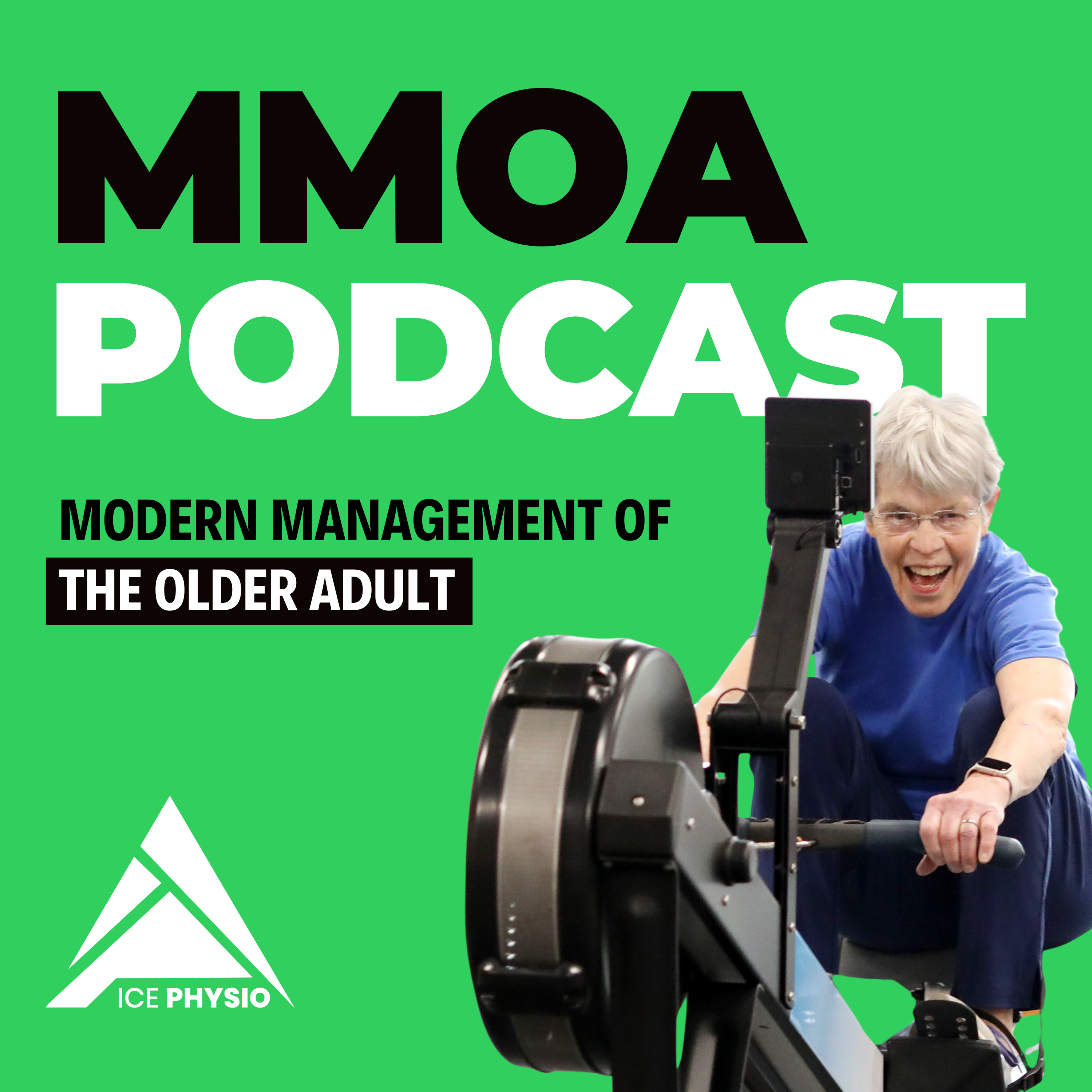
MMOA Podcast - Physical Therapy | Fitness | Geriatrics
by Institute of Clinical Excellence - Older Adult Division
MMOA (Modern Management of the Older Adult) helps rehab & fitness pros get results with older adults. Brought to you by the Institute of Clinical Excellence, tune in to hear pertinent geriatric discussions, relevant research, & treatment ideas. Good for Physical Therapists, Occupational Therapists, Assistants, Students, New Grads, Seasoned Veterans, Geriatricians, & Fitness Professionals. Find out more at www.MMOA.online
-
905
Keys to becoming a provider of choice with older adults
Dr. Jeff Musgrave PT, shares his experience of how to set yourself apart as a provider of choice for older adults! Empathetic listening, how to leverage Ai & how to balance a message of hope with honesty! For more helpful info sign up for the MMOA Digest at mmoa.online
-
904
Hot off the Press! New Dementia Risk Reduction Guidelines
Dr. Macy Bolt breaks down the new WHO dementia risk reduction guidelines that are hot off the press! She dug into the details so you don't have to and she'll walk you through the clinical takeaways you can start implementing them today. Want to make sure you stay up to date in all things Geriatrics in less than 3 minutes every other week? Join thousands of others in our free MMOA Digest Email list - https://institute-of-clinical-excellence.kit.com/a3837f54b7
-
903
Working With Older Adults May Be Making You More Ageist
In this episode, Dr. Christina Prevett discusses the impact of ageism in healthcare, especially when working with older adults. She explores how healthcare providers' perceptions influence patient care and highlights real-world examples of systemic issues and biases. 00:00 Introduction and birthday reflection 00:29 Study on ageism among healthcare providers 00:59 How working with older adults influences perceptions 01:28 Impact of ageism on healthcare system 02:27 Vulnerable moments in older adult care 03:19 Heterogeneity of aging trajectories 04:15 Selection bias in patient populations 05:12 Traveling older adults and healthcare representation 05:40 Case example: Masters athletes and pickleball 07:06 Unintentional skewing of perceptions 08:02 Consequences of ageism in healthcare 08:29 Dismissal of symptoms and misdiagnosis 09:27 Mental health and aging stereotypes 10:51 Patronizing communication and elder speak 12:16 Under-treatment and rationing of care 13:09 Preventative care and health promotion 14:32 Systemic issues and healthcare incentives 16:03 Case study: 75-year-old with fecal impaction 17:23 Fragmented care and systemic neglect 18:49 Systemic bias and patient neglect 20:27Closing remarks and reflection on practice
-
902
Independent at 98: A Home Health PT Case Study (Part Two)
Join Kay Mayordomo, PT, DPT in this new MMOA podcast where she dives into part two of a home health case study of a 98 year old patient who wants to regain his independence at home. Want to make sure you stay on top of all things geriatrics? Sign up for the free MMOA Digest Email. A bi-weekly 5 minute ready that's jam-packed with research reviews, intervention ideas, updates in our profession - https://institute-of-clinical-excellence.kit.com/a3837f54b7
-
901
Appetite, Aging, and Activity
Are your patients telling you they just don't have any appetite? They have no desire to eat? Join Trisa Hutchinson as she dives into appetite, aging, and activity - sharing some outside the box ideas to support your patient's appetite. If you found this content helpful, go to https://PTonICE.com to check out our collection of Free Resources like the MMOA Digest our Bi-Weekly Research Email that goes out to thousands of clinicians.
-
900
Swapping from Physical Therapist to Personal Trainer with the Older Adult Client
It's sometimes hard to know how to differentiate between a great PT/OT vs a personal trainer as from the outside the overall goal can look similar. Get people stronger and more functional. To help with this topic, Dr. Shelby Blankenship PT, DPT, will go through some similarities and some differences to help you navigate the two. Want to make sure you stay up to date in all things Geriatrics in less than 3 minutes every other week? Join thousands of others in our free MMOA Digest Email list - https://institute-of-clinical-excellence.kit.com/a3837f54b7
-
899
Programming Complexity: Brain Training
Join @JMusgravePT as he discusses a recent systematic review on how to get the best results from adding cognitive complexity to your client programming! Guan, Li & Bu (2026). Four-Limb Coordinated Training and Neuroplasticity in Older Adults with Cognitive Frailty. Clinical Interventions in Aging. DOI: 10.2147/CIA.S594798 Join MMOA Digest mmoa.online to get more helpful info!
-
898
The Tactile Crutch
In today's episode, Annoushka discusses how in the world of geriatric rehabilitation, tactile cueing has long been a staple for therapists aiming to ensure the safety of their patients. But have you ever stopped to consider: who is truly learning during these interactions? When we place our hands on patients to guide them, we often believe we are helping. However, in this episode, we will explore why stepping back and using hands-off cues can be one of the most effective strategies for promoting independence and motor learning in older adults while also addressing the instances where it may be necessary to be hands on. Want to make sure you stay up to date in all things Geriatrics in less than 3 minutes every other week? Join thousands of others in our free MMOA Digest Email list - https://institute-of-clinical-excellence.kit.com/a3837f54b7
-
897
Rethinking Osteoarthritis & Your Treatment Paradigm
Is osteoarthritis just "wear and tear" on the joint? Not so much! will be discussing three recent publications that challenge the "wear and tear" narrative around osteoarthritis and what it means for you in the clinic. You'll walk away with a clear gameplan of how to prioritize different treatment methods and get the most bang for your buck. Referenced Links: Original Recording: https://app.ptonice.com/c/ptonice-daily-show/rethinking-oa Strengthening & Joint Forces - https://pubmed.ncbi.nlm.nih.gov/41693614/ Frailty & Knee OA - https://pubmed.ncbi.nlm.nih.gov/41894355/ OA & Systemic Inflammation - https://pubmed.ncbi.nlm.nih.gov/41619154/ Arthritis Workshop Resource - https://institute-of-clinical-excellence.ck.page/fe7f739c26
-
896
The Medicare GLP1 Bridge Program
GLP-1 meds for just $50/month? Here's what providers need to know about the Medicare Part D Bridge Program—and why strength training matters more than ever. #GLP1 #Medicare #HealthcareProviders #WeightLossMedication #StrengthTraining #PatientCare
-
895
From "Blown Out" to Bulked Up: A Shoulder Case Study
In this episode, Dr. Macy Bolt unpacks a shoulder case study and shares her favorite 3 clinical pearls in working with a patient with the perception that their joint was "blown out" beyond repair. Spoiler: it wasn't! Want to make sure you stay up to date in all things Geriatrics in less than 3 minutes every other week? Join thousands of others in our free MMOA Digest Email list - https://institute-of-clinical-excellence.kit.com/a3837f54b7
-
894
Post-Operative Protocols: Rethinking Recovery in Rehabilitation
In this episode, Christina Prevett discusses the pitfalls of standardized post-operative protocols, emphasizing the importance of individualized care and clinical judgment in rehabilitation. She highlights how rigid protocols can hinder patient recovery and professional autonomy. Key Topics: The limitations of surgeon-prescribed protocols The importance of clinical judgment in rehab Research evidence on post-op rehab effectiveness The impact of protocols on therapist autonomy Patient variability and personalized care The influence of healthcare policies on rehab practices The role of research in shaping rehab guidelines Strategies for advocating for autonomous practice 00:00Introduction to Post-Operative Protocols 02:53The Limitations of Standardized Protocols 06:10The Need for Individualized Care 08:54Research and Its Impact on Rehabilitation 11:49Advocating for the Role of Physical Therapists/ Occupational Therapists
-
893
Alcohol and Aging: Balancing Independence and Safety
Navigating the conversation about alcohol as people age can be tricky but often is necessary to have! Join as she talks about the impact alcohol has on older adults and considerations you should ponder before diving into this topic with your patients! If you found this content helpful, go to https://PTonICE.com to check out our collection of Free Resources like the MMOA Digest our Bi-Weekly Research Email that goes out to thousands of clinicians.
-
892
Independent at 98: A Home Health PT Case Study (Part One)
Join Kay Mayordomo, PT, DPT on this new episode of the MMOA podcast. At 98 years old, independence is still possible. This home health case study shows how falls are rarely caused by just one thing and how the right plan can help someone rebuild strength and confidence step by step to regain independence. Want to make sure you stay on top of all things geriatrics? Sign up for the free MMOA Digest Email. A bi-weekly 5 minute ready that's jam-packed with research reviews, intervention ideas, updates in our profession - https://institute-of-clinical-excellence.kit.com/a3837f54b7
-
891
3 Keys for Better Results With Cancer Survivors
Dr. Jeff Musgrave, PT, DPT, shares 3 research-based tips to improve results with those who have survived cancer!
-
890
Why Adductor Strength Matters in Older Adults
Dr. Shelby Blankenship PT, DPT discusses the importance of adductor strengthening in older adults. She emphasizes its role in pelvic floor support, balance training, and functional capacity and ideas for treatment that you can implement tomorrow. Want to make sure you stay up to date in all things Geriatrics in less than 3 minutes every other week? Join thousands of others in our free MMOA Digest Email list - https://institute-of-clinical-excellence.kit.com/a3837f54b7
-
889
Nutrition for Older Adults: What Matters
Most older adults are undernourished, dehydrated, and unaware of simple yet powerful changes that can dramatically improve their quality of life—yet many are missing the big picture. Join Dustin Jones reveals a straightforward, science-backed framework that helps seniors fuel their fitness efforts, avoid common pitfalls, and live more independently. You can get the Older Adult Nutrition Guide that Dustin references here: https://institute-of-clinical-excellence.kit.com/40478932b1
-
888
Failing Forward (but not falling)
In this episode, Annoushka Ranaraja PT, DPT explores how to effectively prescribe and progress balance training for older adults or people with balance deficits. It emphasizes the importance of dosage, intensity, and safety to promote neural adaptation and functional improvements. Want to make sure you stay up to date in all things Geriatrics in less than 3 minutes every other week? Join thousands of others in our free MMOA Digest Email list - https://institute-of-clinical-excellence.kit.com/a3837f54b7
-
887
Group Fitness in Memory Care
Want to level up your group fitness in Memory Care? Join Trisa as she reviews considerations for set up, maintaining attention to task, and specific cues for exercise and safety. https://music.apple.com/us/playlist/exercise-class/pl.u-XkD04X0UDYkKkKp If you found this content helpful, go to https://PTonICE.com to check out our collection of Free Resources like the MMOA Digest our Bi-Weekly Research Email that goes out to thousands of clinicians.
-
886
Fiber and your patients
Discover the crucial role of fiber in improving health and reducing inflammation! In this episode of the MMOA podcast, Ellen Csepe discusses how fiber can significantly impact your patients' well-being and lower their risk of chronic diseases. Key takeaways: * Fiber can reduce the risk of colorectal cancer by 44% with just a 10-gram increase in daily intake. * High fiber diets help decrease inflammation, which is linked to various chronic diseases. * Patients with obesity, diabetes, and chronic conditions see the most significant benefits from increased fiber. * Recommended daily fiber intake is 25 grams for women and 35 grams for men, but many struggle to meet these goals. * Incorporating a variety of fruits, vegetables, nuts, and whole grains can enhance gut health and diversity. What's your biggest challenge with discussing fiber intake with patients? Drop it in the comments! Subscribe for weekly insights on nutrition and health!
-
885
Performing HIIT training with a patient with moderate COPD: a case study
Christina Prevett shares a detailed case study of a COPD patient named Bob, demonstrating how HIIT training can improve functional capacity and oxygen efficiency in pulmonary rehabilitation. The discussion covers personalized exercise protocols, monitoring strategies, and the importance of adaptable training for chronic conditions.
-
884
Blindness and Balance: Reweighting Sensory Systems
Join Dr. Macy Bolt as she unpacks a patient case of an individual struggling with significant balance deficits. She talks all things sensory reweighting and how to facilitate functional improvement for someone with a visual impairment and how that changes testing and treatment. Want to make sure you stay up to date in all things Geriatrics in less than 3 minutes every other week? Join thousands of others in our free MMOA Digest Email list - https://institute-of-clinical-excellence.kit.com/a3837f54b7
-
883
Geri Programming Hacks Part. 3
In part 3 of Geri Programming Hacks Dr. Jeff Musgrave doctor of physical therapy shares how using a clock during your session can improve your efficiency & help you dial in your intensity!
-
882
Weight for it…BMI & Osteoporosis?
Join Kay Mayordomo, PT, DPT as she reviews a 2026 systematic review on the association between BMI and osteoporosis risk. Did you know your BMI could be misleading when it comes to osteoporosis risk? Recent research reveals an association between body mass index (BMI) and osteoporosis. Lower BMIs are often associated with higher osteoporosis risk, especially in women. As BMI increases, the risk generally decreases, suggesting that more body mass can help maintain bone density. But...there's always a but: BMI doesn't tell the whole story. It's just a number, a ratio of height to weight. It doesn't reflect muscle mass, fat distribution, or overall health. Two people can have the same BMI, but vastly different bone health based on their lifestyle and habits. As clinicians, we need to look beyond BMI. Focus on strength training, nutrition, and healthy habits. Help patients maintain their muscle mass and overall well-being. So while BMI can indicate osteoporosis risk, remember it's just one piece of the puzzle. Let's prioritize looking at the whole picture. https://pubmed.ncbi.nlm.nih.gov/41862888/ Want to stay up to date in all things Geriatrics in less than 3 minutes every other week? Join thousands of others in our free MMOA Digest: Want to make sure you stay on top of all things geriatrics? Go to https://MMOA.online to check out our Free eBooks, Lectures, & the MMOA Digest Email List- https://institute-of-clinical-excellence.kit.com/a3837f54b7
-
881
The Power of the Annual Mobility Assessment: Interview with Dr. Mike Puthoff and Dr. Victoria Hamby
Why do we wait for a catastrophic injury or dramatic decline before addressing physical health? In this episode of the MMOA podcast, Dustin Jones sits down with Dr. Mike Puthoff and Dr. Victoria Hamby, leaders of the APTA's Academy of Geriatric Task Force, to explore the transformative potential of the Annual Mobility Assessment. As clinicians, we often see patients in the later stages of decline when it's much harder to reverse damage. This episode highlights how shifting our focus "upstream" can help us identify preclinical mobility limitations—the subtle changes that occur years before a fall or injury—and intervene when it matters most. Key takeaways from this episode include: The Six Pillars of Mobility: A breakdown of the physical performance measures used in the AMA, including usual/fast gait speed, chair stands, and cognitive dual-tasking . The "Report Card" Approach: How using a simple red-yellow-green system makes complex data tangible and empowering for patients . Moving Beyond the HEP: Why moving away from a "dictator" approach toward Brief Action Planning—letting the patient take ownership of their goals—leads to more sustainable behavior change. Practical Implementation: Advice for busy clinicians on how to integrate these assessments into existing workflows, whether through community outreach or as part of a standard plan of care. Stop managing decline and start optimizing capacity. Tune in to learn how to become a movement specialist who identifies problems before they become emergencies. Referenced Links: APTA Geriatrics AMA Resources: https://aptageriatrics.org/annual-mobility-assessment/ Mike's IG: https://www.instagram.com/puthoffml/ Mike's LInkedIn: https://www.linkedin.com/in/michael-puthoff/ Victoria's IG: https://www.instagram.com/toto_hamby/ Victoria's LinkedIn: http://www.linkedin.com/in/victoria-hamby-pt-dpt-ocs-46028546 --- Want to stay up to date in all things Geriatrics in less than 3 minutes every other week? Join thousands of others in our free MMOA Digest Email list - https://institute-of-clinical-excellence.kit.com/a3837f54b7
-
880
Why Every Clinician's a Geriatric Clinician
Think your clinical practice is exempt from geriatrics? Think again. In this episode of the PTonICE Daily Show, Dustin Jones challenges the misconception that geriatric care is limited to specific settings like nursing homes or home health. Whether you specialize in sports, orthopedics, or pediatrics, Dustin argues that every healthcare professional is inherently a "geri-clinician." He outlines three powerful reasons why embracing this identity will not only make you a more effective and fulfilled clinician but also profoundly impact your own life: The Reality of Your Caseload: Regardless of your setting, a vast majority of the patients you treat are either older adults now or are heading there fast . Influencing Future Longevity: Every patient you see, from the 5-year-old child to the 40-year-old athlete, hopes to become an older adult . Your current interventions—and the language you use—set the trajectory for their future health, helping them either thrive or live in fear of decline . "Old People in Training": Embracing this identity isn't just about your patients; it's about you. By understanding the aging process, you can adopt a more realistic and motivating perspective on your own health, time, and mortality. Stop waiting until the later stages of life to understand the principles of healthy aging. Tune in to learn how shifting your mindset can help you become an "old person in training," improve your professional confidence, and ultimately help your patients live more independent, fulfilling lives . ---- Want to stay up to date in all things Geriatrics in less than 3 minutes every other week? Join thousands of others in our free MMOA Digest Email list - https://institute-of-clinical-excellence.kit.com/a3837f54b7
-
879
Case Study: Anterior and Lateral Knee Pain 2.0
Dr. Shelby Blankenship PT, DPT discusses a case study on patient who came in with anterior/lateral knee pain and how to level up your care. The episode covers assessment, treatment approach, progression, outcomes, and medical red flags to stay on top of for your client. Want to make sure you stay on top of all things geriatrics? Go to https://MMOA.online to check out our Free eBooks, Lectures, & the MMOA Digest!
-
878
Founder's Story: Shelby Blankenship of Southern Grit PT and Wellness
Founder's Story: Shelby Blankenship of Southern Grit PT and Wellness In this episode, Shelby breaks down how she built a thriving PT and wellness practice in Hendersonville, Tennessee, by refusing to settle for the "traditional" burnout-inducing model. We're diving deep into the messy reality of starting a business that actually bridges the gap between rehab and performance. In this episode, we discuss: The Red Tape Reality: Navigating the headaches of Medicare and insurance without losing your mind (or your margin). Beyond the Table: How integrating personal training creates a community-focused business that actually keeps people moving. Marketing That Sticks: How to build a brand that resonates with older adults who are tired of being told to "take it easy." Thriving vs. Surviving: Practical tips for building a practice that serves the clinician as much as the patient. Stop waiting for the system to change and start building the practice your community actually needs. --- Want to make sure you stay up to date in all things Geriatrics in less than 3 minutes every other week? Join thousands of others in our free MMOA Digest Email list - https://institute-of-clinical-excellence.kit.com/a3837f54b7
-
877
Continuing to Pickleball with a Spinal Fracture: A Case Study
Dr. Christina Prevett shares a detailed case study of managing a complex osteoporosis-related spinal injury in an active older adult. The discussion highlights evidence-based decision making, patient-centered care, and balancing guidelines with real-world patient needs. 00:00 Introduction to the Case Study 02:45 Understanding the Client's Background and Medical History 06:05 Navigating the Diagnosis and Treatment Dilemma 08:53 Implementing an Evidence-Informed Approach 12:09 Reflections on Patient-Centered Care
-
876
Rewiring the Brain-Stroke rehab
In this Episode, Annoushka Ranaraja PT, DPT explores the latest advancements in stroke rehabilitation, emphasizing high-intensity, technology-driven therapy practices that leverage neuroplasticity. It challenges traditional methods and highlights how modern approaches can significantly improve recovery outcomes. Want to make sure you stay up to date in all things Geriatrics in less than 3 minutes every other week? Join thousands of others in our free MMOA Digest Email list - https://institute-of-clinical-excellence.kit.com/a3837f54b7
-
875
When caregivers ask you NOT to make your patient with Dementia "too mobile"
Are you working hard to help your patients with dementia build strength and mobility? And then faced with caregivers concerned with the mobility causing a potential safety risk? Have you been asked to refrain from helping your patient become "too mobile"? In this episode we address this conversation from all angles to help you navigate the conversation with the caregiver while supporting your patient's well-being. If you found this content helpful, go to https://PTonICE.com to check out our collection of Free Resources like the MMOA Digest our Bi-Weekly Research Email that goes out to thousands of clinicians.
-
874
The LIFTMOR trial: 5 clinical tips
Most clinicians still shy away from heavy lifting with osteoporotic patients because of fear. But this groundbreaking study shows high-intensity resistance training isn't just safe — it's essential. Participants lifted at 85% of their 1RM — which means it's heavy, challenging, and highly effective at reversing bone density loss. And guess what? No fractures or adverse reactions.Here's the kicker: start slow, avoid equipment costs, and accept that not everyone will hit that perfect dose immediately. It's about progress, not perfection. If you're working with post-menopausal women or men at risk, this study gives you a clear blueprint to follow — and the clinical pearls to do it confidently.Take this insight to your next patient convo — and let's shift from fear to empowerment. #Osteoporosis #StrengthTraining #BoneHealth #ClinicalPearls #PhysioTips
-
873
Geri Programming Hacks Part. 2
Join Dr. Jeff Musgrave, Doctor of Physical Therapy, as he continues with Part 2. his series on Geri-programming hacks to make documentation easier as you encounter expected Progressions and unexpected regressions in your bout of care. Want to make sure you stay up to date in all things Geriatrics in less than 3 minutes every other week? Join thousands of others in our free MMOA Digest Email list - https://institute-of-clinical-excellence.kit.com/a3837f54b7
-
872
Dialing in Patient Education: Osteoporosis
Have you ever felt overwhelmed with where to start in educating your patients with osteoporosis? Join Dr. Macy Bolt as she simplifies and hones in on the top 3 education areas for this patient population and helps you become a better patient educator. Want to make sure you stay up to date in all things Geriatrics in less than 3 minutes every other week? Join thousands of others in our free MMOA Digest Email list - https://institute-of-clinical-excellence.kit.com/a3837f54b7
-
871
Clinical Implementation of Wearables
Using wearables (think Apple watch, fitbit, phone) in your plan of care can amplify your outcomes. Join Dustin Jones as he discusses a recent RCT that used wearables in cardiac rehabilitation that had some pretty wild results. We'll discuss HOW to do this in clinic with your patients to get better results. We'll also troubleshoot common barrier to implementation. You can catch the live video recording here in the ICEphysio app - https://app.ptonice.com/c/ptonice-daily-show/wearables ---- Want to make sure you stay up to date in all things Geriatrics in less than 3 minutes every other week? Join thousands of others in our free MMOA Digest Email list - https://institute-of-clinical-excellence.kit.com/a3837f54b7
-
870
Deep Brain Stimulation & Parkinson's: A Case Study
Join Kay Mayordomo, PT, DPT as she dives into a case study involving a patient's experience post-DBS due to Parkinson's, revealing the ongoing challenges he faced with balance and safety. Despite good lower extremity strength, his reactive postural control was lacking, leading to frequent falls. We focused on improving his gait, safety awareness, and even floor recovery techniques to empower him and reduce caregiver burden. Want to make sure you stay up to date in all things Geriatrics in less than 3 minutes every other week? Join thousands of others in our free MMOA Digest Email list - https://institute-of-clinical-excellence.kit.com/a3837f54b7
-
869
NeuroStrength: Bridging the Gap from Clinic to Community. Interview with Dr. Nick Dennis, PT, DPT
Stop bubblewrapping your neuro patients. In this episode, we sit down with Dr. Nick Dennis, PT, DPT of the NeuroStrength Network to talk about the massive gap between traditional neuro-physical therapy and the high-capacity lives our patients actually want to lead. If you think neuro rehab is just about balance pads and seated rows, you may be underdosing your patients and stalling their progress. Links: https://neurostrengthnetwork.com/ NeuroStrength Network Instagram - https://www.instagram.com/neurostrengthnetwork/ ---- Want to make sure you stay up to date in all things Geriatrics in less than 3 minutes every other week? Join thousands of others in our free MMOA Digest Email list - https://institute-of-clinical-excellence.kit.com/a3837f54b7
-
868
Undoing to Redo: A Case study with Shoulder Pain
This episode features Dr. Christina Prevett discussing a case study of a client with calcific tendinitis, highlighting the pitfalls of standard post-op protocols and emphasizing personalized, evidence-based rehab strategies for shoulder injuries.
-
867
Case Study: ICU Deconditioning in the Outpatient Setting
Dr. Shelby Blankenship PT, DPT discusses a case study on a post ICU deconditioned patient due to cervical spine surgery complications. The episode covers assessment, treatment approach, progression, outcomes, and takeaways for similar cases. Want to make sure you stay on top of all things geriatrics? Go to https://MMOA.online to check out our Free eBooks, Lectures, & the MMOA Digest!
-
866
Making Meaningful Days in ALF with Dr. Trisa Hutchinson, OTD
In this episode, Trisa Hutchinson, OT & MMOA Faculty, breaks down what actually moves the needle in assisted living and memory care. We dig into the implementation of the Meaningful Days program, strategies for engaging residents living with dementia, and how physical activity can positively influence behavioral outcomes. If you're looking to move beyond "keeping people busy" and toward truly improving quality of life, this one's for you. Links: Trisa's Instagram - @trisaleehutch - https://www.instagram.com/trisaleehutch/ Meaningful Days Program - https://progressivecaremn.com/meaningful-days-program/ ---- Want to make sure you stay up to date in all things Geriatrics in less than 3 minutes every other week? Join thousands of others in our free MMOA Digest Email list - https://institute-of-clinical-excellence.kit.com/a3837f54b7
-
865
Case Study: Older Adult with Chronic Lower Extremity Pain
Join as we work through a real-life case study of a woman experiencing chronic LE pain at a high risk of losing all her independence.
-
864
Changing the Brain with Exercise
Join Annoushka Ranaraja, PT, DPT as she reviews the 2026 Update to the Parkinson's Disease Foundation/ACSM Exercise Guidelines. Want to make sure you stay on top of all things geriatrics? Go to https://MMOA.online to check out our Free eBooks, Lectures, & the MMOA Digest!
-
863
Geri Programming Hacks Part. 1
Dr. Jeff Musgrave shares some of his favorite ways to save time and effort in sessions, part 1 focuses on how to save time with your warm-up, and thinking through what equipment you do or don't choose will affect how much time your session takes!
-
862
Screenior Citizens - Screens and our patients
Are screens really ruining our seniors' health? Let's dive into the truth behind screen use and cognitive decline! Tag someone who needs to hear this! The reality is, screen use among older adults isn't all bad—engaging use can actually decrease the risk of cognitive decline! But beware, passive screen time can lead to higher risks of dementia. We've got to consider how screens influence not just our minds but also our physical and mental health. Excessive screen time can mean more eye strain and mood dips. And did you know that watching too much TV can worsen anxiety and depression in seniors? So, what's the takeaway? Screens should NEVER interfere with what we need as humans - social connection, sleep, and movement! Chat with your loved ones about their screen habits and encourage more active engagement rather than passive consumption. Let's keep our brains healthy while still enjoying the benefits of technology! #ScreenTime #HealthAndWellness #CognitiveHealth #SeniorCare #MentalHealthMatters
-
861
The Power of a Personal Brand in Physical Therapy. Interview with Lily Jiminez of The Brain PT
What happens when a neuro PT starts sharing what she knows online, and it turns into a career-changing platform? In this episode, Dustin Jones sits down with Lily Jiminez, better known as Lily the Brain PT, to talk about her journey from clinical practice to building a powerful personal brand that now helps clinicians pass the NCS and grow their careers. She shares how creating content started as a way to teach and connect—and quickly opened doors to new opportunities, income streams, and impact beyond the clinic. Lily also gets honest about the challenges that come with putting yourself out there: overcoming self-doubt, finding your voice, and staying aligned with your values while building an online presence. If you've ever thought about sharing your expertise, starting a platform, or building a brand around what you know, this conversation will give you a practical look at what's possible. Links: https://TheBrainPT.com The_Brain_PT on Instagram Brand Bootcamp ---- Want to make sure you stay up to date in all things Geriatrics in less than 3 minutes every other week? Join thousands of others in our free MMOA Digest Email list - https://institute-of-clinical-excellence.kit.com/a3837f54b7
-
860
Clinical Tips for Increasing Physical Activity Levels
Most older adults don't need a perfect workout program—they need more movement in their day. In this episode, we explore practical ways to help older adults become more physically active, focusing on what matters most: moving more, more often. You'll hear simple strategies for assessing current activity levels, setting meaningful goals, and helping people build sustainable movement habits. We also break down the powerful health benefits that can come from even small increases in daily activity. If you work with older adults—or want better ways to help patients move beyond the clinic—this episode offers actionable ideas you can start using right away. See referenced links inside the ICEphysio App - https://app.ptonice.com/c/ptonice-daily-show/case-physical-activity ----- Want to make sure you stay up to date in all things Geriatrics in less than 3 minutes every other week? Join thousands of others in our free MMOA Digest Email list - https://institute-of-clinical-excellence.kit.com/a3837f54b7
-
859
From Quadriceps Palsy to Quadruped: Regaining Function After TKA
On this week's podcast, Macy Bolt digs into a case of quadriceps palsy after a total knee replacement. She unpacks what worked for her patient and what she'd avoid if she could do it over again to help her patient regain independence. Want to make sure you stay up to date in all things Geriatrics in less than 3 minutes every other week? Join thousands of others in our free MMOA Digest Email list - https://institute-of-clinical-excellence.kit.com/a3837f54b7
-
858
A case study of failed conservative care: post-op rehabilitation after revision x 2 with Dr. Christina Prevett
Dr. Christina Prevett shares a detailed case study of a geriatric patient with complex complications post-hip replacement (x3!) highlighting the challenges and reflections in conservative rehabilitation. The discussion emphasizes the importance of realistic expectations, patient-centered care, and the value of reflection in clinical practice. 00:00Introduction and case overview 00:30Understanding the patient's background and health status 01:57Details of the hip replacement complications 03:53The impact of metabolic health and circulation issues 06:45Initial rehab approach and patient perceptions 09:07Challenges with manual therapy and range of motion 11:04Patient's pain perception and motivation barriers 13:01Transition to activity and social engagement 13:49Progress and current status of the patient 15:13Reflections on practice and lessons learned 16:11Final thoughts and resources
-
857
Deep Brain Stimulation in Parkinson's: Does PT help?
Ever wondered if physical therapy really helps after deep brain stimulation for Parkinson's? Let's dive in with Kay Mayordomo, PT, DPT. In this episode, we explore a randomized pilot study on deep brain stimulation (DBS) and its impact on patients with Parkinson's disease (PD). While DBS can help with tremors, rigidity, and bradykinesia, many still struggle with balance and gait issues post-surgery. What does the research say about PT after deep brain stimulation? #ParkinsonsDisease #DeepBrainStimulation #PhysicalTherapy Want to make sure you stay on top of all things geriatrics? Go to https://MMOA.online to check out our Free eBooks, Lectures, & the MMOA Digest!
-
856
Starting Your Own Neuro PT Practice with Dr. Lauren Young of NeuroElitePT
In this episode of the InMoi Podcast, Dustin Jones sits down with Dr. Lauren Young—physical therapist and entrepreneur—to unpack what it really takes to build a practice from the ground up. Lauren shares the story behind launching her own business, starting with a mobile therapy model and eventually transitioning to a brick-and-mortar clinic. Along the way, she opens up about the real challenges of entrepreneurship in healthcare: serving patients in rural communities, navigating insurance and payment models, and deciding when it's time to grow. Lauren also discusses why specialized care matters in underserved areas and how physical therapists can create practices that are both financially sustainable and deeply patient-centered. If you've ever wondered what it looks like to turn clinical expertise into a thriving practice—or how to practice with more intention—this conversation offers practical insights and plenty of honest perspective. Links: NeuroElitePT Clinic - https://www.neuroelitept.com/ Instagram - https://www.instagram.com/neuroelitept/ ----- Want to make sure you stay up to date in all things Geriatrics in less than 3 minutes every other week? Join thousands of others in our free MMOA Digest Email list - https://institute-of-clinical-excellence.kit.com/a3837f54b7
We're indexing this podcast's transcripts for the first time — this can take a minute or two. We'll show results as soon as they're ready.
No matches for "" in this podcast's transcripts.
No topics indexed yet for this podcast.
Loading reviews...
ABOUT THIS SHOW
MMOA (Modern Management of the Older Adult) helps rehab & fitness pros get results with older adults. Brought to you by the Institute of Clinical Excellence, tune in to hear pertinent geriatric discussions, relevant research, & treatment ideas. Good for Physical Therapists, Occupational Therapists, Assistants, Students, New Grads, Seasoned Veterans, Geriatricians, & Fitness Professionals. Find out more at www.MMOA.online
HOSTED BY
Institute of Clinical Excellence - Older Adult Division
Loading similar podcasts...
Frequently Asked Questions
How many episodes does MMOA Podcast - Physical Therapy | Fitness | Geriatrics have?
MMOA Podcast - Physical Therapy | Fitness | Geriatrics currently has 50 episodes available on PodParley. New episodes are automatically indexed when they're published to the podcast feed.
What is MMOA Podcast - Physical Therapy | Fitness | Geriatrics about?
MMOA (Modern Management of the Older Adult) helps rehab & fitness pros get results with older adults. Brought to you by the Institute of Clinical Excellence, tune in to hear pertinent geriatric discussions, relevant research, & treatment ideas. Good for Physical Therapists, Occupational Therapists,...
How often does MMOA Podcast - Physical Therapy | Fitness | Geriatrics release new episodes?
MMOA Podcast - Physical Therapy | Fitness | Geriatrics has 50 episodes. Check the episode list to see recent publication dates and frequency.
Where can I listen to MMOA Podcast - Physical Therapy | Fitness | Geriatrics?
You can listen to MMOA Podcast - Physical Therapy | Fitness | Geriatrics on PodParley by clicking any episode. We provide an embedded audio player for direct listening, and you can also subscribe via your preferred podcast app using the RSS feed.
Who hosts MMOA Podcast - Physical Therapy | Fitness | Geriatrics?
MMOA Podcast - Physical Therapy | Fitness | Geriatrics is created and hosted by Institute of Clinical Excellence - Older Adult Division.
URL copied to clipboard!