
PODCAST · health
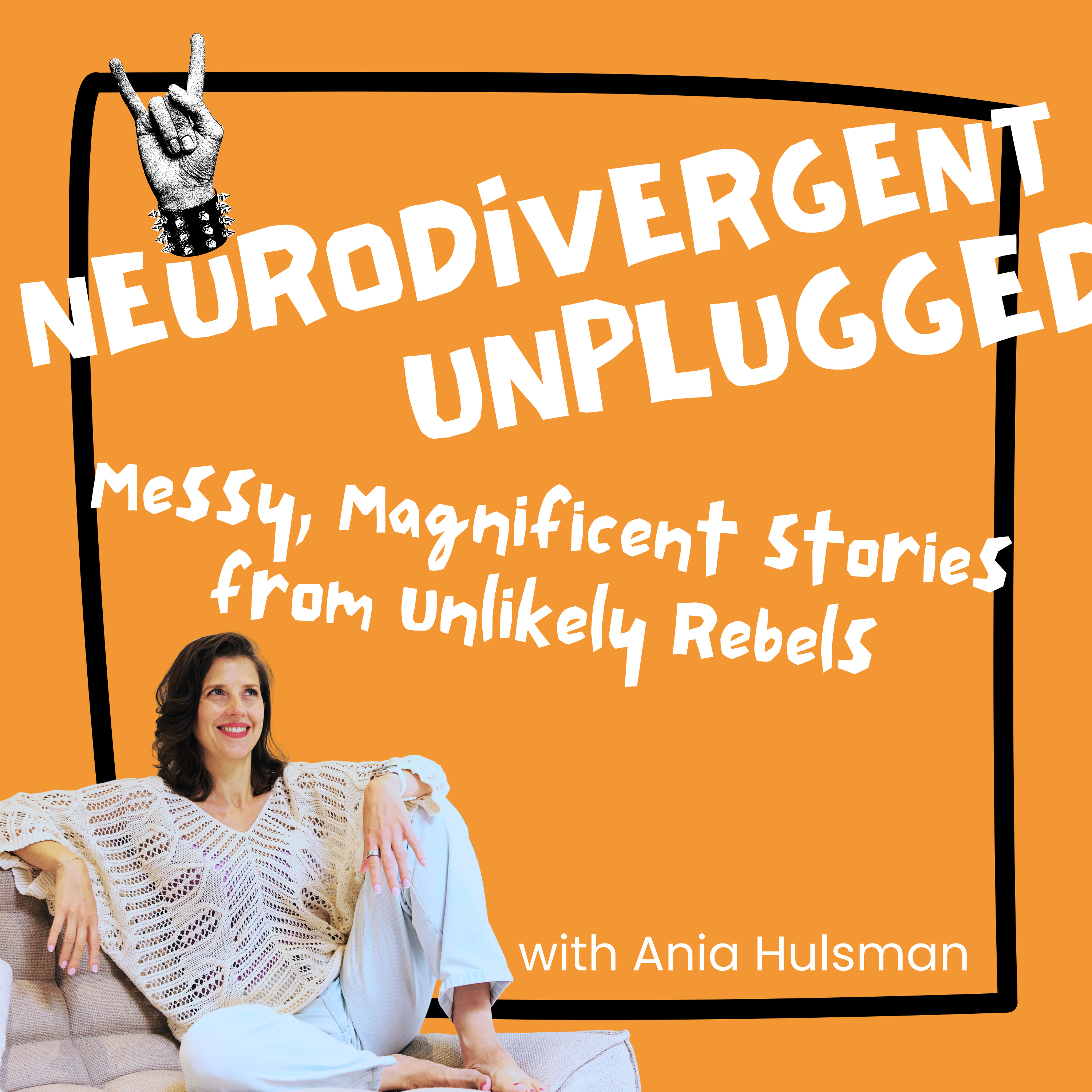
Neurodivergent Unplugged; Messy, Magnificent Stories From Unlikely Rebels
by Ania Hulsman
Neurodivergent Unplugged shares messy, magnificent stories from ADHD, autistic, and dyslexic minds who stopped masking and started thriving. Hosted by coach Ania Hulsman, it dismantles the incompetency bias and celebrates the brilliance of living true to your wiring. Real talk, no beige filters—just unfiltered stories of burnout, joy, and radical self-acceptance. Because neurodivergence isn’t a flaw. It’s the spark that changes everything.
-
29
Ep. 31 | The Boogeyman Under the Bed: Charlie Winton on OCD, ADHD, and Building a Business From Lived Experience
A startup founder who used to mask his OCD as IBS now runs a mental health company - and has spent six years learning to slow down without losing himself.This week Ania talks with Charlie Winton, founder and CEO of OK Positive, a Scotland-based startup using technology to support preventative mental health. Charlie built the business out of his own experience with severe OCD and panic attacks - and he's refreshingly honest about what that's actually like to live with, day to day.The conversation moves through Charlie's ADHD and OCD profile (the "A to B" rushing, the overwhelm of too many choices, the three-question test his wife taught him for sorting intrusive thoughts from real ones), how he learned to read his own warning signs before they become a spiral, and why he thinks "success" is mostly a moving goalpost that's better replaced with small, weekly wins. He also gets into the cost of masking, what it taught him to "helicopter out" of his own life and check in with his values, and why slowing down - something that used to feel like wasted time - turned out to be where most of his actual enjoyment lives.Expect candid talk about mental health stigma, founder culture, the surprising upside of an OCD-trained nervous system, and at least two terrible-but-accurate analogies (cheat meals, mountains made of moles).In this episode:02:00 — Introducing Charlie and OK Positive03:00 — Why he stopped trying to separate himself from his business06:00 — The two moments that shaped him: a mental health crisis at work, and meeting his wife08:00 — Realising he had OCD, and what 21-year-old Charlie didn't understand yet13:00 — The three questions his wife taught him for intrusive thoughts17:00 — Spheres of control and influence - and why energy spent outside them is energy wasted20:00 — Personality profiling, masking with friends and family, and pretending OCD was IBS28:00 — Being misunderstood as "bossy" or "demanding" when it's really an ADHD attention pattern37:00 — Learning to slow down without losing his edge45:00 — Redefining success as small wins instead of moving goalposts51:00 — The ongoing, non-linear work of feeling okay with who you are59:00 — His daily practice: logging how he feels every morning, like a resting heart rate for his mental health1:02:00 — Quick-fire round: food quirks, recovery time, Lord of the Rings, and the one thing he'd change in the worldA few lines that stuck with us:"Mental health is like the boogeyman. When you're a kid and there's a boogeyman under the bed, and your parents explain it's a leaky pipe making a noise - it's not scary anymore.""It's not a weakness to do it differently to me.""The stress that you put on yourself is far worse than the actual stress."More about Charlie:Charlie Winton is the Founder of OK Positive (OK+), a digital mental health platform built on evidence-based practices such as ACT, CBT, and resilience training. After years spent in recruitment and financial technology and drawing on his own lived experience of mental health challenges like OCD Charlie realised the need for a more accessible, preventative approach to emotional wellbeing.Since its inception, OK+ has grown to serve thousands across corporate, education, and charitable sectors, embodying Charlie’s deeply held belief that openness and vulnerability help dismantle mental health stigma. He has been running the organisation for six years and been involved in all aspects of starting and growing a business from investment, sales, operations, recruitment and networking.LinkedIn (search Charlie Winton) | [email protected] | okpositive.co.ukConnect with Ania:aniahulsman.com - book a 30-minute unmasked chemistry call if this episode sparked something
-
28
The ADHD Brain That Never Stopped Moving and Built a 40-Year Career in Hollywood | Chuck Borden EP 30
Nobody handed Chuck Borden a career in Hollywood. What he had instead was a brain that never stayed still, a childhood spent tearing through every sport imaginable, and the stubborn refusal to quit when everyone around him thought he should.In this episode, I sit down with Chuck Borden, professional stuntman, stunt coordinator, second unit director, and now producer and director with over 400 films to his name, including Fast and the Furious, HitMan's Bodyguard, and Doctor Sleep. Chuck shares what it was like growing up self-diagnosed with ADHD before anyone had the language for it, bouncing from baseball to go-karts to BMX, never mastering any one thing but quietly becoming someone who could do everything. We talk about the stepfather who told him not to let anyone talk him out of his dream, the moment on a film set that changed everything, the stunt school he built for kids with ADHD and focus challenges that shut down only because of Covid, and why he believes the neurodivergent brain is not a liability on set but the very thing that makes the work extraordinary.If you have ever been told you were all over the place, or wondered whether your inability to stay in one lane might actually be pointing you somewhere, or just need a reminder that it is never too late to follow the thing that actually sets you on fire, this episode is for you.Connect with Chuck Bordenhttps://www.instagram.com/borden_chuck/http://www.faceplantfilms.com/https://www.linkedin.com/in/chuckborden/Connect with Mehttps://www.linkedin.com/in/aniahulsman/https://www.aniahulsman.comIf this episode spoke to you, please consider subscribing and leaving a review. It would mean the world to me personally, and it really helps others who need to hear these kinds of stories to find the podcast. Until next time, stay messy. Stay magnificent and stay true to your weird, wonderful self!
-
27
Behind the Mask: The Cost of Masking as a Neurodivergent Person at Work | Marie Chaproniere EP 29
Workplaces love to say “bring your whole self to work.” But when a neurodivergent person actually tries, they are often asked to tone it down.In this episode, I sit down with Marie Chaproniere, founder of Behind the Mask, a community built for people who are done pretending. Marie spent 15 years in talent acquisition, employer branding, and diversity and inclusion, and she could see long before most people around her that something was broken in the way organisations talk about authenticity versus how they actually practice it. She shares her own journey through a late ADHD diagnosis, burnout she kept working through, and the gradual unmasking that followed, and makes a case that is both deeply personal and impossible to argue with: when neurodivergent people are free to be themselves, everybody wins.If you have ever felt the gap between who you are at work and who you actually are, or you lead teams and want to understand what it really costs people to keep that gap open, this episode will leave you thinking differently about what belonging at work actually means.Connect with Marie Chaprionierehttps://behindthemask.info/https://www.linkedin.com/company/behind-the-mask-communityhttps://www.instagram.com/behindthemaskcommunity/https://www.instagram.com/mariechaproniere/Connect with Mehttps://www.linkedin.com/in/aniahulsman/https://www.aniahulsman.comIf this episode spoke to you, please consider subscribing and leaving a review. It would mean the world to me personally, and it really helps others who need to hear these kinds of stories to find the podcast. Until next time, stay messy. Stay magnificent and stay true to your weird, wonderful self!
-
26
She Hid a Brilliant Mind the World Had No Room For - Unmasking, Late-Identified Neurodivergence & Burnout | Katja Staeheli EP 28
She is intelligent, driven, but she was quietly falling apart. Not because something was wrong with her, but because the world she was living in had no room for who she actually was.In this episode, I sit down with Katja Staeheli, entrepreneur and author, to talk about late-identified neurodivergence, masking, burnout, and what it takes to finally stop hiding a mind the world never quite knew what to do with. Katja shares her journey from burned-out secondary school teacher to entrepreneur and author, and the moment she realised she could no longer stay inside a life that was slowly erasing her.If you have ever felt too much, too fast, or simply too different to fit inside the life you were handed, this episode is for you.Connect with Katja Staehelihttps://www.instagram.com/katja_staeheli/https://katjastaeheli.de/Connect with Mehttps://www.linkedin.com/in/aniahulsman/https://www.aniahulsman.comIf this episode spoke to you, please consider subscribing and leaving a review. It would mean the world to me personally, and it really helps others who need to hear these kinds of stories to find the podcast. Until next time, stay messy. Stay magnificent and stay true to your weird, wonderful self!
-
25
How Neurodivergence Shapes the Way Entrepreneurs See the World | Thomas Power EP 27
Some people spend their entire lives trying to fit into systems that reward performance, status, and strength, only to realise too late that what actually matters most is the quality of the people sitting beside you.In this episode, I sit down with entrepreneur and community builder Thomas Power to talk about neurodivergence, pattern recognition, empathy, entrepreneurship, and why modern business culture has become disconnected from human intimacy. Thomas shares stories from working alongside billionaires and the striking pattern he noticed across many highly successful entrepreneurs. We explore the difference between building businesses around transactions versus relationships, why vulnerability attracts while strength often repels, and how his own neurodivergent mind became obsessed with patterns, human behaviour, and understanding what truly drives people. This conversation also dives into AI, Twitter, context, human connection, and the future of work and why he believes neurodivergent minds are naturally drawn to pattern recognition systems. At the heart of this episode is a simple but powerful idea: success is not really about money, status, or achievement, but about the depth of our relationships and the shared experiences we create with the people we love.If you have ever struggled to fit inside conventional definitions of success, or wondered whether there is a more human way to build a meaningful life and business, this episode will leave you thinking differently about what actually matters.Connect with Thomas Power WhatsApp: + 4 47875695012 https://bip100.club/https://www.linkedin.com/in/thomaspower/Connect with Mehttps://www.linkedin.com/in/aniahulsman/https://www.aniahulsman.comIf this episode spoke to you, please consider subscribing and leaving a review. It would mean the world to me personally, and it really helps others who need to hear these kinds of stories to find the podcast. Until next time, stay messy. Stay magnificent and stay true to your weird, wonderful self!
-
24
The Pressure to Meet Expectations as a Neurodivergent Woman | Martina Niggli EP 26
Being praised for being “gifted” at a young age can feel empowering at first, until you realise how quickly intelligence can become tied to perfectionism, performance, and the fear of falling short.In this episode, I sit down with Martina Niggli, conflict facilitator, educator, and mediator-in-training, to talk about neurodivergence, sensitivity, perfectionism, and the hidden emotional cost of constantly trying to meet expectations. Martina shares what it was like growing up as a highly intelligent and deeply curious child, from teaching herself maths in kindergarten to studying physics and quantum information theory at ETH Zurich. We also explore the pressure of being praised for achievement from a young age, how perfectionism quietly shaped her identity, and the overwhelming environments that made her feel like she had to cut parts of herself off in order to belong. Martina also reflects on her experiences as a woman inside highly competitive academic spaces, the lack of diversity she witnessed at university, and the project she created to support students who felt left behind by traditional teaching systems.If you have ever felt like you needed to overperform in order to belong, or struggled to balance your sensitivity with the expectations of the world around you, this episode is for you.Connect with Martina Niggli https://www.linkedin.com/in/martina-niggli/[email protected] with Mehttps://www.linkedin.com/in/aniahulsman/https://www.aniahulsman.comIf this episode spoke to you, please consider subscribing and leaving a review. It would mean the world to me personally, and it really helps others who need to hear these kinds of stories to find the podcast. Until next time, stay messy. Stay magnificent and stay true to your weird, wonderful self!
-
23
Why Neurodivergence Struggles in Mainstream School Systems | Chris Benson EP 25
Being told you are intelligent but never quite living up to your “potential” can shape the way you see yourself long before you understand how your brain actually works. In this episode, I sit down with educator, speaker, and consultant Chris Benson to talk about neurodivergence within the education system, not just for students, but for teachers too. We talk about why so many neurodivergent children internalise shame early, how schools often mistake dysregulation for bad behaviour, and why understanding a child’s self-perception matters more than forcing generic strategies onto them. Chris also reflects on the hidden reality of neurodivergent educators, the pressure to mask within professional environments, and why representation inside schools matters more than most people realise.If you have ever felt intelligent but somehow incompatible with the systems around you, this episode is a reminder that struggling inside a rigid environment does not mean there is something wrong with you. Connect with Chris [email protected]://www.headfirstconsulting.com http://www.linkedin.com/in/chrisbenson-ukhttps://www.tes.com/magazine/author/chris-bensonConnect with Mehttps://www.linkedin.com/in/aniahulsman/https://www.aniahulsman.comIf this episode spoke to you, please consider subscribing and leaving a review. It would mean the world to me personally, and it really helps others who need to hear these kinds of stories to find the podcast. Until next time, stay messy. Stay magnificent and stay true to your weird, wonderful self!
-
22
Why Your Neurodivergent Mind Will Never Fit Inside the “Operating Box” | Dr Anu Patel EP 24
Most of us are trying to function inside an invisible “operating box” that no one has clearly defined, yet somehow we are all expected to fit into it.In this episode, I sit down with Dr. Anu Patel, a medical doctor and transformational coach who explores the science of resilience, clarity, and performance through the lens of neurodivergence. We talk about what he calls the “operating box,” the unspoken rules around attention, behaviour, and emotional regulation, and how neurodivergence is often simply a nervous system that does not naturally fit inside those expectations. Anu shares how his early life experiences shaped his ability to adapt as a “chameleon,” learning to read environments, people please, and shift identities in order to feel safe and belong. He also talks about how he began understanding his nervous system, recognising his strengths, and creating practices that support how he naturally operates. If you have ever felt like you were trying to fit into something that never quite made sense, this episode offers a different way of looking at how you function, and what becomes possible when you stop forcing the fit.Connect with Dr. Anu Patel https://dranu.com/https://www.instagram.com/real_dr_anu/https://www.youtube.com/@real_dr_anuConnect with Mehttps://www.linkedin.com/in/aniahulsman/https://www.aniahulsman.comIf this episode spoke to you, please consider subscribing and leaving a review. It would mean the world to me personally, and it really helps others who need to hear these kinds of stories to find the podcast. Until next time, stay messy. Stay magnificent and stay true to your weird, wonderful self!
-
21
He Turned ADHD and Addiction Into a Path for Growth | Patrick Devosse EP 23
Addiction does not usually look like a lack of discipline. More often, it is a strategy that once helped you survive, long after it stops serving you.In this episode, I sit down with Patrick Devosse, who shares his experience of being diagnosed with ADHD at a young age without understanding what it meant, navigating childhood trauma, and developing a 15-year pornography addiction as a way to cope with overwhelming emotions. We talk about how that coping mechanism allowed him to disconnect from pain, but also from himself, and the turning point when it stopped working. We also explore how ADHD played both sides, fuelling the addiction through dopamine-seeking, but also becoming a powerful tool in his recovery through hyperfocus, discipline, and self-driven healing. At the core of this conversation is a perspective that is both confronting and empowering: real change does not come from simply stopping a behaviour, but from understanding the story behind it and choosing who you become next.If you have ever used something to avoid what you are feeling, or wondered what it really takes to break a pattern that feels bigger than you, this episode offers a raw and honest look at what that process can actually require. This one is for you.Connect with Patrick Devossehttps://rebornmethod.com/Connect with Mehttps://www.linkedin.com/in/aniahulsman/https://www.aniahulsman.comIf this episode spoke to you, please consider subscribing and leaving a review. It would mean the world to me personally, and it really helps others who need to hear these kinds of stories to find the podcast. Until next time, stay messy. Stay magnificent and stay true to your weird, wonderful self!
-
20
When You Embrace Your Neurodivergence Instead of “Fixing” It | Solomon Cole EP 22
Understanding your neurodivergence early in life can shape how you see yourself, how you learn, and what you believe is possible for you.In this episode, I sit down with 19-year-old Solomon Cole, who shares what it has been like to grow up with ADHD while feeling different in traditional school environments. We talk about his early experiences of being misunderstood, getting into trouble for behaviours that felt natural to him, and the turning point of being homeschooled. With the support of his parents, Solomon was given the freedom to move, explore, and learn in a way that actually worked for his brain. We also explore how he has learned to work with his differences instead of fighting them. From needing constant movement to stay focused, to “harmonising” with his food sensitivities by finding creative ways to meet his nutritional needs, Solomon shares a grounded and practical approach to self-awareness. If you are learning how your brain works, supporting someone who is, or reflecting on your own experience of feeling different, this episode offers a perspective that feels both honest and quietly empowering.Connect with Solomon Cole: https://www.instagram.com/solomoncolee/linktr.ee/waxonwaxoffpodcastConnect with Mehttps://www.linkedin.com/in/aniahulsman/https://www.aniahulsman.comIf this episode spoke to you, please consider subscribing and leaving a review. It would mean the world to me personally, and it really helps others who need to hear these kinds of stories to find the podcast. Until next time, stay messy. Stay magnificent and stay true to your weird, wonderful self!
-
19
Neurodivergence: A Software Feature, Not A Bug | Kenneth Pennington EP 21
For many neurodivergent people, the question is never just how to succeed, it is how to exist in systems that were never designed with them in mind.In this episode, I’m joined by Kenneth Pennington, who shares his journey from corporate HR to building his own brand, “It’s Just a Fish.” We explore what it actually means to be neurodivergent in professional environments, from being labelled disruptive or aggressive to navigating the exhausting reality of masking. Kenneth explains how neurodivergent people often develop a heightened ability to sense patterns, behaviours, and underlying dynamics in a room, even before anything is said. We also talk about the tension between self-expression and social expectations, including the idea of the “corporate sieve” and why not every environment allows for full unmasking. This conversation also challenges the idea that neurodivergence should excuse harmful behaviour, while still advocating for self-awareness, communication, and support systems that actually help people thrive.If you’ve ever felt like you had to shrink, mask, or constantly adjust yourself just to fit in, this episode offers a more honest and nuanced perspective on what it takes to navigate the world as a neurodivergent person without losing yourself in the process.Connect with Kenneth Pennington: https://www.linkedin.com/in/kennethppennington/https://www.instagram.com/its_just_a_fish/Connect with Mehttps://www.linkedin.com/in/aniahulsman/https://www.aniahulsman.comIf this episode spoke to you, please consider subscribing and leaving a review. It would mean the world to me personally, and it really helps others who need to hear these kinds of stories to find the podcast. Until next time, stay messy. Stay magnificent and stay true to your weird, wonderful self!
-
18
When Words Don’t Fit the Rules: Dyslexia, Language, and Creative Expression | Leslie Reed EP 20
She was told she was not good with words, yet today’s guest was able to build a life around language and poetry. In this episode, I sit down with artist, poet, and former healthcare think tank leader Leslie Reed. She shares what it was like growing up unable to read out loud in class, being told she was not smart despite a high IQ, and struggling with spelling across multiple languages. We talk about how dyslexia shaped her relationship with language, not by taking it away, but by deepening it in unexpected ways. Leslie also reflects on her career in philanthropy, where she thrived in big-picture, visionary work but felt the pressure of performing and fitting into expectations, and how stepping away from that world led her back to creativity, poetry, and a more authentic way of expressing herself.If you have ever felt like your struggles with words meant something was missing, this conversation offers a different perspective, one where dyslexia and creativity are not in conflict, but deeply connected.Connect with Leslie ReedInstagram: https://www.instagram.com/leslie_reed_art/Berkeley Wall + Piece: Graffiti Poetry https://tinyurl.com/fm4wxnc5Connect with Mehttps://www.linkedin.com/in/aniahulsman/https://www.aniahulsman.comIf this episode spoke to you, please consider subscribing and leaving a review. It would mean the world to me personally, and it really helps others who need to hear these kinds of stories to find the podcast. Until next time, stay messy. Stay magnificent and stay true to your weird, wonderful self!
-
17
Human Diversity: Having The Courage to Be Out, Different, and Seen | Joyce CoomberSewell EP 19
What if we stopped calling it neurodiversity and started calling it what it actually is — human diversity? In this episode, I sit down with Joyce CoomberSewell, a 71-year-old late-diagnosed neurodivergent powerhouse. We Talk about her mission to shift the conversation from “neurodiversity” to human diversity, and her belief that visibility and representation are what move the needle, just like they have in other rights movements. Joyce also shares the real barriers to supporting neurodiverse people, not just logistics and resources, but fear, stigma, and the way society still tries to hide what it does not understand.This conversation goes deep and wide, from disability access and simple accommodations that change lives, to identity, grief, resilience, and what it means to be “out and proud” at any age. And at the heart of it all is Joyce’s mantra, one that feels like both a call-in and a rebellion: Be kind.If you are navigating late diagnosis or wondering whether you should pursue one, this episode is a reminder that it is never too late to reclaim who you are, and that we all deserve to be met with dignity.Episode Highlights:00:00 Why autism diagnosis is harder for older women (and what’s broken in the system)08:00 PhD motivation: credibility, visibility, and getting into bigger rooms13:10 “Neurotypical doesn’t exist”: the case for human diversity14:10 Supporting high needs disability and why society still fails people17:15 Fear, prejudice, and the myths people believe about autism22:00 Representation, visibility, and what rights movements teach usConnect with Joyce Coomber Sewellhttps://www.linkedin.com/in/joycecoombersewell/https://training.coombersewell.co.ukhttps://[email protected] with Mehttps://www.linkedin.com/in/aniahulsman/https://www.aniahulsman.comIf this episode spoke to you, please consider subscribing and leaving a review. It would mean the world to me personally, and it really helps others who need to hear these kinds of stories to find the podcast. Until next time, stay messy. Stay magnificent and stay true to your weird, wonderful self!
-
16
What Understanding His Brain Changed About Work, Identity, and Expectations | Pete Daly-Dickson EP 18
The traits that made you feel like you didn't fit in when you were young, the ones you tried to hide or shrink, are the same ones that become your superpower as an adult.In this episode, I sit down with Pete Daly-Dickson, an actor, director, producer, and former software entrepreneur who was diagnosed with ADHD at the age of 55. Pete shares what it felt like to always be told to sit still and stop being so much, to internalize the message "don't be you," and what it has taken to unlearn that decades later. We explore his decision not to take medication, choosing instead to manage his ADHD through awareness and self compassion. Pete opens up about the daily practices that ground him now, creative visualization with his wife, and finally doing the things he had known about for forty years. He reveals his big bold wish to become a happy, healthy, connected, international wealthy artist, and walks us through the specific visualization of his short film being selected at HollyShorts, hearing the words "and the winner is."If you have ever wondered what might have happened if you had taken a different path decades ago, if you are still unlearning the message that who you are is not good enough, or if you have ever needed permission to slow down when everything in you wants to speed up, this conversation is a reminder that it is never too late to become all of who you are.Episode Highlights: 00:00 Curiosity as a Superpower23:14 ADHD Triggers and Rumination26:12 Childhood Messages and Late Diagnosis31:24 Strengths, Business, and ADHD Myths54:45 Space Creates The ArtistConnect with Peter Daly-Dickinsonhttps://www.linkedin.com/in/thewealthyartist/https://thewealthyartist.com/Connect with Mehttps://www.linkedin.com/in/aniahulsman/https://www.aniahulsman.com If this episode spoke to you, please consider subscribing and leaving a review. It would mean the world to me personally, and it really helps others who need to hear these kinds of stories to find the podcast. Until next time, stay messy. Stay magnificent and stay true to your weird, wonderful self!
-
15
When Your Brain Works Like a Weapon: Learning to Aim It at Good Things | Ravinol Chambers EP 17
Sometimes the skills that scare you most, the ones that could make you seem ruthless or cruel, are exactly the ones that need the strongest guardrails and the clearest purpose.In this episode, I sit down with Ravinol Chambers, a monk turned filmmaker who spent seven years in spiritual practice across East Africa, India, Ireland, and England before building Be Inspired Films, a company helping purpose-driven organizations tell their stories. Ravinol shares how he discovered his capacity for ruthless focus in school debates, the moment he realized he could bring people to tears without even trying, and why that scared him enough to choose a path with guardrails. We explore compartmentalization and why danger feels life-affirming instead of terrifying, how his son's autism and ADHD diagnosis led to his own recognition, the difference between being consumed by work and being grounded in your body whilst staying spiritually connected, and why learning to hold two contradictory truths at once might be the most important skill we can develop.If you've ever felt pulled between two completely different paths, if you've recognized skills in yourself that could be used for harm and had to learn how to channel them towards good, or if you're learning that being grounded in your body is just as important as any spiritual practice, this conversation is a reminder that the wildest journey often makes the most sense in hindsight.Episode Highlights: 00:00 How He Went From Being a Monk to Filmmaker 12:55 Risk Taking and Dopamine22:26 Hyperfocus and Task Switching39:25 Getting Equipped with Tools for Emotional Regulation50:52 Compartmentalizing Trauma58:42 Unmasking Work and BurnoutConnect with Ravinol Chamberswww.linkedin.com/in/ravchamberswww.instagram.com/beinspiredravResources Mentioned: Be Inspired Films www.linkedin.com/company/be-inspired-filmswww.instagram.com/beinspiredfilmswww.beinspiredfilms.co.ukNeurodiversity animation 'Jack's story'vimeo.com/1084303873/c7f6bf2d52Widgit Brand film 'Bertie's day out'www.widgit.comvimeo.com/1134188093/ccddbd14b0Connect with Mehttps://www.linkedin.com/in/aniahulsman/https://www.aniahulsman.com If this episode spoke to you, please consider subscribing and leaving a review. It would mean the world to me personally, and it really helps others who need to hear these kinds of stories to find the podcast. Until next time, stay messy. Stay magnificent and stay true to your weird, wonderful self!
-
14
Seeing What Others Miss: Pattern Recognition as Superpower | Ghiselle Panneflek EP 16
Sometimes it takes burning out at 43, sitting on a couch for two weeks unable to unpack boxes, to finally realize you're not failing. You're just living in the wrong system.In this episode, I sit down with Dr. Ghiselle Panneflek, a GP, hormonal expert, and nature-based therapist who grew up in Curaçao and now works in the Netherlands. We talk about how she had to see everything in 3D images in her mind to understand medicine whilst her classmates just memorized from textbooks, why she believes sensitivities aren't flaws in the organism but signals that the environment needs changing, and what happened when she burned out at 43 after years of masking and winning "Oscars in life" for being someone she wasn't. If you've wondered whether your sensitivities are trying to tell you something about your environment rather than something wrong with you, or if you're navigating the intersection of hormones and neurodivergence, this conversation is a reminder that success without exhaustion is possible. You just have to stop living in a system that wasn't designed for you.Episode Highlights: (00:00) The moment she realized she could see what others couldn't(20:06) Designing sustainable work when you can't turn off pattern recognition(23:40) Burnout at 43: Two weeks on the couch unable to unpack boxes(27:45) Nature as medicine: Forest bathing and phytoncides(33:46) Alignment over discipline: The mind trick that changes everything(43:56) Redefining success: Good things without the exhaustion(45:39) Perimenopause as the moment neurodivergence gets unmaskedConnect with Ghiselle Panneflekhttps://drghiselle.com/https://instagram.com/dr.ghiselleConnect with Mehttps://www.linkedin.com/in/aniahulsman/https://www.aniahulsman.com If this episode spoke to you, please consider subscribing and leaving a review. It would mean the world to me personally, and it really helps others who need to hear these kinds of stories to find the podcast. Until next time, stay messy. Stay magnificent and stay true to your weird, wonderful self!
-
13
Learning to Human Without the Handbook | Consuela Esseboom EP15
When you see the world in blueprints and everyone else sees chaos, being different isn't wrong. It's just a different operating system.In this episode, I sit down with Consuela Esseboom, a psychologist, corporate EQ specialist, and founder of The Village. We talk about being diagnosed with autism at three and having a mother who decided she'd "grow out of it," why not having labels hurt in some ways but helped in others, and what she calls "outsider privilege." Consuela shares how she sees the world in blueprints, scanning every environment like a machine creating a 3D model, why deep processing means she can breathe underwater but drowns at the surface, and how she's learned to live her life in seasons. We explore the loneliness of high intelligence, why she's attracted to people who are puzzles to solve, her mission to create a library of knowledge on how to human better, and why friendship and communication should be taught in schools.If you've ever felt like everyone else had a manual to life that you didn't receive, if you process everything more deeply than those around you, or if you've had to find your own creative ways to fit into systems that weren't designed for your brain, this conversation is a reminder that different isn't wrong. It's just different.Episode Highlights: (00:00) From psychology to corporate EQ and teaching people to human better(07:19) Why having labels hurt but also created "outsider privilege"(10:50) Seeing the world in blueprints through pattern recognition(26:28) Purpose over IQ and why giftings serve a mission(35:53) Feeling like an outsider who didn't get the manual to life(42:26) The Village mission: mental health resources for African and Caribbean communities(48:58) Living life in seasons and organizing procedurally not taxonomicallyConnect with Consuela Essebomhttps://www.instagram.com/consuelaesseboom/https://www.linkedin.com/in/consuela-esseboom/Say Yes to The Therapist: https://www.eventbrite.nl/e/tickets-say-yes-to-the-therapist-1981498184410?utm-campaign=social&utm-content=attendeeshare&utm-medium=discovery&utm-term=listing&utm-source=cp&aff=ebdsshcopyurlConnect with Mehttps://www.linkedin.com/in/aniahulsman/https://www.aniahulsman.com If this episode spoke to you, please consider subscribing and leaving a review. It would mean the world to me personally, and it really helps others who need to hear these kinds of stories to find the podcast. Until next time, stay messy. Stay magnificent and stay true to your weird, wonderful self!
-
12
Beyond the Boxes: Masking, Code-Switching, and Multiple Identities | Bashair Ahmed EP14
In a world obsessed with categorization, refusing to fit neatly into any single box becomes the truest form of resistance.In this episode, I sit down with Bashair Ahmed, a researcher, practitioner, and academic working at the intersection of humanitarianism, policy, diaspora, and migration. Bashair shares why she connects dots across data points from ten years ago, how her brain works like nodes linking fragmented information, and why she believes neurodiversity is essential because "we would still be in the caves without fire" if everyone thought the same way. We also talk about her mission to drop the word "disorder" from neurodivergent diagnoses, what complementarity means in a society obsessed with individualistic competition, and how she's learning to set boundaries so she can be present for her family whilst doing work she deeply cares about.If you've ever felt pressured to choose just one identity, to mask in professional spaces, or to explain why you can't just "fit in," this conversation is a reminder that the boxes were never designed for people like us. And refusing to squeeze yourself into them isn't defiance. It's survival.Episode Highlights: 00:00 Cultural Perspectives on Neurodiversity32:20 Global Perspectives on ADHD and Neurodiversity37:54 Work Culture and Inclusivity46:07 Challenges of Neurodiverse Parenting55:19 The Importance of Neurodiversity AdvocacyConnect with Bashair Ahmedhttps://www.linkedin.com/in/bashair-ahmed/https://shabaka.org/Connect with Mehttps://www.linkedin.com/in/aniahulsman/https://www.aniahulsman.com If this episode spoke to you, please consider subscribing and leaving a review. It would mean the world to me personally, and it really helps others who need to hear these kinds of stories to find the podcast. Until next time, stay messy. Stay magnificent and stay true to your weird, wonderful self!
-
11
When What You Thought Was A Flaw Becomes Your Greatest Strength | Laurie Mabelis Ep13
The rules of success didn't change. You just finally found a room where your natural way of being was the winning strategy.In this episode, I sit down with Laurie Mabelis, a speaking coach, entrepreneur, and founder of the Public Speaking Academy. We talk about the moment someone told her without invitation that she had ADHD, and why her first reaction was defensiveness rather than relief. Laurie shares how she went from being the quiet, introverted kid who felt invisible to becoming the most recognisable person in her class when the environment finally matched her energy. We explore burnout, what rest actually looks like when you're ridiculously passionate about what you do, why she integrates everything in her life rather than separating work from play, and how she sees magic shows as the perfect metaphor for public speaking.If you've ever been told you're too loud, too excitable, or too intense, or if you've struggled to understand why some rooms celebrate you whilst others shut you down, this conversation is a reminder that the problem was never you. It was just the wrong set of rules.Episode Highlights: (00:00) Why the ADHD label felt like judgment(17:00) Growing up misunderstood in a radically different family(20:00) Finding rooms where you are celebrated (43:00) Redefining success from sprinting to running marathons(54:00) Magic shows as public speaking lessonsConnect with Laurie Mabelis https://lauriemabelis.com/https://www.linkedin.com/in/laurie-mabelis-53a45b117/https://www.instagram.com/lauriemabelis/https://www.youtube.com/channel/UCv9KhgV9orRc1J2spJncc5QConnect with Mehttps://www.linkedin.com/in/aniahulsman/https://www.aniahulsman.com If this episode spoke to you, please consider subscribing and leaving a review. It would mean the world to me personally, and it really helps others who need to hear these kinds of stories to find the podcast. Until next time, stay messy. Stay magnificent and stay true to your weird, wonderful self!
-
10
Unmasking Through Movement: The Body Work That Changed Everything | Claudia Kratzheller
What if the confidence you're trying to project isn't about faking it, but about finally learning to listen to what your body has been telling you all along?In this episode, I sit down with Claudia Kratzheller, a former professional dancer, leadership facilitator, and now coach specialising in somatic intelligence and voice work. We talk about how being labelled "the complicated one" as the youngest of three sisters led her to find expression through dance, a space where she could be unfiltered, joyful, and deeply connected without needing words. Claudia shares how her decades-long journey with the body has informed everything she does now: helping people bridge the disconnect between mind and body, teaching them to read rooms not just intellectually but somatically, and showing up with the kind of grounded confidence that comes from truly inhabiting yourself.If you've ever been told you're too much, struggled to know which version of yourself to bring into a room, or wondered how some people manage to show up so fully present whilst you're still trying to crack the code, this conversation offers a different map. One where your body isn't a problem to manage, but a guide you've been overlooking.Episode Highlights: (00:00) From dancer to leadership facilitator: Claudia's body work journey(08:00) The jumpy mind: Knowing when to share the "whole load"(09:00) "The complicated one": Finding expression through dance(17:00) Boxing, dance, and high-pressure performance(35:00) Natural strengths: Connecting people and unexpected ideas(44:00) The self-consciousness trap: When body awareness changes everything(48:00) What parts of yourself feel impossible to hide at work(52:00) Why we suppress the quirky, wilder parts of ourselvesConnect with Claudia Kratzhellerhttps://body-linguistics.com/Connect with Mehttps://www.linkedin.com/in/aniahulsman/https://www.aniahulsman.com If this episode spoke to you, please consider subscribing and leaving a review. It would mean the world to me personally, and it really helps others who need to hear these kinds of stories to find the podcast. Until next time, stay messy. Stay magnificent and stay true to your weird, wonderful self!
-
9
Why Everything Started to Make Sense Once She Understood Her Neurodivergence | Carla Traini Ep 11
Sometimes the shift begins not with fixing yourself, but with finally understanding what the patterns have been showing you all along.In this episode, I sit down with Carla Traini, a communication designer turned psychology and neuroscience student, to talk about how burnout became the moment she was finally able to step back and make sense of her own experience. Carla shares how recognising recurring themes in her work, values, and relationships helped her understand her strong sense of justice, empathy, and moral ambition, as well as the exhaustion that came from trying to live up to expectations that never quite fit. We explore late diagnosis, family history, and how developing her capacity for pattern recognition helped her see what had been missing, not in terms of effort or ability, but in terms of the right kind of support.If you have ever been labelled intense, difficult, or too much, or felt pressure to keep pushing through environments that drain you, this conversation is an invitation to pause and look more closely. Understanding what keeps repeating can open up clearer self compassion, more honest boundaries, and a way of living that actually reflects who you are.Episode Highlights: 00:00 Carla and Her Journey on Discovering Neurodivergence10:29 Challenges and Strengths of Neurodivergence26:26 Understanding Metacognition and Emotional Processing31:17 Struggles in Romantic Relationships34:21 Redefining Success Post-Diagnosis42:15 Life Hacks for Neurodivergent IndividualsConnect with Carla Trainihttps://www.carlatraini.com/https://www.linkedin.com/in/trainicarla/Connect with Mehttps://www.linkedin.com/in/aniahulsman/https://www.aniahulsman.com If this episode spoke to you, please consider subscribing and leaving a review. It would mean the world to me personally, and it really helps others who need to hear these kinds of stories to find the podcast. Until next time, stay messy. Stay magnificent and stay true to your weird, wonderful self!
-
8
The Surprising Insights Gained from Understanding Autistic Patterns | Blake Baumann Ep 10
Sometimes the shift begins not with fixing yourself, but with finally understanding what the patterns have been showing you all along.In this episode, I sit down with Blake Baumann, an Independence Coach who works with neurodivergent teens, young adults, and their families during the often misunderstood transition into adulthood. Blake shares how his ability to notice patterns, in behaviour, communication, and daily life, has shaped both his personal journey and his work. We talk about discovering his own autism through his son, how literal thinking and internal rules can quietly drive burnout, and why so many struggles are misread as motivation or attitude issues rather than signals of misalignment. Blake explains how recognising patterns helps uncover what someone actually needs, from structure and support to autonomy and psychological safety, instead of forcing them to fit expectations that were never designed for them.If you have ever felt confused by repeated challenges, frustrated by advice that never seems to work, or sensed that there is a pattern beneath what others label as a problem, this conversation is an invitation to slow down, pay attention, and trust that your brain is communicating something meaningful. Episode Highlights: 00:00 Understanding Neurodivergence Through Personal Stories06:36 The Impact of Masking and Finding Authenticity23:31 Blake’s Coaching and Transformative Case Studies and Community Impact32:57 Finding Success Through Pattern Recognition41:22 Changing Perceptions and Labels44:56 Defining Your Own Version of Success and Making an ImpactConnect with Blake Baumannhttps://blakebaumann.comhttps://www.instagram.com/blakebaumannofficial/https://www.facebook.com/blake.baumann.3Connect with Mehttps://www.linkedin.com/in/aniahulsman/https://www.aniahulsman.com If this episode spoke to you, please consider subscribing and leaving a review. It would mean the world to me personally, and it really helps others who need to hear these kinds of stories to find the podcast. Until next time, stay messy. Stay magnificent and stay true to your weird, wonderful self!
-
7
Learn, Change, Grow: Building a Life and Business That Fits YOU | David Abel Ep09
When you stop trying to be normal and start trusting how your brain actually works, everything begins to shift.In this episode, I sit down with David Abel, founder of The Digital Light Bulb, brand strategist, and creative force behind businesses that have generated over a billion dollars in value. David shares what it was like to grow up feeling different, to build a successful career without following a traditional path, and to later discover that his ADHD was not something to overcome but something to understand and work with. We talk about masking, hyperfocus, creativity, and why so many neurodivergent people burn out when they try to force themselves into systems that were never designed for them. David reflects on leadership, psychological safety, community, and the importance of values, honesty, and humanity in building teams that actually thrive.If you have ever felt weighed down by trying to fit in, questioned your own way of working, or sensed that there might be a more human way to build success, this conversation is an invitation to learn, change, and grow in a way that honours who you already are.Episode Highlights: 00:00 Discovering ADHD and Personal Growth09:06 Building High-Performing Teams24:16 Transformation Through Therapy and Self-Discovery29:50 Connecting with Influential People37:45 Advice for Neurodivergent Individuals41:24 Embracing Change and Looking ForwardConnect with David Abelhttps://www.linkedin.com/in/brand-advisor/https://thedigitallightbulb.com/https://www.youtube.com/@thedigitallightbulbConnect with Mehttps://www.linkedin.com/in/aniahulsman/https://www.aniahulsman.com If this episode spoke to you, please consider subscribing and leaving a review. It would mean the world to me personally, and it really helps others who need to hear these kinds of stories to find the podcast. Until next time, stay messy. Stay magnificent and stay true to your weird, wonderful self!
-
6
Making Work More Human for Neurodivergent Minds | James Lovatt Ep08
Workplace struggles become clearer once we stop focusing on labels and start understanding people.In this episode, I sit down with James Lovatt, a grounded and insightful voice in the world of neurodivergence at work through his role at Aspen. James supports autistic and ADHD individuals, as well as the organisations they work in, by helping both sides understand the real reasons behind performance struggles and the practical changes that allow everyone to thrive. We talk about why awareness alone is not enough, how misunderstanding creates frustration on all sides, and what happens when teams move toward clarity and collaboration instead. James shares why slow processing is not a flaw, how pattern recognition can be a quiet strength, and why understanding someone’s whole story, rather than just their job title, unlocks trust, creativity, and meaningful performance. We also explore self-advocacy, what managers can actually do to help, and why the future of work might be far more human than we think.If you are a manager, team member, or someone trying to make sense of how you work best, this conversation offers practical insight and a more compassionate way forward.Episode Highlights: 00:00 Understanding Performance Struggles and Practical Changes08:23 The Importance of Context and Individual Understanding15:09 The Role of Managers in Supporting Neurodivergent Individuals28:43 Equipping Managers to Support Neurodivergent Employees51:28 The Diversity of Human CognitionConnect with James Lovatthttps://www.linkedin.com/in/james-lovatt-6b89a14b/http://www.aspiedent.com/http://www.mindsindepth.com/Resources Mentioned: Rebel Ideas: The Power of Diverse ThinkingBlack Box Thinking: The Surprising Truth About SuccessSteve Jobs - The Lost InterviewConnect with Mehttps://www.linkedin.com/in/aniahulsman/https://www.aniahulsman.com If this episode spoke to you, please consider subscribing and leaving a review. It would mean the world to me personally, and it really helps others who need to hear these kinds of stories to find the podcast. Until next time, stay messy. Stay magnificent and stay true to your weird, wonderful self!
-
5
The Risk and Relief of Being The Most Expressed Version of Yourself | Asis Patel Ep07
The shift happens when you stop forcing yourself to be someone you are not and stand in who you areIn this episode, Asis Patel, an artist and visual storyteller whose work is rooted in deep listening, witnessing, and reflection shares how creativity became a way to understand himself and others, especially as someone who relates to aspects of autism, ADHD, dyslexia, and high sensitivity. We talk about what it means to live between structure and freedom, rigidity and flow, and how giving full energy to what matters requires letting go of outcomes. Asis reflects on art as a form of connection, how being truly seen can feel both vulnerable and liberating, and why expressing the fullest version of yourself often begins with slowing down and paying attention to your own rhythm.If you have ever felt the tension between holding yourself back and wanting to express more of who you are, this conversation is an invitation to soften into curiosity, trust your own pace, and allow space for your inner world to be witnessed without needing to explain or perform.Episode Highlights: 00:00 Exploring Neurodivergence and Creativity05:21 The Intersection of ADHD, Autism, and Art10:56 The Power of Witnessing and Deep Connection20:56 The Journey to Self-Acceptance24:50 Asis Patel's Artistic Journey Connect with Asis Patelhttps://asispatel.com/https://www.linkedin.com/in/asispatel/https://www.instagram.com/asispatel/https://www.asispatel.studio/Connect with Mehttps://www.linkedin.com/in/aniahulsman/https://www.aniahulsman.com If this episode spoke to you, please consider subscribing and leaving a review. It would mean the world to me personally, and it really helps others who need to hear these kinds of stories to find the podcast. Until next time, stay messy. Stay magnificent and stay true to your weird, wonderful self!
-
4
Neurodivergent Minds: Humanity's Imagination Department | Izabella Kaminska Ep06
What happens when a journalist’s “contrarian” brain is finally understood not as a flaw, but as a superpower?In this episode I had the chance to have a sharp, unfiltered conversation with journalist Izabella Kaminska about the brilliance of neurodivergent minds, nonlinear thinking, and how ND brains quietly reshape the world. We explore why she believes neurodivergent people are the “imagination department of humanity,” how AI can both empower and endanger creative thinkers, and why “touching grass” is actually a survival strategy.If you’ve ever felt too quirky for the professional world, too sensitive for criticism, or like your brain only works in extremes, this conversation is a powerful reminder: your wiring isn’t broken. It might just be wired for wonder.Episode Highlights: 00:00 Understanding Rejection Sensitivity Dysphoria09:44 The Dynamic Between ADHD and Autism28:51 The Genius and Dumb Phases of ADHD39:53 Neurodivergence and Creativity40:28 The Role of Different Brain Types in Society53:41 The Impact of AI on ADHD59:14 Healthy Habits for Neurodivergent IndividualsConnect with Izabella Kaminskahttps://the-blindspot.com/https://x.com/izakaminskaConnect with Mehttps://www.linkedin.com/in/aniahulsman/https://www.aniahulsman.com If this episode spoke to you, please consider subscribing and leaving a review. It would mean the world to me personally, and it really helps others who need to hear these kinds of stories to find the podcast. Until next time, stay messy, stay magnificent and stay true to your weird, wonderful self!
-
3
From Struggling to Follow the Rules to Writing Her Own | Evita Lammes Ep05
There is a kind of clarity that only arrives once you stop forcing yourself to work in ways that do not fit your brain.In this episode, I sit down with Evita Lammes, a consultant whose career began to shift the moment she started understanding her own wiring. Evita talks about growing up in environments that did not make sense to her, feeling bored or overwhelmed by repetition, and struggling to keep up with rules that felt unclear or illogical. She shares how exploring giftedness, sensitivity, autism traits, and ADHD traits helped her finally make sense of her patterns. We discuss how she now builds her work around what fits her brain, why honesty has become her way of creating psychological safety, and how understanding her wiring changed the way she leads, communicates, and builds relationships.If you have ever felt confused by your own reactions or out of place in systems that seem effortless for others, this conversation is a reminder that nothing about your brain is wrong. There is a way of working that can finally work for you.Episode Highlights: 00:00 Neurodivergent Labels and Self-Discovery06:09 Struggles and Strengths of a Neurodivergent Mind19:11 Moving Beyond People Pleasing28:44 Word Finding Difficulties29:22 Burnout and Overworking30:17 Working in Sprints33:31 Psychological Safety and Honest CommunicationConnect with Evita Lammeshttps://www.studio-samen.nl/https://www.instagram.com/wijzijnstudiosamenhttps://www.linkedin.com/company/76478608/ Connect with Mehttps://www.linkedin.com/in/aniahulsman/https://www.aniahulsman.com If this episode spoke to you, please consider subscribing and leaving a review. It would mean the world to me personally, and it really helps others who need to hear these kinds of stories to find the podcast. Until next time, stay messy. Stay magnificent and stay true to your weird, wonderful self!
-
2
Trust Your Intuition, Defy The Mold | Sam Mirson Ep04
What if stepping into nature is the moment you finally hear what your intuition has been trying to tell you?In this episode, I sit down with Sam Mirson, founder of Wild Founder Adventures, where he guides entrepreneurs through multi day expeditions in the wild to help them disconnect from the grind and reconnect with who they are beneath the noise. Sam’s journey moves from running a nightclub at seventeen to building high performance teams to realising that the most powerful breakthroughs happen outdoors, under open skies. We talk about how sleeping under the stars, walking in silence, and creating space away from sensory overload can become a catalyst for mental clarity, emotional reset, and genuine transformation. Sam also shares how his ability to read people and bring the right people together has shaped everything he does, from the club scene to the forest, and why community and connection are at the heart of every adventure he leads.If you have been overwhelmed, overstimulated, or craving space, this conversation is an invitation to step away from the noise and reconnect with yourself. There is so much wisdom in doing less but better.Episode Highlights: 00:00 From Nightclubs to Nature Retreats07:32 The Power of Nature for Neurodivergent Minds17:11 Sam's Superpowers 29:51 The Impact of Nature on Productivity and Wellbeing35:44 Exploring Masculine and Feminine EnergiesConnect with Sam Mirson https://www.linkedin.com/company/wild-founder-adventures/https://www.instagram.com/wildfounder/https://www.wildfounder.com/filmConnect with Mehttps://www.linkedin.com/in/aniahulsman/https://www.aniahulsman.com If this episode spoke to you, please consider subscribing and leaving a review. It would mean the world to me personally, and it really helps others who need to hear these kinds of stories to find the podcast. Until next time, stay messy. Stay magnificent and stay true to your weird, wonderful self!
-
1
An Unlikely Medical Doctor Who Trusted Her Gut - And Changed Everything | Dr. Carolyn Eddleston Ep03
We spend so much of our lives looking outside ourselves for answers, for the right expert, the right fix, the right way to be well. But what if the real work was never about looking outward, but about remembering your own wisdom? In this episode, I sit down with Dr. Carolyn Eddleston, a former GP turned acupuncturist and holistic healer, whose career and life defy every linear path. We talk about what it means to die full, not empty, to heal through self-inquiry, and to trust the body’s innate intelligence. Carolyn shares how her neurodivergent mind led her to question everything she was taught about medicine and how that questioning opened the door to real healing, the kind that happens from the inside out.Listen in for a conversation that is as unpolished as it is profound, one that reminds us that we do not need permission to heal, we just need to start listening to ourselves again.Episode Highlights: 00:00 From Medicine to Holistic Healing11:25 The Power of Internal Healing18:34 Navigating Neurodivergence36:53 The Importance of Internal State41:52 The Wisdom of the Body and MindConnect with Dr. Carolyn Eddlestonhttps://cyclesofchange.com/Connect with Mehttps://www.linkedin.com/in/aniahulsman/https://www.aniahulsman.com If this episode spoke to you, please consider subscribing and leaving a review. It would mean the world to me personally, and it really helps others who need to hear these kinds of stories to find the podcast. Until next time, stay messy. Stay magnificent and stay true to your weird, wonderful self!
-
0
From Pro Athlete to Author: How A Dyslexic Let her Heart Lead The Way | Anja Hammerseng-Edin Ep02
Anja, who was told as a child she might be dyslexic and shouldn’t be a writer, went on to publish four books with ease, not by doing things the right way but by finding her own way.In this episode, I sit down with Norwegian author, keynote speaker, and retired professional athlete Anja Hammerseng-Edin, who was told as a child she might be dyslexic and shouldn’t be a writer. She went on to publish four books with ease, not by following the rules, but by trusting her own rhythm.We talk about resilience, presence, and what Anja calls everyday magic, that quiet unfolding that happens when your heart and mind start working together instead of apart. This conversation is about creativity and courage, but also about the gentle rebellion of living from the inside out.If you’ve ever felt like you’re doing life wrong, let this be your reminder: there is real power in doing it your way.Episode Highlights: 00:00 Anja's Journey and Passion07:55 Overcoming Barriers and Embracing Creativity18:04 Discovering Magic in Everyday Life22:48 Aligning with True Self26:07 Mental World vs. Heart's Calling34:57 Writing and Spiritual GrowthConnect with Anja Hammerserng-Edinhttps://www.anjahammerseng-edin.no/https://www.linkedin.com/in/anja-hammerseng-edin/Connect with Mehttps://www.linkedin.com/in/aniahulsman/https://www.aniahulsman.com If this episode spoke to you, please consider subscribing and leaving a review. It would mean the world to me personally, and it really helps others who need to hear these kinds of stories to find the podcast. Until next time, stay messy. Stay magnificent and stay true to your weird, wonderful self!
-
-1
How The "Thick" Kid Became The Data Guru Madison Avenue Needed | Iain Dawson Ep01
We’ve all been told to toughen up, focus harder, fit the mould. But when your brain doesn’t play by the same rules, pretending gets heavy fast.In this episode, I sit down with my dear friend and psychotherapist Iain Dawson, who once believed he was “thick.” Spoiler: he wasn’t. Iain’s journey from misunderstood student to advertising strategist to therapist is proof that brilliance doesn’t always look the way we’re taught to recognise it. We talk about dyslexia, sensitivity, burnout, and the moment you stop performing long enough to meet your real self.If you’ve ever wondered whether you’re broken or just built differently, this one’s for you. Listen in for a grounded, honest conversation about self-awareness, sensitivity, and the power of understanding how your brain actually works.Episode Highlights: 00:00 Meet Ian Dawson: From Advertising to Psychotherapy03:25 Understanding Neurodivergence and Sensitivity11:38 Embracing Neurodivergent Strengths26:43 Exploring Neurodiversity and Comfort Zones30:02 Personal Growth and Professional Balance36:26 Trust and Guidance for Neurodivergent YouthConnewith Iain Dawsonhttps://www.linkedin.com/in/iain-dawson-1555a3b/Connect with Mehttps://www.linkedin.com/in/aniahulsman/https://www.aniahulsman.com If this episode spoke to you, please consider subscribing and leaving a review. It would mean the world to me personally, and it really helps others who need to hear these kinds of stories to find the podcast. Until next time, stay messy. Stay magnificent and stay true to your weird, wonderful self!
We're indexing this podcast's transcripts for the first time — this can take a minute or two. We'll show results as soon as they're ready.
No matches for "" in this podcast's transcripts.
No topics indexed yet for this podcast.
Loading reviews...
ABOUT THIS SHOW
Neurodivergent Unplugged shares messy, magnificent stories from ADHD, autistic, and dyslexic minds who stopped masking and started thriving. Hosted by coach Ania Hulsman, it dismantles the incompetency bias and celebrates the brilliance of living true to your wiring. Real talk, no beige filters—just unfiltered stories of burnout, joy, and radical self-acceptance. Because neurodivergence isn’t a flaw. It’s the spark that changes everything.
HOSTED BY
Ania Hulsman
Loading similar podcasts...
Frequently Asked Questions
How many episodes does Neurodivergent Unplugged; Messy, Magnificent Stories From Unlikely Rebels have?
Neurodivergent Unplugged; Messy, Magnificent Stories From Unlikely Rebels currently has 31 episodes available on PodParley. New episodes are automatically indexed when they're published to the podcast feed.
What is Neurodivergent Unplugged; Messy, Magnificent Stories From Unlikely Rebels about?
Neurodivergent Unplugged shares messy, magnificent stories from ADHD, autistic, and dyslexic minds who stopped masking and started thriving. Hosted by coach Ania Hulsman, it dismantles the incompetency bias and celebrates the brilliance of living true to your wiring. Real talk, no beige...
How often does Neurodivergent Unplugged; Messy, Magnificent Stories From Unlikely Rebels release new episodes?
Neurodivergent Unplugged; Messy, Magnificent Stories From Unlikely Rebels has 31 episodes. Check the episode list to see recent publication dates and frequency.
Where can I listen to Neurodivergent Unplugged; Messy, Magnificent Stories From Unlikely Rebels?
You can listen to Neurodivergent Unplugged; Messy, Magnificent Stories From Unlikely Rebels on PodParley by clicking any episode. We provide an embedded audio player for direct listening, and you can also subscribe via your preferred podcast app using the RSS feed.
Who hosts Neurodivergent Unplugged; Messy, Magnificent Stories From Unlikely Rebels?
Neurodivergent Unplugged; Messy, Magnificent Stories From Unlikely Rebels is created and hosted by Ania Hulsman.
URL copied to clipboard!