
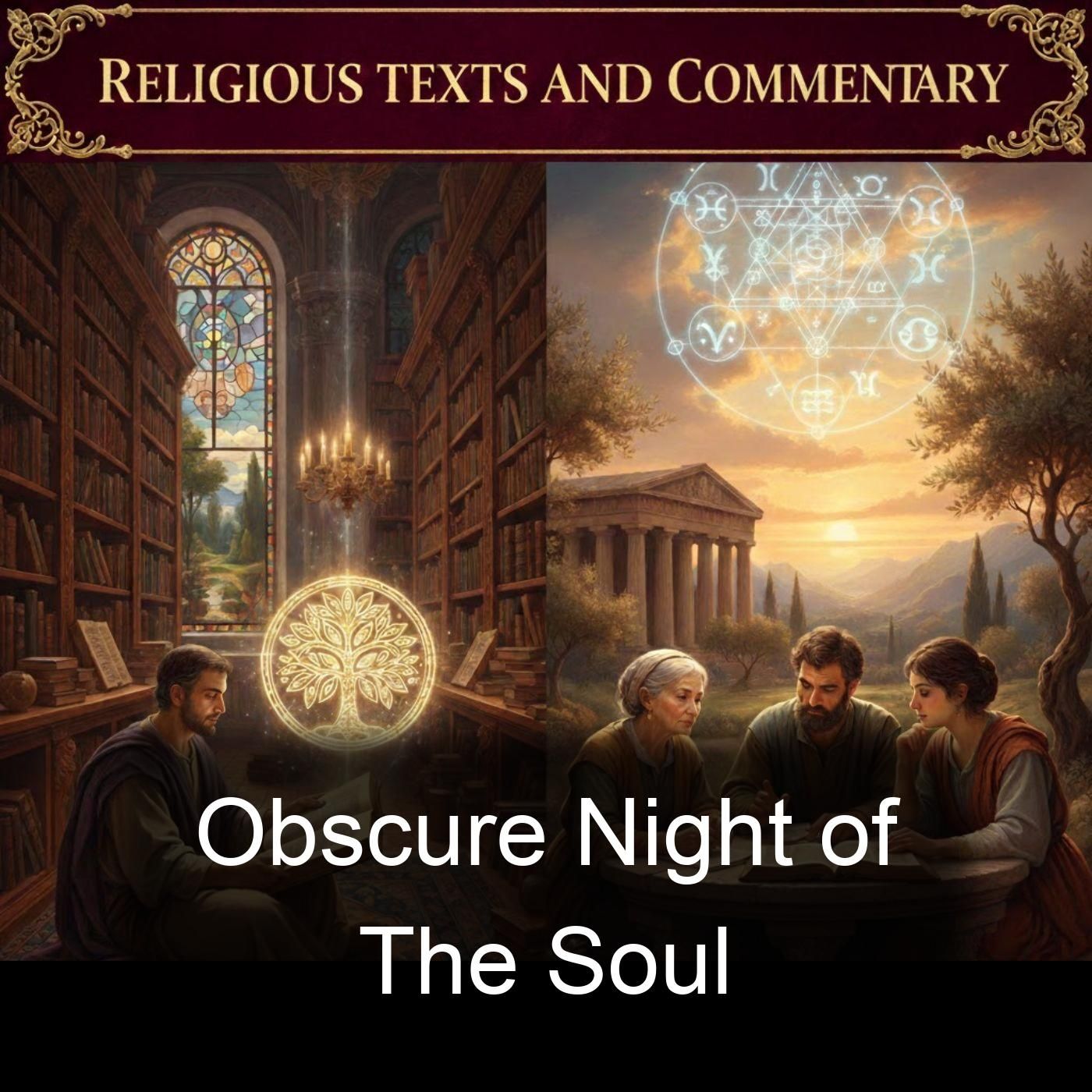
PODCAST · religion
Obscure Night of The Soul
by Saint John of the Cross
The Obscure Night of the Soul, more commonly known today as The Dark Night of the Soul, encapsulates the profound teachings of St. John of the Cross, who transformed Christian contemplation in the 16th century. This timeless text continues to inspire seekers on their spiritual journeys. St. Johns approach, known as the Via Negativa, is a unique form of theological reflection that emphasizes understanding the Divine by exploring what cannot be said about Gods perfect goodness. As explained in Wikipedia, negative theology seeks to clarify religious experiences and language about the Divine through discernment, focusing on what God is not (apophasis) rather than attempting to define what God is. This apophatic tradition is often intertwined with mysticism, which emphasizes a personal, unmediated encounter with divine reality, transcending the confines of traditional organized religion and the conditioned behaviors of our outer selves. - Summary by Ed Humpal and Wikipedia
-
40
On Loving God-Saint Bernard of Clairvaux
"On Loving God" by Saint Bernard of Clairvaux delves into the profound relationship between humanity and the divine, emphasizing the importance of love in the pursuit of faith. This timeless work invites listeners to reflect on the nature of their devotion and the transformative power of love in their spiritual journeys. Bernard’s insights resonate deeply today, reminding us of the enduring quest for connection and understanding in our lives. As we navigate the complexities of modern existence, this exploration of divine love offers a guiding light, encouraging us to cultivate a deeper relationship with God and each other. Embrace the wisdom of Saint Bernard and discover the richness of loving God in every moment.
-
39
Blickling Homilies-Unknown
"Blickling Homilies-Unknown" presents a collection of sermons that delve into the depths of faith and spirituality, offering timeless reflections on the human condition. These homilies, steeped in historical context, explore themes of morality, divine grace, and the quest for understanding amid life's challenges. Their enduring relevance lies in their ability to inspire contemplation and foster a deeper connection to one's beliefs, making them a valuable listen for anyone seeking spiritual insight. As listeners navigate their own journeys, the wisdom contained within these homilies serves as a guiding light, encouraging introspection and a renewed sense of purpose.
-
38
Later Treatises of Saint Athanasius, Archbishop of Alexandria-Athanasius of Alexandria, Theodoret of Cyrus
The "Later Treatises of Saint Athanasius, Archbishop of Alexandria" presents a profound exploration of theological concepts and ecclesiastical authority as articulated by one of Christianity's most influential figures. Athanasius, alongside Theodoret of Cyrus, delves into the complexities of faith, the nature of Christ, and the challenges faced by the early Church. This audiobook invites listeners to reflect on timeless themes of belief and perseverance in the face of adversity, making it a relevant and enriching experience for modern audiences. The enduring wisdom found in these treatises continues to resonate, offering insights into the spiritual struggles that remain pertinent today.
-
37
Treatise on Christ and Antichrist-Hippolytus of Rome
"Treatise on Christ and Antichrist" by Hippolytus of Rome delves into the profound theological distinctions between Christ and the figure of the Antichrist, exploring themes of faith, deception, and the struggle for spiritual truth. This work invites listeners to reflect on the enduring battle between good and evil, a topic that resonates deeply in today's world where moral ambiguity often prevails. Hippolytus’s insights into the nature of Christ and the challenges posed by falsehood remain relevant, offering a timeless perspective on the importance of discernment in faith.
-
36
Flowers from the Garden of Saint Francis for Every Day of the Year-Saint Francis of Assisi
"Flowers from the Garden of Saint Francis for Every Day of the Year" presents a collection of reflections and teachings inspired by the life of Saint Francis of Assisi, offering listeners daily insights into faith, humility, and compassion. This audiobook serves as a spiritual companion, encouraging individuals to embrace the virtues exemplified by Saint Francis in their everyday lives. Its timeless wisdom resonates deeply in today's world, where the pursuit of inner peace and connection to nature remains vital. By exploring themes of simplicity and love, this work invites listeners to cultivate a more meaningful existence, making it a valuable addition to anyone's spiritual journey.
-
35
Shepherd of Hermas-Hermas
Shepherd of Hermas-Hermas is a profound exploration of faith, morality, and the human condition, presented through a series of visions and parables that challenge and inspire. Its themes of repentance, divine guidance, and the struggle for spiritual integrity resonate deeply, offering timeless wisdom for those navigating their own spiritual journeys. The work invites listeners to reflect on their beliefs and the importance of community, making it a relevant and enriching experience for contemporary audiences. As it delves into the complexities of faith, this audiobook serves as a reminder of the enduring nature of spiritual inquiry and the quest for understanding in an often tumultuous world.
-
34
When the Holy Ghost Is Come-Samuel Logan Brengle
"When the Holy Ghost Is Come" by Samuel Logan Brengle delves into the profound spiritual experience of receiving the Holy Spirit, emphasizing its transformative power in the life of a believer. Brengle's insights into faith and divine guidance remain relevant today, as many seek deeper connections with their spirituality amidst the complexities of modern life. The book encourages listeners to reflect on their own spiritual journeys and the role of the Holy Spirit in their faith. With its timeless themes of empowerment and divine presence, this work serves as a beacon for those navigating their own obscure nights of the soul, reminding us of the light that faith can bring.
-
33
Gospel-Mystery of Sanctification-Walter Marshall
The "Gospel-Mystery of Sanctification" by Walter Marshall delves into the profound themes of spiritual growth and the transformative power of faith. This timeless work explores the intricate relationship between grace and sanctification, inviting listeners to reflect on their own spiritual journeys. Marshall's insights into the nature of holiness and divine influence resonate deeply in today's world, where the quest for meaning and purpose remains ever relevant. Engaging with this text offers not only a deeper understanding of the Christian faith but also encourages personal introspection and growth. Its enduring message continues to inspire those seeking a closer connection to their spirituality.
-
32
Where We Got the Bible Our Debt to the Catholic Church-Rev. Henry Grey Graham
"Where We Got the Bible: Our Debt to the Catholic Church" by Rev. Henry Grey Graham explores the historical roots of the Bible and emphasizes the pivotal role the Catholic Church played in its formation and preservation. This insightful work invites listeners to reflect on the profound connections between faith and scripture, highlighting the Church's enduring influence on Christianity. In an age where the origins of religious texts are often questioned, Graham's examination serves as a timeless reminder of the importance of understanding our spiritual heritage. Engaging with this audiobook offers a valuable perspective on the continuity of faith and the significance of tradition in shaping belief systems today.
-
31
Uttermost Star, and Other Gleams of Fancy-Frank W. Boreham
"Uttermost Star, and Other Gleams of Fancy" by Frank W. Boreham invites listeners to explore the depths of imagination and spirituality through a collection of thought-provoking essays. Boreham's reflections illuminate the beauty of the ordinary and the extraordinary, encouraging a deeper appreciation for life's mysteries. His eloquent prose resonates with timeless themes of wonder, faith, and the search for meaning, making this work as relevant today as it was upon its release. By engaging with Boreham's insights, listeners can find inspiration and solace, navigating their own journeys through the complexities of existence and the pursuit of the sublime.
-
30
Epitome of the Formula of Concord-Jakob Andreae
"Epitome of the Formula of Concord" by Jakob Andreae serves as a significant theological document that encapsulates the core beliefs of the Lutheran faith, promoting unity among Christians during a time of division. This work distills complex theological concepts into accessible teachings, making it a foundational text for understanding Lutheran doctrine. Its enduring relevance lies in its exploration of faith, grace, and the importance of communal belief, themes that continue to resonate in contemporary discussions about religious identity and unity. Listening to this audiobook offers a profound insight into the historical context of faith that still influences modern theological discourse and personal spirituality today.
-
29
Against Celsus Book 7-Origen of Alexandria
"Against Celsus Book 7" by Origen of Alexandria delves into the philosophical and theological arguments against the views of the early critic Celsus, providing a profound exploration of faith and reason. This work is a significant contribution to early Christian thought, as Origen defends the teachings of Christianity with intellectual rigor and spiritual insight. Listening to this audiobook today invites reflection on the enduring conflicts between belief and skepticism, themes that resonate in contemporary discussions about faith. Origen's eloquent defense not only enriches our understanding of early Christian doctrine but also encourages listeners to engage thoughtfully with their own beliefs amidst modern challenges.
-
28
Doubter's Doubts About Science and Religion-Sir Robert Anderson
"Doubter's Doubts About Science and Religion" by Sir Robert Anderson delves into the complex interplay between faith and reason, examining the skepticism that often arises in the face of scientific inquiry and religious belief. This thought-provoking work challenges listeners to confront their own uncertainties, making it a timeless exploration of the human condition. As debates around science and spirituality continue to resonate today, Anderson's insights offer a compelling framework for understanding the doubts that can accompany belief. Engaging with this audiobook invites reflection on the enduring questions of existence, purpose, and the search for truth in an increasingly complex world.
-
27
040 - Conclusion
The Obscure Night of the Soul, more commonly known today as The Dark Night of the Soul, encapsulates the profound teachings of St. John of the Cross, who transformed Christian contemplation in the 16th century. This timeless text continues to inspire seekers on their spiritual journeys. St. Johns approach, known as the Via Negativa, is a unique form of theological reflection that emphasizes understanding the Divine by exploring what cannot be said about Gods perfect goodness. As explained in Wikipedia, negative theology seeks to clarify religious experiences and language about the Divine through discernment, focusing on what God is not (apophasis) rather than attempting to define what God is. This apophatic tradition is often intertwined with mysticism, which emphasizes a personal, unmediated encounter with divine reality, transcending the confines of traditional organized religion and the conditioned behaviors of our outer selves. - Summary by Ed Humpal and Wikipedia
-
26
039 - Book II Chapter 24 The Last Line of the Second Stanza Explained
The Obscure Night of the Soul, more commonly known today as The Dark Night of the Soul, encapsulates the profound teachings of St. John of the Cross, who transformed Christian contemplation in the 16th century. This timeless text continues to inspire seekers on their spiritual journeys. St. Johns approach, known as the Via Negativa, is a unique form of theological reflection that emphasizes understanding the Divine by exploring what cannot be said about Gods perfect goodness. As explained in Wikipedia, negative theology seeks to clarify religious experiences and language about the Divine through discernment, focusing on what God is not (apophasis) rather than attempting to define what God is. This apophatic tradition is often intertwined with mysticism, which emphasizes a personal, unmediated encounter with divine reality, transcending the confines of traditional organized religion and the conditioned behaviors of our outer selves. - Summary by Ed Humpal and Wikipedia
-
25
038 - Book II Chapter 23 The Wonderful Hiding Place of the Soul
The Obscure Night of the Soul, more commonly known today as The Dark Night of the Soul, encapsulates the profound teachings of St. John of the Cross, who transformed Christian contemplation in the 16th century. This timeless text continues to inspire seekers on their spiritual journeys. St. Johns approach, known as the Via Negativa, is a unique form of theological reflection that emphasizes understanding the Divine by exploring what cannot be said about Gods perfect goodness. As explained in Wikipedia, negative theology seeks to clarify religious experiences and language about the Divine through discernment, focusing on what God is not (apophasis) rather than attempting to define what God is. This apophatic tradition is often intertwined with mysticism, which emphasizes a personal, unmediated encounter with divine reality, transcending the confines of traditional organized religion and the conditioned behaviors of our outer selves. - Summary by Ed Humpal and Wikipedia
-
24
037 - Book II Chapter 22 Happiness of the Soul
The Obscure Night of the Soul, more commonly known today as The Dark Night of the Soul, encapsulates the profound teachings of St. John of the Cross, who transformed Christian contemplation in the 16th century. This timeless text continues to inspire seekers on their spiritual journeys. St. Johns approach, known as the Via Negativa, is a unique form of theological reflection that emphasizes understanding the Divine by exploring what cannot be said about Gods perfect goodness. As explained in Wikipedia, negative theology seeks to clarify religious experiences and language about the Divine through discernment, focusing on what God is not (apophasis) rather than attempting to define what God is. This apophatic tradition is often intertwined with mysticism, which emphasizes a personal, unmediated encounter with divine reality, transcending the confines of traditional organized religion and the conditioned behaviors of our outer selves. - Summary by Ed Humpal and Wikipedia
-
23
036 - Book II Chapter 21 The Meaning of 'Disguised'
The Obscure Night of the Soul, more commonly known today as The Dark Night of the Soul, encapsulates the profound teachings of St. John of the Cross, who transformed Christian contemplation in the 16th century. This timeless text continues to inspire seekers on their spiritual journeys. St. Johns approach, known as the Via Negativa, is a unique form of theological reflection that emphasizes understanding the Divine by exploring what cannot be said about Gods perfect goodness. As explained in Wikipedia, negative theology seeks to clarify religious experiences and language about the Divine through discernment, focusing on what God is not (apophasis) rather than attempting to define what God is. This apophatic tradition is often intertwined with mysticism, which emphasizes a personal, unmediated encounter with divine reality, transcending the confines of traditional organized religion and the conditioned behaviors of our outer selves. - Summary by Ed Humpal and Wikipedia
-
22
035 - Book II Chapter 20 The Other Five Degrees
The Obscure Night of the Soul, more commonly known today as The Dark Night of the Soul, encapsulates the profound teachings of St. John of the Cross, who transformed Christian contemplation in the 16th century. This timeless text continues to inspire seekers on their spiritual journeys. St. Johns approach, known as the Via Negativa, is a unique form of theological reflection that emphasizes understanding the Divine by exploring what cannot be said about Gods perfect goodness. As explained in Wikipedia, negative theology seeks to clarify religious experiences and language about the Divine through discernment, focusing on what God is not (apophasis) rather than attempting to define what God is. This apophatic tradition is often intertwined with mysticism, which emphasizes a personal, unmediated encounter with divine reality, transcending the confines of traditional organized religion and the conditioned behaviors of our outer selves. - Summary by Ed Humpal and Wikipedia
-
21
034 - Book II Chapter 19 The First Five Degrees of the Mystic Ladder
The Obscure Night of the Soul, more commonly known today as The Dark Night of the Soul, encapsulates the profound teachings of St. John of the Cross, who transformed Christian contemplation in the 16th century. This timeless text continues to inspire seekers on their spiritual journeys. St. Johns approach, known as the Via Negativa, is a unique form of theological reflection that emphasizes understanding the Divine by exploring what cannot be said about Gods perfect goodness. As explained in Wikipedia, negative theology seeks to clarify religious experiences and language about the Divine through discernment, focusing on what God is not (apophasis) rather than attempting to define what God is. This apophatic tradition is often intertwined with mysticism, which emphasizes a personal, unmediated encounter with divine reality, transcending the confines of traditional organized religion and the conditioned behaviors of our outer selves. - Summary by Ed Humpal and Wikipedia
-
20
033 - Book II Chapter 18 This Secret Wisdom is also a Ladder
The Obscure Night of the Soul, more commonly known today as The Dark Night of the Soul, encapsulates the profound teachings of St. John of the Cross, who transformed Christian contemplation in the 16th century. This timeless text continues to inspire seekers on their spiritual journeys. St. Johns approach, known as the Via Negativa, is a unique form of theological reflection that emphasizes understanding the Divine by exploring what cannot be said about Gods perfect goodness. As explained in Wikipedia, negative theology seeks to clarify religious experiences and language about the Divine through discernment, focusing on what God is not (apophasis) rather than attempting to define what God is. This apophatic tradition is often intertwined with mysticism, which emphasizes a personal, unmediated encounter with divine reality, transcending the confines of traditional organized religion and the conditioned behaviors of our outer selves. - Summary by Ed Humpal and Wikipedia
-
19
032 - Book II Chapter 17 Obscure Contemplation is Secret
The Obscure Night of the Soul, more commonly known today as The Dark Night of the Soul, encapsulates the profound teachings of St. John of the Cross, who transformed Christian contemplation in the 16th century. This timeless text continues to inspire seekers on their spiritual journeys. St. Johns approach, known as the Via Negativa, is a unique form of theological reflection that emphasizes understanding the Divine by exploring what cannot be said about Gods perfect goodness. As explained in Wikipedia, negative theology seeks to clarify religious experiences and language about the Divine through discernment, focusing on what God is not (apophasis) rather than attempting to define what God is. This apophatic tradition is often intertwined with mysticism, which emphasizes a personal, unmediated encounter with divine reality, transcending the confines of traditional organized religion and the conditioned behaviors of our outer selves. - Summary by Ed Humpal and Wikipedia
-
18
031 - Book II Chapter 16 How the Soul Travels Securely in Darkness
The Obscure Night of the Soul, more commonly known today as The Dark Night of the Soul, encapsulates the profound teachings of St. John of the Cross, who transformed Christian contemplation in the 16th century. This timeless text continues to inspire seekers on their spiritual journeys. St. Johns approach, known as the Via Negativa, is a unique form of theological reflection that emphasizes understanding the Divine by exploring what cannot be said about Gods perfect goodness. As explained in Wikipedia, negative theology seeks to clarify religious experiences and language about the Divine through discernment, focusing on what God is not (apophasis) rather than attempting to define what God is. This apophatic tradition is often intertwined with mysticism, which emphasizes a personal, unmediated encounter with divine reality, transcending the confines of traditional organized religion and the conditioned behaviors of our outer selves. - Summary by Ed Humpal and Wikipedia
-
17
030 - Book II Chapter 15 Explanation of the Second Stanza
The Obscure Night of the Soul, more commonly known today as The Dark Night of the Soul, encapsulates the profound teachings of St. John of the Cross, who transformed Christian contemplation in the 16th century. This timeless text continues to inspire seekers on their spiritual journeys. St. Johns approach, known as the Via Negativa, is a unique form of theological reflection that emphasizes understanding the Divine by exploring what cannot be said about Gods perfect goodness. As explained in Wikipedia, negative theology seeks to clarify religious experiences and language about the Divine through discernment, focusing on what God is not (apophasis) rather than attempting to define what God is. This apophatic tradition is often intertwined with mysticism, which emphasizes a personal, unmediated encounter with divine reality, transcending the confines of traditional organized religion and the conditioned behaviors of our outer selves. - Summary by Ed Humpal and Wikipedia
-
16
029 - Book II Chapter 14 The Last Lines of the First Stanza Spiritually Explained
The Obscure Night of the Soul, more commonly known today as The Dark Night of the Soul, encapsulates the profound teachings of St. John of the Cross, who transformed Christian contemplation in the 16th century. This timeless text continues to inspire seekers on their spiritual journeys. St. Johns approach, known as the Via Negativa, is a unique form of theological reflection that emphasizes understanding the Divine by exploring what cannot be said about Gods perfect goodness. As explained in Wikipedia, negative theology seeks to clarify religious experiences and language about the Divine through discernment, focusing on what God is not (apophasis) rather than attempting to define what God is. This apophatic tradition is often intertwined with mysticism, which emphasizes a personal, unmediated encounter with divine reality, transcending the confines of traditional organized religion and the conditioned behaviors of our outer selves. - Summary by Ed Humpal and Wikipedia
-
15
028 - Book II Chapter 13 Other Sweet Effects of the Dark Night
The Obscure Night of the Soul, more commonly known today as The Dark Night of the Soul, encapsulates the profound teachings of St. John of the Cross, who transformed Christian contemplation in the 16th century. This timeless text continues to inspire seekers on their spiritual journeys. St. Johns approach, known as the Via Negativa, is a unique form of theological reflection that emphasizes understanding the Divine by exploring what cannot be said about Gods perfect goodness. As explained in Wikipedia, negative theology seeks to clarify religious experiences and language about the Divine through discernment, focusing on what God is not (apophasis) rather than attempting to define what God is. This apophatic tradition is often intertwined with mysticism, which emphasizes a personal, unmediated encounter with divine reality, transcending the confines of traditional organized religion and the conditioned behaviors of our outer selves. - Summary by Ed Humpal and Wikipedia
-
14
027 - Book II Chapter 12 How this Night is like Purgatory How Divine Wisdom Illuminates Men
The Obscure Night of the Soul, more commonly known today as The Dark Night of the Soul, encapsulates the profound teachings of St. John of the Cross, who transformed Christian contemplation in the 16th century. This timeless text continues to inspire seekers on their spiritual journeys. St. Johns approach, known as the Via Negativa, is a unique form of theological reflection that emphasizes understanding the Divine by exploring what cannot be said about Gods perfect goodness. As explained in Wikipedia, negative theology seeks to clarify religious experiences and language about the Divine through discernment, focusing on what God is not (apophasis) rather than attempting to define what God is. This apophatic tradition is often intertwined with mysticism, which emphasizes a personal, unmediated encounter with divine reality, transcending the confines of traditional organized religion and the conditioned behaviors of our outer selves. - Summary by Ed Humpal and Wikipedia
-
13
026 - Book II Chapter 11 Passion of Divine Love the Fruit of these Afflictions
The Obscure Night of the Soul, more commonly known today as The Dark Night of the Soul, encapsulates the profound teachings of St. John of the Cross, who transformed Christian contemplation in the 16th century. This timeless text continues to inspire seekers on their spiritual journeys. St. Johns approach, known as the Via Negativa, is a unique form of theological reflection that emphasizes understanding the Divine by exploring what cannot be said about Gods perfect goodness. As explained in Wikipedia, negative theology seeks to clarify religious experiences and language about the Divine through discernment, focusing on what God is not (apophasis) rather than attempting to define what God is. This apophatic tradition is often intertwined with mysticism, which emphasizes a personal, unmediated encounter with divine reality, transcending the confines of traditional organized religion and the conditioned behaviors of our outer selves. - Summary by Ed Humpal and Wikipedia
-
12
025 - Book II Chapter 10 Explanation of this Purgation by a Comparison
The Obscure Night of the Soul, more commonly known today as The Dark Night of the Soul, encapsulates the profound teachings of St. John of the Cross, who transformed Christian contemplation in the 16th century. This timeless text continues to inspire seekers on their spiritual journeys. St. Johns approach, known as the Via Negativa, is a unique form of theological reflection that emphasizes understanding the Divine by exploring what cannot be said about Gods perfect goodness. As explained in Wikipedia, negative theology seeks to clarify religious experiences and language about the Divine through discernment, focusing on what God is not (apophasis) rather than attempting to define what God is. This apophatic tradition is often intertwined with mysticism, which emphasizes a personal, unmediated encounter with divine reality, transcending the confines of traditional organized religion and the conditioned behaviors of our outer selves. - Summary by Ed Humpal and Wikipedia
-
11
024 - Book II Chapter 9 How this Night Enlightens the Mind While It Brings Darkness Over It
The Obscure Night of the Soul, more commonly known today as The Dark Night of the Soul, encapsulates the profound teachings of St. John of the Cross, who transformed Christian contemplation in the 16th century. This timeless text continues to inspire seekers on their spiritual journeys. St. Johns approach, known as the Via Negativa, is a unique form of theological reflection that emphasizes understanding the Divine by exploring what cannot be said about Gods perfect goodness. As explained in Wikipedia, negative theology seeks to clarify religious experiences and language about the Divine through discernment, focusing on what God is not (apophasis) rather than attempting to define what God is. This apophatic tradition is often intertwined with mysticism, which emphasizes a personal, unmediated encounter with divine reality, transcending the confines of traditional organized religion and the conditioned behaviors of our outer selves. - Summary by Ed Humpal and Wikipedia
-
10
023 - Book II Chapter 8 Trials of the Soul
The Obscure Night of the Soul, more commonly known today as The Dark Night of the Soul, encapsulates the profound teachings of St. John of the Cross, who transformed Christian contemplation in the 16th century. This timeless text continues to inspire seekers on their spiritual journeys. St. Johns approach, known as the Via Negativa, is a unique form of theological reflection that emphasizes understanding the Divine by exploring what cannot be said about Gods perfect goodness. As explained in Wikipedia, negative theology seeks to clarify religious experiences and language about the Divine through discernment, focusing on what God is not (apophasis) rather than attempting to define what God is. This apophatic tradition is often intertwined with mysticism, which emphasizes a personal, unmediated encounter with divine reality, transcending the confines of traditional organized religion and the conditioned behaviors of our outer selves. - Summary by Ed Humpal and Wikipedia
-
9
022 - Book II Chapter 7 Trials of the Will
The Obscure Night of the Soul, more commonly known today as The Dark Night of the Soul, encapsulates the profound teachings of St. John of the Cross, who transformed Christian contemplation in the 16th century. This timeless text continues to inspire seekers on their spiritual journeys. St. Johns approach, known as the Via Negativa, is a unique form of theological reflection that emphasizes understanding the Divine by exploring what cannot be said about Gods perfect goodness. As explained in Wikipedia, negative theology seeks to clarify religious experiences and language about the Divine through discernment, focusing on what God is not (apophasis) rather than attempting to define what God is. This apophatic tradition is often intertwined with mysticism, which emphasizes a personal, unmediated encounter with divine reality, transcending the confines of traditional organized religion and the conditioned behaviors of our outer selves. - Summary by Ed Humpal and Wikipedia
-
8
021 - Book II Chapter 6 Other Sufferings in this Night
The Obscure Night of the Soul, more commonly known today as The Dark Night of the Soul, encapsulates the profound teachings of St. John of the Cross, who transformed Christian contemplation in the 16th century. This timeless text continues to inspire seekers on their spiritual journeys. St. Johns approach, known as the Via Negativa, is a unique form of theological reflection that emphasizes understanding the Divine by exploring what cannot be said about Gods perfect goodness. As explained in Wikipedia, negative theology seeks to clarify religious experiences and language about the Divine through discernment, focusing on what God is not (apophasis) rather than attempting to define what God is. This apophatic tradition is often intertwined with mysticism, which emphasizes a personal, unmediated encounter with divine reality, transcending the confines of traditional organized religion and the conditioned behaviors of our outer selves. - Summary by Ed Humpal and Wikipedia
-
7
020 - Book II Chapter 5 Obscure Contemplation is Pain and Torment for the Soul
The Obscure Night of the Soul, more commonly known today as The Dark Night of the Soul, encapsulates the profound teachings of St. John of the Cross, who transformed Christian contemplation in the 16th century. This timeless text continues to inspire seekers on their spiritual journeys. St. Johns approach, known as the Via Negativa, is a unique form of theological reflection that emphasizes understanding the Divine by exploring what cannot be said about Gods perfect goodness. As explained in Wikipedia, negative theology seeks to clarify religious experiences and language about the Divine through discernment, focusing on what God is not (apophasis) rather than attempting to define what God is. This apophatic tradition is often intertwined with mysticism, which emphasizes a personal, unmediated encounter with divine reality, transcending the confines of traditional organized religion and the conditioned behaviors of our outer selves. - Summary by Ed Humpal and Wikipedia
-
6
019 - Book II Chapter 4 The Second Stanza Spiritually Explained
The Obscure Night of the Soul, more commonly known today as The Dark Night of the Soul, encapsulates the profound teachings of St. John of the Cross, who transformed Christian contemplation in the 16th century. This timeless text continues to inspire seekers on their spiritual journeys. St. Johns approach, known as the Via Negativa, is a unique form of theological reflection that emphasizes understanding the Divine by exploring what cannot be said about Gods perfect goodness. As explained in Wikipedia, negative theology seeks to clarify religious experiences and language about the Divine through discernment, focusing on what God is not (apophasis) rather than attempting to define what God is. This apophatic tradition is often intertwined with mysticism, which emphasizes a personal, unmediated encounter with divine reality, transcending the confines of traditional organized religion and the conditioned behaviors of our outer selves. - Summary by Ed Humpal and Wikipedia
-
5
018 - Book II Chapter 3 Introduction
The Obscure Night of the Soul, more commonly known today as The Dark Night of the Soul, encapsulates the profound teachings of St. John of the Cross, who transformed Christian contemplation in the 16th century. This timeless text continues to inspire seekers on their spiritual journeys. St. Johns approach, known as the Via Negativa, is a unique form of theological reflection that emphasizes understanding the Divine by exploring what cannot be said about Gods perfect goodness. As explained in Wikipedia, negative theology seeks to clarify religious experiences and language about the Divine through discernment, focusing on what God is not (apophasis) rather than attempting to define what God is. This apophatic tradition is often intertwined with mysticism, which emphasizes a personal, unmediated encounter with divine reality, transcending the confines of traditional organized religion and the conditioned behaviors of our outer selves. - Summary by Ed Humpal and Wikipedia
-
4
017 - Book II Chapter 2 Imperfections of Proficients
The Obscure Night of the Soul, more commonly known today as The Dark Night of the Soul, encapsulates the profound teachings of St. John of the Cross, who transformed Christian contemplation in the 16th century. This timeless text continues to inspire seekers on their spiritual journeys. St. Johns approach, known as the Via Negativa, is a unique form of theological reflection that emphasizes understanding the Divine by exploring what cannot be said about Gods perfect goodness. As explained in Wikipedia, negative theology seeks to clarify religious experiences and language about the Divine through discernment, focusing on what God is not (apophasis) rather than attempting to define what God is. This apophatic tradition is often intertwined with mysticism, which emphasizes a personal, unmediated encounter with divine reality, transcending the confines of traditional organized religion and the conditioned behaviors of our outer selves. - Summary by Ed Humpal and Wikipedia
-
3
016 - Book II Chapter 1 The Second Night That of the Spirit
The Obscure Night of the Soul, more commonly known today as The Dark Night of the Soul, encapsulates the profound teachings of St. John of the Cross, who transformed Christian contemplation in the 16th century. This timeless text continues to inspire seekers on their spiritual journeys. St. Johns approach, known as the Via Negativa, is a unique form of theological reflection that emphasizes understanding the Divine by exploring what cannot be said about Gods perfect goodness. As explained in Wikipedia, negative theology seeks to clarify religious experiences and language about the Divine through discernment, focusing on what God is not (apophasis) rather than attempting to define what God is. This apophatic tradition is often intertwined with mysticism, which emphasizes a personal, unmediated encounter with divine reality, transcending the confines of traditional organized religion and the conditioned behaviors of our outer selves. - Summary by Ed Humpal and Wikipedia
-
2
015 - Book I Chapter 14 Explanation of the Last Line of the First Stanza
The Obscure Night of the Soul, more commonly known today as The Dark Night of the Soul, encapsulates the profound teachings of St. John of the Cross, who transformed Christian contemplation in the 16th century. This timeless text continues to inspire seekers on their spiritual journeys. St. Johns approach, known as the Via Negativa, is a unique form of theological reflection that emphasizes understanding the Divine by exploring what cannot be said about Gods perfect goodness. As explained in Wikipedia, negative theology seeks to clarify religious experiences and language about the Divine through discernment, focusing on what God is not (apophasis) rather than attempting to define what God is. This apophatic tradition is often intertwined with mysticism, which emphasizes a personal, unmediated encounter with divine reality, transcending the confines of traditional organized religion and the conditioned behaviors of our outer selves. - Summary by Ed Humpal and Wikipedia
-
1
014 - Book I Chapter 13 Other Benefits of the Night of Sense
The Obscure Night of the Soul, more commonly known today as The Dark Night of the Soul, encapsulates the profound teachings of St. John of the Cross, who transformed Christian contemplation in the 16th century. This timeless text continues to inspire seekers on their spiritual journeys. St. Johns approach, known as the Via Negativa, is a unique form of theological reflection that emphasizes understanding the Divine by exploring what cannot be said about Gods perfect goodness. As explained in Wikipedia, negative theology seeks to clarify religious experiences and language about the Divine through discernment, focusing on what God is not (apophasis) rather than attempting to define what God is. This apophatic tradition is often intertwined with mysticism, which emphasizes a personal, unmediated encounter with divine reality, transcending the confines of traditional organized religion and the conditioned behaviors of our outer selves. - Summary by Ed Humpal and Wikipedia
-
0
013 - Book I Chapter 12 Benefits of the Night of Sense
The Obscure Night of the Soul, more commonly known today as The Dark Night of the Soul, encapsulates the profound teachings of St. John of the Cross, who transformed Christian contemplation in the 16th century. This timeless text continues to inspire seekers on their spiritual journeys. St. Johns approach, known as the Via Negativa, is a unique form of theological reflection that emphasizes understanding the Divine by exploring what cannot be said about Gods perfect goodness. As explained in Wikipedia, negative theology seeks to clarify religious experiences and language about the Divine through discernment, focusing on what God is not (apophasis) rather than attempting to define what God is. This apophatic tradition is often intertwined with mysticism, which emphasizes a personal, unmediated encounter with divine reality, transcending the confines of traditional organized religion and the conditioned behaviors of our outer selves. - Summary by Ed Humpal and Wikipedia
-
-1
012 - Book I Chapter 11 Explanation of the Second Line of the Stanza
The Obscure Night of the Soul, more commonly known today as The Dark Night of the Soul, encapsulates the profound teachings of St. John of the Cross, who transformed Christian contemplation in the 16th century. This timeless text continues to inspire seekers on their spiritual journeys. St. Johns approach, known as the Via Negativa, is a unique form of theological reflection that emphasizes understanding the Divine by exploring what cannot be said about Gods perfect goodness. As explained in Wikipedia, negative theology seeks to clarify religious experiences and language about the Divine through discernment, focusing on what God is not (apophasis) rather than attempting to define what God is. This apophatic tradition is often intertwined with mysticism, which emphasizes a personal, unmediated encounter with divine reality, transcending the confines of traditional organized religion and the conditioned behaviors of our outer selves. - Summary by Ed Humpal and Wikipedia
-
-2
011 - Book I Chapter 10 Conduct upon Entering this Night
The Obscure Night of the Soul, more commonly known today as The Dark Night of the Soul, encapsulates the profound teachings of St. John of the Cross, who transformed Christian contemplation in the 16th century. This timeless text continues to inspire seekers on their spiritual journeys. St. Johns approach, known as the Via Negativa, is a unique form of theological reflection that emphasizes understanding the Divine by exploring what cannot be said about Gods perfect goodness. As explained in Wikipedia, negative theology seeks to clarify religious experiences and language about the Divine through discernment, focusing on what God is not (apophasis) rather than attempting to define what God is. This apophatic tradition is often intertwined with mysticism, which emphasizes a personal, unmediated encounter with divine reality, transcending the confines of traditional organized religion and the conditioned behaviors of our outer selves. - Summary by Ed Humpal and Wikipedia
-
-3
010 - Book I Chapter 9 Signs that One is Walking in this Night
The Obscure Night of the Soul, more commonly known today as The Dark Night of the Soul, encapsulates the profound teachings of St. John of the Cross, who transformed Christian contemplation in the 16th century. This timeless text continues to inspire seekers on their spiritual journeys. St. Johns approach, known as the Via Negativa, is a unique form of theological reflection that emphasizes understanding the Divine by exploring what cannot be said about Gods perfect goodness. As explained in Wikipedia, negative theology seeks to clarify religious experiences and language about the Divine through discernment, focusing on what God is not (apophasis) rather than attempting to define what God is. This apophatic tradition is often intertwined with mysticism, which emphasizes a personal, unmediated encounter with divine reality, transcending the confines of traditional organized religion and the conditioned behaviors of our outer selves. - Summary by Ed Humpal and Wikipedia
-
-4
009 - Book I Chapter 8 Explanation of The Obscure Night
The Obscure Night of the Soul, more commonly known today as The Dark Night of the Soul, encapsulates the profound teachings of St. John of the Cross, who transformed Christian contemplation in the 16th century. This timeless text continues to inspire seekers on their spiritual journeys. St. Johns approach, known as the Via Negativa, is a unique form of theological reflection that emphasizes understanding the Divine by exploring what cannot be said about Gods perfect goodness. As explained in Wikipedia, negative theology seeks to clarify religious experiences and language about the Divine through discernment, focusing on what God is not (apophasis) rather than attempting to define what God is. This apophatic tradition is often intertwined with mysticism, which emphasizes a personal, unmediated encounter with divine reality, transcending the confines of traditional organized religion and the conditioned behaviors of our outer selves. - Summary by Ed Humpal and Wikipedia
-
-5
008 - Book 1 Chapter 7 Imperfections of Envy and Spiritual Sloth
The Obscure Night of the Soul, more commonly known today as The Dark Night of the Soul, encapsulates the profound teachings of St. John of the Cross, who transformed Christian contemplation in the 16th century. This timeless text continues to inspire seekers on their spiritual journeys. St. Johns approach, known as the Via Negativa, is a unique form of theological reflection that emphasizes understanding the Divine by exploring what cannot be said about Gods perfect goodness. As explained in Wikipedia, negative theology seeks to clarify religious experiences and language about the Divine through discernment, focusing on what God is not (apophasis) rather than attempting to define what God is. This apophatic tradition is often intertwined with mysticism, which emphasizes a personal, unmediated encounter with divine reality, transcending the confines of traditional organized religion and the conditioned behaviors of our outer selves. - Summary by Ed Humpal and Wikipedia
-
-6
007 - Book I Chapter 6 Imperfections of Spiritual Gluttony
The Obscure Night of the Soul, more commonly known today as The Dark Night of the Soul, encapsulates the profound teachings of St. John of the Cross, who transformed Christian contemplation in the 16th century. This timeless text continues to inspire seekers on their spiritual journeys. St. Johns approach, known as the Via Negativa, is a unique form of theological reflection that emphasizes understanding the Divine by exploring what cannot be said about Gods perfect goodness. As explained in Wikipedia, negative theology seeks to clarify religious experiences and language about the Divine through discernment, focusing on what God is not (apophasis) rather than attempting to define what God is. This apophatic tradition is often intertwined with mysticism, which emphasizes a personal, unmediated encounter with divine reality, transcending the confines of traditional organized religion and the conditioned behaviors of our outer selves. - Summary by Ed Humpal and Wikipedia
-
-7
006 - Book I Chapter 5 Imperfections of Anger
The Obscure Night of the Soul, more commonly known today as The Dark Night of the Soul, encapsulates the profound teachings of St. John of the Cross, who transformed Christian contemplation in the 16th century. This timeless text continues to inspire seekers on their spiritual journeys. St. Johns approach, known as the Via Negativa, is a unique form of theological reflection that emphasizes understanding the Divine by exploring what cannot be said about Gods perfect goodness. As explained in Wikipedia, negative theology seeks to clarify religious experiences and language about the Divine through discernment, focusing on what God is not (apophasis) rather than attempting to define what God is. This apophatic tradition is often intertwined with mysticism, which emphasizes a personal, unmediated encounter with divine reality, transcending the confines of traditional organized religion and the conditioned behaviors of our outer selves. - Summary by Ed Humpal and Wikipedia
-
-8
005 - Book I Chapter 4 Imperfection of Luxury
The Obscure Night of the Soul, more commonly known today as The Dark Night of the Soul, encapsulates the profound teachings of St. John of the Cross, who transformed Christian contemplation in the 16th century. This timeless text continues to inspire seekers on their spiritual journeys. St. Johns approach, known as the Via Negativa, is a unique form of theological reflection that emphasizes understanding the Divine by exploring what cannot be said about Gods perfect goodness. As explained in Wikipedia, negative theology seeks to clarify religious experiences and language about the Divine through discernment, focusing on what God is not (apophasis) rather than attempting to define what God is. This apophatic tradition is often intertwined with mysticism, which emphasizes a personal, unmediated encounter with divine reality, transcending the confines of traditional organized religion and the conditioned behaviors of our outer selves. - Summary by Ed Humpal and Wikipedia
-
-9
004 - Book I Chapter 3 Imperfections of Avarice
The Obscure Night of the Soul, more commonly known today as The Dark Night of the Soul, encapsulates the profound teachings of St. John of the Cross, who transformed Christian contemplation in the 16th century. This timeless text continues to inspire seekers on their spiritual journeys. St. Johns approach, known as the Via Negativa, is a unique form of theological reflection that emphasizes understanding the Divine by exploring what cannot be said about Gods perfect goodness. As explained in Wikipedia, negative theology seeks to clarify religious experiences and language about the Divine through discernment, focusing on what God is not (apophasis) rather than attempting to define what God is. This apophatic tradition is often intertwined with mysticism, which emphasizes a personal, unmediated encounter with divine reality, transcending the confines of traditional organized religion and the conditioned behaviors of our outer selves. - Summary by Ed Humpal and Wikipedia
We're indexing this podcast's transcripts for the first time — this can take a minute or two. We'll show results as soon as they're ready.
No matches for "" in this podcast's transcripts.
No topics indexed yet for this podcast.
Loading reviews...
ABOUT THIS SHOW
The Obscure Night of the Soul, more commonly known today as The Dark Night of the Soul, encapsulates the profound teachings of St. John of the Cross, who transformed Christian contemplation in the 16th century. This timeless text continues to inspire seekers on their spiritual journeys. St. Johns approach, known as the Via Negativa, is a unique form of theological reflection that emphasizes understanding the Divine by exploring what cannot be said about Gods perfect goodness. As explained in Wikipedia, negative theology seeks to clarify religious experiences and language about the Divine through discernment, focusing on what God is not (apophasis) rather than attempting to define what God is. This apophatic tradition is often intertwined with mysticism, which emphasizes a personal, unmediated encounter with divine reality, transcending the confines of traditional organized religion and the conditioned behaviors of our outer selves. - Summary by Ed Humpal and Wikipedia
HOSTED BY
Saint John of the Cross
CATEGORIES
Loading similar podcasts...
Frequently Asked Questions
How many episodes does Obscure Night of The Soul have?
Obscure Night of The Soul currently has 50 episodes available on PodParley. New episodes are automatically indexed when they're published to the podcast feed.
What is Obscure Night of The Soul about?
The Obscure Night of the Soul, more commonly known today as The Dark Night of the Soul, encapsulates the profound teachings of St. John of the Cross, who transformed Christian contemplation in the 16th century. This timeless text continues to inspire seekers on their spiritual journeys. St. Johns...
How often does Obscure Night of The Soul release new episodes?
Obscure Night of The Soul has 50 episodes. Check the episode list to see recent publication dates and frequency.
Where can I listen to Obscure Night of The Soul?
You can listen to Obscure Night of The Soul on PodParley by clicking any episode. We provide an embedded audio player for direct listening, and you can also subscribe via your preferred podcast app using the RSS feed.
Who hosts Obscure Night of The Soul?
Obscure Night of The Soul is created and hosted by Saint John of the Cross.
URL copied to clipboard!